briefs
Topic · across the network

Existentialism

Freedom without instructions, and the anxiety that comes with it.

106
briefs
5
subjects
12:34
average
1332 min
in total
Abstraction 407Absurdism 137Acoustics 220Acting 65Adaptation 372Addiction 95Adolescence 202Advertising 77Age of exploration 14Ageing 113Agriculture 100Algorithms 114Ambition 46Anarchism 38Ancient Egypt 17Ancient Greece 38Ancient Rome 30Animals 172Anthropology 23Apartheid 12Architecture 165Archives 32Argentina 10Art Deco 26Artificial intelligence 78Astronomy 81Attention 42Australia 32Automation 73Avant-garde 164Aviation 79Banking 72Banned works 40Bauhaus 12Beer 5Behavioural economics 22Berlin 16Big tech 6Biodiversity 136Biography 86Birds 41Black holes 20Blockchain 12Boxing 14Branding 77Brazil 43Bread 29Britain 131Brutalism 4Bubbles 3Buddhism 28Byzantium 10California 17Canada 18Capitalism 94Cars 468Celebrity 59Censorship 110Cheese 24Chefs 9Chemistry 104Chess 2Childhood 87China 109Chocolate 8Christianity 49Cinematography 343Cities 90Class 485Climate change 107Club culture 100Cocktails 2Coffee 11Cognitive bias 14Collecting 16Colonialism 284Colour 42Comedy 89Community 52Complexity 21Computing 309Consciousness 16Conservatism 14Conspiracy theories 8Cooking 178Corruption 38Cosmology 31Cover versions 64Craft 116Crate digging 42Creativity 8Crime 234Cryptocurrency 8Cryptography 24Cuba 10Cybersecurity 30Dada 12Debt 38Decision-making 28Decolonisation 46Deep time 80Democracy 45Denim 16Deserts 45Detroit 17Dinosaurs 12Directing 168Disasters 59Disease 109DJ culture 89Dreams 32Drones 5Drum machines 96Dystopia 69East Africa 28Ecology 337Economics 36Editing 72Education 92Egypt 12Electric vehicles 59Emotion 22Empire 92Endurance 49Energy 120Engineering 541Entropy 8Epidemics 13Equality 9Espionage 31Ethics 44Evolution 174Existentialism 106Expertise 2Exploration 49Extinction 23Failure 37Family 240Fandom 22Fascism 45Fashion 215Fast fashion 12Fear 34Feminism 122Fermentation 126Film music 81Fishing 12Folklore 71Food history 588Football 16Forests 31Forgery 7France 163Fraud 15Free will 13Freedom 16French literature 15Friendship 24Furniture 36Gambling 14Gender 63Generations 28Genetics 87Geology 96Germany 66Globalisation 74Gothic 32Greece 5Grief 126Habits 6Happiness 2Hardware 709Haute couture 22Headphones 8Hi-fi 12Hinduism 12Hoaxes 1Human history 23Human nature 41Identity 138Illustration 8Impressionism 6Improvisation 249India 89Indonesia 15Industrial design 342Inequality 13Inflation 4Information 34Infrastructure 280Insects 29Intelligence 8Interiors 31Internet culture 88Invention 329Iran 41Islam 40Islands 17Israel 9Italy 52Jamaica 10Japan 114Jewellery 5Journalism 34Judaism 13Justice 42Korea 41Language 70Law 90Leadership 20Learning 6Liberalism 1Libraries 6Literary criticism 26London 12Loneliness 61Los Angeles 62Lost works 9Love 67Luxury 55Machine learning 15Management 10Maps 5Marketing 21Markets 51Mars 6Marxism 26Masculinity 46Materials 138Mathematics 79Meaning 6Medicine 124Memory 82Mental health 70Mesopotamia 4Mexico 38Migration 95Minimalism 68Mining 30Misinformation 9Modernism 63Money 24Monopoly 32Mortality 61Motivation 2Mountains 16Museums 27Mysticism 11Mythology 60Nationalism 40Neuroscience 23New York 36Nigeria 7Nihilism 10Noise 31Nostalgia 33Nuclear 29Nutrition 17Oceans 48Oil 42Open source 45Painting 18Palaeontology 29Parenting 14Paris 18Partition 6Patents 71Patronage 14Perception 44Personal style 27Personality 2Persuasion 8Peru 10Philosophy 77Photography 37Physics 206Plants 26Platforms 89Podcasting 1Poetry 25Poland 17Policing 34Pop Art 16Populism 2Portraiture 6Portugal 18Postmodernism 23Power 91Prehistory 24Preservation 28Printmaking 21Privacy 11Probability 6Productivity 1Programming 54Prohibition 1Propaganda 35Protest 75Pseudoscience 17Psychology 80Publishing 22Punishment 16Quantum mechanics 44Race 145Radio 30Railways 35Rave 17Realism 47Record labels 19Recording 810Relativity 23Religion 154Resilience 15Restaurants 30Restoration 2Retail 94Revolution 58Risk 18Ritual 96Robotics 26Romance 96Russia 58Salt 9Sampling 246Satire 84Scandinavia 28Scientific method 186Screenwriting 26Sculpture 7Secularism 2Self-deception 14Semiconductors 73Sexuality 102Ships 18Silence 24Silicon Valley 17Slavery 35Sleep 2Smartphones 27Sneakers 15Social media 58Socialism 9Software 68Songwriting 180Sound design 332Sound systems 20South Africa 19South East Asia 30Space exploration 84Spain 18Special effects 41Spices 62Spirits 12Sport 82Startups 21Statistics 10Status 9Stoicism 4Storytelling 68Strategy 70Street food 99Streetwear 16Studio craft 508Subcultures 59Sugar 12Supply chains 115Surrealism 53Surveillance 21Sustainability 30Synthesis 232Tailoring 37Taxation 14Tea 24Textiles 97Thailand 11The American Revolution 19The American South 88The Arab world 41The Arctic 19The Balkans 17The Belle Epoque 13The body 29The brain 26The Caribbean 28The civil rights movement 62The Cold War 160The eighties 268The Enlightenment 29The financial crisis 19The First World War 39The food industry 157The French Revolution 9The Gilded Age 9The Great Depression 18The Holocaust 20The Industrial Revolution 93The internet 61The interwar years 135The Middle Ages 35The Moon 4The music business 169The Netherlands 10The nineties 26The Olympics 10The pandemic 13The Reformation 1The Renaissance 16The Russian Revolution 19The Second World War 102The seventies 58The sixties 28The space race 5The United States 19The universe 7The Victorian era 37Therapy 20Tokyo 11Trade 48Tragedy 22Translation 5Trauma 85Travel 5True crime 2Turkey 18Typography 54Uniforms 23Unions 8Urban planning 66Utilitarianism 1Utopia 5Vaccines 10Vegetarianism 15Venture capital 6Video games 291Vietnam 12Vintage 65Vinyl 6Virtual reality 11War 169Watches 4Water 11Weather 29West Africa 29Wilderness 10Wine 3Work 22Workwear 19Worldbuilding 121

books.briefs Books

All 7 in books →
15:46

Death in Venice

Thomas Mann · 1954

Death in Venice argues that aesthetic obsession is lethal discipline undone. It shows Gustav Aschenbach’s collapse as inevitable — not tragic, not redemptive, but logical. The brief isolates the fatal smile, the bacchanal dream, and the English clerk’s report as the three moments that define the book’s ruthless logic.

10:57

The Master Builder

Henrik Ibsen · 0

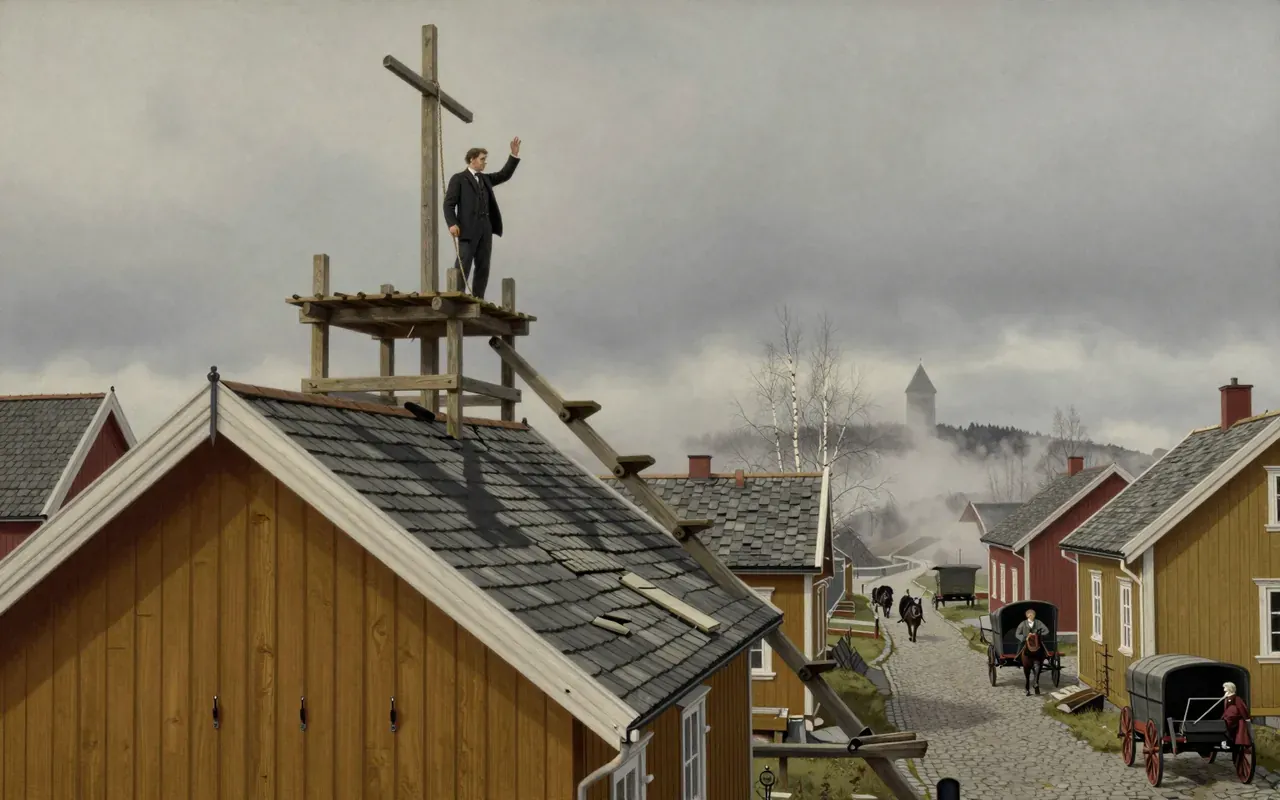
The Master Builder argues that genius is sustained by moral evasion—and that no tower can stand on ash. It works as a claustrophobic duel between Solness and Hilda, but collapses under its own refusal to interrogate her motive or hold Solness to account. Read it for the tower, not the triumph.

15:50

Steppenwolf

Hermann Hesse · 0

Steppenwolf argues spiritual life demands self-annihilation through laughter—not transcendence. It fails when it abandons Haller’s voice for abstraction. Skip the political despair section. Read the Magic Theatre from the masked ball onward, but stop before Hermine’s command.

12:30

The Idiot

Fyodor Dostoyevsky · 1869

Dostoevsky's 1869 novel follows Prince Myshkin, a man of genuine virtue in a corrupt Russian society, as his innocence collides with greed, vanity, and cruelty. The novel treats moral purity as a defect, not an ideal, and offers no redemption for it.

11:00

The Trial

Franz Kafka · 1925

Kafka's unfinished novel about a man arrested without charges and caught in an impenetrable legal system. The brief covers what the trial actually investigates, the machinery of power behind the courts, Kafka's ambivalence about the work itself, and which chapters matter most.

12:46

Crime and Punishment

Fyodor Dostoyevsky · 1866

Fyodor Dostoyevsky’s classic follows Raskolnikov, a debt‑ridden student who murders a pawnbroker to prove a theory of extraordinary men. The novel unravels his psychological collapse, the moral backlash, and eventual confession. It offers a brutal study of guilt, class, and redemption, but its sprawling narrative can feel bloated for those seeking a tight thriller.

11:04

The Stranger

Albert Camus · 1942

Camus's first novel in a hundred and twenty pages of flat, exact prose. The brief covers the plot in one minute, the absurd in three, and why the trial is the real subject of the book.

music.briefs Music

All 5 in music →
9:26

Ghosteen

Nick Cave and the Bad Seeds · 2019

Ghosteen is a deliberate reduction — of rhythm, of narrative, of band-as-unit — into sustained ambient texture and falsetto-led abstraction. Its power lies in what it omits.

10:10

Songs From a Room

Leonard Cohen · 1969

Songs From a Room is Leonard Cohen’s second studio album, released in 1969. It follows his 1967 debut and precedes Songs of Love and Hate (1971) and New Skin for the Old Ceremony (1974). Recorded in Nashville with Bob Johnston after abandoning sessions with David Crosby in Hollywood, it features Ron Cornelius, Charlie Daniels, Bubba Fowler, and Johnston himself. The sound is austere: acoustic guitar, banjo, fiddle, bass, keyboards, and ornamental Jew’s harp. Drums are sparse. Johnston treated the process as painting, and for ‘The Partisan’, he and Cohen travelled to France to overdub three female French singers. The album responds directly to criticism of the lushness of Cohen’s first record — it is stark, lyric-forward, and deliberately simple.

10:50

Songs of Love and Hate

Leonard Cohen · 1971

Songs of Love and Hate is Leonard Cohen’s third studio album, released in 1971. It follows Songs of Leonard Cohen (1967) and Songs from a Room (1969). It is part of his early sequence of folk music albums. Most of the album was recorded at Columbia Studio A in Nashville between 22 and 26 September 1970. 'Sing Another Song, Boys' was recorded live at the Isle of Wight Festival on 30 August 1970. Further recording took place at Trident Studios in London. Cohen reunited with producer Bob Johnston and brought back guitarist Ron Cornelius, who led the backing band called The Army. Cohen described 'Joan of Arc' as exploring how humans meet and embrace their destiny. He stated that 'Famous Blue Raincoat' is about a man writing to another man who had an affair with his wife, and that the title references his own blue Burberry raincoat. Cohen expressed dissatisfaction with 'Famous Blue Raincoat', feeling it was unfinished and revealed its compositional 'carpentry', though he praised its tune and some images. Cohen's syncopated classical guitar 'chop' is especially prominent on 'Avalanche', and he considered 'Dress Rehearsal Rag' unreperformable by him. Songs of Love and Hate was not referenced in the document as having been used in film soundtracks or performed on BBC TV.

11:18

Surf's Up

The Beach Boys · 1971

Surf's Up is the Beach Boys' 1971 studio album, recorded intermittently between January and July 1971. Carl Wilson assumed de facto leadership and produced the bulk of the recordings, marking a shift from Brian Wilson’s earlier dominance. Brian Wilson was not especially active in the production, resulting in thinner vocal arrangements compared to Sunflower. Carl Wilson's first major solo compositions — 'Long Promised Road' and 'Feel Flows' — were recorded almost entirely by him. The title track 'Surf’s Up' was completed in June 1971 using archival recordings from late 1966, newly overdubbed by Carl and augmented with Moog and vocals. The album reflects a deliberate shift toward topical lyricism under Rieley’s influence, with socially conscious songs like 'Student Demonstration Time' and 'Don't Go Near the Water'. Brian contributed 'Til I Die', crafted over weeks amid existential crisis with drum machine, vibraphone, and organ, and co-wrote 'A Day in the Life of a Tree' with Jack Rieley, scored with antique and smaller pipe organs. Bruce Johnston wrote 'Disney Girls (1957)' in response to drug-affected youth in their audience, and Al Jardine contributed the Sunflower outtake 'Take a Load Off Your Feet' and co-wrote 'Lookin' at Tomorrow (A Welfare Song)' with Gary Winfrey.

8:59

undun

The Roots · 2011

Undun is a reverse-chronological hip-hop concept album about Redford Stevens, a fictional man whose life ends before it begins. Recorded in Philadelphia and New York City, produced by Questlove, it uses neo soul and indie textures played live by The Roots’ full band—including sousaphone, guitar, and keyboards. Guest rappers and vocalists appear, but never as decoration: each voice marks a pivot in Redford’s narrowing path. It refuses catharsis. It refuses explanation. It insists the tragedy is structural—not personal.

film.briefs Film

All 86 in film →
13:00

About Dry Grasses

Nuri Bilge Ceylan · 2023

Nuri Bilge Ceylan’s About Dry Grasses follows a disillusioned Istanbul teacher stationed in eastern Anatolia after he and a colleague face student accusations. Shot in Erzurum and Adıyaman by Kürşat Üresin and Cehavir Şahin, the film unfolds across winter in long takes and muted tones, anchored by Merve Dizdar’s Cannes-winning performance. Co-written by Ceylan, Ebru Ceylan and Akın Aksu, it resists narrative resolution in favour of sustained atmosphere, probing education, geography and epistemic limits without recourse to exposition or catharsis.

13:00

Anna's Meetings

Chantal Akerman · 1978

Chantal Akerman’s 1978 film follows Anne Silver, a Belgian filmmaker travelling across Western Europe to promote her work. She meets lovers, friends, family and strangers, but remains emotionally detached. Shot in restrained, observational style by Jean Penzer and edited by Francine Sandberg, the film builds its power through duration, repetition and unspoken tension — culminating in Anne alone, listening to unanswered messages. It is a study in autonomy, exhaustion and the quiet persistence of loneliness.

13:00

Baxter, Vera Baxter

Marguerite Duras · 1977

Baxter, Vera Baxter (1977) is a French arthouse drama written and directed by Marguerite Duras. Set largely in a rented seaside villa, it follows Vera Baxter as she receives two visitors and recounts fragments of her marriage. With Delphine Seyrig, Noëlle Châtelet, and Claudine Gabay, the film uses stillness, repetition, and architectural framing to explore existential exhaustion, bourgeois entrapment, and the silent circuits of duty. Carlos d’Alessio’s sparse score and unhurried editing reinforce its austere tone.

13:00

Before Sunrise

Richard Linklater · 1995

Two strangers meet on a train, disembark in Vienna, and spend twelve hours walking the city, talking, hesitating, revealing, and connecting. There is no plot beyond that; no music swells, no camera lingers on faces for effect, no external drama intrudes. What remains is the texture of real conversation, the weight of time passing, and the quiet ache of something meaningful that cannot last.

13:00

Beware of a Holy Whore

Rainer Werner Fassbinder · 1971

Rainer Werner Fassbinder’s 1971 drama Beware of a Holy Whore stages the slow disintegration of a film crew stranded in a Spanish hotel, awaiting production that never begins in earnest. Shot by Michael Ballhaus and edited by Fassbinder and Thea Eymèsz, it uses repetition, confinement and unresolved tension to explore self-deception, dependency and the violence of creative collaboration.

13:00

Beyond the Law

Norman Mailer · 1968

Norman Mailer’s 1968 film is a self-financed, largely unscripted experiment set over one night in a Manhattan police station, following detectives and suspects through interrogations, lineups, and personal fallout. Shot with three crews over four nights, it uses improvisation to probe the psychological and ethical continuities between law enforcement and criminality — a theme Mailer pursued across his writing. Though technically rough and narratively diffuse, its rawness serves its purpose: to show power not as policy but as habit, posture, and proximity.

13:00

Blast of Silence

Allen Baron · 1961

Blast of Silence is a 1961 American neo-noir crime film written, directed by, and starring Allen Baron. Set over Christmas week in New York City, it follows Frankie Bono, a hitman returning to his hometown to carry out a contract killing. Shot on location without permits and scored with stark minimalism, the film leans on atmosphere, silence, and moral ambiguity rather than plot mechanics. Its narration — written by blacklisted Waldo Salt and voiced uncredited by Lionel Stander — adds a layer of literary distance. Though modest in budget and scope, it endures as a precise, unsparing study of alienation and consequence.

13:00

Boy Meets Girl

Leos Carax · 1984

Leos Carax’s 1984 debut is a black-and-white French drama following Alex, a jaded aspiring filmmaker, and Mireille, a woman teetering on self-erasure, as their paths intersect in a heat-struck Paris. Built on eavesdropping, misdirection, and withheld emotion, it privileges texture over trajectory—using tight framing, sparse sound, and restrained performances to evoke post-adolescent stasis. Though structurally reliant on coincidence and stylistically indebted to the French New Wave, its emotional precision and formal control mark an unmistakable arrival.

games.briefs Games

All 3 in games →
9:18

Shin Megami Tensei III: Nocturne

Atlus · 2003

Shin Megami Tensei III: Nocturne is a PlayStation 2 RPG developed by Atlus and directed by Katsura Hashino. Released in 2003, it was the first main-series Megami Tensei game released in the United States (2004). Its design centres on a weakness-driven 'Press Turn' battle system, demon negotiation and fusion, and navigation across a symbolic 2D world map and grid-based 3D dungeons with automatic mapping and first-person 'Look' functionality. It sets difficulty at the start (Normal or Hard) and features a silent protagonist named during the opening.

10:15

Steins;Gate

5pb. · 2009

Steins;Gate is a visual novel built around two precise, low-friction inputs — answering calls and selecting words in texts — that drive tightly wound branching narratives about causality and consequence. It demands sustained reading and rewards attention to detail, not dexterity or speed. Its design reflects its themes: small actions ripple across time, but only if you’re paying close enough attention to notice the trigger.

8:46

Disco Elysium

ZA/UM · 2019

Disco Elysium is a narrative RPG where dialogue and skill checks replace combat. Its 24 skills — grouped under Intellect, Psyche, Physique, and Motorics — speak autonomously during interactions. Checks use two six-sided dice and can trigger negative effects or quirks. Clothing modifies skills. The Thought Cabinet lets players internalise thoughts over in-game hours, granting benefits but occasionally drawbacks.

culture.briefs Culture

All 5 in culture →
9:46

Beatnik

How the media's word "beatnik" turned Kerouac's "beat" into a caricature, and how fast serious ideas become costumes.
8:42

Absurdism

The absurd isn’t in you or the world — it’s the gap between them, and it’s wider than ever.
8:47

Existentialism

Existentialism isn’t a philosophy—it’s a refusal to let philosophy do your living for you.
8:08

Patricia Highsmith

A writer who gave queer love its first happy ending—and spent her life denying humanity to everyone else.
9:27

Simone de Beauvoir

Beauvoir did not free women — she insisted they were already free, and demanded they act like it.