briefs
Topic · across the network

Ancient Rome

A republic that became an empire, and never stopped arguing about the cost.

30
briefs
5
subjects
12:01
average
361 min
in total
Abstraction 407Absurdism 137Acoustics 220Acting 65Adaptation 372Addiction 95Adolescence 202Advertising 77Age of exploration 14Ageing 113Agriculture 100Algorithms 114Ambition 46Anarchism 38Ancient Egypt 17Ancient Greece 38Ancient Rome 30Animals 172Anthropology 23Apartheid 12Architecture 165Archives 32Argentina 10Art Deco 26Artificial intelligence 78Astronomy 81Attention 42Australia 32Automation 73Avant-garde 164Aviation 79Banking 72Banned works 40Bauhaus 12Beer 5Behavioural economics 22Berlin 16Big tech 6Biodiversity 136Biography 86Birds 41Black holes 20Blockchain 12Boxing 14Branding 77Brazil 43Bread 29Britain 131Brutalism 4Bubbles 3Buddhism 28Byzantium 10California 17Canada 18Capitalism 94Cars 468Celebrity 59Censorship 110Cheese 24Chefs 9Chemistry 104Chess 2Childhood 87China 109Chocolate 8Christianity 49Cinematography 343Cities 90Class 485Climate change 107Club culture 100Cocktails 2Coffee 11Cognitive bias 14Collecting 16Colonialism 284Colour 42Comedy 89Community 52Complexity 21Computing 309Consciousness 16Conservatism 14Conspiracy theories 8Cooking 178Corruption 38Cosmology 31Cover versions 64Craft 116Crate digging 42Creativity 8Crime 234Cryptocurrency 8Cryptography 24Cuba 10Cybersecurity 30Dada 12Debt 38Decision-making 28Decolonisation 46Deep time 80Democracy 45Denim 16Deserts 45Detroit 17Dinosaurs 12Directing 168Disasters 59Disease 109DJ culture 89Dreams 32Drones 5Drum machines 96Dystopia 69East Africa 28Ecology 337Economics 36Editing 72Education 92Egypt 12Electric vehicles 59Emotion 22Empire 92Endurance 49Energy 120Engineering 541Entropy 8Epidemics 13Equality 9Espionage 31Ethics 44Evolution 174Existentialism 106Expertise 2Exploration 49Extinction 23Failure 37Family 240Fandom 22Fascism 45Fashion 215Fast fashion 12Fear 34Feminism 122Fermentation 126Film music 81Fishing 12Folklore 71Food history 588Football 16Forests 31Forgery 7France 163Fraud 15Free will 13Freedom 16French literature 15Friendship 24Furniture 36Gambling 14Gender 63Generations 28Genetics 87Geology 96Germany 66Globalisation 74Gothic 32Greece 5Grief 126Habits 6Happiness 2Hardware 709Haute couture 22Headphones 8Hi-fi 12Hinduism 12Hoaxes 1Human history 23Human nature 41Identity 138Illustration 8Impressionism 6Improvisation 249India 89Indonesia 15Industrial design 342Inequality 13Inflation 4Information 34Infrastructure 280Insects 29Intelligence 8Interiors 31Internet culture 88Invention 329Iran 41Islam 40Islands 17Israel 9Italy 52Jamaica 10Japan 114Jewellery 5Journalism 34Judaism 13Justice 42Korea 41Language 70Law 90Leadership 20Learning 6Liberalism 1Libraries 6Literary criticism 26London 12Loneliness 61Los Angeles 62Lost works 9Love 67Luxury 55Machine learning 15Management 10Maps 5Marketing 21Markets 51Mars 6Marxism 26Masculinity 46Materials 138Mathematics 79Meaning 6Medicine 124Memory 82Mental health 70Mesopotamia 4Mexico 38Migration 95Minimalism 68Mining 30Misinformation 9Modernism 63Money 24Monopoly 32Mortality 61Motivation 2Mountains 16Museums 27Mysticism 11Mythology 60Nationalism 40Neuroscience 23New York 36Nigeria 7Nihilism 10Noise 31Nostalgia 33Nuclear 29Nutrition 17Oceans 48Oil 42Open source 45Painting 18Palaeontology 29Parenting 14Paris 18Partition 6Patents 71Patronage 14Perception 44Personal style 27Personality 2Persuasion 8Peru 10Philosophy 77Photography 37Physics 206Plants 26Platforms 89Podcasting 1Poetry 25Poland 17Policing 34Pop Art 16Populism 2Portraiture 6Portugal 18Postmodernism 23Power 91Prehistory 24Preservation 28Printmaking 21Privacy 11Probability 6Productivity 1Programming 54Prohibition 1Propaganda 35Protest 75Pseudoscience 17Psychology 80Publishing 22Punishment 16Quantum mechanics 44Race 145Radio 30Railways 35Rave 17Realism 47Record labels 19Recording 810Relativity 23Religion 154Resilience 15Restaurants 30Restoration 2Retail 94Revolution 58Risk 18Ritual 96Robotics 26Romance 96Russia 58Salt 9Sampling 246Satire 84Scandinavia 28Scientific method 186Screenwriting 26Sculpture 7Secularism 2Self-deception 14Semiconductors 73Sexuality 102Ships 18Silence 24Silicon Valley 17Slavery 35Sleep 2Smartphones 27Sneakers 15Social media 58Socialism 9Software 68Songwriting 180Sound design 332Sound systems 20South Africa 19South East Asia 30Space exploration 84Spain 18Special effects 41Spices 62Spirits 12Sport 82Startups 21Statistics 10Status 9Stoicism 4Storytelling 68Strategy 70Street food 99Streetwear 16Studio craft 508Subcultures 59Sugar 12Supply chains 115Surrealism 53Surveillance 21Sustainability 30Synthesis 232Tailoring 37Taxation 14Tea 24Textiles 97Thailand 11The American Revolution 19The American South 88The Arab world 41The Arctic 19The Balkans 17The Belle Epoque 13The body 29The brain 26The Caribbean 28The civil rights movement 62The Cold War 160The eighties 268The Enlightenment 29The financial crisis 19The First World War 39The food industry 157The French Revolution 9The Gilded Age 9The Great Depression 18The Holocaust 20The Industrial Revolution 93The internet 61The interwar years 135The Middle Ages 35The Moon 4The music business 169The Netherlands 10The nineties 26The Olympics 10The pandemic 13The Reformation 1The Renaissance 16The Russian Revolution 19The Second World War 102The seventies 58The sixties 28The space race 5The United States 19The universe 7The Victorian era 37Therapy 20Tokyo 11Trade 48Tragedy 22Translation 5Trauma 85Travel 5True crime 2Turkey 18Typography 54Uniforms 23Unions 8Urban planning 66Utilitarianism 1Utopia 5Vaccines 10Vegetarianism 15Venture capital 6Video games 291Vietnam 12Vintage 65Vinyl 6Virtual reality 11War 169Watches 4Water 11Weather 29West Africa 29Wilderness 10Wine 3Work 22Workwear 19Worldbuilding 121

books.briefs Books

All 3 in books →
15:08

Julius Caesar

William Shakespeare · 1616

Brutus joins the conspiracy on principle and loses Rome to a better speaker. The brief covers why Shakespeare puts the murder at the halfway mark, how Antony turns a hostile crowd line by line, and why the second half never matches the first.

14:41

Romeo and Juliet

William Shakespeare · 1597

Two teenagers from feuding families marry in secret and are dead within four days. The brief covers the compression Shakespeare imposes on his source, why Mercutio and the Nurse are the best things in it, and the case that the lovers are less interesting than the people around them.

8:30

Meditations

Marcus Aurelius · 180

Private notes by a Roman emperor, never meant to be read. The brief explains what Stoicism actually asks of you, which translation to pick, and why the book works better in fragments than front to back.

film.briefs Film

All 4 in film →
13:00

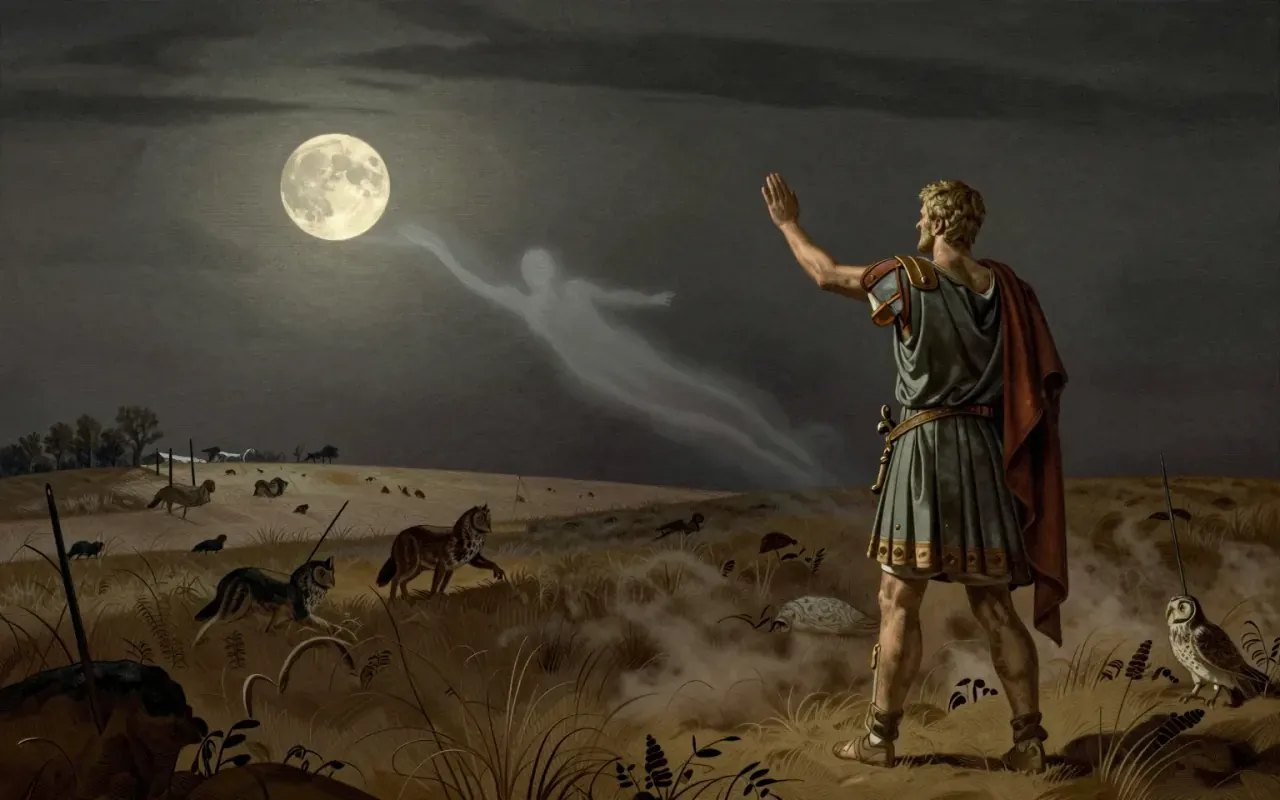
Androcles and the Lion

Chester Erskine, Nicholas Ray · 1952

RKO’s 1952 Androcles and the Lion adapts George Bernard Shaw’s 1912 play with strict fidelity to his text, casting Alan Young as a gentle Christian tailor who befriends a lion in the Roman wilderness. Directed by Chester Erskine and Nicholas Ray, it foregrounds verbal wit over visual spectacle, staging philosophical debate in studio-bound sets. Though reshoots added arena theatrics, the film’s strength remains its unflinching commitment to Shaw’s irony, pacifism, and bureaucratic satire—making it a rare, talkative anomaly in the sword-and-sandal cycle.
13:00

Caesar and Cleopatra

Gabriel Pascal · 1945

Gabriel Pascal’s 1945 Technicolor film adapts George Bernard Shaw’s 1901 play with near-verbatim fidelity. Starring Vivien Leigh and Claude Rains, it follows Cleopatra’s tutelage under Caesar during the Siege of Alexandria. Lavish in scale but restrained in execution, it privileges dialogue, idea and historical procedure over spectacle or sentiment. Though a financial failure on release, it endures as a rare example of British studio craft applying philosophical seriousness to ancient subject matter.

13:00

Satyricon

Federico Fellini · 1969

Federico Fellini’s 1969 Satyricon is a hallucinatory, episodic reimagining of Petronius’s fragmented Roman satire. Shot on studio sets and Italian locations by Giuseppe Rotunno, it follows Encolpius (Martin Potter) through a surreal, decaying empire — brothels, banquets, pirate ships, deserts — where power is performative, desire transactional, and narrative secondary to texture and tone. Nino Rota’s score and Danilo Donati’s production design anchor its visceral, dreamlike logic.

13:00

Spartacus

Stanley Kubrick · 1960

Stanley Kubrick’s 1960 Spartacus adapts Howard Fast’s novel via Dalton Trumbo’s blacklisted script, telling the story of a slave revolt not as myth but as moral architecture. Kirk Douglas stars as Spartacus, with Laurence Olivier, Peter Ustinov, and Jean Simmons in key roles. Shot across California locations including Hearst Castle and Wildwood Park, its Oscar-winning art direction and cinematography render Rome as a study in hierarchy — accent, space, and light all coded by class. Though structurally uneven and romantically thin, its enduring power lies in its deliberate, collective gaze and the historic courage of its authorship.

history.briefs History

All 18 in history →
10:07

First Council of Nicaea

May–July 325

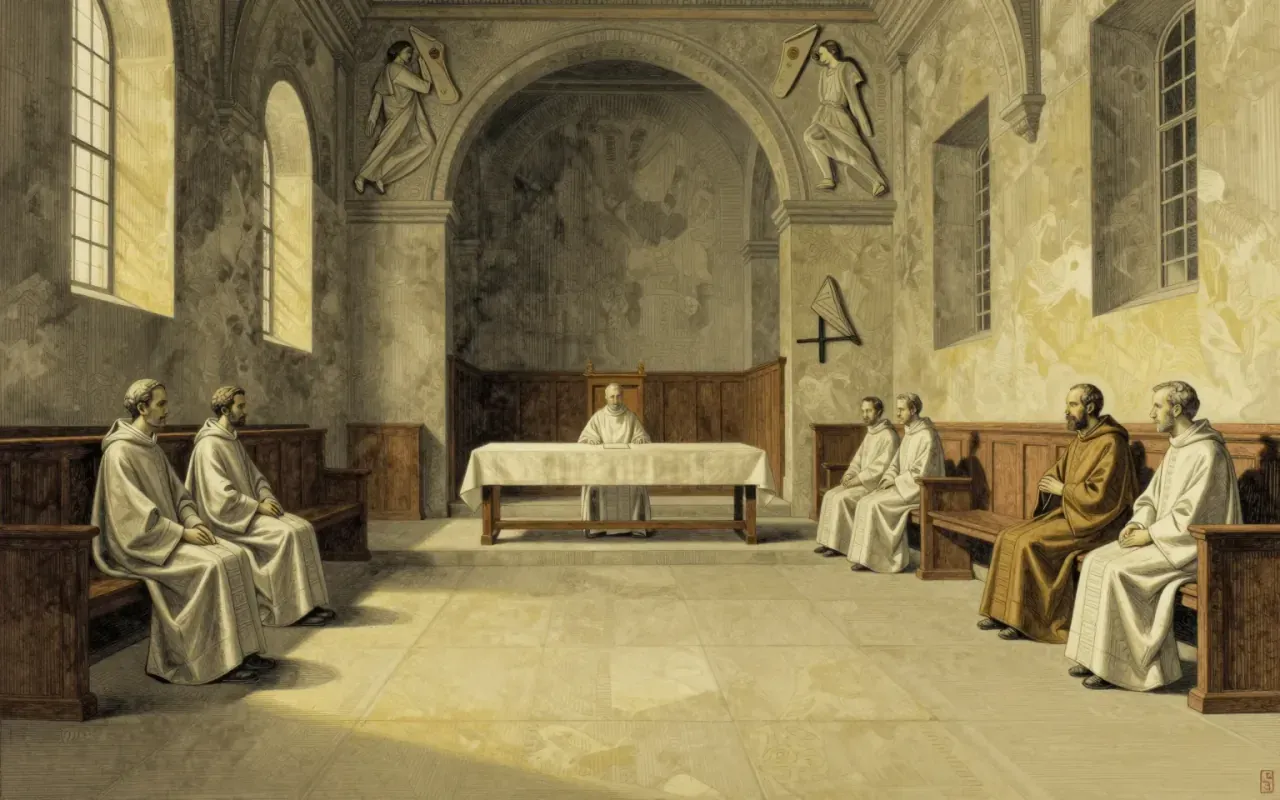
The First Council of Nicaea was the first empire-backed attempt to standardise Christian doctrine by assembly. It succeeded procedurally — nearly all bishops signed — but the record reveals nothing about internal debate, enforcement, or theological nuance. Its legacy is structural, not doctrinal.

13:00

Alaric I

370–410

Alaric led Visigothic forces in an on-again, off-again relationship with the Roman Empire for over a decade, seeking recognised rank, land and provisions before finally sacking Rome in 410 after repeated refusals. What survives of his story comes entirely from Roman and later Gothic writers with their own agendas, leaving his exact origins and true motives genuinely uncertain.

13:00

Augustus

63 BC–14

Born Gaius Octavius, Augustus rose from Julius Caesar's teenage heir to sole ruler of Rome, defeating rivals in successive stages before accepting the title Augustus from the Senate in 27 BC and governing for four more decades. He kept republican forms intact while concentrating power in his own hands, and the fullest accounts of how he managed it come either from his own self-justifying record or from biographers writing a century or more after his death.

13:00

Cleopatra

69–30 BC

Cleopatra VII ruled Ptolemaic Egypt from 51 to 30 BC, allying in turn with Julius Caesar and Mark Antony and bearing children by both, before Octavian's forces defeated Antony at Actium and she died by suicide as Rome absorbed Egypt. The fullest ancient account, Plutarch's, was written about a century and a half after her death, and much of the negative Roman portrait that shaped later European memory of her originated as wartime propaganda against Antony rather than as neutral reporting.

13:00

Constantine the Great

272–337

Constantine won sole control of the Roman Empire by 324 after nearly two decades of war against rival claimants, founded the new capital of Constantinople, and convened bishops at Nicaea in 325 to settle a dispute over the nature of Christ. Nearly every surviving account of him was written by Christian admirers or later ecclesiastical writers with their own doctrinal stakes, leaving his personal beliefs, and the details of his most famous conversion story, genuinely uncertain.

13:00

Hannibal

247–183 BC

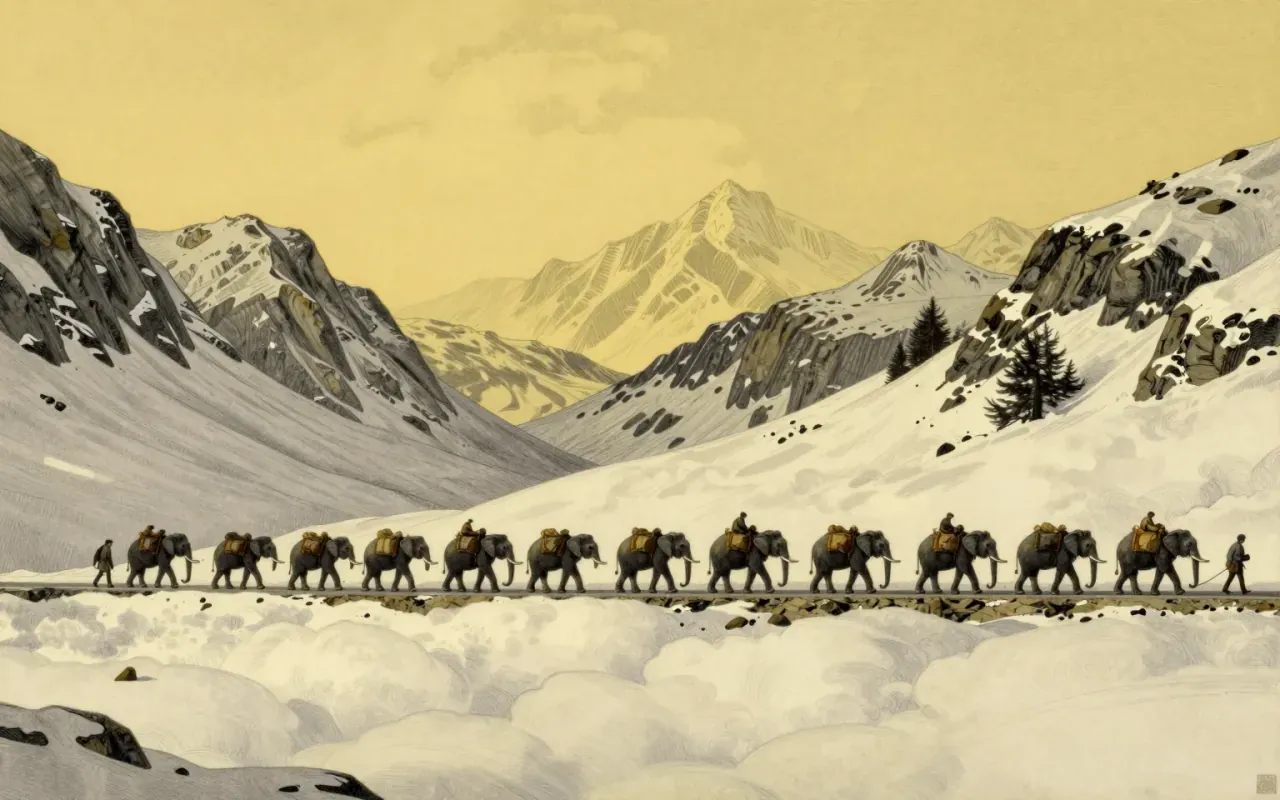
Hannibal led Carthaginian forces across the Alps into Italy in 218 BC and won a string of victories, most famously at Cannae, before spending over a decade occupying southern Italy without ever taking Rome itself. Recalled to Africa, he was defeated at Zama in 202 BC, and everything known about his campaigns and motives comes from Greek and Roman historians rather than any surviving Carthaginian source.

13:00

Julius Caesar

100–44 BC

Julius Caesar rose through Roman political and military office in the first century BC, conquered Gaul in the 50s BC, and then led an army against the Senate and his former ally Pompey in a civil war that made him dictator of Rome. He was assassinated by a group of senators, including Brutus and Cassius, on the Ides of March in 44 BC. The fullest evidence for his career comes partly from his own self-justifying commentaries and partly from biographers writing more than a century later.

13:00

Marcus Aurelius

121–180

Adopted as heir in 138 and made emperor in 161, Marcus Aurelius spent much of his nineteen-year reign fighting wars in the east and along the Danube while a severe epidemic killed millions across the empire. His private notebook, the Meditations, records a Stoic-trained mind working through the burdens of rule, but the actual chronicle of his reign rests on other, less personal sources whose own reliability historians still weigh carefully.

culture.briefs Culture

All 3 in culture →
9:03

Forum (Roman)

The Roman forum wasn’t democratic—it was mandatory infrastructure for control.
10:45

Culture of Italy

Italy didn’t invent Western culture—it built the first operating systems for it.
8:36

Neoclassicism

Neoclassicism didn’t revive antiquity—it repackaged archaeology as political architecture.

food.briefs Food

All 2 in food →
1:36

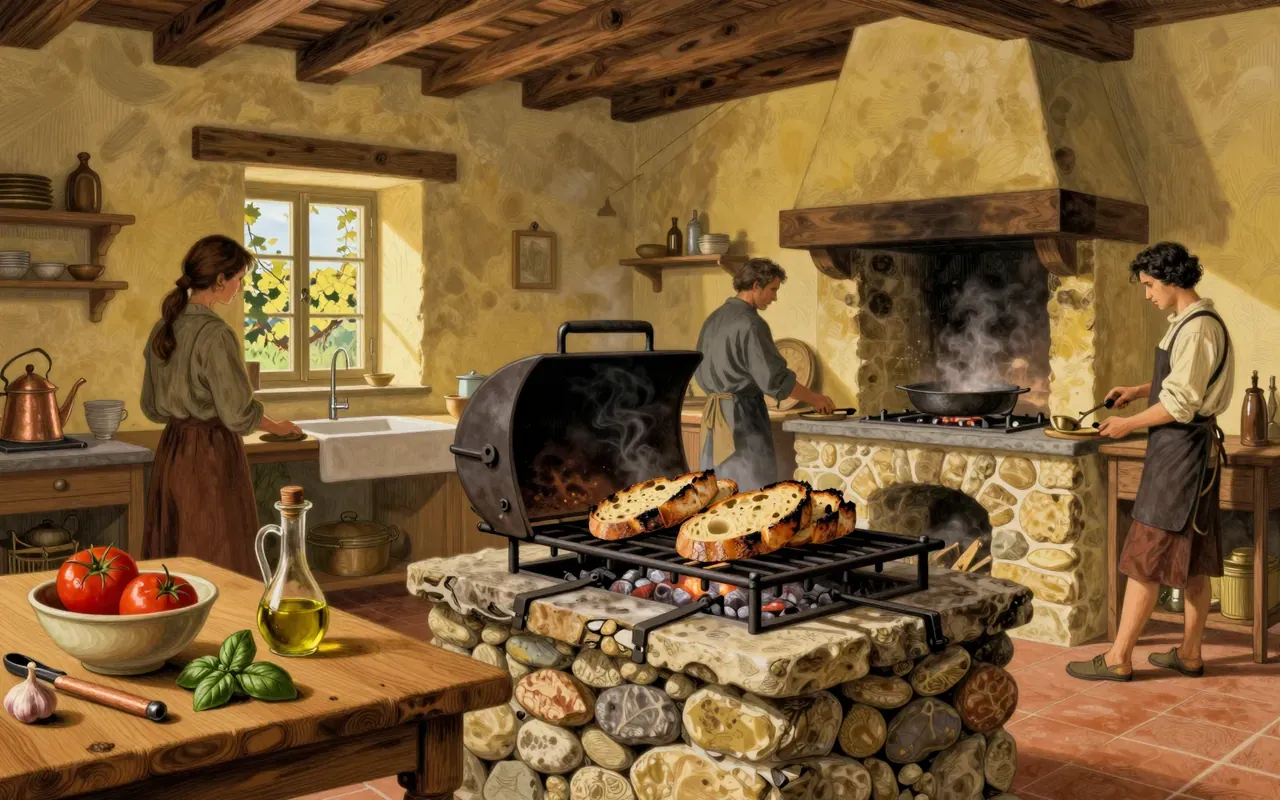
Bruschetta

An Italian antipasto of grilled bread rubbed with garlic and dressed with olive oil and salt, often topped with tomatoes or other regional ingredients.
9:14

Pâté

Pâté is not luxury—it’s logistics disguised as lunch.