briefs
Topic · across the network

Abstraction

Leaving the visible world behind, on purpose.

407
briefs
11
subjects
10:02
average
4086 min
in total
Abstraction 407Absurdism 137Acoustics 220Acting 65Adaptation 372Addiction 95Adolescence 202Advertising 77Age of exploration 14Ageing 113Agriculture 100Algorithms 114Ambition 46Anarchism 38Ancient Egypt 17Ancient Greece 38Ancient Rome 30Animals 172Anthropology 23Apartheid 12Architecture 165Archives 32Argentina 10Art Deco 26Artificial intelligence 78Astronomy 81Attention 42Australia 32Automation 73Avant-garde 164Aviation 79Banking 72Banned works 40Bauhaus 12Beer 5Behavioural economics 22Berlin 16Big tech 6Biodiversity 136Biography 86Birds 41Black holes 20Blockchain 12Boxing 14Branding 77Brazil 43Bread 29Britain 131Brutalism 4Bubbles 3Buddhism 28Byzantium 10California 17Canada 18Capitalism 94Cars 468Celebrity 59Censorship 110Cheese 24Chefs 9Chemistry 104Chess 2Childhood 87China 109Chocolate 8Christianity 49Cinematography 343Cities 90Class 485Climate change 107Club culture 100Cocktails 2Coffee 11Cognitive bias 14Collecting 16Colonialism 284Colour 42Comedy 89Community 52Complexity 21Computing 309Consciousness 16Conservatism 14Conspiracy theories 8Cooking 178Corruption 38Cosmology 31Cover versions 64Craft 116Crate digging 42Creativity 8Crime 234Cryptocurrency 8Cryptography 24Cuba 10Cybersecurity 30Dada 12Debt 38Decision-making 28Decolonisation 46Deep time 80Democracy 45Denim 16Deserts 45Detroit 17Dinosaurs 12Directing 168Disasters 59Disease 109DJ culture 89Dreams 32Drones 5Drum machines 96Dystopia 69East Africa 28Ecology 337Economics 36Editing 72Education 92Egypt 12Electric vehicles 59Emotion 22Empire 92Endurance 49Energy 120Engineering 541Entropy 8Epidemics 13Equality 9Espionage 31Ethics 44Evolution 174Existentialism 106Expertise 2Exploration 49Extinction 23Failure 37Family 240Fandom 22Fascism 45Fashion 215Fast fashion 12Fear 34Feminism 122Fermentation 126Film music 81Fishing 12Folklore 71Food history 588Football 16Forests 31Forgery 7France 163Fraud 15Free will 13Freedom 16French literature 15Friendship 24Furniture 36Gambling 14Gender 63Generations 28Genetics 87Geology 96Germany 66Globalisation 74Gothic 32Greece 5Grief 126Habits 6Happiness 2Hardware 709Haute couture 22Headphones 8Hi-fi 12Hinduism 12Hoaxes 1Human history 23Human nature 41Identity 138Illustration 8Impressionism 6Improvisation 249India 89Indonesia 15Industrial design 342Inequality 13Inflation 4Information 34Infrastructure 280Insects 29Intelligence 8Interiors 31Internet culture 88Invention 329Iran 41Islam 40Islands 17Israel 9Italy 52Jamaica 10Japan 114Jewellery 5Journalism 34Judaism 13Justice 42Korea 41Language 70Law 90Leadership 20Learning 6Liberalism 1Libraries 6Literary criticism 26London 12Loneliness 61Los Angeles 62Lost works 9Love 67Luxury 55Machine learning 15Management 10Maps 5Marketing 21Markets 51Mars 6Marxism 26Masculinity 46Materials 138Mathematics 79Meaning 6Medicine 124Memory 82Mental health 70Mesopotamia 4Mexico 38Migration 95Minimalism 68Mining 30Misinformation 9Modernism 63Money 24Monopoly 32Mortality 61Motivation 2Mountains 16Museums 27Mysticism 11Mythology 60Nationalism 40Neuroscience 23New York 36Nigeria 7Nihilism 10Noise 31Nostalgia 33Nuclear 29Nutrition 17Oceans 48Oil 42Open source 45Painting 18Palaeontology 29Parenting 14Paris 18Partition 6Patents 71Patronage 14Perception 44Personal style 27Personality 2Persuasion 8Peru 10Philosophy 77Photography 37Physics 206Plants 26Platforms 89Podcasting 1Poetry 25Poland 17Policing 34Pop Art 16Populism 2Portraiture 6Portugal 18Postmodernism 23Power 91Prehistory 24Preservation 28Printmaking 21Privacy 11Probability 6Productivity 1Programming 54Prohibition 1Propaganda 35Protest 75Pseudoscience 17Psychology 80Publishing 22Punishment 16Quantum mechanics 44Race 145Radio 30Railways 35Rave 17Realism 47Record labels 19Recording 810Relativity 23Religion 154Resilience 15Restaurants 30Restoration 2Retail 94Revolution 58Risk 18Ritual 96Robotics 26Romance 96Russia 58Salt 9Sampling 246Satire 84Scandinavia 28Scientific method 186Screenwriting 26Sculpture 7Secularism 2Self-deception 14Semiconductors 73Sexuality 102Ships 18Silence 24Silicon Valley 17Slavery 35Sleep 2Smartphones 27Sneakers 15Social media 58Socialism 9Software 68Songwriting 180Sound design 332Sound systems 20South Africa 19South East Asia 30Space exploration 84Spain 18Special effects 41Spices 62Spirits 12Sport 82Startups 21Statistics 10Status 9Stoicism 4Storytelling 68Strategy 70Street food 99Streetwear 16Studio craft 508Subcultures 59Sugar 12Supply chains 115Surrealism 53Surveillance 21Sustainability 30Synthesis 232Tailoring 37Taxation 14Tea 24Textiles 97Thailand 11The American Revolution 19The American South 88The Arab world 41The Arctic 19The Balkans 17The Belle Epoque 13The body 29The brain 26The Caribbean 28The civil rights movement 62The Cold War 160The eighties 268The Enlightenment 29The financial crisis 19The First World War 39The food industry 157The French Revolution 9The Gilded Age 9The Great Depression 18The Holocaust 20The Industrial Revolution 93The internet 61The interwar years 135The Middle Ages 35The Moon 4The music business 169The Netherlands 10The nineties 26The Olympics 10The pandemic 13The Reformation 1The Renaissance 16The Russian Revolution 19The Second World War 102The seventies 58The sixties 28The space race 5The United States 19The universe 7The Victorian era 37Therapy 20Tokyo 11Trade 48Tragedy 22Translation 5Trauma 85Travel 5True crime 2Turkey 18Typography 54Uniforms 23Unions 8Urban planning 66Utilitarianism 1Utopia 5Vaccines 10Vegetarianism 15Venture capital 6Video games 291Vietnam 12Vintage 65Vinyl 6Virtual reality 11War 169Watches 4Water 11Weather 29West Africa 29Wilderness 10Wine 3Work 22Workwear 19Worldbuilding 121

music.briefs Music

All 112 in music →
9:33

Ágætis byrjun

Sigur Rós · 1999

Ágætis byrjun is Sigur Rós’s second studio album, recorded between summer 1998 and spring 1999 with producer Ken Thomas. It marks a stylistic shift from Von, introducing Jónsi’s cello-bowed guitar and orchestration including a double string octet. It features self-reference (backmasked title track in the intro; 'Avalon' as a slowed alternate take of 'Starálfur'), palindromic strings on 'Starálfur', and vocals in Icelandic except for 'Olsen Olsen' and the final section of the title track, both in Vonlenska. It brought international acclaim, spread by word of mouth, and appeared in Vanilla Sky and The Life Aquatic.
9:56

Arepa 3000: A Venezuelan Journey Into Space

Los Amigos Invisibles · 2000

Los Amigos Invisibles’ Arepa 3000: A Venezuelan Journey Into Space is a 2000 studio album produced by Philip Steir. It won a Latin Grammy for Best Rock Album and received a Grammy nomination for Best Latin Alternative Album. Its sound is tightly arranged, groove-first, and sonically frictionless — built for repeat listening and film placement, not deep excavation.

8:59

Chet Baker Sings

Chet Baker · 1954

Chet Baker Sings is a 1954 Hollywood studio session where Baker—previously almost exclusively a trumpeter—recorded eight ballads as both singer and player. Russ Freeman selected the songs and played piano and celesta. Baker struggled to sing in tune, requiring many takes. Freeman dismissed the project as 'bullshit' compared to Armstrong or Teagarden; Ruth Young observed the lyrics held no meaning for Baker—they were 'mere notes'. The record foregrounds musical abstraction over vocal expression or narrative. It was released by Pacific Jazz Records, drew criticism, and nonetheless helped make Baker the readers’ top jazz vocalist of 1954.

9:42

Concerto for Orchestra

Bartók · 1956

No recording is described. Only the 1943 composition is verified — commissioned by Koussevitzky, premiered by the Boston Symphony Orchestra in 1944, scored for symphony orchestra, structured in five movements, and defined by rotating soloistic emphasis. Everything else — sound, performance, recording, interpretation — is absent from the evidence.

11:32

Country Life

Roxy Music · 1974

Country Life is Roxy Music’s fourth studio album, released on 15 November 1974. It entered the US Billboard 200 Top 40 at No. 37. Rolling Stone described it as 'a cabaret for psychotics'. Its sound features Eddie Jobson’s flanged violin, German oom-pah band passages, Elizabethan textures, and boogie-blues edges. The title and cover parody the British magazine Country Life. The original cover caused US retailers to wrap the album in opaque plastic. An alternative forest-only cover was later issued.
9:43

Eli and the Thirteenth Confession

Laura Nyro · 1968

Laura Nyro’s 1968 album Eli and the Thirteenth Confession is a densely layered, piano-driven work built from multi-tracked vocals, strings, and a rotating ensemble of session players. It merges pop form with avant-garde jazz sensibility and centres on themes of passion, love, death, and drugs. Widely regarded as one of her best works, it was written entirely by Nyro and arranged and co-produced by Charlie Calello.

9:04

Fontessa

The Modern Jazz Quartet · 1956

Fontessa is the Modern Jazz Quartet’s 1956 Atlantic debut: their first formal guest collaboration (with Jimmy Giuffre), their first album after moving from Prestige, and their first recording following their 1956 European debut tour. The 11-minute title suite was composed by John Lewis and inspired by Commedia dell’arte, with its four characters illustrated on the cover. Lewis described it as a suite whose sketchy plot invites improvisation. The Prelude opens and closes the work. Harlequin is evoked by vibraphone improvisation in older jazz style. Pierrot appears in piano-led 'less older jazz'. Pantaloon emerges in drum-led 'still later jazz', developing the main motif. Colombine is represented by the recurring three-note 'Fontessa' motif. The mono version was issued in the USA on Atlantic’s black label, catalogue number 1231. The stereo release contained technical flaws: mains hum, tape hiss, and reduced bass level.

11:27

Fox Confessor Brings the Flood

Neko Case · 2006

Fox Confessor Brings the Flood is a tightly controlled act of withholding — in lyric, structure, and space. Its power lies in what it omits, not what it declares.

film.briefs Film

All 22 in film →
13:00

71 Fragments of a Chronology of Chance

Michael Haneke · 1994

Michael Haneke’s 1994 Austrian drama arranges thirty-seven fragmented scenes — intercuts of Viennese lives, real news footage, and black pauses — into a chronology that culminates in a bank shooting. Shot by Christian Berger and edited by Marie Homolkova, it avoids psychology and music, presenting migration, isolation, and mediated violence as systemic conditions rather than personal tragedies. Set in Vienna between October and December 1993, it forms the final part of Haneke’s early trilogy. Winner of the Sitges Film Festival’s Best Feature and Best Screenplay awards, and the Gold Hugo at Chicago.

13:00

Being There

Hal Ashby · 1979

Hal Ashby’s 1979 adaptation of Jerzy Kosiński’s novel follows Chauncey Gardiner, a sheltered gardener mistaken for a sage after stepping into Washington society. Peter Sellers delivers a performance of radical stillness, while the film’s craft — cinematography, editing, score — enforces a tone of calm, unblinking observation. It is satire without ridicule, comedy without punchlines, and a portrait of meaning-making as collective fiction.

13:00

King Lear

Jean-Luc Godard · 1987

Jean-Luc Godard’s 1987 King Lear is a ninety-minute essay-film shot in Switzerland, using only shards of Shakespeare’s text alongside quotations from Weil, Bresson, Woolf, and others. It rejects narrative continuity, linear character arcs, and cinematic convention in favour of repetition, silence, and deliberate disjunction. Funded by Cannon Films and shot alongside denim commercials, it treats money, copyright, and authorship as structural elements. Norman Mailer’s abandoned script and departure mid-production are woven into its fabric. The film is less about Lear than about the conditions under which any cultural work can be made—or remembered—after catastrophe.

13:00

Naqoyqatsi

Godfrey Reggio · 2002

Naqoyqatsi (2002), the final film in Godfrey Reggio’s Qatsi trilogy, uses digitally manipulated archive footage and Philip Glass’s cello-led score to argue that modern life operates under a regime of ‘civilized violence’: abstraction, competition, and technological acceleration displacing embodied reality. Edited by Jon Kane and produced by Reggio, it abandons the observational style of its predecessors for a collage of stock, surveillance, and CGI imagery. Its reception was divided — critics called it the trilogy’s weakest — yet its formal rigour and thematic persistence make it a singular, unsettling document of early-digital consciousness.

13:00

Orderly or Disorderly

Abbas Kiarostami · 1981

Orderly or Disorderly is a seventeen-minute 1981 Iranian short film by Abbas Kiarostami. Using a single courtyard, two groups of children and young adults, and a static camera, it compares structured and unstructured movement — one group walking in line, the other moving freely. There is no dialogue beyond instruction, no music, no editing within sequences. The film is a precise, quiet study of social patterning, asking what emerges when rules are given, withdrawn, or merely drawn on the ground.

13:00

Punch-Drunk Love

Paul Thomas Anderson · 2002

Paul Thomas Anderson’s 2002 film stars Adam Sandler as Barry Egan, a socially anxious novelty-plunger entrepreneur in Los Angeles whose life fractures and reforms around an unexpected romance with Emily Watson’s Lena. Shot in 95 tightly controlled minutes, it uses Jon Brion’s dissonant score, Jeremy Blake’s abstract interludes, and a meticulously restrained performance from Sandler to explore loneliness, familial pressure, and love as destabilising force — not resolution.

13:00

Sans Soleil

Chris Marker · 1983

Sans Soleil (1983) is Chris Marker’s 100-minute French essay-film, structured around letters from a fictional cameraman and narrated by Florence Delay. Shot on silent 16mm and edited with found footage from Japan, Guinea-Bissau, Iceland and Paris, it explores memory’s fragility through juxtaposition, colourisation and Moog-scored stillness — not as documentary exposition but as a sustained, self-aware meditation on what images remember and forget.

13:00

So Can I

Abbas Kiarostami · 1975

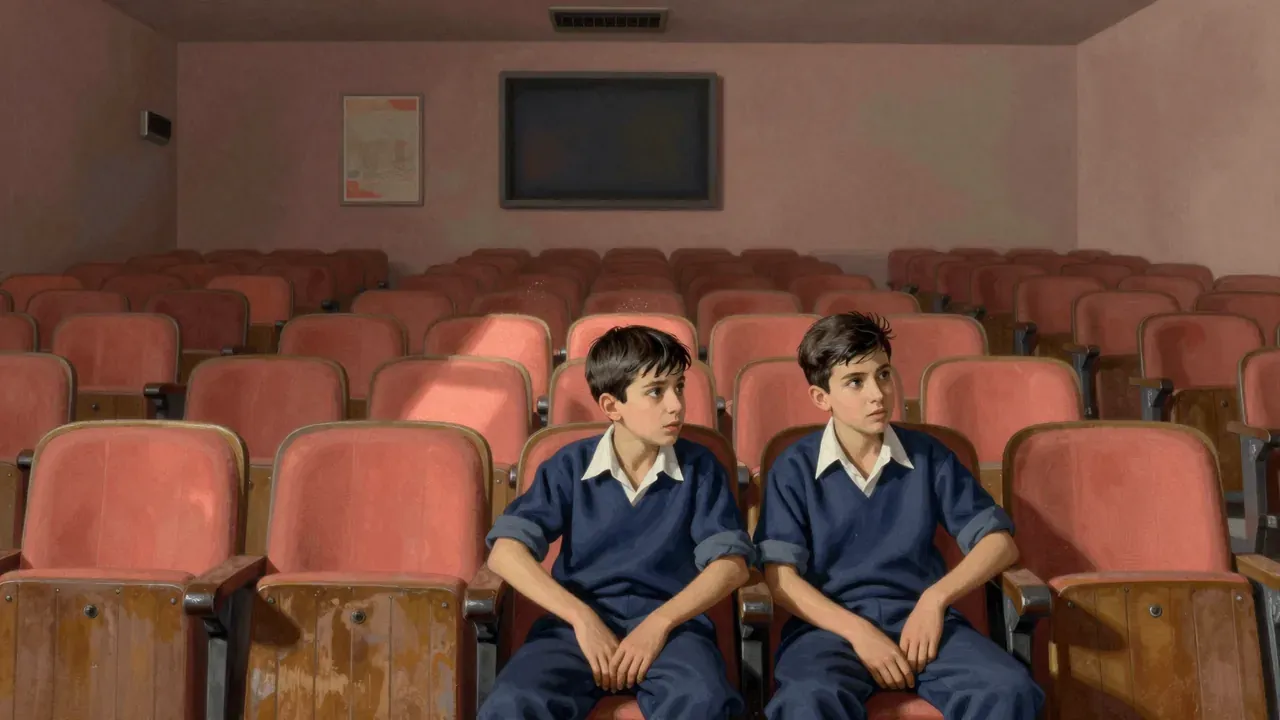
So Can I (1975) is a seventeen-minute Iranian short by Abbas Kiarostami, following two boys watching an educational cartoon. One boy repeatedly asserts 'So can I' in response to animals’ actions—until birds fly across the screen, and he falls silent. The film ends with an aeroplane circling overhead. Made for Kanun, it treats childhood cognition with formal rigour: no narration, no adult presence, no resolution—only repetition, silence, and a single, resonant visual rupture.

science.briefs Science

All 24 in science →
10:48

Ada Lovelace

Lovelace didn’t write code — she wrote the first argument for what code could mean.
9:03

Claude Shannon

Shannon didn’t invent the computer — he proved electricity could think.
10:06

David Hilbert

Hilbert didn’t build tools—he built the rules for building tools, and then proved some tools can’t be built at all.
10:44

Dmitri Mendeleev

Mendeleev didn’t discover elements — he discovered how to think like nature thinks.
10:47

Emmy Noether

Noether didn’t just find links between symmetry and conservation—she rebuilt mathematics so those links were inevitable.
10:54

Évariste Galois

Galois didn’t just solve an old problem — he invented the language to say why some problems can’t be solved at all.
10:57

Felix Klein

Klein didn’t discover space—he discovered how to stop arguing about it.

design.briefs Design

All 34 in design →
9:49

Constructivism (art)

Constructivism isn’t about looking modern — it’s about building society with rivets, type, and montage.
10:08

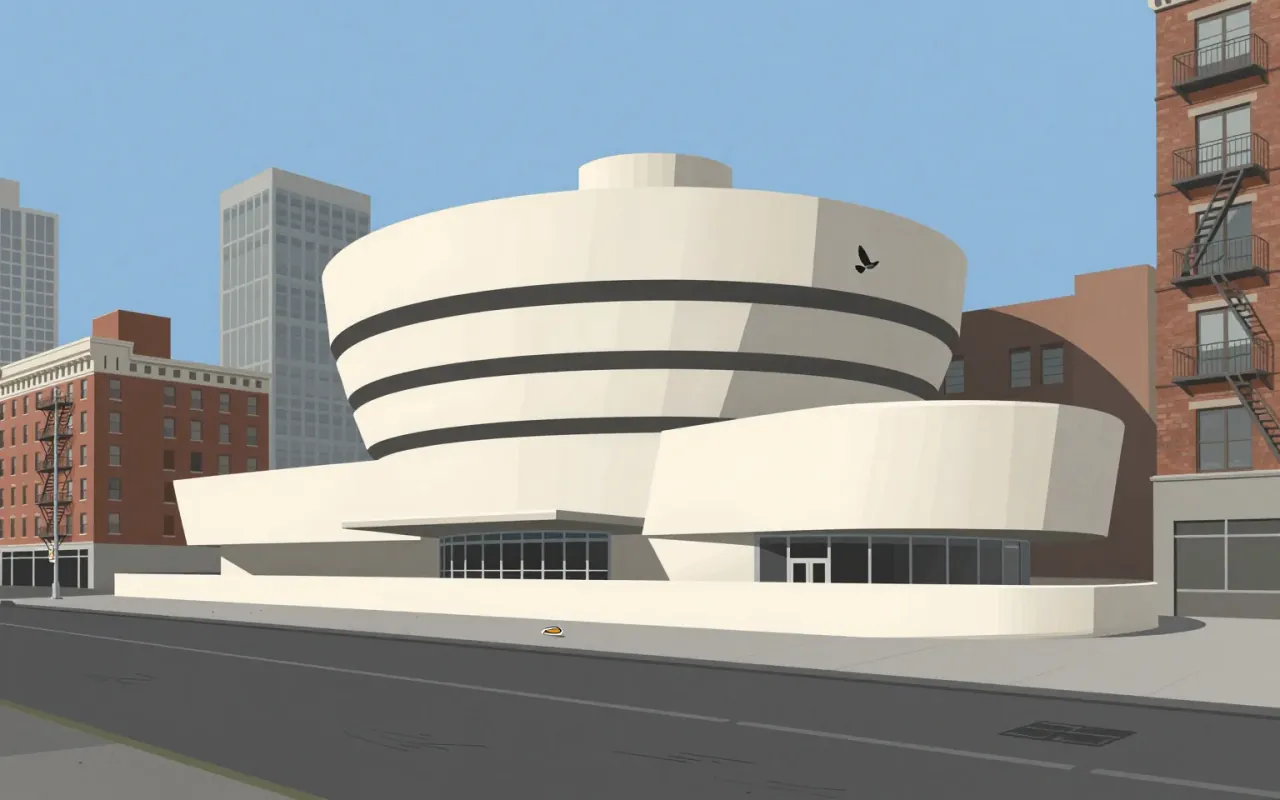
Solomon R. Guggenheim Museum

Frank Lloyd Wright · 1937

The Solomon R. Guggenheim Museum is Frank Lloyd Wright’s most recognized masterpiece. Built in New York City and completed in 1959, it features a helical ramp surrounding an open-air atrium. Wright designed it over 15 years, using more than 700 sketches and six sets of working drawings. The commission came from Hilla von Rebay, who envisioned a 'temple of spirit' enabling a new way of seeing modern art. Wright incorporated geometric motifs — squares, circles, rectangles, triangles, lozenges — each assigned symbolic meaning. Visitors ride an elevator to the top and descend the ramp, experiencing the gallery itself as a work of art. The building drew controversy for its unusual display spaces and remains a landmark of 20th-century architecture.

9:38

Tube map

Harry Beck · 1931

A diagrammatic map of London's rapid transit network, designed in 1931 by Harry Beck. It is not a geographic map. It is a navigational tool that reduces the network to connections, sequence, and interchange points.

11:14

Memphis Group

Ettore Sottsass · 1981

The Memphis Group was a short-lived but decisive intervention: a collective rejection of Modernist austerity, built on accessible materials, shared drawing, and irreverent references. Its durability lies not in longevity but in how precisely it named the limits of ‘good taste’ — then stepped past them.

10:38

Swoosh

Carolyn Davidson · 1972

The Swoosh is a 1971 graphic design solution to a specific client request: motion, differentiation from Adidas, speed of execution. It succeeded not as an expression of personality or craft, but as a functional answer to a narrow constraint — and its longevity reveals more about brand consolidation than design innovation.

games.briefs Games

All 98 in games →
8:44

Bubble Shooter

Ilyon Dynamics · 2002

Bubble Shooter is a 2002 puzzle game by Absolutist, later expanded by Ilyon Dynamics. It asks players to clear marbles by matching three or more of the same colour before they reach the bottom line. It has four difficulty levels and two scoring modes: Classic (no limits) and Sniper (fewest shots wins).

11:11

Shin Megami Tensei: Digital Devil Saga

Atlus · 2004

Digital Devil Saga is a system-first RPG duology that treats combat as arithmetic and progression as inventory management. It runs on the PlayStation 2. It was made by Atlus’s Creative Department 1st Production (Team Maniax). It is a spin-off of the Megami Tensei series. It asks players to master a tight, punishing loop—not to lose themselves in a world.

7:58

Doom (1993 video game)

id Software · 1993

Doom (1993) is a first-person shooter for MS-DOS and Windows developed by id Software. It uses a 2.5D engine: environments render in 3D perspective but movement is confined to a 2D plane, and enemies are 2D sprites using billboarding. Players assume the role of a space marine fighting demons and possessed undead humans across labyrinthine levels grouped into episodes, each ending in a boss fight. Completion requires reaching a marked exit room while managing limited ammo, health, and armor—and avoiding hazards like toxic waste and crushing ceilings. Five difficulty levels scale enemy count, damage, speed, and aggression. The game supports cooperative and deathmatch multiplayer over local networks and modding via WAD files. Its design prioritises fast-paced action over narrative, with minimal plot conveyed through inter-episode text.

9:37

Indy 500 (1977 video game)

Atari · 1977

Indy 500 (1977) is a cartridge for the Atari 2600 offering fourteen variations across four gameplay modes — Race Car, Crash n' Score, Tag, and Ice Race — each defined by distinct win conditions, player configurations, and physics constraints.

8:25

Journey (2012 video game)

Thatgamecompany · 2012

Journey is a PlayStation 3 game where a cloaked figure walks across a desert toward a distant mountain. Flight is enabled by a magical scarf whose charge depletes and recharges near red cloth or glowing symbols. Players may meet one anonymous co-player per session, cooperating silently through chimes that transform cloth to alter the world — opening paths or levitating players — with no speech, text, or visible names until the credits.

9:20

Kirby 64: The Crystal Shards

Nintendo · 2000

Kirby 64: The Crystal Shards is a 2000 Nintendo 64 platformer developed by HAL Laboratory. It uses 3D rendering but locks movement to a 2D plane. Players collect 98 crystal shards across six worlds using Kirby’s core actions—walk, jump, inhale, fly—and seven copy abilities. Power Combos let players mix two abilities for 28 possible effects. Vehicle-based segments include riding King Dedede’s back, minecarts, and log flumes. Controls use the D-pad exclusively, following usability testing with children. All shards must be collected to reach the final boss and true ending.

9:26

Marvel vs. Capcom: Clash of Super Heroes

Capcom · 1998

Marvel vs. Capcom: Clash of Super Heroes is a 1998 2D tag-team fighting game developed by Capcom’s Division 2 for the CP System II arcade system. Players select two fighters, swap between them mid-match, and rely on off-screen regeneration and randomly assigned guest characters with limited uses. It introduces the simultaneous 'Variable Cross' attack and grants unlimited use of the Hyper Combo Gauge. Its 2D animated cartoon-style graphics follow Capcom’s post-Darkstalkers aesthetic.

technology.briefs Technology

All 51 in technology →
9:44

API

APIs are not magic glue—they are brittle contracts that work only when someone enforces the abstraction.
9:20

Chiplet

Chiplets don’t replace Moore’s Law—they bypass it with Lego logic and yield math.
10:14

Relational model

Codd · 1969

Codd’s 1969 relational model is a formal specification—not software, not SQL, not a product. It defines data as tuples in relations, enforces consistency via logic, and insists all information be explicit. Real databases violate it daily. That gap is where data engineering begins.

9:22

Domain Name System

Paul Mockapetris

DNS is the distributed name-resolution system invented by Paul Mockapetris in 1983. It replaced the ARPAnet’s central hosts file. It uses a hierarchical zone model and originally ran over UDP. Later concerns about reliability, security, and privacy drove TCP use and protocol extensions. RFCs 882, 883, 973, 1034, and 1035 define its evolution. Mockapetris implemented the first version, 'Jeeves', for TOPS-20 the same year.

10:49

REST

Roy Fielding

REST is Roy Fielding’s 2000 architectural style for the Web. It defines constraints—not rules—to diagnose scalability failures in distributed hypermedia systems. Its power lies in exposing gaps between promise and practice, especially around statelessness and HATEOAS. Most so-called RESTful APIs ignore its core mechanism: hypermedia-driven state transitions.

9:03

Internet protocol suite

Vint Cerf and Bob Kahn · 1975

TCP/IP is a layered framework for end-to-end data communication. It specifies how data should be packetised, addressed, transmitted, routed, and received. Its architecture rests on the end-to-end principle—placing intelligence at the edges—and uses encapsulation and the robustness principle (conservative sending, liberal receiving) to achieve interoperability across heterogeneous networks. Developed by Cerf and Kahn starting in 1973 under DARPA, it replaced the ARPANET's NCP with a modular, host-responsible reliability model. IPv4 was installed in the ARPANET in 1983, and TCP/IP was formally adopted as the US DoD standard in March 1982. The defining technical specifications are RFC 1122 and RFC 1123, which codify its four-layer abstraction model.

9:54

Terraform (software)

HashiCorp

Terraform is infrastructure-as-code software developed by HashiCorp in 2014. It uses declarative configuration (HCL or JSON) and provider plugins to manage infrastructure across clouds and on-prem systems. It shifted from MPL 2.0 to BUSL on 10 August 2023, restricting commercial use by competitors and prompting the OpenTofu fork. It supports automation in large-scale service-oriented development but requires strict state management and does not enforce security or runtime behaviour.

10:55

Metaverse

The metaverse is a dead architecture — promised as universal, delivered as fragmented, abandoned before it shipped.

culture.briefs Culture

All 28 in culture →
8:38

Cultural movement

Cultural movements don’t organise—they ripple. And that’s why most things called 'cultural movements' aren’t.
8:33

Mandala

A ritual geometry that maps the cosmos—and then erases itself. Not art. Not therapy. A discipline disguised as symmetry.
10:14

Minimalism (visual arts)

Minimalism didn’t strip art down to purity—it stripped away the artist’s hand to install the object as authority.
9:57

Mosaic

Mosaic is not decoration—it’s the oldest surviving method of turning colour into architecture.
8:02

Post-Impressionism

The label for French painting from 1886 to 1905 that kept Impressionism's vivid colour and threw out its naturalistic light.
8:47

Post-Internet

It’s not after the internet—it’s inside it, breathing the same air as your browser, your silk scarf, and your 3D-printed sculpture.
10:14

Rangoli

Rangoli is not decoration. It is a threshold discipline: ritual, hygiene, spinal exercise and deity invitation—all in one morning gesture.

automotive.briefs Automotive

All 4 in automotive →
8:25

Ferrari Modulo

Paolo Martin · 1970

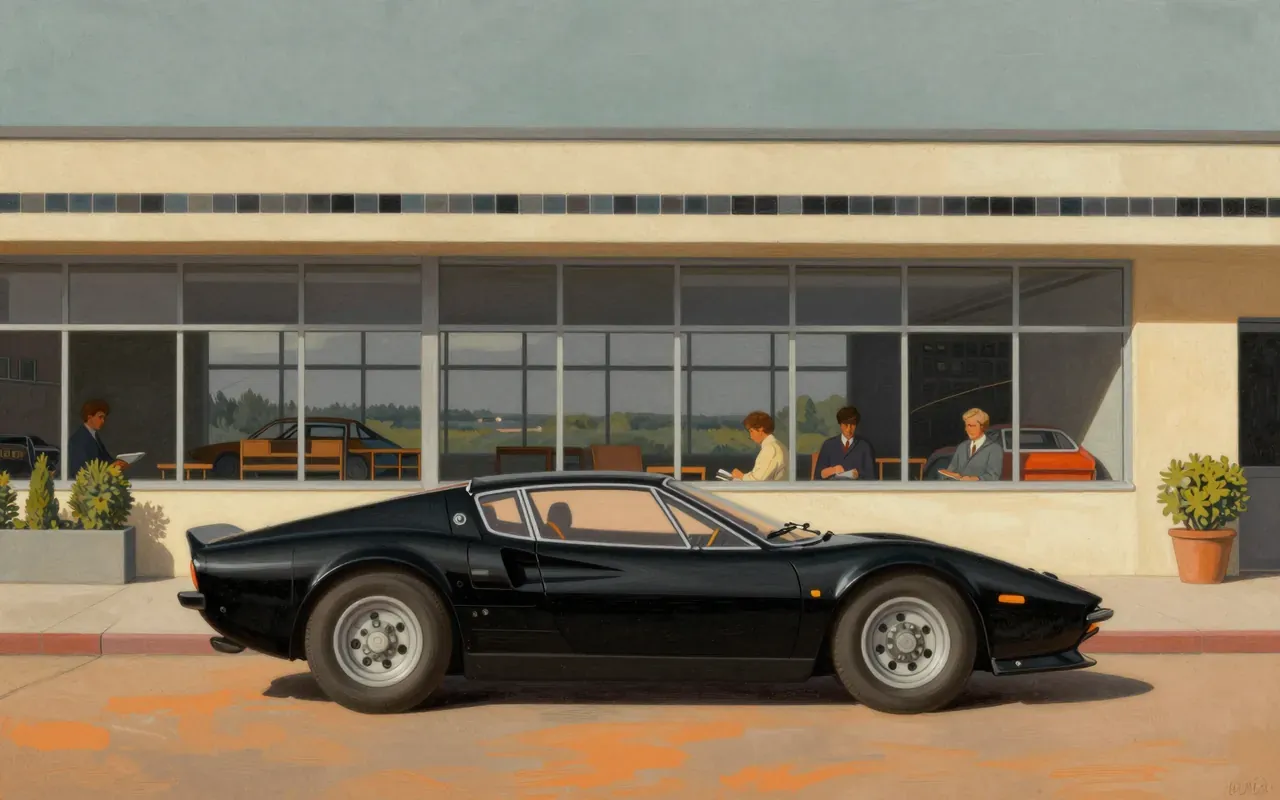
The Ferrari Modulo is a static concept car built by Pininfarina on a de-powered Ferrari 512 S chassis. It debuted black at Geneva 1970. Its wedge shape, sliding canopy and exposed V12 defined a new visual language — one that influenced 1970s car design more than any production model.

9:36

Audi TT

Freeman Thomas · 1998

Audi TT (1998) — Freeman Thomas co-design. Front-engine, transverse, FWD or quattro. Coupé and roadster. Built on VW Group A-platforms. Named after Isle of Man TT.

10:21

Cizeta-Moroder V16T

Marcello Gandini · 1991

The Cizeta-Moroder V16T is a self-contained argument in sheet metal and alloy: that a car’s reason for being can be singular, uncompromising, and entirely divorced from utility.

10:08

Renault Avantime

Patrick Le Quément · 2001

The Renault Avantime is a 2001 one-box grand tourer marketed by Renault and designed and manufactured by Matra. Patrick Le Quément led its design. It combines estate space with four-place pillarless coupé qualities. It features an aluminium structure, aluminium panels for the greenhouse, and a full sunroof of strengthened heat-reflecting glass. As a one-box design without B-pillars, it blends MPV, estate, or shooting brake elements with 2+2 coupé style and convertible elements. Renault self-described it as a grand tourer.

audio.briefs Audio

All 17 in audio →
8:44

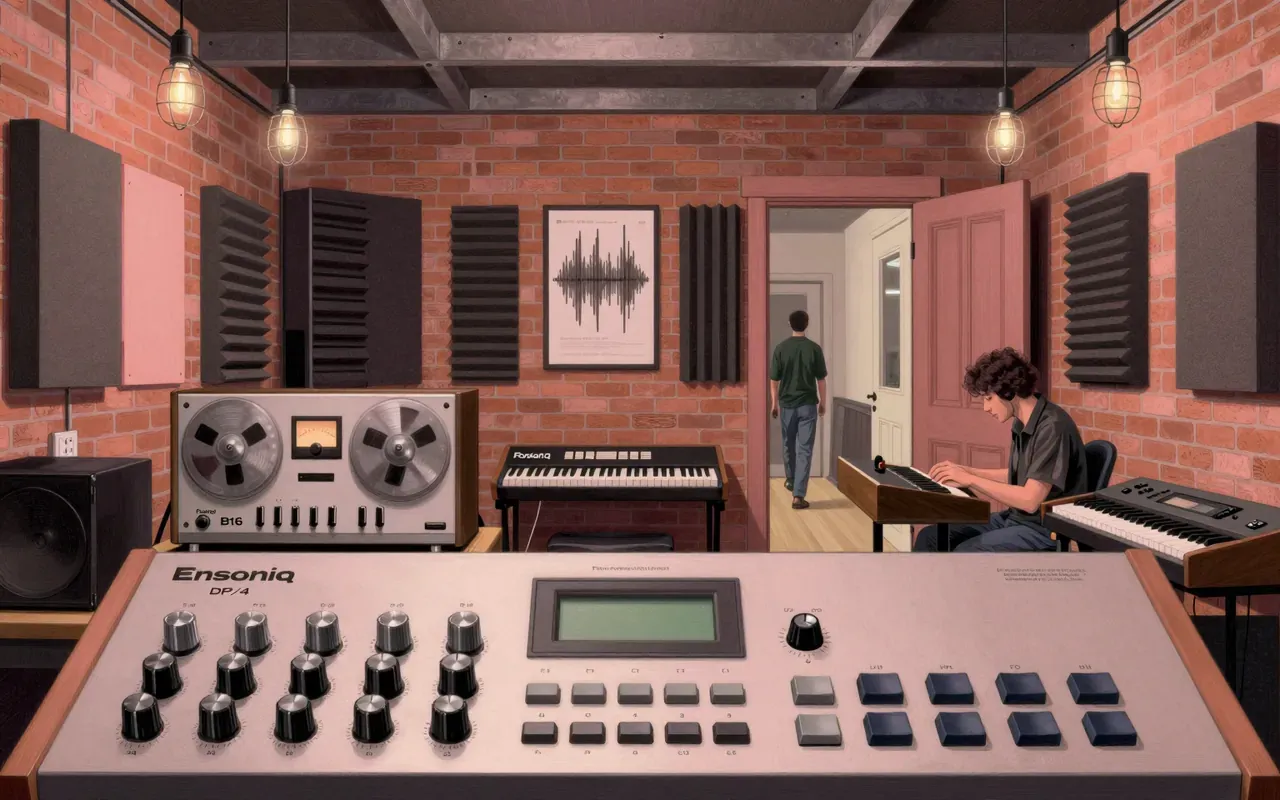
Ensoniq DP/4

Ensoniq

The Ensoniq DP/4 is a rack-mounted digital multi-effects processor. It uses four 24-bit DSPs to process four signals in parallel. Input gain is adjustable for saturation. Effects are intentionally non-realistic. Transformer noise occurs when idle. Front-panel editing is cumbersome. MIDI control via MIDIQuest is unreliable. The manual is unusable. An internal battery is user-replaceable.

9:01

Buchla Music Easel

Buchla

The Buchla Music Easel is an analog synth with no technical specifications. That is all that is verified.

6:57

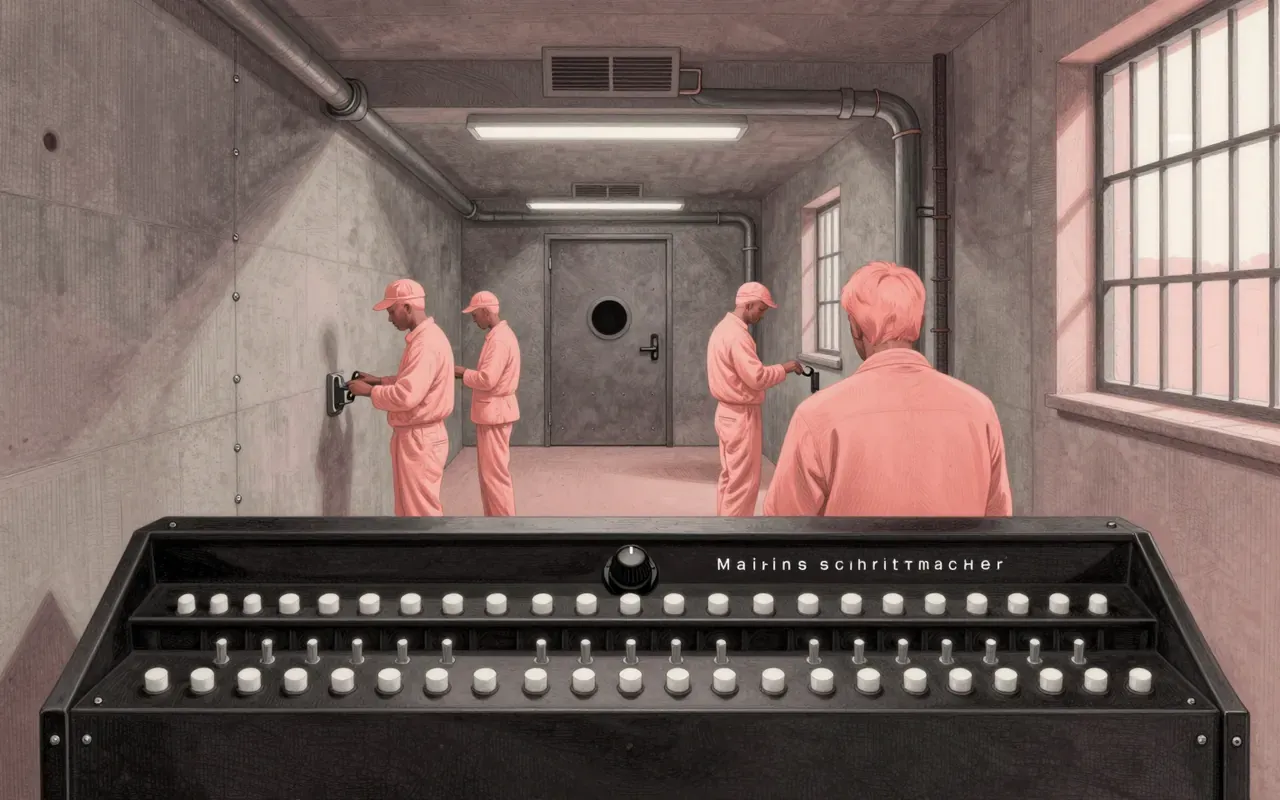
Manikin Electronic Schrittmacher

Manikin Electronic

The Schrittmacher is a sequencer made by Manikin Electronic. No technical specifications are available. That is all that is known.

9:41

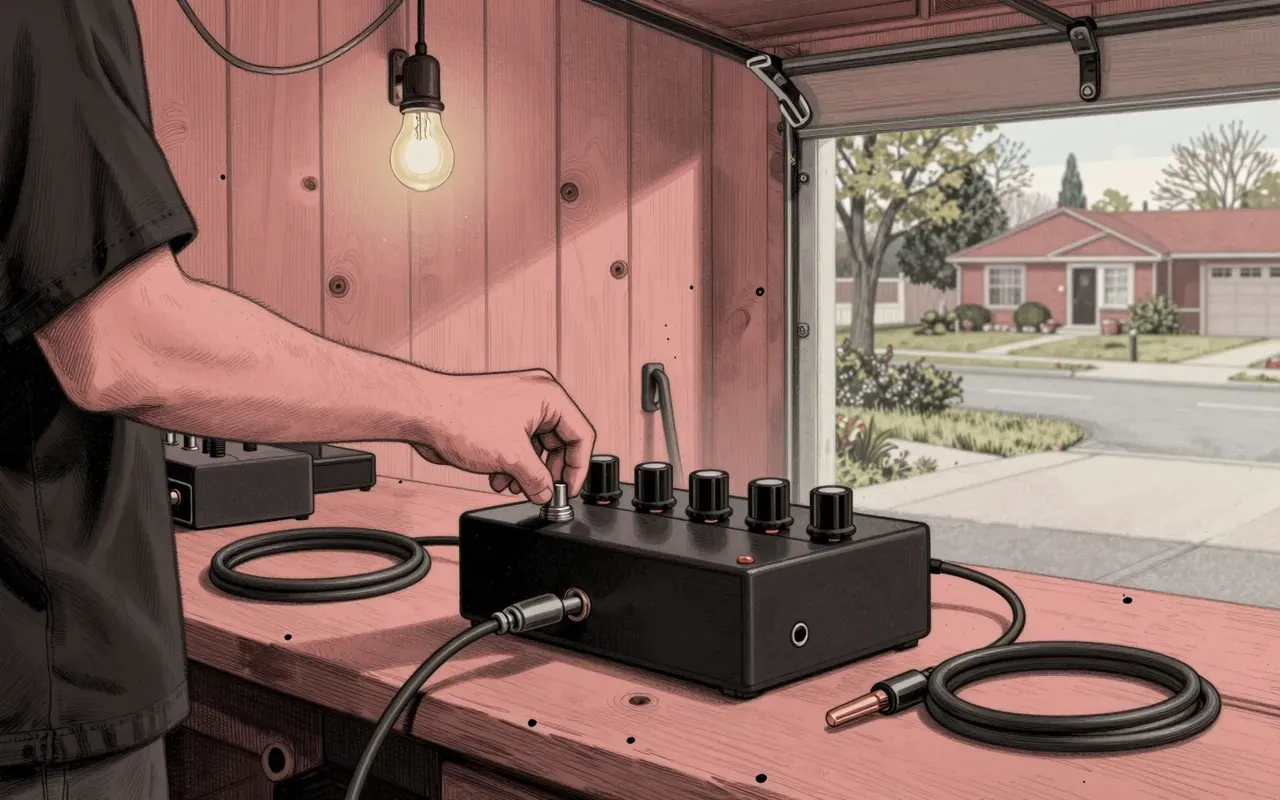
Z.Vex Fuzz Factory

Z.Vex

The Z.Vex Fuzz Factory is a 1995 fuzz pedal built around unstable germanium transistors whose biasing is manipulated via five interactive controls; it originated from Zachary Vex’s accidental discovery of extreme sonic behavior when boosting a surplus-transistor circuit, leading him to retain adjustable pots for expressive texture control rather than fixing component values.

8:40

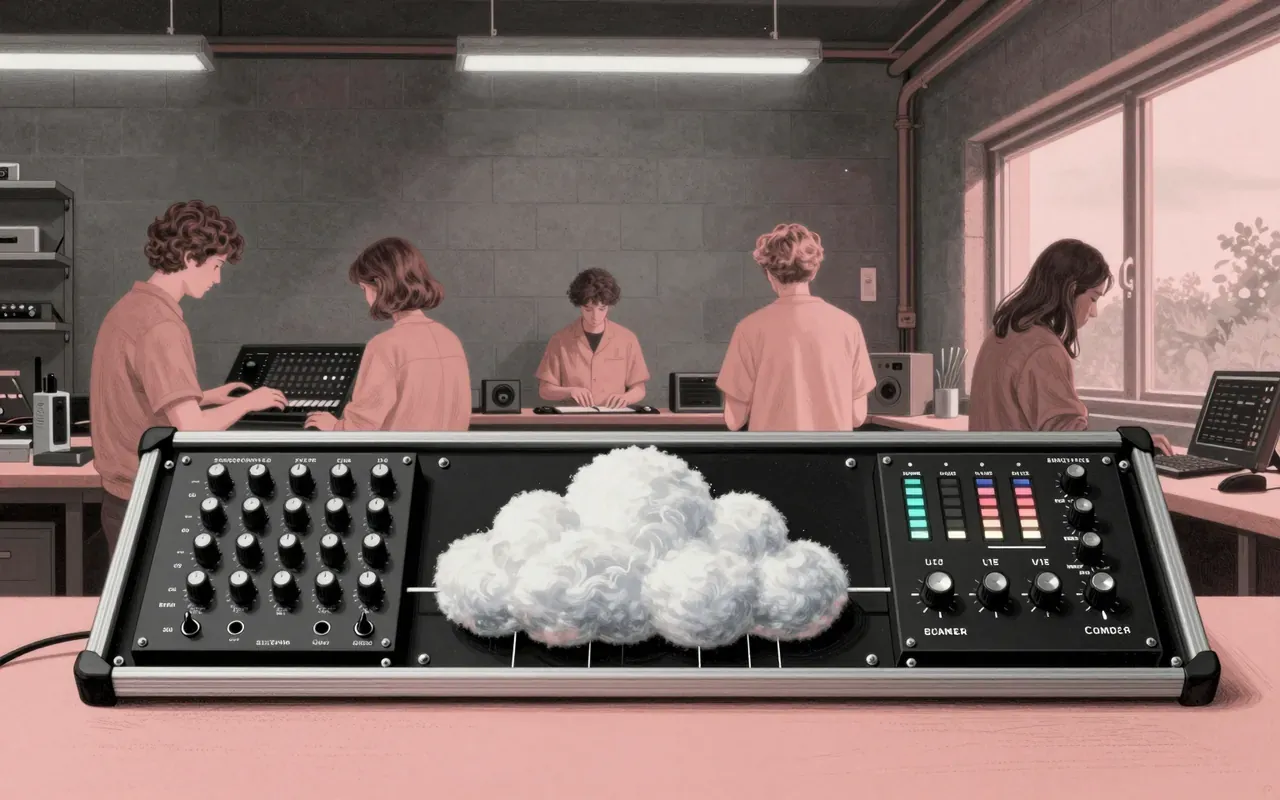
Mutable Instruments Clouds

Mutable Instruments

Clouds is a granular audio processor for Eurorack that transforms live input into dense, overlapping grains. It records continuously into a short, variable buffer (up to 8 seconds), allows freezing that buffer to isolate a sonic space, and provides hands-on control over grain position, size, pitch, density, timing distribution, and envelope shape. A diffuser blurs transients using all-pass filters. It supports 40–60 concurrent grains and operates in stereo with extensive CV control, dry/wet blending, feedback, and reverb-like effects during freeze mode. It does not store or recall samples, nor does it support offline processing or waveform editing.

10:15

Doepfer Dark Energy

Doepfer

A compact, monophonic, fully analog synthesizer released in 2010 as a stand-alone version of the Doepfer A-111-5 Eurorack module. It features dual LFOs capable of audio-rate FM (~5 kHz), a 24 dB/octave low-pass VCF, and a triangle-based VCO. The VCF can function as a sine oscillator when the VCO is disengaged and resonance is maxed. All sound generation and modulation are analog; only USB/MIDI contain digital components. It has no polyphony, no patch memory, no velocity or aftertouch, and no audio input. Superseded by the Dark Energy II in 2012.

10:15

Mutable Instruments Marbles

Mutable Instruments

Mutable Instruments Marbles is a Eurorack module for generative timing and control voltage. It uses hardware randomness, memory-based reuse (DEJA VU), and adaptive quantization (STEPS) to produce rhythm and pitch that respond to player input. It has no audio output, no presets, no MIDI, and no visual interface beyond LEDs. Its strength is in linking decision-making across domains—timing, pitch, and memory—in real time.

9:34

Make Noise Maths

Make Noise

MATHS is a 20hp Eurorack module by Make Noise Music that functions as an analog computer for generating, transforming, and routing control voltages and digital timing signals. It extends Buchla’s legacy of analog control voltage processing, enabling scaling, inversion, amplification, integration, arithmetic, logic, and autonomous function generation — including LFOs and envelopes — with timing ranging from milliseconds to minutes.

fashion.briefs Fashion

All 13 in fashion →
9:43

Marni (brand)

Marni trades in intelligent discomfort — and has done so since its fur-trade origins demanded it.
8:17

Martin Margiela

Martin Margiela

Maison Martin Margiela is a fashion house founded in 1988 in Paris through a collaborative venture with Jenny Meirens. Its debut show took place in fall 1989 at a derelict playground in a North African neighborhood on the outskirts of Paris. The show used an uneven runway and intentionally stumbling models to create a shocking public spectacle. The debut collection rejected contemporaneous extravagance in favour of ripped sleeves, frayed hems, and clumpy shoes. Local children hand-drew invitations in school art classes and sat in the front row to honour the community. The label’s trademark is a cloth badge numbered 0–23, attached with four small white tack stitches, exposed externally on unlined garments. Margiela consistently remained backstage and declined to take a bow after shows, distinguishing himself from peers. From 1988 onward, Margiela refused all formal interviews and photographic appearances.

10:05

Pierre Cardin

Cardin didn’t dress bodies—he dressed ideas, and they still don’t fit comfortably.

nature.briefs Nature

All 4 in nature →
10:07

Food web

It flattens reality to reveal pattern—but only if you accept that lions, ladybirds and lichens are all just nodes.
8:42

Apex predator

Apex predator is not a creature—it’s a lever. Pull it, and the whole food chain moves.
9:07

Keystone species

A keystone species isn’t rare — it’s irreplaceable. Remove it, and the whole arch falls.