briefs
Topic · across the network

Poland

A country repeatedly erased from the map that kept turning up on it.

17
briefs
6
subjects
11:58
average
203 min
in total
Abstraction 407Absurdism 137Acoustics 220Acting 65Adaptation 372Addiction 95Adolescence 202Advertising 77Age of exploration 14Ageing 113Agriculture 100Algorithms 114Ambition 46Anarchism 38Ancient Egypt 17Ancient Greece 38Ancient Rome 30Animals 172Anthropology 23Apartheid 12Architecture 165Archives 32Argentina 10Art Deco 26Artificial intelligence 78Astronomy 81Attention 42Australia 32Automation 73Avant-garde 164Aviation 79Banking 72Banned works 40Bauhaus 12Beer 5Behavioural economics 22Berlin 16Big tech 6Biodiversity 136Biography 86Birds 41Black holes 20Blockchain 12Boxing 14Branding 77Brazil 43Bread 29Britain 131Brutalism 4Bubbles 3Buddhism 28Byzantium 10California 17Canada 18Capitalism 94Cars 468Celebrity 59Censorship 110Cheese 24Chefs 9Chemistry 104Chess 2Childhood 87China 109Chocolate 8Christianity 49Cinematography 343Cities 90Class 485Climate change 107Club culture 100Cocktails 2Coffee 11Cognitive bias 14Collecting 16Colonialism 284Colour 42Comedy 89Community 52Complexity 21Computing 309Consciousness 16Conservatism 14Conspiracy theories 8Cooking 178Corruption 38Cosmology 31Cover versions 64Craft 116Crate digging 42Creativity 8Crime 234Cryptocurrency 8Cryptography 24Cuba 10Cybersecurity 30Dada 12Debt 38Decision-making 28Decolonisation 46Deep time 80Democracy 45Denim 16Deserts 45Detroit 17Dinosaurs 12Directing 168Disasters 59Disease 109DJ culture 89Dreams 32Drones 5Drum machines 96Dystopia 69East Africa 28Ecology 337Economics 36Editing 72Education 92Egypt 12Electric vehicles 59Emotion 22Empire 92Endurance 49Energy 120Engineering 541Entropy 8Epidemics 13Equality 9Espionage 31Ethics 44Evolution 174Existentialism 106Expertise 2Exploration 49Extinction 23Failure 37Family 240Fandom 22Fascism 45Fashion 215Fast fashion 12Fear 34Feminism 122Fermentation 126Film music 81Fishing 12Folklore 71Food history 588Football 16Forests 31Forgery 7France 163Fraud 15Free will 13Freedom 16French literature 15Friendship 24Furniture 36Gambling 14Gender 63Generations 28Genetics 87Geology 96Germany 66Globalisation 74Gothic 32Greece 5Grief 126Habits 6Happiness 2Hardware 709Haute couture 22Headphones 8Hi-fi 12Hinduism 12Hoaxes 1Human history 23Human nature 41Identity 138Illustration 8Impressionism 6Improvisation 249India 89Indonesia 15Industrial design 342Inequality 13Inflation 4Information 34Infrastructure 280Insects 29Intelligence 8Interiors 31Internet culture 88Invention 329Iran 41Islam 40Islands 17Israel 9Italy 52Jamaica 10Japan 114Jewellery 5Journalism 34Judaism 13Justice 42Korea 41Language 70Law 90Leadership 20Learning 6Liberalism 1Libraries 6Literary criticism 26London 12Loneliness 61Los Angeles 62Lost works 9Love 67Luxury 55Machine learning 15Management 10Maps 5Marketing 21Markets 51Mars 6Marxism 26Masculinity 46Materials 138Mathematics 79Meaning 6Medicine 124Memory 82Mental health 70Mesopotamia 4Mexico 38Migration 95Minimalism 68Mining 30Misinformation 9Modernism 63Money 24Monopoly 32Mortality 61Motivation 2Mountains 16Museums 27Mysticism 11Mythology 60Nationalism 40Neuroscience 23New York 36Nigeria 7Nihilism 10Noise 31Nostalgia 33Nuclear 29Nutrition 17Oceans 48Oil 42Open source 45Painting 18Palaeontology 29Parenting 14Paris 18Partition 6Patents 71Patronage 14Perception 44Personal style 27Personality 2Persuasion 8Peru 10Philosophy 77Photography 37Physics 206Plants 26Platforms 89Podcasting 1Poetry 25Poland 17Policing 34Pop Art 16Populism 2Portraiture 6Portugal 18Postmodernism 23Power 91Prehistory 24Preservation 28Printmaking 21Privacy 11Probability 6Productivity 1Programming 54Prohibition 1Propaganda 35Protest 75Pseudoscience 17Psychology 80Publishing 22Punishment 16Quantum mechanics 44Race 145Radio 30Railways 35Rave 17Realism 47Record labels 19Recording 810Relativity 23Religion 154Resilience 15Restaurants 30Restoration 2Retail 94Revolution 58Risk 18Ritual 96Robotics 26Romance 96Russia 58Salt 9Sampling 246Satire 84Scandinavia 28Scientific method 186Screenwriting 26Sculpture 7Secularism 2Self-deception 14Semiconductors 73Sexuality 102Ships 18Silence 24Silicon Valley 17Slavery 35Sleep 2Smartphones 27Sneakers 15Social media 58Socialism 9Software 68Songwriting 180Sound design 332Sound systems 20South Africa 19South East Asia 30Space exploration 84Spain 18Special effects 41Spices 62Spirits 12Sport 82Startups 21Statistics 10Status 9Stoicism 4Storytelling 68Strategy 70Street food 99Streetwear 16Studio craft 508Subcultures 59Sugar 12Supply chains 115Surrealism 53Surveillance 21Sustainability 30Synthesis 232Tailoring 37Taxation 14Tea 24Textiles 97Thailand 11The American Revolution 19The American South 88The Arab world 41The Arctic 19The Balkans 17The Belle Epoque 13The body 29The brain 26The Caribbean 28The civil rights movement 62The Cold War 160The eighties 268The Enlightenment 29The financial crisis 19The First World War 39The food industry 157The French Revolution 9The Gilded Age 9The Great Depression 18The Holocaust 20The Industrial Revolution 93The internet 61The interwar years 135The Middle Ages 35The Moon 4The music business 169The Netherlands 10The nineties 26The Olympics 10The pandemic 13The Reformation 1The Renaissance 16The Russian Revolution 19The Second World War 102The seventies 58The sixties 28The space race 5The United States 19The universe 7The Victorian era 37Therapy 20Tokyo 11Trade 48Tragedy 22Translation 5Trauma 85Travel 5True crime 2Turkey 18Typography 54Uniforms 23Unions 8Urban planning 66Utilitarianism 1Utopia 5Vaccines 10Vegetarianism 15Venture capital 6Video games 291Vietnam 12Vintage 65Vinyl 6Virtual reality 11War 169Watches 4Water 11Weather 29West Africa 29Wilderness 10Wine 3Work 22Workwear 19Worldbuilding 121

books.briefs Books

All 4 in books →
13:36

The Frogs

Aristophanes · 0

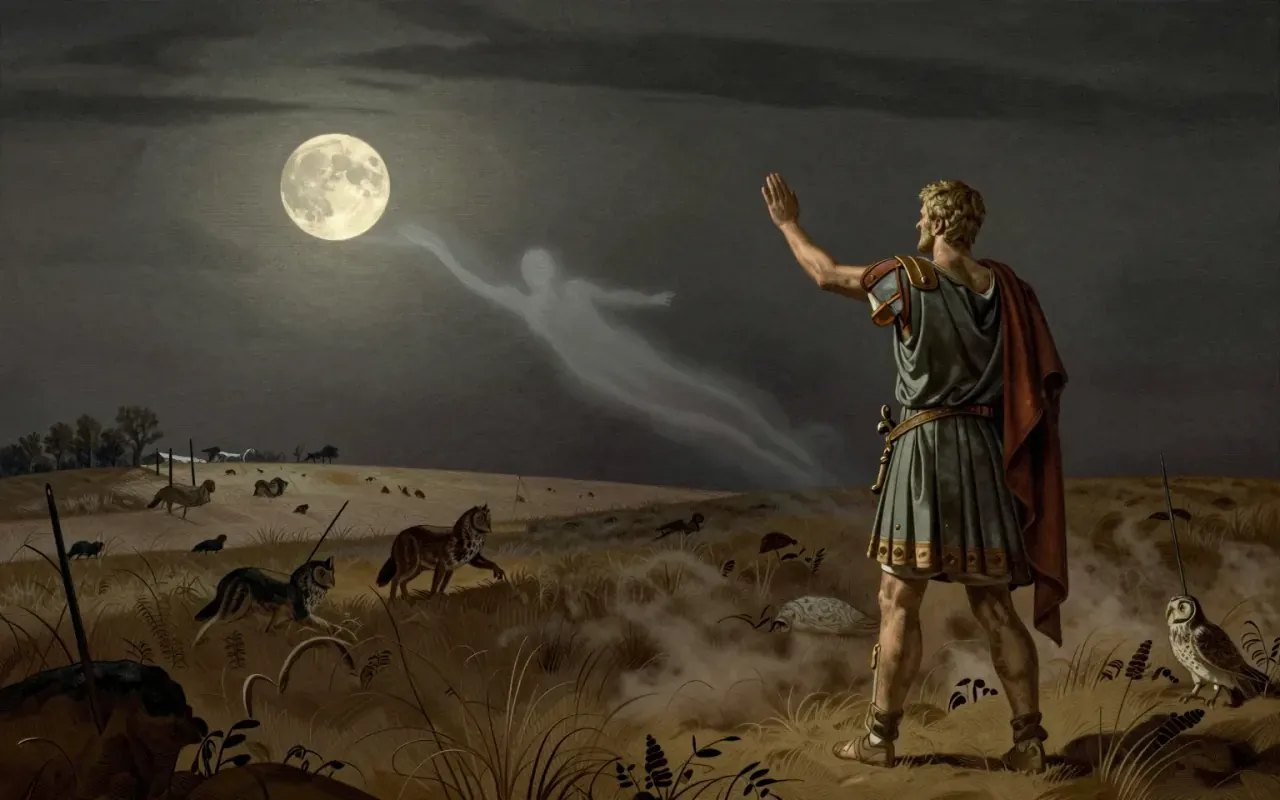
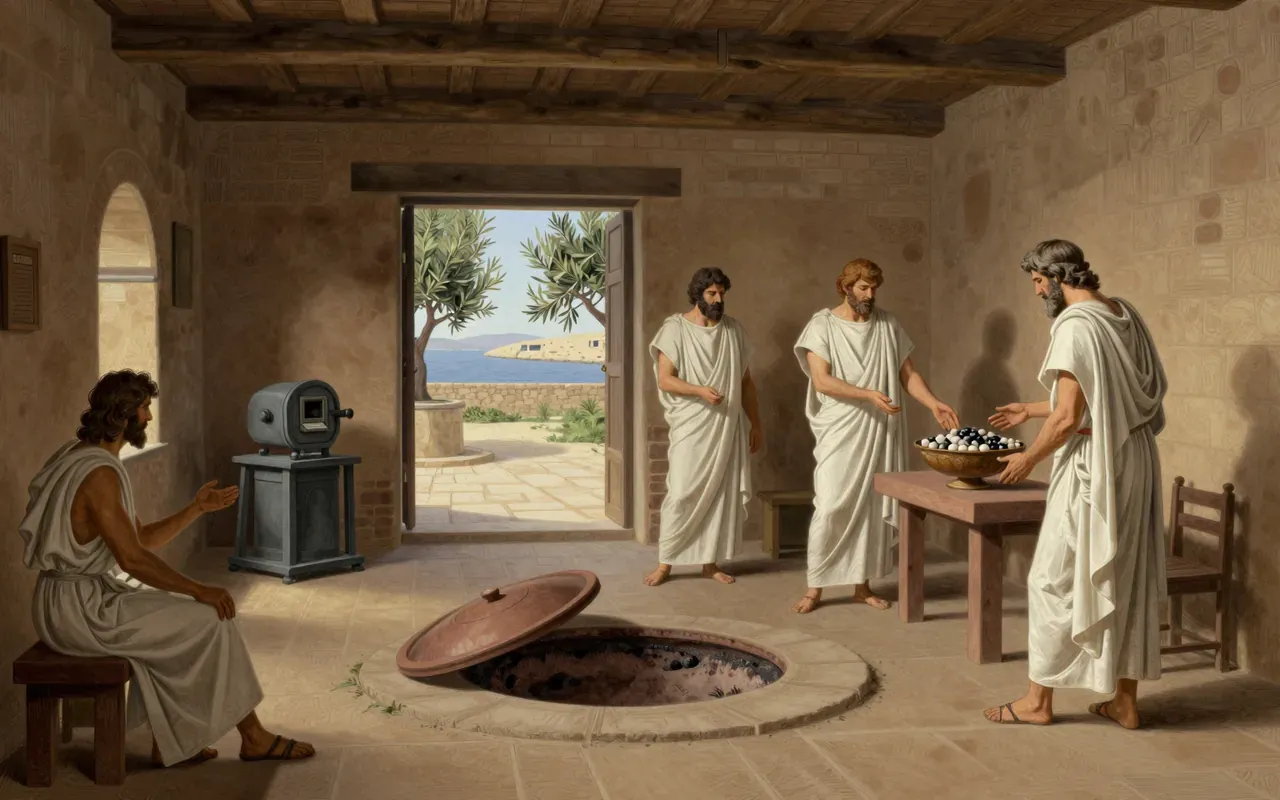
The Frogs is a 405 BCE Athenian comedy arguing that tragedy sustains democracy. Dionysus descends to Hades to retrieve Euripides—but chooses Aeschylus instead, because his poetry offers civic instruction, not just artistry. The brief explains why the frogs matter more than the plot, why the weighing scale is the play’s true thesis, and why the ending is policy, not poetry.
13:22

The Prince

Niccolò Machiavelli · 1515

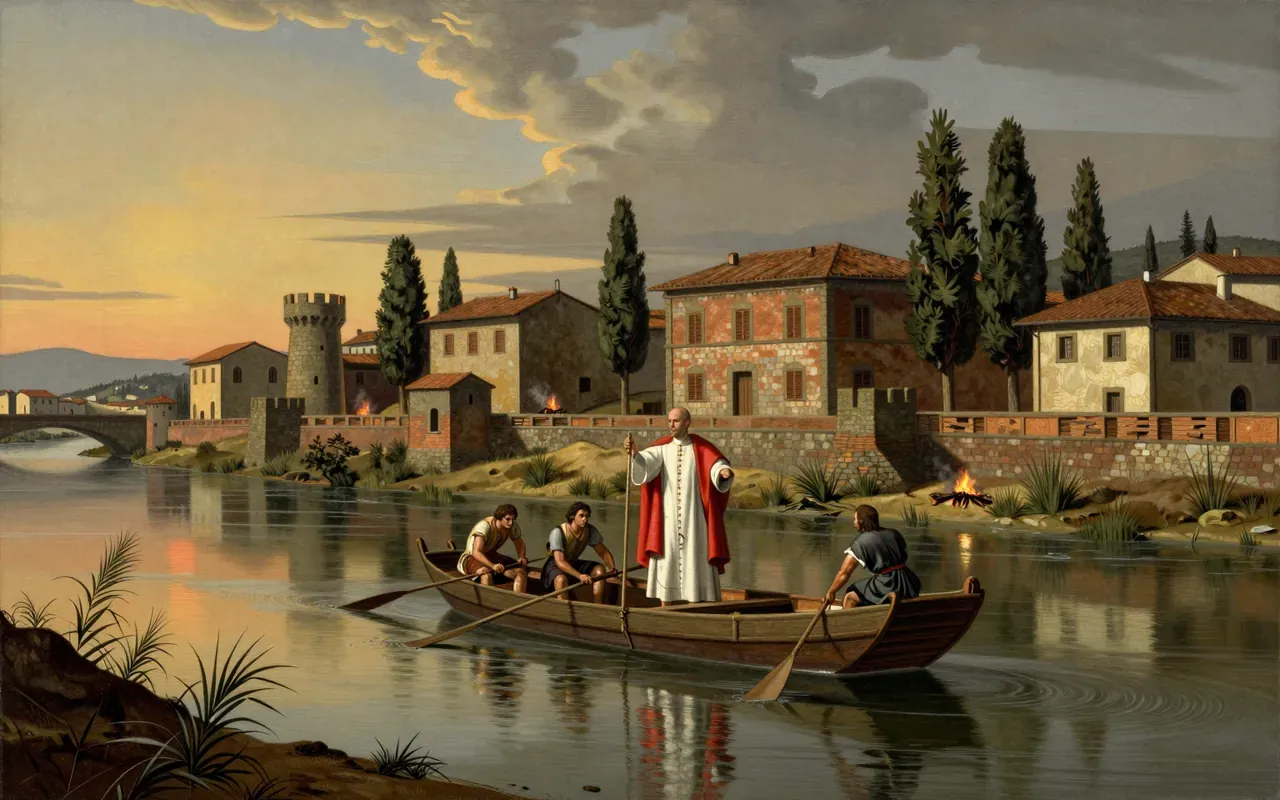
The Prince is a manual for seizing and holding absolute power without legitimacy. It argues that arms, timing and audacity—not virtue or law—secure rule. Its strongest ideas are in Chapters XX–XXVI: the river metaphor for fortune, the three-tier intellect test, and the warning against neutrality. Skip Chapter XXVI—it names Giuliano de’ Medici as Italy’s saviour but offers no analysis.

15:46

The Republic

Plato · 0

The Republic argues justice is soul-harmony enforced by philosopher-kings, censorship and communal breeding. Its greatest strength—the Cave—is also its warning: truth requires coercion. Skip Book V’s breeding logic and Book III’s musical digressions. Read Books IV, VI, VII and X for the core argument.

15:08

Julius Caesar

William Shakespeare · 1616

Brutus joins the conspiracy on principle and loses Rome to a better speaker. The brief covers why Shakespeare puts the murder at the halfway mark, how Antony turns a hostile crowd line by line, and why the second half never matches the first.

film.briefs Film

All 5 in film →
13:00

Ashes and Diamonds

Andrzej Wajda · 1958

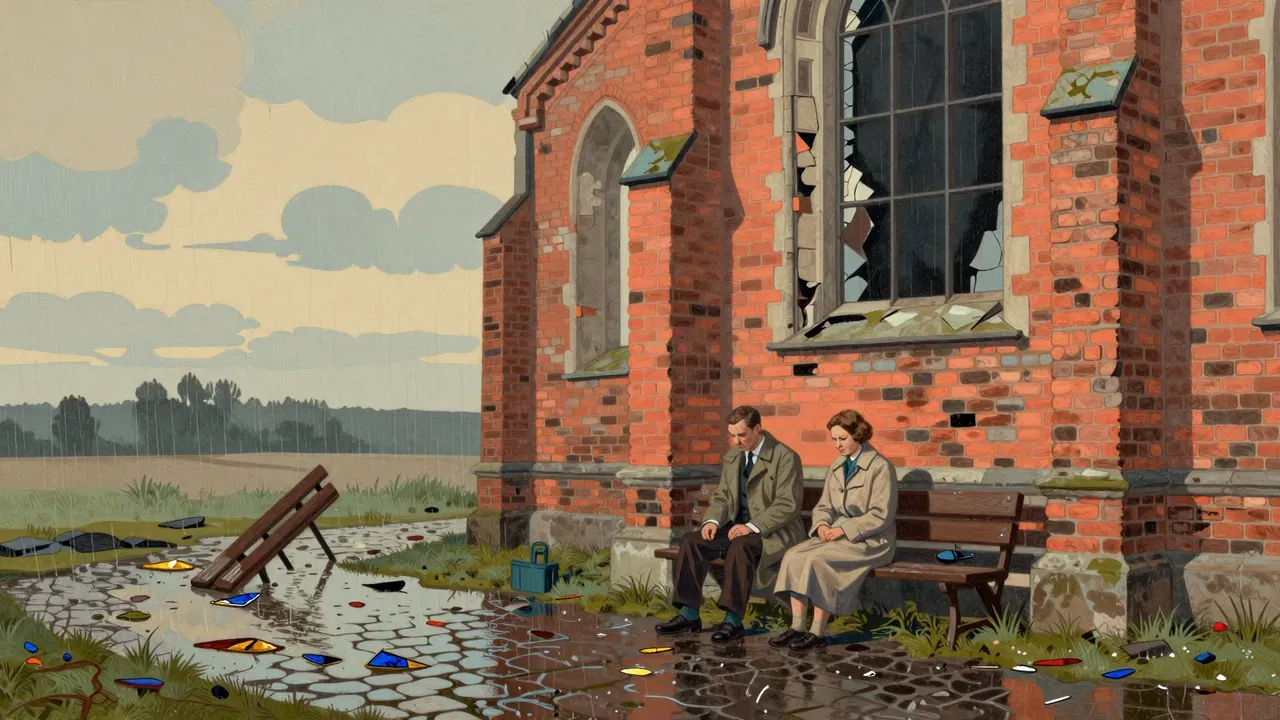
Andrzej Wajda’s 1958 drama Ashes and Diamonds compresses Poland’s postwar reckoning into a single rain-dampened day. Former Home Army soldier Maciek Chełmicki hesitates before carrying out an assassination order — not out of doubt about his cause, but from a growing awareness of time, mortality and connection. Shot in stark, intimate compositions by Jerzy Wójcik and anchored by Zbigniew Cybulski’s defining performance, it treats ideology as atmosphere rather than argument, and history as something felt in the body before it is understood in the mind.

13:00

Blind Chance

Krzysztof Kieślowski · 1987

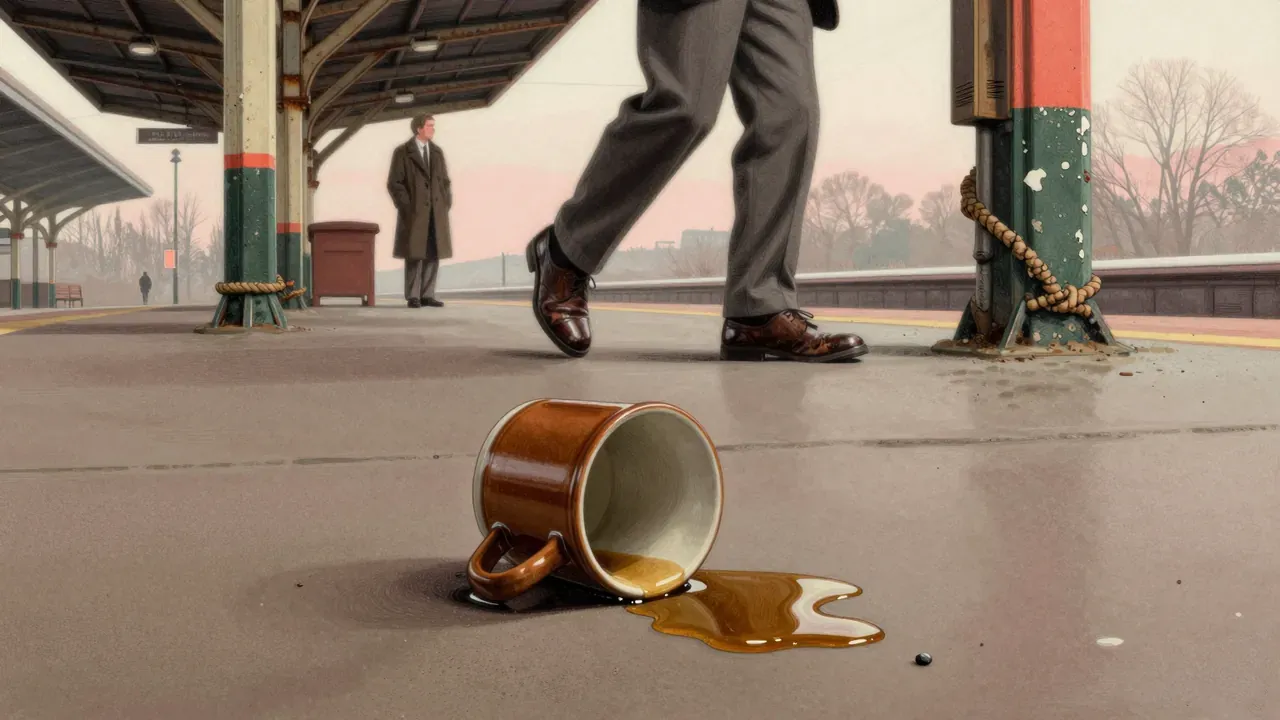
Krzysztof Kieślowski’s 1987 film follows Witek (Bogusław Linda) through three divergent lives, each triggered by how he navigates a single encounter at Łódź Fabryczna station. In one, he joins the Communist Party; in another, he joins the anti-Communist resistance; in the third, he retreats into apolitical domesticity. Shot with procedural restraint by Krzysztof Pakulski and edited with mathematical parity by Elżbieta Kurkowska, the film treats political identity as emergent from physical circumstance — not philosophy, but timing, surface, and sequence.

13:00

Canal

Andrzej Wajda · 1957

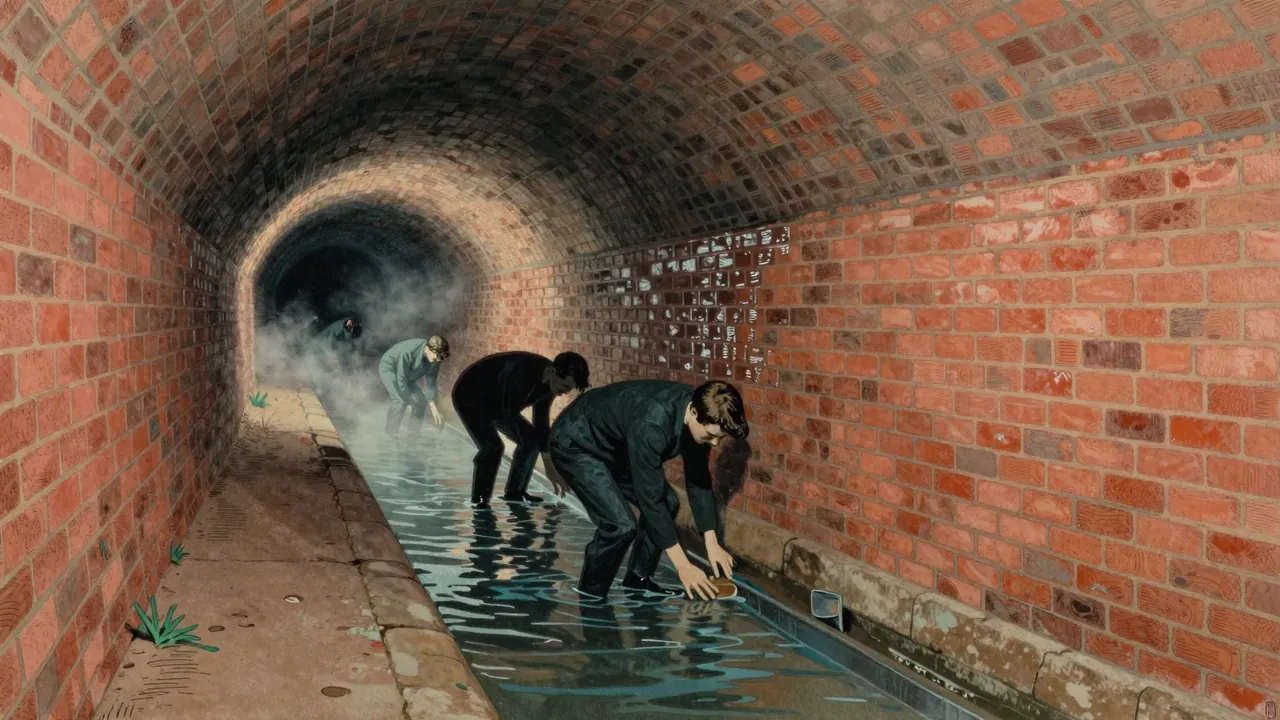
Andrzej Wajda’s 1957 film Canal follows a group of Polish Home Army fighters and civilians retreating through Warsaw’s sewers during the final days of the 1944 uprising. Adapted by veteran Jerzy Stefan Stawiński and shot by Jerzy Lipman, it uses tight framing, low light, and minimal music to render exhaustion, disorientation, and the erosion of command. There are no speeches, no flashbacks, no explanations — only movement, hesitation, and collapse. It is a war film without battle scenes, a drama without catharsis, and a landmark of Polish cinema for its unflinching formal rigour.

13:00

Danton

Andrzej Wajda · 1983

Andrzej Wajda’s 1983 Danton, starring Gérard Depardieu and Wojciech Pszoniak, dramatises the final weeks of Georges Danton during the Reign of Terror. Adapted from Stanisława Przybyszewska’s play, it avoids historical literalism in favour of stark political psychology — showing how revolutionary ideals curdle into bureaucratic violence. Shot in muted tones by Igor Luther, edited with deliberate gravity by Halina Prugar-Ketling, and scored sparingly by Jean Prodromidès, it rests on two towering, mutually corrosive performances. Though occasionally opaque in its plotting, its moral precision and formal restraint make it a defining arthouse drama of the Cold War era.

13:00

The Decalogue

Krzysztof Kieślowski · 1989

Krzysztof Kieślowski’s 1989 ten-part Polish television series The Decalogue explores everyday ethical dilemmas in a Warsaw housing estate. Each self-contained episode, written with Krzysztof Piesiewicz and shot by three cinematographers, treats a moral question loosely linked to one of the Ten Commandments — without naming them, without preaching, and without resolution. Starring Artur Barciś, Krystyna Janda, and others, and scored by Zbigniew Preisner, it is a study in restraint: in performance, image, sound, and consequence.

history.briefs History

All 3 in history →
13:00

Lech Wałęsa

Born 29 September 1943

Lech Wałęsa led the August 1980 shipyard strike that produced Solidarity, the first independent trade union recognised in a Warsaw Pact state, surviving martial law and imprisonment before receiving the 1983 Nobel Peace Prize and becoming Poland's first freely elected president in 1990. Documents surfacing between 2008 and 2017, including files seized from a deceased interior minister's home, allege he collaborated with Polish security services as an informant in the early 1970s, a claim he denies and that remains genuinely disputed among historians examining the same evidence.

13:00

Invasion of Poland

1 September – 6 October 1939

Germany invaded Poland on 1 September 1939 behind the manufactured pretext of a staged attack at Gleiwitz, deploying newly mechanised blitzkrieg tactics that broke Polish resistance within weeks while the Soviet Union invaded from the east on 17 September under the secret terms of the Molotov-Ribbentrop Pact signed a week before the war began. Hitler's own instructions to his forces called for killing Polish people without pity or mercy, language historians treat as establishing genocidal intent from the campaign's very outset rather than something that developed only later in the occupation.

13:00

January Uprising

1863–1864

Poland's January Uprising broke out in 1863 after Russian authorities tried to remove suspected agitators through long-term military conscription, triggering a rebellion that spread across the old Polish-Lithuanian lands before Russian forces crushed it by mid-1864. Its final commander, Romuald Traugutt, was captured and hanged after his land-reform decree arrived too late to rally the peasantry, and the roughly eighty thousand people Russia deported afterward, by one historian's count, made the reprisal the largest single deportation in Russian history.

business.briefs Business

All 2 in business →
9:30

Biedronka

Jerónimo Martins · 1997

Biedronka is a Polish discount supermarket chain owned by Portuguese group Jerónimo Martins. It operates 3,730 stores in Poland, employs 84,000 people, and accounts for approximately 70% of its parent’s sales. Its model relies on high-volume, low-margin sales of local and own-label goods — not differentiation or premium pricing. Its sole international move — one store in Slovakia, opened March 2025 — shows no evidence of traction. Its strength is also its risk: extreme geographic concentration in Poland.

11:20

Orlen

A state-directed oil giant masquerading as a multinational — its scale is real, its independence is not.

culture.briefs Culture

All 1 in culture →
10:32

Dante Alighieri

Dante didn’t invent Italian—he weaponised Florentine to claim space in power.

food.briefs Food

All 2 in food →
1:18

Bigos

A Polish stew of mixed chopped meats, sauerkraut, and shredded fresh cabbage, slow-simmered and improved by reheating.
8:56

Vodka

Vodka isn’t neutral—it’s standardised silence, enforced by courts, customs, and cold rooms.