briefs
Topic · across the network

Open source

The most valuable software in the world, given away.
45
briefs
4
subjects
9:38
average
433 min
in total
Abstraction 407Absurdism 137Acoustics 220Acting 65Adaptation 372Addiction 95Adolescence 202Advertising 77Age of exploration 14Ageing 113Agriculture 100Algorithms 114Ambition 46Anarchism 38Ancient Egypt 17Ancient Greece 38Ancient Rome 30Animals 172Anthropology 23Apartheid 12Architecture 165Archives 32Argentina 10Art Deco 26Artificial intelligence 78Astronomy 81Attention 42Australia 32Automation 73Avant-garde 164Aviation 79Banking 72Banned works 40Bauhaus 12Beer 5Behavioural economics 22Berlin 16Big tech 6Biodiversity 136Biography 86Birds 41Black holes 20Blockchain 12Boxing 14Branding 77Brazil 43Bread 29Britain 131Brutalism 4Bubbles 3Buddhism 28Byzantium 10California 17Canada 18Capitalism 94Cars 468Celebrity 59Censorship 110Cheese 24Chefs 9Chemistry 104Chess 2Childhood 87China 109Chocolate 8Christianity 49Cinematography 343Cities 90Class 485Climate change 107Club culture 100Cocktails 2Coffee 11Cognitive bias 14Collecting 16Colonialism 284Colour 42Comedy 89Community 52Complexity 21Computing 309Consciousness 16Conservatism 14Conspiracy theories 8Cooking 178Corruption 38Cosmology 31Cover versions 64Craft 116Crate digging 42Creativity 8Crime 234Cryptocurrency 8Cryptography 24Cuba 10Cybersecurity 30Dada 12Debt 38Decision-making 28Decolonisation 46Deep time 80Democracy 45Denim 16Deserts 45Detroit 17Dinosaurs 12Directing 168Disasters 59Disease 109DJ culture 89Dreams 32Drones 5Drum machines 96Dystopia 69East Africa 28Ecology 337Economics 36Editing 72Education 92Egypt 12Electric vehicles 59Emotion 22Empire 92Endurance 49Energy 120Engineering 541Entropy 8Epidemics 13Equality 9Espionage 31Ethics 44Evolution 174Existentialism 106Expertise 2Exploration 49Extinction 23Failure 37Family 240Fandom 22Fascism 45Fashion 215Fast fashion 12Fear 34Feminism 122Fermentation 126Film music 81Fishing 12Folklore 71Food history 588Football 16Forests 31Forgery 7France 163Fraud 15Free will 13Freedom 16French literature 15Friendship 24Furniture 36Gambling 14Gender 63Generations 28Genetics 87Geology 96Germany 66Globalisation 74Gothic 32Greece 5Grief 126Habits 6Happiness 2Hardware 709Haute couture 22Headphones 8Hi-fi 12Hinduism 12Hoaxes 1Human history 23Human nature 41Identity 138Illustration 8Impressionism 6Improvisation 249India 89Indonesia 15Industrial design 342Inequality 13Inflation 4Information 34Infrastructure 280Insects 29Intelligence 8Interiors 31Internet culture 88Invention 329Iran 41Islam 40Islands 17Israel 9Italy 52Jamaica 10Japan 114Jewellery 5Journalism 34Judaism 13Justice 42Korea 41Language 70Law 90Leadership 20Learning 6Liberalism 1Libraries 6Literary criticism 26London 12Loneliness 61Los Angeles 62Lost works 9Love 67Luxury 55Machine learning 15Management 10Maps 5Marketing 21Markets 51Mars 6Marxism 26Masculinity 46Materials 138Mathematics 79Meaning 6Medicine 124Memory 82Mental health 70Mesopotamia 4Mexico 38Migration 95Minimalism 68Mining 30Misinformation 9Modernism 63Money 24Monopoly 32Mortality 61Motivation 2Mountains 16Museums 27Mysticism 11Mythology 60Nationalism 40Neuroscience 23New York 36Nigeria 7Nihilism 10Noise 31Nostalgia 33Nuclear 29Nutrition 17Oceans 48Oil 42Open source 45Painting 18Palaeontology 29Parenting 14Paris 18Partition 6Patents 71Patronage 14Perception 44Personal style 27Personality 2Persuasion 8Peru 10Philosophy 77Photography 37Physics 206Plants 26Platforms 89Podcasting 1Poetry 25Poland 17Policing 34Pop Art 16Populism 2Portraiture 6Portugal 18Postmodernism 23Power 91Prehistory 24Preservation 28Printmaking 21Privacy 11Probability 6Productivity 1Programming 54Prohibition 1Propaganda 35Protest 75Pseudoscience 17Psychology 80Publishing 22Punishment 16Quantum mechanics 44Race 145Radio 30Railways 35Rave 17Realism 47Record labels 19Recording 810Relativity 23Religion 154Resilience 15Restaurants 30Restoration 2Retail 94Revolution 58Risk 18Ritual 96Robotics 26Romance 96Russia 58Salt 9Sampling 246Satire 84Scandinavia 28Scientific method 186Screenwriting 26Sculpture 7Secularism 2Self-deception 14Semiconductors 73Sexuality 102Ships 18Silence 24Silicon Valley 17Slavery 35Sleep 2Smartphones 27Sneakers 15Social media 58Socialism 9Software 68Songwriting 180Sound design 332Sound systems 20South Africa 19South East Asia 30Space exploration 84Spain 18Special effects 41Spices 62Spirits 12Sport 82Startups 21Statistics 10Status 9Stoicism 4Storytelling 68Strategy 70Street food 99Streetwear 16Studio craft 508Subcultures 59Sugar 12Supply chains 115Surrealism 53Surveillance 21Sustainability 30Synthesis 232Tailoring 37Taxation 14Tea 24Textiles 97Thailand 11The American Revolution 19The American South 88The Arab world 41The Arctic 19The Balkans 17The Belle Epoque 13The body 29The brain 26The Caribbean 28The civil rights movement 62The Cold War 160The eighties 268The Enlightenment 29The financial crisis 19The First World War 39The food industry 157The French Revolution 9The Gilded Age 9The Great Depression 18The Holocaust 20The Industrial Revolution 93The internet 61The interwar years 135The Middle Ages 35The Moon 4The music business 169The Netherlands 10The nineties 26The Olympics 10The pandemic 13The Reformation 1The Renaissance 16The Russian Revolution 19The Second World War 102The seventies 58The sixties 28The space race 5The United States 19The universe 7The Victorian era 37Therapy 20Tokyo 11Trade 48Tragedy 22Translation 5Trauma 85Travel 5True crime 2Turkey 18Typography 54Uniforms 23Unions 8Urban planning 66Utilitarianism 1Utopia 5Vaccines 10Vegetarianism 15Venture capital 6Video games 291Vietnam 12Vintage 65Vinyl 6Virtual reality 11War 169Watches 4Water 11Weather 29West Africa 29Wilderness 10Wine 3Work 22Workwear 19Worldbuilding 121

design.briefs Design

All 7 in design →
10:42

Erik Spiekermann

Typography is not about taste — it’s about infrastructure, and Spiekermann built it.
6:38

Inter (typeface)

Inter isn’t prettier than Roboto—it’s legible where Roboto fails, and that’s why it replaced it.
4:16

Lato (typeface)

Łukasz Dziedzic

Lato is a humanist sans-serif typeface designed by Łukasz Dziedzic and released in 2010. It was commissioned by a Polish bank, then cancelled and published under the Open Font License. As of August 2018, it appeared on over 9.6 million websites and ranked third on Google Fonts by usage. It has been applied in physical media including election billboards and information signs, and adopted by Save the Children for its logotype since 2022.
6:40

Source Sans

A pragmatic open-source sans-serif built to fix News Gothic’s uneven colour — not to reinvent typography.
11:34

IBM Plex

IBM Design · 2017

IBM Plex is a corporate typeface designed to replace Helvetica across IBM’s global communications. Its rationale is financial and ideological: open-source licensing eliminates licence fees; typographic decisions reject expressive or historical categories in favour of functional clarity. It delivers a coherent, documented system — but only within the narrow frame of IBM’s internal brand requirements.
10:08

Open Sans

Steve Matteson · 2010

Open Sans is a functional, open-source humanist sans-serif designed by Steve Matteson for Google in 2011. It prioritises screen legibility through wide apertures and large x-height, supports Latin, Greek, Cyrillic (897 glyphs), gained Hebrew and variable font support in 2021, and manifests publicly via a Google Easter egg. It does not extend beyond those scripts. Its influence lies in normalising open-source, cross-platform typography — not aesthetic innovation.
11:22

Roboto

Christian Robertson · 2011

Roboto is a functional, open, and pervasive sans-serif typeface family designed by Christian Robertson for Google in 2011. It succeeded by solving a narrow problem well — legibility on early Android screens — then scaled through permissive licensing and platform integration.

games.briefs Games

All 4 in games →
9:44

StepMania

Chris Danford · 2001

StepMania is a cross-platform rhythm video game and engine originally developed as a clone of Dance Dance Revolution, evolving into an extensible rhythm game engine supporting various rhythm-based game types. Its core gameplay involves scrolling arrows meeting stationary targets in time with the song's beat, scored by timing accuracy, letter grade, and numeric score. Highest performance yields AAA+, requiring flawless timing, mine avoidance, and full hold arrow completion; failure results in an E grade when the life gauge fully depletes. It runs on Windows, Linux, FreeBSD, macOS, and Xbox.
8:54

Warsow (video game)

Amanieu d'Ohsson · 2005

Warsow is a movement-first FPS built on Quake II. Its design forces mastery of physics-based tricks—dash, dodge, wall jump, rocket jump—as the sole path to advantage. It trades narrative, progression and accessibility for purity of motion and competitive clarity.
10:44

Far Cry 4

Ubisoft Montreal · 2014

Far Cry 4 is a polished, iterative open-world shooter that prioritises environmental spectacle and weapon-led combat over narrative weight or systemic innovation. It works best when treated as a tactical sandbox — not a story world.

9:55

Far Cry 5

Ubisoft Montreal · 2018

Far Cry 5 is a first-person shooter developed by Ubisoft Montreal and released in 2018. It runs on the Dunia engine. Players explore Hope County freely on foot or by vehicle. They customise their silent protagonist, engage in ranged and melee combat, and use a ballistics system with bullet drop. Progression is region-based: most of the world opens after the intro, and Resistance Points earned through actions trigger story events.
technology.briefs Technology

All 31 in technology →
9:36

Apache ActiveMQ

ActiveMQ made JMS mainstream—but its Java roots and 2007-era architecture now hold back the very systems it was meant to unify.
9:10

Fused filament fabrication

Crump

Fused filament fabrication is fused deposition modeling repackaged: same thermoplastic extrusion mechanism, same 1988 origin, same patent. RepRap renamed it to escape Stratasys’ trademark. Its real impact arrived only after the 2009 patent expiry enabled open hardware development. It delivers functional prototypes—not precision parts. It trades repeatability for accessibility.

9:41

Google Chrome

Chrome didn’t win by being better—it won by becoming infrastructure.
8:56

Jenkins (software)

Jenkins isn’t better software than Hudson—it’s the same software with a democratically ratified name.
9:25

RabbitMQ

RabbitMQ isn’t about speed—it’s about certainty in chaos.
10:49

RISC-V

UC Berkeley researchers · 2010

RISC-V is a free and open instruction set architecture developed in 2010 at UC Berkeley. Its specifications were published openly in 2011 and stewardship transferred to RISC-V International in 2015. It enables royalty-free processor design—but does not eliminate the engineering, tooling, or ecosystem work required to deploy it.
9:30

OLPC XO

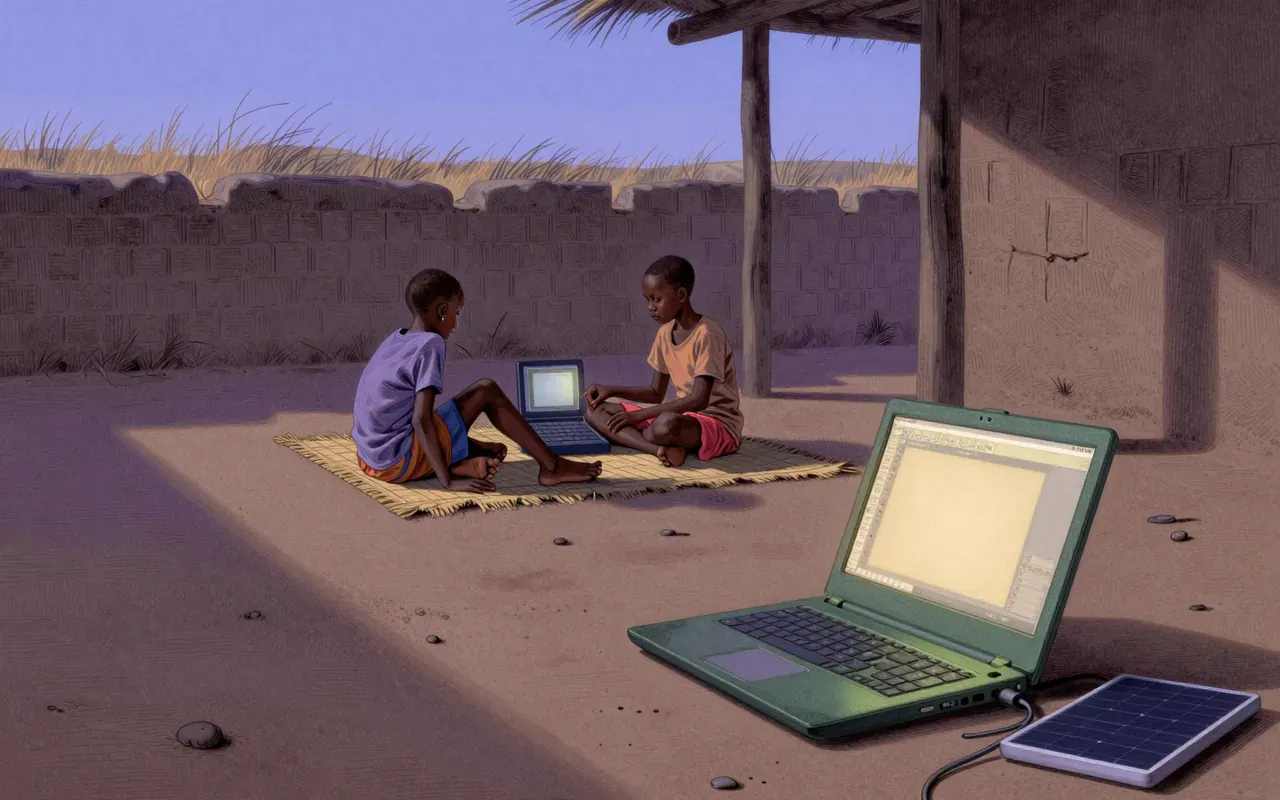
A noble failure: the XO delivered rugged, flash-based Linux laptops to children — but broke its core promises on price, power, and peer networking.
10:03

Go (programming language)

Robert Griesemer, Rob Pike, Ken Thompson · 2009

Go is a statically typed, compiled programming language designed in 2007 by Robert Griesemer, Rob Pike, and Ken Thompson at Google to improve programming productivity for multicore, networked machines and large codebases. It combines static typing and runtime efficiency like C, readability and usability like Python, and high-performance networking and multiprocessing. Publicly announced in November 2009 and released as version 1.0 in March 2012, Go emphasizes simplicity, safety, and developer tooling — especially around concurrency via goroutines and channels, packaging, testing, and deployment — while deliberately omitting features like inheritance, assertions, pointer arithmetic, and implicit type conversions. Its design reflects a focus on the software development process itself rather than just language syntax or semantics.
culture.briefs Culture

All 3 in culture →
9:00

Remix culture

Remix culture isn’t new — it’s just newly named, newly licensed, and newly policed.
8:01

Hacker culture

Hacker culture isn’t about breaking things—it’s about refusing to accept the box as given.
8:50

Maker culture

Maker culture teaches people to build—but not to ask who benefits from what they build.