briefs
Topic · across the network

The interwar years

Twenty years of unfinished business between two wars.

135
briefs
8
subjects
11:59
average
1619 min
in total
Abstraction 407Absurdism 137Acoustics 220Acting 65Adaptation 372Addiction 95Adolescence 202Advertising 77Age of exploration 14Ageing 113Agriculture 100Algorithms 114Ambition 46Anarchism 38Ancient Egypt 17Ancient Greece 38Ancient Rome 30Animals 172Anthropology 23Apartheid 12Architecture 165Archives 32Argentina 10Art Deco 26Artificial intelligence 78Astronomy 81Attention 42Australia 32Automation 73Avant-garde 164Aviation 79Banking 72Banned works 40Bauhaus 12Beer 5Behavioural economics 22Berlin 16Big tech 6Biodiversity 136Biography 86Birds 41Black holes 20Blockchain 12Boxing 14Branding 77Brazil 43Bread 29Britain 131Brutalism 4Bubbles 3Buddhism 28Byzantium 10California 17Canada 18Capitalism 94Cars 468Celebrity 59Censorship 110Cheese 24Chefs 9Chemistry 104Chess 2Childhood 87China 109Chocolate 8Christianity 49Cinematography 343Cities 90Class 485Climate change 107Club culture 100Cocktails 2Coffee 11Cognitive bias 14Collecting 16Colonialism 284Colour 42Comedy 89Community 52Complexity 21Computing 309Consciousness 16Conservatism 14Conspiracy theories 8Cooking 178Corruption 38Cosmology 31Cover versions 64Craft 116Crate digging 42Creativity 8Crime 234Cryptocurrency 8Cryptography 24Cuba 10Cybersecurity 30Dada 12Debt 38Decision-making 28Decolonisation 46Deep time 80Democracy 45Denim 16Deserts 45Detroit 17Dinosaurs 12Directing 168Disasters 59Disease 109DJ culture 89Dreams 32Drones 5Drum machines 96Dystopia 69East Africa 28Ecology 337Economics 36Editing 72Education 92Egypt 12Electric vehicles 59Emotion 22Empire 92Endurance 49Energy 120Engineering 541Entropy 8Epidemics 13Equality 9Espionage 31Ethics 44Evolution 174Existentialism 106Expertise 2Exploration 49Extinction 23Failure 37Family 240Fandom 22Fascism 45Fashion 215Fast fashion 12Fear 34Feminism 122Fermentation 126Film music 81Fishing 12Folklore 71Food history 588Football 16Forests 31Forgery 7France 163Fraud 15Free will 13Freedom 16French literature 15Friendship 24Furniture 36Gambling 14Gender 63Generations 28Genetics 87Geology 96Germany 66Globalisation 74Gothic 32Greece 5Grief 126Habits 6Happiness 2Hardware 709Haute couture 22Headphones 8Hi-fi 12Hinduism 12Hoaxes 1Human history 23Human nature 41Identity 138Illustration 8Impressionism 6Improvisation 249India 89Indonesia 15Industrial design 342Inequality 13Inflation 4Information 34Infrastructure 280Insects 29Intelligence 8Interiors 31Internet culture 88Invention 329Iran 41Islam 40Islands 17Israel 9Italy 52Jamaica 10Japan 114Jewellery 5Journalism 34Judaism 13Justice 42Korea 41Language 70Law 90Leadership 20Learning 6Liberalism 1Libraries 6Literary criticism 26London 12Loneliness 61Los Angeles 62Lost works 9Love 67Luxury 55Machine learning 15Management 10Maps 5Marketing 21Markets 51Mars 6Marxism 26Masculinity 46Materials 138Mathematics 79Meaning 6Medicine 124Memory 82Mental health 70Mesopotamia 4Mexico 38Migration 95Minimalism 68Mining 30Misinformation 9Modernism 63Money 24Monopoly 32Mortality 61Motivation 2Mountains 16Museums 27Mysticism 11Mythology 60Nationalism 40Neuroscience 23New York 36Nigeria 7Nihilism 10Noise 31Nostalgia 33Nuclear 29Nutrition 17Oceans 48Oil 42Open source 45Painting 18Palaeontology 29Parenting 14Paris 18Partition 6Patents 71Patronage 14Perception 44Personal style 27Personality 2Persuasion 8Peru 10Philosophy 77Photography 37Physics 206Plants 26Platforms 89Podcasting 1Poetry 25Poland 17Policing 34Pop Art 16Populism 2Portraiture 6Portugal 18Postmodernism 23Power 91Prehistory 24Preservation 28Printmaking 21Privacy 11Probability 6Productivity 1Programming 54Prohibition 1Propaganda 35Protest 75Pseudoscience 17Psychology 80Publishing 22Punishment 16Quantum mechanics 44Race 145Radio 30Railways 35Rave 17Realism 47Record labels 19Recording 810Relativity 23Religion 154Resilience 15Restaurants 30Restoration 2Retail 94Revolution 58Risk 18Ritual 96Robotics 26Romance 96Russia 58Salt 9Sampling 246Satire 84Scandinavia 28Scientific method 186Screenwriting 26Sculpture 7Secularism 2Self-deception 14Semiconductors 73Sexuality 102Ships 18Silence 24Silicon Valley 17Slavery 35Sleep 2Smartphones 27Sneakers 15Social media 58Socialism 9Software 68Songwriting 180Sound design 332Sound systems 20South Africa 19South East Asia 30Space exploration 84Spain 18Special effects 41Spices 62Spirits 12Sport 82Startups 21Statistics 10Status 9Stoicism 4Storytelling 68Strategy 70Street food 99Streetwear 16Studio craft 508Subcultures 59Sugar 12Supply chains 115Surrealism 53Surveillance 21Sustainability 30Synthesis 232Tailoring 37Taxation 14Tea 24Textiles 97Thailand 11The American Revolution 19The American South 88The Arab world 41The Arctic 19The Balkans 17The Belle Epoque 13The body 29The brain 26The Caribbean 28The civil rights movement 62The Cold War 160The eighties 268The Enlightenment 29The financial crisis 19The First World War 39The food industry 157The French Revolution 9The Gilded Age 9The Great Depression 18The Holocaust 20The Industrial Revolution 93The internet 61The interwar years 135The Middle Ages 35The Moon 4The music business 169The Netherlands 10The nineties 26The Olympics 10The pandemic 13The Reformation 1The Renaissance 16The Russian Revolution 19The Second World War 102The seventies 58The sixties 28The space race 5The United States 19The universe 7The Victorian era 37Therapy 20Tokyo 11Trade 48Tragedy 22Translation 5Trauma 85Travel 5True crime 2Turkey 18Typography 54Uniforms 23Unions 8Urban planning 66Utilitarianism 1Utopia 5Vaccines 10Vegetarianism 15Venture capital 6Video games 291Vietnam 12Vintage 65Vinyl 6Virtual reality 11War 169Watches 4Water 11Weather 29West Africa 29Wilderness 10Wine 3Work 22Workwear 19Worldbuilding 121

music.briefs Music

All 1 in music →
9:42

Paris 1919

John Cale · 1973

Paris 1919 is John Cale’s third solo studio album, recorded in 1972–1973 at Sunwest Studios in Los Angeles and produced by Chris Thomas to add objectivity. It features Lowell George, Richie Hayward, Wilton Felder, and the UCLA Symphony Orchestra — uncredited on the original LP. Musically, it departs from Cale’s experimental tendencies toward an orchestral singer-songwriter style influenced by Brian Wilson, the Bee Gees, and Procol Harum’s 1972 live album. Lyrically, it references the 1919 Paris Peace Conference, Dylan Thomas, and Graham Greene. Critically acclaimed upon release and since, it is widely regarded as Cale’s most accessible and traditionally structured solo work — and retrospectively considered his masterpiece.
film.briefs Film

All 92 in film →
13:00

A Day in the Country

Jean Renoir · 1946

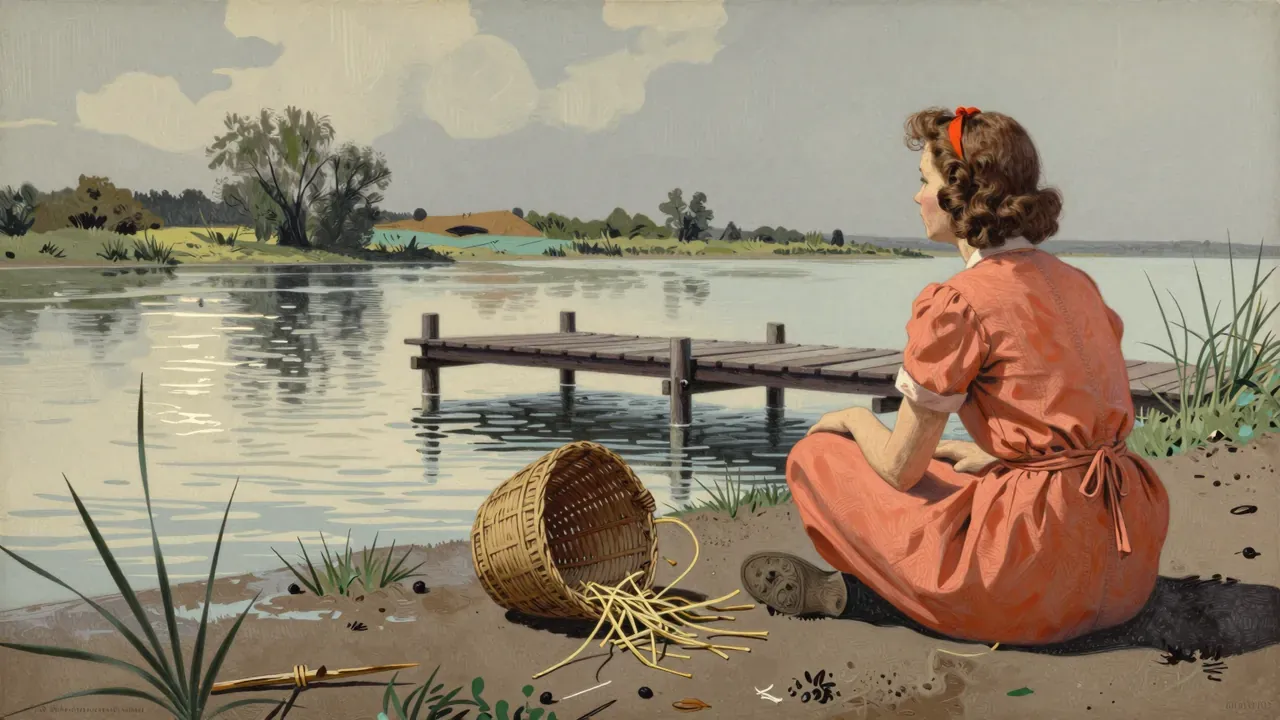
Jean Renoir’s 1946 featurette, shot in 1936 and adapted from Maupassant, captures a summer day in 1860 when a Paris shopkeeper’s daughter is briefly drawn from her world by a riverbank encounter. Forty minutes long, it relies on atmosphere, restraint, and precise visual storytelling rather than exposition or resolution. Claude Renoir’s cinematography, Joseph Kosma’s score, and Marguerite Renoir’s editing sustain a mood of quiet inevitability. Though some structural choices feel tentative, its emotional accuracy and formal discipline make it a benchmark of poetic realism.

13:00

A Woman of Paris

Charlie Chaplin, A. Edward Sutherland · 1923

A Woman of Paris (1923) is Charlie Chaplin’s sole silent drama without the Tramp, starring Edna Purviance as Marie St. Clair — a woman whose life unravels not through vice, but through miscommunication, social constraint, and quiet consequence. Directed with surgical restraint, it uses décor, editing, and understated performance to trace fate as environment rather than destiny. Though its contemporary reception was mixed and its lead performance uneven, its influence on narrative realism endures.

13:00

A Woman's Face

Gustaf Molander · 1938

A disfigured Swedish woman, Anna Holm, joins a blackmail ring out of social exile. After a botched break-in, she is taken in by a plastic surgeon who repairs her face — not to make her beautiful, but to restore her ability to move unseen in the world. As she assumes a new identity to infiltrate a wealthy family, she begins to protect the very child she was meant to kill. Gustaf Molander’s 1938 drama traces moral change not through epiphany but through repeated, quiet choices — about care, labour, and who gets to belong.
13:00

Ådalen 31

Bo Widerberg · 1969

Bo Widerberg’s 1969 Swedish drama Ådalen 31 reconstructs the 1931 Ådalen shootings through the daily life of the working-class Andersson family. Anchored by Peter Schildt and Roland Hedlund, it traces springtime tensions between strikers and strikebreakers in northern Sweden, culminating in a military massacre that kills five. Shot by Jörgen Persson with deliberate restraint, it avoids polemic in favour of tactile realism — fishing, jazz, French lessons, abortion, grief — making ideology legible through habit, not speech. It won the Cannes Grand Prix and remains a landmark of socially engaged arthouse cinema.

13:00

Blonde Venus

Josef von Sternberg · 1932

Blonde Venus (1932), directed by Josef von Sternberg and starring Marlene Dietrich, follows a chemist’s wife who returns to the cabaret stage to fund her husband’s life-saving treatment, then descends into flight, poverty, and arrest before a fragile reconciliation. Its power lies not in plot but in Dietrich’s commanding presence, Bert Glennon’s high-contrast cinematography, and a formal insistence on dignity amid degradation — all within the constrained moral universe of pre-Code Hollywood.

13:00

Borderline

Kenneth Macpherson · 1930

Borderline (1930), written and directed by Kenneth Macpherson, is a silent British-Swiss drama starring Paul and Eslanda Robeson and H.D. Set in a Swiss guesthouse, it traces an interracial love triangle amid local hostility, using Eisensteinian montage and Pabst-influenced psychological framing. Restored in 2006 and again in 2010 with new soundtracks, it remains a demanding, formally rigorous work — less concerned with storytelling than with how cinema constructs meaning around race, gender, and social boundary-making.

13:00

Boudu Saved from Drowning

Jean Renoir · 1932

Jean Renoir’s 1932 Boudu Saved from Drowning follows a Paris bookseller who rescues a suicidal tramp and tries to assimilate him into middle-class life. Starring Michel Simon, the film uses precise staging, behavioural realism and dry wit to dissect the contradictions of respectability — not by arguing against it, but by letting its rituals collapse under the weight of an unassimilable presence.

13:00

Brief Encounter

David Lean · 1945

David Lean’s 1945 adaptation of Noël Coward’s Still Life follows Laura Jesson and Alec Harvey, two married strangers whose brief, chaste affair unfolds over Thursdays in a Lancashire railway station. Shot in stark black-and-white by Robert Krasker, scored with Rachmaninoff’s Second Piano Concerto, and performed with extraordinary restraint by Celia Johnson and Trevor Howard, it renders love not as liberation but as quiet crisis — a collision of feeling and duty that resolves not in triumph or tragedy, but in return.

history.briefs History

All 4 in history →
10:18

Reichstag fire

27 February 1933

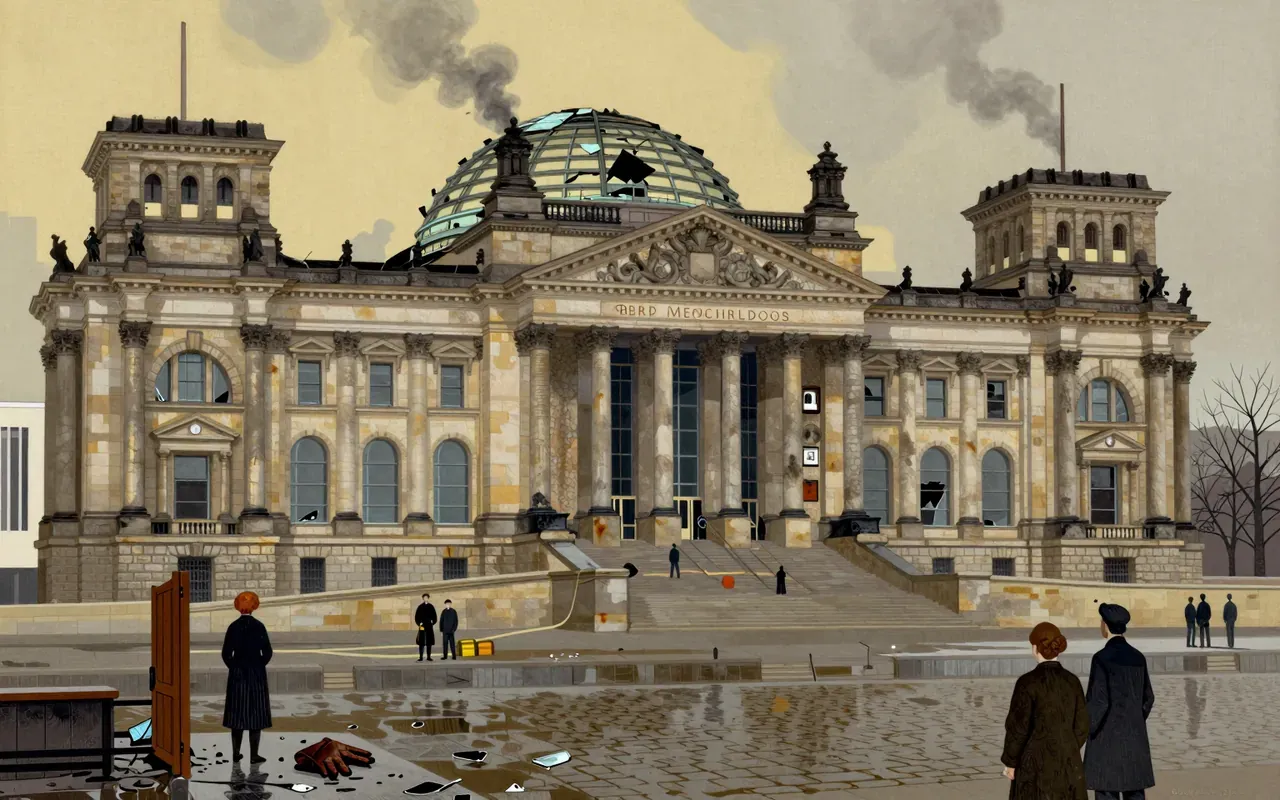
The Reichstag fire was an arson attack on 27 February 1933 in Berlin. It was reported at 9:00 p.m., extinguished by 11:30 p.m., and gutted most of the building. Van der Lubbe was arrested inside. Twenty unburned firelighters were found. The Nazi government used it within 24 hours to suspend civil liberties. Who started it remains contested. The record proves method and consequence — not motive, conspiracy or sole agency.

10:48

Spanish Civil War

1936 to 1939

The Spanish Civil War was a domestically rooted civil conflict (1936–1939) between Republicans defending the Popular Front government and Nationalists launching a failed coup. It ended with Nationalist victory and Franco’s authoritarian regime — lasting until 1975. Evidence confirms militia mobilisation, Franco’s October 1936 appointment as supreme leader, organised purges in conquered zones, and Casado’s March 1939 coup fracturing Republican resistance. What remains contested includes the scale, coordination and motives behind Republican executions — the source only states local authority involvement 'varied by location'. The war changed Spain’s constitutional order permanently and demonstrated how foreign powers weaponise civil wars as ideological proxies.

13:00

Great Depression

1929–1941

The Great Depression began with the October 1929 Wall Street crash and, over the following years, produced a roughly 46 per cent drop in American industrial production, unemployment reaching a quarter of the workforce, and a worldwide contraction in trade and output that lasted until the outbreak of the Second World War. Economists have proposed several overlapping explanations, monetary contraction, insufficient aggregate demand, and a debt-deflation spiral among them, and continue to debate how much credit each deserves alongside factors including the Smoot-Hawley Tariff and the rigidity of the gold standard.

13:00

Roaring Twenties

1920–1929

The 1920s brought rapid economic growth, mass consumer goods, jazz and a new pace of urban life to the United States and, more unevenly, to parts of Europe. The prosperity behind the name was real but badly distributed: rural industries stagnated, and Prohibition, in force for most of the decade, produced a black market and thousands of poisoning deaths alongside whatever gains it made against drinking. The Wall Street crash of 1929 ended the boom abruptly, and the arguments the decade started, about excess, exclusion and the wisdom of Prohibition, ran on well past the crash.

design.briefs Design

All 10 in design →
10:19

Marianne Brandt

Marianne Brandt didn’t just make lamps — she ran the workshop that paid the Bauhaus’ bills.
11:43

Art Deco

Art Deco wasn’t about beauty — it was about broadcasting power through geometry, gold, and reinforced concrete.
9:46

Barcelona Pavilion

Ludwig Mies van der Rohe · 1928

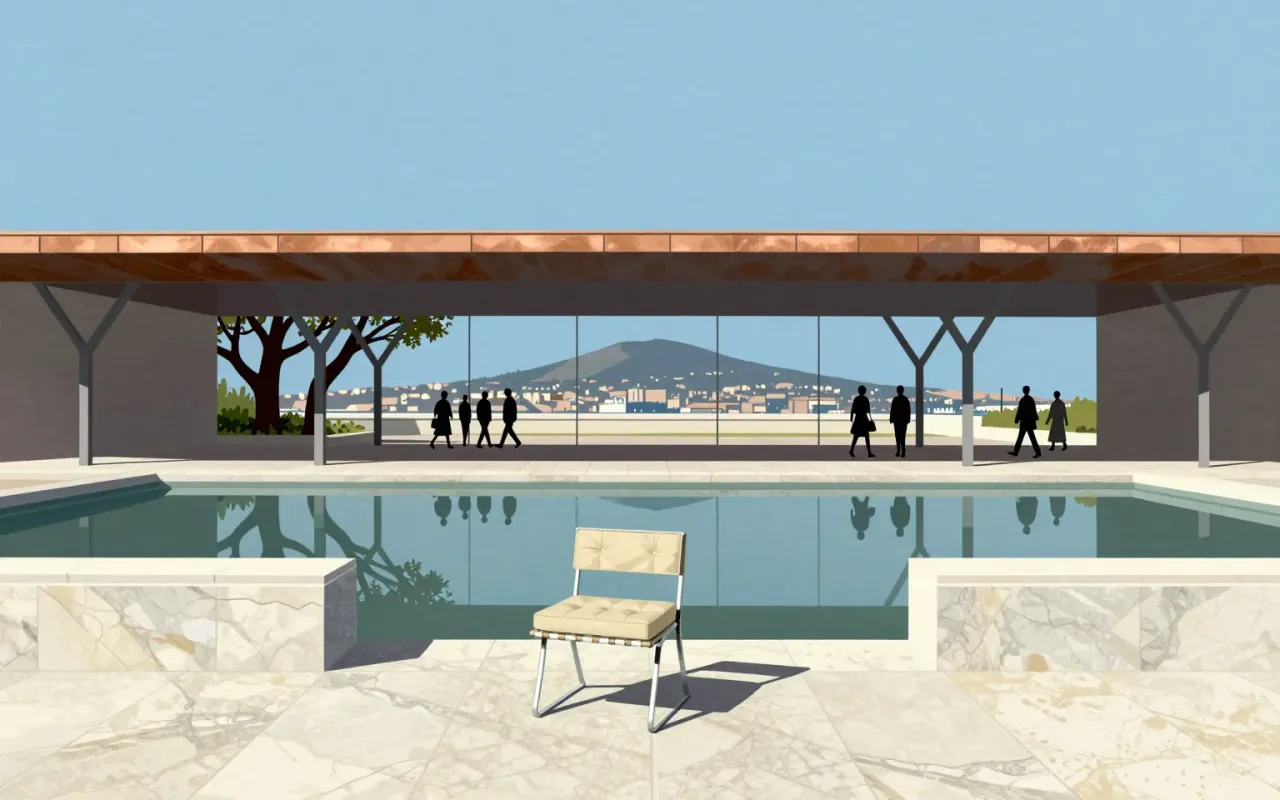
The Barcelona Pavilion is a temporary German Pavilion for the 1929 International Exposition in Barcelona, co-designed by Ludwig Mies van der Rohe and Lilly Reich. It used marble, red onyx, and travertine. It was demolished in 1930. A 1986 reconstruction now stands on the original site. It is one of Mies’s two European masterworks. Its spatial logic, material choices, and role as both exhibit and experiential space remain legible and instructive.

11:34

Bauhaus

Walter Gropius · 1919

The Bauhaus was a German art school (1919–1933) founded by Walter Gropius in Weimar. It combined crafts and fine arts through an experimental, theory-led pedagogy centred on the Vorkurs. Its aim was to unify artistic vision with mass production, functionality, and industrial collaboration — producing functional, cheap, industrially viable objects like the F51 armchair (1920), Sommerfeld House (1920), and Gropius’s 1923 door handles. Its internal tensions — between expressionism and New Objectivity, craft and industry — were structural, not resolved. It established the principle that aesthetic quality must extend to every home via well-designed, industrially produced objects.

10:01

Cooper Black

Oswald Cooper · 1922

Cooper Black is an ultrabold serif typeface designed for display use, drawn as an extra-bold weight of the Cooper Old Style family. It originated from Oswald Cooper’s lettering practice in 1920s Chicago and the Midwest. Its low stroke contrast and soft, 'muddy' appearance distinguish it from nineteenth-century fat faces. It quickly became popular in newspaper advertising and later in pop culture — notably on the 1966 Pet Sounds album cover. It was the second-best-selling typeface for American Type Founders and polarised typographic opinion: rejected by conservative typographers but embraced so enthusiastically by graphic designers that supply could not meet demand.

9:52

International Style

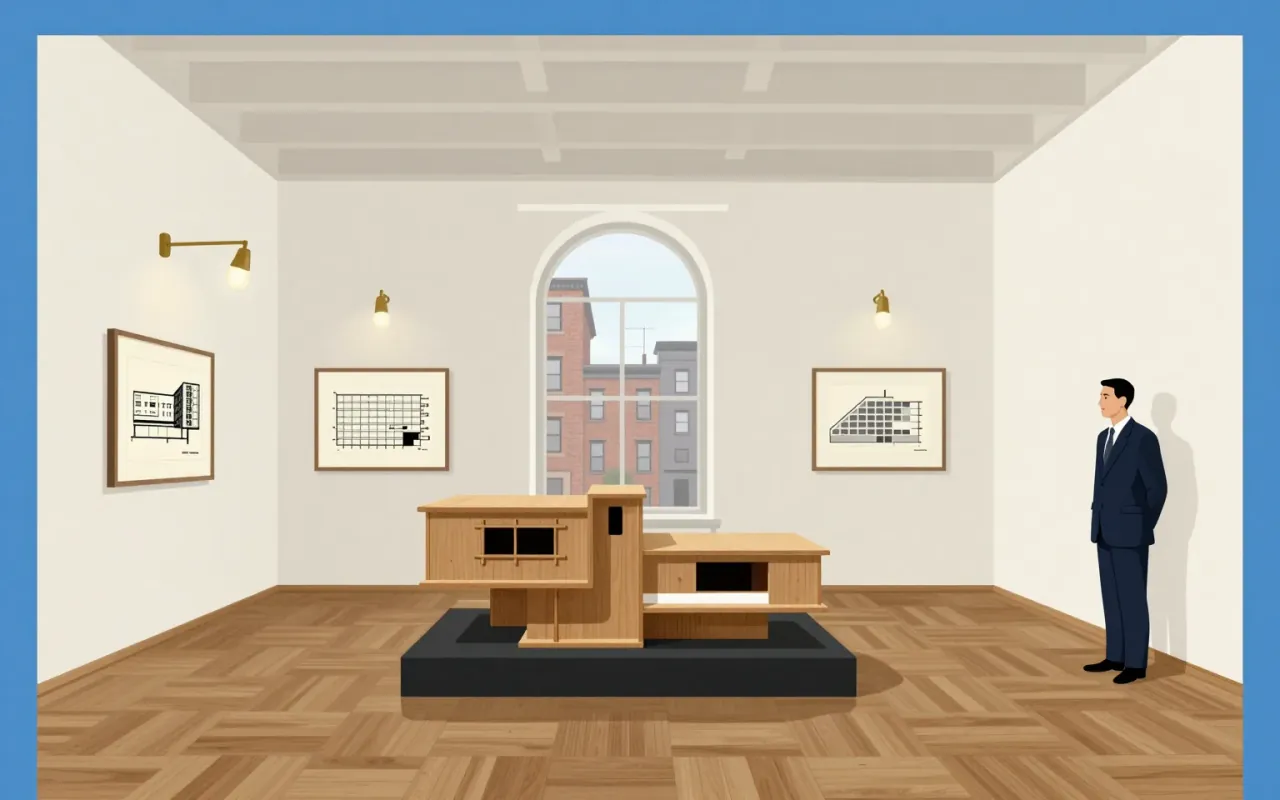
The International Style was not invented by architects — it was edited into existence by two men at MoMA in 1932.
9:25

Konstantin Melnikov

Melnikov didn’t follow Constructivism—he outmanoeuvred its dogma with sawtooths, slopes, and glass.

business.briefs Business

All 1 in business →
10:09

Merck & Co.

George Merck · 1891

Merck & Co. is a multinational pharmaceutical company founded in 1891 as the American affiliate of the German Merck Group, made independent in 1919 after U.S. government expropriation and resale. Its early growth came from strategic mergers — not organic R&D — and its landmark streptomycin breakthrough relied on external academic research funded by the company. Under George W. Merck’s presidency (1925–1950), it developed synthetic vitamins, sulfas, antibiotics, and hormones, while simultaneously leading the U.S. biological weapons programme. The gap between its self-presentation as a scientific pioneer and its actual mechanics — acquisition, outsourcing, and state-aligned research — is the core of its business story.

culture.briefs Culture

All 6 in culture →
8:47

Social realism

Social realism names power as the subject—but mistakes visibility for leverage.
9:04

Frankfurt School

Critical theory was never neutral. It was a weapon forged in exile against fascism, capitalism, and dogma—and it still cuts.
8:52

Futurism

Futurism wasn’t about the future—it was about breaking the present with a petrol-soaked rag.
10:49

Lost Generation

A garage mechanic’s insult became a generation’s epitaph—and erased everyone who didn’t write in Paris.
9:01

British Council

A state-backed cultural agency founded not to share art, but to fight ideology — and still operating on that premise.

automotive.briefs Automotive

All 11 in automotive →
9:30

Bugatti Type 57SC Atlantic

Jean Bugatti · 1936

The Atlantic was one of the best-known bodies on the Bugatti Type 57S and 57SC. It was based on Jean Bugatti's 1935 Aérolithe concept, and the dorsal seam that began as a riveting method became its signature.

9:50

Auto Union

Ferdinand Porsche · 1932

The Auto Union racing cars (Types A–D) were state-funded, rear mid-engine Grand Prix machines built from 1934 to 1939. Ferdinand Porsche designed the foundational P-Wagen Project, which Auto Union acquired in 1932. Their central fuel tank, forward driver position, and supercharged engines delivering up to 550 hp defined pre-war racing engineering — and established solutions still used in modern open-wheel cars.

10:20

Talbot-Lago T150-C SS

Figoni & Falaschi · 1936

The Talbot-Lago T150C SS Teardrop Coupe is a 1936 Figoni & Falaschi-bodied car commissioned by Antonio Lago to revive the Talbot marque. Its teardrop form was among the most aerodynamic of its era—and the most frequently specified for the Lago-SS. It established no new chassis or engine architecture, but it did establish a visual language for speed that resonated at concours and auction alike.

10:42

Bugatti Royale

Ettore Bugatti · 1927

The Bugatti Royale is a large luxury automobile built by Bugatti from 1927 to 1933. Ettore Bugatti conceived it as a royal conveyance. It has a straight-eight engine derived from an unrealised French Air Ministry aero design.

10:12

Cord 810/812

Gordon Buehrig · 1936

The Cord 810/812 is a 1936–1937 American luxury automobile designed by Gordon M. Buehrig for Cord Automobile, a division of Auburn Automobile Company. It pioneered front-wheel drive with independent front suspension in the US. It introduced hidden headlights and replaced the radiator grille with horizontal louvres — earning the 'coffin nose' nickname. Its semi-automatic transmission sat ahead of the engine, eliminating the driveshaft and transmission tunnel. It omitted running boards. Total production was 2,972 units. The Cord 812 was recognised for its originality by the Museum of Modern Art in 1951.

8:21

Borgward Isabella

Carl Borgward · 1954

The Borgward Isabella is a 1954–1962 two-door saloon built in Bremen. It uses a 1493 cc four-cylinder engine, front-engine rear-wheel-drive layout, monocoque construction, and swing axle rear suspension. It was originally planned as the Hansa 1500 but renamed Isabella due to internal and media preference. Though smaller and less powerful than its predecessor, it became Borgward’s largest commercial success—11,150 units were built in its first year, and 202,862 total by end of production. Its launch price was DM 7,265—higher than Opel Rekord and Ford Taunus, but lower than Mercedes-Benz 180. A launch road test recorded 130 km/h top speed and 8.4 L/100 km fuel consumption. Testers praised its wide cabin, large windows, effective brakes, cigarette lighter, and clock. Carl Borgward participated in detail in its design. It embodied American-type styling and chrome decoration with European compact dimensions.

10:24

Bugatti Type 35

Ettore Bugatti · 1924

The Bugatti Type 35 is the first holistically conceived, race-ready car sold as a complete system. It pioneered cast alloy wheels and won over 1,000 races between 1924 and 1930. Its design prioritised integration over adaptation—and succeeded globally, with factory and privateer teams alike.

10:58

Chrysler Airflow

Carl Breer · 1934

The Chrysler Airflow is a full-size car produced by Chrysler from 1934 to 1937. It pioneered streamlining, unibody construction, full-steel body between the wheels, and innovative weight distribution for improved handling and ride. Despite its engineering breakthroughs, it failed commercially due to controversial styling and poor market acceptance.

fashion.briefs Fashion

All 10 in fashion →
9:29

Christian Dior

Dior didn’t liberate women—he re-enchanted them with structure, season by season.
9:18

Ivy League (clothes)

Ivy League clothing was not rebellion—it was recalibration: sportswear stripped of sport, tailoring stripped of tension, class stripped of ceremony.
9:49

Burberry

A war coat that refused demobilisation—and made utility legible as authority.
7:40

Marie-Louise Carven

A dress built for small bodies—and built from housemaids’ cloth—changed how ready-to-wear began.
9:34

Coco Chanel

Chanel didn’t liberate women’s bodies—she outsourced their discipline to jersey.
7:09

Jean Patou

Jean Patou didn’t liberate women’s bodies — he equipped them for sport.
7:48

Rochas

Rochas didn’t make clothes — it edited the body’s margins.