briefs
Topic · across the network

Interiors

The room as an argument about how to live.

31
briefs
5
subjects
10:03
average
312 min
in total
Abstraction 407Absurdism 137Acoustics 220Acting 65Adaptation 372Addiction 95Adolescence 202Advertising 77Age of exploration 14Ageing 113Agriculture 100Algorithms 114Ambition 46Anarchism 38Ancient Egypt 17Ancient Greece 38Ancient Rome 30Animals 172Anthropology 23Apartheid 12Architecture 165Archives 32Argentina 10Art Deco 26Artificial intelligence 78Astronomy 81Attention 42Australia 32Automation 73Avant-garde 164Aviation 79Banking 72Banned works 40Bauhaus 12Beer 5Behavioural economics 22Berlin 16Big tech 6Biodiversity 136Biography 86Birds 41Black holes 20Blockchain 12Boxing 14Branding 77Brazil 43Bread 29Britain 131Brutalism 4Bubbles 3Buddhism 28Byzantium 10California 17Canada 18Capitalism 94Cars 468Celebrity 59Censorship 110Cheese 24Chefs 9Chemistry 104Chess 2Childhood 87China 109Chocolate 8Christianity 49Cinematography 343Cities 90Class 485Climate change 107Club culture 100Cocktails 2Coffee 11Cognitive bias 14Collecting 16Colonialism 284Colour 42Comedy 89Community 52Complexity 21Computing 309Consciousness 16Conservatism 14Conspiracy theories 8Cooking 178Corruption 38Cosmology 31Cover versions 64Craft 116Crate digging 42Creativity 8Crime 234Cryptocurrency 8Cryptography 24Cuba 10Cybersecurity 30Dada 12Debt 38Decision-making 28Decolonisation 46Deep time 80Democracy 45Denim 16Deserts 45Detroit 17Dinosaurs 12Directing 168Disasters 59Disease 109DJ culture 89Dreams 32Drones 5Drum machines 96Dystopia 69East Africa 28Ecology 337Economics 36Editing 72Education 92Egypt 12Electric vehicles 59Emotion 22Empire 92Endurance 49Energy 120Engineering 541Entropy 8Epidemics 13Equality 9Espionage 31Ethics 44Evolution 174Existentialism 106Expertise 2Exploration 49Extinction 23Failure 37Family 240Fandom 22Fascism 45Fashion 215Fast fashion 12Fear 34Feminism 122Fermentation 126Film music 81Fishing 12Folklore 71Food history 588Football 16Forests 31Forgery 7France 163Fraud 15Free will 13Freedom 16French literature 15Friendship 24Furniture 36Gambling 14Gender 63Generations 28Genetics 87Geology 96Germany 66Globalisation 74Gothic 32Greece 5Grief 126Habits 6Happiness 2Hardware 709Haute couture 22Headphones 8Hi-fi 12Hinduism 12Hoaxes 1Human history 23Human nature 41Identity 138Illustration 8Impressionism 6Improvisation 249India 89Indonesia 15Industrial design 342Inequality 13Inflation 4Information 34Infrastructure 280Insects 29Intelligence 8Interiors 31Internet culture 88Invention 329Iran 41Islam 40Islands 17Israel 9Italy 52Jamaica 10Japan 114Jewellery 5Journalism 34Judaism 13Justice 42Korea 41Language 70Law 90Leadership 20Learning 6Liberalism 1Libraries 6Literary criticism 26London 12Loneliness 61Los Angeles 62Lost works 9Love 67Luxury 55Machine learning 15Management 10Maps 5Marketing 21Markets 51Mars 6Marxism 26Masculinity 46Materials 138Mathematics 79Meaning 6Medicine 124Memory 82Mental health 70Mesopotamia 4Mexico 38Migration 95Minimalism 68Mining 30Misinformation 9Modernism 63Money 24Monopoly 32Mortality 61Motivation 2Mountains 16Museums 27Mysticism 11Mythology 60Nationalism 40Neuroscience 23New York 36Nigeria 7Nihilism 10Noise 31Nostalgia 33Nuclear 29Nutrition 17Oceans 48Oil 42Open source 45Painting 18Palaeontology 29Parenting 14Paris 18Partition 6Patents 71Patronage 14Perception 44Personal style 27Personality 2Persuasion 8Peru 10Philosophy 77Photography 37Physics 206Plants 26Platforms 89Podcasting 1Poetry 25Poland 17Policing 34Pop Art 16Populism 2Portraiture 6Portugal 18Postmodernism 23Power 91Prehistory 24Preservation 28Printmaking 21Privacy 11Probability 6Productivity 1Programming 54Prohibition 1Propaganda 35Protest 75Pseudoscience 17Psychology 80Publishing 22Punishment 16Quantum mechanics 44Race 145Radio 30Railways 35Rave 17Realism 47Record labels 19Recording 810Relativity 23Religion 154Resilience 15Restaurants 30Restoration 2Retail 94Revolution 58Risk 18Ritual 96Robotics 26Romance 96Russia 58Salt 9Sampling 246Satire 84Scandinavia 28Scientific method 186Screenwriting 26Sculpture 7Secularism 2Self-deception 14Semiconductors 73Sexuality 102Ships 18Silence 24Silicon Valley 17Slavery 35Sleep 2Smartphones 27Sneakers 15Social media 58Socialism 9Software 68Songwriting 180Sound design 332Sound systems 20South Africa 19South East Asia 30Space exploration 84Spain 18Special effects 41Spices 62Spirits 12Sport 82Startups 21Statistics 10Status 9Stoicism 4Storytelling 68Strategy 70Street food 99Streetwear 16Studio craft 508Subcultures 59Sugar 12Supply chains 115Surrealism 53Surveillance 21Sustainability 30Synthesis 232Tailoring 37Taxation 14Tea 24Textiles 97Thailand 11The American Revolution 19The American South 88The Arab world 41The Arctic 19The Balkans 17The Belle Epoque 13The body 29The brain 26The Caribbean 28The civil rights movement 62The Cold War 160The eighties 268The Enlightenment 29The financial crisis 19The First World War 39The food industry 157The French Revolution 9The Gilded Age 9The Great Depression 18The Holocaust 20The Industrial Revolution 93The internet 61The interwar years 135The Middle Ages 35The Moon 4The music business 169The Netherlands 10The nineties 26The Olympics 10The pandemic 13The Reformation 1The Renaissance 16The Russian Revolution 19The Second World War 102The seventies 58The sixties 28The space race 5The United States 19The universe 7The Victorian era 37Therapy 20Tokyo 11Trade 48Tragedy 22Translation 5Trauma 85Travel 5True crime 2Turkey 18Typography 54Uniforms 23Unions 8Urban planning 66Utilitarianism 1Utopia 5Vaccines 10Vegetarianism 15Venture capital 6Video games 291Vietnam 12Vintage 65Vinyl 6Virtual reality 11War 169Watches 4Water 11Weather 29West Africa 29Wilderness 10Wine 3Work 22Workwear 19Worldbuilding 121

film.briefs Film

All 9 in film →
13:00

Blow Up My Town

Chantal Akerman · 1968

Blow Up My Town is a 13-minute Belgian short film directed by and starring Chantal Akerman, released in 1968. Filmed in French in a single domestic interior with no edits or soundtrack, it follows a solitary woman performing mundane kitchen tasks before an off-screen explosion ends the film. It belongs to Akerman’s early structuralist period, sharing concerns with time, repetition, and the charged ordinariness of domestic space. Though obscure and formally austere, it functions as a precise calibration of attention — less a story than a sustained observation of how routine holds latent force.

13:00

Midnight

Mitchell Leisen · 1939

Midnight (1939), directed by Mitchell Leisen and written by Charles Brackett and Billy Wilder, follows American showgirl Eve Peabody as she impersonates a baroness in Paris to escape poverty — only to become entangled in a wealthy couple’s marital crisis. Anchored by Claudette Colbert’s precise physical comedy and Charles Lang’s softly lit cinematography, the film balances screwball energy with studio-era sophistication. Though its final act retreats from its sharpest ideas into convention, its craftsmanship, timing, and thematic clarity make it a durable, pleasurable artefact of Golden Age Hollywood.

13:00

Ornamental Hairpin

Hiroshi Shimizu · 1941

Set entirely at a remote Japanese hot-spring resort in 1941, Ornamental Hairpin follows a group of guests — a soldier, a geisha, two boys, a professor, an old man — whose intersecting stays are extended by a single lost hairpin. Directed by Hiroshi Shimizu and starring Kinuyo Tanaka, it is a quiet, observational drama that finds emotional weight in routine, restraint, and unspoken connection, refusing both wartime urgency and narrative resolution.

13:00

Repulsion

Roman Polanski · 1965

Roman Polanski’s 1965 psychological horror follows Carol Ledoux, a withdrawn Belgian manicurist in London, as she descends into acute dissociation while left alone in her sister’s flat. Shot in black and white on a modest budget, the film uses tight framing, amplified diegetic sound, and meticulous pacing to replicate the texture of perceptual collapse — cracks in walls, hands emerging from plaster, time stretching and warping. Catherine Deneuve’s restrained performance anchors a film that refuses exposition, causality, or resolution. It is a study in claustrophobia, not of space alone, but of consciousness under pressure.

13:00

The Bitter Tears of Petra von Kant

Rainer Werner Fassbinder · 1972

Rainer Werner Fassbinder’s 1972 chamber drama confines itself to one Bremen apartment, tracing the rise and collapse of fashion designer Petra von Kant’s obsessive relationship with younger woman Karin Thimm. With an all-female cast and static, theatrical staging, it uses repetition, framing and silence to dissect codependency, class, and the violence of care — not as psychology, but as architecture.

13:00

The Touch

Ingmar Bergman · 1971

Ingmar Bergman’s 1971 English-language debut follows Karin, a Swedish housewife whose affair with an American archaeologist unravels her assumptions about duty, desire, and selfhood. Shot on Gotland with Sven Nykvist, it privileges psychological nuance over plot, using restraint and silence to trace a woman’s slow, uncertain reclamation of agency. Though criticised at release for stiffness and imbalance, it remains a rare, transparent record of Bergman adapting his methods to new language, cast, and expectation.

13:00

Vanya on 42nd Street

Louis Malle · 1994

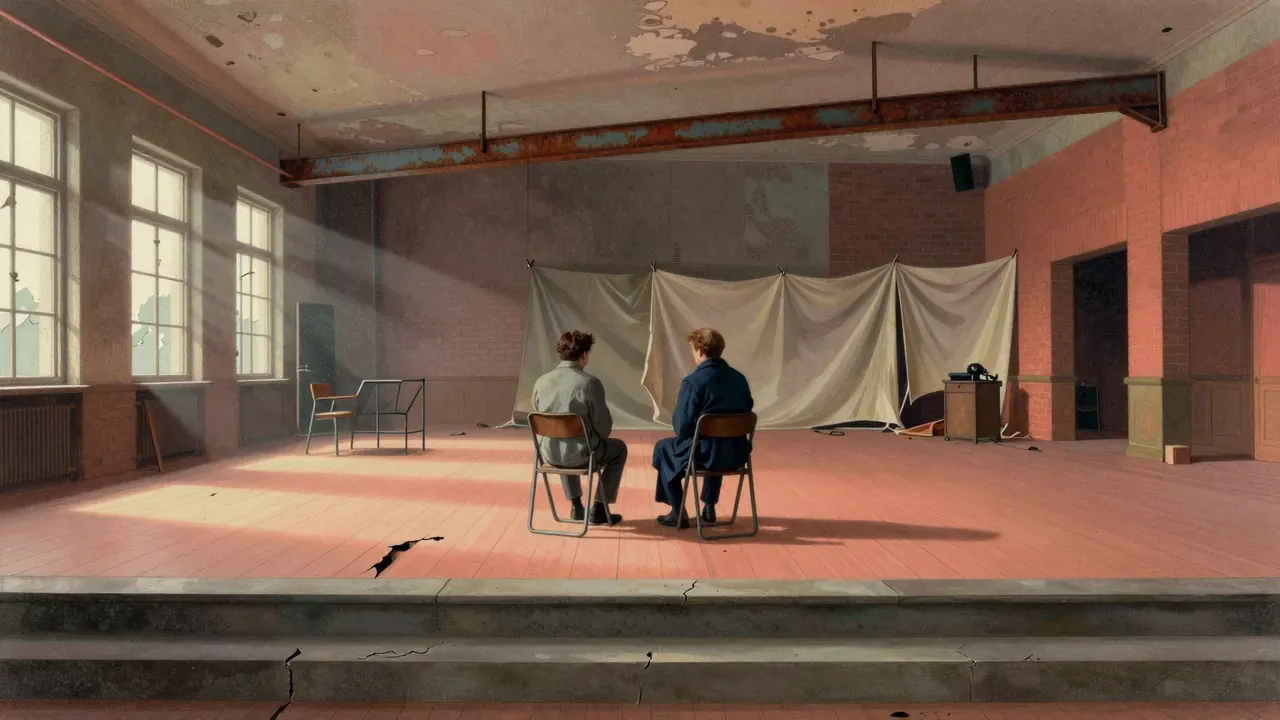
Louis Malle’s final film documents Andre Gregory’s long-term workshop on Chekhov’s Uncle Vanya, shot in the derelict New Amsterdam Theatre with Wallace Shawn, Julianne Moore, and others. It preserves the rhythms of rehearsal — interruption, repetition, uncertainty — rather than staging a polished performance. Declan Quinn’s restrained cinematography and Joshua Redman’s sparse saxophone score support a film that values duration, silence, and the physical reality of a decaying space over narrative propulsion or dramatic resolution.

13:00

Barton Fink

Joel Coen, Ethan Coen · 1991

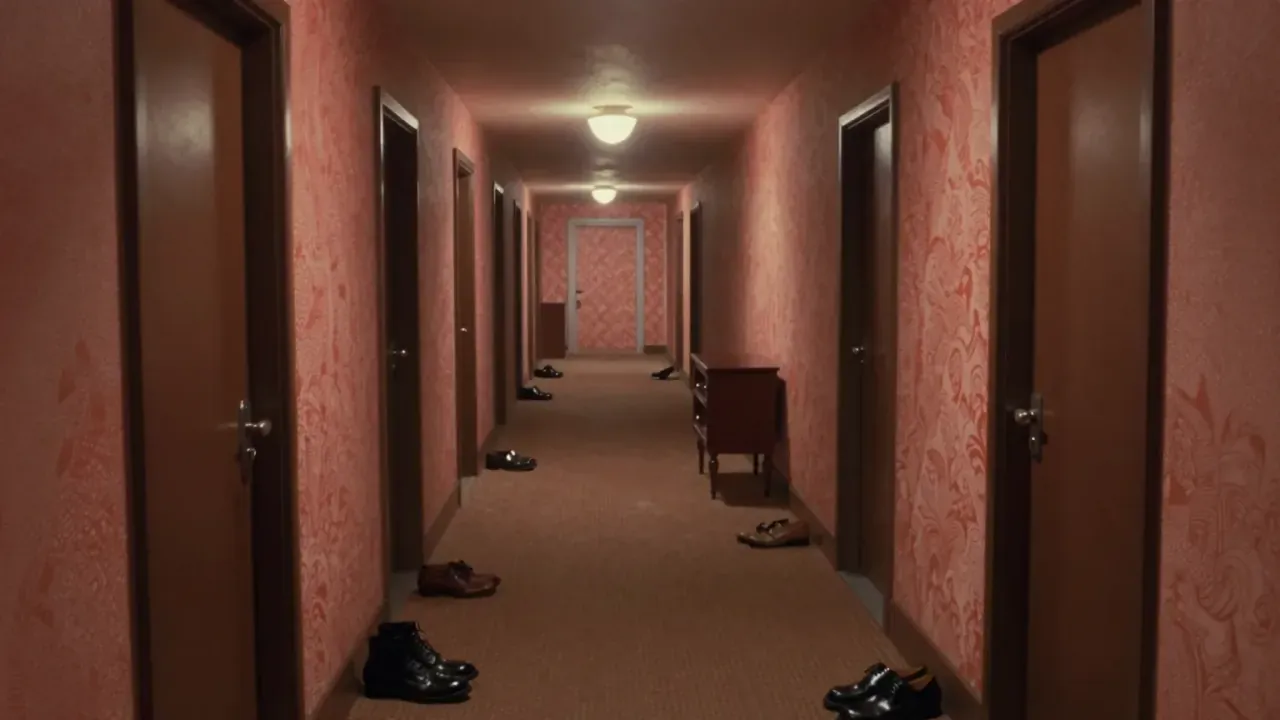
Barton Fink (1991) is a neo-noir arthouse thriller set in 1941, following a New York playwright’s unsettling stay at the decaying Hotel Earle while writing for a Hollywood studio. Directed by Joel and Ethan Coen, it stars John Turturro and John Goodman, with cinematography by Roger Deakins and music by Carter Burwell. Its power lies in sustained atmosphere, recursive imagery, and psychological compression — less a narrative than a meticulously constructed state of mind.

design.briefs Design

All 17 in design →
5:27

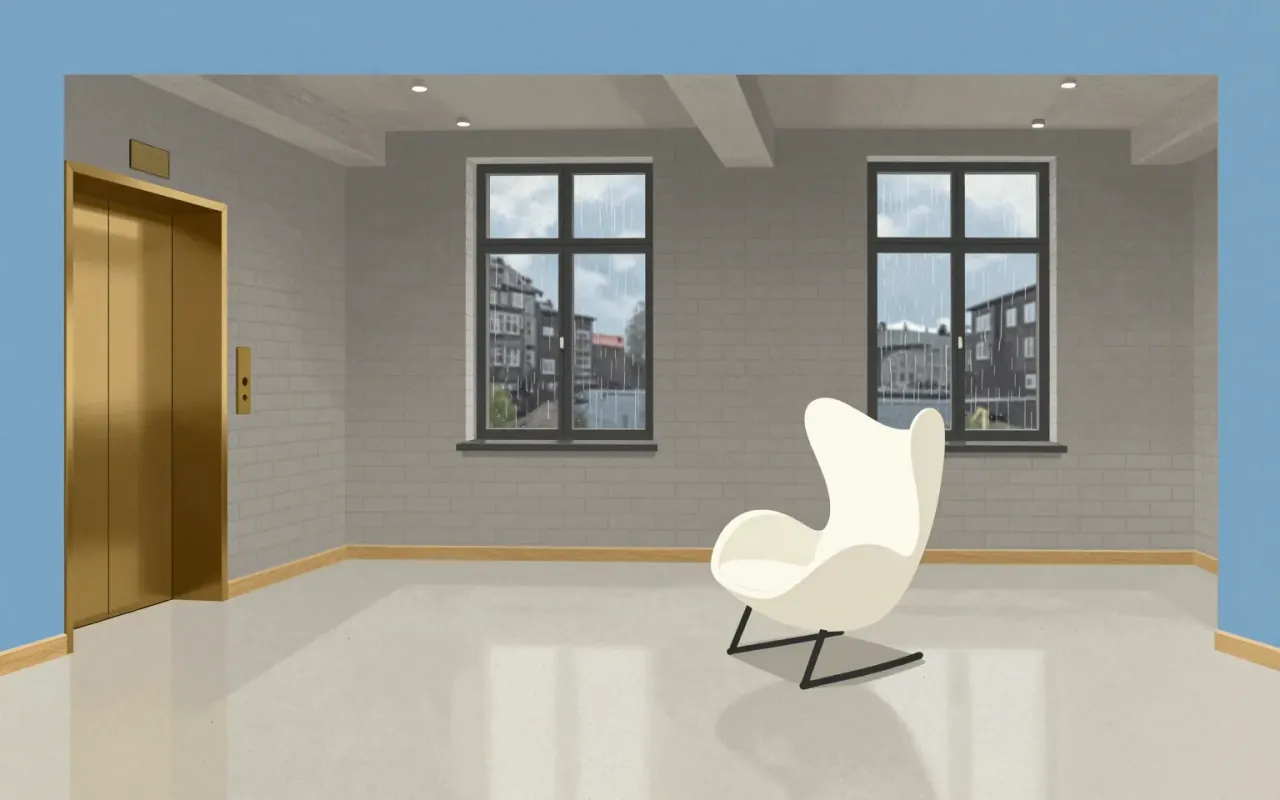
Egg (chair)

Arne Jacobsen · 1958

The Egg chair is a tightly constrained response to the SAS Royal Hotel commission: a sculptural, isolating seat made possible by new materials. Its couch variant reveals the cost of scaling that logic — a visible seam, limited production, and unresolved tension between form and upholstery. It belongs to design/furniture and design/interiors. Topics include furniture, industrial-design, and interiors.

8:37

Enric Miralles

Miralles treated detail as meaning—and refused to separate architecture from the ground it stood on.
1:35

Swan (chair)

Arne Jacobsen

Arne Jacobsen designed the Swan lounge chair and sofa for Copenhagen's SAS Royal Hotel in 1958. The chair combines an upholstered body with a star-shaped satin-polished aluminium base.

9:07

TeamLab (art collective)

TeamLab doesn’t simulate nature—it stages a dependency: the artwork only coheres when people move through it.
9:24

Willow Tearooms

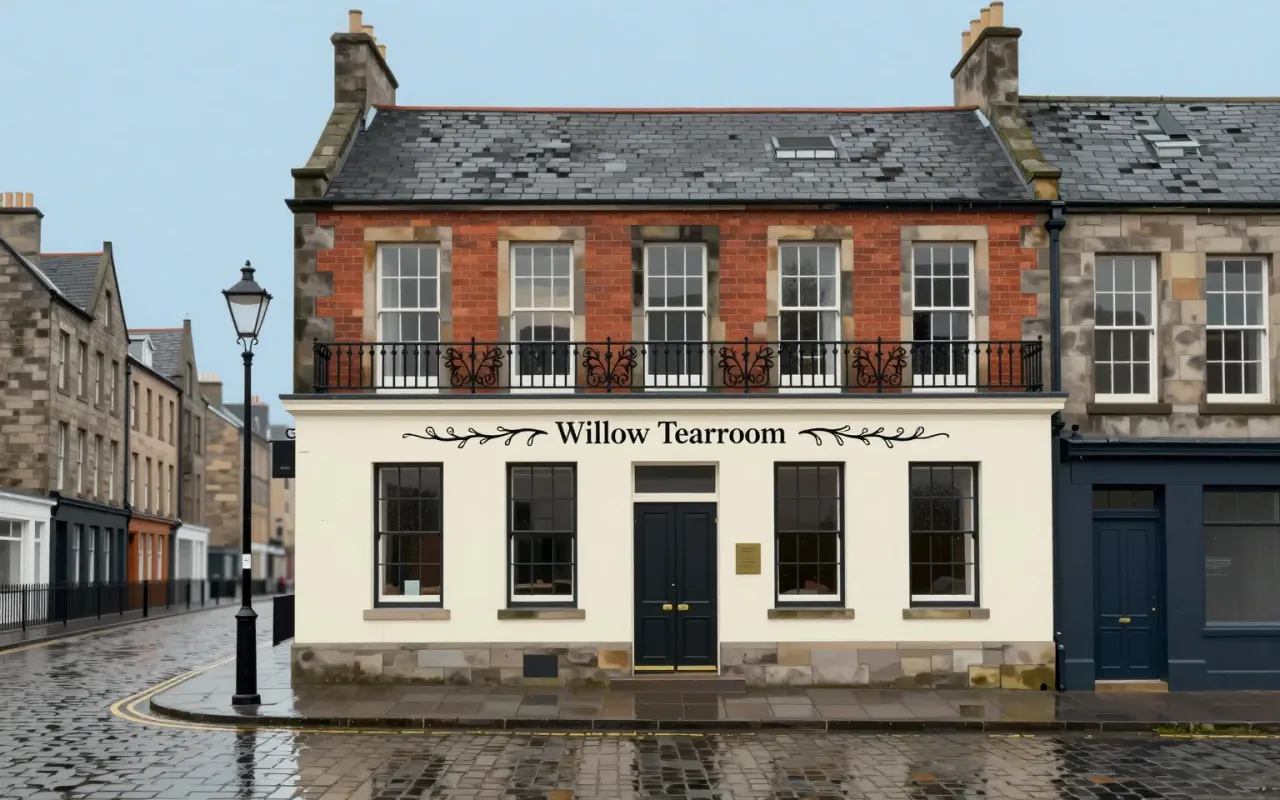
Mackintosh didn’t just design a tearoom — he designed a brand, a service, and a building, all at once, in 1903.
9:02

Alvar Aalto

Aalto didn’t soften modernism—he rebuilt it from the inside out, using wood, patents, and total control.
8:14

Andrée Putman

Essentialism is not minimalism—it’s choosing what to keep, then telling a story with the rest.

games.briefs Games

All 2 in games →
9:52

The Sims (video game)

Will Wright / Maxis · 2000

The Sims is a social simulation video game developed by Maxis and published by Electronic Arts in 2000. Designed by Will Wright, it allows players to create and control virtual people called Sims, build and furnish homes, and manage Sims' needs, relationships, careers, and household finances. Its open-ended gameplay has no fixed win condition. The Sims is an artificial life game built around simulated characters who respond to needs, objects, and other Sims. Although Sims can act autonomously when free will is enabled, the player usually directs their actions, manages their household, and decides how they develop relationships, skills, careers, and homes. Because the game has no fixed win condition, it can be played indefinitely and has been described as more like a toy than a traditional game. Sims are influenced by the player to interact with objects or other Sims. If enabled in the game's options, Sims have a certain amount of free will, allowing them to autonomously interact with their world; however, the player can override most of these autonomous actions by canceling them in the action queue at the top of the screen.

10:12

The Sims 4

Maxis · 2014

The Sims 4 is a social simulation game developed by Maxis and released in September 2014. It has no primary objectives or storyline. Players create Sims using Create-a-Sim, build homes in Build mode, and manage six depleting needs—hunger, bladder, hygiene, social, fun, and energy—through interactions with objects. Careers generate income, but advancement depends on developing linked skills. Aspirations and dynamic wants and fears provide optional goal-oriented structure. The game is open-ended and almost endless.

technology.briefs Technology

All 1 in technology →
9:09

IEEE 802.11

IEEE

IEEE 802.11 is the foundational WLAN standard family. It defines MAC and PHY protocols for wireless local area networking. It uses CSMA/CA for channel access. It supports multiple bands and modulation schemes. It enables interoperability with Ethernet and IP. It was first released in 1997. Amendments extend functionality without replacing the base.

fashion.briefs Fashion

All 2 in fashion →
9:51

Lanvin

Romance is not decoration — it is discipline, and Lanvin built it stitch by stitch.
8:46

Kenzō

Kenzo Takada

Kenzō Takada’s Kenzō label began in 1970 as a resource-constrained experiment in Paris—using flea-market space, Saint Pierre market fabrics, and Rousseau-inspired interiors. It re-energised ready-to-wear with colour and volume, launching the 'Big Look' in 1973–74. Its methods were specific, local, and materially grounded—not symbolic or national. It reached New York and Tokyo by 1971, but never claimed to represent Japan. Its legacy is procedural: how to build influence without infrastructure.