briefs
Topic · across the network

Film music

Scores, and the emotions the image cannot supply on its own.

81
briefs
3
subjects
12:03
average
976 min
in total
Abstraction 407Absurdism 137Acoustics 220Acting 65Adaptation 372Addiction 95Adolescence 202Advertising 77Age of exploration 14Ageing 113Agriculture 100Algorithms 114Ambition 46Anarchism 38Ancient Egypt 17Ancient Greece 38Ancient Rome 30Animals 172Anthropology 23Apartheid 12Architecture 165Archives 32Argentina 10Art Deco 26Artificial intelligence 78Astronomy 81Attention 42Australia 32Automation 73Avant-garde 164Aviation 79Banking 72Banned works 40Bauhaus 12Beer 5Behavioural economics 22Berlin 16Big tech 6Biodiversity 136Biography 86Birds 41Black holes 20Blockchain 12Boxing 14Branding 77Brazil 43Bread 29Britain 131Brutalism 4Bubbles 3Buddhism 28Byzantium 10California 17Canada 18Capitalism 94Cars 468Celebrity 59Censorship 110Cheese 24Chefs 9Chemistry 104Chess 2Childhood 87China 109Chocolate 8Christianity 49Cinematography 343Cities 90Class 485Climate change 107Club culture 100Cocktails 2Coffee 11Cognitive bias 14Collecting 16Colonialism 284Colour 42Comedy 89Community 52Complexity 21Computing 309Consciousness 16Conservatism 14Conspiracy theories 8Cooking 178Corruption 38Cosmology 31Cover versions 64Craft 116Crate digging 42Creativity 8Crime 234Cryptocurrency 8Cryptography 24Cuba 10Cybersecurity 30Dada 12Debt 38Decision-making 28Decolonisation 46Deep time 80Democracy 45Denim 16Deserts 45Detroit 17Dinosaurs 12Directing 168Disasters 59Disease 109DJ culture 89Dreams 32Drones 5Drum machines 96Dystopia 69East Africa 28Ecology 337Economics 36Editing 72Education 92Egypt 12Electric vehicles 59Emotion 22Empire 92Endurance 49Energy 120Engineering 541Entropy 8Epidemics 13Equality 9Espionage 31Ethics 44Evolution 174Existentialism 106Expertise 2Exploration 49Extinction 23Failure 37Family 240Fandom 22Fascism 45Fashion 215Fast fashion 12Fear 34Feminism 122Fermentation 126Film music 81Fishing 12Folklore 71Food history 588Football 16Forests 31Forgery 7France 163Fraud 15Free will 13Freedom 16French literature 15Friendship 24Furniture 36Gambling 14Gender 63Generations 28Genetics 87Geology 96Germany 66Globalisation 74Gothic 32Greece 5Grief 126Habits 6Happiness 2Hardware 709Haute couture 22Headphones 8Hi-fi 12Hinduism 12Hoaxes 1Human history 23Human nature 41Identity 138Illustration 8Impressionism 6Improvisation 249India 89Indonesia 15Industrial design 342Inequality 13Inflation 4Information 34Infrastructure 280Insects 29Intelligence 8Interiors 31Internet culture 88Invention 329Iran 41Islam 40Islands 17Israel 9Italy 52Jamaica 10Japan 114Jewellery 5Journalism 34Judaism 13Justice 42Korea 41Language 70Law 90Leadership 20Learning 6Liberalism 1Libraries 6Literary criticism 26London 12Loneliness 61Los Angeles 62Lost works 9Love 67Luxury 55Machine learning 15Management 10Maps 5Marketing 21Markets 51Mars 6Marxism 26Masculinity 46Materials 138Mathematics 79Meaning 6Medicine 124Memory 82Mental health 70Mesopotamia 4Mexico 38Migration 95Minimalism 68Mining 30Misinformation 9Modernism 63Money 24Monopoly 32Mortality 61Motivation 2Mountains 16Museums 27Mysticism 11Mythology 60Nationalism 40Neuroscience 23New York 36Nigeria 7Nihilism 10Noise 31Nostalgia 33Nuclear 29Nutrition 17Oceans 48Oil 42Open source 45Painting 18Palaeontology 29Parenting 14Paris 18Partition 6Patents 71Patronage 14Perception 44Personal style 27Personality 2Persuasion 8Peru 10Philosophy 77Photography 37Physics 206Plants 26Platforms 89Podcasting 1Poetry 25Poland 17Policing 34Pop Art 16Populism 2Portraiture 6Portugal 18Postmodernism 23Power 91Prehistory 24Preservation 28Printmaking 21Privacy 11Probability 6Productivity 1Programming 54Prohibition 1Propaganda 35Protest 75Pseudoscience 17Psychology 80Publishing 22Punishment 16Quantum mechanics 44Race 145Radio 30Railways 35Rave 17Realism 47Record labels 19Recording 810Relativity 23Religion 154Resilience 15Restaurants 30Restoration 2Retail 94Revolution 58Risk 18Ritual 96Robotics 26Romance 96Russia 58Salt 9Sampling 246Satire 84Scandinavia 28Scientific method 186Screenwriting 26Sculpture 7Secularism 2Self-deception 14Semiconductors 73Sexuality 102Ships 18Silence 24Silicon Valley 17Slavery 35Sleep 2Smartphones 27Sneakers 15Social media 58Socialism 9Software 68Songwriting 180Sound design 332Sound systems 20South Africa 19South East Asia 30Space exploration 84Spain 18Special effects 41Spices 62Spirits 12Sport 82Startups 21Statistics 10Status 9Stoicism 4Storytelling 68Strategy 70Street food 99Streetwear 16Studio craft 508Subcultures 59Sugar 12Supply chains 115Surrealism 53Surveillance 21Sustainability 30Synthesis 232Tailoring 37Taxation 14Tea 24Textiles 97Thailand 11The American Revolution 19The American South 88The Arab world 41The Arctic 19The Balkans 17The Belle Epoque 13The body 29The brain 26The Caribbean 28The civil rights movement 62The Cold War 160The eighties 268The Enlightenment 29The financial crisis 19The First World War 39The food industry 157The French Revolution 9The Gilded Age 9The Great Depression 18The Holocaust 20The Industrial Revolution 93The internet 61The interwar years 135The Middle Ages 35The Moon 4The music business 169The Netherlands 10The nineties 26The Olympics 10The pandemic 13The Reformation 1The Renaissance 16The Russian Revolution 19The Second World War 102The seventies 58The sixties 28The space race 5The United States 19The universe 7The Victorian era 37Therapy 20Tokyo 11Trade 48Tragedy 22Translation 5Trauma 85Travel 5True crime 2Turkey 18Typography 54Uniforms 23Unions 8Urban planning 66Utilitarianism 1Utopia 5Vaccines 10Vegetarianism 15Venture capital 6Video games 291Vietnam 12Vintage 65Vinyl 6Virtual reality 11War 169Watches 4Water 11Weather 29West Africa 29Wilderness 10Wine 3Work 22Workwear 19Worldbuilding 121

music.briefs Music

All 23 in music →
8:58

Glassworks

Philip Glass · 1982

Glassworks is a six-movement chamber work Philip Glass wrote for the recording studio after his large concert and stage pieces, released by CBS in 1982 on LP and on cassette, each with its own mix. It was meant to bring his music to a wider audience, and it did: the album sold well and made his name widely known.

9:08

Ascenseur pour l’échafaud

Miles Davis · 1958

Ascenseur pour l’échafaud is the 1958 soundtrack album for Louis Malle’s Elevator to the Gallows, recorded in Paris in November 1957 by Miles Davis and a quartet of French and American musicians during a single improvised session.

11:32

Country Life

Roxy Music · 1974

Country Life is Roxy Music’s fourth studio album, released on 15 November 1974. It entered the US Billboard 200 Top 40 at No. 37. Rolling Stone described it as 'a cabaret for psychotics'. Its sound features Eddie Jobson’s flanged violin, German oom-pah band passages, Elizabethan textures, and boogie-blues edges. The title and cover parody the British magazine Country Life. The original cover caused US retailers to wrap the album in opaque plastic. An alternative forest-only cover was later issued.

8:21

Histoire de Melody Nelson

Serge Gainsbourg · 1971

Histoire de Melody Nelson is a 1971 concept album by Serge Gainsbourg, co-written and arranged by Jean-Claude Vannier and produced by Jean-Claude Desmarty. It features funk-style electric guitar and bass guitar, Gainsbourg’s spoken word and Sprechgesang vocals, and lush string and choral arrangements. Personnel include Vic Flick, Big Jim Sullivan, Dave Richmond, Dougie Wright, Jean-Luc Ponty, and Jane Birkin. At just under twenty-eight minutes, its short running time and stylistic consistency give it qualities more in line with an extended play or a single continuous suite.

9:23

King Creole

Elvis Presley · 1958

The source material establishes only the commercial reception and basic provenance of the 'King Creole' soundtrack — not its sound, craft, or meaning.

11:43

Loving You

Elvis Presley · 1957

The 'Loving You' soundtrack is Elvis Presley’s first film album, recorded in early 1957 across two studios — Paramount Pictures Scoring Stage and Radio Recorders in Hollywood — with Steve Sholes as first officially credited producer. It contains seven songs written expressly for the film under Presley’s and Parker’s publishing companies, plus five added to meet LP runtime: 'Don’t Leave Me Now' (written for but excluded from the film), '(Let Me Be Your) Teddy Bear' (insisted upon by producer Hal B. Wallis), 'Blueberry Hill' (a 1956 Fats Domino hit), 'True Love' (a Cole Porter song from High Society), and 'I Need You So'. Released in July 1957, it was Presley’s third consecutive number-one album. It inaugurated RCA’s practice of padding Presley soundtracks with non-soundtrack recordings — a pattern that defined his film-era output.

8:26

Movies

Holger Czukay · 1979

The record 'Movies' is verifiably a 1979 solo album by Holger Czukay, released after his departure from Can, and remastered in 2007. Its production method is inferable only as likely involving shortwave radio and tape splicing—because the source states those were Czukay’s trademarks across his solo work, though it never links them specifically to this album. Nothing else about its sound, personnel, studio, instrumentation, or intent is documented. Its title and track names evoke film, but the source material confirms no connection between the album and cinematic practice beyond that nominal link. The appearance of 'Hollywood Symphony' in later films involves entirely separate orchestral recordings—not Czukay’s version. There is no evidence of composition, performance, reception, or cultural impact beyond these bare facts.
9:24

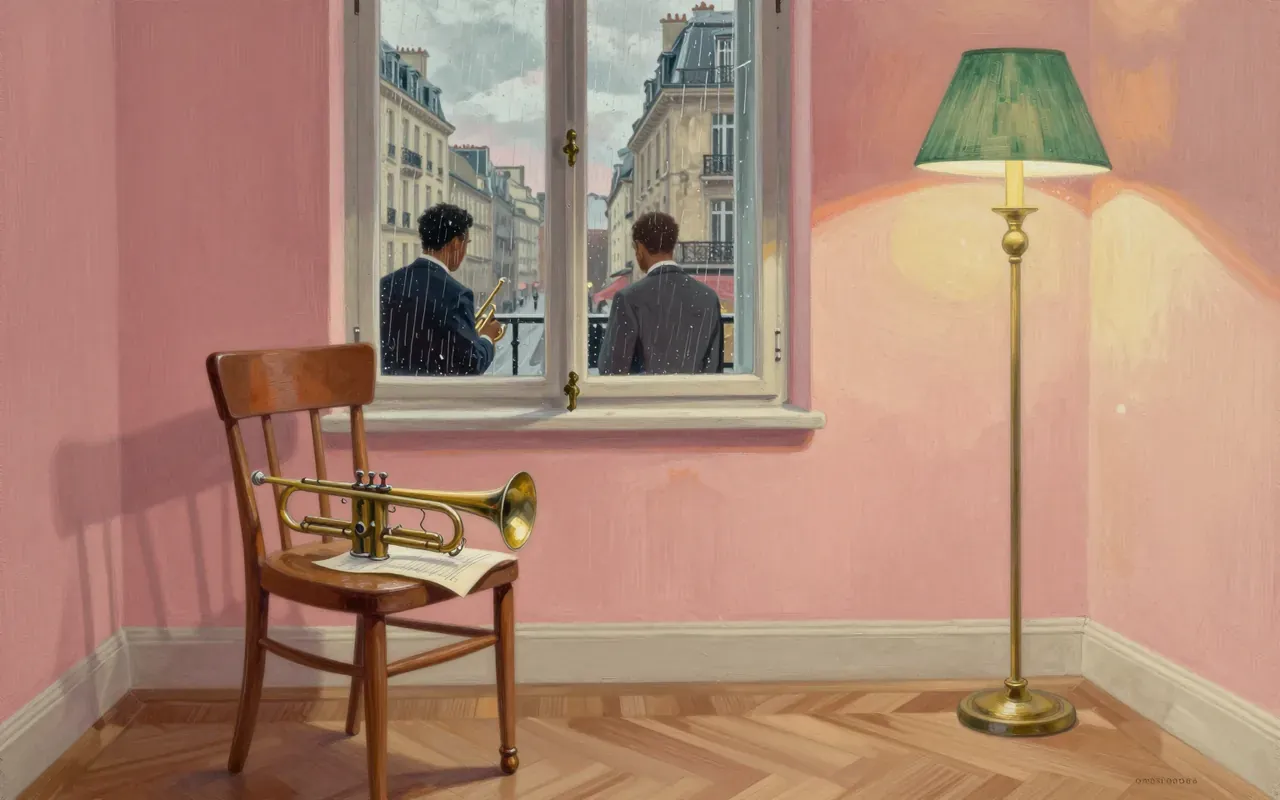
The Music From Peter Gunn

Henry Mancini · 1959

The Music From Peter Gunn is a television soundtrack album composed by Henry Mancini for the series Peter Gunn, produced by Blake Edwards in 1958. It won the inaugural Grammy Award for Album of the Year in 1958. Mancini pioneered the integration of jazz elements into late-romantic orchestral television scoring.

film.briefs Film

All 55 in film →
13:00

A Summer's Tale

Éric Rohmer · 1996

Éric Rohmer’s 1996 comedy-drama follows mathematics graduate Gaspard over three weeks in the Breton seaside town of Dinard, as he navigates hesitant affections for three women — Margot, Léna and Solène — without ever resolving between them. Shot with quiet precision by Diane Baratier and edited to sustain long takes and unhurried dialogue, the film treats romantic uncertainty not as failure but as sustained, everyday practice. Its power lies in its fidelity to duration, silence and the moral weight of small, unremarkable choices.

13:00

Alexander Nevsky

Sergei Eisenstein, Dmitri Vasilyev · 1938

Alexander Nevsky (1938) is a Soviet historical drama directed by Sergei Eisenstein and Dmitri Vasilyev, depicting Prince Alexander’s defeat of the Teutonic Knights in 1242. Shot by Eduard Tisse and scored by Sergei Prokofiev, it uses stylised performances, rigorous montage, and a landmark battle sequence to advance a socialist realist vision of collective defence and principled leadership. Though shaped by Stalin-era constraints — including censorship and allegorical framing — its formal control and thematic cohesion remain potent. It is less a period piece than a functional artefact: history made operational.

13:00

Bay of Angels

Jacques Demy · 1963

Jacques Demy’s 1963 black-and-white drama follows a young bank clerk and a compulsive gambler through the casinos of Nice and Monte Carlo. Built around Jeanne Moreau’s tightly coiled performance and Michel Legrand’s percussive score, it studies addiction as rhythm, not pathology — where money is incidental, and the real stakes are time, attention, and the diminishing space between decisions.

13:00

Burden of Dreams

Les Blank · 1982

Les Blank’s 1982 documentary Burden of Dreams observes the gruelling, near-failed production of Werner Herzog’s Fitzcarraldo in the Peruvian jungle. Shot on location over several months, it captures exhaustion, ambition, and the jungle’s indifference — without narration, music, or editorial judgement. It remains a landmark of observational documentary craft.

13:00

Circus Angel

Albert Lamorisse · 1965

Albert Lamorisse’s 1965 Circus Angel follows a burglar who joins a travelling circus to evade arrest but continues stealing in his spare time, all while navigating its fragile community and tentative romance. Shot in France with a restrained, observational style, it uses fantasy not as spectacle but as a lens for ethical ambiguity and transient belonging. Though its loose structure and muted romance divide opinion, its visual cohesion and tonal discipline make it a distinctive, unhurried work of mid-century arthouse cinema.

13:00

Comanche Station

Budd Boetticher, Randolph Scott · 1960

A retired Texas Ranger tracks a Comanche raiding party to rescue a woman abducted years earlier. Joined by two morally divergent men, he crosses hostile terrain toward an uncertain settlement — all in 74 taut, unadorned minutes. Directed by Budd Boetticher and starring Randolph Scott, it is the penultimate film of the Ranown cycle: lean, taciturn, and resolutely uninterested in explaining itself.

13:00

Empire of Passion

Nagisa Ōshima · 1978

Nagisa Ōshima’s 1978 French-Japanese co-production Empire of Passion adapts a novel by Itoko Nakamura into a stark, psychologically rigorous kaidan. Set in 1895 rural Japan, it follows Seki and Toyoji, whose affair leads to the murder of her husband — and the subsequent, inescapable haunting that follows. Shot by Yoshio Miyajima and scored by Tōru Takemitsu, the film rejects gothic ornament in favour of austere composition, deliberate pacing, and moral weight. It premiered at Cannes, where Ōshima won Best Director.

13:00

Fearless Hyena Part II

Lo Wei · 1983

Fearless Hyena Part II (1983) is a fractured Hong Kong martial arts film directed by Lo Wei, written by Jackie Chan, and released after Chan broke his contract to join Golden Harvest. With Chan absent for much of the shoot, the film relies on doubles, reused material, and disjointed editing. Its plot — two cousins avenging their slain fathers — is undercut by narrative incoherence, tonal whiplash, and visible production strain. Yet its absurdity and historical significance as a case study in studio power make it more revealing than entertaining.

culture.briefs Culture

All 3 in culture →
9:18

Hindi cinema

Hindi cinema didn’t just add songs to stories—it rebuilt storytelling around music, then exported that logic worldwide.