briefs
Topic · across the network

Race

A category with no biology and enormous consequences.

145
briefs
10
subjects
11:23
average
1649 min
in total
Abstraction 407Absurdism 137Acoustics 220Acting 65Adaptation 372Addiction 95Adolescence 202Advertising 77Age of exploration 14Ageing 113Agriculture 100Algorithms 114Ambition 46Anarchism 38Ancient Egypt 17Ancient Greece 38Ancient Rome 30Animals 172Anthropology 23Apartheid 12Architecture 165Archives 32Argentina 10Art Deco 26Artificial intelligence 78Astronomy 81Attention 42Australia 32Automation 73Avant-garde 164Aviation 79Banking 72Banned works 40Bauhaus 12Beer 5Behavioural economics 22Berlin 16Big tech 6Biodiversity 136Biography 86Birds 41Black holes 20Blockchain 12Boxing 14Branding 77Brazil 43Bread 29Britain 131Brutalism 4Bubbles 3Buddhism 28Byzantium 10California 17Canada 18Capitalism 94Cars 468Celebrity 59Censorship 110Cheese 24Chefs 9Chemistry 104Chess 2Childhood 87China 109Chocolate 8Christianity 49Cinematography 343Cities 90Class 485Climate change 107Club culture 100Cocktails 2Coffee 11Cognitive bias 14Collecting 16Colonialism 284Colour 42Comedy 89Community 52Complexity 21Computing 309Consciousness 16Conservatism 14Conspiracy theories 8Cooking 178Corruption 38Cosmology 31Cover versions 64Craft 116Crate digging 42Creativity 8Crime 234Cryptocurrency 8Cryptography 24Cuba 10Cybersecurity 30Dada 12Debt 38Decision-making 28Decolonisation 46Deep time 80Democracy 45Denim 16Deserts 45Detroit 17Dinosaurs 12Directing 168Disasters 59Disease 109DJ culture 89Dreams 32Drones 5Drum machines 96Dystopia 69East Africa 28Ecology 337Economics 36Editing 72Education 92Egypt 12Electric vehicles 59Emotion 22Empire 92Endurance 49Energy 120Engineering 541Entropy 8Epidemics 13Equality 9Espionage 31Ethics 44Evolution 174Existentialism 106Expertise 2Exploration 49Extinction 23Failure 37Family 240Fandom 22Fascism 45Fashion 215Fast fashion 12Fear 34Feminism 122Fermentation 126Film music 81Fishing 12Folklore 71Food history 588Football 16Forests 31Forgery 7France 163Fraud 15Free will 13Freedom 16French literature 15Friendship 24Furniture 36Gambling 14Gender 63Generations 28Genetics 87Geology 96Germany 66Globalisation 74Gothic 32Greece 5Grief 126Habits 6Happiness 2Hardware 709Haute couture 22Headphones 8Hi-fi 12Hinduism 12Hoaxes 1Human history 23Human nature 41Identity 138Illustration 8Impressionism 6Improvisation 249India 89Indonesia 15Industrial design 342Inequality 13Inflation 4Information 34Infrastructure 280Insects 29Intelligence 8Interiors 31Internet culture 88Invention 329Iran 41Islam 40Islands 17Israel 9Italy 52Jamaica 10Japan 114Jewellery 5Journalism 34Judaism 13Justice 42Korea 41Language 70Law 90Leadership 20Learning 6Liberalism 1Libraries 6Literary criticism 26London 12Loneliness 61Los Angeles 62Lost works 9Love 67Luxury 55Machine learning 15Management 10Maps 5Marketing 21Markets 51Mars 6Marxism 26Masculinity 46Materials 138Mathematics 79Meaning 6Medicine 124Memory 82Mental health 70Mesopotamia 4Mexico 38Migration 95Minimalism 68Mining 30Misinformation 9Modernism 63Money 24Monopoly 32Mortality 61Motivation 2Mountains 16Museums 27Mysticism 11Mythology 60Nationalism 40Neuroscience 23New York 36Nigeria 7Nihilism 10Noise 31Nostalgia 33Nuclear 29Nutrition 17Oceans 48Oil 42Open source 45Painting 18Palaeontology 29Parenting 14Paris 18Partition 6Patents 71Patronage 14Perception 44Personal style 27Personality 2Persuasion 8Peru 10Philosophy 77Photography 37Physics 206Plants 26Platforms 89Podcasting 1Poetry 25Poland 17Policing 34Pop Art 16Populism 2Portraiture 6Portugal 18Postmodernism 23Power 91Prehistory 24Preservation 28Printmaking 21Privacy 11Probability 6Productivity 1Programming 54Prohibition 1Propaganda 35Protest 75Pseudoscience 17Psychology 80Publishing 22Punishment 16Quantum mechanics 44Race 145Radio 30Railways 35Rave 17Realism 47Record labels 19Recording 810Relativity 23Religion 154Resilience 15Restaurants 30Restoration 2Retail 94Revolution 58Risk 18Ritual 96Robotics 26Romance 96Russia 58Salt 9Sampling 246Satire 84Scandinavia 28Scientific method 186Screenwriting 26Sculpture 7Secularism 2Self-deception 14Semiconductors 73Sexuality 102Ships 18Silence 24Silicon Valley 17Slavery 35Sleep 2Smartphones 27Sneakers 15Social media 58Socialism 9Software 68Songwriting 180Sound design 332Sound systems 20South Africa 19South East Asia 30Space exploration 84Spain 18Special effects 41Spices 62Spirits 12Sport 82Startups 21Statistics 10Status 9Stoicism 4Storytelling 68Strategy 70Street food 99Streetwear 16Studio craft 508Subcultures 59Sugar 12Supply chains 115Surrealism 53Surveillance 21Sustainability 30Synthesis 232Tailoring 37Taxation 14Tea 24Textiles 97Thailand 11The American Revolution 19The American South 88The Arab world 41The Arctic 19The Balkans 17The Belle Epoque 13The body 29The brain 26The Caribbean 28The civil rights movement 62The Cold War 160The eighties 268The Enlightenment 29The financial crisis 19The First World War 39The food industry 157The French Revolution 9The Gilded Age 9The Great Depression 18The Holocaust 20The Industrial Revolution 93The internet 61The interwar years 135The Middle Ages 35The Moon 4The music business 169The Netherlands 10The nineties 26The Olympics 10The pandemic 13The Reformation 1The Renaissance 16The Russian Revolution 19The Second World War 102The seventies 58The sixties 28The space race 5The United States 19The universe 7The Victorian era 37Therapy 20Tokyo 11Trade 48Tragedy 22Translation 5Trauma 85Travel 5True crime 2Turkey 18Typography 54Uniforms 23Unions 8Urban planning 66Utilitarianism 1Utopia 5Vaccines 10Vegetarianism 15Venture capital 6Video games 291Vietnam 12Vintage 65Vinyl 6Virtual reality 11War 169Watches 4Water 11Weather 29West Africa 29Wilderness 10Wine 3Work 22Workwear 19Worldbuilding 121

books.briefs Books

All 2 in books →
13:56

Adventures of Huckleberry Finn

Mark Twain · 0

The book argues that moral clarity emerges from direct human contact, not society’s rules—and that Southern 'civilization' is a fraud sustained by violence and self-deception. It does this through Huck’s choices: faking his death, choosing Jim over religion, and rejecting adoption. Tom’s elaborate rescue is exposed as cruel theatre. Read Chapters I–XVI and XXX–XLII. Skip Chapter XL.
10:30

To Kill a Mockingbird

Harper Lee · 1960

Lee's 1960 novel follows Scout Finch growing up in Depression-era Alabama as her father Atticus defends a Black man wrongly accused of rape. The trial is rigged, but the book is not about whether he wins—it is about what Scout learns when he loses.

music.briefs Music

All 25 in music →
10:00

By All Means Necessary

Boogie Down Productions · 1988

By All Means Necessary is Boogie Down Productions’ 1988 second studio album, released April 12, 1988. KRS-One wrote, produced, and performed every track alone. It features minimalist production and hard-hitting drum beats. Sampling is central: 'My Philosophy' uses Stanley Turrentine’s 'Sister Sanctified'; 'Ya Slippin’' interpolates Deep Purple’s 'Smoke on the Water' and reuses the 'Poetry' beat; 'Stop the Violence' uses Courtney Melody’s 'This Sound a Dem Trouble' riddim; 'Illegal Business' samples Fat Albert’s 'Creativity' and Jefferson Starship’s 'Rock Music'; 'Nervous' samples Rhythm Heritage’s 'Sky’s the Limit' and War’s 'Galaxy'; 'I’m Still #1' samples All the People’s 'Cramp Your Style'. Themes include government and police corruption, safe sex, government involvement in the drug trade, and intra-community violence. It marks KRS-One’s adoption of the 'Teacha' identity and follows DJ Scott La Rock’s murder.

9:48

Freedom Suite

Sonny Rollins · 1958

A 1958 sax-bass-drums trio record by Sonny Rollins. Recorded with Oscar Pettiford and Max Roach. Originally released briefly before being repackaged as part of Shadow Waltz.

9:41

Lemonade

Beyoncé · 2016

Lemonade is a 2016 visual album and hour-long musical film, released simultaneously on HBO and Tidal. It is a song cycle structured around emotional stages derived from the Kübler-Ross model, conceived and executed as a unified work of sound and image.

10:08

Sin & Soul

Oscar Brown Jr. · 1960

Sin & Soul is Oscar Brown Jr.'s 1960 debut LP — a lyric-driven jazz record built from pre-existing instrumentals. It states Black experience plainly, using rhythm, repetition, and vernacular language. Its sound is lean, dry, and voice-forward. No embellishment. No evasion.

10:34

A Seat at the Table

Solange · 2016

A Seat at the Table is Solange’s third studio album. Writing began in 2008. Recording spanned 2013 to June 2016 across Long Island, New Orleans, New Iberia and Los Angeles. It was released 30 September 2016. Its sound comes from hour-long improvised tracks built around bass and synth lines, later structured in Louisiana and finished in LA with Raphael Saadiq and Troy Johnson. 'Cranes in the Sky' originated from a 2008 Saadiq instrumental — drums, strings and bass only. Master P narrated interludes drawn from real conversations. Themes include identity, empowerment, grief, healing, rage and self-care. All lyrics were paired with images in a digital art book.

10:08

All Directions

The Temptations · 1972

All Directions is a 1972 Motown album by The Temptations, produced by Norman Whitfield. It features layered vocals, timpani, vibes, congas, brass, and basslines from James Jamerson and Bob Babbitt. The group resisted recording 'Papa Was a Rollin’ Stone' and 'Run Charlie Run', both covers with socially charged lyrics. 'Papa' became a

film.briefs Film

All 62 in film →
13:00

Affirmations

Marlon Riggs · 1990

Marlon Riggs’s 1990 ten-minute short Affirmations places Black gay men visibly within Harlem’s African American Freedom Day parade, intercutting Reginald T. Jackson’s quiet recollection of intimacy with footage of protest, portraiture and public speech. Using minimal craft and maximal assertion, it treats queerness not as deviation from Black tradition but as its living, contested continuation.

13:00

Alex Wheatle

Steve McQueen · 2020

Steve McQueen’s Alex Wheatle (2020) follows the British novelist from institutional childhood through Brixton’s sound-system culture to imprisonment after the 1981 uprising, where he discovers literature. Starring Sheyi Cole and shot by Shabier Kirchner, it is the fourth film in the Small Axe anthology — a focused, atmospheric biographical drama that prioritises sensory detail and quiet transformation over exposition or historical sweep.

13:00

Anthem

Marlon Riggs · 1991

Marlon Riggs’s 1991 eight-minute music video Anthem fuses poetry, hip-hop rhythm, and political iconography to assert Black gay identity as inseparable from African heritage and American citizenship. Featuring Essex Hemphill, Colin Robinson, and others, it overlays ACT UP slogans with Pan-African symbols, memorial candles with erotic intimacy, and spoken word with drum patterns — building a declarative, non-narrative montage that refuses assimilation and rejects erasure.

13:00

Bamboozled

Spike Lee · 2000

Spike Lee’s 2000 film Bamboozled follows a Black television writer who creates a modern minstrel show as a cynical ploy to get fired—only to see it become a hit. Shot partly on Mini DV and partly on Super 16, it blends satire, drama and documentary-style montage to confront the persistence of racist imagery in American media. Though critically divisive on release, it has since been reappraised for its prescience and added to the National Film Registry.

13:00

Black Girl

Ousmane Sembène · 1966

Ousmane Sembène’s 1966 feature debut follows Diouana, a young Senegalese woman who moves to France to work for a French couple, only to find her identity stripped away by isolation, linguistic erasure, and routine condescension. Shot in Senegal with a minimal crew and dubbed dialogue, the film uses stark visual contrast and elliptical editing to trace the psychological toll of colonial labour. Its power lies in restraint: no score, no exposition, no redemption—just the quiet accumulation of small violences, culminating in an act of final autonomy. Widely regarded as the first Sub-Saharan African feature by an African filmmaker to gain international attention, it remains a foundational text of anti-colonial cinema.

13:00

Black is... Black Ain't

Marlon Riggs · 1994

Marlon Riggs’s final film is a sprawling, urgent essay on Black identity in America, built from hundreds of unmediated testimonies, performances by Bill T. Jones and Essex Hemphill, and commentary from Angela Davis, bell hooks, and Cornel West. Framed by Riggs’s own illness and unfinished work, it treats Blackness not as a fixed category but as a contested, embodied, intersectional practice—resisting homogenisation, patriarchy, homophobia, and colourism while insisting on solidarity without uniformity.

13:00

Black Sun

Koreyoshi Kurahara · 1964

Black Sun (1964), directed by Koreyoshi Kurahara for Nikkatsu, follows Akira, a young Japanese thief, and Gill, an injured African-American soldier, as they move silently toward the sea after a violent encounter. Shot in high-contrast monochrome, with sparse music by Toshiro Mayuzumi and Max Roach, it uses jazz records, ruined architecture, and deliberate pacing to explore connection without translation. Its themes centre on embodied difference, failed communication, and freedom as ascent rather than arrival.

13:00

Body and Soul

Oscar Micheaux · 1925

Oscar Micheaux’s 1925 silent drama Body and Soul stars Paul Robeson in his film debut as a criminal posing as a preacher in a Black Southern town. After two re-edits forced by New York censors, the surviving five-reel version tells a morally charged story of deception, violation, and a dream-framed reckoning. Though technically rudimentary and narratively fractured, it remains a landmark of African-American independent cinema — selected for the National Film Registry in 2019 for its cultural and historical significance.

history.briefs History

All 2 in history →
9:40

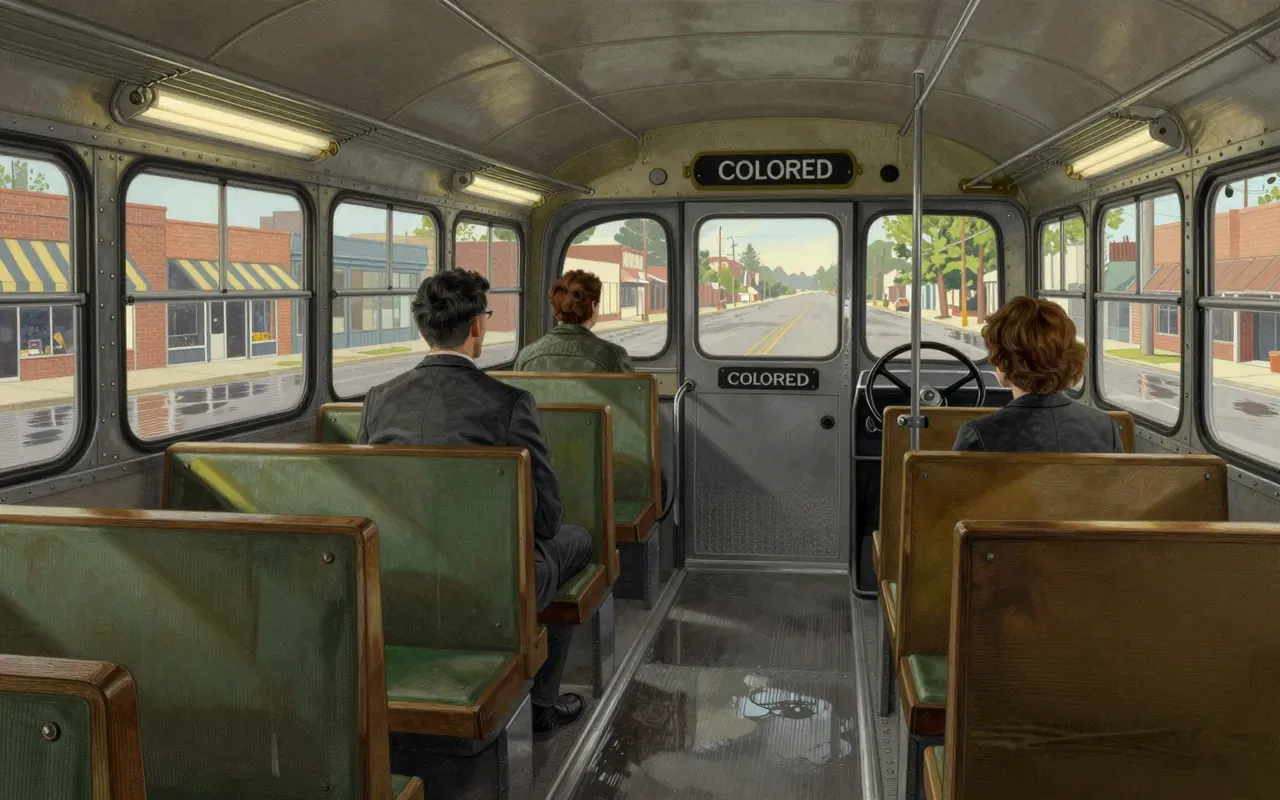
Rosa Parks

Rosa Parks didn’t sit down by accident — she sat down to start a war of attrition against segregation, and won.
10:22

Thurgood Marshall

Marshall didn’t just win cases — he rebuilt how courts measure equality, one plain-spoken, evidence-led opinion at a time.

design.briefs Design

All 2 in design →
4:32

James Victore

Hand-lettered posters are not nostalgic — they are a refusal of mediation.
9:32

Theaster Gates

Gates doesn’t make art about place — he makes place into art, then turns it into infrastructure.

games.briefs Games

All 10 in games →
10:18

Project Gotham Racing (video game)

Bizarre Creations · 2001

Project Gotham Racing is a 2001 Xbox racing game developed by Bizarre Creations. It uses the Kudos system to reward stylish driving—power sliding, two-wheeling, and overtaking—with points that decay on collision. Players advance by meeting both speed and Kudos thresholds across three modes: Kudos Challenge (medal-based style events), Quick Race (five-car races), and Arcade Race (additional style challenges). It runs at 60 FPS and supports split-screen multiplayer.

9:35

F-Zero (video game)

Nintendo · 1990

F-Zero is a 1990 SNES launch title. It is a futuristic racing tournament set in 2560. Players select one of four characters, each piloting a unique hovercar. Races are five laps long. Players must avoid hazards like slip zones and magnets. Collisions drain a power meter. Energy is restored via pit areas. Lap placement must improve each time to avoid disqualification. Each lap grants a ~4-second 'Super Jet' boost and points based on finish position. The game uses Mode 7 graphics to simulate pseudo-3D motion.

10:00

Diddy Kong Racing

Rare · 1997

Diddy Kong Racing is a 1997 Nintendo 64 kart racer developed and published by Rare. Players select from ten characters and race across five worlds—each containing four tracks—using cars, hovercraft, or aeroplanes. Victory over antagonist Wizpig comes solely through winning races. Vehicle types impose clear trade-offs: the car is all-round but slowest on sand and water; the hovercraft handles those surfaces but suffers poor acceleration and manoeuvrability; the aeroplane accesses aerial zones and turns sharply but has the lowest speed. All characters can use all vehicles. The design asks players to match vehicle to terrain—and learn why the match fails as often as it succeeds.

9:21

Forza Motorsport 4

Turn 10 Studios · 2011

Forza Motorsport 4 is the fourth Forza Motorsport title, developed by Turn 10 Studios for Xbox 360 and published by Microsoft Studios in 2011. It is a racing simulation emphasising realistic car handling and visual fidelity on closed-circuit tracks. It supports dual-input control: traditional controllers or wheels for driving, and Kinect for head-tracking, voice commands, or full-body steering (with auto-acceleration/braking). Its Autovista mode enables detailed exploration of select cars, and its World Tour career adapts AI difficulty based on player performance.

9:56

Sonic R

Sonic Team · 1997

Sonic R (1997) is a foot-racing game co-developed by Sonic Team and Traveller's Tales for the Sega Saturn. It emphasises jumping, exploration, and item-based progression across five themed tracks — with reverse racing, ring trading, and unlockable characters tied to hidden token collection. Its design responds directly to Saturn hardware limits: custom engine, 12-layer transparency, and 30 fps target. It is not a kart racer, nor a traditional Sonic platformer — but a constrained experiment in 3D movement under technical duress.

10:44

Forza Motorsport 7

Turn 10 Studios · 2017

Forza Motorsport 7 refines the Motorsport formula without redefining it. It delivers technical excellence and scale — but nothing structurally new.

9:18

Mario Kart Wii

Nintendo · 2008

Mario Kart Wii is a 2008 Wii racing game where 24 Mario characters race on 32 themed tracks using items to attack or boost. It supports two- to four-player local split screen and Battle Mode (balloon popping). Motion controls via the bundled Wii Wheel define its feel — intuitive but imprecise. Half the content is locked behind completion objectives. Online play ended in May 2014.

9:52

Need for Speed: Carbon

Black Box · 2006

Need for Speed: Carbon (2006, Black Box) is a rhythm-driven street racer built on repetition, territory, and tight mechanical loops — not simulation or story.

culture.briefs Culture

All 27 in culture →
10:01

Breakdancing

Breakdancing is not a spectacle — it’s a language of resistance, rhythm, and precision, now sanctioned by the IOC.
10:44

Négritude

Négritude named colonial racism in its own grammar — then reproduced its hierarchies in the name of liberation.
8:30

Streetwear

Streetwear is not youth culture—it’s Black and Latino cultural infrastructure, repackaged for mass consumption without credit.
7:39

Vogue (dance)

Voguing isn’t about fashion—it’s about refusing erasure one rigid pose at a time.
10:02

Afrofuturism

Afrofuturism isn’t about Black people in space—it’s about Black people defining what space means.
9:04

Cultural relativism

Cultural relativism is not moral permission—it’s a method for stopping anthropologists from mistaking their upbringing for universal truth.

automotive.briefs Automotive

All 9 in automotive →
11:26

Ford XY Falcon GT

Ford · 1971

The Ford XY Falcon GT is a 1970–1971 Australian sports sedan built by Ford Australia on the Falcon XY platform. Its GTHO Phase III variant — 300 units built May–November 1971 — won the 1971 Bathurst 500 outright. It used a 351 Cleveland V8 rated at 224 kW (300 bhp) at 5400 rpm. Total production was 1,557 units. A limited number were exported to South Africa with Fairmont GT badging.

10:42

Boss 429 Mustang

Larry Shinoda · 1969

The Boss 429 Mustang is a 1969–1970 homologation special built solely to qualify Ford’s semi-hemispherical 429 cu in V8 for NASCAR. Its engine was too wide for the Mustang’s engine bay—requiring Kar Kraft to widen the front end. Priced at nearly $5,000 and limited to 1,359 units, it sacrificed usability, cost, and serviceability for one purpose: counting toward NASCAR’s 500-car rule. Larry Shinoda, who named the Boss line as a homage to Bunkie Knudsen, did not design this car—but its existence follows directly from the logic he established with the Boss 302.

10:59

Plymouth Superbird

Chrysler Engineering · 1970

The Plymouth Superbird is a 1970-only, NASCAR-focused, aerodynamically enhanced variant of the Plymouth Road Runner, developed as Plymouth's response to the 1969 Dodge Charger Daytona and designed to lure Richard Petty back from Ford; it featured a distinctive nosecone, high rear wing, and 'beep, beep' horn, with three engine options — most notably the rare 426 Hemi — and was built in limited numbers (around 1,935 units) to meet NASCAR homologation rules.

9:26

Renault Clio V6 RS

Renault Sport · 2001

The Renault Clio V6 RS is a radical departure from the hot hatch formula: mid-engined, rear-wheel drive, hand-built, and deliberately impractical. It exists as a mechanical argument—against front-drive orthodoxy, against shared-platform economics, against the idea that a ‘hatch’ must behave like one. Its legacy is not volume or versatility, but velocity of idea.

11:37

AC Cobra

AC Cars · 1962

The AC Cobra is a British-built sports roadster developed from the AC Ace, modified to accept Ford V8 engines, produced from 1962 to 1967 in the UK and US, with evolving chassis and suspension designs across Mk I–III iterations, and powered by various displacements of Ford V8 engines — notably the 4.3 L, 4.7 L, and 7.0 L variants.

10:29

Dodge Charger Daytona

Chrysler Engineering · 1969

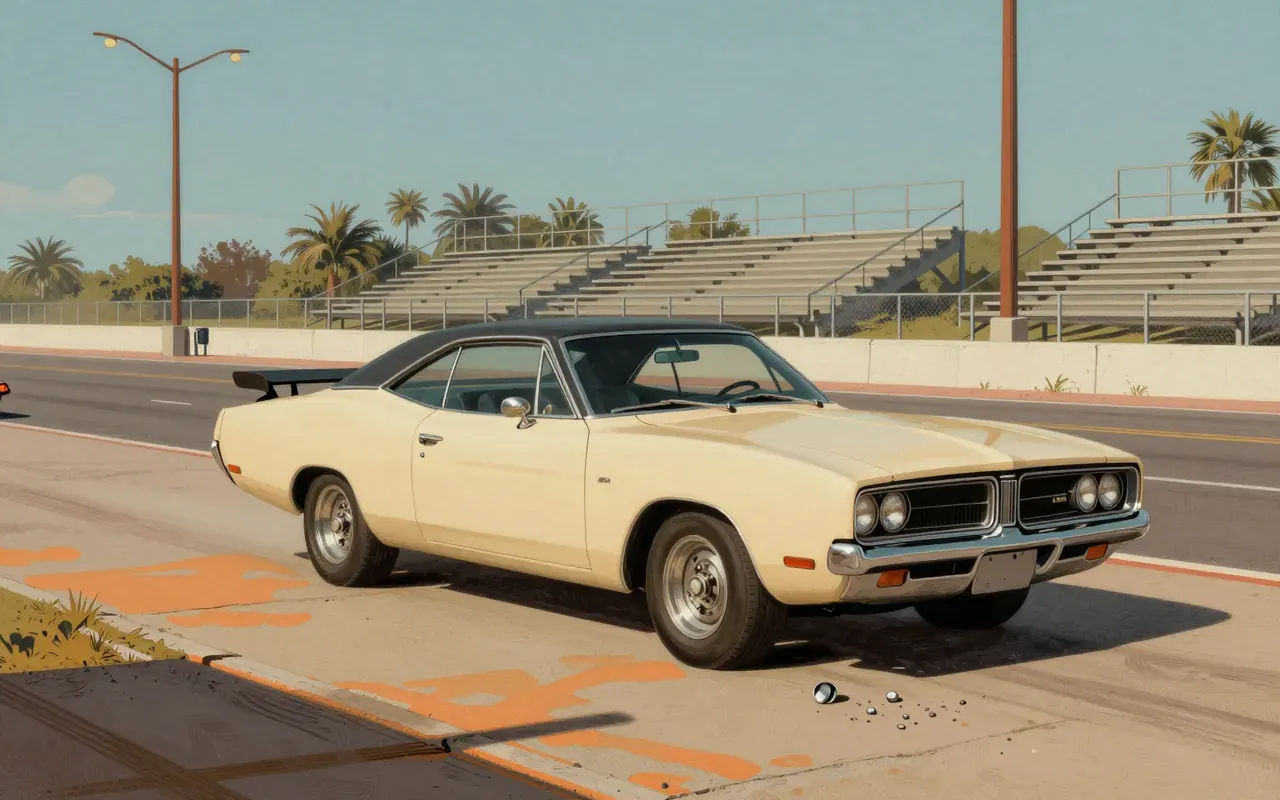
The 1969 Dodge Charger Daytona is a purpose-built NASCAR racer derived from the Charger R/T. It introduced radical aerodynamics — nose cone and rear wing — to achieve stability at 200 mph. It won six races and changed how American manufacturers approached superspeedway competition. It is not a grand tourer, not a collector’s lounge piece, and not a design exercise — it is a documented response to a specific racing problem.

9:42

Boss 302 Mustang

Larry Shinoda · 1969

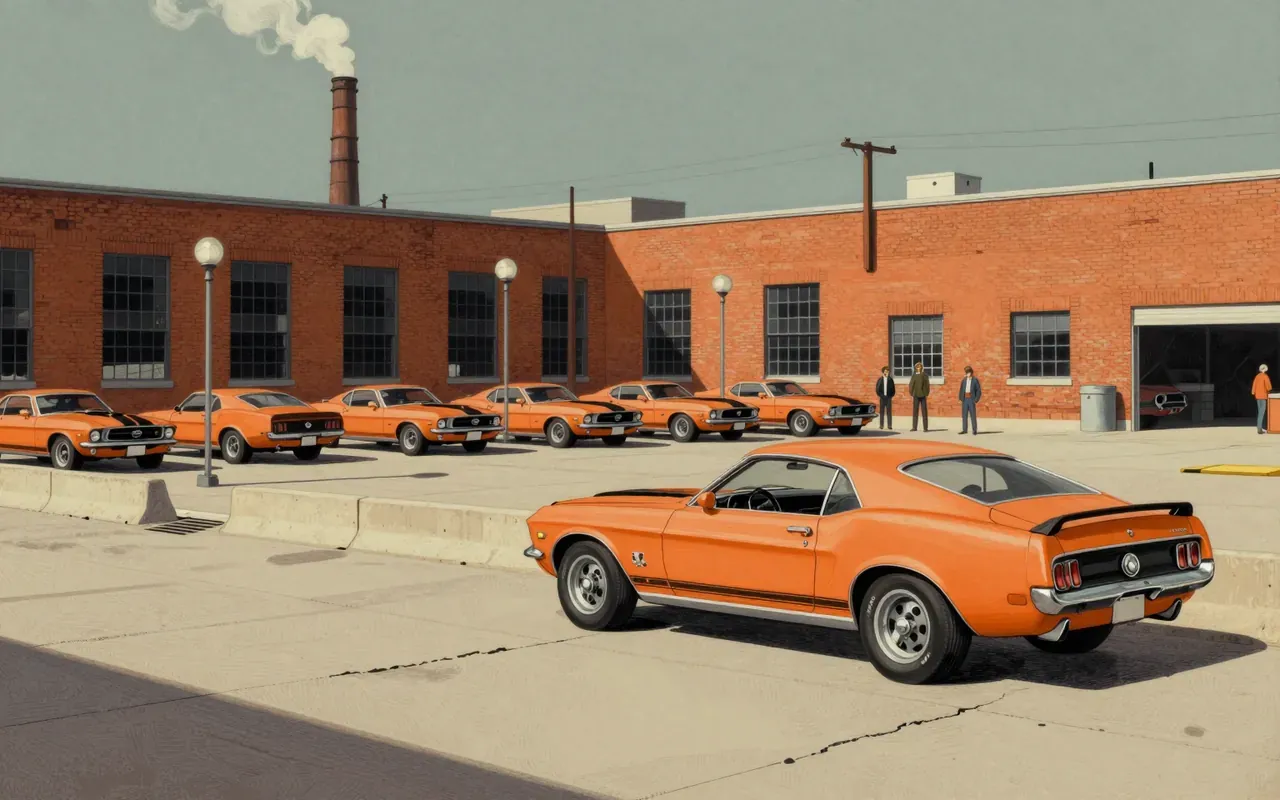
The 1969–1970 Boss 302 Mustang is a Trans-Am homologation special designed by Larry Shinoda. It used a unique thin-wall, high-nickel 302 cu in (4.9 L) H.O. V8 with solid lifters, 4-bolt main bearings, threaded freeze plugs, and canted-valve heads. It was sold only in a complete package including a four-speed manual, upgraded suspension, brakes, and aerodynamic aids. A total of 7,013 units were sold.

9:48

Maserati MC12

Frank Stephenson · 2004

The Maserati MC12 is a homologation special built to return Maserati to FIA GT racing. Designed by Frank Stephenson on the Ferrari Enzo’s chassis, it is longer, wider, taller, and more aerodynamically efficient. Its mid-rear V12 layout prioritises balance over packaging. Only 62 were built: 50 road cars and 12 racers. It is uncompromising, specific, and historically consequential — but not versatile.

fashion.briefs Fashion

All 5 in fashion →
10:48

Olivier Rousteing

Rousteing didn’t revive Balmain — he weaponised its silhouette for the age of the feed.
9:54

Hubert de Givenchy

Glamour was never about fabric. Givenchy proved it with cotton, geometry, and five Black American women.
10:20

Naomi Campbell

Campbell didn’t break barriers—she exposed them, one Vogue cover at a time.

nature.briefs Nature

All 1 in nature →