Hedy Lamarr
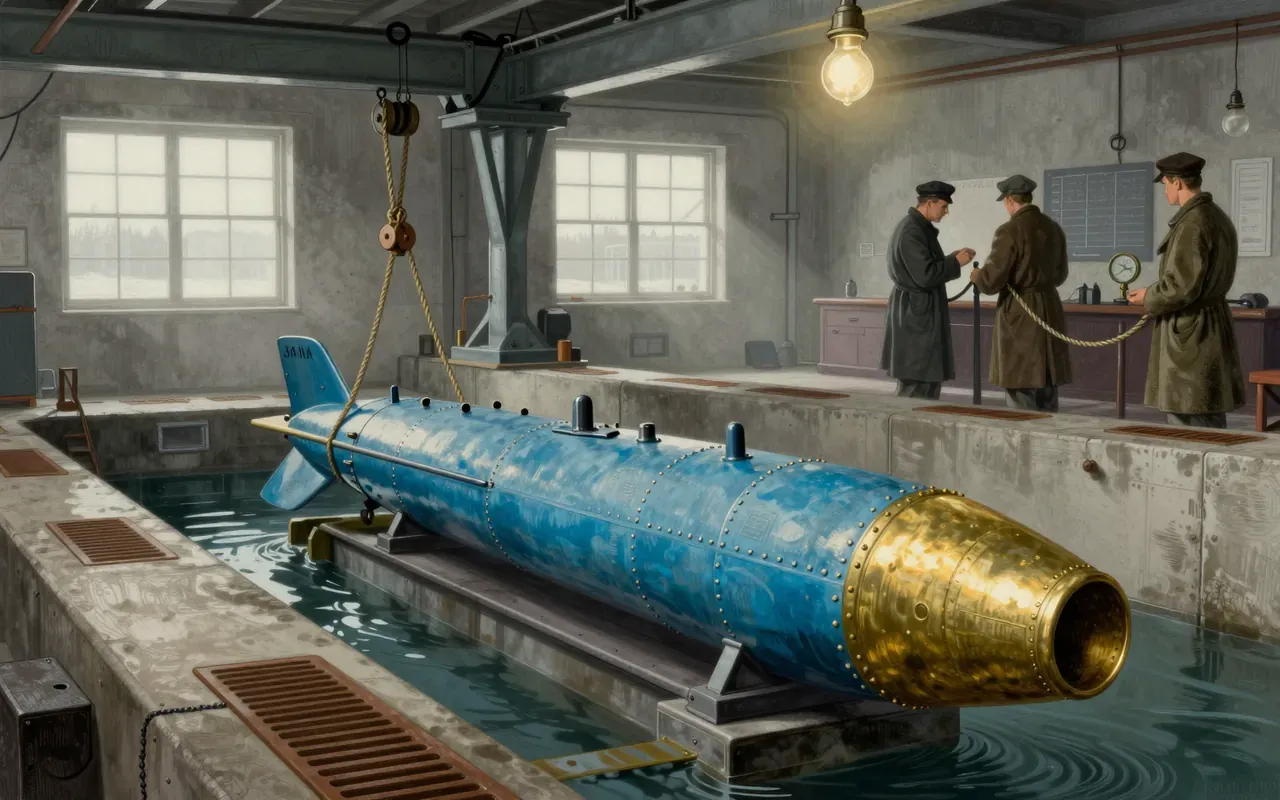
A Hollywood actress co-patented a jam-proof torpedo system — but never saw it built, tested, or used.
A temporary monopoly granted to encourage disclosure.
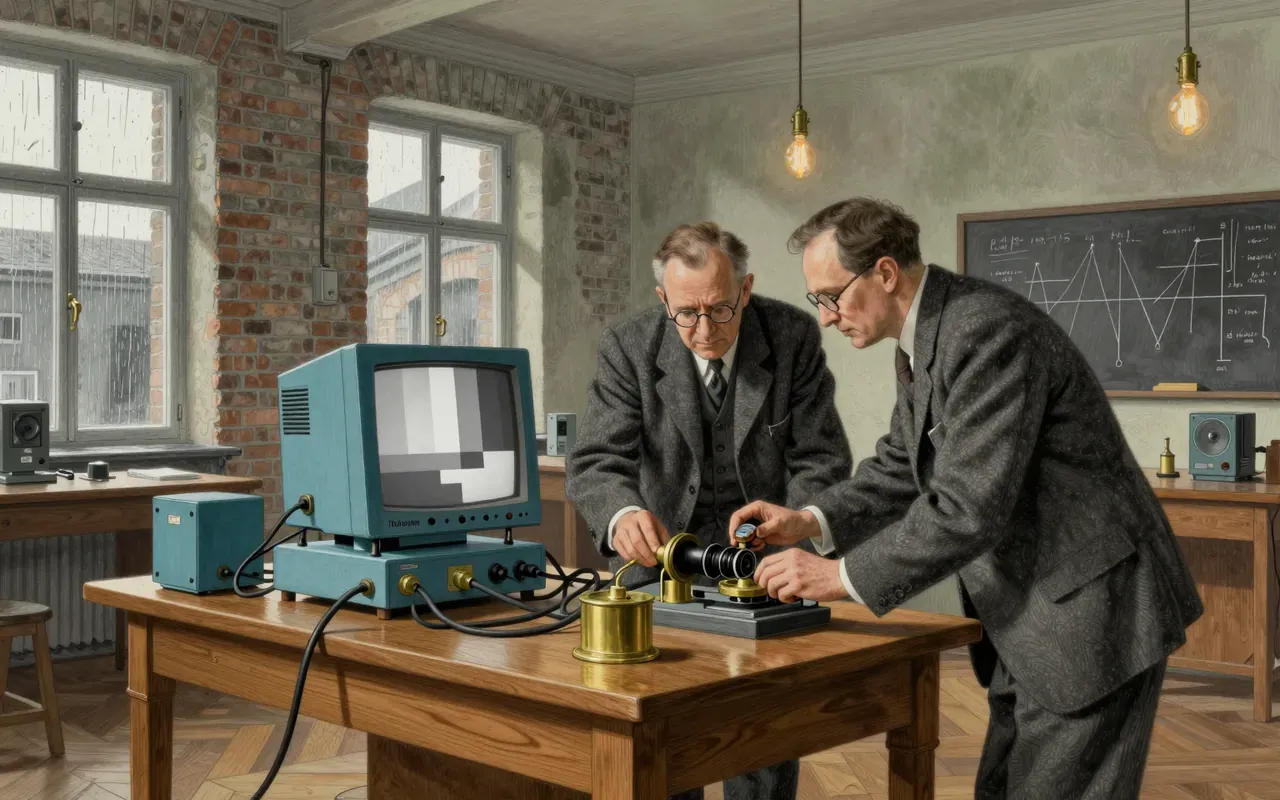

Trinitron is a CRT display technology defined by its single-gun three-cathode electron gun and vertically aligned steel aperture grille. It improved image sharpness by reducing beam obstruction and simplifying focus. Its patent ran until 1996. It launched as a branded line in 1968, powered televisions and monitors until 2005–2007, and marked the end of Sony’s analog display era.

The Zippo lighter is a tightly constrained industrial object defined by wind resistance, guaranteed longevity, and procedural repeatability — not novelty, aesthetics, or scale.
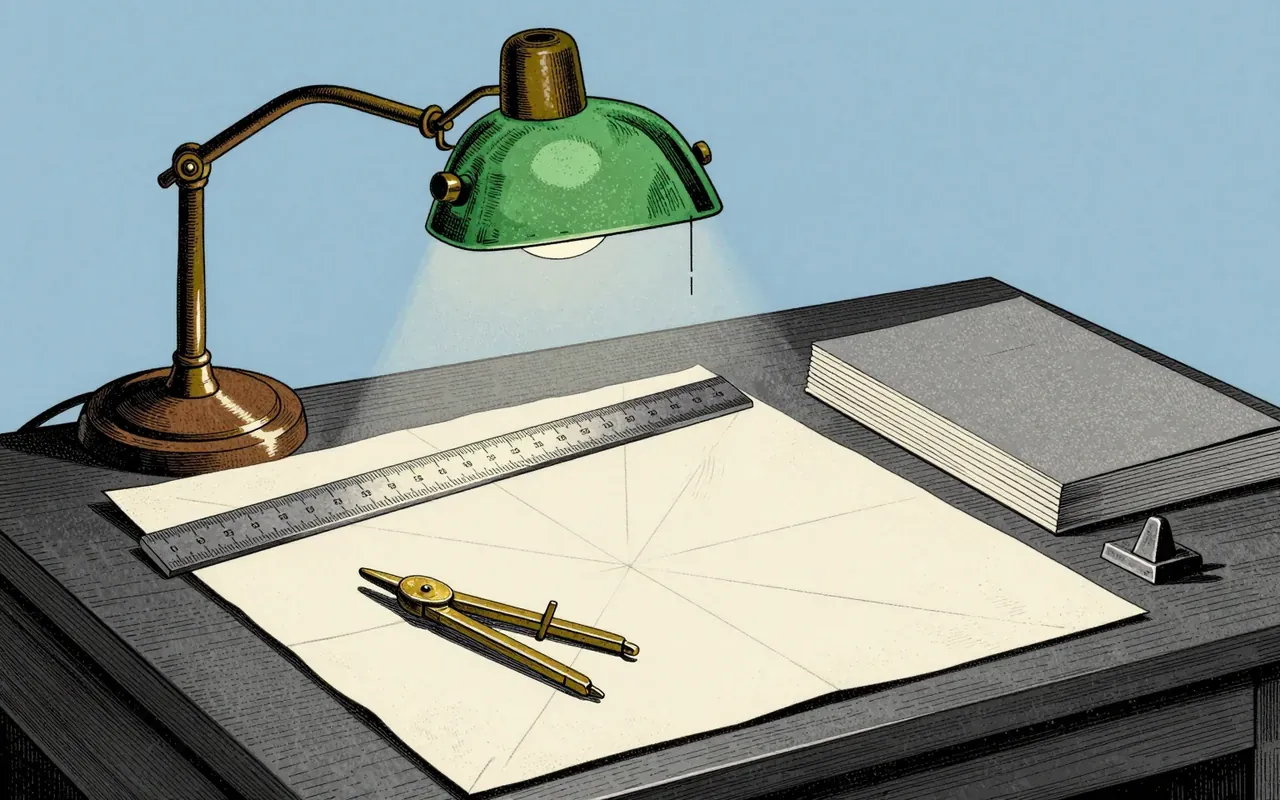
A foundational sans-serif typeface family released in 1898 for commercial print jobs, derived from a shadowed predecessor by removing the drop shadow and filing two design patents. Its monoline structure and single-storey 'g' prioritised mechanical reproducibility over typographic nuance. It prefigured neo-grotesques like Helvetica by fifty years—not as a stylistic ancestor, but as an operational prototype for scalable, patent-protected industrial typography.

The Anglepoise lamp is a balanced-arm lamp designed in 1932 by George Carwardine, a vehicle suspension specialist. Its defining feature is the placement of all springs near the base — a direct transfer of suspension mechanics to lighting. It requires no clamps to hold position. Carwardine patented it, built it himself in Bath, then licensed it to Herbert Terry and Sons in 1934. Two versions exist: four-spring for professional use, three-spring for domestic use — both sharing the same spring-placement principle.
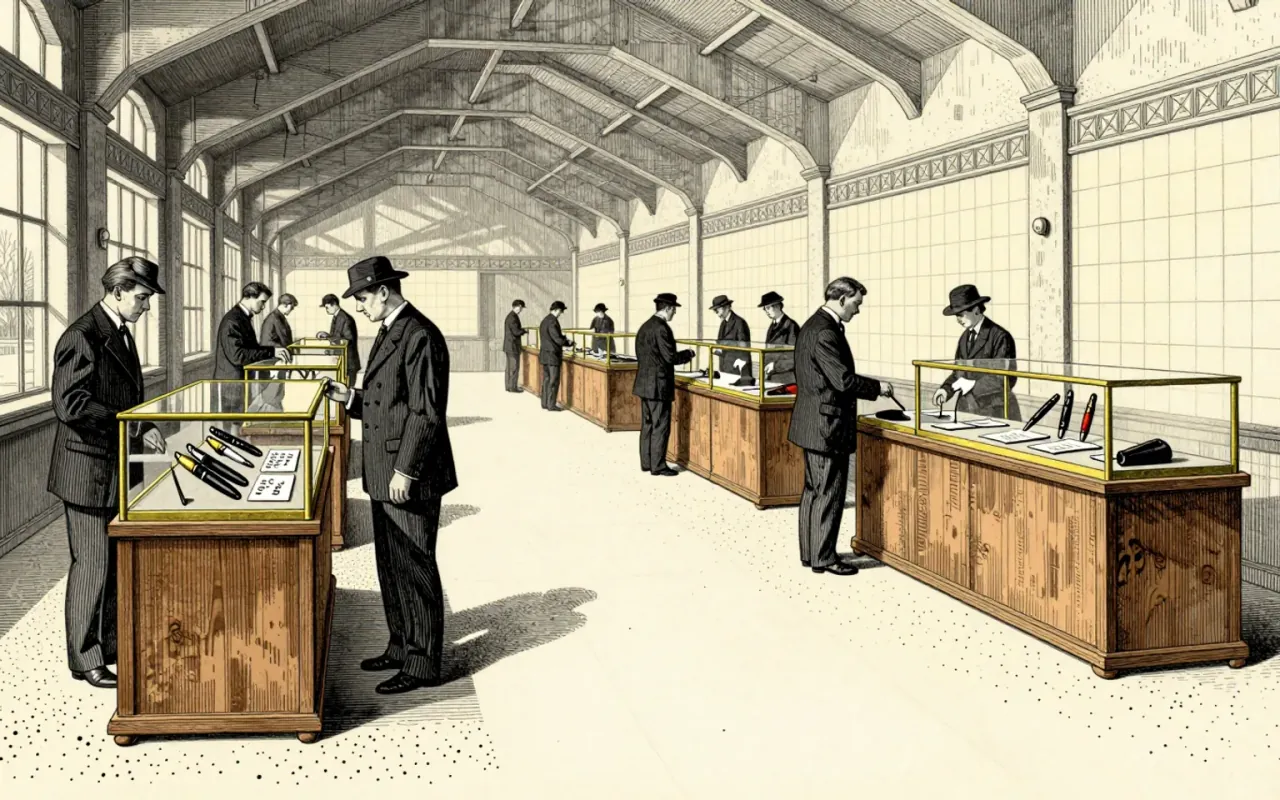
The ballpoint pen is a mechanical solution to ink viscosity. It replaces fountain-pen capillary action with a rotating ball that meters viscous, fast-drying newspaper ink. Bíró’s 1931 prototype and subsequent patents formalised this logic — not as refinement, but as substitution. It works where fountain pens fail: on absorbent paper, without blotting, with minimal maintenance. It does not solve line consistency or pressure sensitivity. Its influence is structural: it defined the cartridge-fed, disposable, low-tolerance writing tool that dominated global manufacturing after 1945.

The Schweizer Offiziers- und Sportmesser is a pivotal industrial response: a compact, spring-driven, dual-sided tool system developed in Ibach, Switzerland in 1896. It solved production dependency on German suppliers, used cellulose fibre instead of imported materials, and achieved commercial viability without military adoption. Its influence lies not in novelty but in disciplined constraint — one spring, two sides, no commission, global reach.

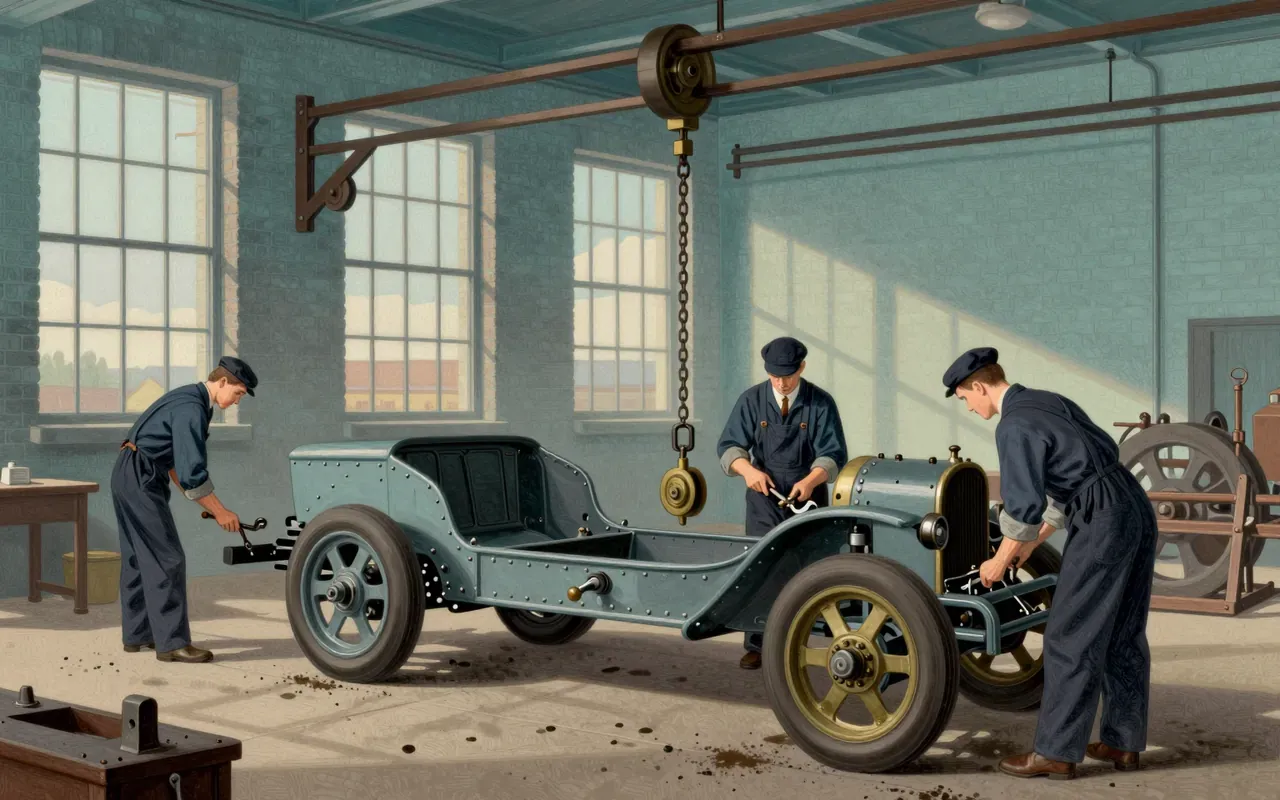
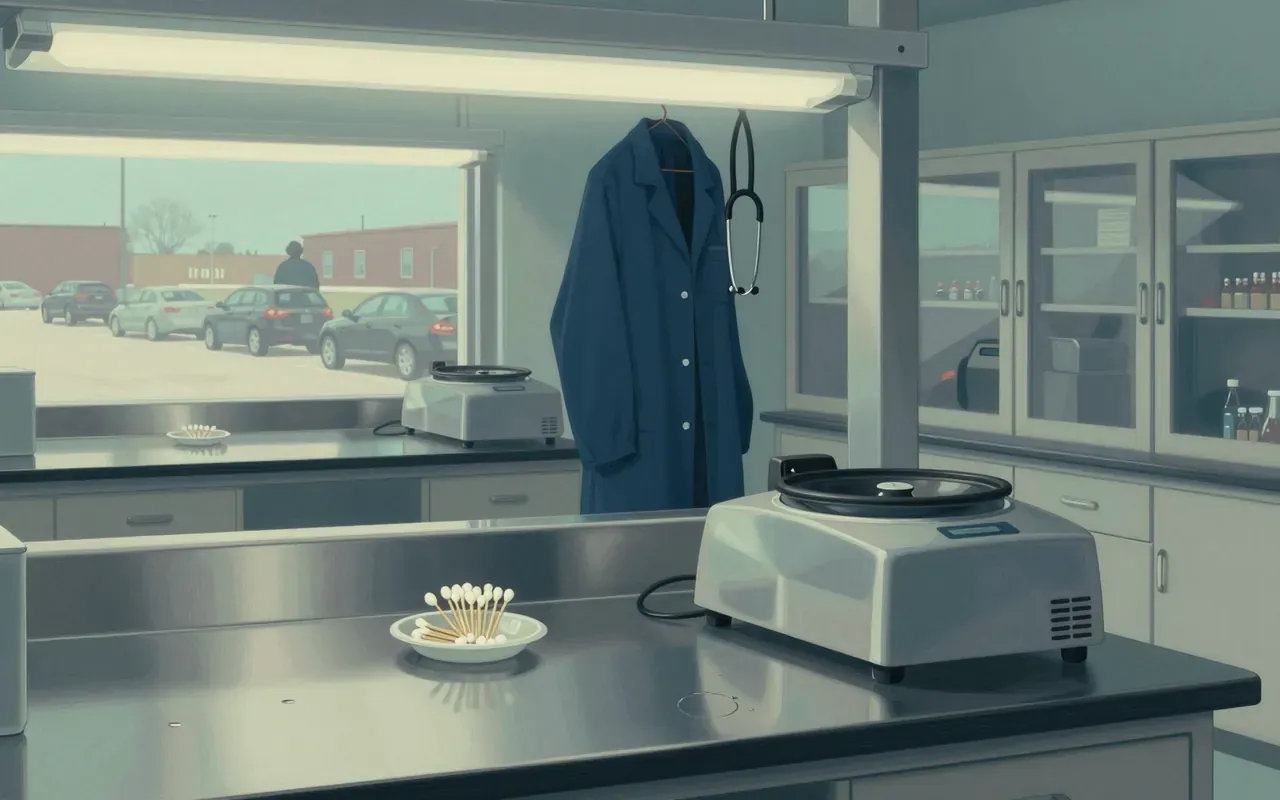

Biogen is a neurology-focused biotech that built scale via acquisition, not foundational science — and César Milstein, whose hybridoma work underpins modern antibody therapeutics, has no documented relationship to the company.

Caterpillar Inc. is the world's largest construction equipment manufacturer, founded in 1925 via merger, but rooted in Benjamin Holt’s continuous-track tractor innovation of 1904–1907.

Regeneron is a biotech firm whose core innovation — the receptor trap — emerged from neurobiology, not pharmacology. It monetises that science via high-value partnerships and outsized government contracts, not broad platform dominance. Its success depends less on internal scale than on strategic leverage of public R&D funding.
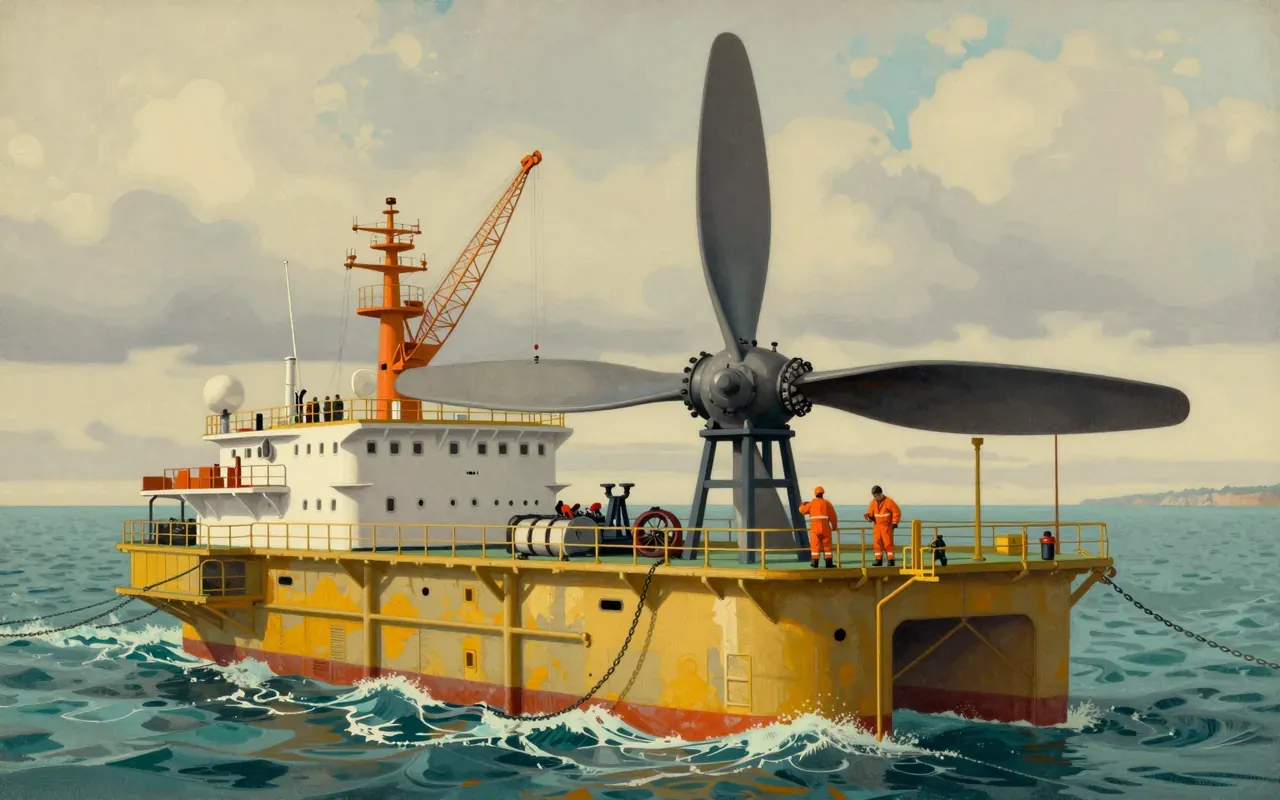
Vestas is a Danish wind turbine company founded in 1945, engaged in manufacturing, selling, installing, and servicing turbines globally; it details major operational milestones including global installations, R&D investment and patenting activity, strategic mergers, facility expansions and closures, and technical innovations such as stealth blades and floating turbines.

Activision’s founding was a contractual rupture, not a technological leap. It turned programmer identity and shelf presence into revenue — and proved third-party publishing could exist only after winning in court.
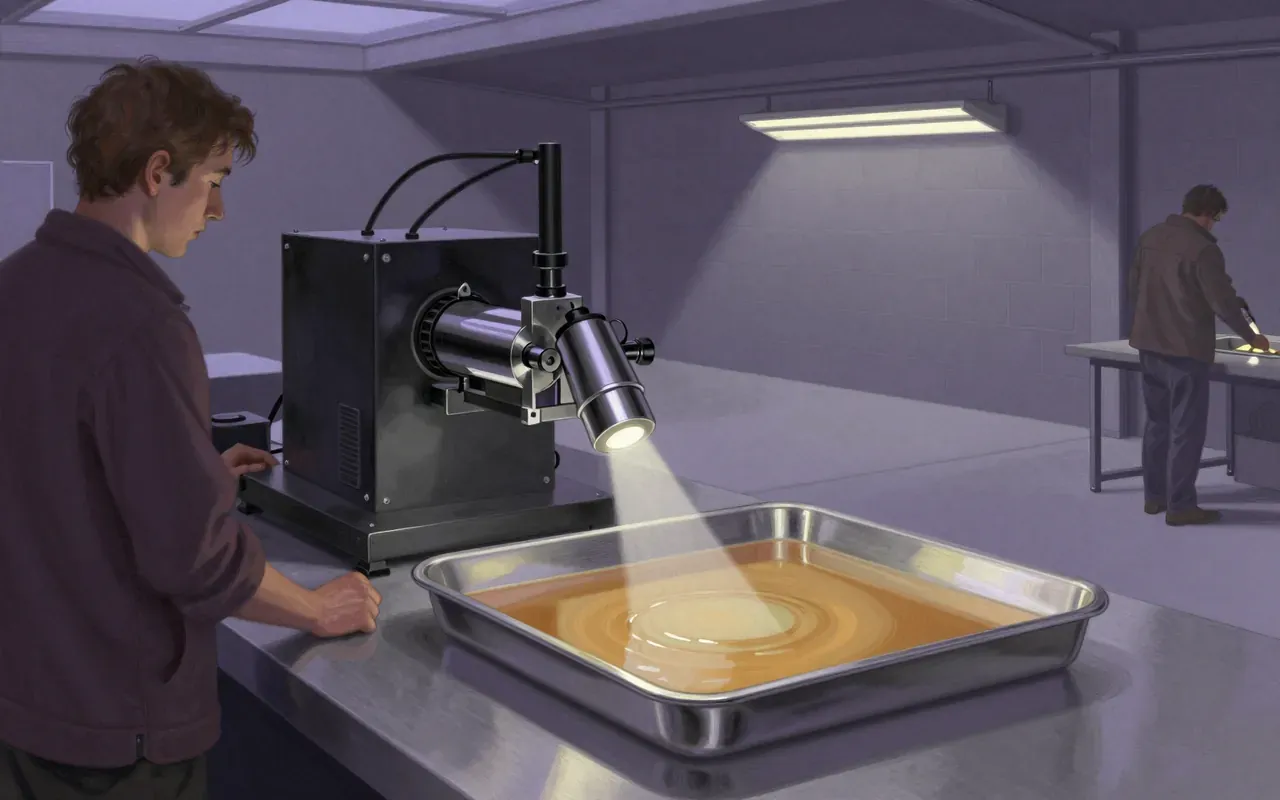
Chuck Hull’s stereolithography system is the origin point of digital additive manufacturing—not because it printed everything, but because it defined how digital models become physical things: via slicing, STL, and controlled solidification. It works for prototyping. It fails for production. Its legacy is infrastructural, not material.
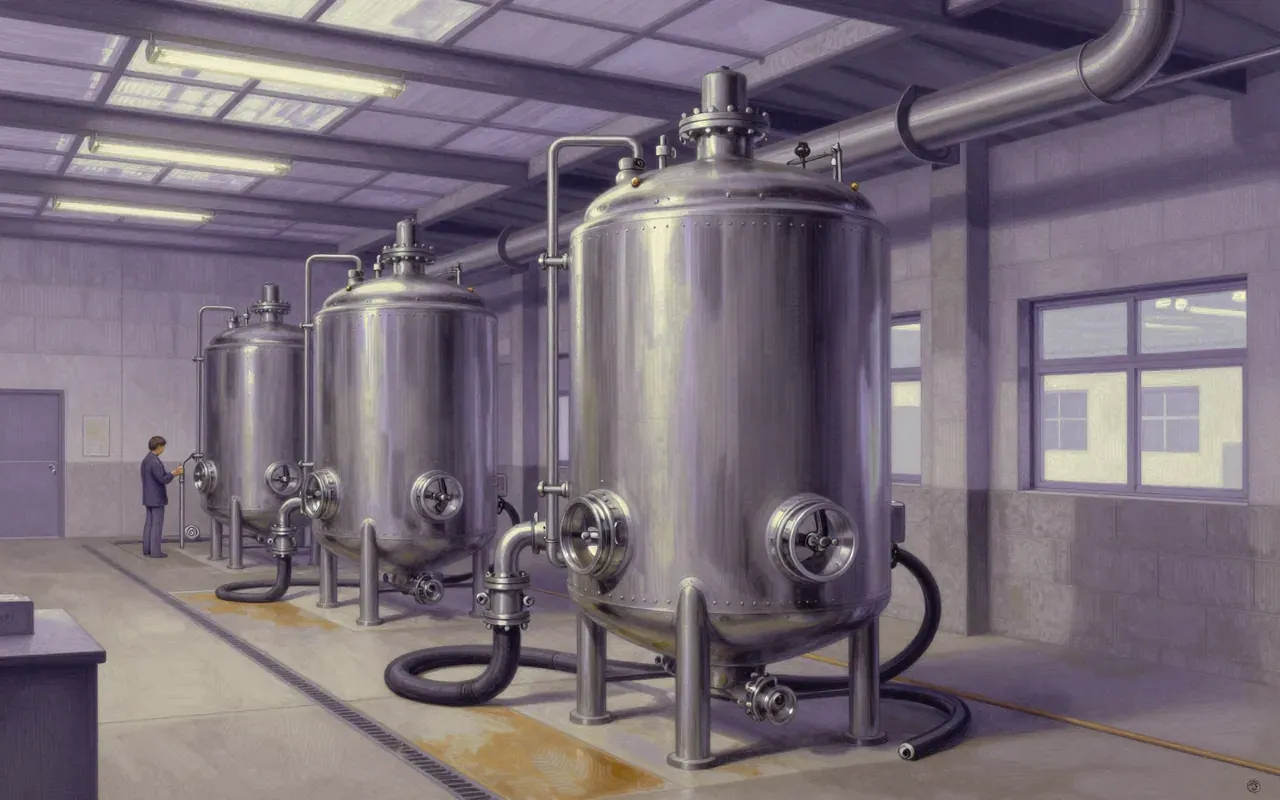

Fused filament fabrication is fused deposition modeling repackaged: same thermoplastic extrusion mechanism, same 1988 origin, same patent. RepRap renamed it to escape Stratasys’ trademark. Its real impact arrived only after the 2009 patent expiry enabled open hardware development. It delivers functional prototypes—not precision parts. It trades repeatability for accessibility.
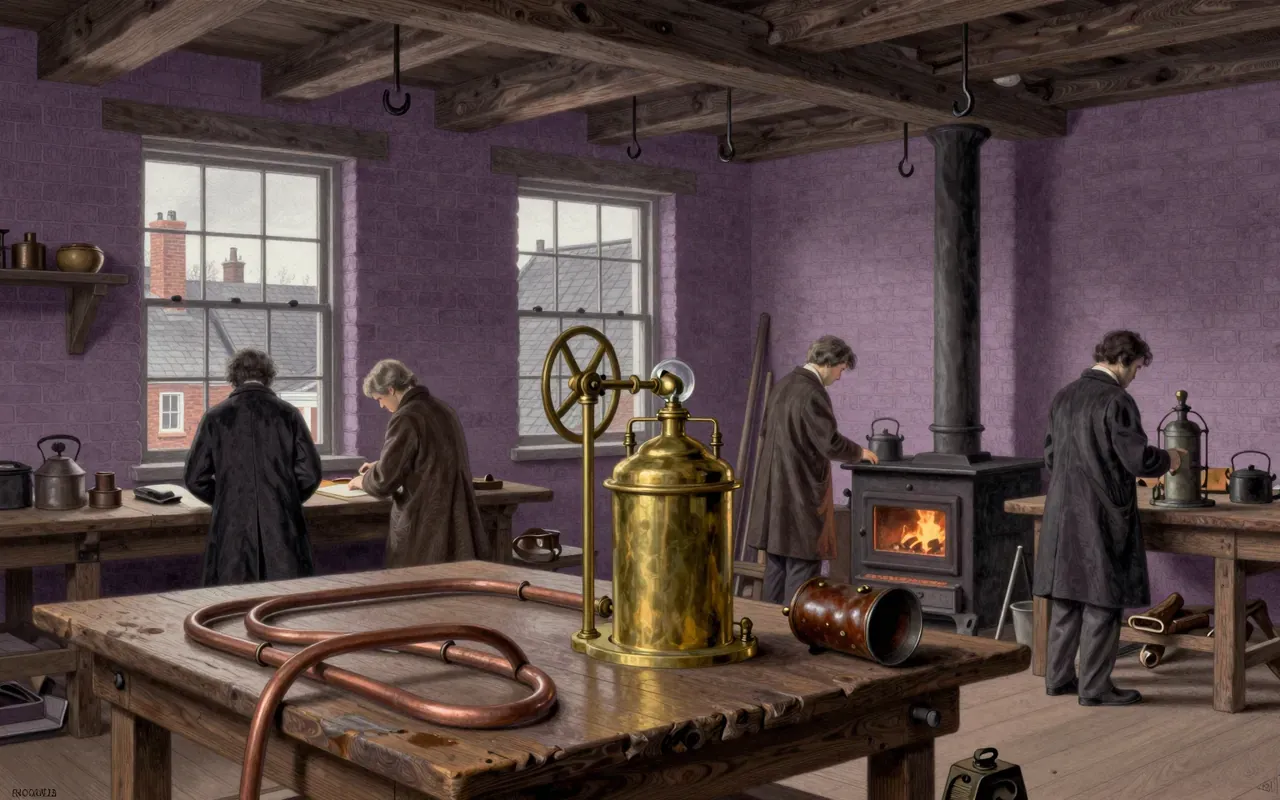
Perkins’s icemaker was the first working vapor compression refrigeration system. It used ether, not ammonia. It proved artificial cold could be generated mechanically — but produced no usable ice beyond lab-scale demonstration. Its legacy is procedural: it fixed the method before the market existed.

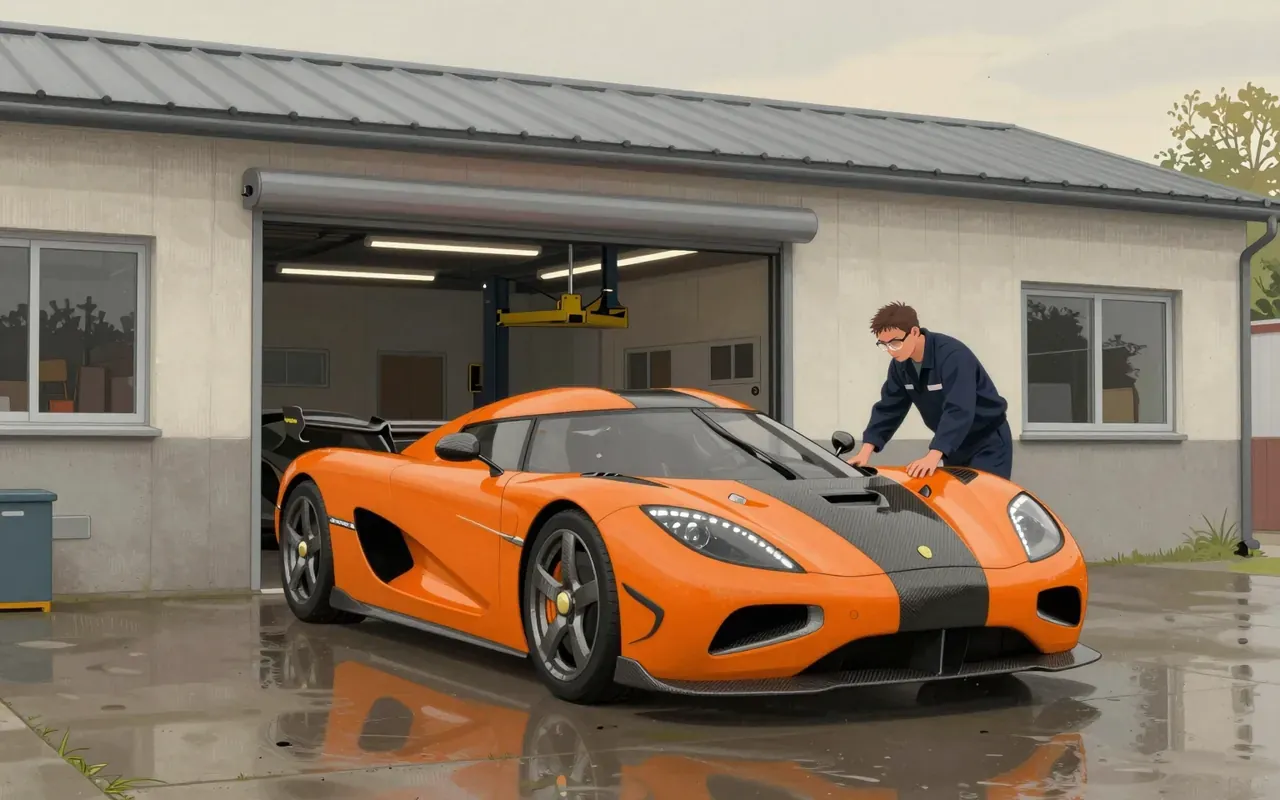
The Koenigsegg Agera is a Swedish mid-engine sports car produced by Koenigsegg Automotive AB. It succeeded the CCX/CCXR and was named Hypercar of the Year in 2010. Its Agera RS variant became the world's fastest production car in 2017. Production ceased in July 2018 and it was succeeded by the Jesko in 2019. It uses an in-house developed 5.0-litre V8 engine with twin-turbochargers and a specially developed CIMA 7-speed dual-clutch transmission with paddle shifters.
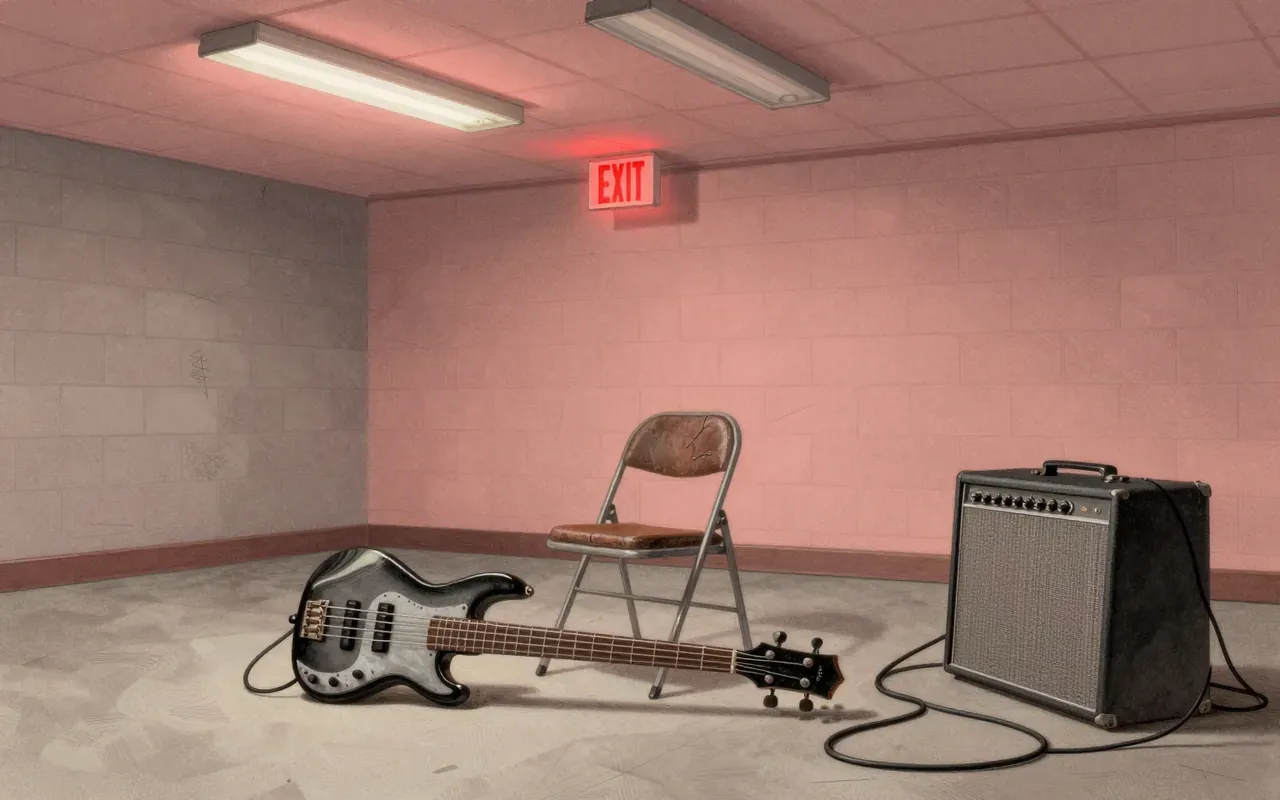
The L-series was the best-known Steinberger design, first made as a bass; the first Steinberger basses were built in Brooklyn in 1979. It dropped the headstock, moved the tuners to a tailpiece and made the whole instrument from a graphite and carbon-fibre blend in two pieces. The L2 is the version with two EMG pickups. Listeners were split on a sound that some called clean and others called synthetic.

The Gibson Moderne is a non-instrument: a shape conceived in 1957, patented in 1958, rejected at NAMM the same year, and absent from musical use for 25 years. It has no verified sound, no operational history, no confirmed prototype, and no functional distinction from later reissues. Its only property is ambiguity.