briefs
Topic · across the network

Club culture

The dancefloor as a social institution.

100
briefs
7
subjects
9:54
average
990 min
in total
Abstraction 407Absurdism 137Acoustics 220Acting 65Adaptation 372Addiction 95Adolescence 202Advertising 77Age of exploration 14Ageing 113Agriculture 100Algorithms 114Ambition 46Anarchism 38Ancient Egypt 17Ancient Greece 38Ancient Rome 30Animals 172Anthropology 23Apartheid 12Architecture 165Archives 32Argentina 10Art Deco 26Artificial intelligence 78Astronomy 81Attention 42Australia 32Automation 73Avant-garde 164Aviation 79Banking 72Banned works 40Bauhaus 12Beer 5Behavioural economics 22Berlin 16Big tech 6Biodiversity 136Biography 86Birds 41Black holes 20Blockchain 12Boxing 14Branding 77Brazil 43Bread 29Britain 131Brutalism 4Bubbles 3Buddhism 28Byzantium 10California 17Canada 18Capitalism 94Cars 468Celebrity 59Censorship 110Cheese 24Chefs 9Chemistry 104Chess 2Childhood 87China 109Chocolate 8Christianity 49Cinematography 343Cities 90Class 485Climate change 107Club culture 100Cocktails 2Coffee 11Cognitive bias 14Collecting 16Colonialism 284Colour 42Comedy 89Community 52Complexity 21Computing 309Consciousness 16Conservatism 14Conspiracy theories 8Cooking 178Corruption 38Cosmology 31Cover versions 64Craft 116Crate digging 42Creativity 8Crime 234Cryptocurrency 8Cryptography 24Cuba 10Cybersecurity 30Dada 12Debt 38Decision-making 28Decolonisation 46Deep time 80Democracy 45Denim 16Deserts 45Detroit 17Dinosaurs 12Directing 168Disasters 59Disease 109DJ culture 89Dreams 32Drones 5Drum machines 96Dystopia 69East Africa 28Ecology 337Economics 36Editing 72Education 92Egypt 12Electric vehicles 59Emotion 22Empire 92Endurance 49Energy 120Engineering 541Entropy 8Epidemics 13Equality 9Espionage 31Ethics 44Evolution 174Existentialism 106Expertise 2Exploration 49Extinction 23Failure 37Family 240Fandom 22Fascism 45Fashion 215Fast fashion 12Fear 34Feminism 122Fermentation 126Film music 81Fishing 12Folklore 71Food history 588Football 16Forests 31Forgery 7France 163Fraud 15Free will 13Freedom 16French literature 15Friendship 24Furniture 36Gambling 14Gender 63Generations 28Genetics 87Geology 96Germany 66Globalisation 74Gothic 32Greece 5Grief 126Habits 6Happiness 2Hardware 709Haute couture 22Headphones 8Hi-fi 12Hinduism 12Hoaxes 1Human history 23Human nature 41Identity 138Illustration 8Impressionism 6Improvisation 249India 89Indonesia 15Industrial design 342Inequality 13Inflation 4Information 34Infrastructure 280Insects 29Intelligence 8Interiors 31Internet culture 88Invention 329Iran 41Islam 40Islands 17Israel 9Italy 52Jamaica 10Japan 114Jewellery 5Journalism 34Judaism 13Justice 42Korea 41Language 70Law 90Leadership 20Learning 6Liberalism 1Libraries 6Literary criticism 26London 12Loneliness 61Los Angeles 62Lost works 9Love 67Luxury 55Machine learning 15Management 10Maps 5Marketing 21Markets 51Mars 6Marxism 26Masculinity 46Materials 138Mathematics 79Meaning 6Medicine 124Memory 82Mental health 70Mesopotamia 4Mexico 38Migration 95Minimalism 68Mining 30Misinformation 9Modernism 63Money 24Monopoly 32Mortality 61Motivation 2Mountains 16Museums 27Mysticism 11Mythology 60Nationalism 40Neuroscience 23New York 36Nigeria 7Nihilism 10Noise 31Nostalgia 33Nuclear 29Nutrition 17Oceans 48Oil 42Open source 45Painting 18Palaeontology 29Parenting 14Paris 18Partition 6Patents 71Patronage 14Perception 44Personal style 27Personality 2Persuasion 8Peru 10Philosophy 77Photography 37Physics 206Plants 26Platforms 89Podcasting 1Poetry 25Poland 17Policing 34Pop Art 16Populism 2Portraiture 6Portugal 18Postmodernism 23Power 91Prehistory 24Preservation 28Printmaking 21Privacy 11Probability 6Productivity 1Programming 54Prohibition 1Propaganda 35Protest 75Pseudoscience 17Psychology 80Publishing 22Punishment 16Quantum mechanics 44Race 145Radio 30Railways 35Rave 17Realism 47Record labels 19Recording 810Relativity 23Religion 154Resilience 15Restaurants 30Restoration 2Retail 94Revolution 58Risk 18Ritual 96Robotics 26Romance 96Russia 58Salt 9Sampling 246Satire 84Scandinavia 28Scientific method 186Screenwriting 26Sculpture 7Secularism 2Self-deception 14Semiconductors 73Sexuality 102Ships 18Silence 24Silicon Valley 17Slavery 35Sleep 2Smartphones 27Sneakers 15Social media 58Socialism 9Software 68Songwriting 180Sound design 332Sound systems 20South Africa 19South East Asia 30Space exploration 84Spain 18Special effects 41Spices 62Spirits 12Sport 82Startups 21Statistics 10Status 9Stoicism 4Storytelling 68Strategy 70Street food 99Streetwear 16Studio craft 508Subcultures 59Sugar 12Supply chains 115Surrealism 53Surveillance 21Sustainability 30Synthesis 232Tailoring 37Taxation 14Tea 24Textiles 97Thailand 11The American Revolution 19The American South 88The Arab world 41The Arctic 19The Balkans 17The Belle Epoque 13The body 29The brain 26The Caribbean 28The civil rights movement 62The Cold War 160The eighties 268The Enlightenment 29The financial crisis 19The First World War 39The food industry 157The French Revolution 9The Gilded Age 9The Great Depression 18The Holocaust 20The Industrial Revolution 93The internet 61The interwar years 135The Middle Ages 35The Moon 4The music business 169The Netherlands 10The nineties 26The Olympics 10The pandemic 13The Reformation 1The Renaissance 16The Russian Revolution 19The Second World War 102The seventies 58The sixties 28The space race 5The United States 19The universe 7The Victorian era 37Therapy 20Tokyo 11Trade 48Tragedy 22Translation 5Trauma 85Travel 5True crime 2Turkey 18Typography 54Uniforms 23Unions 8Urban planning 66Utilitarianism 1Utopia 5Vaccines 10Vegetarianism 15Venture capital 6Video games 291Vietnam 12Vintage 65Vinyl 6Virtual reality 11War 169Watches 4Water 11Weather 29West Africa 29Wilderness 10Wine 3Work 22Workwear 19Worldbuilding 121

music.briefs Music

All 38 in music →
9:56

Arepa 3000: A Venezuelan Journey Into Space

Los Amigos Invisibles · 2000

Los Amigos Invisibles’ Arepa 3000: A Venezuelan Journey Into Space is a 2000 studio album produced by Philip Steir. It won a Latin Grammy for Best Rock Album and received a Grammy nomination for Best Latin Alternative Album. Its sound is tightly arranged, groove-first, and sonically frictionless — built for repeat listening and film placement, not deep excavation.

11:30

Blackout

Britney Spears · 2007

Blackout is Britney Spears’ fifth studio album and the only one she executive-produced. Recording began earnestly in 2006. It was released in October 2007.

10:42

Kaleidoscope

Kelis · 1999

Kaleidoscope is Kelis’s 1999 debut studio album, produced entirely by the Neptunes and released by Virgin Records. It draws from 1970s jazz, disco, soul, R&B, hip hop, urban and rock, and features club-oriented electro beats. Several tracks were designed for dancing. The Neptunes performed instruments and created arrangements. Dave Hummel and Andrew Coleman engineered it. Şerban Ghenea mixed thirteen tracks; Ken 'Duro' Ifill mixed track 10. Kelis cited Sarah Vaughan, Ella Fitzgerald and Dinah Washington as major vocal influences. The album was recorded between mid-1998 and mid-1999.

8:57

Acid jazz

A genre named after acid house that refused to sound like it.
10:08

Body Talk

Robyn · 2010

Body Talk is Robyn’s seventh studio album, released 22 November 2010 as the culminating full-length replacement for a planned third mini-album in the Body Talk trilogy. It functions both as a standalone record and as a curated compilation — drawing select tracks from Body Talk Pt. 1 (June 2010) and Pt. 2 (September 2010), plus five new songs. Its centrepiece collaboration is ‘Time Machine’ with Max Martin, described by Robyn as a nostalgic, full-circle return to songcraft. The album produced three top-10 singles — ‘Dancing On My Own’, ‘Hang with Me’, and ‘Indestructible’ — and received unanimous critical acclaim and three Grammy nominations. It reflects Robyn’s 2010 strategy of rapid, self-motivated release: she prioritised immediacy and inspiration over traditional album cycles, rejecting commercial calculation in favour of sustained creative flow.

8:35

Broken beat

Broken beat didn’t reinvent rhythm—it fractured it on purpose, then left the pieces in West London.
10:16

C’est Chic

Chic · 1978

C’est Chic is Chic’s second studio album, released in 1978 on Atlantic Records. It contains 'Le Freak', which topped US Hot 100, R&B, and Club Play in October 1978, and 'I Want Your Love', which reached number 5 on US R&B, number 7 on US Pop, and number 4 in the UK. The European version was originally titled Très Chic, featured a more risqué cover, and had a different track listing before being withdrawn. The Globe and Mail described it as 'a sleekly elegant variation' of disco; the Los Angeles Times judged that, aside from 'Le Freak', the album consists of pedestrian disco pieces and plodding R&B ballads. All songs were written by Bernard Edwards and Nile Rodgers unless noted otherwise.

9:09

Currents

Tame Impala · 2015

Currents is a tightly controlled, emotionally exposed electronic pop record made alone in a beach house. It replaces guitar-layered psychedelia with vintage synths, drum machines, and clear vocals. Its strength is precision — its weakness is airlessness. It rewards attention to texture, not spectacle.

film.briefs Film

All 7 in film →
13:00

Cold Water

Olivier Assayas · 1994

Olivier Assayas’s 1994 drama Cold Water follows two French teenagers—Christine and Gilles—as they flee unstable homes and converge at an all-night party in an abandoned country house. Set in the early 1970s and scored entirely with period American rock, the film immerses itself in the physicality of youth: smoke, sweat, vinyl crackle, and unspoken understanding. Shot by Denis Lenoir and edited by Luc Barnier, it favours duration and texture over exposition. Though its ending falters in abstraction, its middle section remains a masterclass in atmospheric storytelling—quietly political, deeply sensory, and resolutely unsentimental.

13:00

French Cancan

Jean Renoir · 1955

Jean Renoir’s 1955 French Cancan follows nightclub owner Henri Danglard as he transforms a Montmartre dance hall into the Moulin Rouge, betting everything on the revival of the cancan. Starring Jean Gabin and Françoise Arnoul, it is a musical comedy-drama less concerned with plot than with the textures of creation: rehearsal, construction, rivalry, and collective euphoria. Shot in colour at Joinville Studios with art direction by Max Douy and cinematography by Michel Kelber, it evokes Impressionist painting without imitation. Though uneven in emotional payoff, it remains a singular testament to Renoir’s belief in cinema as a space for presence, not just meaning.
13:00

House Party

Reginald Hudlin · 1990

House Party (1990) is a low-budget teen comedy directed by Reginald Hudlin, following Kid and Play as they throw a house party in South Central Los Angeles. Built around a single chaotic night, it uses hip hop aesthetics — scratching, freestyling, dance-offs — as structural devices rather than decoration. With naturalistic cinematography by Peter Deming and a jazz-funk-hip hop score by Lenny White, it prioritises physicality, vernacular rhythm and communal joy over plot mechanics. Though some subplots falter and caricature occasionally intrudes, its consistency, specificity and warmth have secured its status as a culturally significant cult classic.

13:00

Quadrophenia

Franc Roddam · 1979

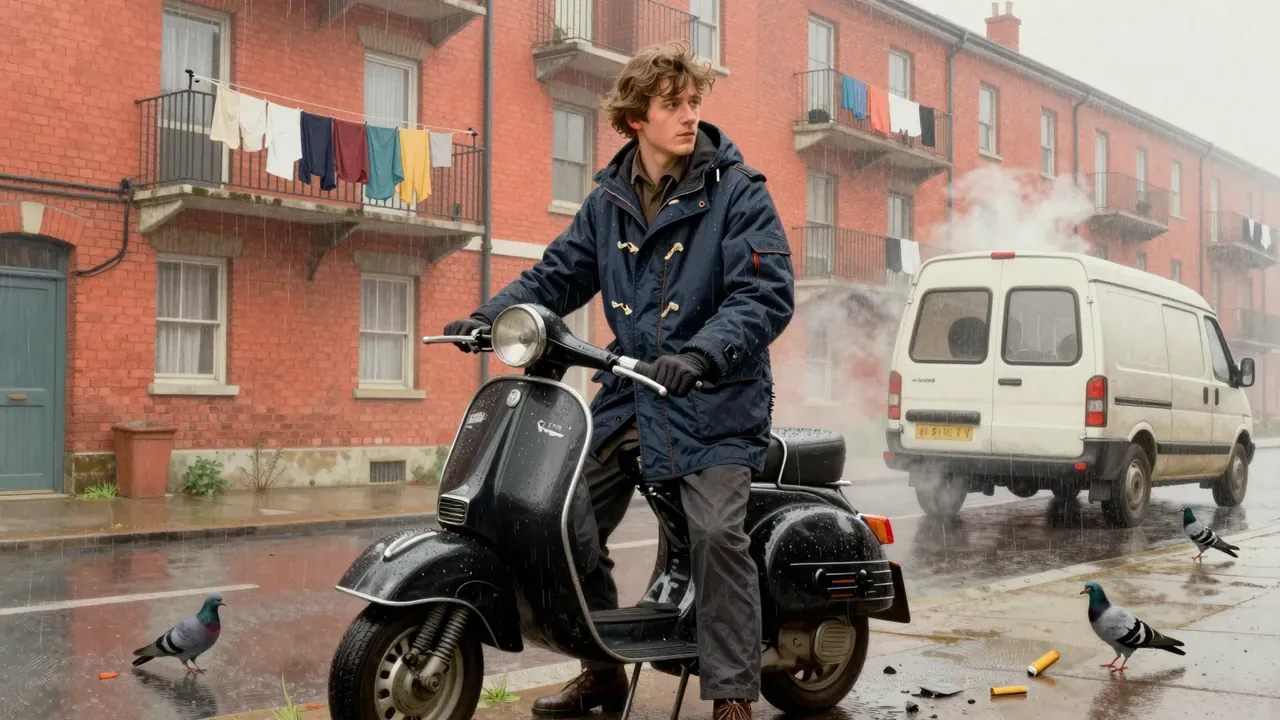
Quadrophenia (1979), directed by Franc Roddam, adapts The Who’s 1973 rock opera into a naturalistic British teen drama set in 1964–65. Starring Phil Daniels as Jimmy Cooper, a disillusioned London mod, it traces his descent through amphetamine use, scooter culture, dance-hall rivalry, and violent clashes with rockers — culminating in the Brighton bank holiday riots. Shot entirely on location except for one studio scene, it relies on physical performance, Brian Tufano’s unvarnished cinematography, and Pete Townshend’s sparingly used score. Not a musical, not nostalgic, it renders subculture as lived infrastructure — transport, stimulants, dress, and dance — all underpinned by class constraint and adolescent uncertainty.

13:00

The Last Days of Disco

Whit Stillman · 1998

Whit Stillman’s 1998 drama follows a group of Ivy League graduates navigating Manhattan’s early-1980s club scene. Built on extended dialogue rather than plot, it examines how class, ideology, and self-presentation shape relationships in a world where moral certainty masks uncertainty. With flat lighting, restrained editing, and performances tuned to verbal nuance, it offers a dry, observant portrait of privilege in transition — one that rewards attention to subtext over spectacle.

13:00

The Lure

Agnieszka Smoczyńska · 2015

Agnieszka Smoczyńska’s 2015 debut is a Polish musical horror film set in a 1980s Warsaw nightclub, following two sirens who perform, love, and devour. Blending gothic metal, bodily realism, and Andersen’s fable, it literalises female adolescence, immigration, and assimilation — with tails removed, voices lost, and hearts consumed. Produced by Warsaw Documentary Film Studio, scored by Ballady i Romanse, and shot by Jakub Kijowski.

13:00

Víctimas del Pecado

Emilio Fernández · 1951

Emilio Fernández’s 1951 Víctimas del Pecado stars Ninón Sevilla as Violeta, a Cuban dancer who adopts an abandoned infant in Mexico City’s red-light district. Set in Churubusco Studios, the film blends mambo numbers by Pérez Prado and Pedro Vargas with a tightly wound melodrama of love, betrayal, and imprisonment. Gabriel Figueroa’s cinematography carves space into zones of glamour, austerity, and quiet domesticity. Though structurally uneven and reliant on genre convention, its physical expressiveness, moral clarity, and studio craft make it a defining work of post-war Mexican cinema.

design.briefs Design

All 1 in design →

games.briefs Games

All 2 in games →
9:46

Dance Dance Revolution (1998 video game)

Konami · 1998

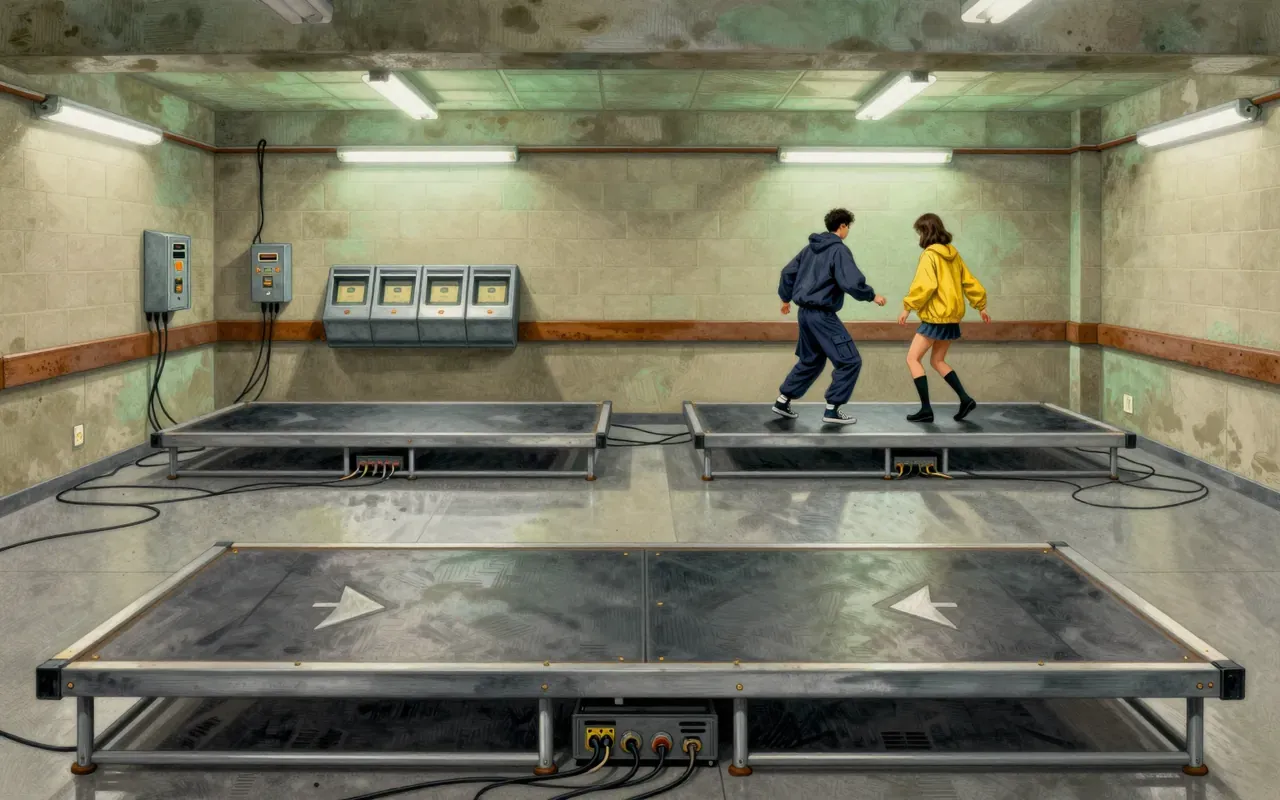
Dance Dance Revolution (1998) is a Konami arcade rhythm game that turns footwork into score. Players match scrolling arrows with steps on a dance pad. Timing judgments affect a life meter — the Dance Gauge — whose depletion ends the song. Combo tracking, step counts, and letter grades follow each performance. It runs under Konami’s Bemani brand. It has no narrative, no progression beyond song selection, and no solo longevity without hardware or social context.

12:10

Just Dance (video game)

Ubisoft · 2009

Just Dance (2009) is a Wii-exclusive rhythm game published by Ubisoft. Players use only the Wii Remote in their right hand to mirror on-screen dancers’ choreography. Moves are scored X, OK, or Great. Shake moves trigger a shake meter for bonus points. Each song has two scoring targets: 10,000 (Standard) and 15,000 (Master). Four modes include Standard, Warm Up, Strike a Pose, and Last One Standing. It is one of Ubisoft’s core, long-running franchises.

culture.briefs Culture

All 15 in culture →
10:23

CBGB

A venue named for genres it never hosted became the birthplace of American punk by enforcing discipline, not chaos.
9:41

Cybergoth

A fashion label borrowed from a roleplaying game — then stretched over rave gear, goth tailoring and industrial hardware.
10:32

All Crews

A scene document, not a history — it maps jungle and drum & bass by who built it, not who branded it.
9:10

Free party

Free parties weren’t just parties—they were jurisdictional strikes.
9:41

Goth subculture

Goth wasn’t about darkness—it was about building shelter in plain sight.
9:20

New Romantic

New Romantic wasn’t a rebellion—it was a costume change that got mistaken for a revolution.
10:51

Rave

Rave wasn’t a movement—it was a loophole in the law, a crack in the night, and a blueprint for how capital would later absorb rebellion.

audio.briefs Audio

All 33 in audio →
9:23

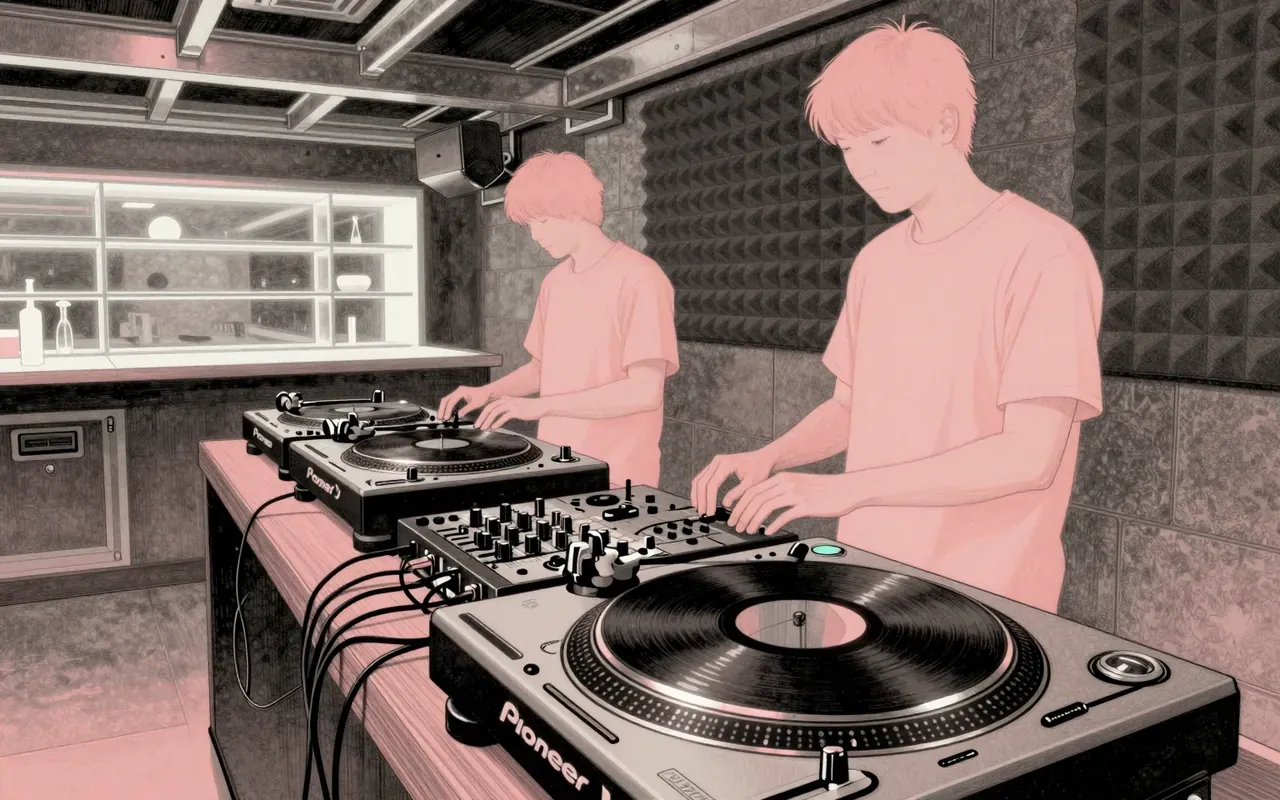
Pioneer CDJ-1000

Pioneer

The Pioneer CDJ-1000 is a tabletop DJ player. It plays CDs. It does not read MP3 files. It is no longer sold. It was replaced by the CDJ-2000 Nexus.

8:36

Pioneer CDJ-1000MK2

Pioneer

The Pioneer CDJ-1000 MK2 is a discontinued tabletop DJ player built to play CDs with exacting mechanical and operational control. It sets the reference for precision, robustness, and reliability among CD-based DJ players of its era. Loops fire instantly. Hot Cues never lag—even while seeking. Reverse isn’t just functional—it’s musical. It’s a discontinued CD-only player, replaced by the CDJ-2000 Nexus.

9:40

Pioneer CDJ-100S

Pioneer

The Pioneer CDJ-100S is a discontinued tabletop DJ player. It loads CDs reliably. It has pitch control and effects users praise. Its cue point system is obsolete. It is outperformed by the CDJ200, CDJ800, and DNS1000. Users deployed it in live events but declined to repurchase it due to age. Its build quality remains high — but that does not compensate for functional limitations.

9:12

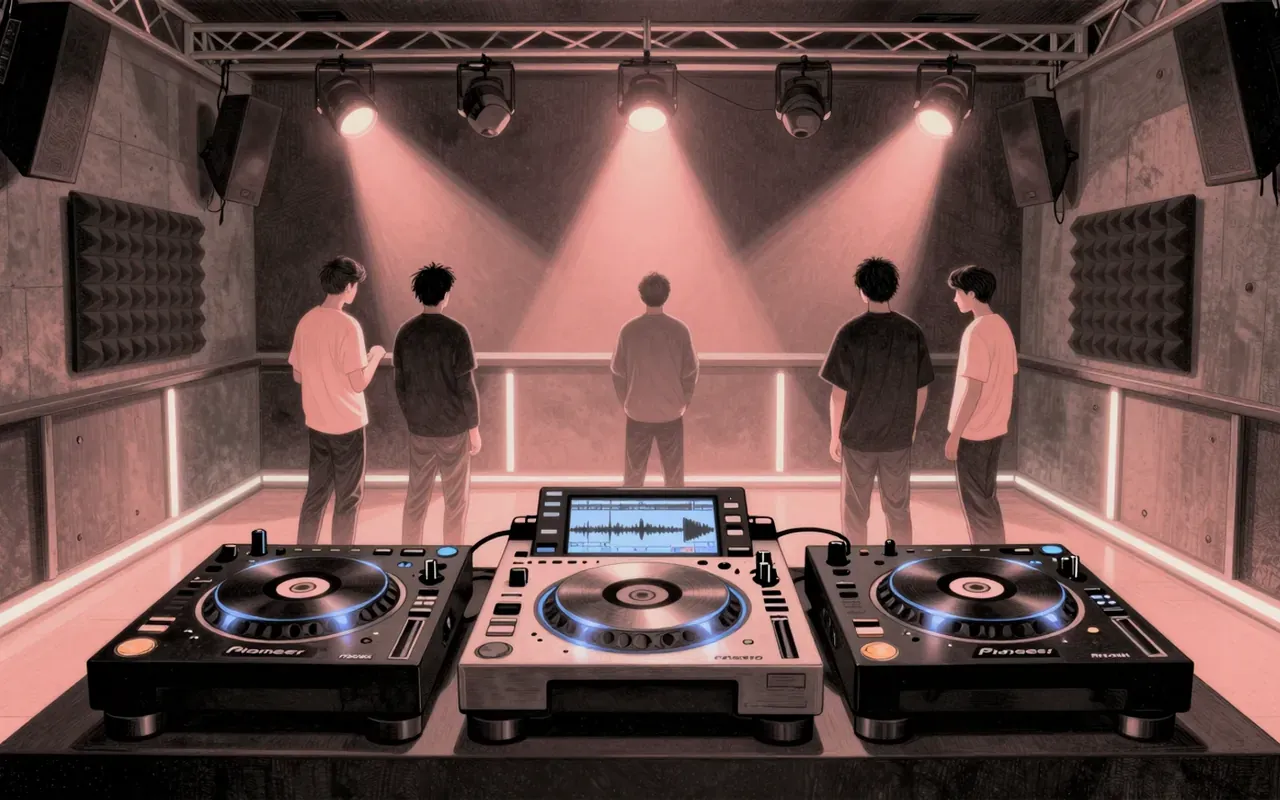
Pioneer CDJ-2000

Pioneer

The Pioneer CDJ-2000 is a discontinued tabletop DJ player. It supports playback from CDs, DVDs, SD cards, USB devices, and wirelessly via WiFi from computers and phones. It has a ~6-inch colour LCD display. Its loop quantisation is automatic and highly accurate. User preferences are saved across power cycles. It was replaced by the CDJ-2000 Nexus.

7:55

Pioneer CDJ-500

Pioneer

The Pioneer CDJ-500 is a tabletop DJ player built to play CDs in live and private DJ sets.

9:18

Farfisa Compact

Farfisa

The JB Systems Compact is a no-nonsense 3-channel DJ mixer from 2008. It delivers reliable talk-over, basic EQ, and straightforward monitoring — all at entry-level cost and fidelity. It does not pretend to be more.

9:17

Pioneer DJM-1000

Pioneer

The Pioneer DJM-1000 is a rack-mountable 4+ channel DJ mixer with two master outputs and one booth output sharing a single volume control. It has no built-in effects. Its equalizer is low quality and offers parametric control only on mic channels. Its preamps and potentiometers are poor. Its output level of 2V + 6dB causes distortion across frequency ranges.

7:20

Pioneer DJM-600

Pioneer

The Pioneer DJM-600 is a 4-channel analog DJ mixer with RCA and XLR I/O, non-parametric EQ, integrated non-automatable effects, no sync capability, and clean, distortion-free sound — though perceived as dated by 2010. It is widely used in clubs and praised for reliability, intuitive layout, and ease of installation.

fashion.briefs Fashion

All 4 in fashion →
9:17

Dazed

Dazed is not a magazine—it’s a publishing posture: student-made, colour-switched, club-promoted, and never sold off.
8:09

Martine Rose

Martine Rose doesn’t design clothes for men—it designs menswear that refuses to stay put.
9:08

Raf Simons

Raf Simons

Raf Simons is a Belgian menswear label launched in 1995 by a furniture-trained designer who rejected runway conventions, used video and street casting, fused divergent youth cultures into coherent silhouettes, and paused the label in 2000 after Confusion—before shifting focus from subcultural code to pure form.