briefs
Topic · across the network

Poetry

The form with the smallest audience and the longest memory.

25
briefs
5
subjects
11:31
average
288 min
in total
Abstraction 407Absurdism 137Acoustics 220Acting 65Adaptation 372Addiction 95Adolescence 202Advertising 77Age of exploration 14Ageing 113Agriculture 100Algorithms 114Ambition 46Anarchism 38Ancient Egypt 17Ancient Greece 38Ancient Rome 30Animals 172Anthropology 23Apartheid 12Architecture 165Archives 32Argentina 10Art Deco 26Artificial intelligence 78Astronomy 81Attention 42Australia 32Automation 73Avant-garde 164Aviation 79Banking 72Banned works 40Bauhaus 12Beer 5Behavioural economics 22Berlin 16Big tech 6Biodiversity 136Biography 86Birds 41Black holes 20Blockchain 12Boxing 14Branding 77Brazil 43Bread 29Britain 131Brutalism 4Bubbles 3Buddhism 28Byzantium 10California 17Canada 18Capitalism 94Cars 468Celebrity 59Censorship 110Cheese 24Chefs 9Chemistry 104Chess 2Childhood 87China 109Chocolate 8Christianity 49Cinematography 343Cities 90Class 485Climate change 107Club culture 100Cocktails 2Coffee 11Cognitive bias 14Collecting 16Colonialism 284Colour 42Comedy 89Community 52Complexity 21Computing 309Consciousness 16Conservatism 14Conspiracy theories 8Cooking 178Corruption 38Cosmology 31Cover versions 64Craft 116Crate digging 42Creativity 8Crime 234Cryptocurrency 8Cryptography 24Cuba 10Cybersecurity 30Dada 12Debt 38Decision-making 28Decolonisation 46Deep time 80Democracy 45Denim 16Deserts 45Detroit 17Dinosaurs 12Directing 168Disasters 59Disease 109DJ culture 89Dreams 32Drones 5Drum machines 96Dystopia 69East Africa 28Ecology 337Economics 36Editing 72Education 92Egypt 12Electric vehicles 59Emotion 22Empire 92Endurance 49Energy 120Engineering 541Entropy 8Epidemics 13Equality 9Espionage 31Ethics 44Evolution 174Existentialism 106Expertise 2Exploration 49Extinction 23Failure 37Family 240Fandom 22Fascism 45Fashion 215Fast fashion 12Fear 34Feminism 122Fermentation 126Film music 81Fishing 12Folklore 71Food history 588Football 16Forests 31Forgery 7France 163Fraud 15Free will 13Freedom 16French literature 15Friendship 24Furniture 36Gambling 14Gender 63Generations 28Genetics 87Geology 96Germany 66Globalisation 74Gothic 32Greece 5Grief 126Habits 6Happiness 2Hardware 709Haute couture 22Headphones 8Hi-fi 12Hinduism 12Hoaxes 1Human history 23Human nature 41Identity 138Illustration 8Impressionism 6Improvisation 249India 89Indonesia 15Industrial design 342Inequality 13Inflation 4Information 34Infrastructure 280Insects 29Intelligence 8Interiors 31Internet culture 88Invention 329Iran 41Islam 40Islands 17Israel 9Italy 52Jamaica 10Japan 114Jewellery 5Journalism 34Judaism 13Justice 42Korea 41Language 70Law 90Leadership 20Learning 6Liberalism 1Libraries 6Literary criticism 26London 12Loneliness 61Los Angeles 62Lost works 9Love 67Luxury 55Machine learning 15Management 10Maps 5Marketing 21Markets 51Mars 6Marxism 26Masculinity 46Materials 138Mathematics 79Meaning 6Medicine 124Memory 82Mental health 70Mesopotamia 4Mexico 38Migration 95Minimalism 68Mining 30Misinformation 9Modernism 63Money 24Monopoly 32Mortality 61Motivation 2Mountains 16Museums 27Mysticism 11Mythology 60Nationalism 40Neuroscience 23New York 36Nigeria 7Nihilism 10Noise 31Nostalgia 33Nuclear 29Nutrition 17Oceans 48Oil 42Open source 45Painting 18Palaeontology 29Parenting 14Paris 18Partition 6Patents 71Patronage 14Perception 44Personal style 27Personality 2Persuasion 8Peru 10Philosophy 77Photography 37Physics 206Plants 26Platforms 89Podcasting 1Poetry 25Poland 17Policing 34Pop Art 16Populism 2Portraiture 6Portugal 18Postmodernism 23Power 91Prehistory 24Preservation 28Printmaking 21Privacy 11Probability 6Productivity 1Programming 54Prohibition 1Propaganda 35Protest 75Pseudoscience 17Psychology 80Publishing 22Punishment 16Quantum mechanics 44Race 145Radio 30Railways 35Rave 17Realism 47Record labels 19Recording 810Relativity 23Religion 154Resilience 15Restaurants 30Restoration 2Retail 94Revolution 58Risk 18Ritual 96Robotics 26Romance 96Russia 58Salt 9Sampling 246Satire 84Scandinavia 28Scientific method 186Screenwriting 26Sculpture 7Secularism 2Self-deception 14Semiconductors 73Sexuality 102Ships 18Silence 24Silicon Valley 17Slavery 35Sleep 2Smartphones 27Sneakers 15Social media 58Socialism 9Software 68Songwriting 180Sound design 332Sound systems 20South Africa 19South East Asia 30Space exploration 84Spain 18Special effects 41Spices 62Spirits 12Sport 82Startups 21Statistics 10Status 9Stoicism 4Storytelling 68Strategy 70Street food 99Streetwear 16Studio craft 508Subcultures 59Sugar 12Supply chains 115Surrealism 53Surveillance 21Sustainability 30Synthesis 232Tailoring 37Taxation 14Tea 24Textiles 97Thailand 11The American Revolution 19The American South 88The Arab world 41The Arctic 19The Balkans 17The Belle Epoque 13The body 29The brain 26The Caribbean 28The civil rights movement 62The Cold War 160The eighties 268The Enlightenment 29The financial crisis 19The First World War 39The food industry 157The French Revolution 9The Gilded Age 9The Great Depression 18The Holocaust 20The Industrial Revolution 93The internet 61The interwar years 135The Middle Ages 35The Moon 4The music business 169The Netherlands 10The nineties 26The Olympics 10The pandemic 13The Reformation 1The Renaissance 16The Russian Revolution 19The Second World War 102The seventies 58The sixties 28The space race 5The United States 19The universe 7The Victorian era 37Therapy 20Tokyo 11Trade 48Tragedy 22Translation 5Trauma 85Travel 5True crime 2Turkey 18Typography 54Uniforms 23Unions 8Urban planning 66Utilitarianism 1Utopia 5Vaccines 10Vegetarianism 15Venture capital 6Video games 291Vietnam 12Vintage 65Vinyl 6Virtual reality 11War 169Watches 4Water 11Weather 29West Africa 29Wilderness 10Wine 3Work 22Workwear 19Worldbuilding 121

books.briefs Books

All 4 in books →
15:13

Leaves of Grass

Walt Whitman · 1855

Leaves of Grass is Whitman’s lifelong poetic declaration that the self, the body, and democracy are one sacred continuum. It works best in fragments: the opening 'One’s-self I sing', the Lincoln elegies, and the death meditations. Skip the expansions. Read it as liturgy, not argument.
11:50

The Song of Hiawatha

Henry Wadsworth Longfellow · 0

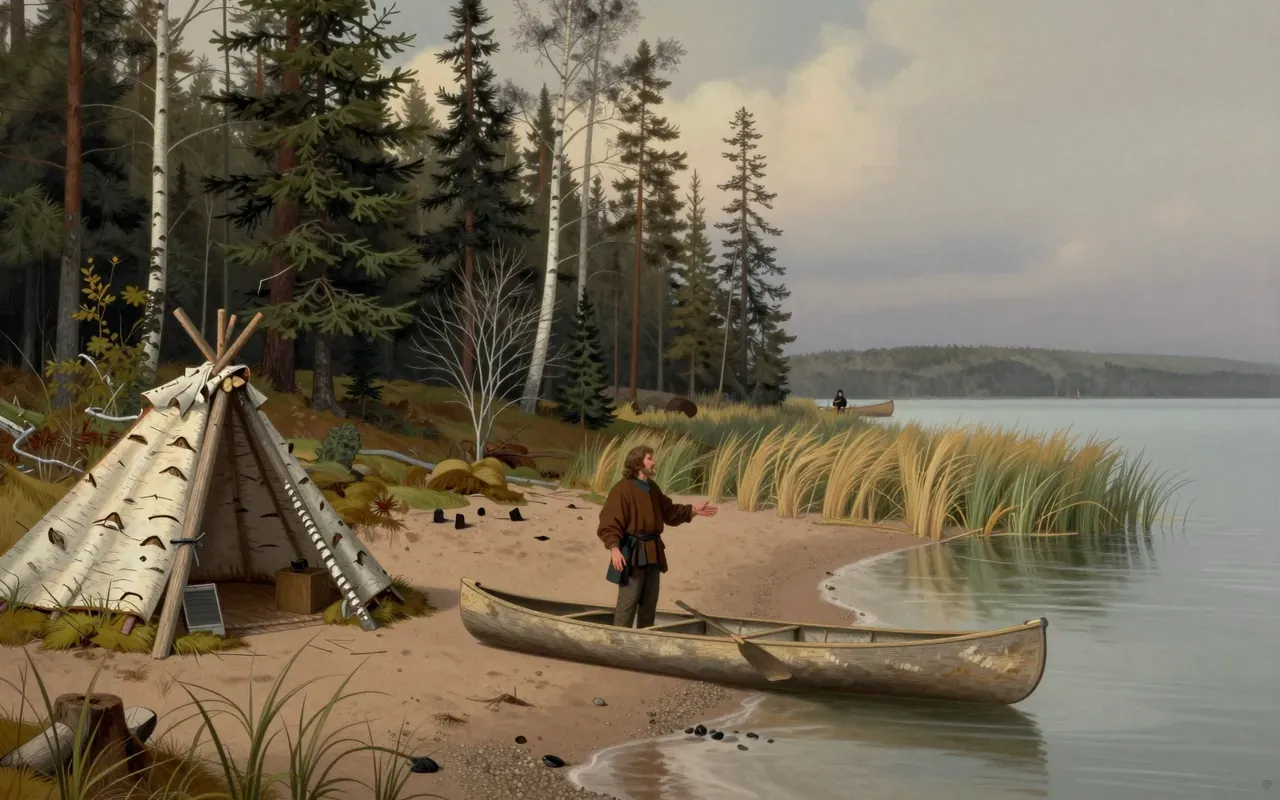
Longfellow’s 1855 poem recasts Ojibway oral tradition into a mythic biography of Hiawatha, using Kalevala metre and Romantic moral framing. It works best in its ritual moments—ghosts testing hospitality, Minnehaha’s death, Hiawatha’s departure—but fails as ethnography or theology. Read Chapters I, IV, V and XXII; skip the botanical interludes and explanatory digressions.

14:25

Spoon River Anthology

Edgar Lee Masters · 0

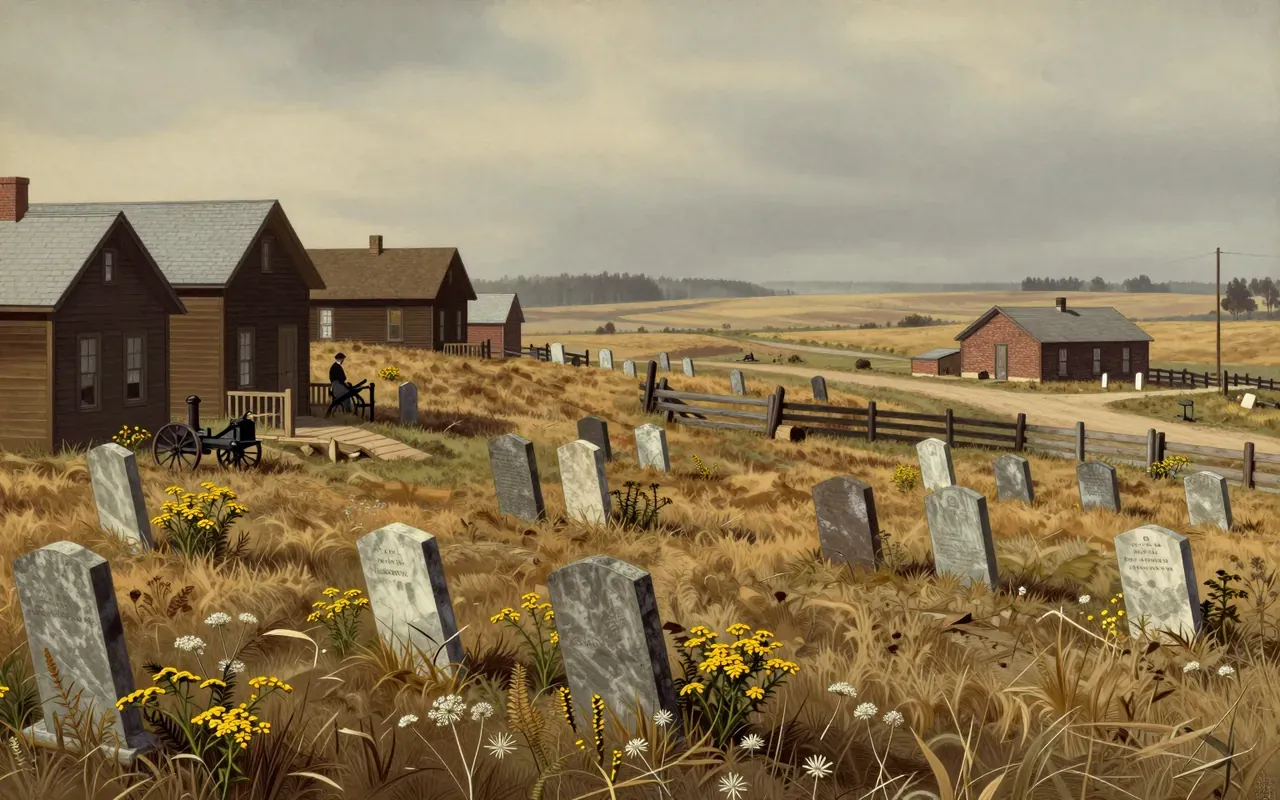
The brief argues that Spoon River Anthology’s power lies entirely in its epitaphs—the dead speaking plainly about lies, loss and local truth. The Epilogue’s mythic allegory undermines that power. Read The Hill. Skip the rest.

14:32

The Waste Land

T. S. Eliot · 1922

The Waste Land is a fractured 1922 poem diagnosing spiritual drought after the First World War. It rejects coherence, using shards of language, myth and memory to enact collapse rather than describe it. The brief tells you why its disorientation is deliberate, which lines anchor its argument, and why it remains essential—if unreadable in the old way.

music.briefs Music

All 2 in music →
8:35

Caetano Veloso

Caetano Veloso · 1968

No self-titled 1968 'Caetano Veloso' album exists in the material. Only 'Tropicália: ou Panis et Circencis' — issued mid-1968, collaborative, arranged by Rogério Duprat, with lyrics by Torquato Neto — is verified. Everything else is unsupported.

9:39

Horses

Patti Smith · 1975

Horses is a document of negotiation — between poetry and rock, spontaneity and structure, live force and studio craft. It lands where it commits: in voice, rhythm, and refusal. It falters where it sprawls.

film.briefs Film

All 9 in film →
13:00

Alphaville

Jean-Luc Godard · 1965

Jean-Luc Godard’s 1965 Alphaville transplants American detective Lemmy Caution into a nameless, near-future city ruled by Alpha 60, a sentient computer that bans emotion, poetry, and questioning. Shot on real Paris locations with no futuristic props, it merges film noir and dystopian satire to interrogate language, control, and the persistence of feeling. Eddie Constantine and Anna Karina star; Raoul Coutard shot it, Agnès Guillemot edited it, Paul Misraki scored it. It won the Golden Bear at Berlin in 1965.

13:00

Dead Man

Jim Jarmusch · 1995

Dead Man (1995) is Jim Jarmusch’s monochrome acid western starring Johnny Depp as a fatally wounded accountant guided west by Gary Farmer’s enigmatic Native American spirit-guide Nobody. Shot by Robby Müller and scored by Neil Young, it rejects narrative convention in favour of ritual, silence, and poetic logic — foregrounding Indigenous epistemology, untranslated Cree and Blackfoot dialogue, and a vision of landscape as sentient participant. Though critically divisive on release, it has since been reassessed as a singular, austere meditation on mortality, colonialism, and perception.

13:00

Love Jones

Theodore Witcher · 1997

A 1997 Chicago-set romance following poet Darius Lovehall and photographer Nina Mosley as they navigate attraction, miscommunication, and distance without relying on genre clichés. Directed by Theodore Witcher as his debut, it foregrounds Black intellectual and artistic life, uses spoken word as emotional grammar, and resists tidy closure in favour of bittersweet realism.

13:00

Orpheus

Jean Cocteau · 1950

Jean Cocteau’s 1950 Orpheus recasts the Greek myth as a post-war Parisian fable, where poetry, death and mirrors operate under shared, unspoken rules. Jean Marais stars as a poet drawn into a bureaucratic underworld by María Casares’ enigmatic Princess of Death. Shot in ruined academies and Paris streets, with practical effects that foreground craft rather than conceal it, the film sustains a poetic logic across 95 minutes — demanding attention, not explanation.

13:00

Poetic Justice

John Singleton · 1993

Poetic Justice is John Singleton’s 1993 romantic road film following Justice (Janet Jackson), a grieving poet and hairdresser, on a journey from South Los Angeles to Oakland with friends and postal workers Lucky (Tupac Shakur) and Chicago (Joe Torry). Shot by Peter Lyons Collister and scored by Stanley Clarke, it attempts to centre Black women’s emotional lives within the ‘hood film’ tradition. Though criticised for narrative slack and exposition-heavy writing, it endures for its textured portrayal of grief, care and quiet connection — anchored by Jackson and Shakur’s restrained, resonant performances.

13:00

The Blood of a Poet

Jean Cocteau · 1932

Jean Cocteau’s 1932 debut feature is a 55-minute avant-garde fantasy structured in four discontinuous sections. An artist sketches a mouth that migrates to his palm, then to a statue’s lips; he passes through a mirror into a hotel where he is instructed to shoot himself; a marble snowball kills a boy; a card game unfolds over the corpse while a guardian angel absorbs him and departs. Shot by Georges Périnal, scored by Georges Auric, and narrated by Cocteau, it avoids psychology and narrative logic in favour of symbolic recurrence and formal rigour. Financed by Charles de Noailles, it was delayed over fears of blasphemy and remains the first part of Cocteau’s Orphic Trilogy.

13:00

The Eternal Breasts

Kinuyo Tanaka · 1955

Kinuyo Tanaka’s 1955 film follows Fumiko Nakajō, a tanka poet diagnosed with late-stage breast cancer, as she navigates divorce, motherhood, literary ambition, and mortality. Shot on location in Hokkaidō, it avoids biopic conventions, favouring quiet observation over exposition. Yumeji Tsukioka anchors a restrained ensemble; Kumenobu Fujioka’s naturalistic cinematography and Takanobu Saitō’s sparse score support a film that values duration, physical detail, and unspoken tension over narrative closure or thematic pronouncement.

13:00

Bright Star

Jane Campion · 2009

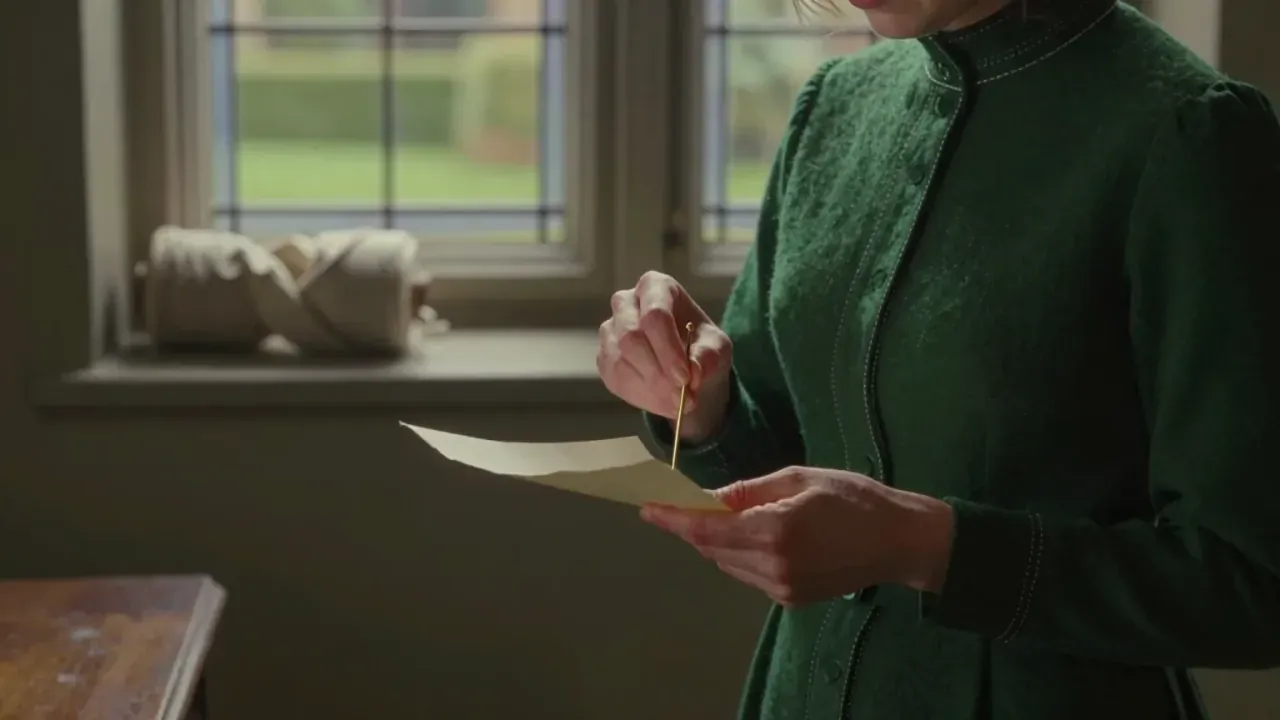
Jane Campion’s Bright Star follows the final years of John Keats and his relationship with Fanny Brawne, drawing directly from his letters and poems. Set in Hampstead and Italy between 1818 and 1821, it renders their love with quiet precision — in shared walks, handwritten notes, stitched garments and unspoken grief. Ben Whishaw and Abbie Cornish anchor a restrained, visually tactile film shaped by Greig Fraser’s naturalistic cinematography and Janet Patterson’s lived-in production and costume design. It is less a biographical survey than an intimate study of endurance within limitation: of health, income, time and language itself.

history.briefs History

All 1 in history →

culture.briefs Culture

All 9 in culture →
8:35

Dumpster diving

Salvaging from waste bins is neither rebellion nor rescue—it’s necessity with hazards baked in.
9:59

Haiku

Haiku is not a minimalist poem. It is a tightly constrained linguistic apparatus — and most English versions break it.
8:19

Imagism

Imagism didn’t reinvent poetry—it weaponised concision.
10:16

Langston Hughes

Hughes didn’t just write about Black life—he insisted it was the only subject worth writing from.
10:37

Maya Angelou

Angelou didn’t just tell her story—she rebuilt the form to hold Black women’s truth, then took it to the White House and the lecture hall.
9:14

Ntozake Shange

Shange didn’t write plays — she built anti-colonial syntax with bodies, rhythm, and refusal.