briefs
Topic · across the network

Ambition

The drive to make something, and what it costs the maker.

46
briefs
5
subjects
12:21
average
568 min
in total
Abstraction 407Absurdism 137Acoustics 220Acting 65Adaptation 372Addiction 95Adolescence 202Advertising 77Age of exploration 14Ageing 113Agriculture 100Algorithms 114Ambition 46Anarchism 38Ancient Egypt 17Ancient Greece 38Ancient Rome 30Animals 172Anthropology 23Apartheid 12Architecture 165Archives 32Argentina 10Art Deco 26Artificial intelligence 78Astronomy 81Attention 42Australia 32Automation 73Avant-garde 164Aviation 79Banking 72Banned works 40Bauhaus 12Beer 5Behavioural economics 22Berlin 16Big tech 6Biodiversity 136Biography 86Birds 41Black holes 20Blockchain 12Boxing 14Branding 77Brazil 43Bread 29Britain 131Brutalism 4Bubbles 3Buddhism 28Byzantium 10California 17Canada 18Capitalism 94Cars 468Celebrity 59Censorship 110Cheese 24Chefs 9Chemistry 104Chess 2Childhood 87China 109Chocolate 8Christianity 49Cinematography 343Cities 90Class 485Climate change 107Club culture 100Cocktails 2Coffee 11Cognitive bias 14Collecting 16Colonialism 284Colour 42Comedy 89Community 52Complexity 21Computing 309Consciousness 16Conservatism 14Conspiracy theories 8Cooking 178Corruption 38Cosmology 31Cover versions 64Craft 116Crate digging 42Creativity 8Crime 234Cryptocurrency 8Cryptography 24Cuba 10Cybersecurity 30Dada 12Debt 38Decision-making 28Decolonisation 46Deep time 80Democracy 45Denim 16Deserts 45Detroit 17Dinosaurs 12Directing 168Disasters 59Disease 109DJ culture 89Dreams 32Drones 5Drum machines 96Dystopia 69East Africa 28Ecology 337Economics 36Editing 72Education 92Egypt 12Electric vehicles 59Emotion 22Empire 92Endurance 49Energy 120Engineering 541Entropy 8Epidemics 13Equality 9Espionage 31Ethics 44Evolution 174Existentialism 106Expertise 2Exploration 49Extinction 23Failure 37Family 240Fandom 22Fascism 45Fashion 215Fast fashion 12Fear 34Feminism 122Fermentation 126Film music 81Fishing 12Folklore 71Food history 588Football 16Forests 31Forgery 7France 163Fraud 15Free will 13Freedom 16French literature 15Friendship 24Furniture 36Gambling 14Gender 63Generations 28Genetics 87Geology 96Germany 66Globalisation 74Gothic 32Greece 5Grief 126Habits 6Happiness 2Hardware 709Haute couture 22Headphones 8Hi-fi 12Hinduism 12Hoaxes 1Human history 23Human nature 41Identity 138Illustration 8Impressionism 6Improvisation 249India 89Indonesia 15Industrial design 342Inequality 13Inflation 4Information 34Infrastructure 280Insects 29Intelligence 8Interiors 31Internet culture 88Invention 329Iran 41Islam 40Islands 17Israel 9Italy 52Jamaica 10Japan 114Jewellery 5Journalism 34Judaism 13Justice 42Korea 41Language 70Law 90Leadership 20Learning 6Liberalism 1Libraries 6Literary criticism 26London 12Loneliness 61Los Angeles 62Lost works 9Love 67Luxury 55Machine learning 15Management 10Maps 5Marketing 21Markets 51Mars 6Marxism 26Masculinity 46Materials 138Mathematics 79Meaning 6Medicine 124Memory 82Mental health 70Mesopotamia 4Mexico 38Migration 95Minimalism 68Mining 30Misinformation 9Modernism 63Money 24Monopoly 32Mortality 61Motivation 2Mountains 16Museums 27Mysticism 11Mythology 60Nationalism 40Neuroscience 23New York 36Nigeria 7Nihilism 10Noise 31Nostalgia 33Nuclear 29Nutrition 17Oceans 48Oil 42Open source 45Painting 18Palaeontology 29Parenting 14Paris 18Partition 6Patents 71Patronage 14Perception 44Personal style 27Personality 2Persuasion 8Peru 10Philosophy 77Photography 37Physics 206Plants 26Platforms 89Podcasting 1Poetry 25Poland 17Policing 34Pop Art 16Populism 2Portraiture 6Portugal 18Postmodernism 23Power 91Prehistory 24Preservation 28Printmaking 21Privacy 11Probability 6Productivity 1Programming 54Prohibition 1Propaganda 35Protest 75Pseudoscience 17Psychology 80Publishing 22Punishment 16Quantum mechanics 44Race 145Radio 30Railways 35Rave 17Realism 47Record labels 19Recording 810Relativity 23Religion 154Resilience 15Restaurants 30Restoration 2Retail 94Revolution 58Risk 18Ritual 96Robotics 26Romance 96Russia 58Salt 9Sampling 246Satire 84Scandinavia 28Scientific method 186Screenwriting 26Sculpture 7Secularism 2Self-deception 14Semiconductors 73Sexuality 102Ships 18Silence 24Silicon Valley 17Slavery 35Sleep 2Smartphones 27Sneakers 15Social media 58Socialism 9Software 68Songwriting 180Sound design 332Sound systems 20South Africa 19South East Asia 30Space exploration 84Spain 18Special effects 41Spices 62Spirits 12Sport 82Startups 21Statistics 10Status 9Stoicism 4Storytelling 68Strategy 70Street food 99Streetwear 16Studio craft 508Subcultures 59Sugar 12Supply chains 115Surrealism 53Surveillance 21Sustainability 30Synthesis 232Tailoring 37Taxation 14Tea 24Textiles 97Thailand 11The American Revolution 19The American South 88The Arab world 41The Arctic 19The Balkans 17The Belle Epoque 13The body 29The brain 26The Caribbean 28The civil rights movement 62The Cold War 160The eighties 268The Enlightenment 29The financial crisis 19The First World War 39The food industry 157The French Revolution 9The Gilded Age 9The Great Depression 18The Holocaust 20The Industrial Revolution 93The internet 61The interwar years 135The Middle Ages 35The Moon 4The music business 169The Netherlands 10The nineties 26The Olympics 10The pandemic 13The Reformation 1The Renaissance 16The Russian Revolution 19The Second World War 102The seventies 58The sixties 28The space race 5The United States 19The universe 7The Victorian era 37Therapy 20Tokyo 11Trade 48Tragedy 22Translation 5Trauma 85Travel 5True crime 2Turkey 18Typography 54Uniforms 23Unions 8Urban planning 66Utilitarianism 1Utopia 5Vaccines 10Vegetarianism 15Venture capital 6Video games 291Vietnam 12Vintage 65Vinyl 6Virtual reality 11War 169Watches 4Water 11Weather 29West Africa 29Wilderness 10Wine 3Work 22Workwear 19Worldbuilding 121

books.briefs Books

All 4 in books →
10:57

The Master Builder

Henrik Ibsen · 0

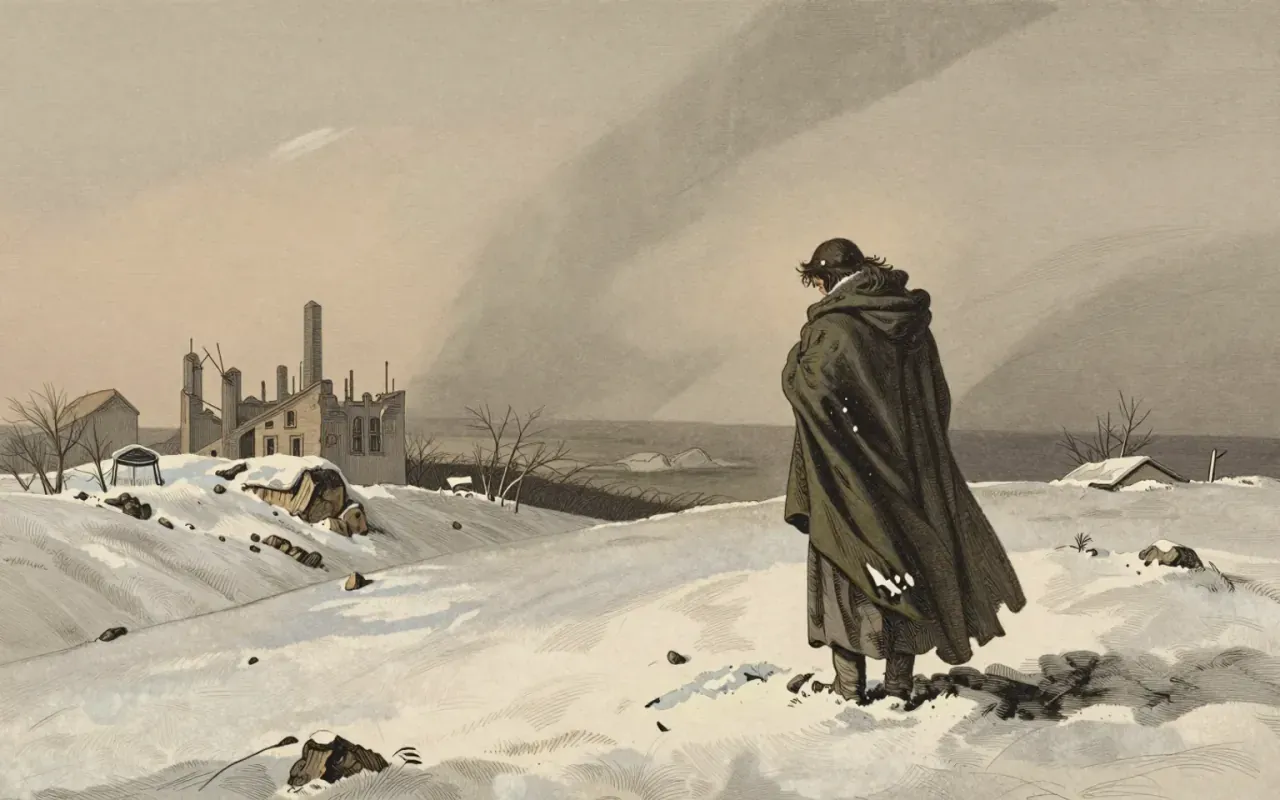
The Master Builder argues that genius is sustained by moral evasion—and that no tower can stand on ash. It works as a claustrophobic duel between Solness and Hilda, but collapses under its own refusal to interrogate her motive or hold Solness to account. Read it for the tower, not the triumph.

9:15

Frankenstein

Mary Wollstonecraft Shelley · 1818

Frankenstein is a cautionary gothic tale about the perils of unchecked scientific ambition. The novel follows Victor Frankenstein’s obsessive quest to animate life, the creature’s thirst for vengeance, and the moral fallout for all involved. The brief argues the book’s core is a warning about hubris, while pointing out its dated prose and moral ambiguity.

10:50

The Great Gatsby

F. Scott Fitzgerald · 1925

Fitzgerald's 1925 masterpiece on wealth, desire, and the American Dream in its fullest delusion. The brief covers who Gatsby is and why he fails, the machinery of class that destroys him, and why the ending matters.

15:02

Macbeth

William Shakespeare · 1623

A soldier is told he will be king, kills to make it happen, and narrates his own disintegration in the plainest verse Shakespeare wrote. The brief covers what the witches actually promise, why Lady Macbeth is written out of the second half, and where the play sags.

music.briefs Music

All 7 in music →
9:59

Get Rich or Die Tryin’

50 Cent · 2003

Get Rich or Die Tryin’ is 50 Cent’s 2003 debut studio album, executive-produced by Eminem and Dr. Dre to fuse gangsta rap and R&B. It features production by Mike Elizondo, Sha Money XL, Mr. Porter, Rockwilder, Dirty Swift, and Megahertz. Guest appearances include Eminem, Young Buck, Nate Dogg, Lloyd Banks, and Tony Yayo. 'In da Club' was one of seven tracks recorded with Dr. Dre in five days. 'Back Down' repurposed an unused instrumental from Rakim’s unreleased Oh My God. The album debuted at #1 on the Billboard 200 with 872,000 copies sold in four days. It spawned two Billboard Hot 100 number-one singles: 'In da Club' and '21 Questions' (featuring Nate Dogg). Rolling Stone noted its 'dark synth grooves, buzzy keyboards and a persistently funky bounce'. The Source highlighted 'In da Club’s' 'blaring horns, funky organs, guitar riffs and sparse hand claps'. It received Multiple Platinum certification by the RIAA.

9:34

Mellon Collie and the Infinite Sadness

The Smashing Pumpkins · 1995

Mellon Collie and the Infinite Sadness is a 1995 double album by The Smashing Pumpkins. It contains 28 songs spanning over two hours. It was recorded with producers Flood and Alan Moulder, abandoning longtime producer Butch Vig. The band recorded first in a rehearsal space, used two rooms simultaneously, and employed Pro Tools for overdubs. All guitars were tuned down a half-step. The album was conceived as a double album from the outset, partly inspired by the Beatles' self-titled album. Corgan described it as 'The Wall for Generation X'. The songs were intended to symbolise the cycle of life and death. Time magazine praised it as 'the group's most ambitious and accomplished work yet'. It debuted at number one on the Billboard 200 in October 1995.

10:36

Siamese Dream

Smashing Pumpkins · 1993

Siamese Dream is the Smashing Pumpkins’ 1993 album, recorded December 1992 to March 1993 at Triclops Studios in Marietta, Georgia. It was made under duress: Jimmy Chamberlin’s heroin addiction led to multi-day disappearances; Billy Corgan’s depression deepened to suicidal ideation; band members withdrew physically and emotionally; Corgan overdubbed most guitar and bass parts himself for efficiency; Butch Vig co-produced using analog tape; Alan Moulder mixed the final product after Corgan and Vig exhausted themselves. The album contains up to 40 guitar parts in 'Soma', achieved through obsessive layering—not reverb or delay. It ran four months and $250,000 over budget. It peaked at No. 10 on the Billboard 200 and sold over four million copies in the US.

10:22

SMiLE

Brian Wilson · 2004

SMiLE is not an album you listen to—it’s a forensic archive of ambition collapsing under its own weight.

10:50

Born to Run

Bruce Springsteen · 1975

A meticulously constructed studio artifact — not a live document — built on tension, layering, and unresolved sonic ambition.

11:50

Finally Famous

Big Sean · 2011

Finally Famous is a technically polished, sample-driven debut that delivers on radio-ready craft but avoids risk or revelation.

10:07

Master of Puppets

Metallica · 1986

A dry, precise, sober metal record made in Copenhagen to escape American studio acoustics. No synths. No gloss. No myth-making during recording. Themes: drugs, militaries, religion, rage, insanity, monsters.

film.briefs Film

All 33 in film →
13:00

Afire

Christian Petzold · 2023

Christian Petzold’s Afire follows a brittle young writer whose self-absorption fractures under the pressure of shared space, honest criticism, and an approaching forest fire. Set in a Baltic holiday home, the film traces his slow disorientation as relationships shift and catastrophe interrupts narrative control. With restrained performances and unadorned craft, it asks how people begin to see clearly only after their stories stop holding.

13:00

All About Eve

Joseph L. Mankiewicz · 1950

All About Eve (1950) follows ageing Broadway star Margo Channing as she takes in devoted fan Eve Harrington, only to find her career, relationships, and sense of self quietly displaced. Written and directed by Joseph L. Mankiewicz, it unfolds through layered narration, razor-sharp dialogue, and restrained performances — especially Bette Davis as Margo and Anne Baxter as Eve. Shot in black-and-white by Milton Krasner, edited by Barbara McLean, and scored by Alfred Newman, it is a precise, unsentimental study of power, performance, and professional inheritance.

13:00

All That Jazz

Bob Fosse · 1979

Bob Fosse’s 1979 semi-autobiographical musical follows Joe Gideon—a director and editor burning himself out across Broadway and Hollywood—as his body fails. Using dance, dream logic, and clinical realism, it maps the collision of creative obsession and physical collapse. Roy Scheider stars; Giuseppe Rotunno shoots; Alan Heim edits; Ralph Burns scores. It won four Oscars and the Palme d’Or, and remains a benchmark for formal audacity in American cinema.

13:00

Bottle Rocket

Wes Anderson · 1996

Wes Anderson’s 1996 debut follows three Texas friends attempting increasingly ill-conceived robberies, not for money or thrills but to inhabit roles — planner, accomplice, driver — that confer identity and connection. Shot with flat, frontal precision by Robert Yeoman and scored with wry minimalism by Mark Mothersbaugh, it treats ambition, failure, and affection with equal, unblinking calm.

13:00

Downhill Racer

Michael Ritchie · 1969

Michael Ritchie’s 1969 debut follows American downhill skier David Chappellet — played by Robert Redford — as he joins the U.S. Ski Team in Europe. Written by James Salter and shot on real World Cup courses, the film avoids sports-movie tropes: no training montages, no last-minute comebacks, no emotional breakthroughs. Instead, it observes Chappellet’s unyielding self-containment — his victories, silences, and failures — with clinical precision. Brian Probyn’s cinematography and Kenyon Hopkins’ sparse score reinforce its austere tone. It is less about skiing than about the cost of treating excellence as a solitary metric.

13:00

Election

Alexander Payne · 1999

Alexander Payne’s 1999 black comedy follows a high school teacher’s attempt to sabotage an overachieving student’s bid for class president. Told through four intersecting voiceovers and shot on location in Omaha, it uses the mechanics of a student election to dissect ambition, resentment, and institutional failure — with Reese Witherspoon and Matthew Broderick delivering performances of unnerving clarity.

13:00

High Art

Lisa Cholodenko · 1998

Lisa Cholodenko’s 1998 debut follows Syd, a young magazine editor drawn into the orbit of Lucy, a reclusive photographer whose fame and heroin dependency unsettle Syd’s orderly life. Shot by Tami Reiker and anchored by Ally Sheedy’s restrained performance, the film traces the blurring of professional and personal boundaries in New York’s art world—with precision, restraint, and no easy answers.

13:00

I Knew Her Well

Antonio Pietrangeli · 1965

Antonio Pietrangeli’s I Knew Her Well follows Adriana Astarelli, a provincial woman navigating Rome’s celebrity fringes in 1965. With Stefania Sandrelli in a performance of quiet intensity, the film avoids plot in favour of cumulative observation: each encounter reveals how attention is rationed, gender shapes access, and ambition functions as rational response to constraint. Armando Nannuzzi’s cinematography and Benedetto Ghiglia’s restrained score support a structure built on repetition, silence, and unexplained exits. It is arthouse realism at its most patient — a portrait that asks the viewer to attend, not interpret.

history.briefs History

All 1 in history →
11:06

Toyotomi Hideyoshi

1537–1598

Hideyoshi’s rise and rule are documented as a sequence of dated, geolocated acts: battles won, provinces subdued, names granted, weapons seized. The record shows method—not motive. It confirms institutional shifts—not their social reach. It names factions—but not their ideologies or grievances. It reports outcomes—but omits dissent, debate, or delay.

design.briefs Design

All 1 in design →
8:35

Ryoji Ikeda

Ikeda doesn’t make music you feel in your chest—he makes music you measure in hertz.