Close to You
Carpenters · 1970
Close to You is a studio-crafted pop record defined by Karen Carpenter’s voice, Richard Carpenter’s arrangements, and familial oversight — not myth, not rebellion, not accident.
Skill accumulated by hand, and the economics that keep removing it.
Close to You is a studio-crafted pop record defined by Karen Carpenter’s voice, Richard Carpenter’s arrangements, and familial oversight — not myth, not rebellion, not accident.
The Complete Recordings (1990) compiles all 29 master recordings and 12 alternate takes Robert Johnson made for ARC in San Antonio (November 1936) and Dallas (June 1937). He performed solo on acoustic guitar and vocals. Don Law produced. Vincent Liebler engineered. The sound is dry, immediate, and unvarnished — captured on portable equipment in improvised spaces. It excludes only one alternate take of 'Traveling Riverside Blues', later added in 2011. This edition remains the foundational, unembellished document of his studio work.
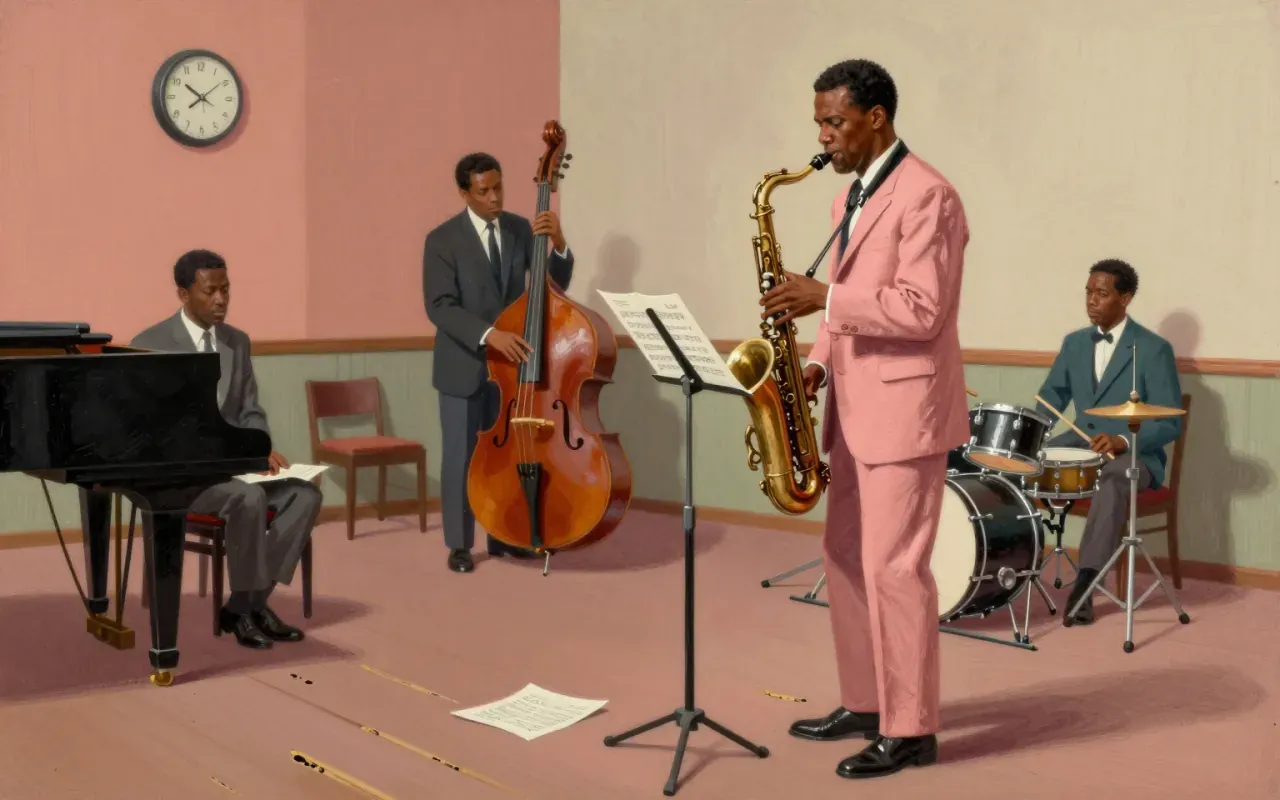
John Coltrane's first album as leader for Atlantic gathers sessions from three dates in 1959, built around a rapid, major-third chord movement that has since become a standard saxophone exercise. Alongside the title track's difficulty sit gentler pieces named for his family, including the ballad Naima, showing the same harmonic ideas turned toward tenderness.
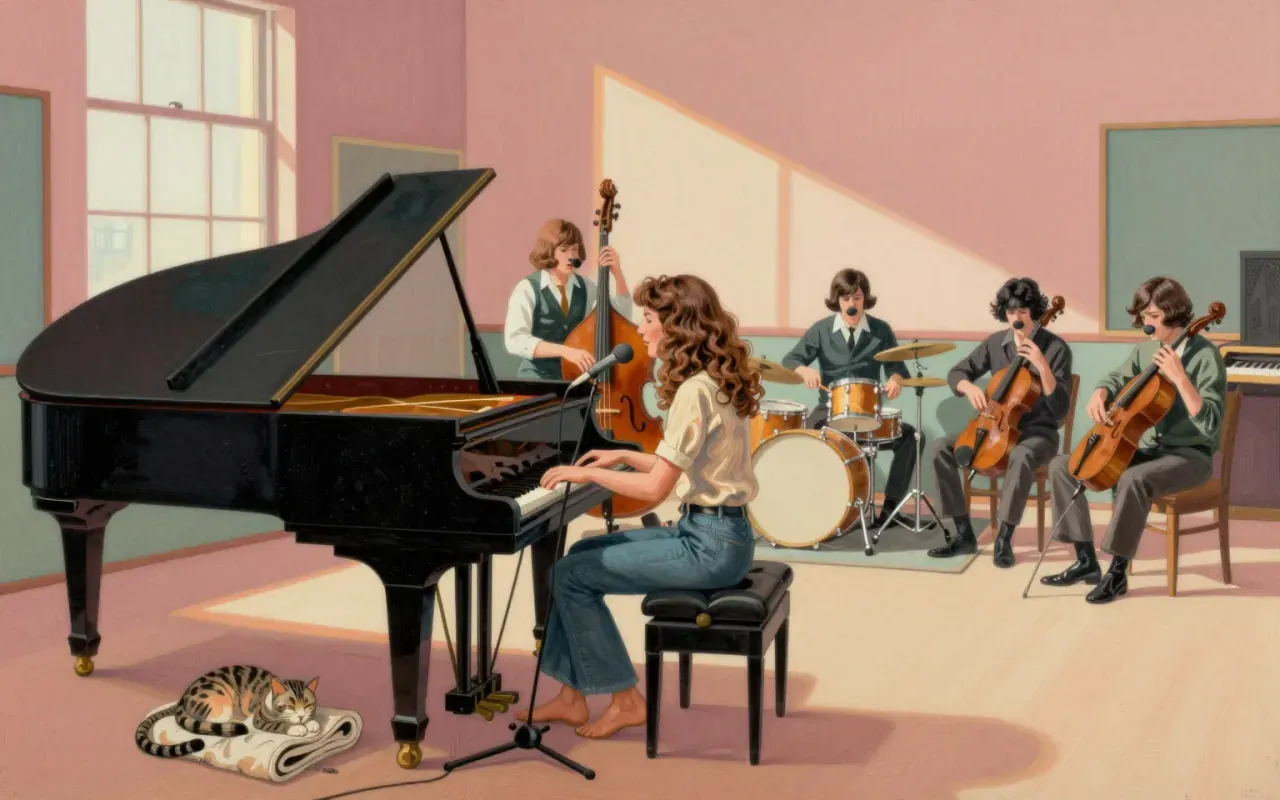
Recorded at A&M's Hollywood studios with James Taylor and a small circle of session players, Tapestry lets Carole King sing her own catalogue for the first time, trading polish for conviction across twelve mostly piano-led songs.
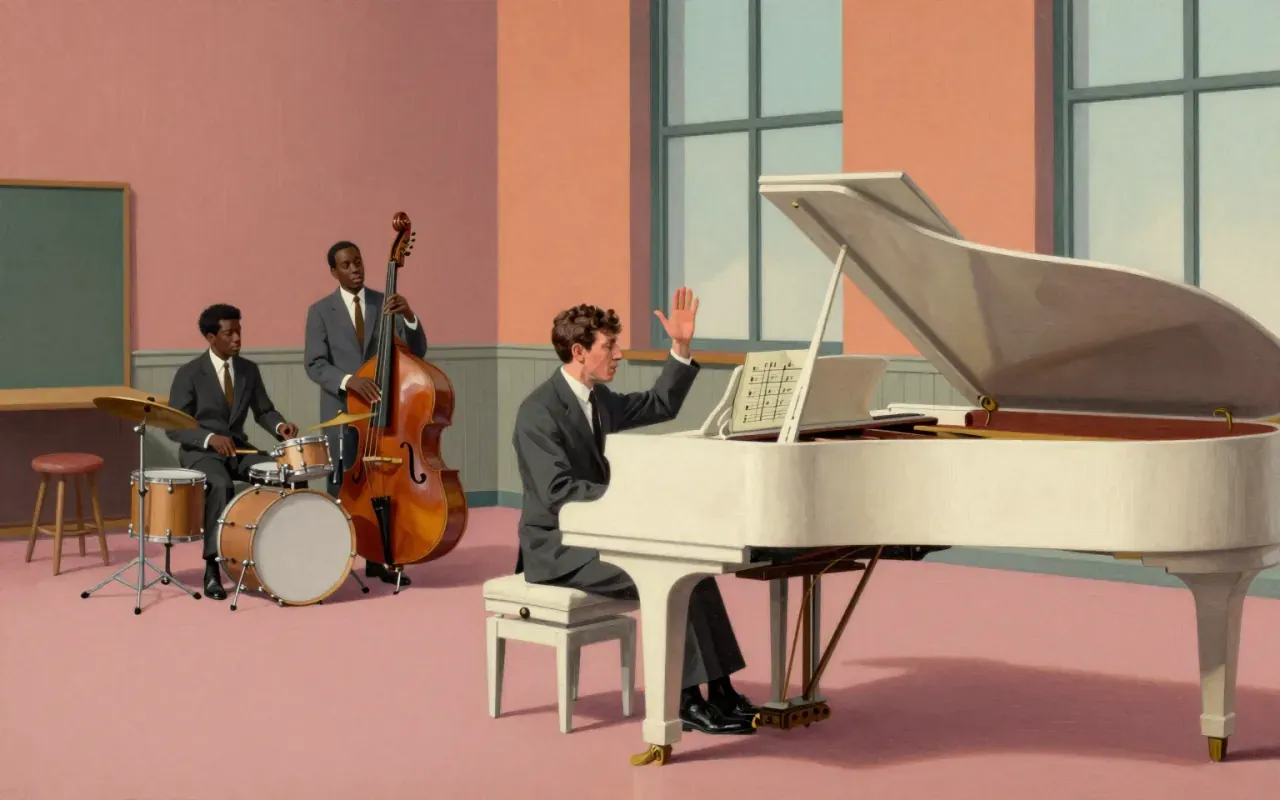
Recorded in 1959 at Columbia's 30th Street Studio, Time Out grew out of Dave Brubeck's overseas tours for the State Department, where he heard rhythms outside the usual pulse of American jazz. The Dave Brubeck Quartet built seven tracks around metres like nine-eight and five-four, including Take Five, composed by saxophonist Paul Desmond almost as an afterthought, which went on to outsell every jazz single before it.
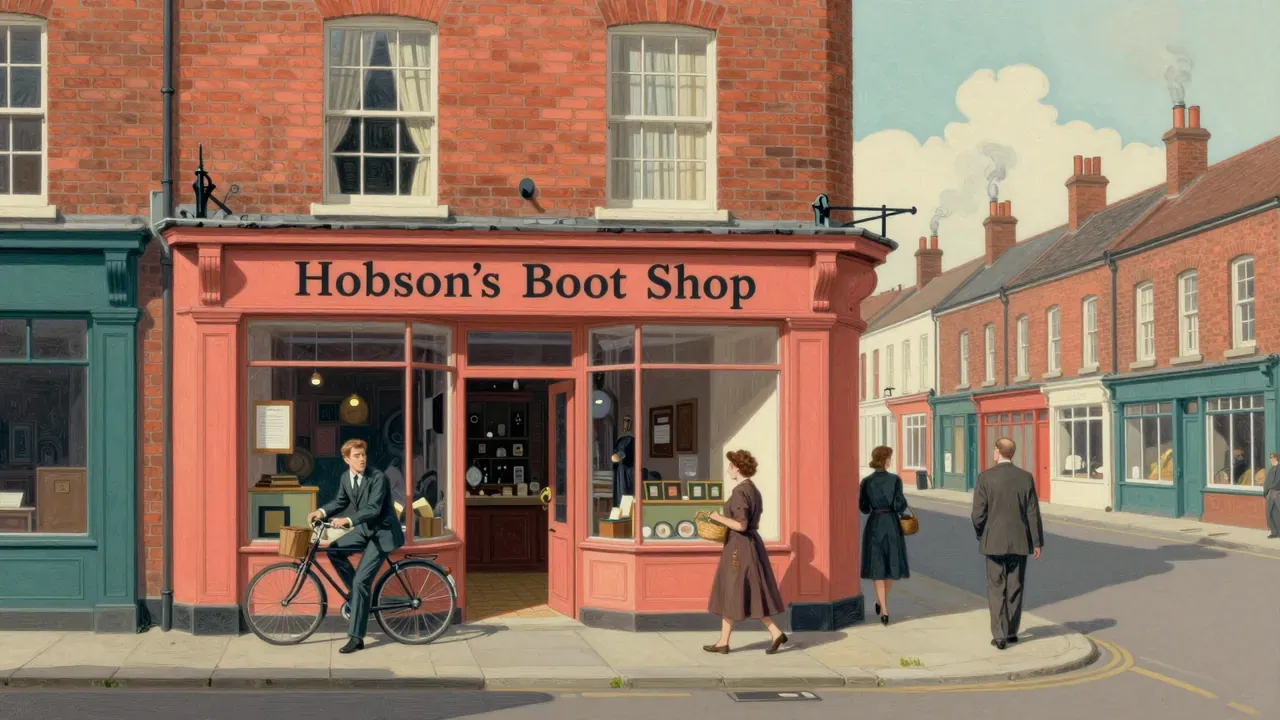
David Lean’s 1954 adaptation of Harold Brighouse’s play follows Maggie Hobson as she marries bootmaker Will Mossop to escape her tyrannical father’s household, then builds a rival business with him in 1880 Salford. Grounded in precise performance and restrained craft, it treats class, literacy, and domestic labour as material forces — not metaphors — and locates dignity in incremental, negotiated change.
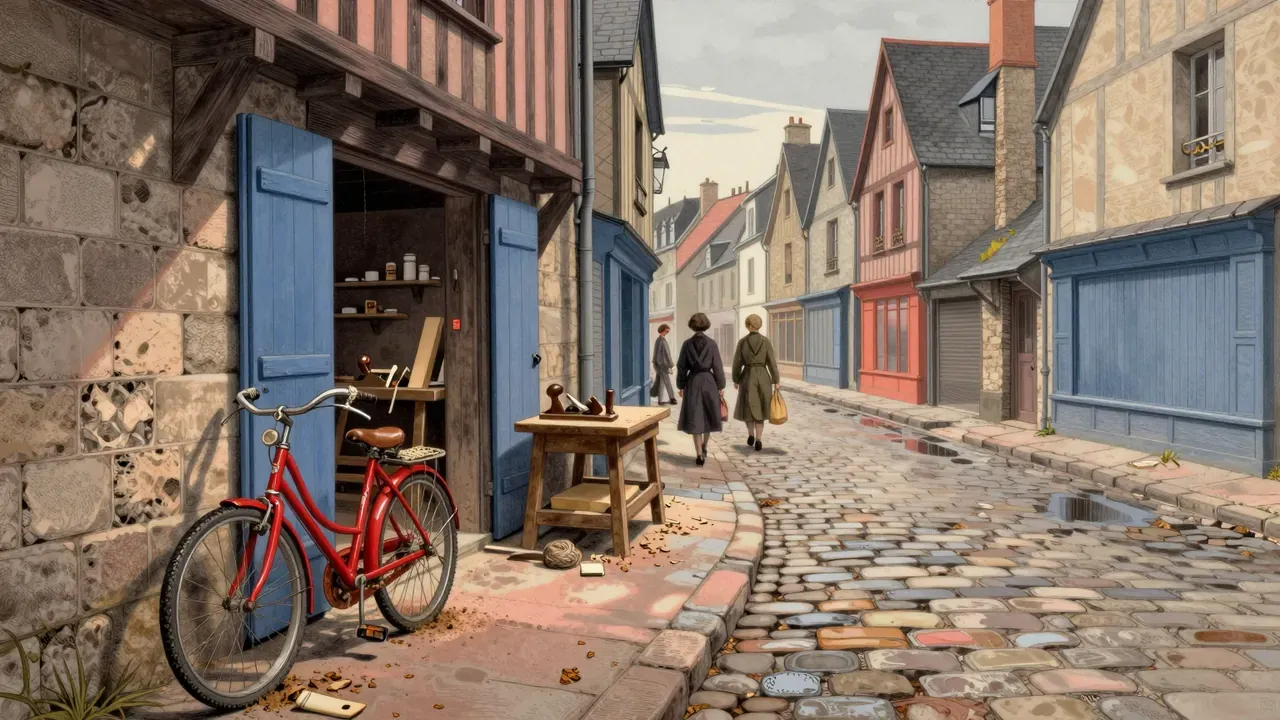
Jacquot de Nantes (1991) is Agnès Varda’s tender, unhurried portrait of her husband Jacques Demy’s childhood in wartime Nantes. Blending dramatised scenes with documentary interludes and archival fragments, it traces his early fascination with film-making — not as spectacle, but as tangible craft: drawing, lighting, set-building, animation. Shot by Patrick Blossier, Agnès Godard and Georges Strouvé, with music by Joanna Bruzdowicz, it privileges material detail and quiet observation over narrative drive or psychological exposition.
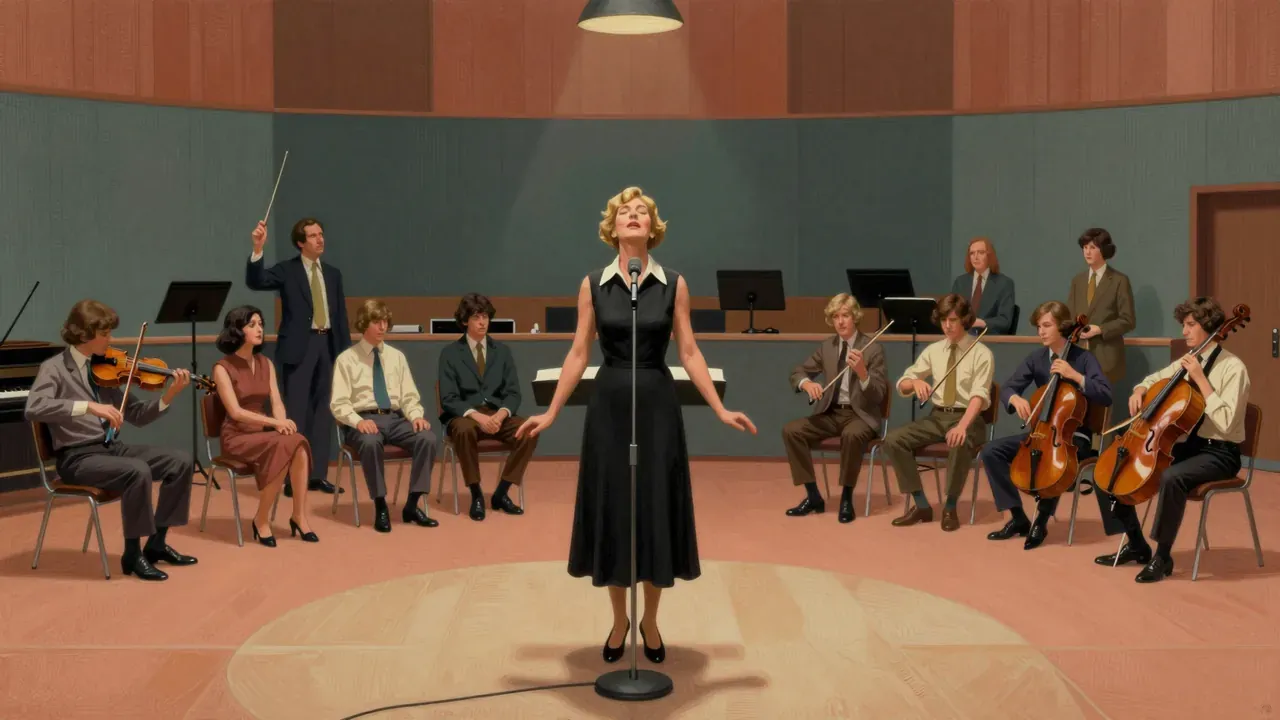
D. A. Pennebaker’s 1970 documentary observes the marathon studio session for the original cast album of Stephen Sondheim’s Company. Filmed over two days at Columbia Records’ 30th Street Studio, it captures singers, musicians, and producers wrestling with fatigue, pitch, and timing — most memorably Elaine Stritch’s repeated attempts at 'The Ladies Who Lunch'. Unvarnished, chronological, and devoid of narration or context, it treats recording as craft rather than spectacle.
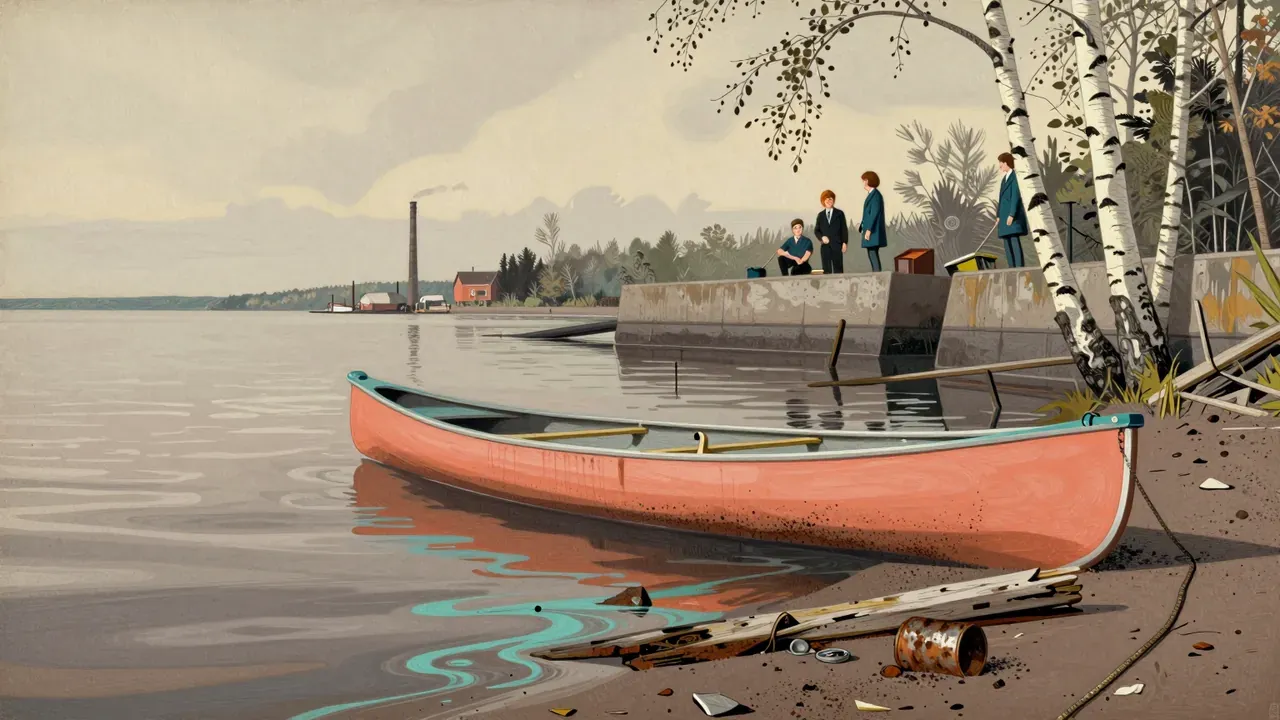
Bill Mason’s 1966 NFB short follows a hand-carved wooden canoe from Lake Nipigon to the Atlantic, using real locations, minimal narration and patient observation. Based on Holling C. Holling’s book but expanded with a quiet critique of water pollution, it is a documentary-fiction hybrid that treats geography as ethics and time as texture.
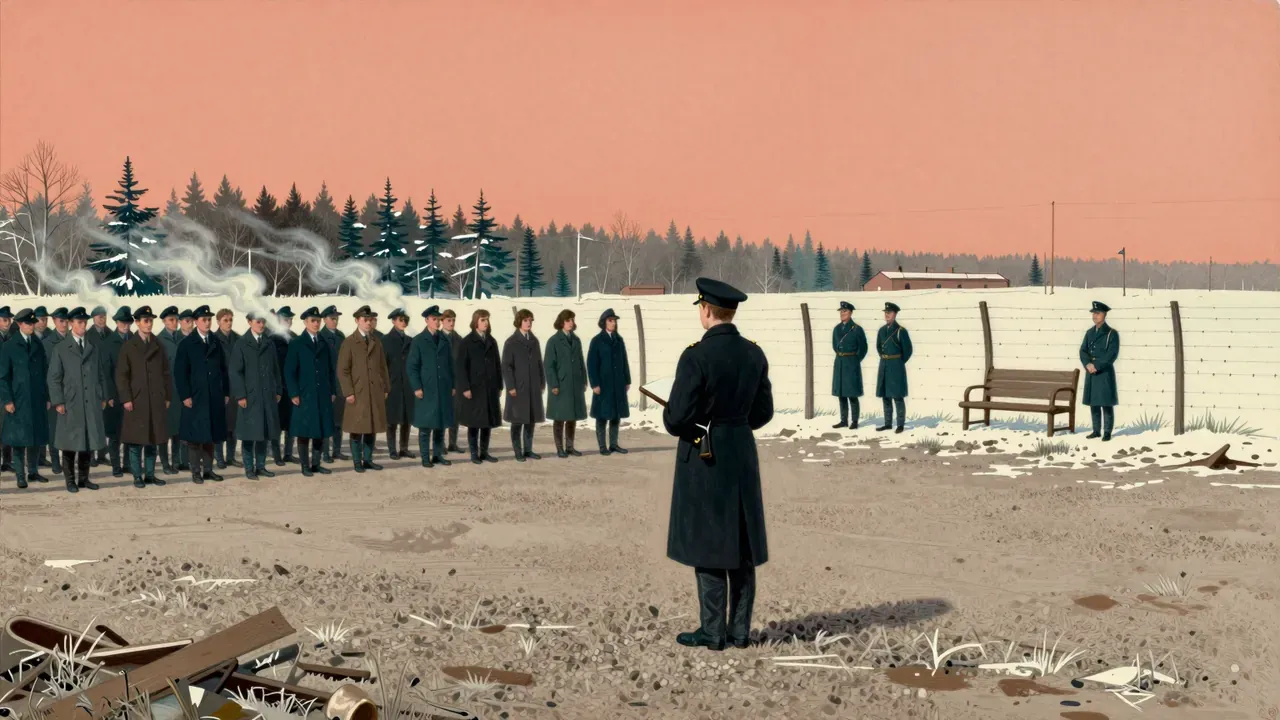
John Sturges’ 1963 epic adapts the real 1944 Stalag Luft III escape with deliberate fictionalisation, centring invented American characters amid a meticulously rendered ensemble of POWs. Shot in Bavaria, it foregrounds collective craft — tunnelling, forging, scouting — over individual heroics, building tension through repetition and restraint. Though its motorcycle stunt and US framing depart from history, its commitment to procedural authenticity and moral clarity gives it enduring weight.
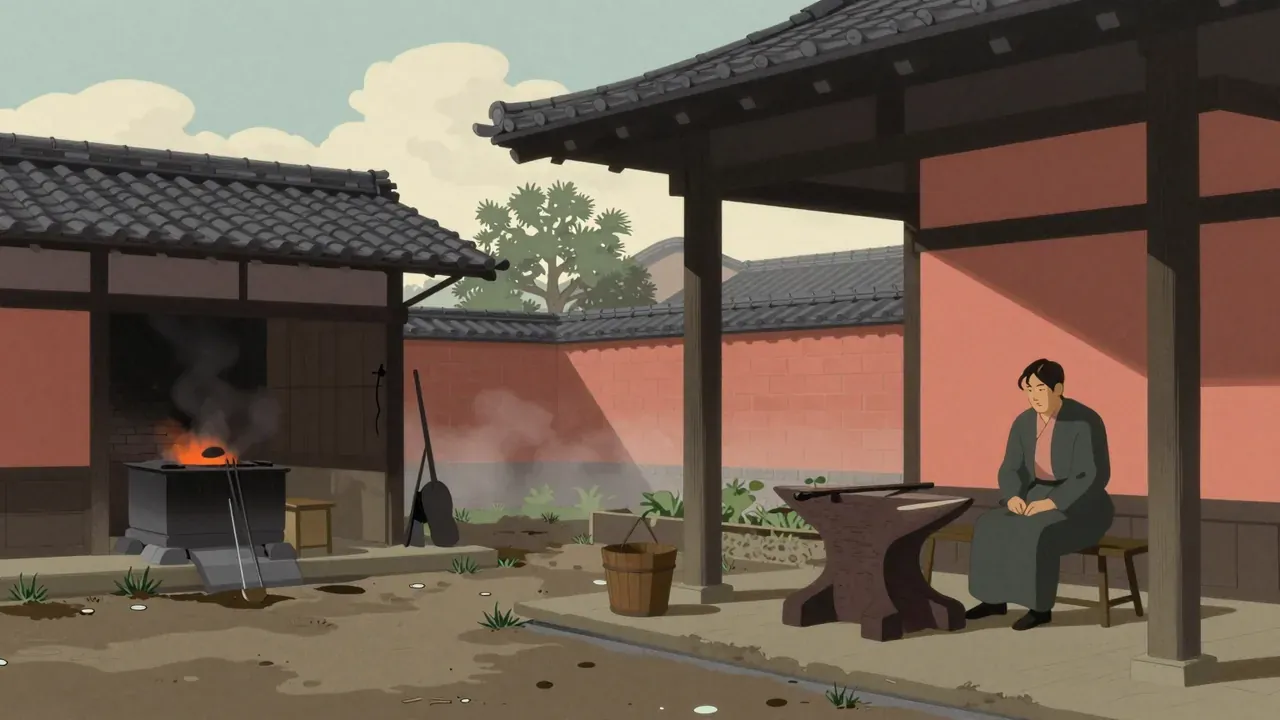
Keisuke Kinoshita’s 1943 film The Living Magoroku is a tightly controlled drama set in a traditional swordsmith’s workshop during wartime Japan. With no credited cast or composer, it relies on gesture, duration, and compositional restraint to explore transmission, duty, and the ethics of making. Its power lies in what it omits—psychological exposition, overt politics, dramatic climax—as much as in what it shows: the physical labour of preserving form under constraint.
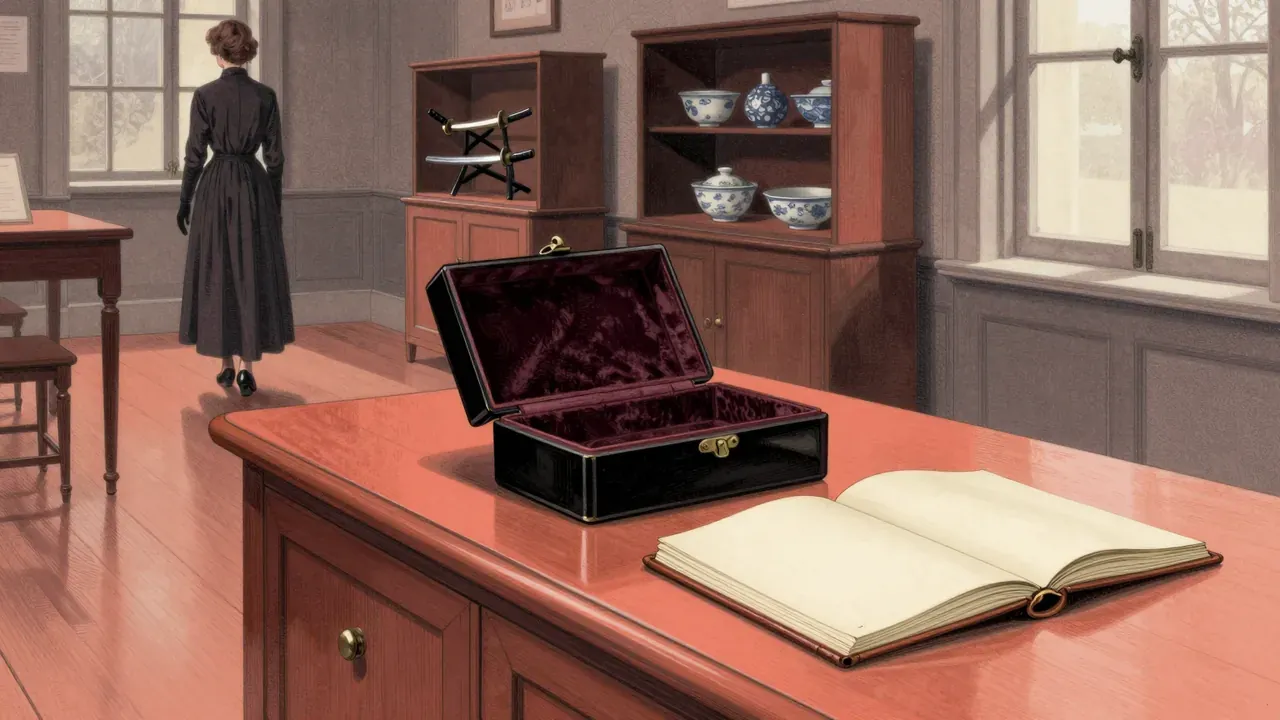
Mike Leigh’s Topsy-Turvy (1999) follows W. S. Gilbert and Arthur Sullivan through the 15-month creation of The Mikado, foregrounding rehearsal, costume design, salary negotiation, and backstage friction over biographical revelation. Shot by Dick Pope, scored by Carl Davis, and performed live by the cast, it treats Victorian theatre as a site of material, social, and artistic labour — yielding an arthouse drama that values process, texture, and ensemble over plot or polish.
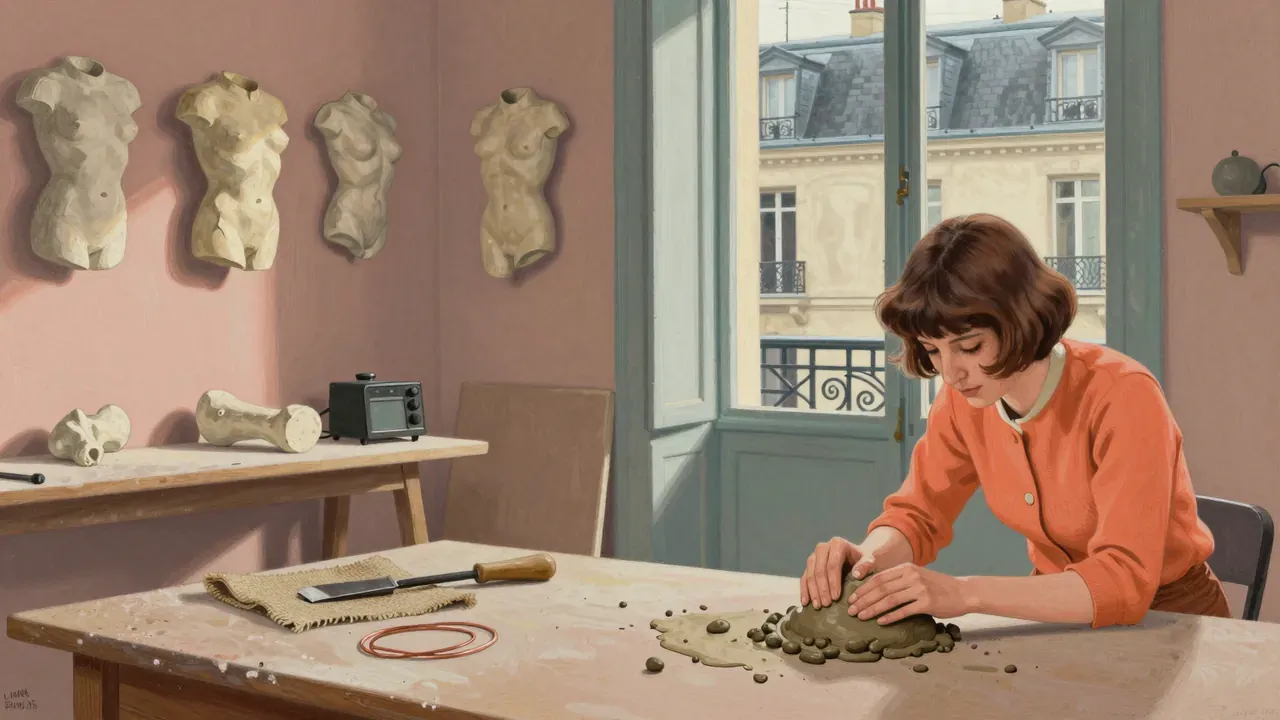
Agnès Varda’s 1967 documentary Uncle Janco observes Romanian-born sculptor Marcel Janco in his Paris studio over 22 minutes. With no narration, no interviews, and no contextual framing, the film rests on sustained observation: Janco’s speech, his handling of materials, and the quiet rhythm of his daily practice. It is a study in presence, not biography — a work that values tactile knowledge and embodied memory over exposition or historical positioning.






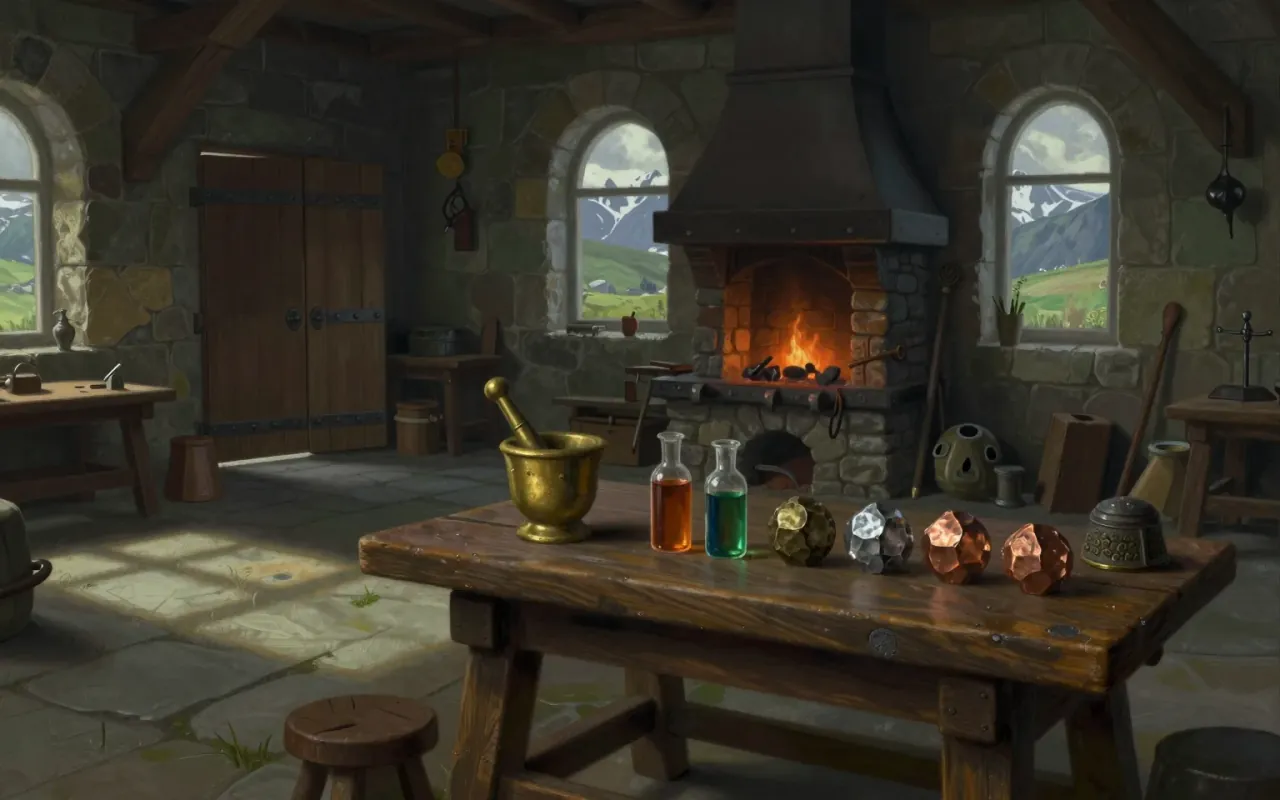
EverQuest II is a 3D fantasy MMORPG for Windows PCs, released by Sony Online Entertainment on November 9, 2004. It is a sequel set hundreds of years after the original EverQuest, following the same strategy: persistent world, experience-based leveling, guild-driven advancement, and a robust tradeskill system that lets players craft spells, potions, armor, and more. It shifted to free-to-play on December 6, 2011, with optional subscriptions. Its core loop demands sustained group coordination, gear acquisition, and long-term social investment—making it viable only for players who treat MMOs as infrastructure, not entertainment.
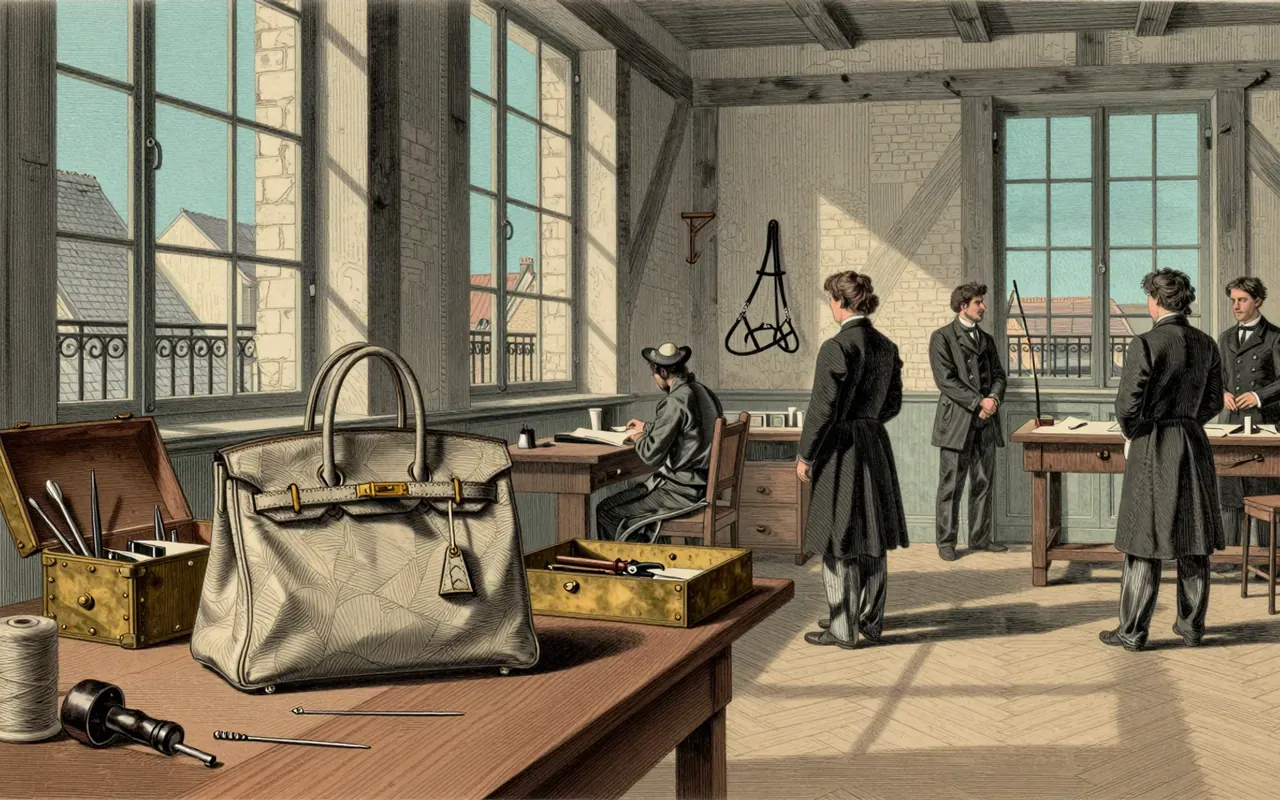
Hermès is a vertically integrated French manufacturing company built on a hand-sewn stitch, sustained by family control, and monetised through scarcity-enforced pricing across 16 product lines.
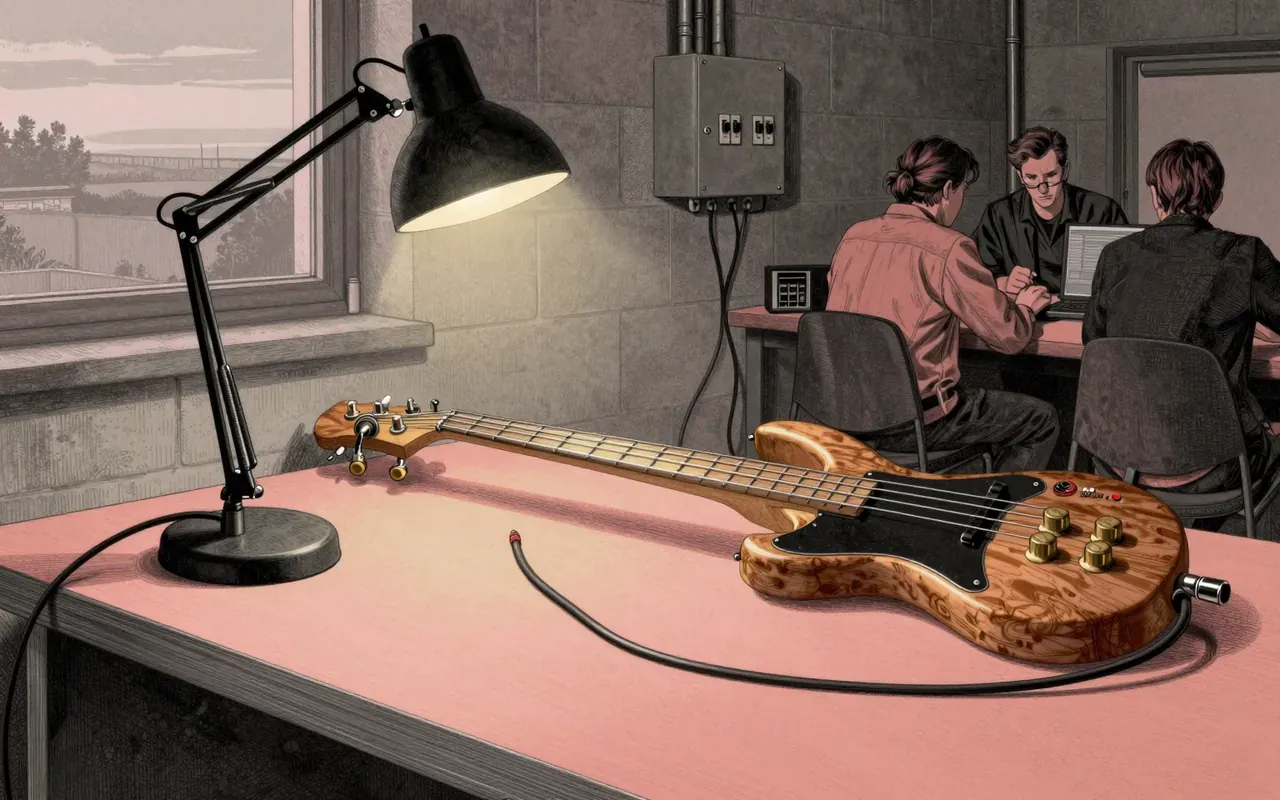
The Alembic Series I is a 1977 US-made 4-string bass with rabl neck and top, mahogany body, bne key, brass bridge and nut, and 24-fret pearl-inlaid neck. Its electronics include two single-coil pickups, a central dummy hum pickup, stereo 5-pin XLR output, external power supply, dual volume/tone controls, dual 3-position Q-switches, and a 3-position + Off selector. It delivers precise, clear, full-range sound suited to slap, fingerstyle, and pick playing—but is relatively heavy, fragile (headstock prone to breakage), and has non-independent string height adjustment at the bridge.
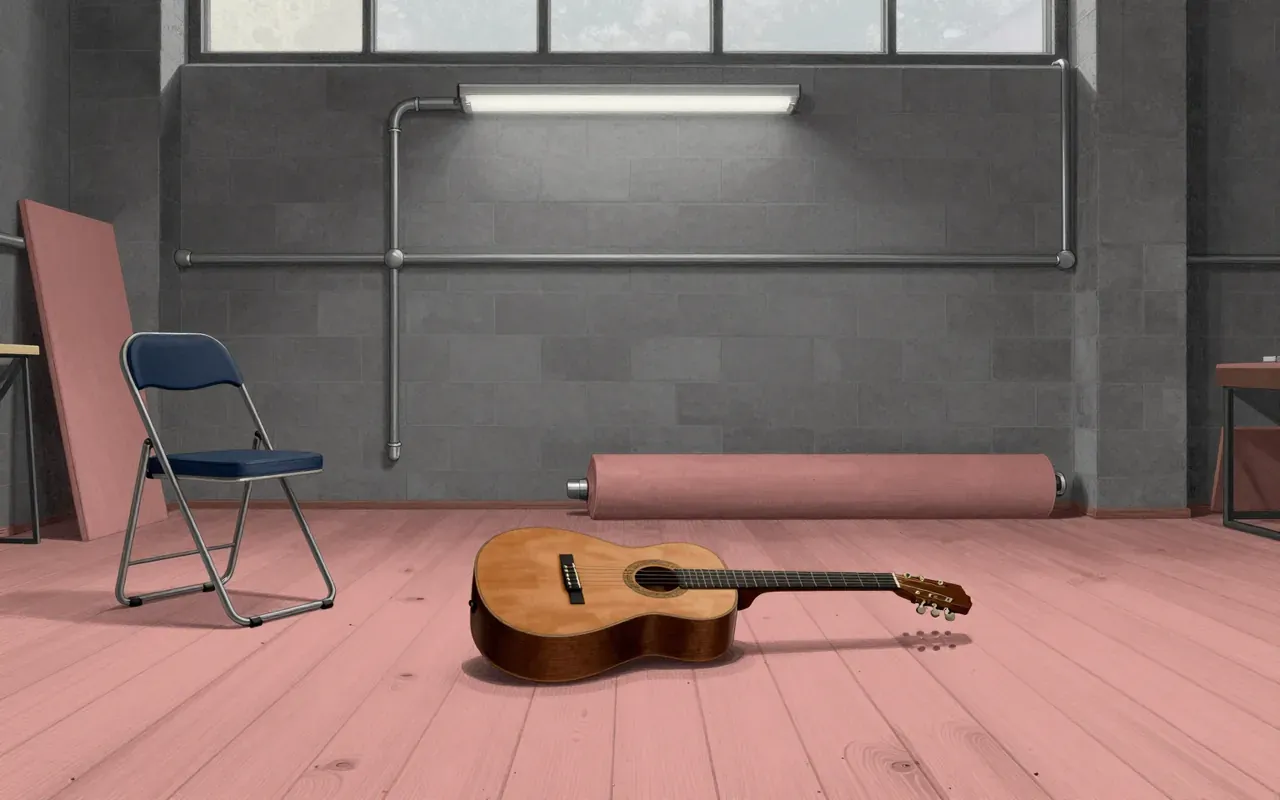
The Epiphone PR-100 is a Chinese-made, US-designed dreadnought acoustic guitar with 22 frets, a mahogany neck, rosewood fretboard, and plastic bridge. It has no electronics or controls. It is built for unamplified play only.
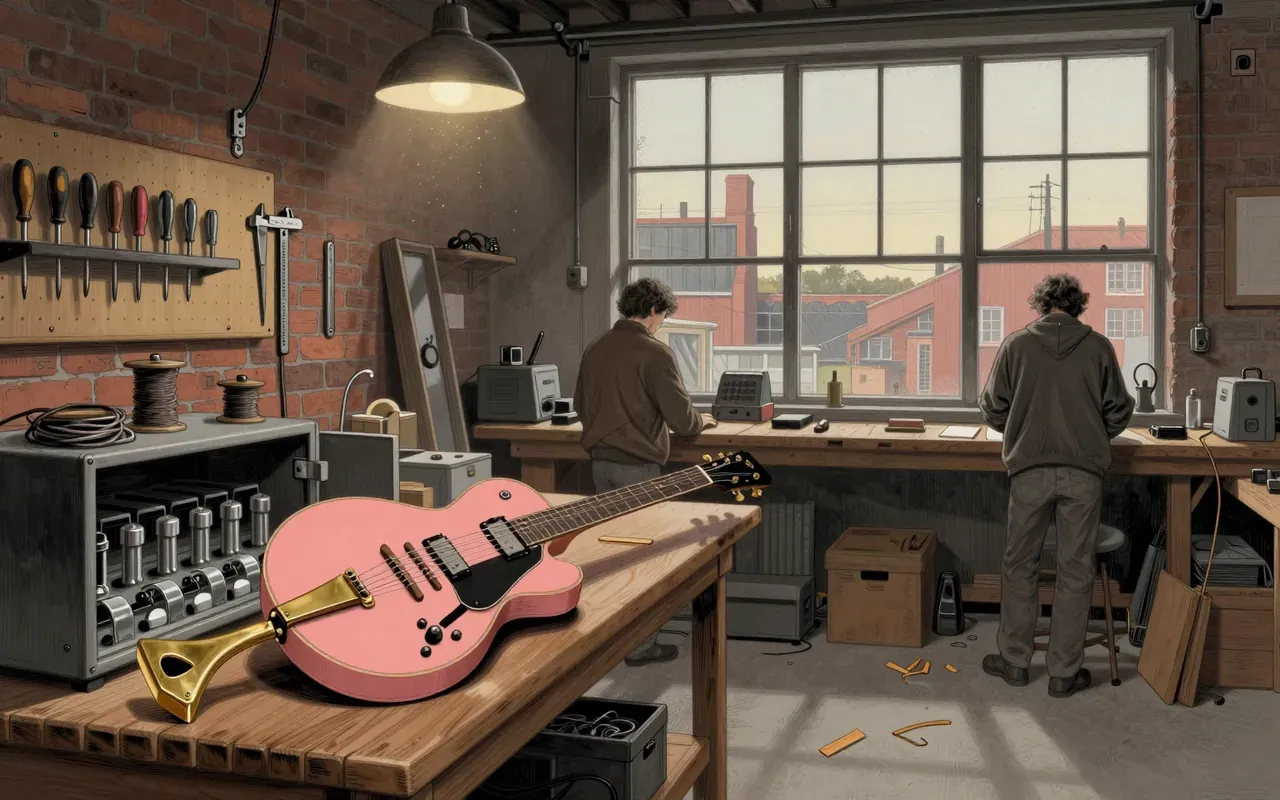
A true hollow-body electric guitar built for resonance, not resistance. Lightweight. Loud unplugged. Feedback-prone. P-90-driven. 16th-fret neck joint. Used by The Beatles and generations of players who value immediacy over isolation.
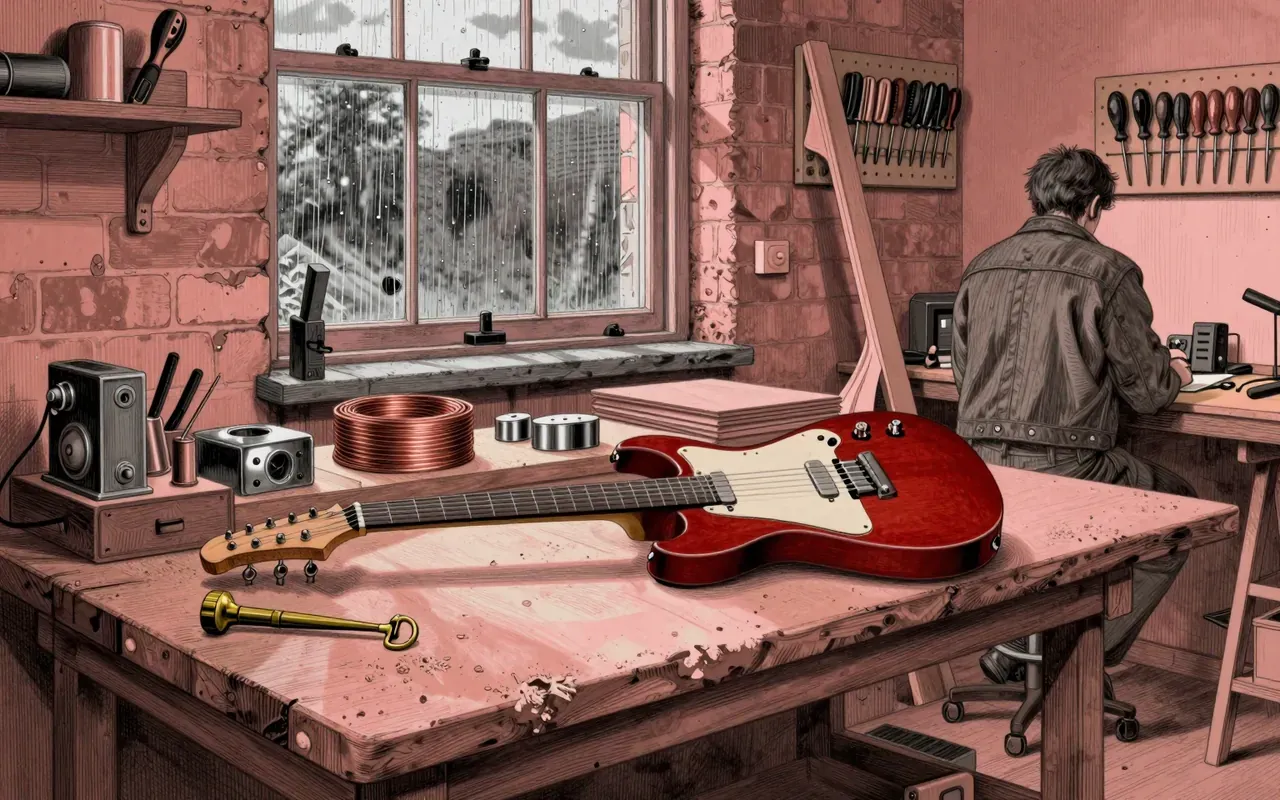
The Red Special is a functional anomaly: a self-contained solution to feedback and sustain, built before those problems had names. Its value lies in what it withheld — standardisation, mass production, modularity — not what it delivered.