Catch-22
Heller's 1961 novel follows Yossarian, whose only escape from deadly bombing runs is to convince a doctor he is mad. The catch: anyone sane enough to ask is sane enough to fly. It is a circular trap, and the book is built to prove it.
The event the modern world still measures itself against.

Heller's 1961 novel follows Yossarian, whose only escape from deadly bombing runs is to convince a doctor he is mad. The catch: anyone sane enough to ask is sane enough to fly. It is a circular trap, and the book is built to prove it.

49th Parallel (1941), directed by Michael Powell and written by Emeric Pressburger, follows six German sailors stranded in Canada after their U-boat is destroyed. As they attempt to cross into neutral America, each encounter — with Inuit hunters, Hutterite farmers, a bohemian writer, and a disillusioned soldier — exposes the limits of Nazi ideology. Shot across Canada and at Denham Studios, with music by Ralph Vaughan Williams and editing by David Lean, it is a morally precise, formally restrained war drama that argues through confrontation, not combat.

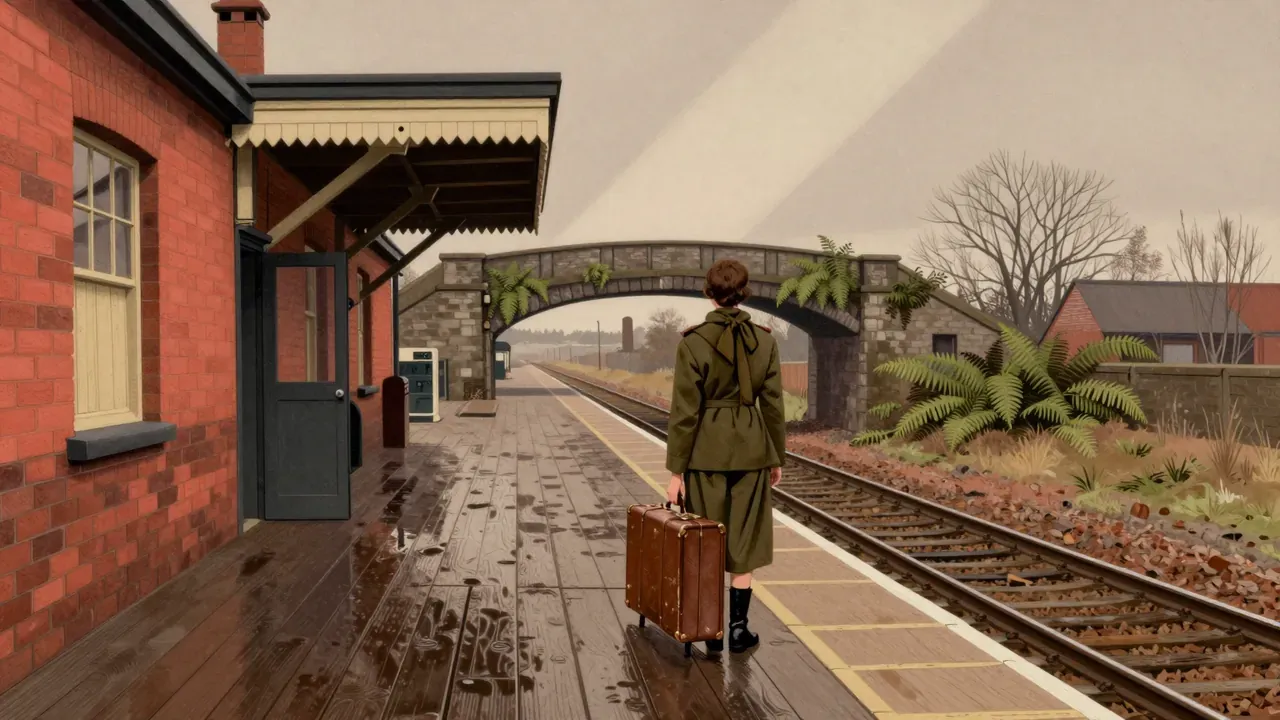
A Canterbury Tale (1944) follows three strangers — a Land Girl, a British soldier and an American GI — who converge in a Kent village during WWII and investigate a local 'glue man' mystery. Directed by Powell and Pressburger, it uses Chaucer’s pilgrimage framework to explore English identity, wartime community and the weight of place, all filmed on location amid real bomb sites and rural villages. Its power lies in restraint: in Erwin Hillier’s understated cinematography, in performances that avoid theatrics, and in a story that values observation over explanation.

Andrzej Wajda’s 1955 debut A Generation follows two young men in Nazi-occupied Warsaw as they move from alienation to resistance within a communist underground cell. Shot on location in Wola with natural light and unvarnished performances, it grounds political commitment in workshop routines, shared silences, and the physical texture of daily survival. Though ideologically specific and formally austere, its power lies in its restraint — in what it shows, not what it tells.

Keisuke Kinoshita’s 1944 Army follows three generations of a Japanese family as militarism seeps into domestic life. Chishū Ryū and Kinuyo Tanaka play parents shaping their son for service, culminating in a wordless, censored final scene where Tanaka’s character runs alongside her departing son — an act of love deemed unpatriotic. Made under strict wartime oversight at Shochiku, the film’s power lies in what it omits, delays, or shows without commentary.

Jean-Pierre Melville’s 1969 Army of Shadows is a stark, procedural drama about French Resistance operatives during Nazi occupation. Based on Joseph Kessel’s memoir, it follows Philippe Gerbier and his cell as they navigate safe houses, betrayals, failed rescues, and grim moral calculations — all rendered with clinical precision, minimal score, and unvarnished performances. Released to indifference in 1969, it was rediscovered and acclaimed after its 2006 restoration.

Andrzej Wajda’s 1958 drama Ashes and Diamonds compresses Poland’s postwar reckoning into a single rain-dampened day. Former Home Army soldier Maciek Chełmicki hesitates before carrying out an assassination order — not out of doubt about his cause, but from a growing awareness of time, mortality and connection. Shot in stark, intimate compositions by Jerzy Wójcik and anchored by Zbigniew Cybulski’s defining performance, it treats ideology as atmosphere rather than argument, and history as something felt in the body before it is understood in the mind.

Louis Malle’s 1987 autobiographical drama follows eleven-year-old Julien at a Catholic boarding school in occupied France, where the arrival of three new pupils reveals a secret: one is Jewish, hidden under a false name. As Julien forms a fragile friendship with Jean Bonnet — real name Kippelstein — he witnesses the slow collapse of safety, culminating in a Gestapo raid that takes Jean, two other boys, and their protector, the headmaster Père Jean. Shot with quiet precision by Renato Berta and performed with unshowy authenticity, the film rests its power on accumulation, not climax: in glances, silences, and the unbearable ordinariness of betrayal.

Grigori Chukhrai’s 1959 drama follows a young Red Army soldier granted six days’ leave to repair his mother’s roof. En route, he meets soldiers and civilians, exchanges small gifts and confidences, and falls tentatively in love. Set during the Second World War but resolutely unconcerned with combat, the film locates heroism in endurance, love in gesture, and memory in quiet fidelity. Shot by Vladimir Nikolayev and Era Savelyeva, scored by Mikhail Ziv, and anchored by debut performances from Vladimir Ivashov and Zhanna Prokhorenko, it remains a benchmark of poetic restraint.

The atomic bombings of Hiroshima and Nagasaki were deliberate, authorised, and executed military operations using newly developed nuclear weapons. Their scale, method, and human impact are well-documented in the source. Their causal relationship to Japan’s surrender is asserted only as ‘precipitation’—not proof of necessity or sufficiency. No claim about motives, alternatives, or internal Japanese decision-making appears in the material.

The Potsdam Conference was a tightly bounded, procedurally self-conscious effort to manage postwar Germany — not to end the war (that had happened), nor to build peace (no treaties were signed), nor to reconcile allies (disagreements are unrecorded). Its significance lies in its method: scheduled, interrupted, adaptive, and shadowed by a weapon no one named aloud.

The Yalta Conference was a decisive wartime coordination meeting—not a peace settlement—that formalised Allied control over postwar Germany and pledged democratic self-determination for liberated Europe. Its outcomes were concrete: occupation zones, a French role, and a written declaration. Its limits were structural: no enforcement mechanism, no input from affected nations, and no record of dissent or doubt in the source material.

Adolf Hitler rose from a failed art student and decorated First World War soldier to leader of the Nazi Party by 1921, became German chancellor in January 1933 through a backroom deal among conservative politicians who believed they could control him, and consolidated absolute power within months through the Enabling Act. His government pursued territorial expansion that triggered the Second World War and orchestrated the Holocaust, killing an estimated six million Jews and millions of others, before his suicide in Berlin on 30 April 1945 as Soviet forces closed in on the city.

Benito Mussolini built his early reputation as a socialist journalist before breaking with the party over the First World War, founding the fascist movement that took power in 1922 through a mostly legal transfer he later mythologised as a revolutionary march on Rome. His alliance with Hitler, sealed through Ethiopia's invasion, the Spanish Civil War, and the Pact of Steel, ended in his own removal by the king he had served, capture by partisans, and summary execution in April 1945.

The Allied invasion of Normandy on 6 June 1944, the opening of Operation Overlord, put roughly 160,000 troops ashore across five beaches on a single day, supported by nearly 5,000 vessels and a 1,200-plane airborne assault, after a monthslong deception campaign, Operation Bodyguard, convinced German commanders the main landing would come at Calais. Allied casualties on the day itself totalled at least 10,000, with 4,414 confirmed dead, and the broader Normandy campaign that followed committed over a million troops before liberating Paris on 25 August 1944.

Founded as a castle town in 1589, Hiroshima grew into a regional military and industrial centre before the United States dropped an atomic bomb on it on 6 August 1945. Immediate deaths ran into the tens of thousands, with the toll continuing to climb from injury and radiation for months afterward, and occupation censorship kept much of the detail from the Japanese public for years. The rebuilt city has since made remembrance its civic purpose, formalised as a City of Peace in 1949.

Neville Chamberlain spent nearly two decades in cabinet before becoming prime minister in 1937 and pursuing the policy of appeasement that produced the 1938 Munich Agreement, an outcome he initially returned home to genuine public acclaim for. His reputation collapsed within two years, cemented by a bestselling wartime pamphlet blaming him for Britain's unpreparedness, and though later historians have argued declassified evidence shows Britain was in fact militarily unready for war in 1938, that reassessment has not restored his standing among British prime ministers.


Wolfenstein (2009) is a first-person shooter that adds a supernatural layer — the Veil — to id Tech 4. It lets players slow time, bypass obstacles, and kill shielded enemies. Raven Software built it using id’s engine technology. Development problems led to layoffs. The Veil is mechanically functional but narratively detached. It is a technical demonstration, not a unified experience.

Return to Castle Wolfenstein is a first-person shooter built on id Tech 3, where the player navigates levels and fights enemies including Nazi soldiers, undead, and experimental mutants. In the game's single-player mode, players use combat and stealth to complete objectives across 27 levels in 7 missions. Missions begin with a mission briefing, providing information about objectives, and may include activities such as reaching the end of an area, defeating all the enemies, collecting certain items, eliminating specific enemies, or stealth missions. The player acquires weapons and ammo throughout levels, including for pistols, submachine guns, rifles, grenades, rockets, flamethrowers, and experimental weapons including the Venom, a minigun, and the Tesla Gun, which shoots electricity at enemies. Some weapons have alternate fire modes, such as rifles that have a scope, or shoot projectiles. The player can also engage in melee combat by either kicking or using a knife. Damage is location-specific, with headshots damaging enemies more than other areas. Special items can be collected that increase the player's health, ammo, armor, or stamina.
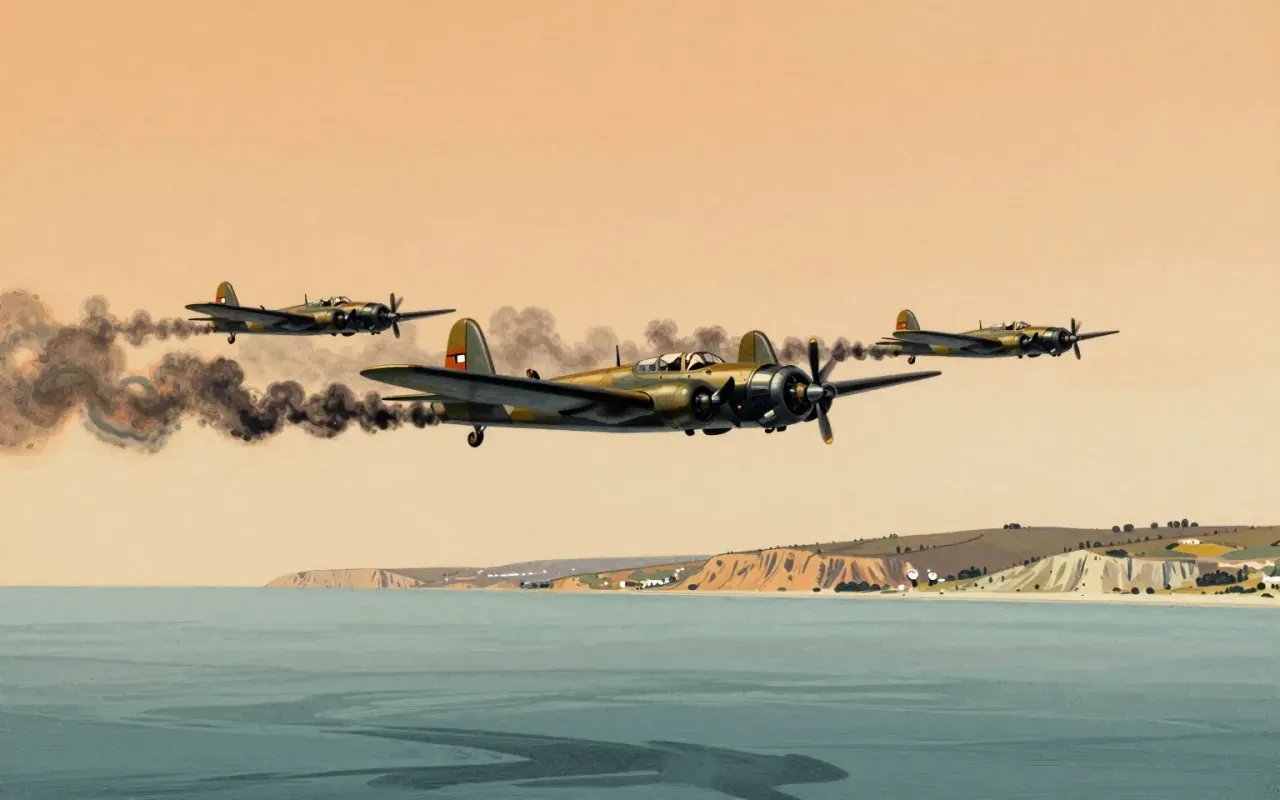
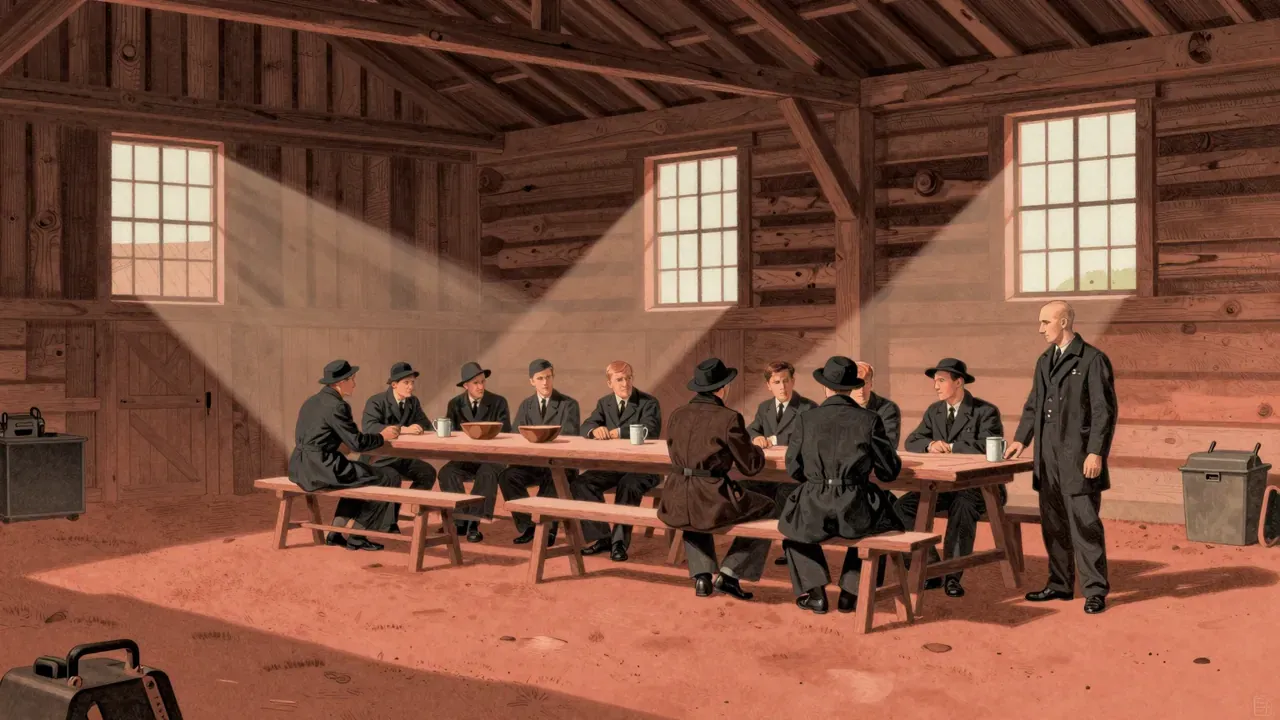
A foundational first-person shooter that uses rigid grid-based level design, fixed-height walls, and Nazi iconography as structural constraints—not just theme—to create a fast, lethal, and relentlessly focused combat loop.


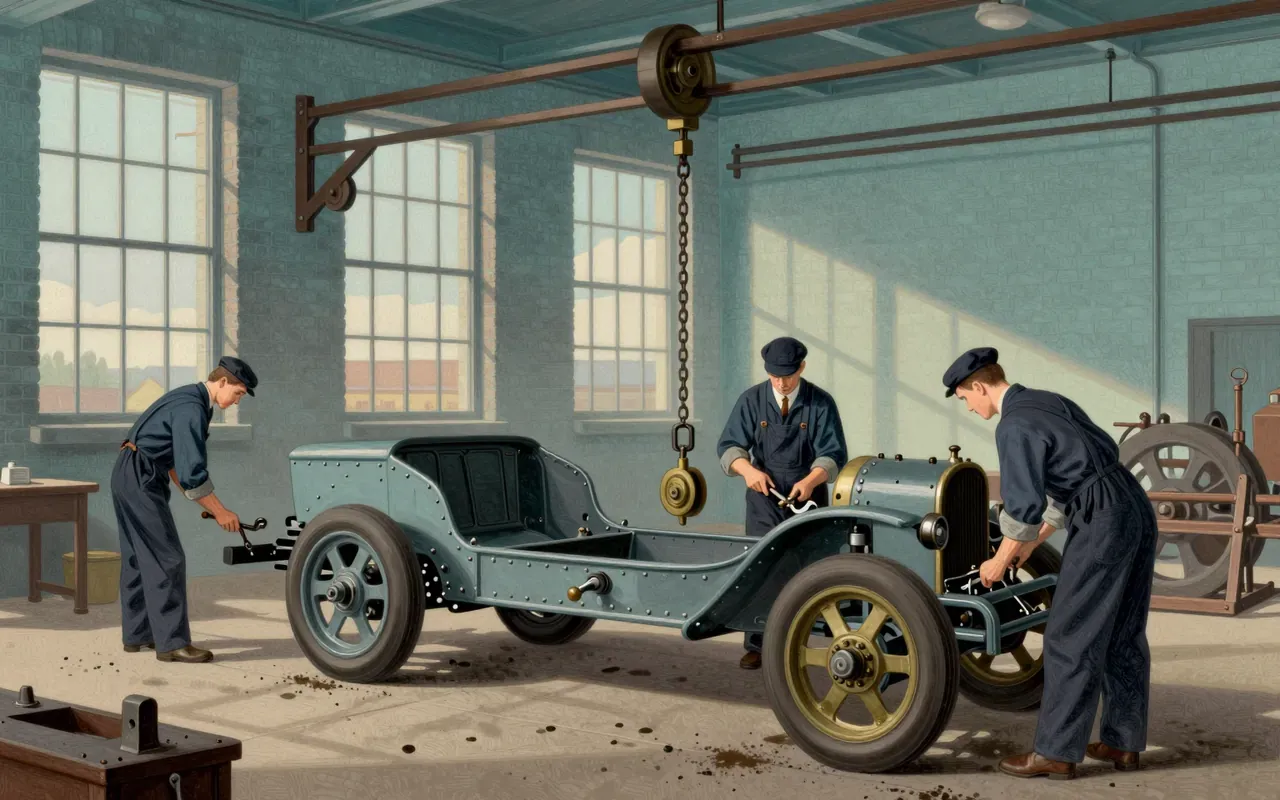
Volkswagen was a Nazi state project designed by Ferdinand Porsche, funded by coerced public savings, and diverted entirely to military production. Its 'people’s car' promise was broken before delivery — yet its engineering outlived its ideology.

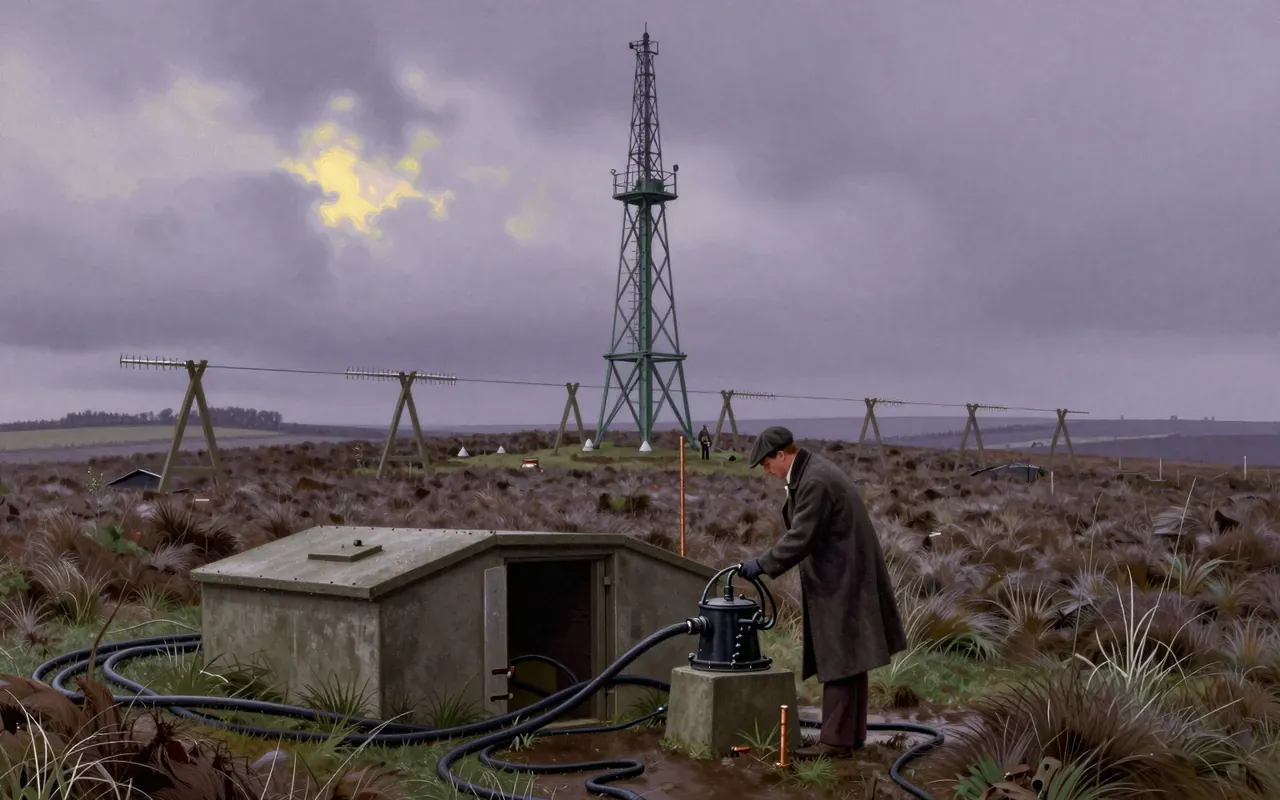
Radar is a radio reflection system for aircraft detection. It solved urgent air defence needs by replacing sound with electromagnetic sensing. Its mechanism is simple: transmit, reflect, receive, time. Its success hinged on rapid scaling — from 16 to 60 miles in months — and integration into a fixed coastal network. It fell short on low-altitude coverage, mobility, and precision tracking. It changed warfare by enabling interception over reaction. It is worth your time because it demonstrates how repurposing existing tools under constraint yields decisive capability — not through invention ex nihilo, but through disciplined redirection.

Chicago Pile-1 was not a power plant. It was a proof-of-concept pile — physically crude, operationally minimal, and militarily urgent. Its success established that controlled fission was possible. Its limitations — no heat extraction, no radiation shielding, no control rods beyond cadmium-coated wood — show how far engineering lagged behind theory.


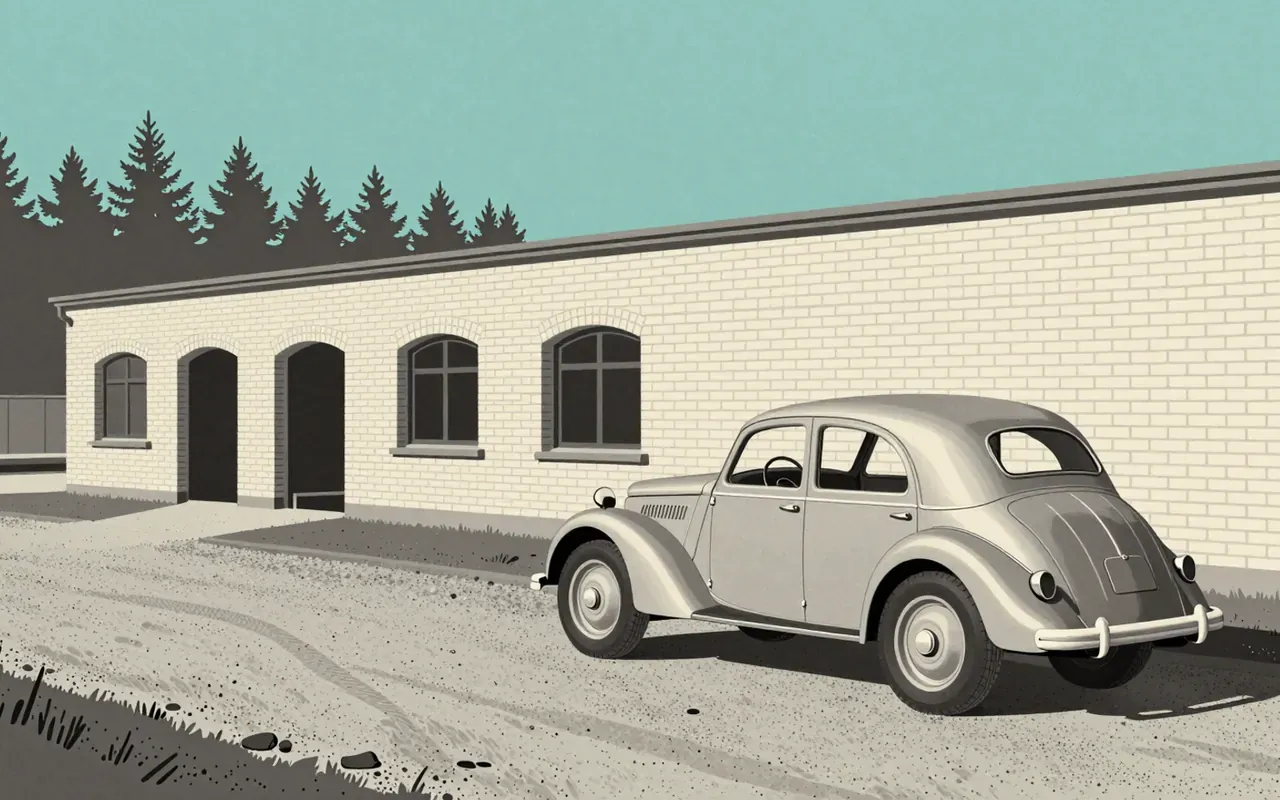
The Volkswagen Beetle is the Volkswagen Type 1. It was conceived in the early 1930s under Adolf Hitler’s directive for a 'people’s car' to serve Germany’s Reichsautobahn. Ferdinand Porsche’s team developed it from 1934, building two prototypes in 1935. Production began in 1938 but was delayed until 1945 by World War II.

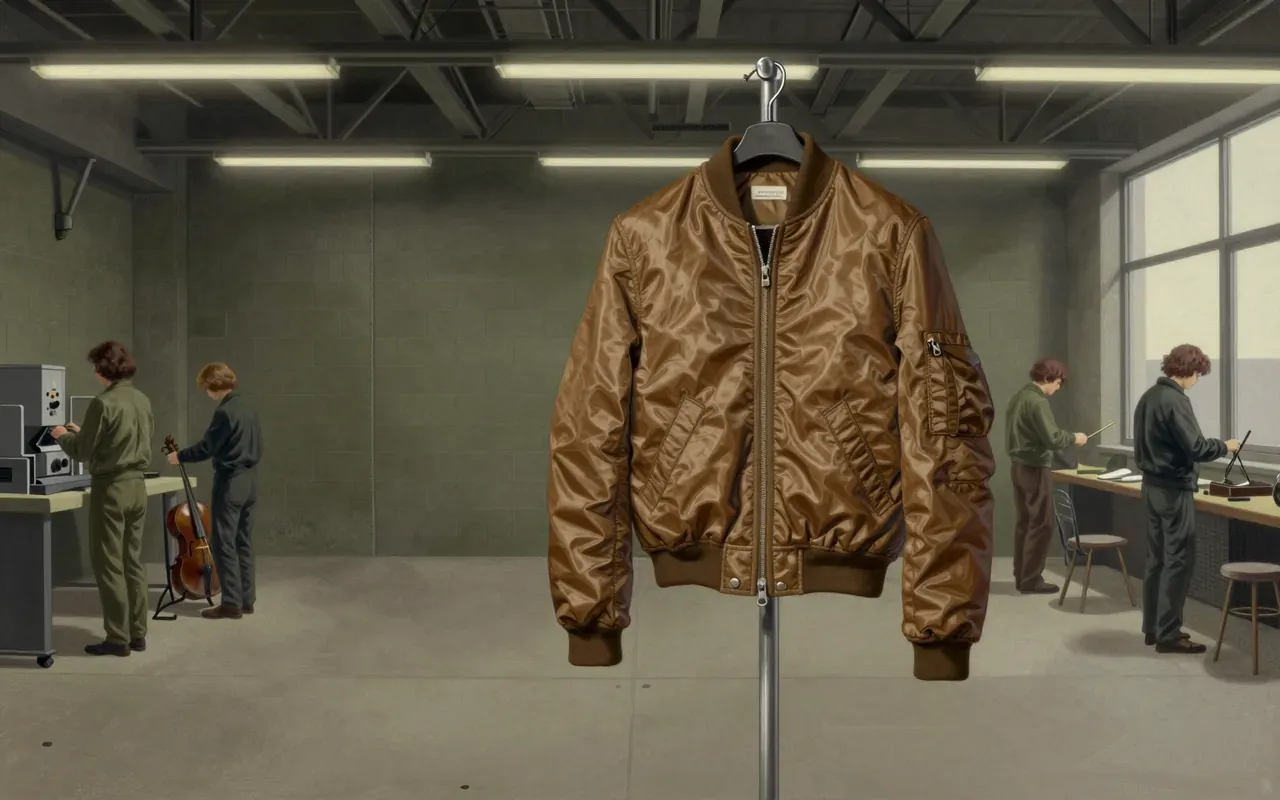
Nylon is a family of synthetic thermoplastics characterised by amide linkages, melt-processed into fibres, films and moulded shapes. Wallace Carothers made the first one at DuPont in 1935, and women's stockings made it famous. Pure nylon's weaknesses in clothing led to blends with cotton, polyester and spandex, and pure nylon is now rarely used.


Chanel is an Anglo-French luxury fashion house founded in 1910 by Coco Chanel in Paris. It began in 1909 as a millinery shop. It popularised sporty, casual chic in the post–World War I era using jersey and prêt-à-porter sports clothes. It closed in 1939. Chanel collaborated directly with the Nazi Sicherheitsdienst during the occupation. She was not charged due to Winston Churchill’s intervention. She revived the house in 1954.