Snow Crash
Neal Stephenson · 1992
Stephenson's breakthrough novel from 1992 that imagined the metaverse two decades before it became a buzzword. The brief covers the plot in two minutes, the vision in four, and which parts hold up.
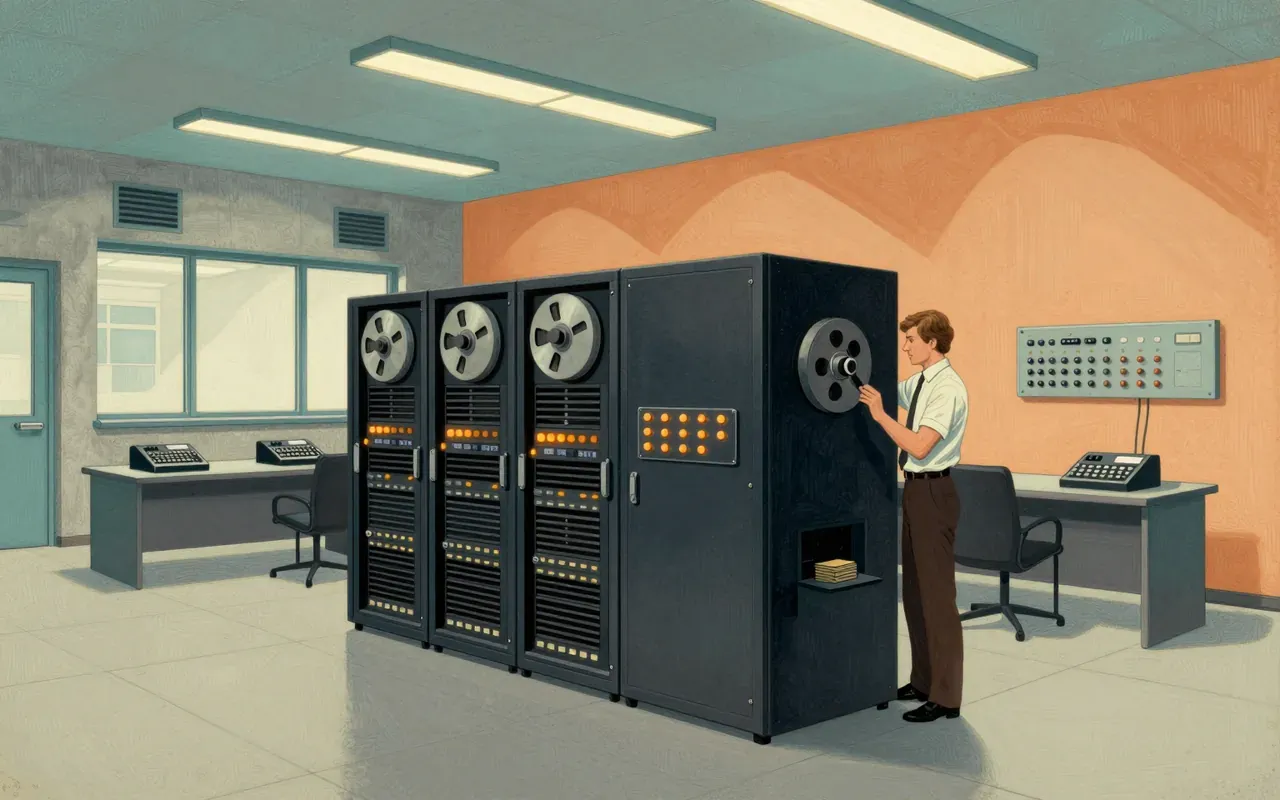
The machine that ate every other machine.
Stephenson's breakthrough novel from 1992 that imagined the metaverse two decades before it became a buzzword. The brief covers the plot in two minutes, the vision in four, and which parts hold up.

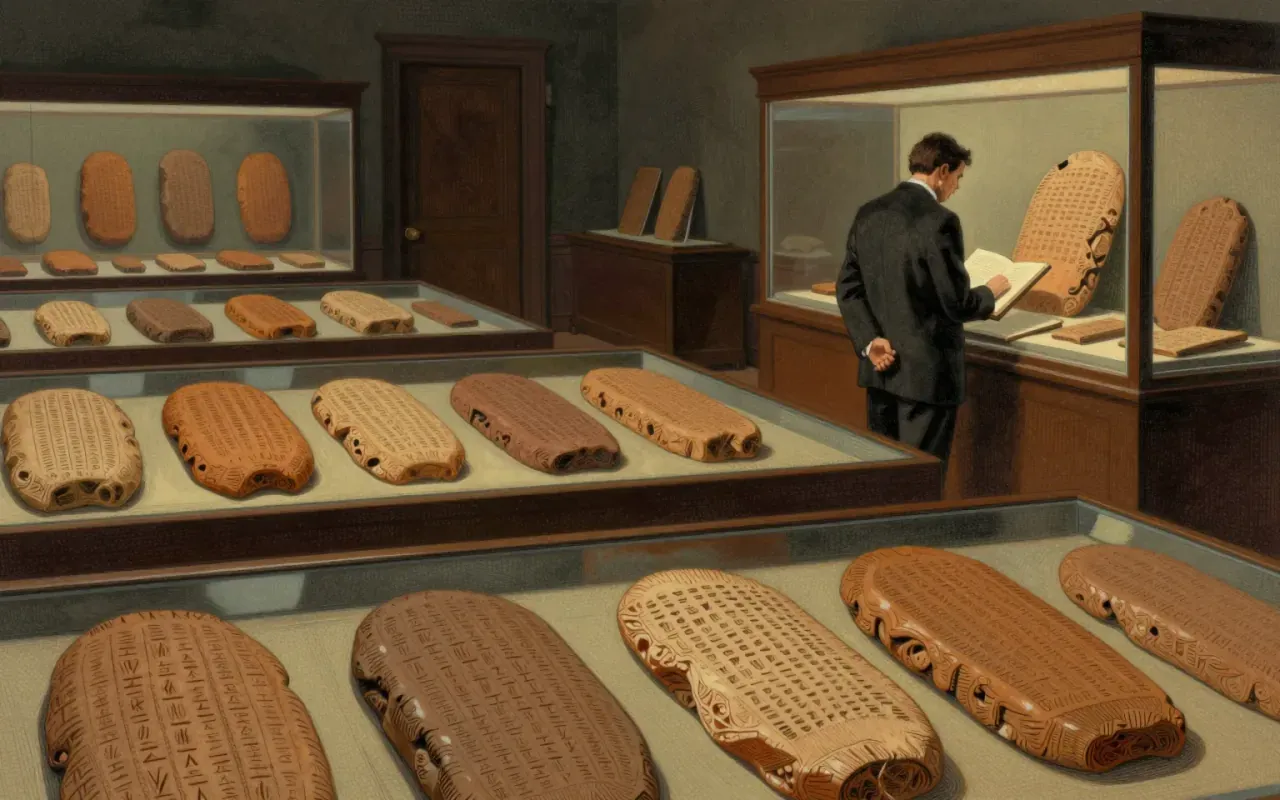
Naqoyqatsi (2002), the final film in Godfrey Reggio’s Qatsi trilogy, uses digitally manipulated archive footage and Philip Glass’s cello-led score to argue that modern life operates under a regime of ‘civilized violence’: abstraction, competition, and technological acceleration displacing embodied reality. Edited by Jon Kane and produced by Reggio, it abandons the observational style of its predecessors for a collage of stock, surveillance, and CGI imagery. Its reception was divided — critics called it the trilogy’s weakest — yet its formal rigour and thematic persistence make it a singular, unsettling document of early-digital consciousness.
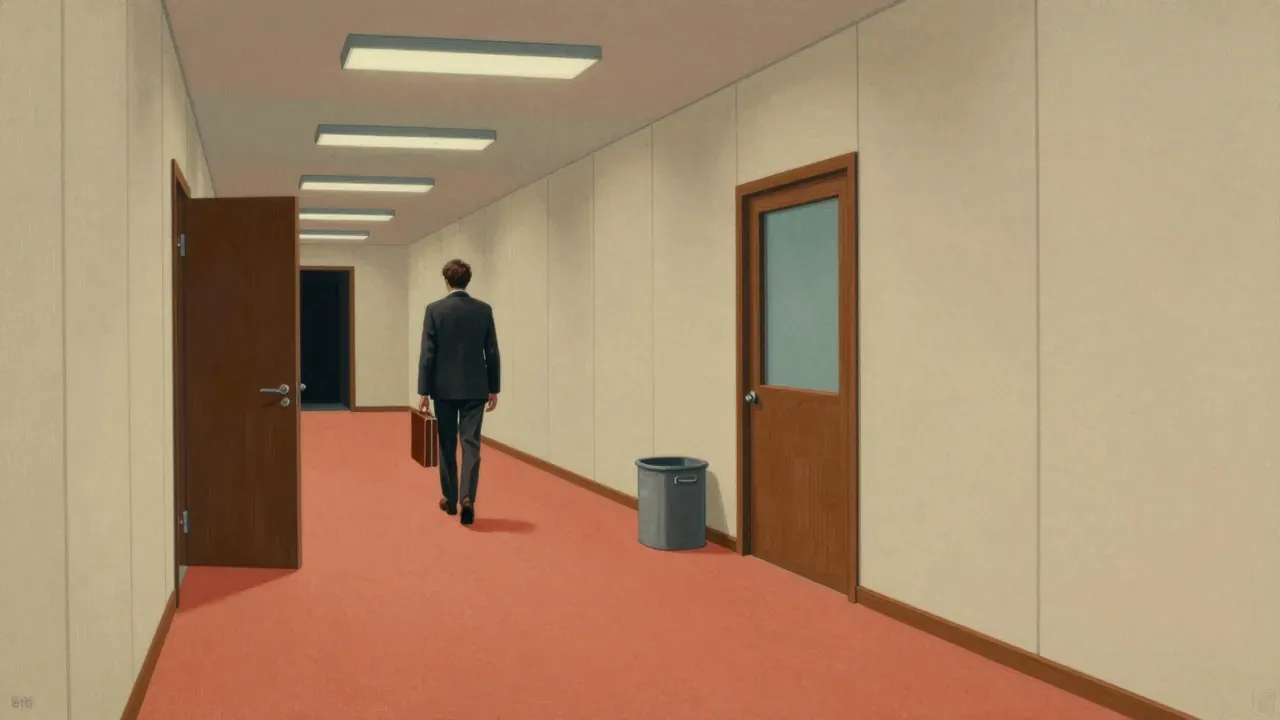
Rainer Werner Fassbinder’s 1973 two-part television serial adapts Daniel F. Galouye’s Simulacron-3 as a cool, methodical inquiry into perception, memory, and institutional control. Set in a near-future West Germany indistinguishable from the present, it follows cyberneticist Fred Stiller as he uncovers layers of simulation — not as spectacle, but as bureaucratic fact. Shot on 16mm by Michael Ballhaus, scored sparsely by Gottfried Hüngsberg, and performed with deliberate restraint, it sustains a quiet, recursive unease across 210 minutes. Its power lies in accumulation, not climax: names disappear, people vanish, logic folds — all without fanfare.
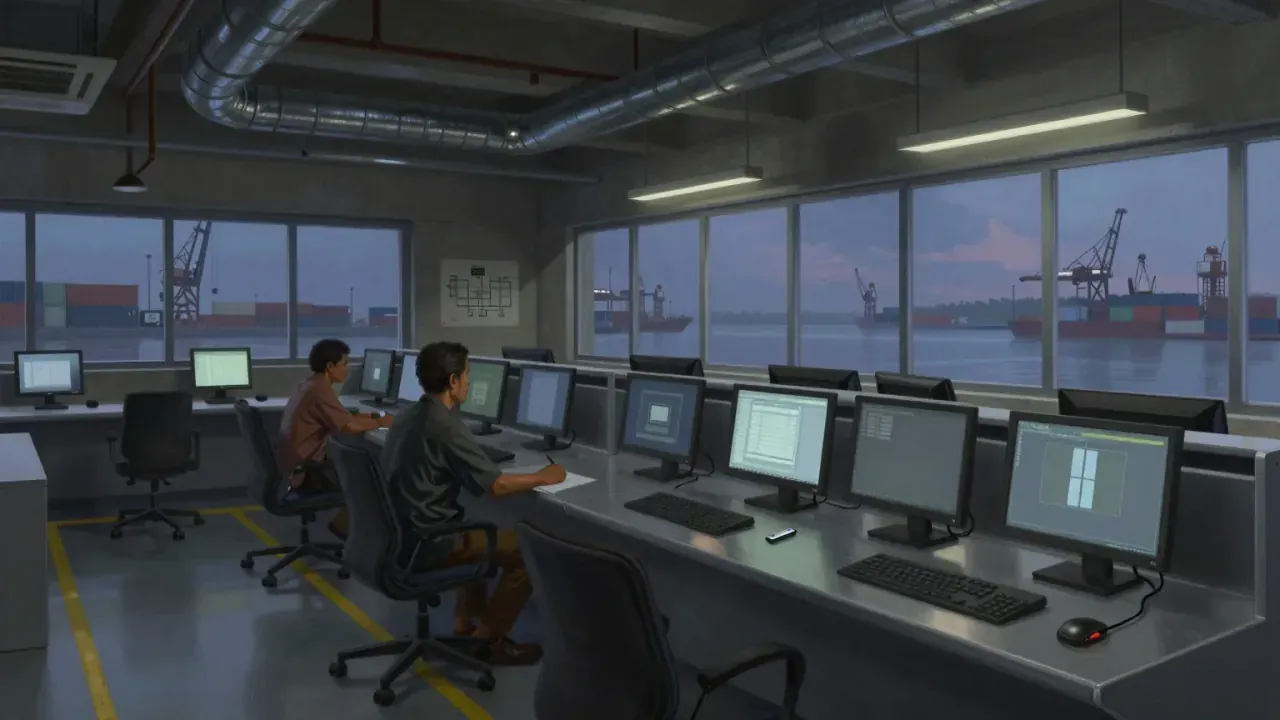
Michael Mann’s 2015 thriller Blackhat follows a convicted hacker released to track a global cyberattack spanning nuclear plants, ports, and financial markets. Shot entirely digitally across Los Angeles, Hong Kong, Jakarta, and Kuala Lumpur, it prioritises procedural realism and atmospheric tension over conventional plotting or emotional exposition. Though critically divided and commercially unsuccessful, it stands as a formally rigorous, thematically coherent attempt to render networked threat as physical, geopolitical, and human-scaled.
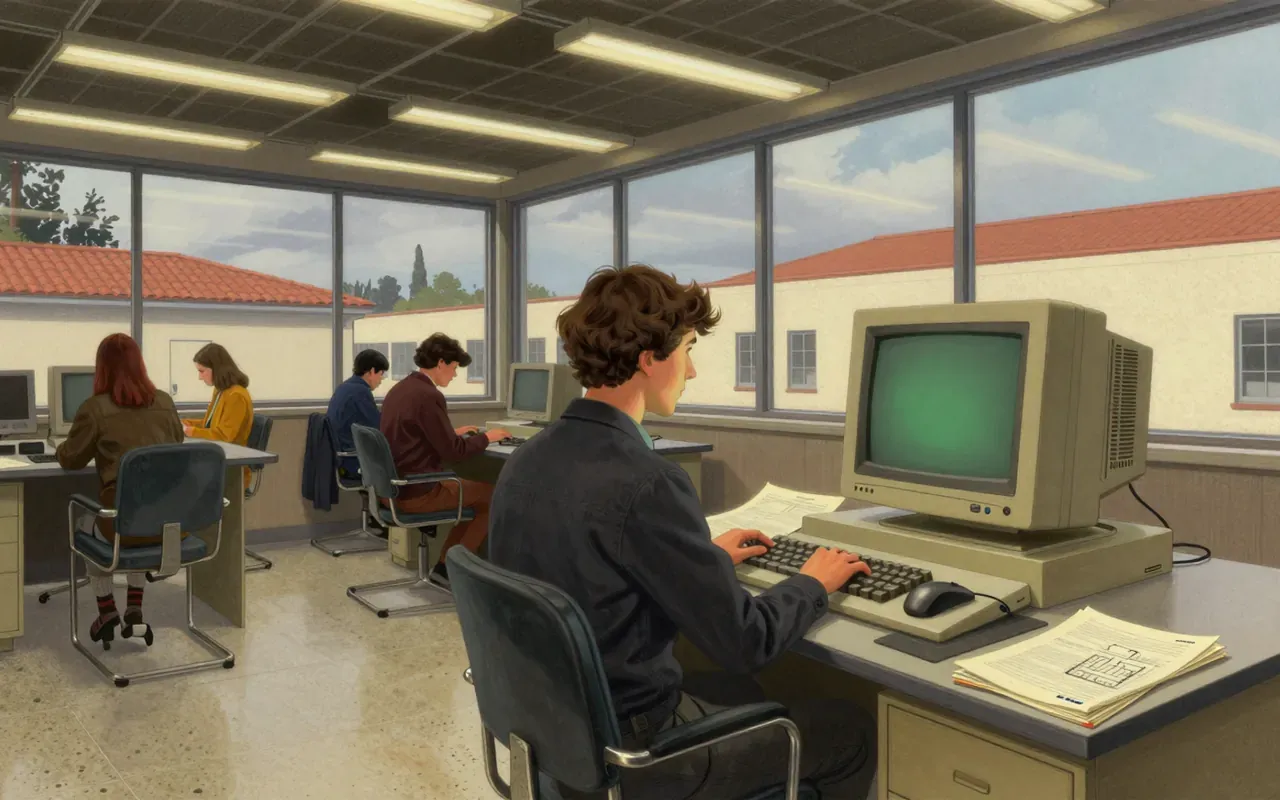
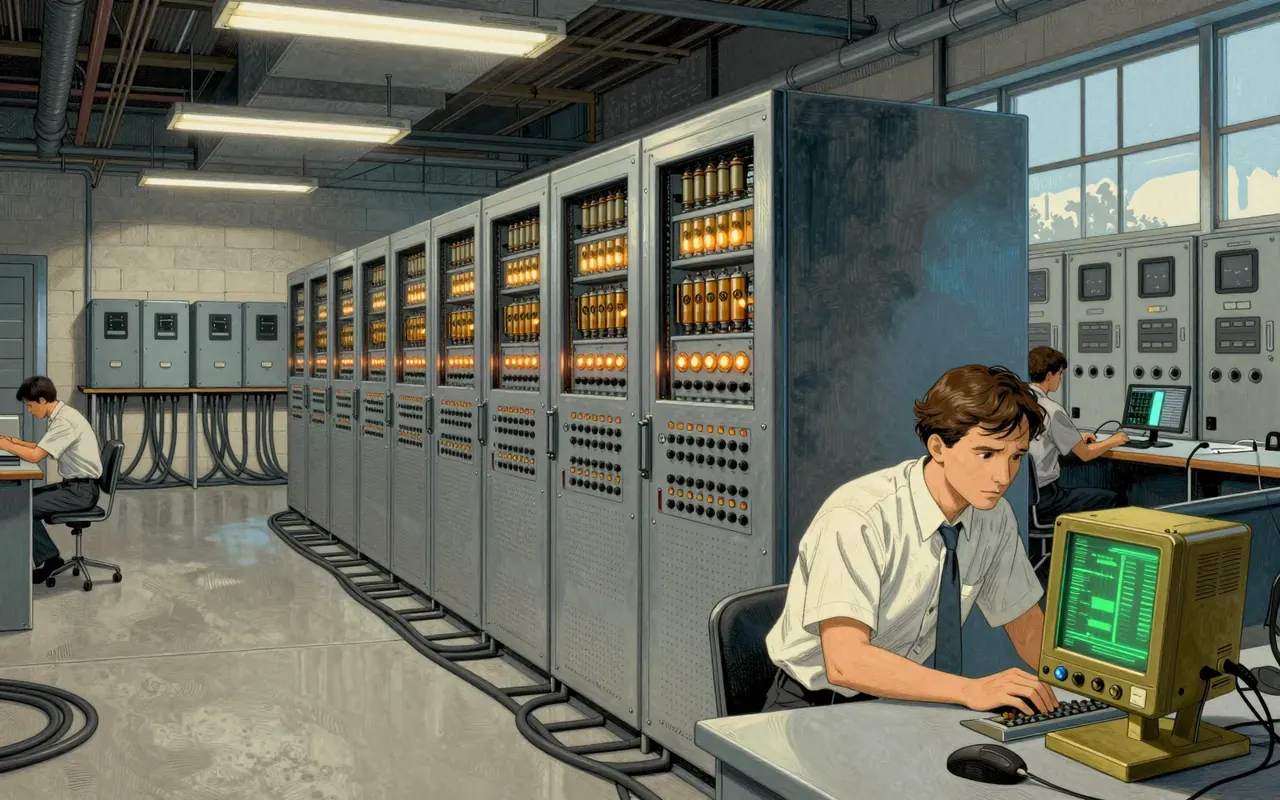



Georgia is a 1993 serif typeface designed by Matthew Carter for Microsoft, manually hinted by Thomas Rickner, specifically optimised for legibility on low-resolution screens through features including a large x-height, thicker thin strokes, reduced contrast, thickened serifs, and an unusually bold weight — all shaped by the binary bitmap constraints of mid-1990s screen rendering. Its design draws on 19th-century Scotch Roman models and shares lineage with Carter’s concurrent print typeface Miller.


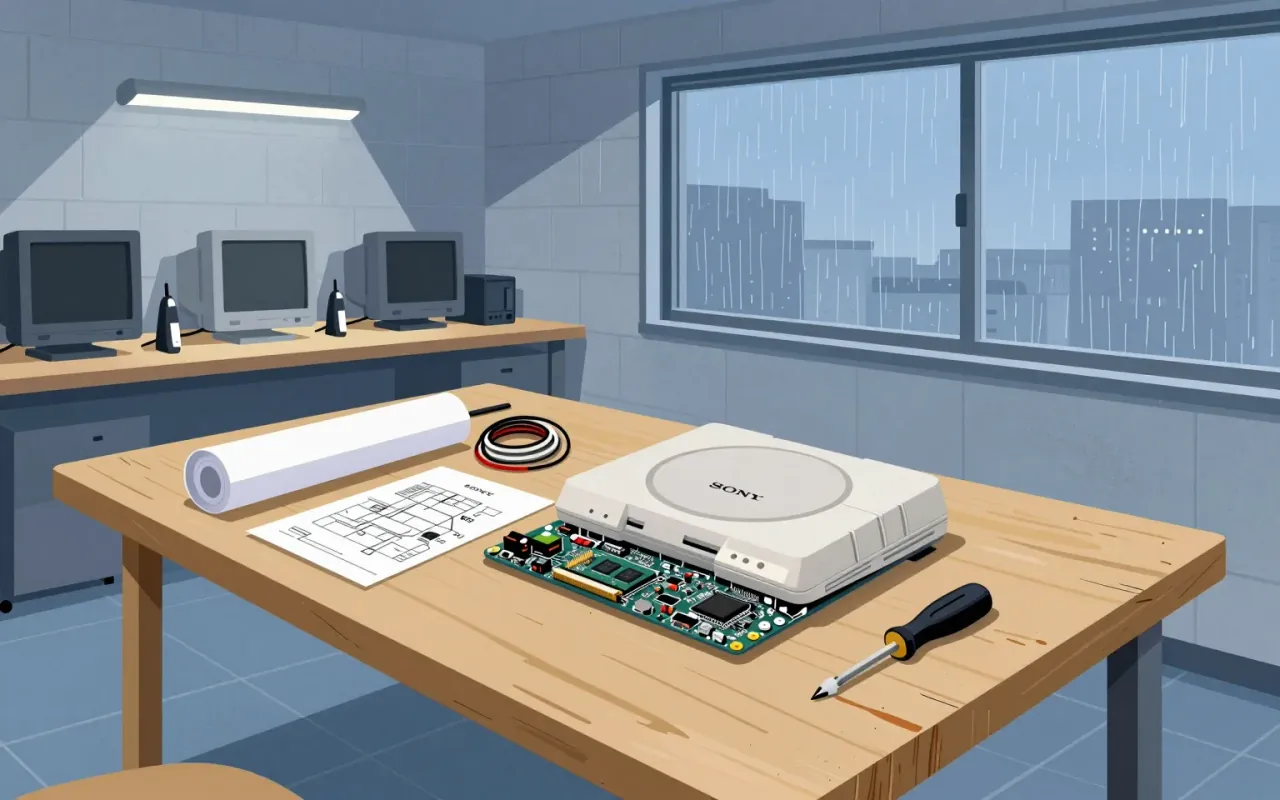
The PlayStation’s significance lies in its developer-centric architecture—not its industrial design. Teiyu Goto is not referenced in any verified source. The brief treats the console as a software platform first, a physical object second—and only what is documented is stated.
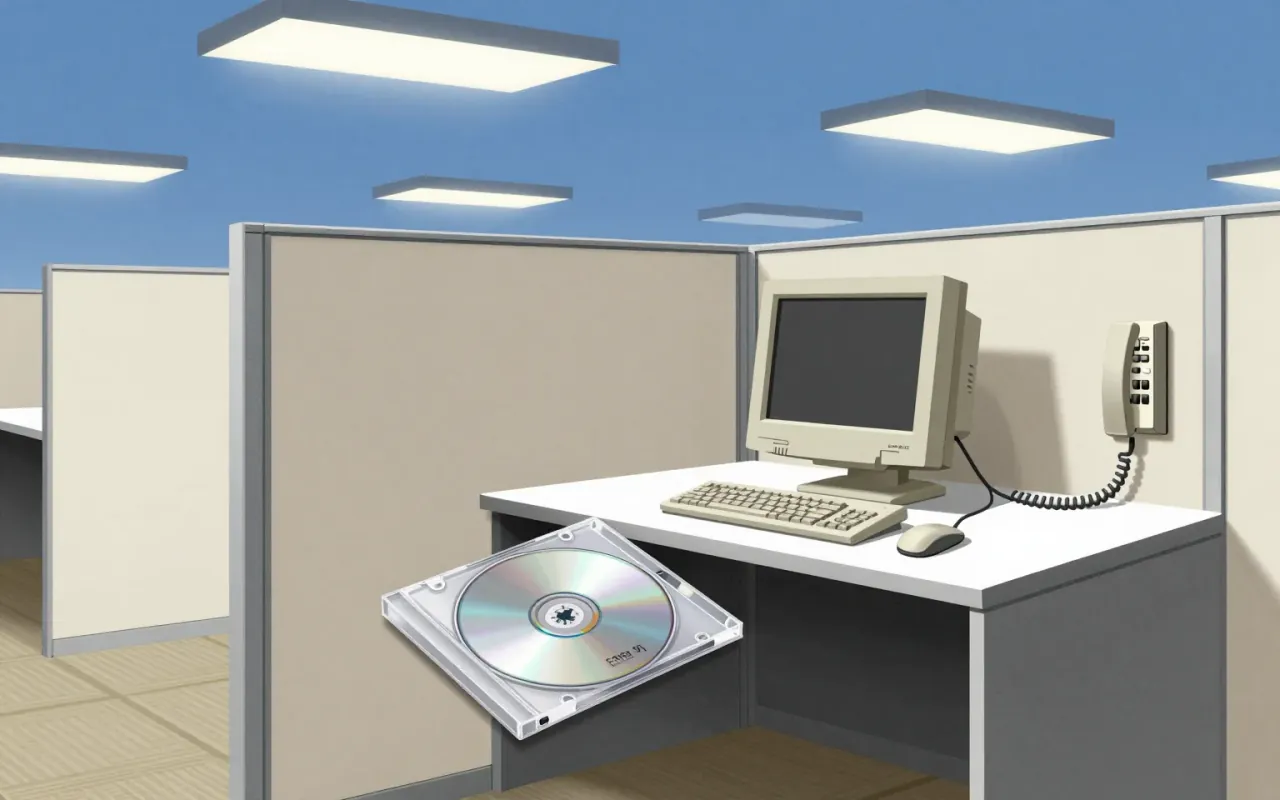
Tahoma is a humanist sans-serif typeface designed by Matthew Carter for Microsoft as the Windows interface typeface. It shipped with Office 97 and served as the default screen font in multiple Windows versions. Carter first designed it as a bitmap font, then wrapped TrueType outlines around those bitmaps. Its bold weight is based on double-pixel width. Ascender Corporation added italic and small caps versions in 2010. Tahoma has a narrower body, smaller counters, tighter letter spacing, and a more complete Unicode set than Verdana. The uppercase I is distinguishable from lowercase l — critical for technical clarity. Carter acknowledged similarities between Tahoma and his earlier Bell Centennial typeface. It was created to address specific technical challenges posed by early computers.


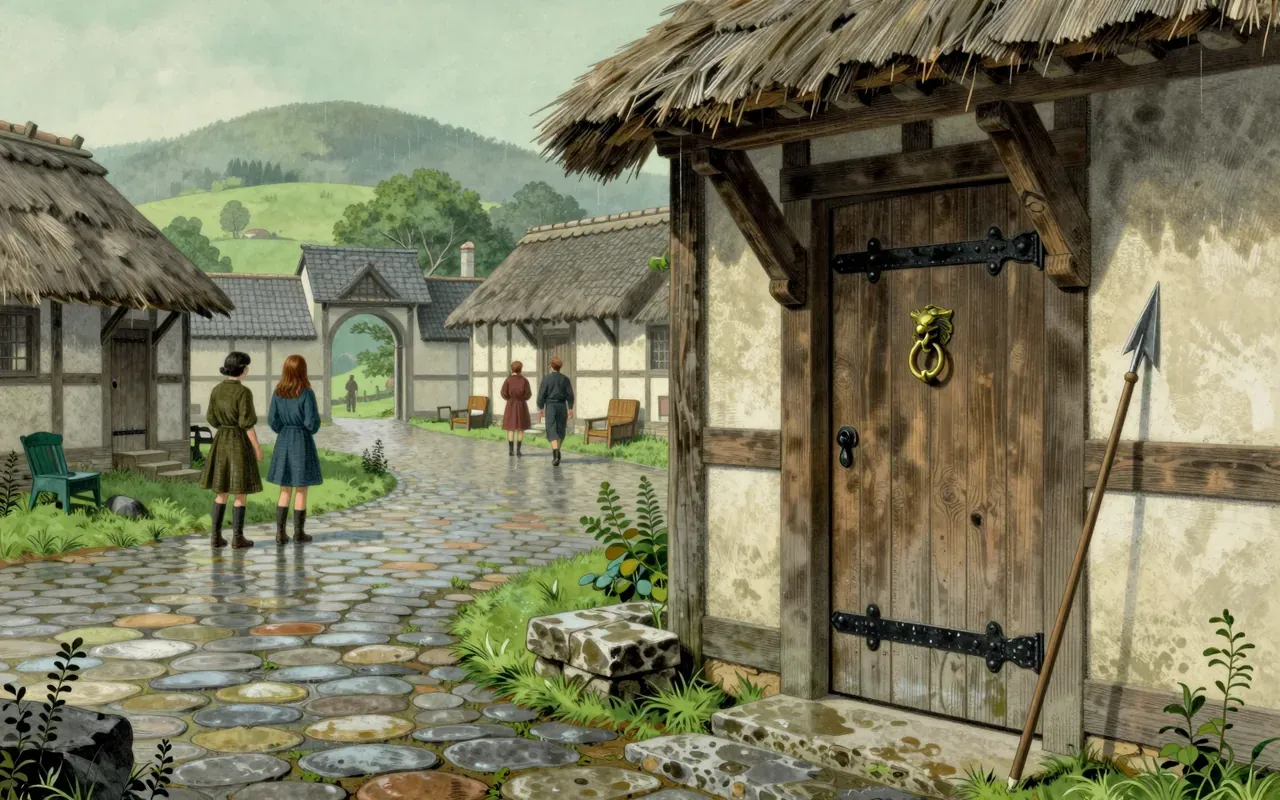
The Bard's Tale II: The Destiny Knight is a 1986 Interplay dungeon crawl that expands the first game’s scope with six cities, an explorable wilderness, banks, casinos, and the Archmage class — but retains its opaque interface and unrefined pacing.

Hitman: Codename 47 is a foundational stealth-action hybrid built on compromise: a forced pivot from MMO to shooter, then reshaped by executive vision into something slower, tenser, and more systemic. It rewards silence with money, punishes civilian deaths with deductions, and forces players to drag bodies to avoid alerts — all while running on a bespoke engine that pioneered ragdoll physics. Its brilliance lies in how it stitches together ideas from Deus Ex and Thief, then bends them around corpse logistics. Its flaw is that it never fully sheds its run-and-gun roots — some levels abandon stealth outright, and movement remains stubbornly unrefined. It is not a polished experience. It is a working blueprint.
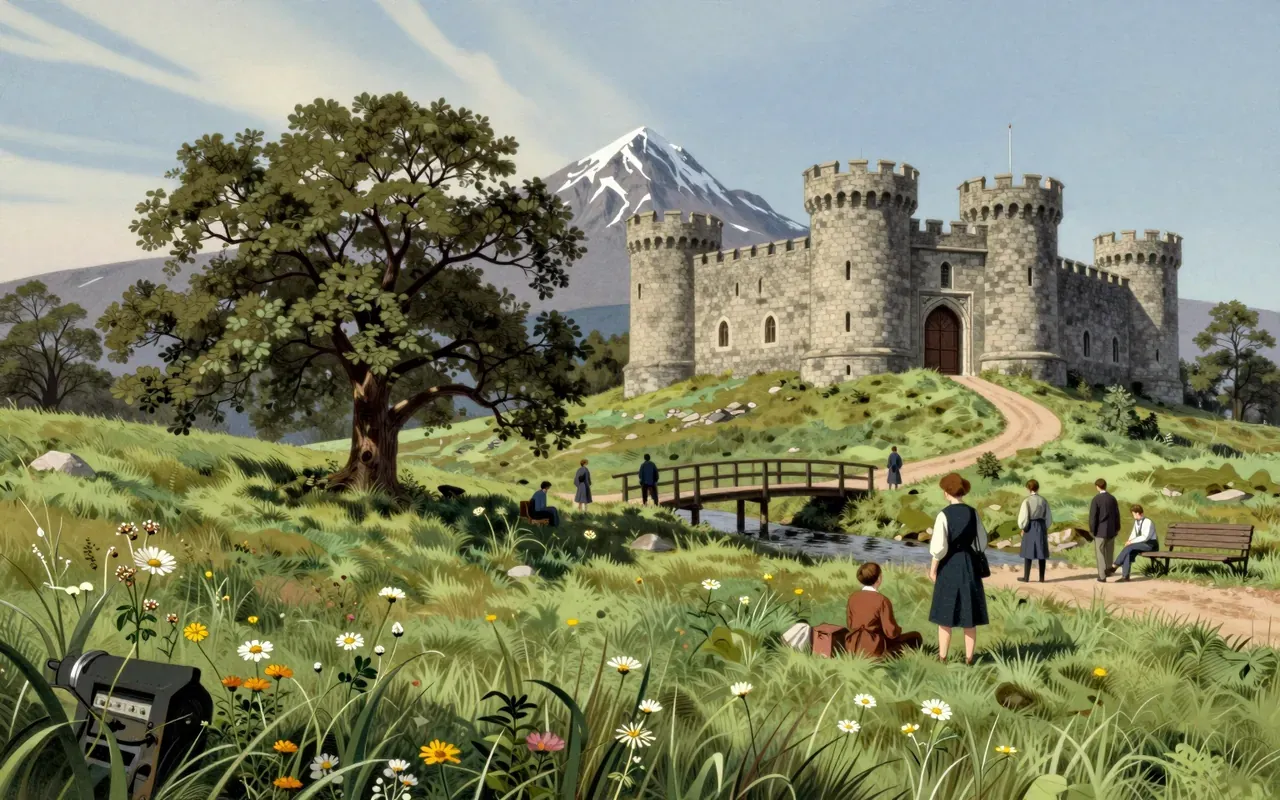
King's Quest I is a foundational graphic adventure that trades player freedom for architectural control — every screen is a stage, every command a test of precise positioning, and every death a reminder that the machine holds all the cards.
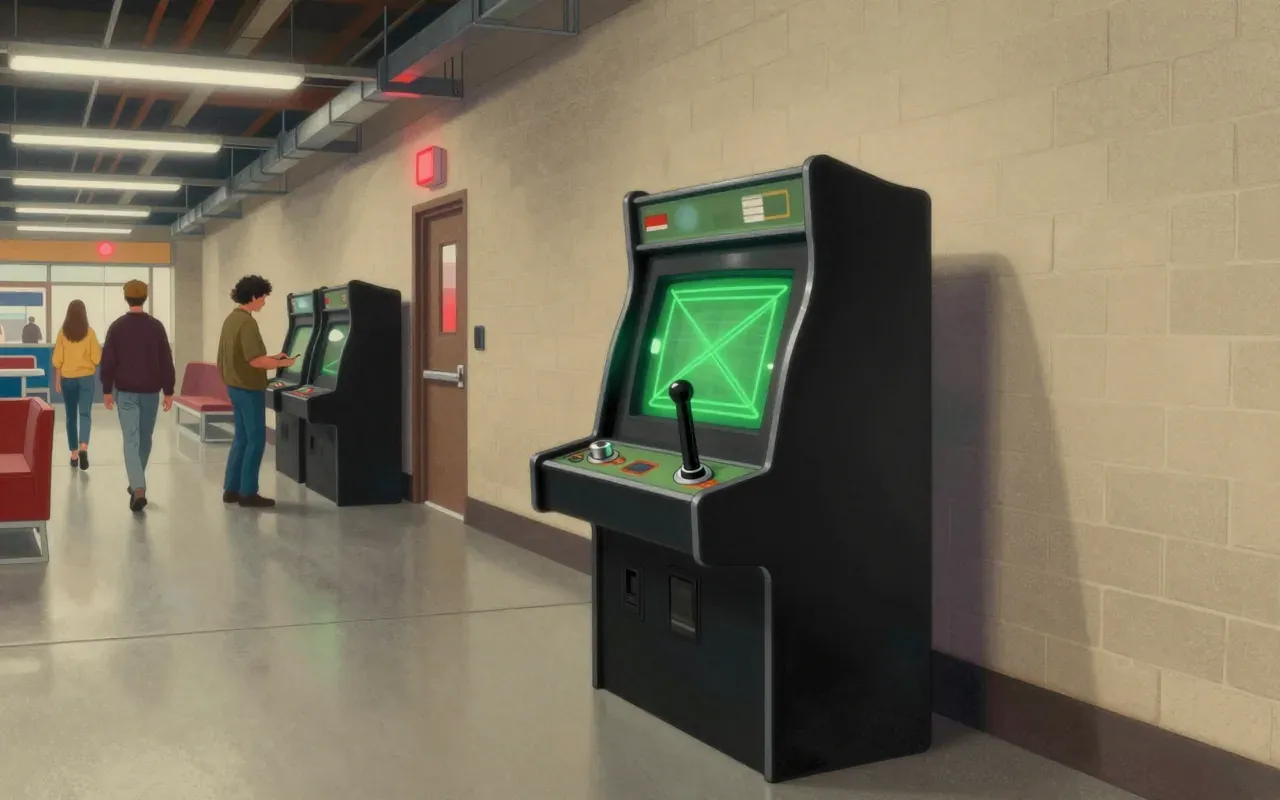
Lunar Lander (1979) is a vector-based arcade game by Atari, Inc. that reduces piloting to rotation, thrust, and fuel. It offers no story, no characters, no world—only a side-view landscape, a fragile module, and the unblinking arithmetic of descent.

Monkey Island 2: LeChuck's Revenge is a 1991 LucasArts SCUMM-based point-and-click adventure game that introduced iMUSE, used Puzzle Dependency Charts, and offered dual puzzle-difficulty modes.
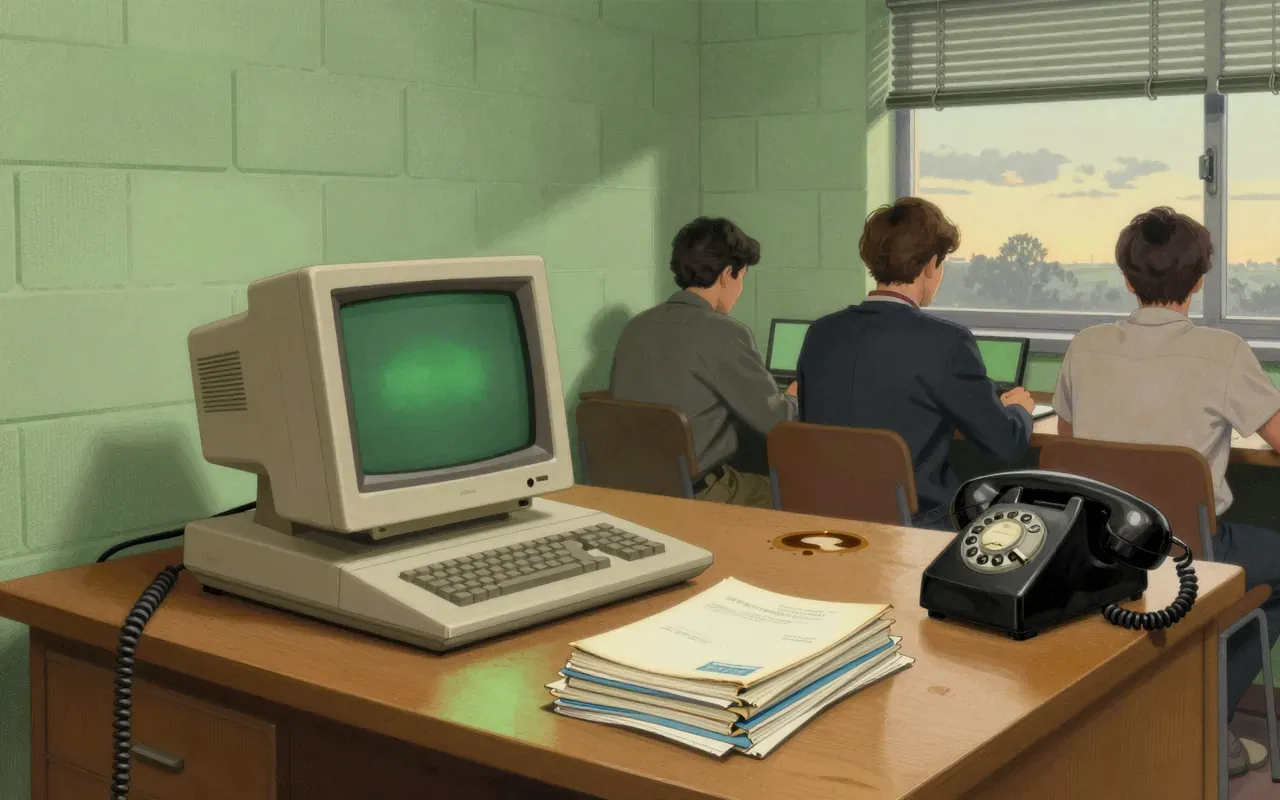
Space Quest I is a 1986 graphic adventure built on Sierra’s AGI engine. It asks players to type commands, navigate layered 2D spaces, consult the manual constantly for copy protection, and tolerate platform-specific interface splits—including no menus on Apple II. Its humour relies on parser friction, hardware constraints, and satirical worldbuilding. It works as a design document for early Sierra adventure grammar—not as a frictionless play experience.
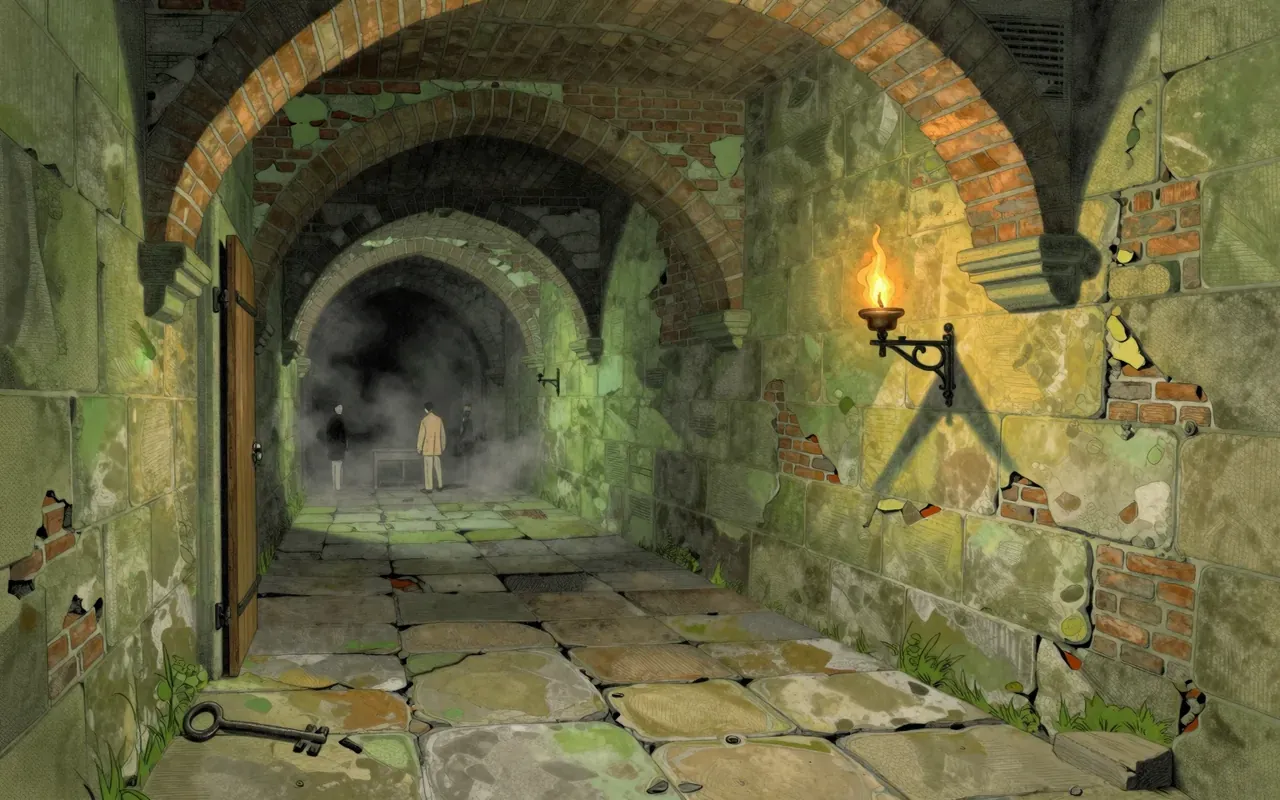
Thief: The Dark Project is a 1998 stealth game by Looking Glass Studios. It uses light and sound as core mechanics. Players assume the role of Garrett in a first-person, unscripted 3D world. Objectives are discrete—like stealing a specific object—and must be completed to advance. A visibility gem on the HUD indicates detectability. NPCs react to environmental cues. Eidos Interactive published it.
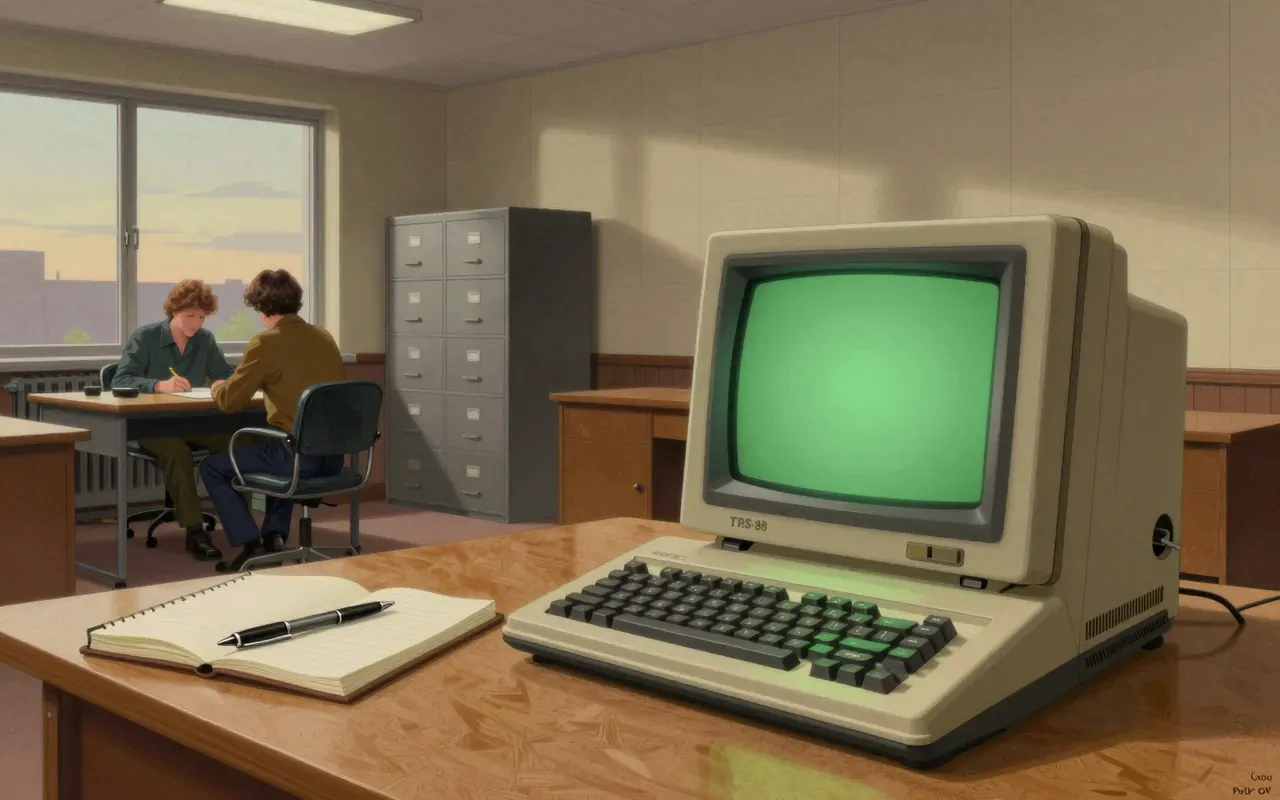
Ultima I: The First Age of Darkness is a foundational computer RPG where 'The Stranger'—summoned from another world—must destroy the Gem of Immortality to end Mondain's rule in Sosaria.
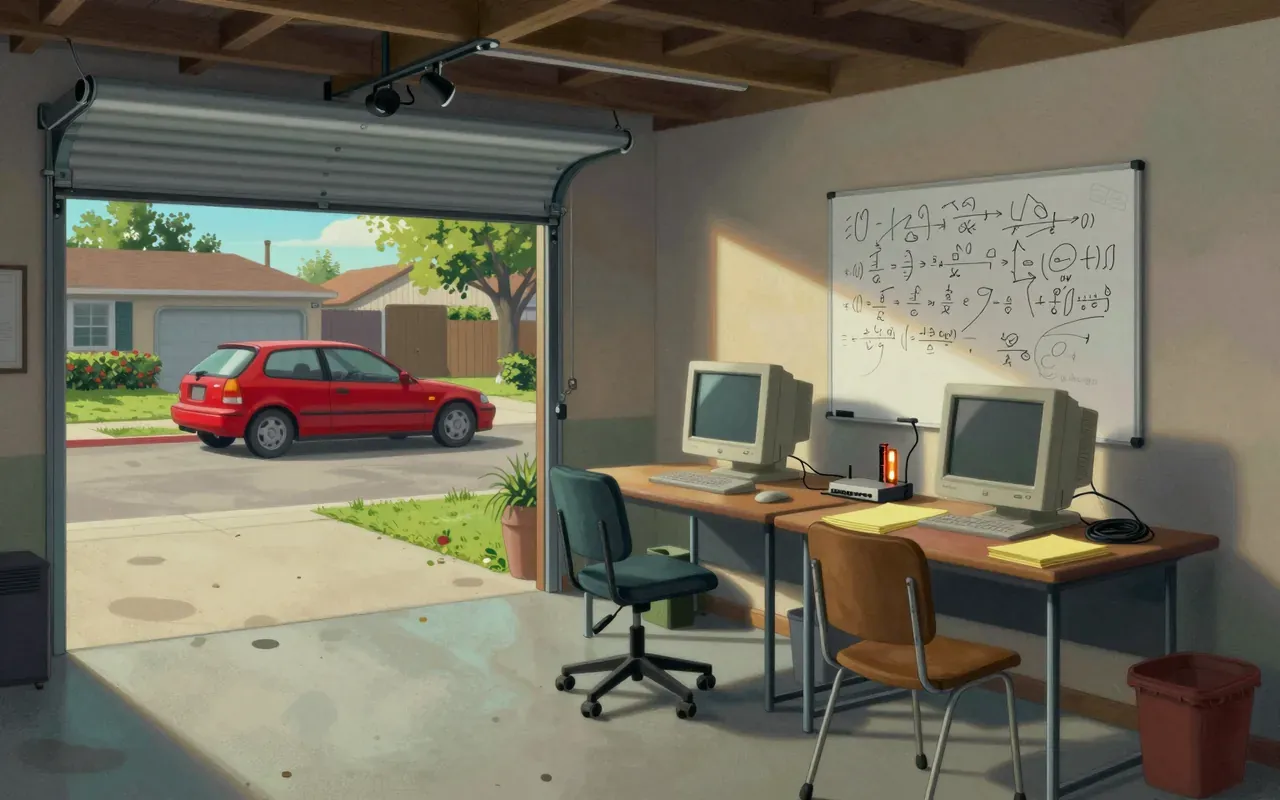
Google is a search engine company founded in 1998 by Larry Page and Sergey Brin. Its core technology, PageRank, ranked websites by inbound links — a method co-published with Motwani and Winograd and patented by Stanford. Scott Hassan wrote the first implementation. The company launched from Susan Wojcicki’s garage. Its name misspelled 'googol' to signal scale. Initial funding came from Andy Bechtolsheim’s $100,000 cheque in August 1998. The sources say nothing about advertising, revenue, users, infrastructure costs, or market position beyond this.


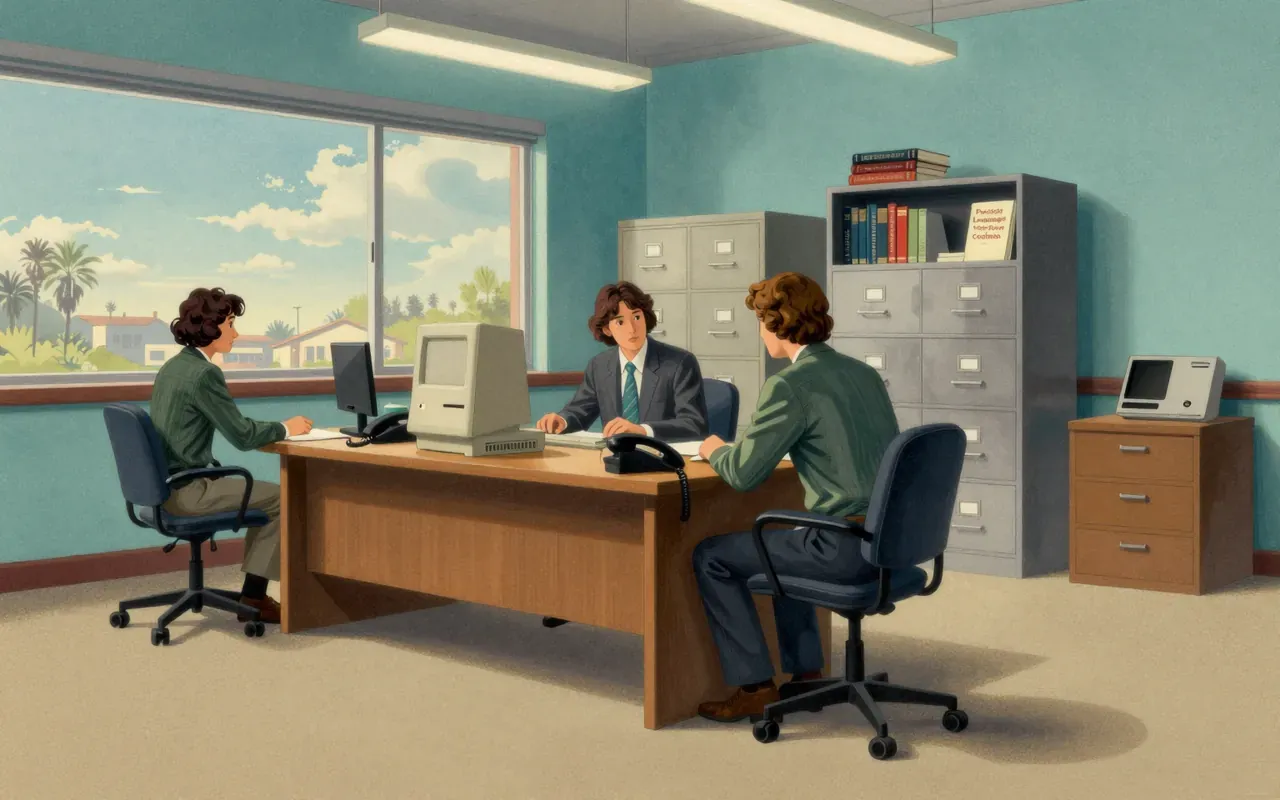
Adobe’s founding story is not about creative tools—it is about control of a foundational layer: the language that told printers what to print. That decision, made in a garage in 1982, let Adobe license across hardware and software ecosystems before ever selling to end users. Everything else came later—and is absent from the verified record.
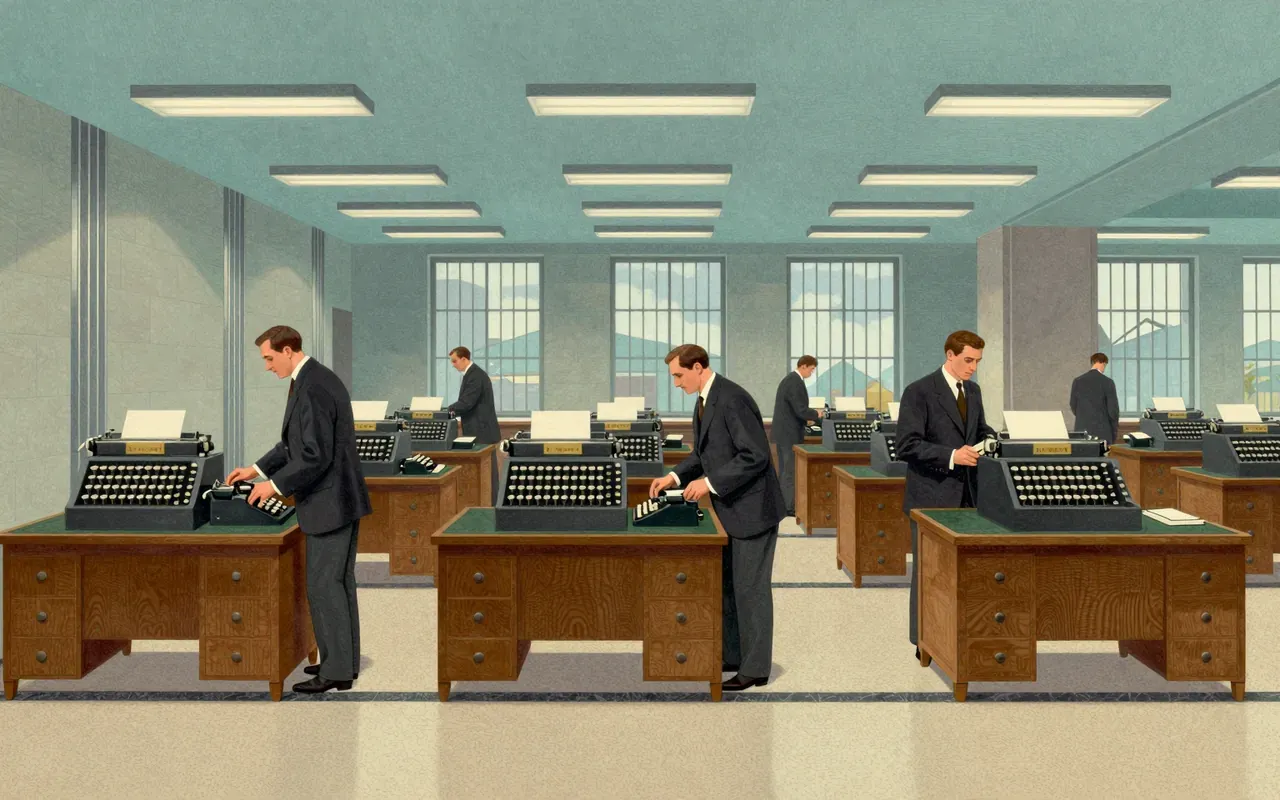
IBM under Thomas J. Watson Sr. was a sales-and-leasing enterprise built on punched card tabulators — not computing. Its dominance relied on vertical control, not technical novelty. That control was dismantled by antitrust action in 1936. Everything else — System/360, AI, PCs — belongs to a later era.
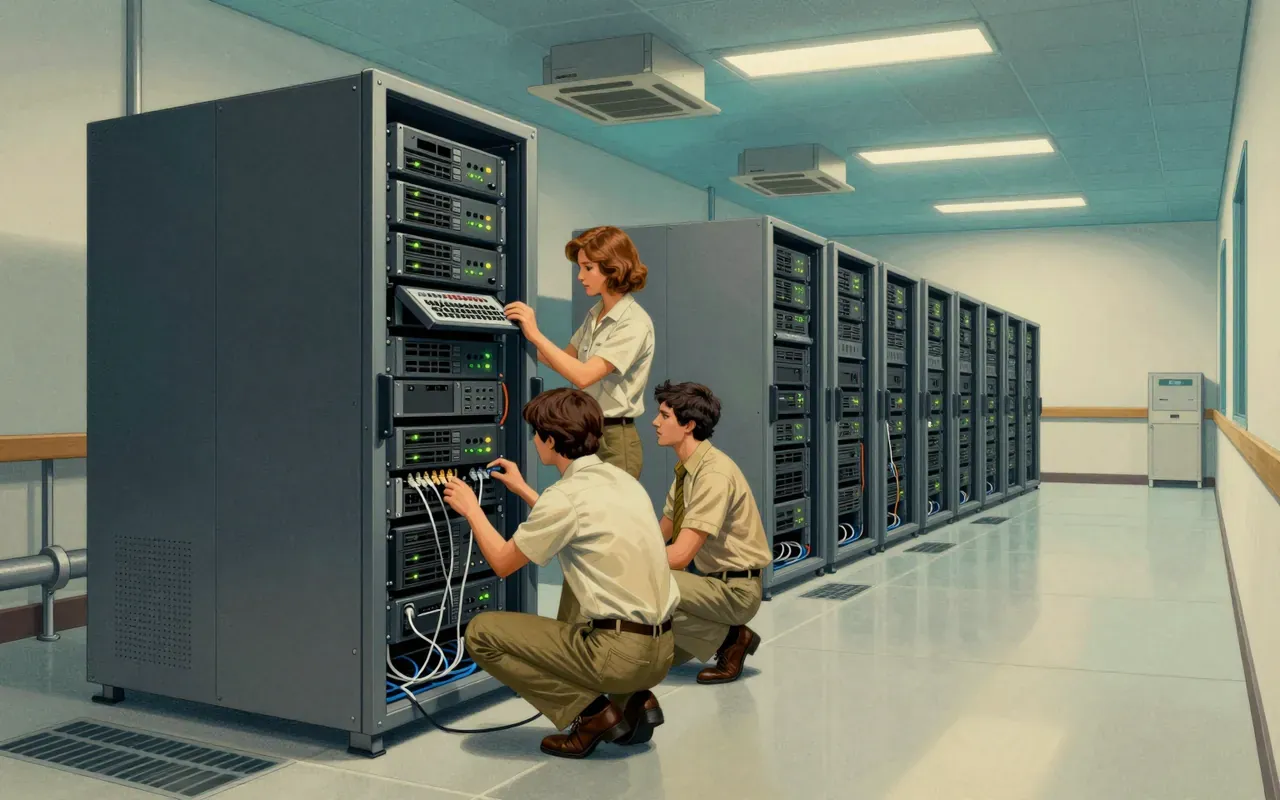
Oracle Corporation is a multinational technology company founded in 1977 in Santa Clara, California, by Larry Ellison, Bob Miner, and Ed Oates. It sells database software (especially Oracle Database), enterprise applications (ERP, HCM, CX, SCM), and cloud infrastructure and hardware. By the mid-2000s, it had become the world's largest enterprise software vendor. Its foundational database design drew from Edgar F. Codd’s relational model paper. IBM’s delay in releasing a relational database for Unix and Windows allowed Oracle to dominate mid-range and microcomputer systems. Oracle acquired Sun Microsystems in 2010 after regulatory approval in the U.S. and EU.
SAP is the world's largest vendor of enterprise software. Founded in 1972 in Walldorf by Dietmar Hopp and four former IBM colleagues, it built its first product—the RF financial accounting system—in 1973 for Imperial Chemical Industries in Östringen. Its technical distinction was real-time operation via local electronic storage and a common logical database, eliminating overnight punch card processing. It restructured from GbR to GmbH (1981), to AG (late 1980s), to SE (2014). Hopp led SAP from 1988 to 2005 and retained ~10% equity.
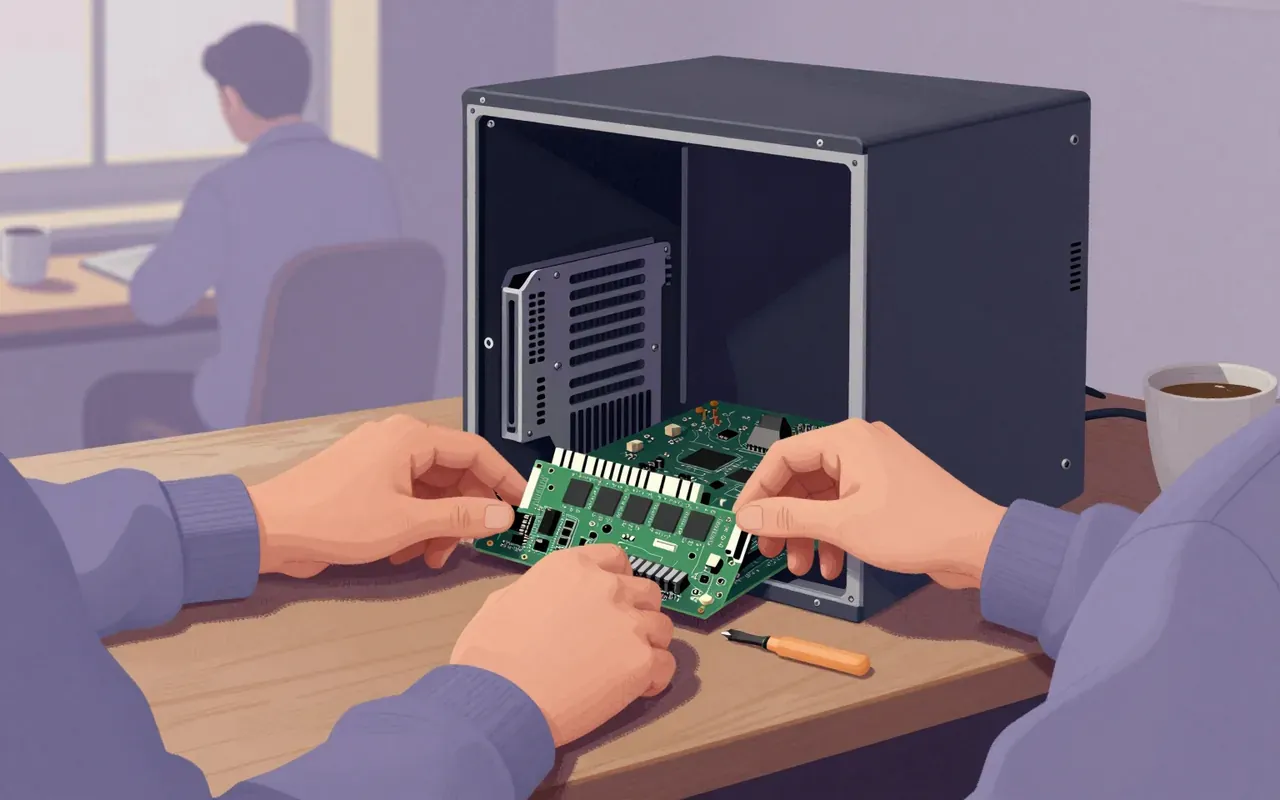
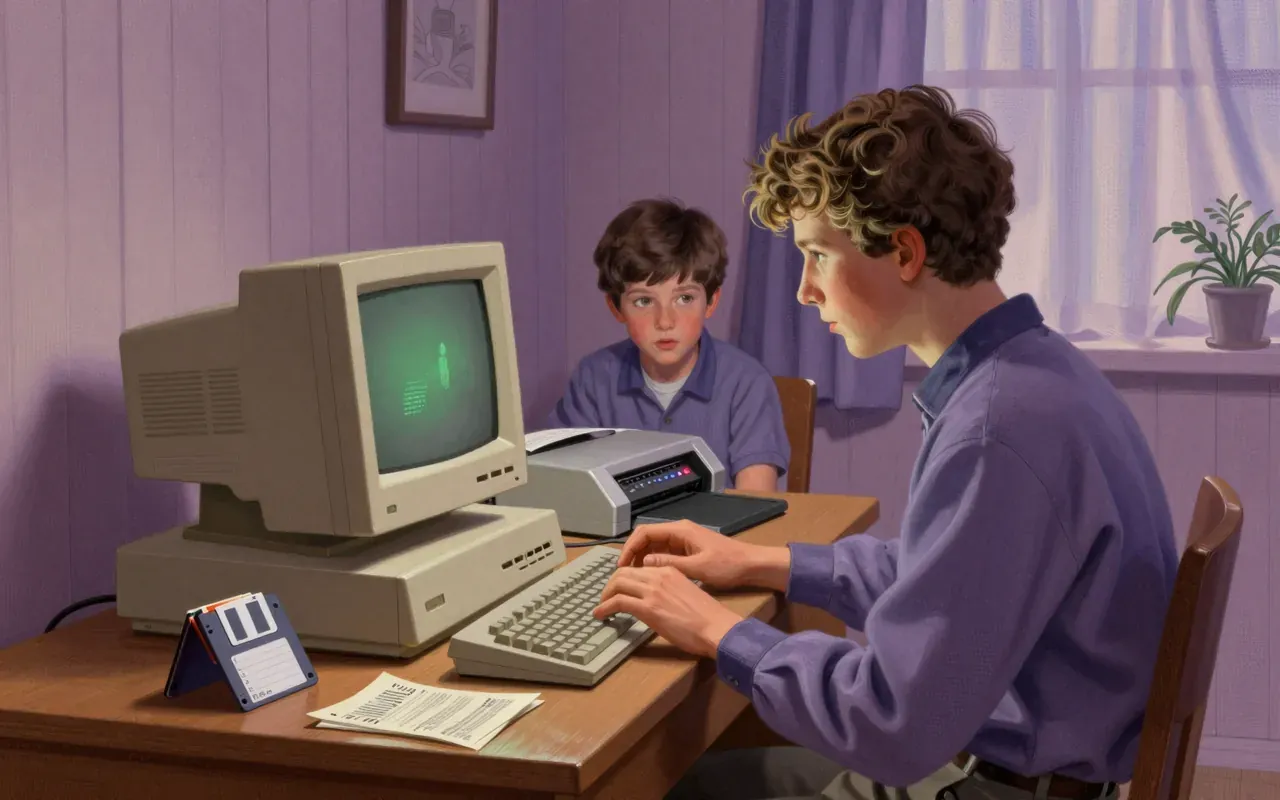

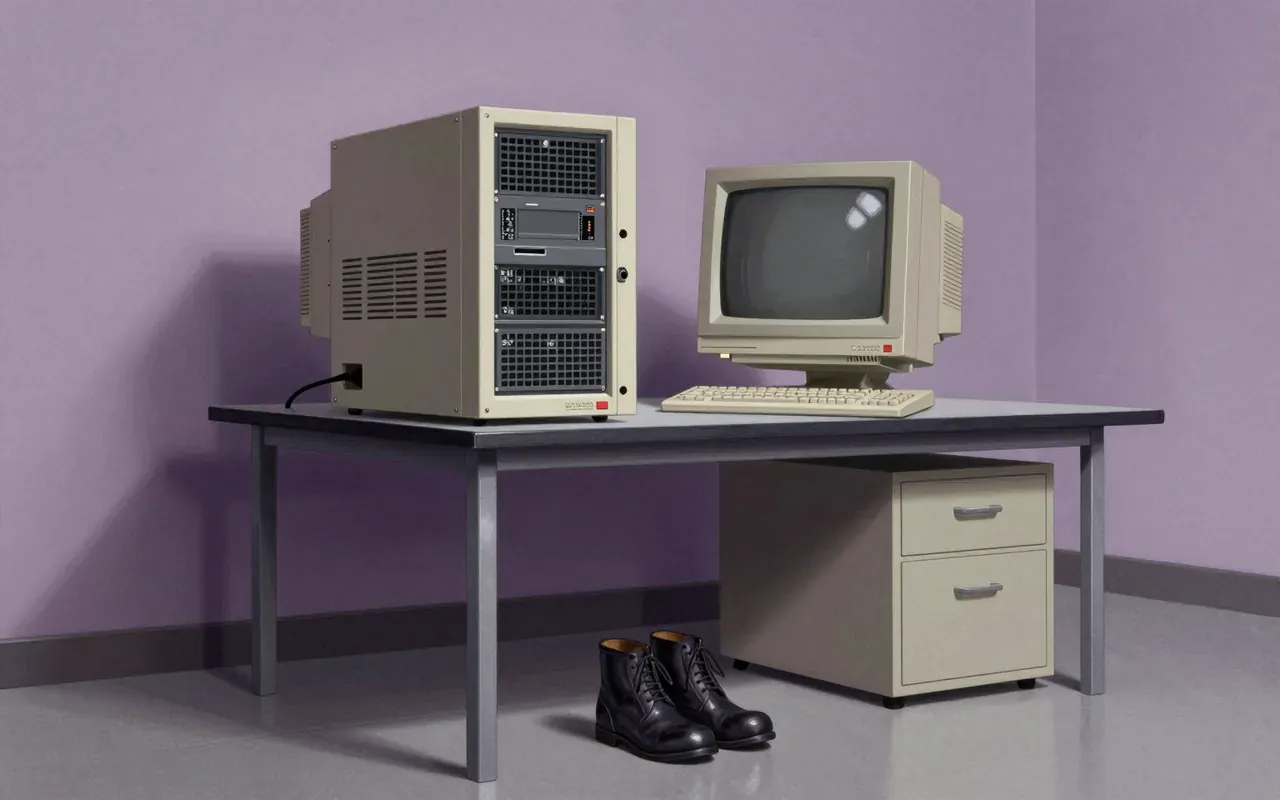
Silicon Graphics built the first practical hardware-accelerated 3D graphics systems. Its Geometry Engine — designed at Stanford under ARPA — delivered ~6 million geometry operations per second. It pioneered scalable cc-NUMA architectures in the mid-1990s. But its reliance on proprietary MIPS and failed transitions to Itanium and Xeon eroded its position as PC graphics commoditised. It filed for bankruptcy in 2009.
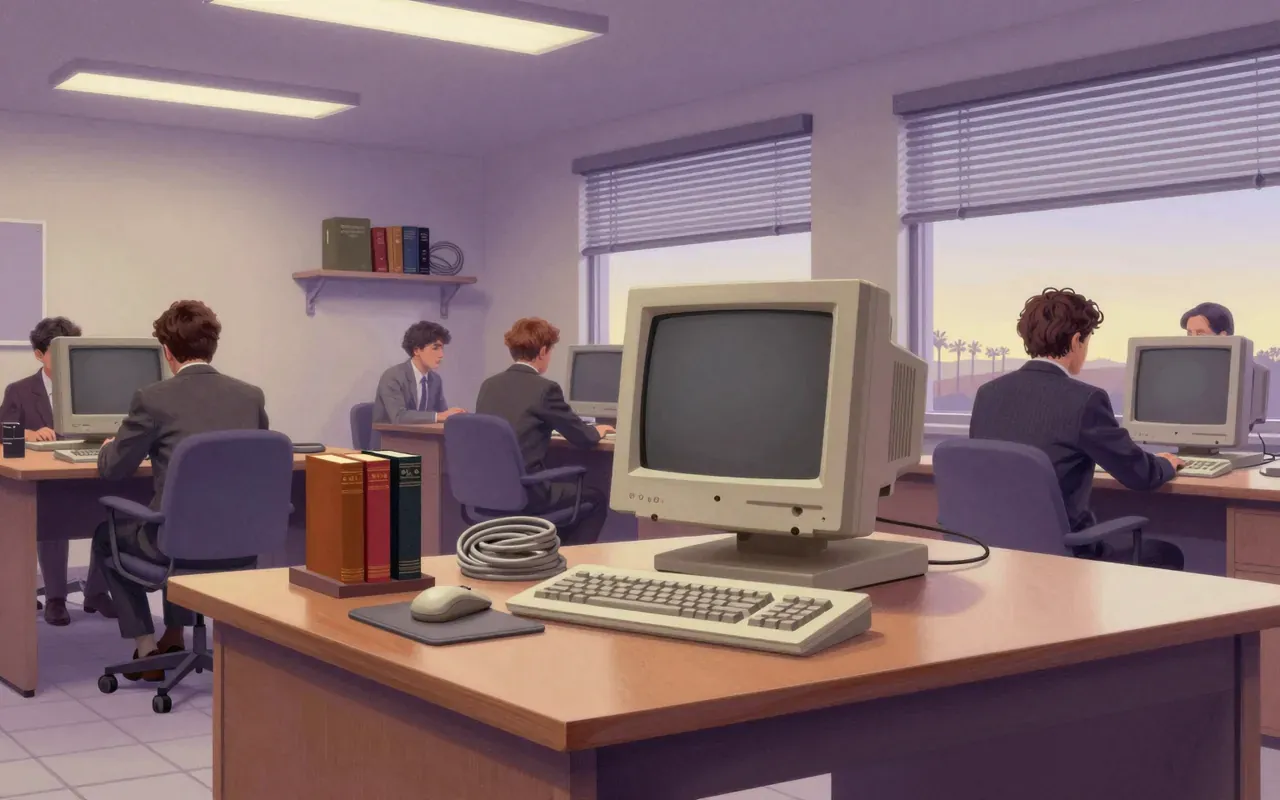
The Macintosh 128K delivers a complete graphical interface in a sealed, unexpandable box. It works by tightly integrating hardware and firmware — not by scaling up, but by locking down. Its success comes from constraint, not capability.

Capacitive sensing is not an invention by E.A. Johnson. He is a Canadian ecologist whose work concerns climate change, fire management, and geoscience-ecology interfaces. Capacitive sensing is an engineering method with no documented link to him. The technology relies on measurable electric field disruption—not intuition, ecology, or field observation.
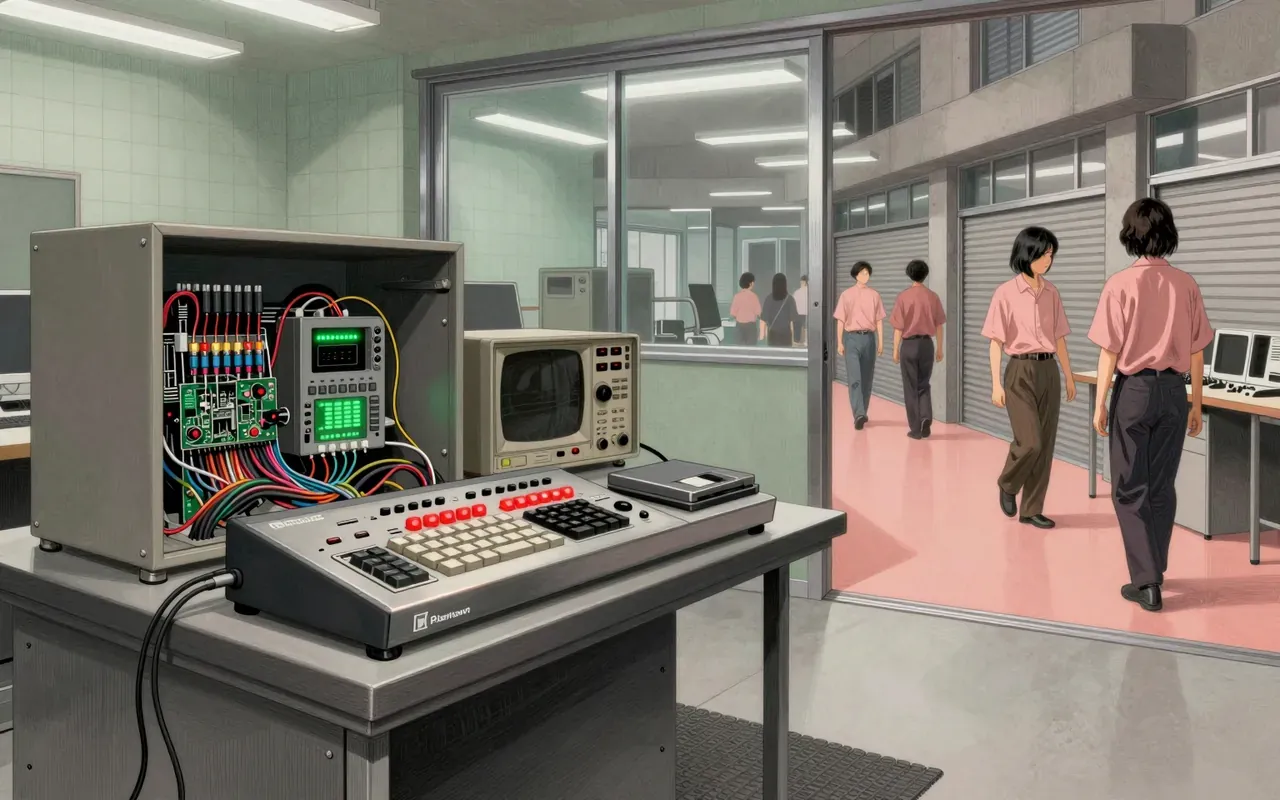
The Roland MC-8 Microcomposer is a pioneering CV/Gate sequencer from early 1977. It uses an Intel 8080A CPU and 16 KB RAM to store up to 5,300 notes. It enables polyphonic sequencing via CV/Gate allocation and precise, rapid control of VCOs, VCFs, and lighting. It was designed for large modular systems like the System 700 and System-100M. It does not support real-time recording well and lacks modern interface conveniences.