briefs
Topic · across the network

Cities

The machine most people now live inside.

90
briefs
8
subjects
11:22
average
1022 min
in total
Abstraction 407Absurdism 137Acoustics 220Acting 65Adaptation 372Addiction 95Adolescence 202Advertising 77Age of exploration 14Ageing 113Agriculture 100Algorithms 114Ambition 46Anarchism 38Ancient Egypt 17Ancient Greece 38Ancient Rome 30Animals 172Anthropology 23Apartheid 12Architecture 165Archives 32Argentina 10Art Deco 26Artificial intelligence 78Astronomy 81Attention 42Australia 32Automation 73Avant-garde 164Aviation 79Banking 72Banned works 40Bauhaus 12Beer 5Behavioural economics 22Berlin 16Big tech 6Biodiversity 136Biography 86Birds 41Black holes 20Blockchain 12Boxing 14Branding 77Brazil 43Bread 29Britain 131Brutalism 4Bubbles 3Buddhism 28Byzantium 10California 17Canada 18Capitalism 94Cars 468Celebrity 59Censorship 110Cheese 24Chefs 9Chemistry 104Chess 2Childhood 87China 109Chocolate 8Christianity 49Cinematography 343Cities 90Class 485Climate change 107Club culture 100Cocktails 2Coffee 11Cognitive bias 14Collecting 16Colonialism 284Colour 42Comedy 89Community 52Complexity 21Computing 309Consciousness 16Conservatism 14Conspiracy theories 8Cooking 178Corruption 38Cosmology 31Cover versions 64Craft 116Crate digging 42Creativity 8Crime 234Cryptocurrency 8Cryptography 24Cuba 10Cybersecurity 30Dada 12Debt 38Decision-making 28Decolonisation 46Deep time 80Democracy 45Denim 16Deserts 45Detroit 17Dinosaurs 12Directing 168Disasters 59Disease 109DJ culture 89Dreams 32Drones 5Drum machines 96Dystopia 69East Africa 28Ecology 337Economics 36Editing 72Education 92Egypt 12Electric vehicles 59Emotion 22Empire 92Endurance 49Energy 120Engineering 541Entropy 8Epidemics 13Equality 9Espionage 31Ethics 44Evolution 174Existentialism 106Expertise 2Exploration 49Extinction 23Failure 37Family 240Fandom 22Fascism 45Fashion 215Fast fashion 12Fear 34Feminism 122Fermentation 126Film music 81Fishing 12Folklore 71Food history 588Football 16Forests 31Forgery 7France 163Fraud 15Free will 13Freedom 16French literature 15Friendship 24Furniture 36Gambling 14Gender 63Generations 28Genetics 87Geology 96Germany 66Globalisation 74Gothic 32Greece 5Grief 126Habits 6Happiness 2Hardware 709Haute couture 22Headphones 8Hi-fi 12Hinduism 12Hoaxes 1Human history 23Human nature 41Identity 138Illustration 8Impressionism 6Improvisation 249India 89Indonesia 15Industrial design 342Inequality 13Inflation 4Information 34Infrastructure 280Insects 29Intelligence 8Interiors 31Internet culture 88Invention 329Iran 41Islam 40Islands 17Israel 9Italy 52Jamaica 10Japan 114Jewellery 5Journalism 34Judaism 13Justice 42Korea 41Language 70Law 90Leadership 20Learning 6Liberalism 1Libraries 6Literary criticism 26London 12Loneliness 61Los Angeles 62Lost works 9Love 67Luxury 55Machine learning 15Management 10Maps 5Marketing 21Markets 51Mars 6Marxism 26Masculinity 46Materials 138Mathematics 79Meaning 6Medicine 124Memory 82Mental health 70Mesopotamia 4Mexico 38Migration 95Minimalism 68Mining 30Misinformation 9Modernism 63Money 24Monopoly 32Mortality 61Motivation 2Mountains 16Museums 27Mysticism 11Mythology 60Nationalism 40Neuroscience 23New York 36Nigeria 7Nihilism 10Noise 31Nostalgia 33Nuclear 29Nutrition 17Oceans 48Oil 42Open source 45Painting 18Palaeontology 29Parenting 14Paris 18Partition 6Patents 71Patronage 14Perception 44Personal style 27Personality 2Persuasion 8Peru 10Philosophy 77Photography 37Physics 206Plants 26Platforms 89Podcasting 1Poetry 25Poland 17Policing 34Pop Art 16Populism 2Portraiture 6Portugal 18Postmodernism 23Power 91Prehistory 24Preservation 28Printmaking 21Privacy 11Probability 6Productivity 1Programming 54Prohibition 1Propaganda 35Protest 75Pseudoscience 17Psychology 80Publishing 22Punishment 16Quantum mechanics 44Race 145Radio 30Railways 35Rave 17Realism 47Record labels 19Recording 810Relativity 23Religion 154Resilience 15Restaurants 30Restoration 2Retail 94Revolution 58Risk 18Ritual 96Robotics 26Romance 96Russia 58Salt 9Sampling 246Satire 84Scandinavia 28Scientific method 186Screenwriting 26Sculpture 7Secularism 2Self-deception 14Semiconductors 73Sexuality 102Ships 18Silence 24Silicon Valley 17Slavery 35Sleep 2Smartphones 27Sneakers 15Social media 58Socialism 9Software 68Songwriting 180Sound design 332Sound systems 20South Africa 19South East Asia 30Space exploration 84Spain 18Special effects 41Spices 62Spirits 12Sport 82Startups 21Statistics 10Status 9Stoicism 4Storytelling 68Strategy 70Street food 99Streetwear 16Studio craft 508Subcultures 59Sugar 12Supply chains 115Surrealism 53Surveillance 21Sustainability 30Synthesis 232Tailoring 37Taxation 14Tea 24Textiles 97Thailand 11The American Revolution 19The American South 88The Arab world 41The Arctic 19The Balkans 17The Belle Epoque 13The body 29The brain 26The Caribbean 28The civil rights movement 62The Cold War 160The eighties 268The Enlightenment 29The financial crisis 19The First World War 39The food industry 157The French Revolution 9The Gilded Age 9The Great Depression 18The Holocaust 20The Industrial Revolution 93The internet 61The interwar years 135The Middle Ages 35The Moon 4The music business 169The Netherlands 10The nineties 26The Olympics 10The pandemic 13The Reformation 1The Renaissance 16The Russian Revolution 19The Second World War 102The seventies 58The sixties 28The space race 5The United States 19The universe 7The Victorian era 37Therapy 20Tokyo 11Trade 48Tragedy 22Translation 5Trauma 85Travel 5True crime 2Turkey 18Typography 54Uniforms 23Unions 8Urban planning 66Utilitarianism 1Utopia 5Vaccines 10Vegetarianism 15Venture capital 6Video games 291Vietnam 12Vintage 65Vinyl 6Virtual reality 11War 169Watches 4Water 11Weather 29West Africa 29Wilderness 10Wine 3Work 22Workwear 19Worldbuilding 121

music.briefs Music

All 3 in music →
11:48

Fear of Music

Talking Heads · 1979

Fear of Music was recorded live in two days in Chris Frantz and Tina Weymouth’s Long Island City loft. Brian Eno co-produced and applied electronic treatments after the fact. David Byrne’s lyrics fixate on urban isolation and unnamed dread. The sound merges post-punk rock and funk. The recording environment — raw, wired, untreated — defines the album more than any instrument or melody.

11:04

Rain Dogs

Tom Waits · 1985

Rain Dogs is Tom Waits’ ninth studio album, released in September 1985. It was written in a basement room at Washington and Horatio Streets in Lower Manhattan in fall 1984. It was recorded at RCA Studios in mid-1985. It features marimba, accordion, double bass, trombone and banjo. Waits rejected digital sampling, instead striking furniture with a two-by-four to create original percussion. Keith Richards and Marc Ribot both performed on the album. NME named it the best album of 1985.

8:25

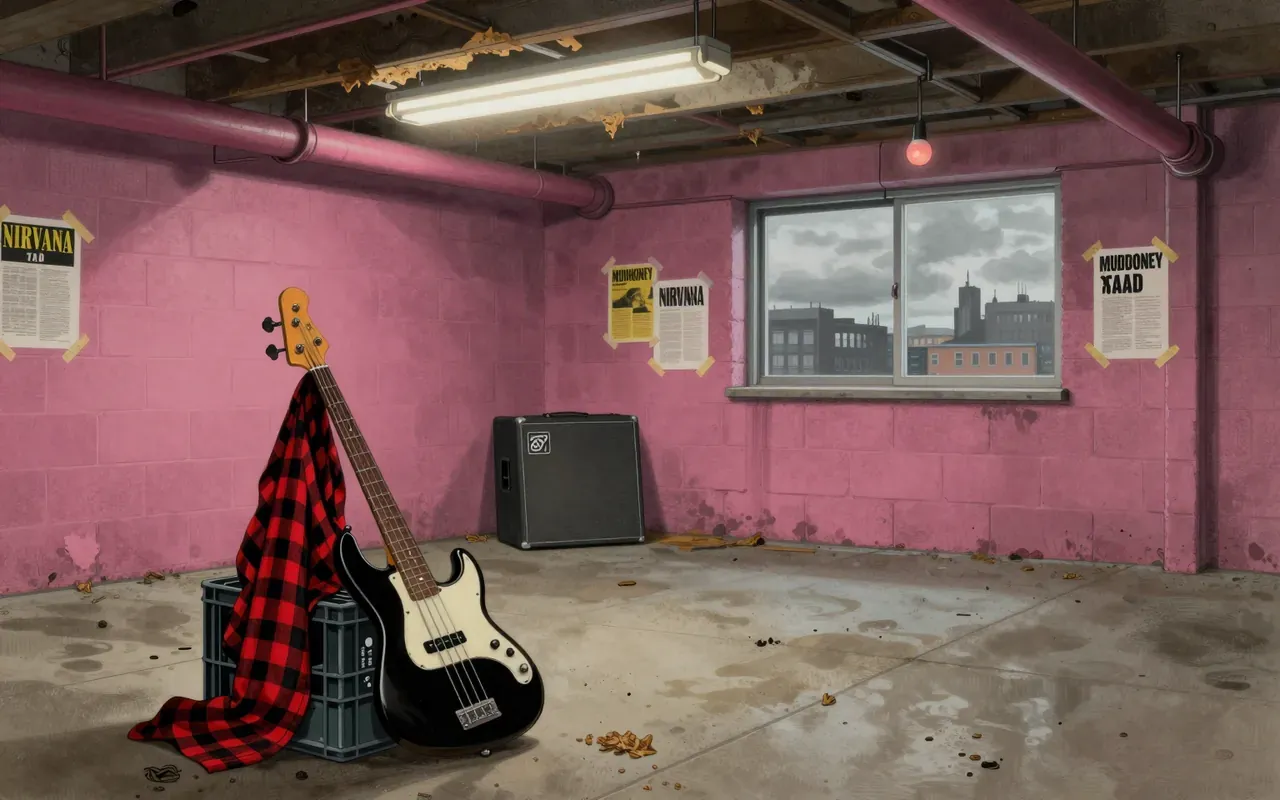
Grunge

Grunge wasn’t invented in Seattle—it was named there after the fact, then sold everywhere else.

film.briefs Film

All 33 in film →
13:00

After Hours

Martin Scorsese · 1985

Martin Scorsese’s 1985 black comedy follows office worker Paul Hackett through a single, increasingly surreal night in SoHo. Stranded without money, misunderstood at every turn, and hunted by neighbours, he careens from one absurd crisis to the next — until the plaster hardens, the van doors fly open, and he crashes, barefoot and broken, into his office at dawn. Michael Ballhaus’s tight cinematography, Thelma Schoonmaker’s razor-sharp editing, and Howard Shore’s nervy score sustain a tone of escalating, inescapable farce.

13:00

Alice in the Cities

Wim Wenders · 1974

Wim Wenders’ 1974 road film follows a stalled writer and a nine-year-old girl as they search across Germany for her estranged grandmother. Shot in black-and-white 16 mm by Robby Müller, it favours duration over exposition, silence over speech, and observation over explanation. Its power lies in restraint: in the weight of a glance, the rhythm of a bus ride, the quiet persistence of mutual attention.

13:00

Calcutta

Louis Malle · 1969

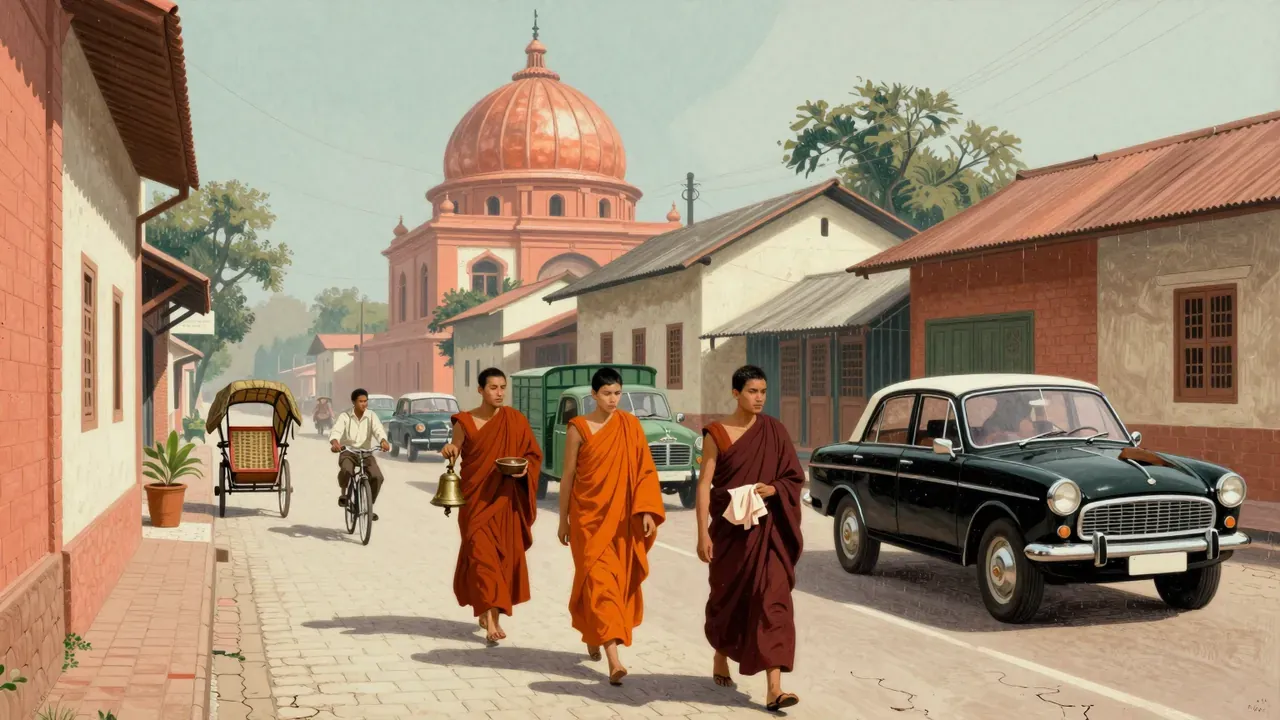
Louis Malle’s 1969 documentary Calcutta observes the city over 105 minutes without narration, interviews, or explanatory text. Shot on location in 1967–68, it relies on long takes, ambient sound, and unmediated access to street life, ritual, and labour. Its method is observational, its stance unflinching but unjudging. It offers no synthesis — only duration, texture, and the quiet insistence of the real.

13:00

Chop Shop

Ramin Bahrani · 2007

Chop Shop follows twelve-year-old Ale as he works, saves, and schemes in Willets Point, Queens — a scrap-metal district where auto repair shops double as homes and survival is measured in hubcaps, candy bars, and stolen DVDs. Directed by Ramin Bahrani with non-professional actors and handheld digital footage, it is a neorealist portrait of resourcefulness without recourse, ambition without infrastructure, and care without safety nets.

13:00

Daguerréotypes

Agnès Varda · 1975

Made in 1975 on Paris’s Rue Daguerre, Agnès Varda’s Daguerréotypes is a quietly radical documentary composed of static portraits of local shopkeepers and residents, all filmed within ninety metres of her home. Each subject answers three questions about origin and arrival, their responses left unedited and unframed by commentary. Nurith Aviv and William Lubtchansky’s cinematography is unobtrusive and naturalistic; Varda’s direction is resolutely local, anti-extractive, and typologically curious. The film treats the street as both subject and limit—offering not analysis, but sustained attention.

13:00

Hands Over the City

Francesco Rosi · 1963

Francesco Rosi’s 1963 Golden Lion winner follows Neapolitan developer and councillor Edoardo Nottola as he leverages public office for private real-estate gain—until a building collapse triggers an official inquiry. Shot in stark, observational style by Gianni Di Venanzo and written with journalistic rigour, the film avoids psychology and spectacle in favour of committee rooms, permits, and quiet complicity. Rod Steiger and Carlo Fermariello anchor a cast that includes non-professionals, reinforcing its documentary texture. It is a film about how power consolidates not in crises but in paperwork.

13:00

In Vanda's Room

Pedro Costa · 2000

Pedro Costa’s 2000 film In Vanda’s Room observes life in Lisbon’s Fontainhas shantytown over 170 minutes, using fixed digital shots to document Vanda Duarte and her community as their homes are demolished. Neither documentary nor fiction, it treats time, place and presence as primary materials — offering no exposition, no score, no narrative arc, only sustained attention to what remains when story is set aside.

13:00

Koyaanisqatsi

Godfrey Reggio · 1982

Koyaanisqatsi (1982) is a non-narrative American documentary directed by Godfrey Reggio, shot by Ron Fricke and scored by Philip Glass. Comprising time-lapse, slow motion and static imagery of natural and urban landscapes across the US, it constructs a sensory argument about technological acceleration and ecological rupture — without voiceover, text or exposition. Its title, from the Hopi language, means 'life out of balance'. Though widely regarded as a landmark of avant-garde documentary, its formal rigour sits alongside omissions: no engagement with the people behind the images, no contextualisation of its US-specific sites, and no reckoning with the cultural source of its title.

history.briefs History

All 9 in history →
12:35

Baghdad

762 AD

Baghdad’s founding in 762 was a decisive, documented act of imperial design — not evolution, not accident. It created a new kind of capital: planned, symbolic, and engineered for intellectual and administrative dominance. Its scale, longevity and influence are verifiable. Its motives and internal politics are not.

11:30

Hangzhou

221 BC

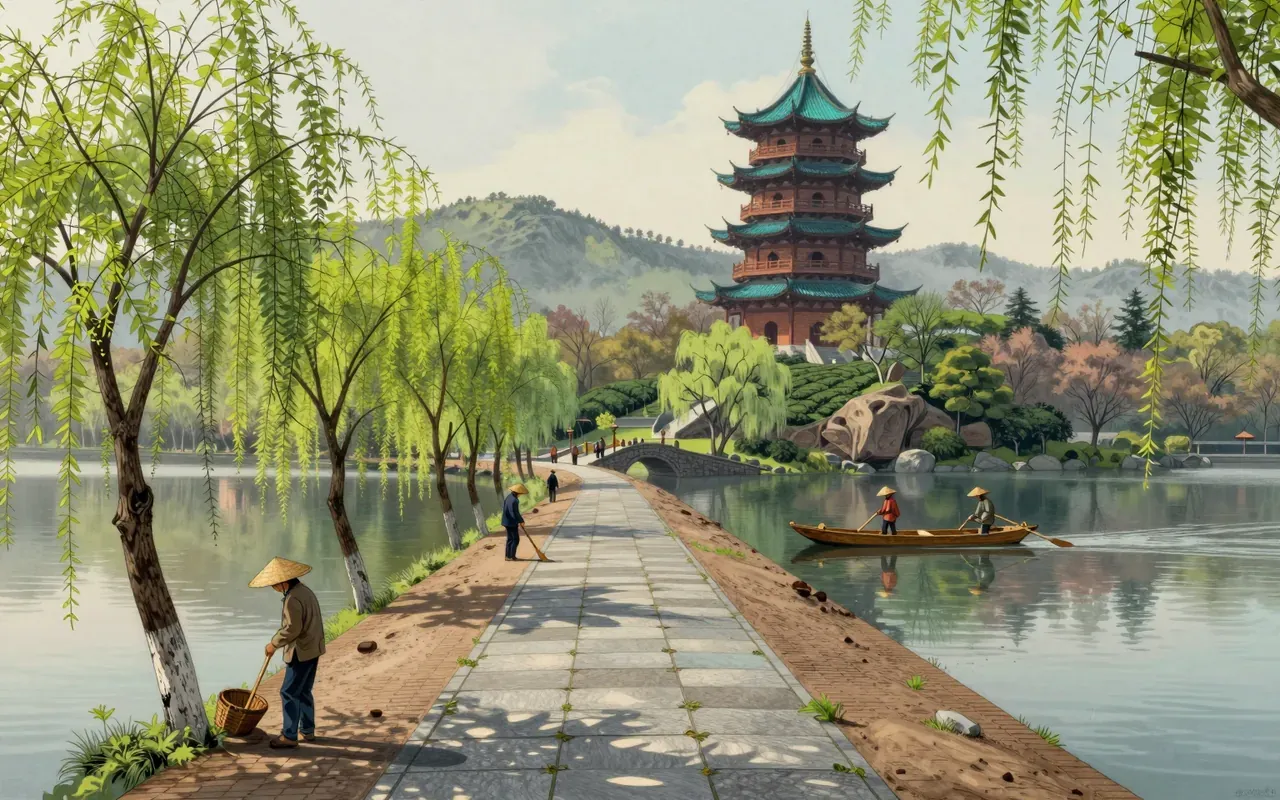
Hangzhou is a record of governance as iterative repair — not a story of rise and fall, but of wall, lake, capital, fire, and algorithm, each layer responding to a documented crisis.

10:20

Istanbul

6 October 1923

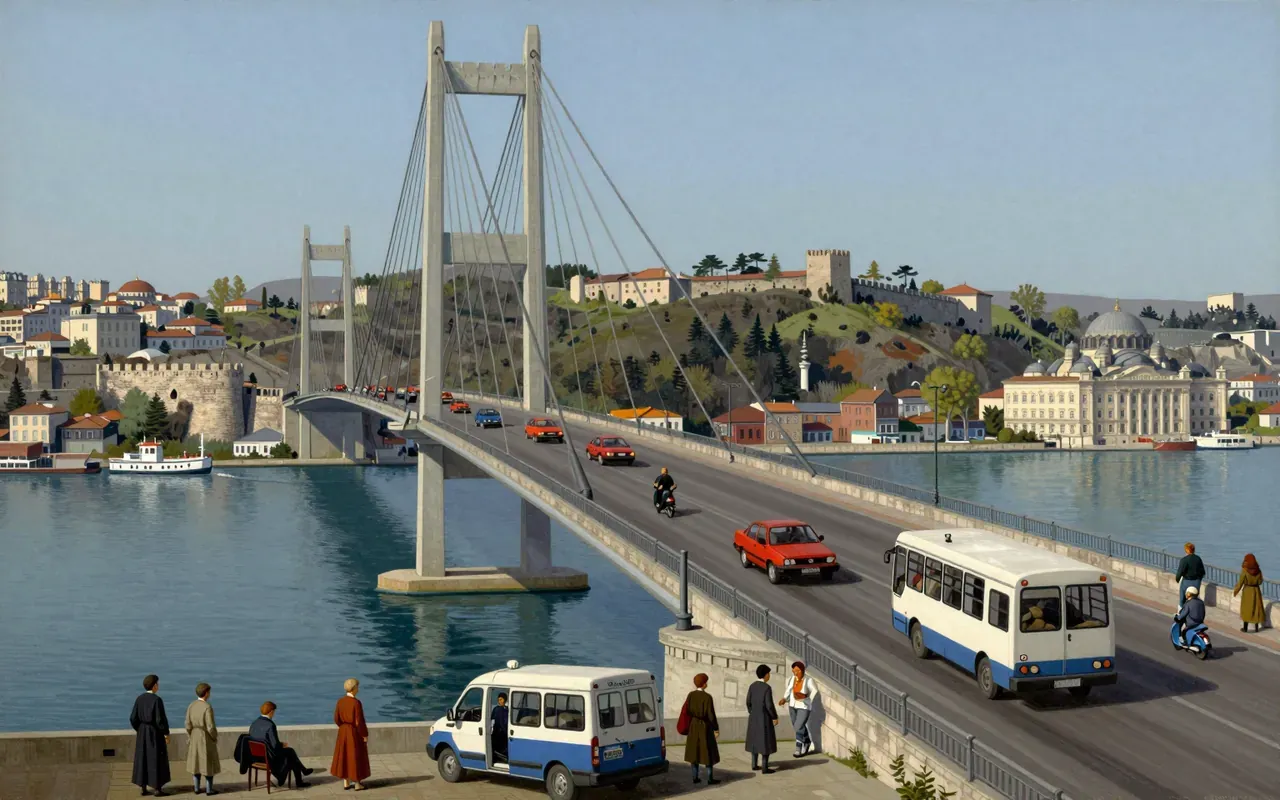
This brief treats only what the sources verify: Istanbul’s 20th-century political reconstitution. The year 1453 appears only as a footnote in a song lyric—cited solely to date the composition of 'Istanbul (Not Constantinople)', not to assert historical causation. No claim connects 1453 to the city’s modern governance, demography, infrastructure, or naming. To centre 1453 would be to ignore the evidence.

13:04

Teotihuacan

100 BCE to 250 CE

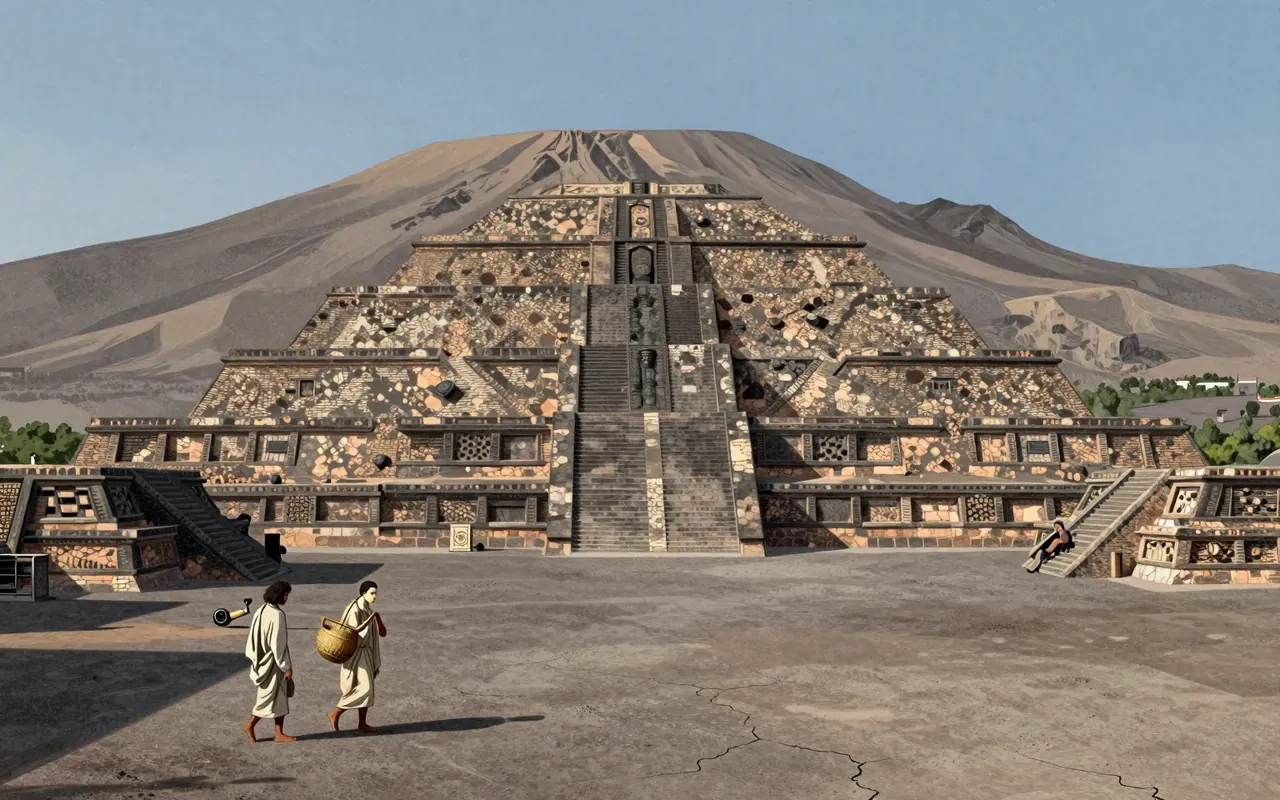
Teotihuacan was the largest city in the Americas before 500 CE. Its monuments were built over 350 years. Its central structures were burned around 550 CE. It housed ~100,000 people — 80–90% of the Valley of Mexico’s population. It ended between the 7th and 8th centuries CE. We know none of its rulers’ names. We do not know why it burned. We do not know what its people called it.

13:00

Ellis Island

1892 to 1954

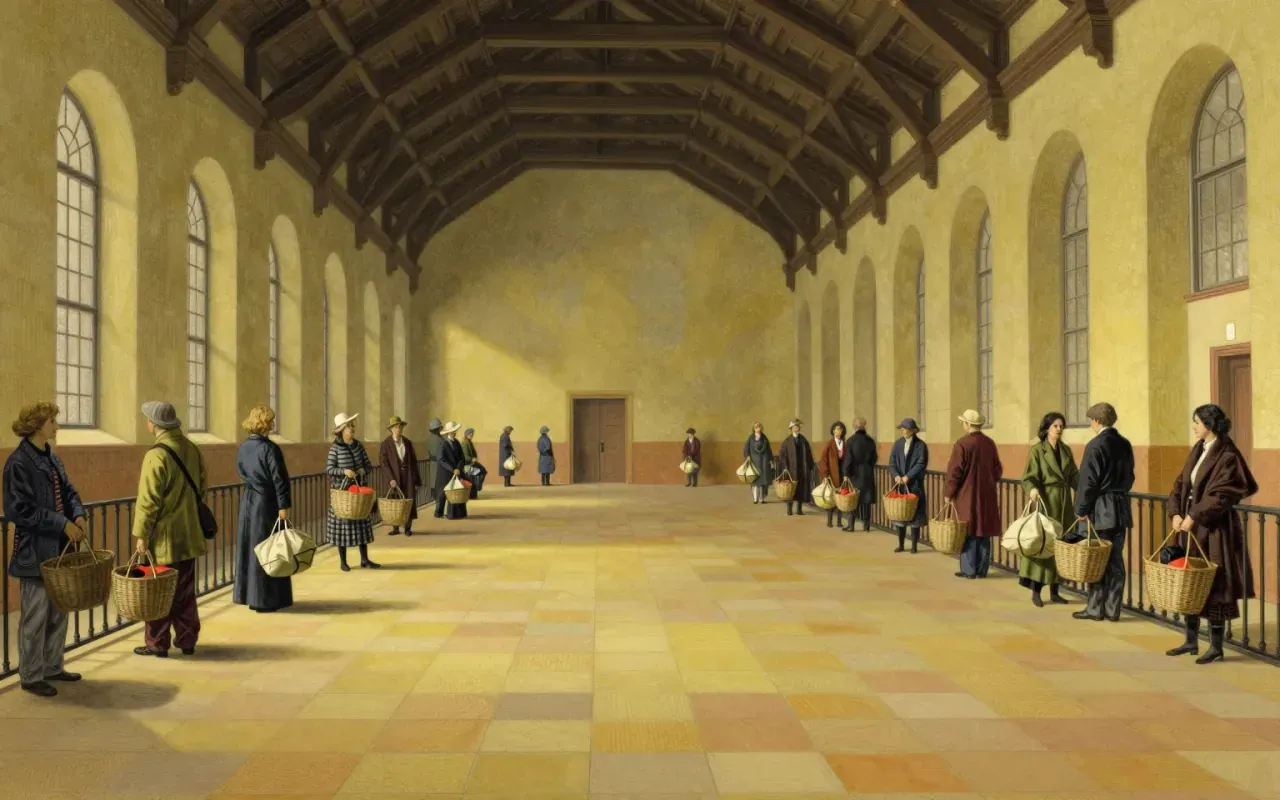
Ellis Island operated as an immigration station from 1892 to 1954, processing roughly twelve million immigrants across two distinct buildings, the first destroyed by a fire in 1897 that also burned all immigration records dating back to 1855. Its function shifted sharply after the Immigration Act of 1924 downgraded it from a primary inspection point to a detention facility, and even its own physical land remained under legal dispute until a 1998 Supreme Court case split jurisdiction between New York and New Jersey.

13:00

Jericho

Founded 9600 BC

Long before it was a byword for tumbling walls, Jericho was a spring-fed settlement in the Jordan Valley occupied, on and off, for some eleven thousand years. A century of digging has traced a Neolithic tower and wall from around 8300 BC through Bronze Age destructions to a Byzantine revival, but the excavators disagree about what some of it was for, and the famous conquest story from the Hebrew Bible sits awkwardly beside what the trenches actually show.

13:00

Cahokia

Founded 1050

Beginning around 1050, a settlement across the Mississippi from present-day St Louis grew explosively into a city of thousands, its inhabitants moving millions of cubic feet of earth by hand to build over a hundred mounds. Because Cahokians left no written records, everything known about the city comes from excavation, radiocarbon dating and soil analysis rather than testimony, leaving population estimates and the causes of its abandonment by 1350 genuinely disputed among archaeologists. Long misattributed to a vanished non-Native civilisation, the site is now recognised as ancestral heritage by multiple Indigenous nations and holds UNESCO World Heritage status.

13:00

Eruption of Mount Vesuvius in 79 AD

24 August 79

In 79 AD, Mount Vesuvius buried Pompeii, Herculaneum and neighbouring towns under ash and superheated volcanic flows over roughly two days, killing an unknown but substantial number of people. The event is known chiefly through two letters Pliny the Younger wrote to Tacitus a quarter-century later, and through the archaeology itself, which has recently pushed the long-accepted August date toward autumn instead.

science.briefs Science

All 1 in science →
11:16

Geoffrey West

Cities scale like organisms—but the 15% salary bump isn’t a law, it’s a rough correlation with no mechanism, margin of error, or boundary conditions.

design.briefs Design

All 11 in design →
10:00

Diller Scofidio + Renfro

Diller Scofidio + Renfro is a New York design studio that works across architecture, the visual arts and the performing arts.
5:38

King Power Mahanakhon

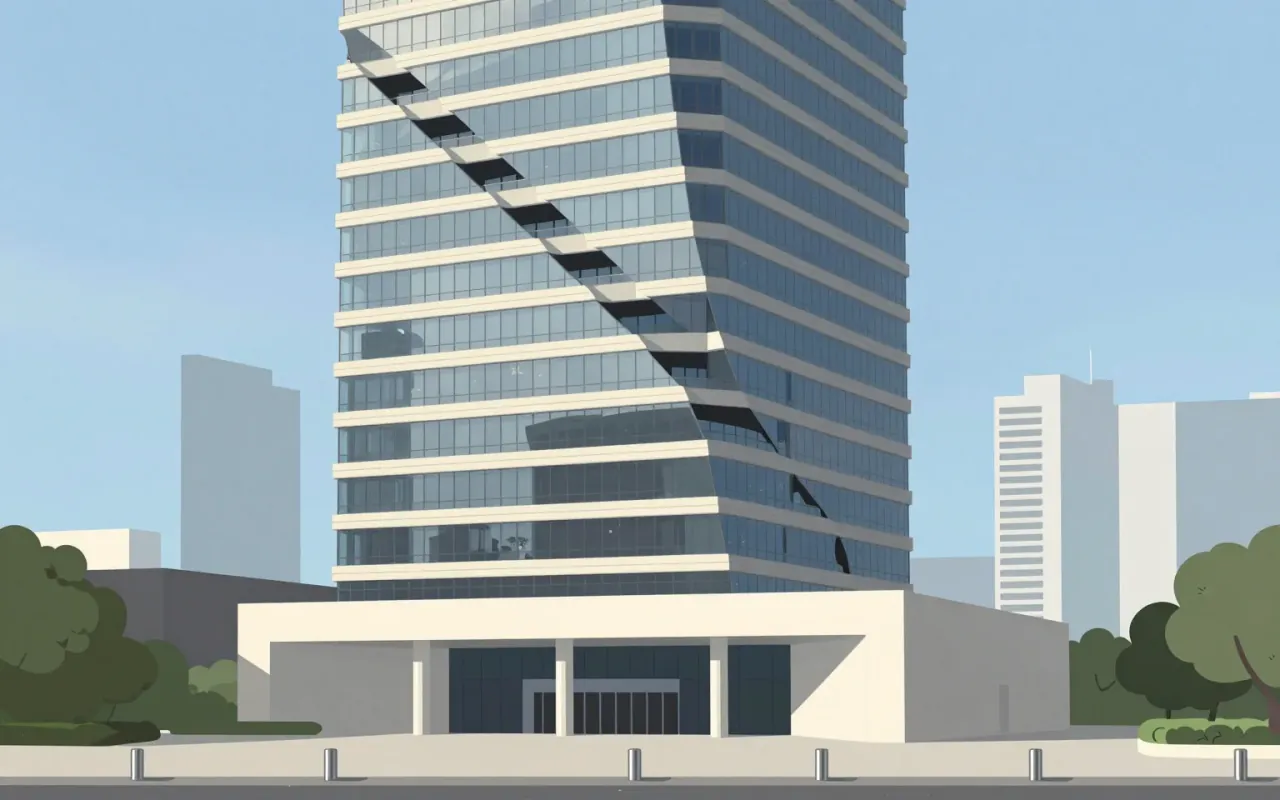
A helix-shaped void that made a building famous—not for what it housed, but for how tall it stood, and how briefly.
10:05

Ole Scheeren

Scheeren’s work is not theory—it is delivery at scale across Asia’s most demanding cities.
9:37

Toyo Ito

Toyo Ito didn’t build cities—he built interfaces between them and their simulations.
10:24

Aldo Rossi

Monuments are not ornaments—they're the city's memory banks, and Rossi designed architecture to last as long as they do.
10:26

Centre Pompidou

Renzo Piano & Richard Rogers · 1977

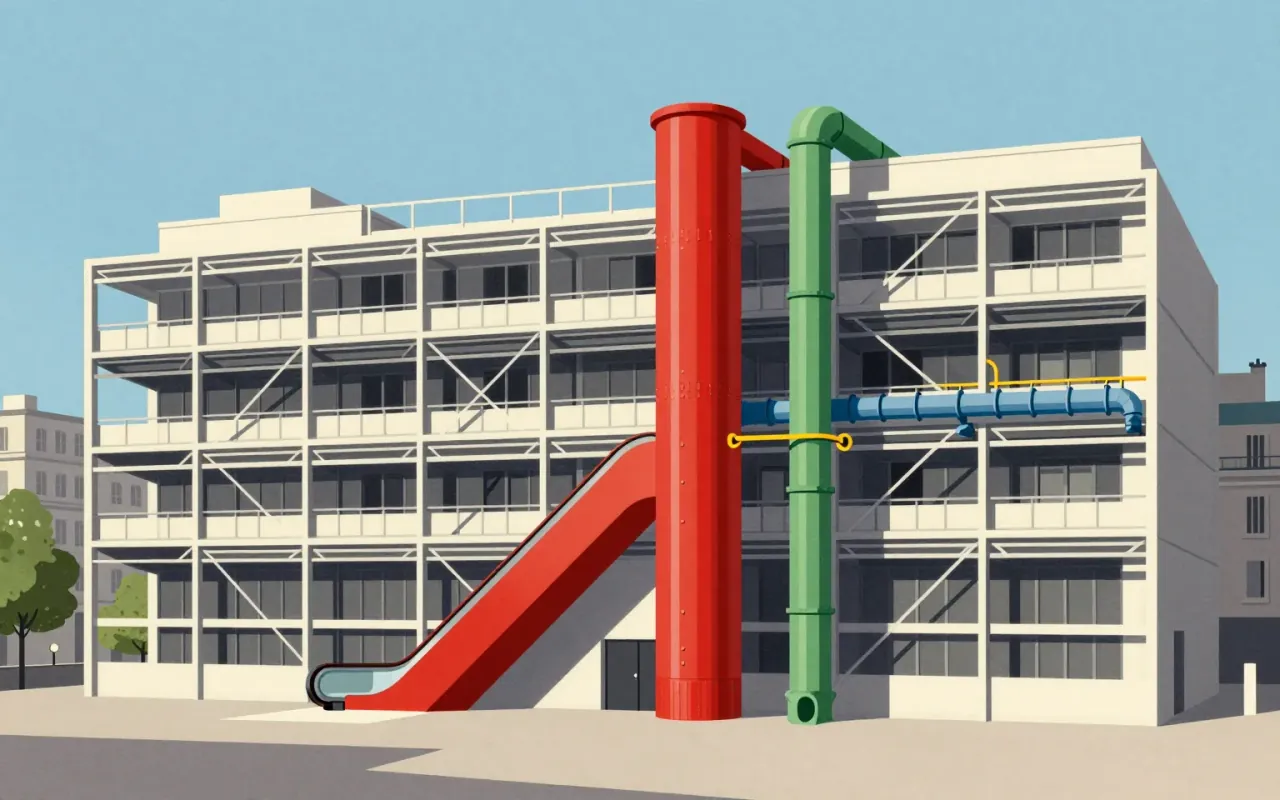
The Centre Pompidou is a 1977 building in Paris designed by Renzo Piano and Richard Rogers as a publicly accessible cultural 'town'. Its 'inside-out' strategy externalises and colour-codes structural, mechanical, and circulation systems. Green pipes carry water. Blue ducts manage climate. Yellow conduits house electricity. Red elements handle movement and safety. The design emerged from France’s first international architectural competition, judged by Niemeyer, Prouvé, and Johnson, and selected from 681 entries. It was intended for 8,000 daily visitors. In its first two decades, it attracted more than 145 million—over five times the projection. Its exposed systems improved interior space efficiency. Its stated aim was inclusivity: 'a place for all people – for the poor and rich, the young and old'.

9:53

David Adjaye

Adjaye’s architecture doesn’t build objects—it builds conditions for civic belonging.

games.briefs Games

All 5 in games →
12:14

Thief II

Looking Glass Studios · 2000

Thief II is a foundational immersive sim built on light, sound, and consequence. It asks players to move like a thought — unseen, unheard, deliberate. Its design remains coherent decades later. Its pacing and opacity do not.

10:09

Cities: Skylines

Colossal Order · 2015

Cities: Skylines is a systems-first city-builder where players manage zoning, infrastructure, taxation, and district-level regulations to grow a functional urban area. It rewards methodical planning and iterative adjustment—not storytelling, speed, or spectacle.

9:56

Grand Theft Auto III

Rockstar Games · 2001

Grand Theft Auto III is a foundational open-world action-adventure game that redefined spatial possibility in games—but its systems remain rigid, its controls unrefined, and its world more atmospheric than alive.

11:11

Grand Theft Auto: San Andreas

Rockstar Games · 2004

Grand Theft Auto: San Andreas is an action-adventure game published by Rockstar Games in 2004. Players control Carl 'CJ' Johnson in a third-person open world representing a fictionalised California and Nevada. The world comprises three cities—Los Santos, San Fierro, and Las Venturas—connected by rural and desert areas. Cities unlock progressively through the story; airports allow fast travel between them. Players complete linear story missions with fixed objectives, and may freely explore and undertake optional side missions. Navigation includes running, swimming, and vehicle use; combat includes melee, firearms, explosives, dual-wielding, and drive-by shootings. Weapons are acquired via purchase, looting corpses, or finding them scattered across the world. Safehouses—purchasable locations—are used to save progress and store vehicles. The game introduces role-playing elements such as character customisation, skill progression, gang territory control, and relationship management.
9:18

SimCity 3000

Maxis · 1999

SimCity 3000 refines the city simulation loop with decay, density, and deal-making — but never asks why the city exists, only how to keep its accounts balanced.
culture.briefs Culture

All 26 in culture →
10:26

Haight-Ashbury

Haight-Ashbury is the San Francisco district around Haight Street that became one of the main centres of the 1960s counterculture.
10:32

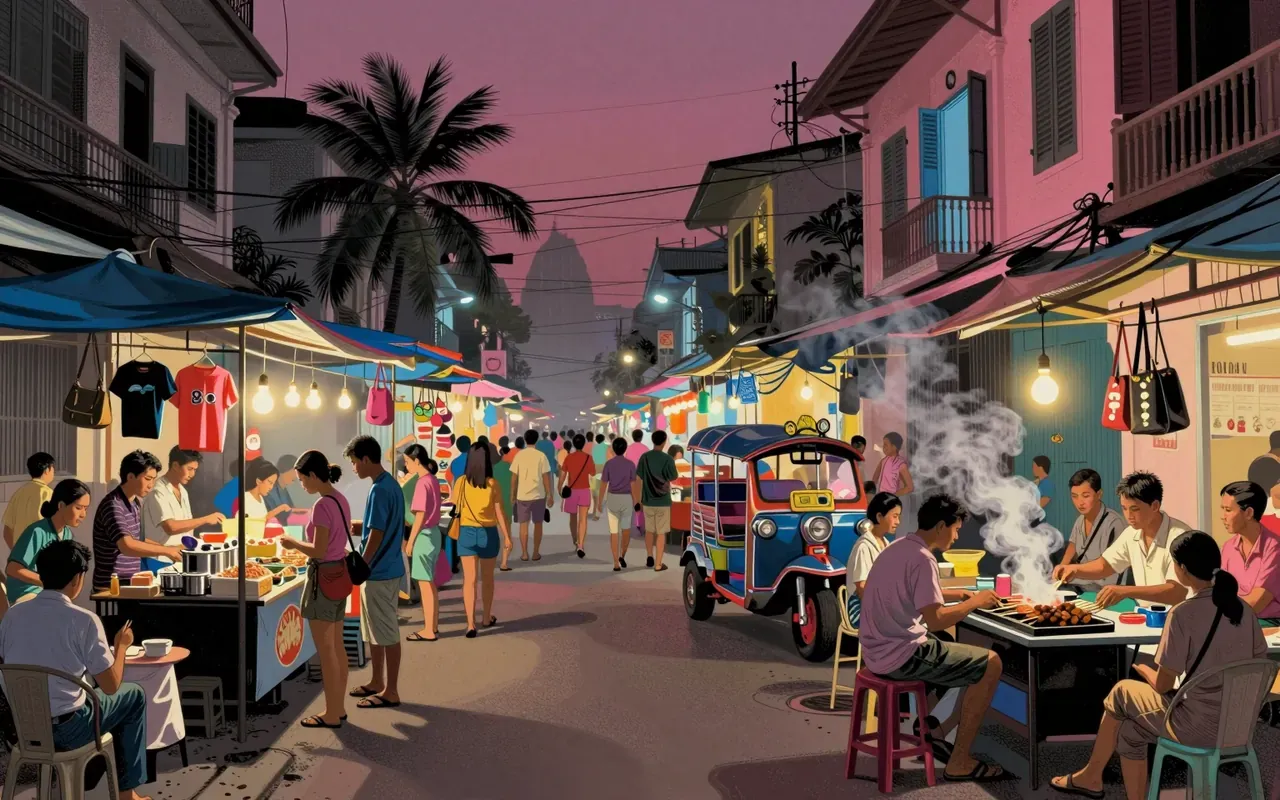
Bangkok red-light districts

Patpong, Nana Plaza and Soi Cowboy are three of Bangkok's red-light districts, bar areas that cater mainly to tourists and expatriates.
9:52

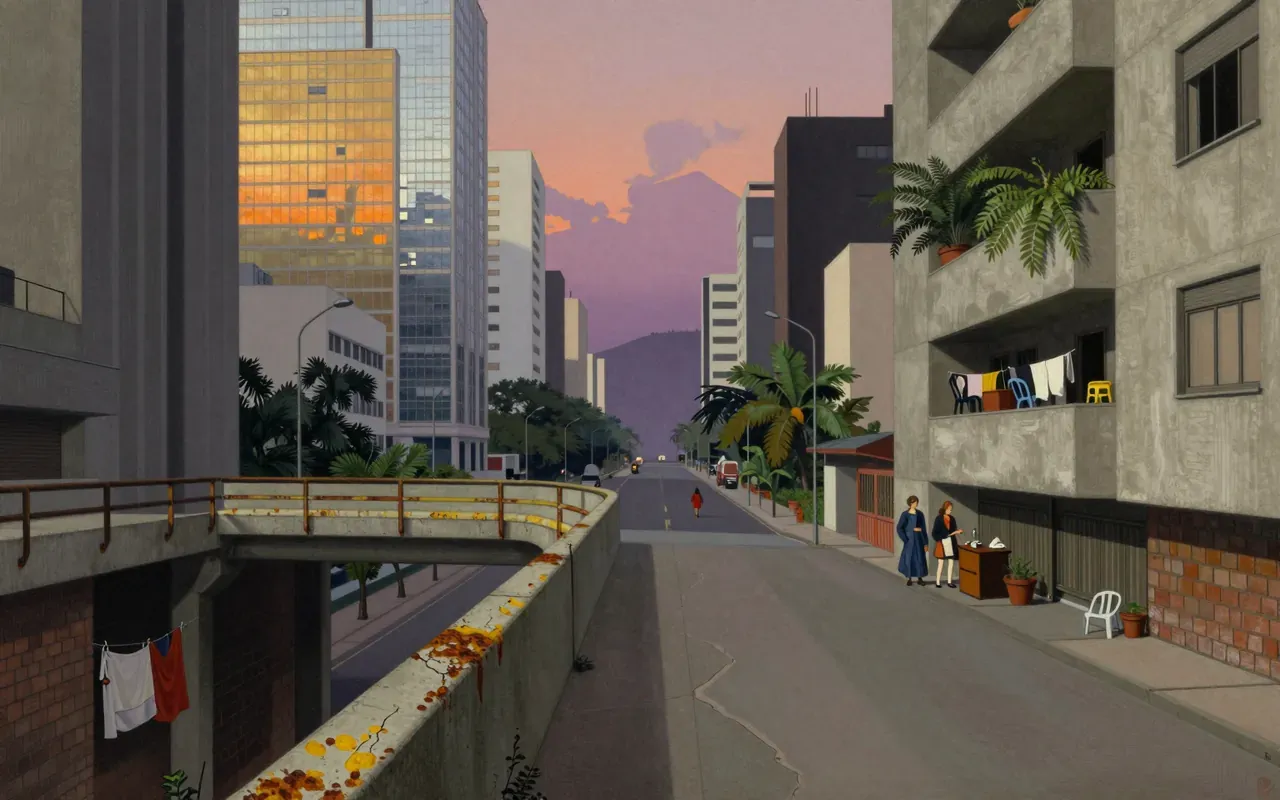
São Paulo

A city named for an apostle, built on Tupi land, whose motto declares leadership while its origin declares subjugation.
9:42

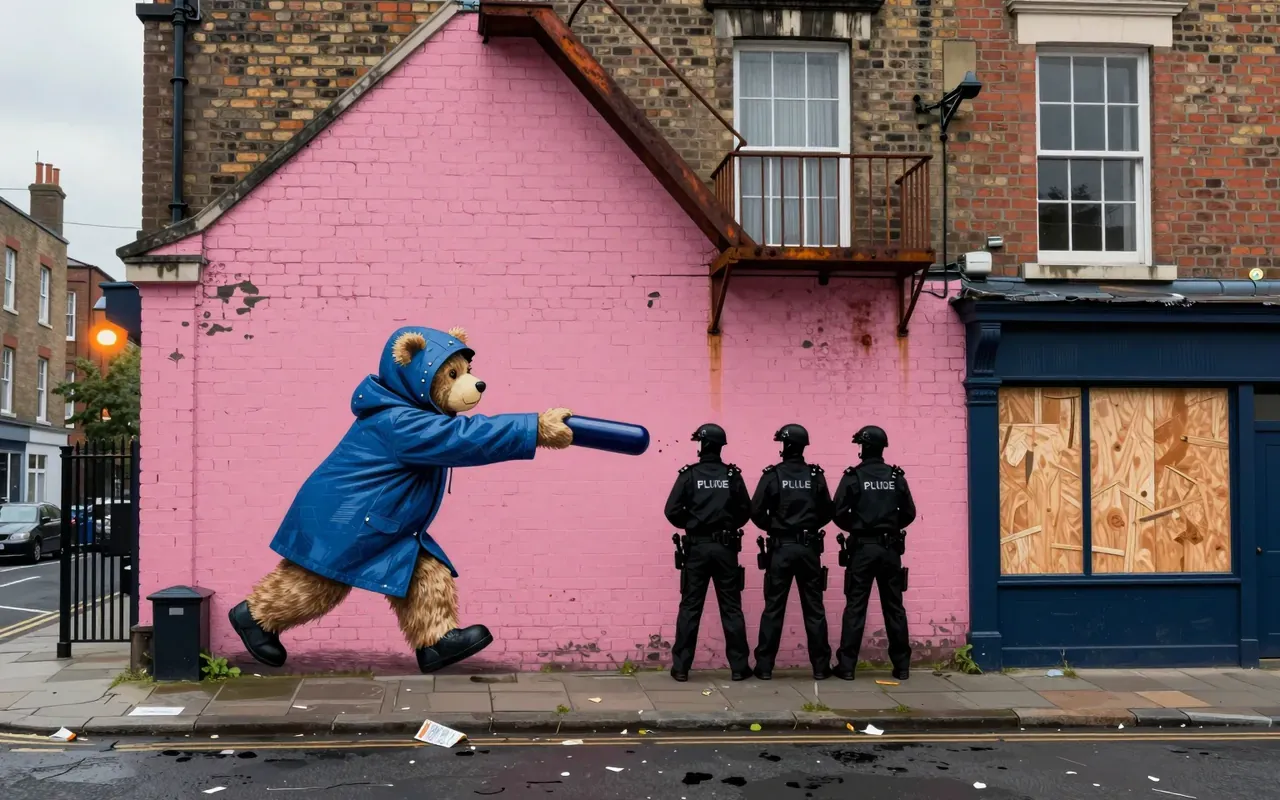
Banksy

Banksy didn’t reinvent protest art—he weaponised its disappearance.
9:16

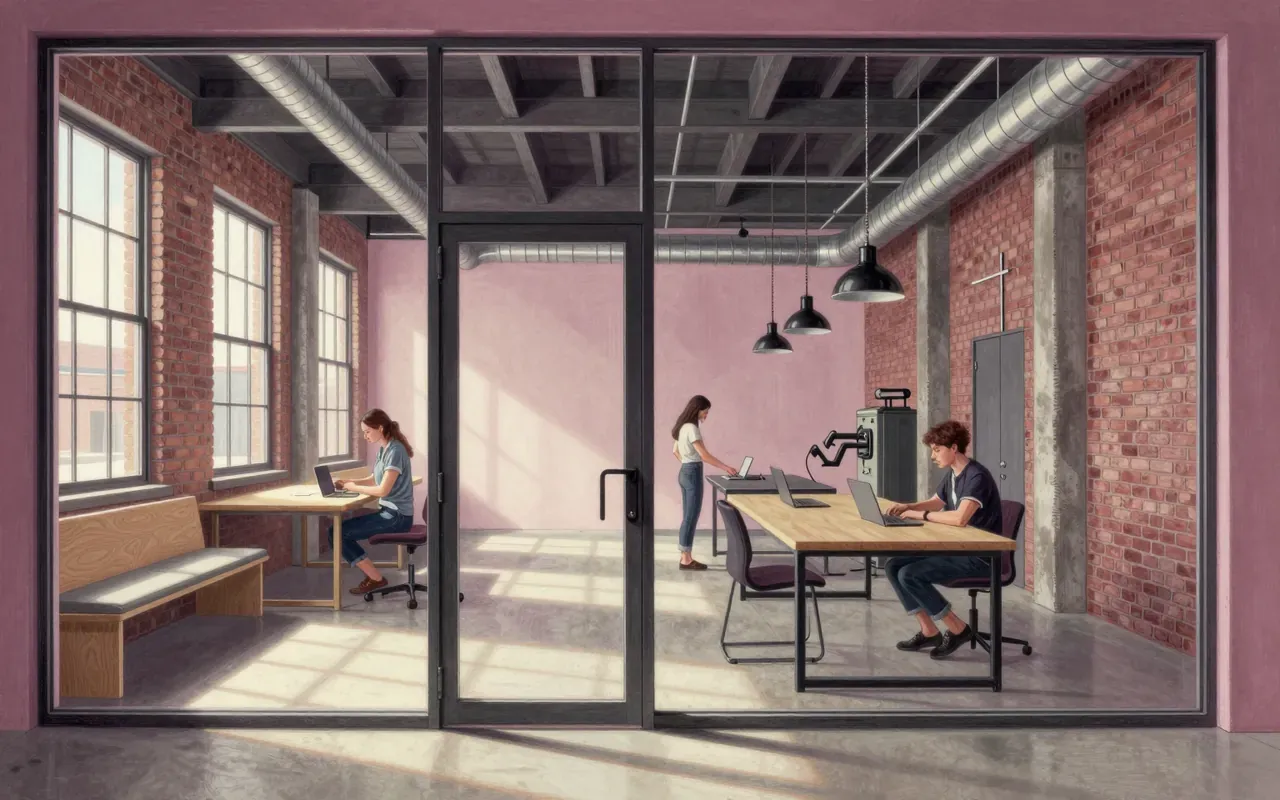
Coworking

Coworking promised community but delivered real estate with Wi-Fi—and that’s still its most honest function.
9:03

Forum (Roman)

The Roman forum wasn’t democratic—it was mandatory infrastructure for control.
8:59

Grindhouse

Grindhouse wasn’t a genre—it was a pricing strategy dressed in blood and polyester.
12:27

Lagos

Lagos is not a city that works—it’s a city that endures, despite having no unified government, broken infrastructure, and rising seas.

fashion.briefs Fashion

All 2 in fashion →
10:12

London Fashion Week

London Fashion Week wasn’t born from creativity—it was built by bureaucrats to sell clothes.