1984
Orwell's 1949 novel follows Winston Smith in a state where the party controls language, history, and thought. The brief covers the mechanics of totalitarian control, what Orwell gets right about power, and which parts of the book hold up.
The future as a warning, usually about the present.

Orwell's 1949 novel follows Winston Smith in a state where the party controls language, history, and thought. The brief covers the mechanics of totalitarian control, what Orwell gets right about power, and which parts of the book hold up.

The 1932 novel describes a future where stability is engineered through biological castes, pleasure drugs, and psychological conditioning. It poses a question harder to refute than mere tyranny—what if contentment and freedom are irreconcilable?

Bradbury's 1953 novel follows a fireman in a totalitarian future who questions his role burning books. The brief traces Montag's awakening from enforcer to resister, examines what the book argues about censorship and conformity, and considers what it gets right and where it falters.

Atwood's 1985 novel follows Offred, a handmaid in the Republic of Gilead, forced to bear children for state-sanctioned rulers. It is a precise anatomization of power, gender, and the small rebellions that survive totalitarianism.

Golding's 1954 novel stages what happens when children are left to organize themselves. The surface reads as survival adventure. Below it is a sharp argument about how quickly order becomes tyranny and civilization masks brutality.

Silent Shout is The Knife’s third studio album, released 17 February 2006. It is darker than Deep Cuts. It is synth-pop and techno. Karin Dreijer’s vocals are pitch-shifted and multi-tracked. The Knife handled recording, programming, production, vocals, and mixing. Christoffer Berg mixed tracks 1–7, 9, and 11. Pelle Gunnerfeldt mixed tracks 8 and 10. Henrik Jonsson mastered the album. Pitchfork named it the best album of 2006. A companion DVD, Silent Shout: An Audio Visual Experience, was released 8 November 2006. 'We Share Our Mothers’ Health' was iTunes’ Single of the Week in late 2006.

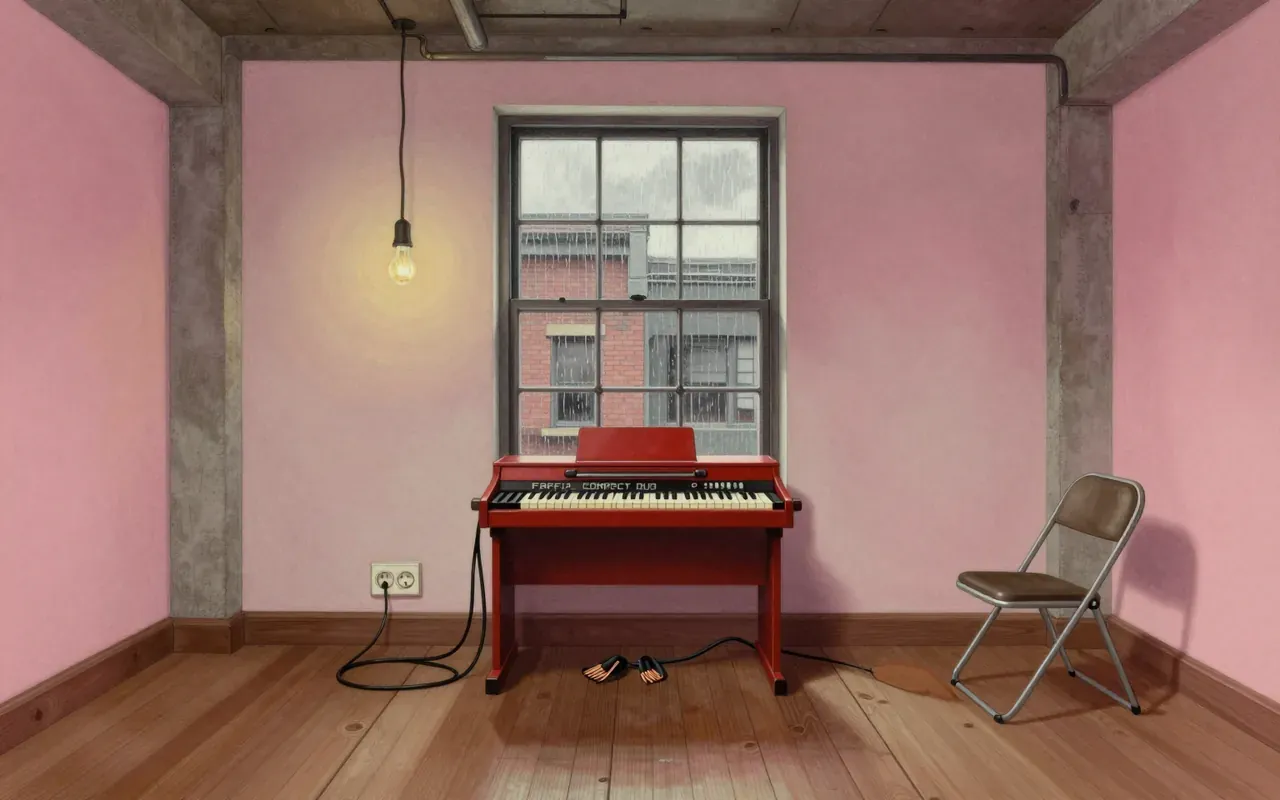
Suicide (1977) is a foundational electronic record made with a Farfisa organ, a drum machine, and a microphone — no guitars, no bass, no reverb. Its sound is dry, repetitive, and physically confrontational. ‘Frankie Teardrop’ and ‘Ghost Rider’ define its impact. It establishes electronic minimalism as a vehicle for psychological tension, not dance or futurism. It falls short as a record of melodic development, harmonic movement, or vocal nuance — by design. Its ideas are architectural: repetition as pressure, silence as weight, monotony as threat. It is worth your time if you treat rhythm and space as primary materials.

2112 is Rush’s fourth studio album, recorded in January 1976 at Toronto Sound Studios with producer Terry Brown. It followed financial and creative crisis after Caress of Steel underperformed. The band composed material on the road in 1975—Peart writing lyrics first, Lee and Lifeson building songs on acoustic guitars to match their mood—departing from prior electric-based writing. They minimized overdubbing for live fidelity, used varied guitars (ES-335, Les Paul, B-45, Dove, Stratocaster), Fender amps, and Lee’s stereo-output Rickenbacker bass routed unconventionally. 'The Temples of Syrinx' was developed backstage in Sault Ste. Marie; the 'Overture' was the final piece written. It was the first Rush album to 'really sound like Rush'.

Aladdin Sane is David Bowie’s sixth studio album, co-produced with Ken Scott and recorded between December 1972 and January 1973 in London and New York City during breaks in the Ziggy Stardust Tour. It features the full Spiders from Mars lineup—Mick Ronson, Trevor Bolder, and Mick Woodmansey—alongside jazz-influenced pianist Mike Garson, two saxophonists, and three backing vocalists. Most songs were written on the road in the US and reflect Bowie’s ambivalent perceptions of America, resulting in a harder, edgier rock sound than his prior glam work. Lyrics explore duality: the rewards of stardom versus the toll of touring, and recurring motifs of urban decay, drugs, sex, violence, and death. The album includes a Rolling Stones cover, 'Let's Spend the Night Together', and Bowie framed its title as both a pun—'A Lad Insane'—and the conceptual extension 'Ziggy Stardust goes to America'. 'The Jean Genie' was the first track recorded, on 6 October 1972 in New York, with Bowie producing that session himself. It was Bowie’s final album with the complete Spiders from Mars lineup.


Demon Days is a 2005 Gorillaz concept album about night as allegory — recorded across London studios, produced by Danger Mouse, and defined by layered guest vocals, reggae bounce, choral swell, and deliberate emotional contrast in harmony.

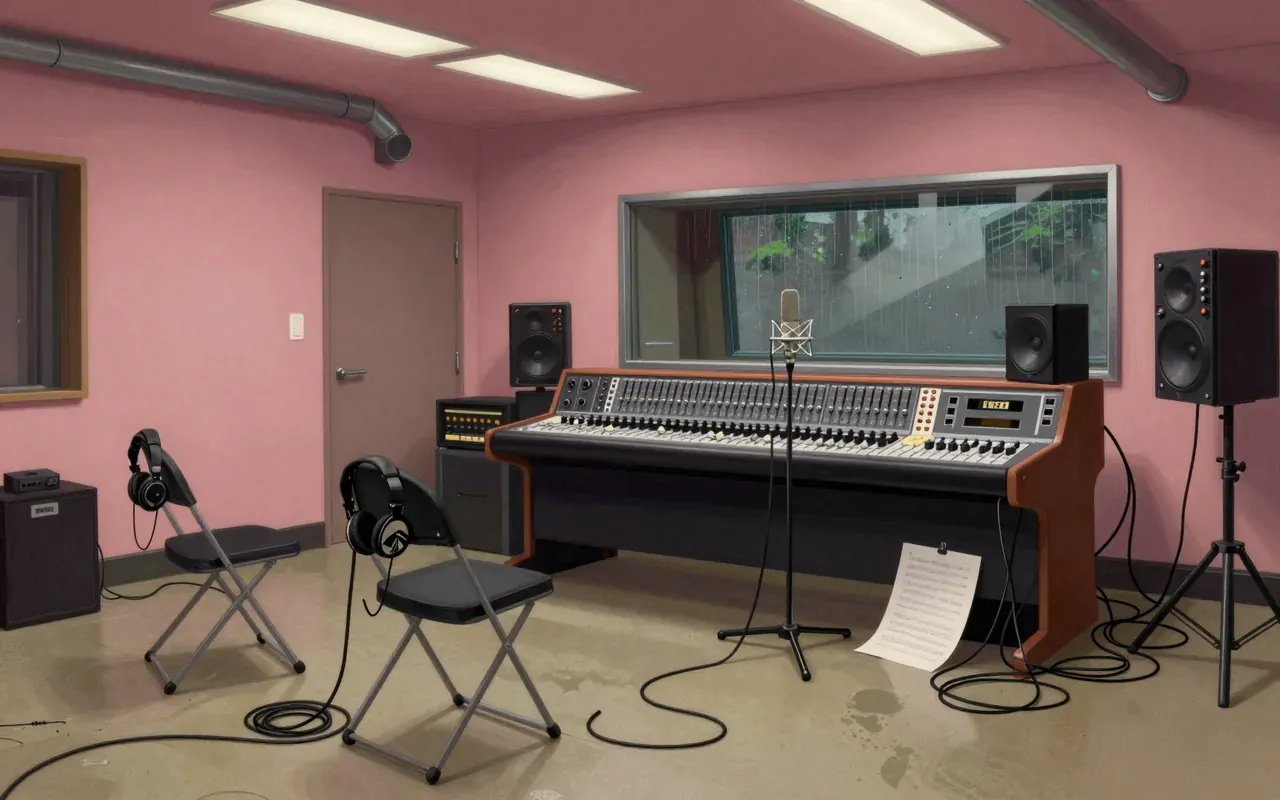
Fear of Music was recorded live in two days in Chris Frantz and Tina Weymouth’s Long Island City loft. Brian Eno co-produced and applied electronic treatments after the fact. David Byrne’s lyrics fixate on urban isolation and unnamed dread. The sound merges post-punk rock and funk. The recording environment — raw, wired, untreated — defines the album more than any instrument or melody.

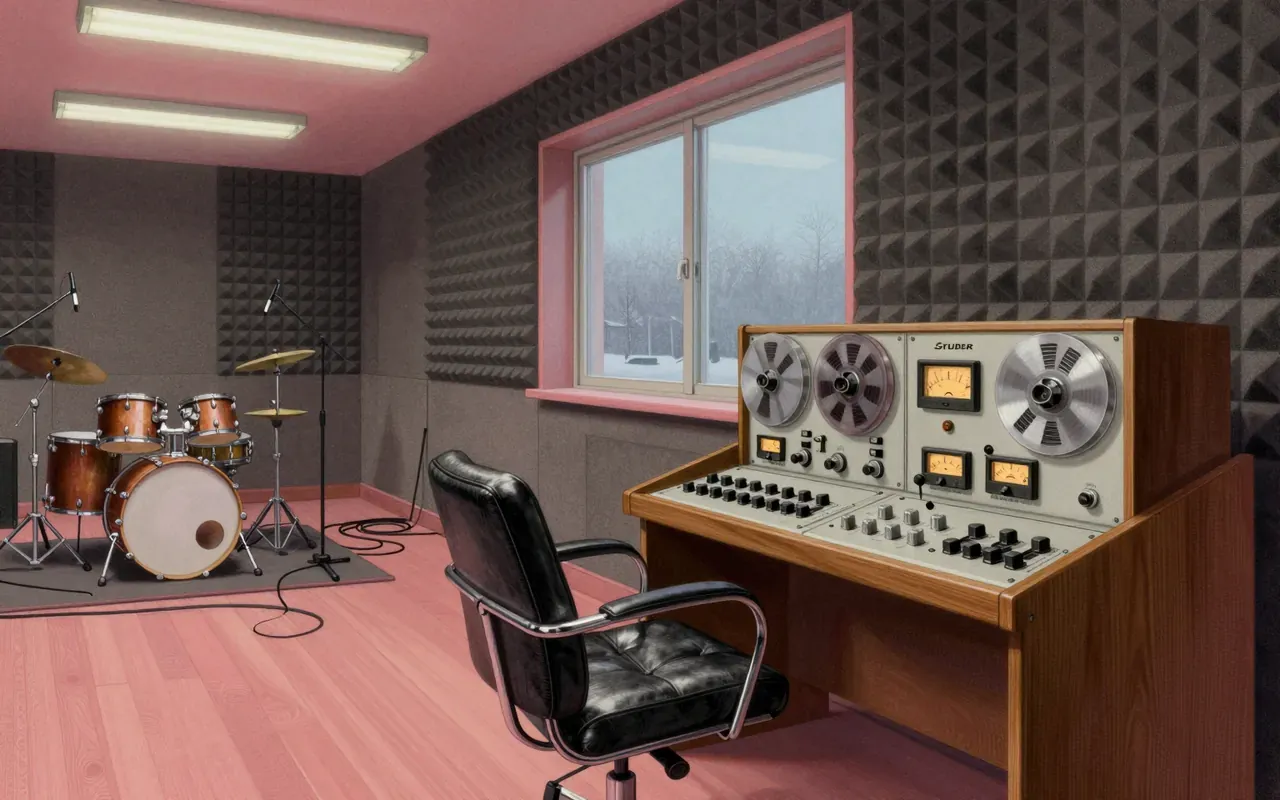
Moving Pictures is a 1981 prog-rock album by Rush, recorded at Le Studio in Morin-Heights, Quebec using 48-track tape and an early Sony digital mastering machine. Its sound is defined by surgical drum-bass separation, chest-mounted ambience capture, and rhythmic rigour over expressive looseness.

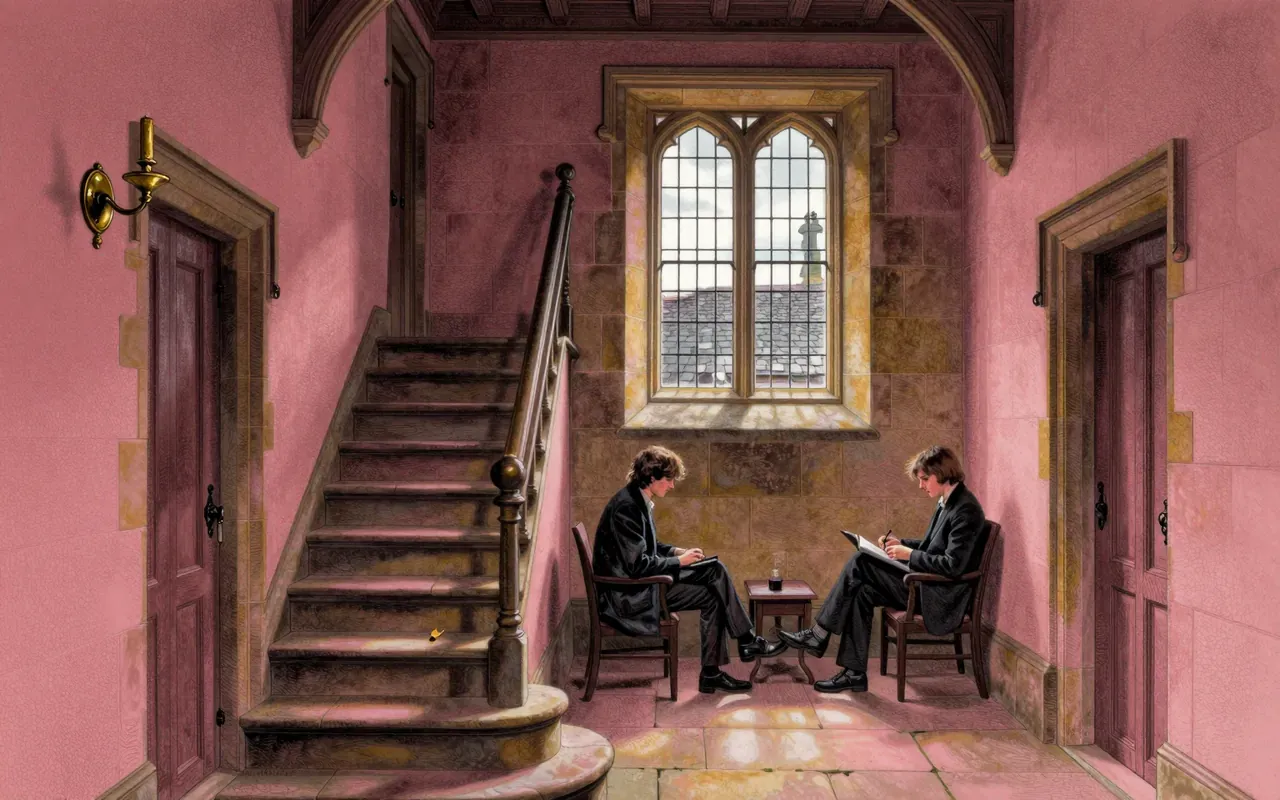
OK Computer is Radiohead’s third studio album, released in May 1997. Most of it was recorded in 1996–1997 at two locations: Canned Applause, a converted apple shed near Didcot, Oxfordshire, and St Catherine’s Court, a 15th-century mansion near Bath owned by Jane Seymour. The band abandoned Canned Applause due to its proximity to home and lack of basic facilities. At St Catherine’s Court, they recorded 80% of the album live, exploiting room acoustics—vocals for 'Exit Music (for a Film)' were captured on a stone staircase; 'Let Down' was tracked in a ballroom at 3 am. Strings were recorded separately at Abbey Road Studios in London. Production avoided artificial reverb and minimised overdubbing. Nigel Godrich co-produced. The album marks a departure from the guitar-centred introspection of The Bends, favouring atmospheric density, thematic abstraction, and collective, room-responsive experimentation. Lyrics shift from personal confession to fragmented, character-based narratives reflecting 'end-of-the-millennium blues'.

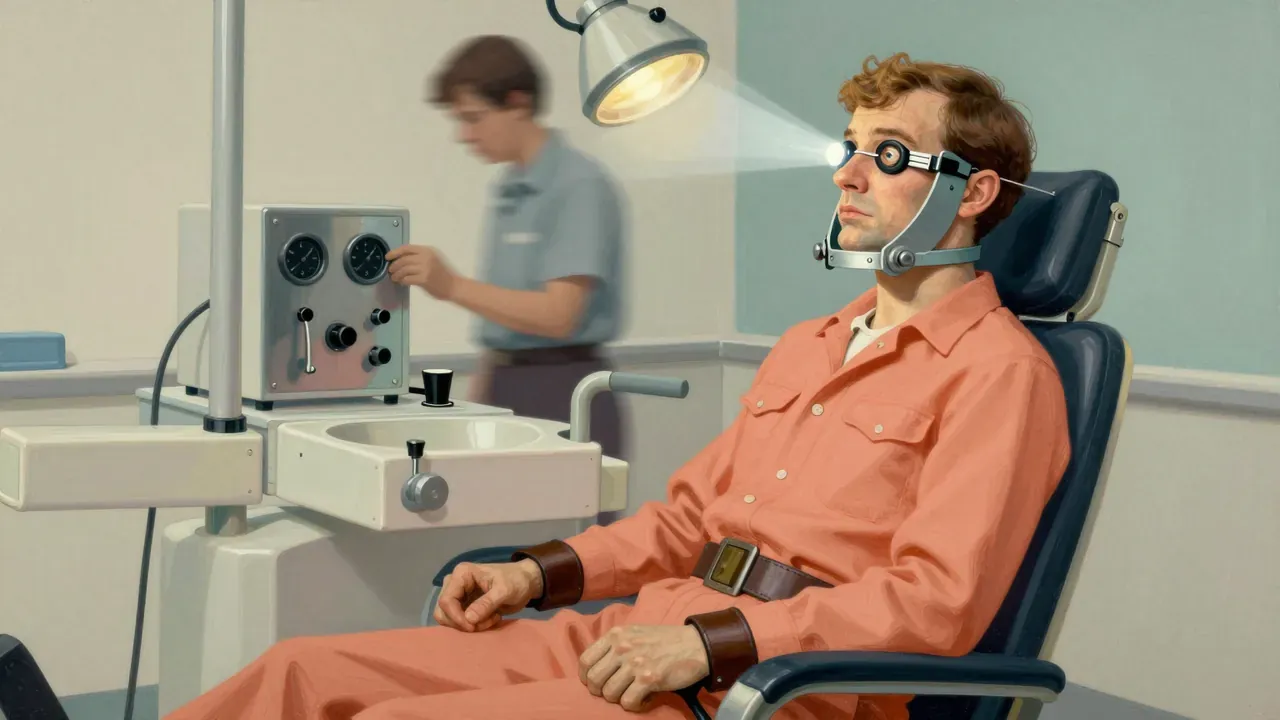
Stanley Kubrick’s 1971 adaptation of Anthony Burgess’s novel follows Alex DeLarge, a charismatic teenage delinquent subjected to state-mandated aversion therapy. Stylised, unsettling, and formally exacting, it interrogates free will, coercion, and the aestheticisation of power through John Alcott’s cinematography, Wendy Carlos’s electronic score, and Malcolm McDowell’s indelible performance.

Jean-Luc Godard’s 1965 Alphaville transplants American detective Lemmy Caution into a nameless, near-future city ruled by Alpha 60, a sentient computer that bans emotion, poetry, and questioning. Shot on real Paris locations with no futuristic props, it merges film noir and dystopian satire to interrogate language, control, and the persistence of feeling. Eddie Constantine and Anna Karina star; Raoul Coutard shot it, Agnès Guillemot edited it, Paul Misraki scored it. It won the Golden Bear at Berlin in 1965.

A 1985 dystopian satire directed by Terry Gilliam, Brazil follows Sam Lowry, a low-ranking bureaucrat in a decaying, anachronistic state, as he navigates absurd administrative logic, misfiled arrest warrants, and increasingly unstable fantasies. With Jonathan Pryce, Robert De Niro, Katherine Helmond and Michael Palin, it uses retro-futurist design, black comedy and Kafkaesque structure to dissect technocracy, surveillance and institutional incompetence — not as future threats, but as present habits dressed in tweed and duct tape.

Executioners reunites Michelle Yeoh, Anita Mui and Maggie Cheung in a post-apocalyptic Hong Kong where water scarcity and social collapse test their evolving definitions of duty. Directed by Johnnie To and Ching Siu-tung, it prioritises ethical recalibration over martial escalation — with Yeoh tutoring a disfigured former enemy, Mui balancing motherhood and latent power, and Cheung reluctantly embracing collective responsibility. Its strengths lie in restrained performances and atmospheric world-weariness; its weaknesses in underwritten antagonists and uneven tonal discipline.

Goke, Body Snatcher from Hell (1968), directed by Hajime Satō, follows survivors of a plane crash on a deserted island who are hunted by a vampiric alien entity. With minimal exposition and stark visuals, it charts their rapid moral collapse under pressure — betrayals, sacrifices and self-preservation escalate until only two remain, walking across a dead world beneath an orbital fleet. Shunsuke Kikuchi’s score and practical effects reinforce its clinical, allegorical tone.

Derek Jarman’s 1978 Jubilee transplants Queen Elizabeth I into a decaying, punk-saturated 1970s London. Shot on location in Blitz-damaged neighbourhoods, it follows a nihilistic gang—Amyl Nitrate, Bod, Chaos, Crabs and Mad—through acts of violence, commodification and petty rebellion, all observed by Elizabeth, John Dee and Ariel. With Brian Eno’s ambient score and Peter Middleton’s raw cinematography, the film rejects narrative fluency in favour of texture, rupture and mythic collapse. Now a cult classic, it remains a stark, unresolved portrait of national exhaustion.

Kung Fu Master (1988), co-directed by Agnès Varda and Gordon Chan and written by Jane Birkin, follows Mary-Jane, a woman in her forties, as she becomes emotionally entangled with Julien, a fourteen-year-old boy. Built around real-life family members and shot with observational restraint, the film avoids moral framing in favour of precise, unhurried attention to gesture, silence, and domestic space. Its power lies in what it refuses: explanation, escalation, catharsis. The narrative culminates not in confrontation but in divergence — memory, consequence, and time operating on irreconcilable terms.

A 28-minute French photomontage from 1962, La Jetée tells a post-nuclear time-travel story almost entirely through still black-and-white photographs, linked by voice-over narration and a sparse orchestral score. Its protagonist is sent from a ruined Paris to the past and future, bound by a childhood memory of a woman on an airport jetty — a memory that proves to be his own death. Built as a photo novel, not a film, it treats time as recursive, memory as architectural, and perception as the only continuous medium across stillness.

Danganronpa 2: Goodbye Despair is a visual novel, adventure game, and role-playing video game developed by Spike before its 2012 merger with Chunsoft. Its structure divides time between Daily Life (dialogue-driven relationship building), Deadly Life (linear evidence collection after murder), and Class Trial (logic combat using Truth Bullets in a first-person shooter framework). Players earn Hope Fragments through Free Time conversations, exchange them for debate skills, and fund that loop with Monocoins earned from trial success and hidden Monokuma Figures. The game demands attention to verbal contradiction, rewards repetition as narrative escalation, and offers no mechanical evolution beyond its fixed, self-reinforcing systems.

Portal is a first-person puzzle game where players solve spatial challenges using a portal gun that creates bidirectional, color-coded connections between surfaces. Physics-based movement—especially momentum conservation and orientation realignment across portals—forms the core mechanical loop, enabling techniques like 'flinging'. Constraints include inability to place portals through existing portals, on moving or unsuitable surfaces, or past Emancipation Grills, which erase portals and destroy carried objects. Puzzles are structured across test chambers, with optional challenge modes emphasizing efficiency or added hazards. The player controls Chell, a silent protagonist guided and antagonized by GLaDOS, within a clinical, minimalist facility designed to foreground functional geometry over decoration.

Rage is a first-person shooter with integrated vehicular traversal and combat, featuring customizable weapons and ammo, dual enemy archetypes, and structured racing events with variable opposition and armament. Players upgrade vehicles via event rewards and engage in both open-world exploration and mission-based progression.

Wipeout is a 1995 PlayStation anti-gravity racing game set in the F3600 league of 2052. Players select from eight craft—two per team—each defined by acceleration, top speed, mass, and turning radius. Six tracks depict futuristic Canada, the United States, and Japan. A seventh, Firestar, is set on Mars and unlocked only after completing the Rapier Championship.

Deus Ex (2000) is an action role-playing game developed by Ion Storm and directed by Warren Spector. It combines first-person shooter, stealth, and RPG elements in a hub-based city structure. Players control JC Denton, a nanotech-augmented agent, and navigate environments using climbing, swimming, crouching, and object interaction. Missions are optional and objectives permit multiple solutions—stealth, hacking, or armed assault. Dialogue choices affect some events. Augmentations are permanent and energy-costed. Inventory space is limited. The game was built on the Unreal Engine, requiring added RPG systems. A post-release patch added deathmatch-style multiplayer.

Fallout (1997) is a foundational CRPG built on rigid arithmetic and player-driven consequence. Its design refuses abstraction: if your Luck is six, you fail 40% of critical rolls. If your Speech is 65%, you unlock one branch—not all. It does not ask you to believe. It asks you to calculate.

Advance Wars: Days of Ruin is a 2008 turn-based strategy game developed by Intelligent Systems for the Nintendo DS. It departs from earlier entries with a darker tone, toned-down CO powers, no Tag powers, and new units and terrain effects. Players command military forces on grid-based maps to defeat enemies by destroying all units or capturing their headquarters. Fog of war, weather, and terrain shape tactics. The campaign contains 26 story-driven missions. Multiplayer supports local hot-seat and online play via Nintendo Wi-Fi Connection.

Deathloop is a first-person shooter built around a deterministic time-loop puzzle. Players control Colt Vahn, who must kill eight Visionaries before midnight to break the loop. Time advances only when moving between Blackreef’s four districts. NPC routines and environmental access shift with time-of-day. Actions in one district affect others. There is exactly one valid kill order. Every failure resets progress.

MongoDB is a document-oriented database program released in February 2009. It uses JSON-like BSON documents with optional schemas. It implements its own query language (MQL). It supports indexing with primary and secondary indices. It provides high availability via replica sets. It scales horizontally using sharding. It can be used as a file system called GridFS. It is source-available and designed for unstructured data. It added ACID transactions to broaden enterprise appeal. It launched Atlas, a SaaS offering, in 2016. It replaced AGPL with the Server Side Public License in 2018. As of 2025, it ranked fifth among database software and served over 65,200 customers. Atlas became 70 percent of MongoDB's revenue by 2024.