briefs
Topic · across the network

Mexico

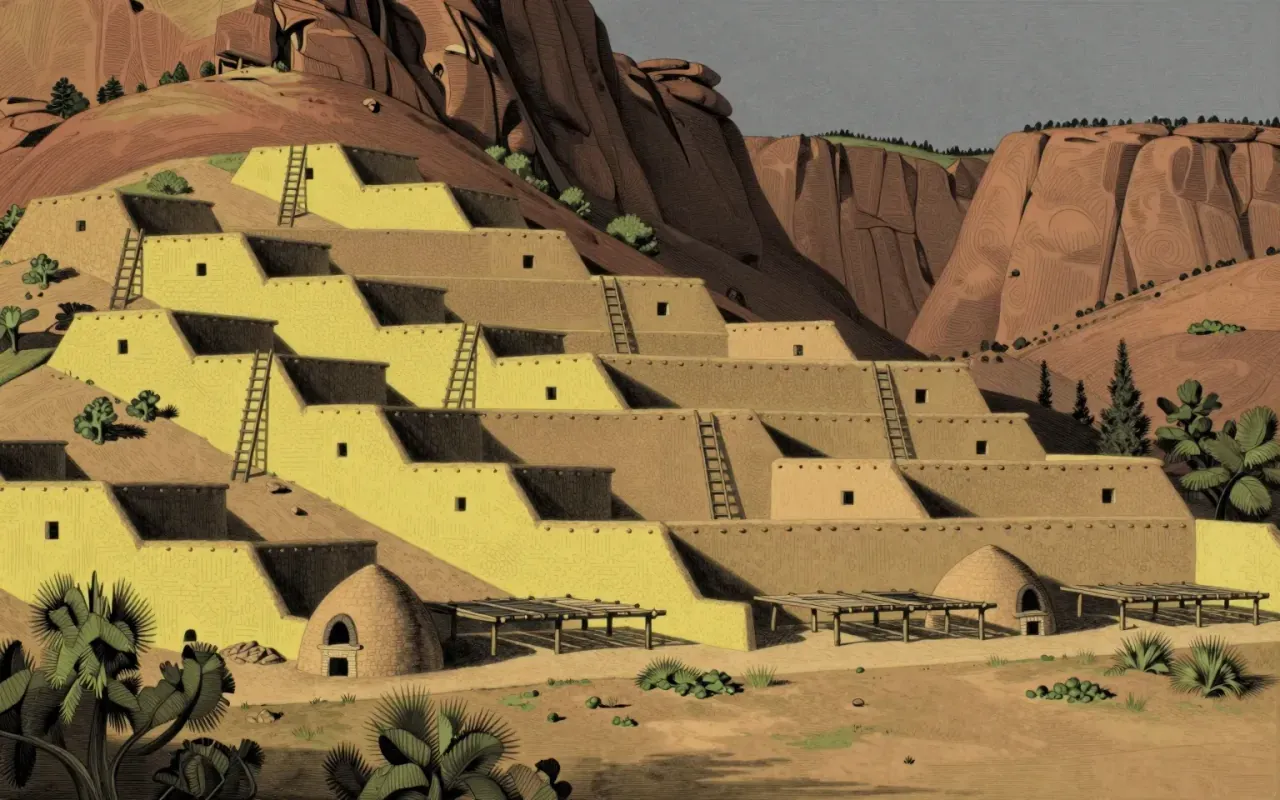
Where the pre-Columbian and the colonial were fused rather than replaced.

38
briefs
8
subjects
9:58
average
379 min
in total
Abstraction 407Absurdism 137Acoustics 220Acting 65Adaptation 372Addiction 95Adolescence 202Advertising 77Age of exploration 14Ageing 113Agriculture 100Algorithms 114Ambition 46Anarchism 38Ancient Egypt 17Ancient Greece 38Ancient Rome 30Animals 172Anthropology 23Apartheid 12Architecture 165Archives 32Argentina 10Art Deco 26Artificial intelligence 78Astronomy 81Attention 42Australia 32Automation 73Avant-garde 164Aviation 79Banking 72Banned works 40Bauhaus 12Beer 5Behavioural economics 22Berlin 16Big tech 6Biodiversity 136Biography 86Birds 41Black holes 20Blockchain 12Boxing 14Branding 77Brazil 43Bread 29Britain 131Brutalism 4Bubbles 3Buddhism 28Byzantium 10California 17Canada 18Capitalism 94Cars 468Celebrity 59Censorship 110Cheese 24Chefs 9Chemistry 104Chess 2Childhood 87China 109Chocolate 8Christianity 49Cinematography 343Cities 90Class 485Climate change 107Club culture 100Cocktails 2Coffee 11Cognitive bias 14Collecting 16Colonialism 284Colour 42Comedy 89Community 52Complexity 21Computing 309Consciousness 16Conservatism 14Conspiracy theories 8Cooking 178Corruption 38Cosmology 31Cover versions 64Craft 116Crate digging 42Creativity 8Crime 234Cryptocurrency 8Cryptography 24Cuba 10Cybersecurity 30Dada 12Debt 38Decision-making 28Decolonisation 46Deep time 80Democracy 45Denim 16Deserts 45Detroit 17Dinosaurs 12Directing 168Disasters 59Disease 109DJ culture 89Dreams 32Drones 5Drum machines 96Dystopia 69East Africa 28Ecology 337Economics 36Editing 72Education 92Egypt 12Electric vehicles 59Emotion 22Empire 92Endurance 49Energy 120Engineering 541Entropy 8Epidemics 13Equality 9Espionage 31Ethics 44Evolution 174Existentialism 106Expertise 2Exploration 49Extinction 23Failure 37Family 240Fandom 22Fascism 45Fashion 215Fast fashion 12Fear 34Feminism 122Fermentation 126Film music 81Fishing 12Folklore 71Food history 588Football 16Forests 31Forgery 7France 163Fraud 15Free will 13Freedom 16French literature 15Friendship 24Furniture 36Gambling 14Gender 63Generations 28Genetics 87Geology 96Germany 66Globalisation 74Gothic 32Greece 5Grief 126Habits 6Happiness 2Hardware 709Haute couture 22Headphones 8Hi-fi 12Hinduism 12Hoaxes 1Human history 23Human nature 41Identity 138Illustration 8Impressionism 6Improvisation 249India 89Indonesia 15Industrial design 342Inequality 13Inflation 4Information 34Infrastructure 280Insects 29Intelligence 8Interiors 31Internet culture 88Invention 329Iran 41Islam 40Islands 17Israel 9Italy 52Jamaica 10Japan 114Jewellery 5Journalism 34Judaism 13Justice 42Korea 41Language 70Law 90Leadership 20Learning 6Liberalism 1Libraries 6Literary criticism 26London 12Loneliness 61Los Angeles 62Lost works 9Love 67Luxury 55Machine learning 15Management 10Maps 5Marketing 21Markets 51Mars 6Marxism 26Masculinity 46Materials 138Mathematics 79Meaning 6Medicine 124Memory 82Mental health 70Mesopotamia 4Mexico 38Migration 95Minimalism 68Mining 30Misinformation 9Modernism 63Money 24Monopoly 32Mortality 61Motivation 2Mountains 16Museums 27Mysticism 11Mythology 60Nationalism 40Neuroscience 23New York 36Nigeria 7Nihilism 10Noise 31Nostalgia 33Nuclear 29Nutrition 17Oceans 48Oil 42Open source 45Painting 18Palaeontology 29Parenting 14Paris 18Partition 6Patents 71Patronage 14Perception 44Personal style 27Personality 2Persuasion 8Peru 10Philosophy 77Photography 37Physics 206Plants 26Platforms 89Podcasting 1Poetry 25Poland 17Policing 34Pop Art 16Populism 2Portraiture 6Portugal 18Postmodernism 23Power 91Prehistory 24Preservation 28Printmaking 21Privacy 11Probability 6Productivity 1Programming 54Prohibition 1Propaganda 35Protest 75Pseudoscience 17Psychology 80Publishing 22Punishment 16Quantum mechanics 44Race 145Radio 30Railways 35Rave 17Realism 47Record labels 19Recording 810Relativity 23Religion 154Resilience 15Restaurants 30Restoration 2Retail 94Revolution 58Risk 18Ritual 96Robotics 26Romance 96Russia 58Salt 9Sampling 246Satire 84Scandinavia 28Scientific method 186Screenwriting 26Sculpture 7Secularism 2Self-deception 14Semiconductors 73Sexuality 102Ships 18Silence 24Silicon Valley 17Slavery 35Sleep 2Smartphones 27Sneakers 15Social media 58Socialism 9Software 68Songwriting 180Sound design 332Sound systems 20South Africa 19South East Asia 30Space exploration 84Spain 18Special effects 41Spices 62Spirits 12Sport 82Startups 21Statistics 10Status 9Stoicism 4Storytelling 68Strategy 70Street food 99Streetwear 16Studio craft 508Subcultures 59Sugar 12Supply chains 115Surrealism 53Surveillance 21Sustainability 30Synthesis 232Tailoring 37Taxation 14Tea 24Textiles 97Thailand 11The American Revolution 19The American South 88The Arab world 41The Arctic 19The Balkans 17The Belle Epoque 13The body 29The brain 26The Caribbean 28The civil rights movement 62The Cold War 160The eighties 268The Enlightenment 29The financial crisis 19The First World War 39The food industry 157The French Revolution 9The Gilded Age 9The Great Depression 18The Holocaust 20The Industrial Revolution 93The internet 61The interwar years 135The Middle Ages 35The Moon 4The music business 169The Netherlands 10The nineties 26The Olympics 10The pandemic 13The Reformation 1The Renaissance 16The Russian Revolution 19The Second World War 102The seventies 58The sixties 28The space race 5The United States 19The universe 7The Victorian era 37Therapy 20Tokyo 11Trade 48Tragedy 22Translation 5Trauma 85Travel 5True crime 2Turkey 18Typography 54Uniforms 23Unions 8Urban planning 66Utilitarianism 1Utopia 5Vaccines 10Vegetarianism 15Venture capital 6Video games 291Vietnam 12Vintage 65Vinyl 6Virtual reality 11War 169Watches 4Water 11Weather 29West Africa 29Wilderness 10Wine 3Work 22Workwear 19Worldbuilding 121

music.briefs Music

All 1 in music →
11:02

How Will the Wolf Survive?

Los Lobos · 1984

How Will the Wolf Survive? is Los Lobos’s major label debut (October 1984), composed informally at Louie Pérez’s brother-in-law’s home, drawing lyrical inspiration from a National Geographic article about survival and identity; musically, it fuses Mexican traditions with R&B, country, and blues, and centres immigrant experience in songs like 'A Matter of Time' and 'Will the Wolf Survive?'.


film.briefs Film

All 6 in film →
13:00

Canoa: A Shameful Memory

Felipe Cazals · 1976

Felipe Cazals’s 1976 Mexican drama reconstructs the 1968 San Miguel Canoa massacre, where five university employees were lynched after a local priest branded them communists. Shot in documentary style in the actual town, with Alex Phillips Jr.’s restrained cinematography and Enrique Lucero’s chillingly calm performance as the priest, the film traces how fear, faith, and state rhetoric coalesce into mob violence — not as exception, but as logical outcome.

13:00

Deep Crimson

Arturo Ripstein · 1996

Arturo Ripstein’s 1996 Deep Crimson transposes the Lonely Hearts Killers’ crimes to Mexico, following Coral Fabre and Nicolás Estrella as their lonely-hearts scam hardens into serial murder. With no psychological exposition or moral framing, the film charts their descent through ritualised acts, understated performances, and a stark visual style. It won eight Ariel Awards and Sundance Honorable Mention, and was Mexico’s Oscar submission.

13:00

Sólo Con Tu Pareja

Alfonso Cuarón · 1991

Alfonso Cuarón’s 1991 debut Sólo Con Tu Pareja is a tightly wound Mexican romantic comedy about a womanising ad man falsely diagnosed with AIDS, whose ensuing suicide pact with a disillusioned flight attendant becomes an accidental path to emotional honesty. Shot by Emmanuel Lubezki and edited by him too, it balances farce, satire, and quiet realism across 94 minutes in Mexico City. Though it won Ariel Awards and international festival acclaim, it was delayed for domestic release until 1993. Its strength lies in formal control and moral unsentimentality — not in likable characters or tidy resolutions.

13:00

Víctimas del Pecado

Emilio Fernández · 1951

Emilio Fernández’s 1951 Víctimas del Pecado stars Ninón Sevilla as Violeta, a Cuban dancer who adopts an abandoned infant in Mexico City’s red-light district. Set in Churubusco Studios, the film blends mambo numbers by Pérez Prado and Pedro Vargas with a tightly wound melodrama of love, betrayal, and imprisonment. Gabriel Figueroa’s cinematography carves space into zones of glamour, austerity, and quiet domesticity. Though structurally uneven and reliant on genre convention, its physical expressiveness, moral clarity, and studio craft make it a defining work of post-war Mexican cinema.

13:00

Y tu mamá también

Alfonso Cuarón · 2001

Set in 1999 Mexico, Y tu mamá también follows two teenage boys and a woman in her late twenties on a road trip to a mythical beach. Narrated with clinical detachment, the film observes their shifting alliances, sexual awakenings, and quiet confrontations with mortality and class — all shot in handheld, naturalistic style. It is a coming-of-age story that refuses to sentimentalise youth or simplify its contradictions.

13:00

The Treasure of the Sierra Madre

John Huston · 1948

John Huston’s 1948 adaptation of B. Traven’s novel follows two American drifters and an ageing prospector searching for gold in the Mexican wilderness. As the find is made, trust fractures, language fails, and morality simplifies to survival. With restrained cinematography by Ted McCord, sparse scoring by Max Steiner, and performances anchored by Humphrey Bogart and Walter Huston, the film traces the slow, unsentimental collapse of shared reality under pressure. Shot on location in Mexico and California, it remains a benchmark of psychological realism — austere, exacting, and unyielding.

history.briefs History

All 6 in history →
13:00

Hernán Cortés

1485–1547

After nearly fifteen years working through Spanish colonial administration in the Caribbean, Hernan Cortes defied his own superior to lead an unauthorised expedition to Mexico in 1519, exploiting divisions among Aztec tributary peoples to conquer Tenochtitlan by 1521. His own letters to the Spanish crown, written to justify the illegal campaign, remain the central source for his career, supplemented by a soldier's later memoir and his chaplain's admiring biography. Several of his most flattering claims, including Aztec reverence toward him as a god, have not held up to modern scrutiny, and unresolved accusations, including his first wife's suspicious death, shadow his personal reputation.

13:00

Moctezuma II

1466–1520

Moctezuma II expanded the Aztec Empire to its greatest territorial extent, fought some seventy-three military campaigns, and reorganised imperial administration into centrally governed provinces before Spanish forces reached Tenochtitlan in 1519. Spanish and indigenous sources diverge sharply in their portrayal of him, and his death in June 1520 remains disputed between accounts of his own subjects stoning him and testimony that Spanish soldiers killed him directly. His decades of successful rule have been largely overshadowed in popular memory by the empire's collapse the following year, leaving no single settled portrait of the man behind either extreme characterisation.

13:00

Aztec Empire

1367

Three Nahua city-states, Tenochtitlan, Texcoco and Tlacopan, formed the Triple Alliance around 1428 after a civil war, building an empire that dominated central Mexico by the early sixteenth century before Hernán Cortés and his indigenous allies destroyed it between 1519 and 1521. Much of the empire's own documentary record may have been deliberately destroyed by one of its own administrators, leaving historians dependent on a mix of surviving pictographic codices, Spanish conquistador accounts, and archaeology to reconstruct its history.

13:00

Spanish conquest of the Aztec Empire

1519–1521

Hernan Cortes landed on the Gulf coast of Mexico in 1519 and, through alliances with Aztec tributary peoples resentful of imperial rule, marched on Tenochtitlan, where an initial peaceful reception collapsed into violence, a chaotic Spanish retreat, and a devastating smallpox epidemic before the capital finally fell after siege in August 1521. Spanish accounts dominate the surviving record, though indigenous testimony recorded after the conquest under colonial supervision offers a partial counterweight. Historians now doubt several staples of the traditional story, including the belief that Moctezuma saw Cortes as a returning god, tracing that idea only to European writing from the 1540s.

13:00

Maya civilization

2000 BC–1521

Maya civilisation developed across roughly two thousand years, from early farming settlements around 2000 BC through a Classic period of competing city-states between about 250 and 900, a still-unexplained ninth-century decline, and a Postclassic phase that lasted until Spanish conquest reached the last independent stronghold in 1697. Only three Maya codices survived the conquest, so much of what is known comes from decoded hieroglyphic inscriptions and archaeology, and no single explanation for the Classic collapse commands agreement among historians.

13:00

Pueblo Revolt

10 August – 21 August 1680

In August 1680, Pueblo communities across Spanish New Mexico, coordinated by the Tewa religious leader Po'pay after five years of secret planning, rose simultaneously and expelled Spanish colonists for twelve years, the longest sustained indigenous victory over a European colonial power in the Americas. Spanish colonial letters dominate the immediate record, while Po'pay's own character survives mostly through hostile testimony, leaving historians uncertain whether he ruled afterward as visionary or tyrant. When Spain returned in 1692, it permanently abandoned earlier attempts at religious suppression, making the revolt one of the rare cases of resistance producing lasting concessions.

games.briefs Games

All 1 in games →
10:38

Forza Horizon 5

Playground Games · 2021

Forza Horizon 5 is a racing game set in an open world modelled on Mexico. It was developed by Playground Games and published by Xbox Game Studios for Windows, Xbox One, and Xbox Series X/S.

business.briefs Business

All 4 in business →
10:04

Carlos Slim

Carlos Slim is the Mexican businessman who built Grupo Carso, a conglomerate whose fortune rests mainly on telecommunications.
10:41

FEMSA

Eugenio Garza Sada · 1890

FEMSA is a Mexican multinational beverage and retail company headquartered in Monterrey, operating the largest independent Coca-Cola bottling group in the world and Mexico’s largest convenience store chain. It reports US$26.9 billion in revenue (2019), ranks fifth-largest company in Mexico, and operates across Latin America via bottling plants, convenience stores, drugstores, fuel stations, and third-party logistics—and in the US via jan-san distribution. Listed on the Mexican Stock Exchange since 1978 and NYSE ADRs since 1998. FEMSA is the holding company of Cuauhtémoc Moctezuma Brewery—the culmination of Eugenio Garza Sada’s industrial expansion from a single brewery into Grupo Valores Industriales, which included Fábricas de Monterrey (1920), HYLSA (1942), Empaques de Cartón Titán (1936), and multiple acquired breweries.

10:34

Grupo Modelo

A national monopoly built on Spanish immigrant capital became a global beer leader only after surrendering its biggest export market to a third party.
10:04

Pemex

A national oil company that peaked before the iPhone—and still pays for half of Mexico’s federal budget.

culture.briefs Culture

All 2 in culture →
8:52

Frida Kahlo

Kahlo didn’t paint dreams—she painted wounds, walls, and the weight of being Mexican after revolution.
9:02

LemonGrass

A children’s pop group built not from fandom or street culture — but from 900 auditions, one TV show, and iTunes data.

food.briefs Food

All 17 in food →
9:31

Tamales

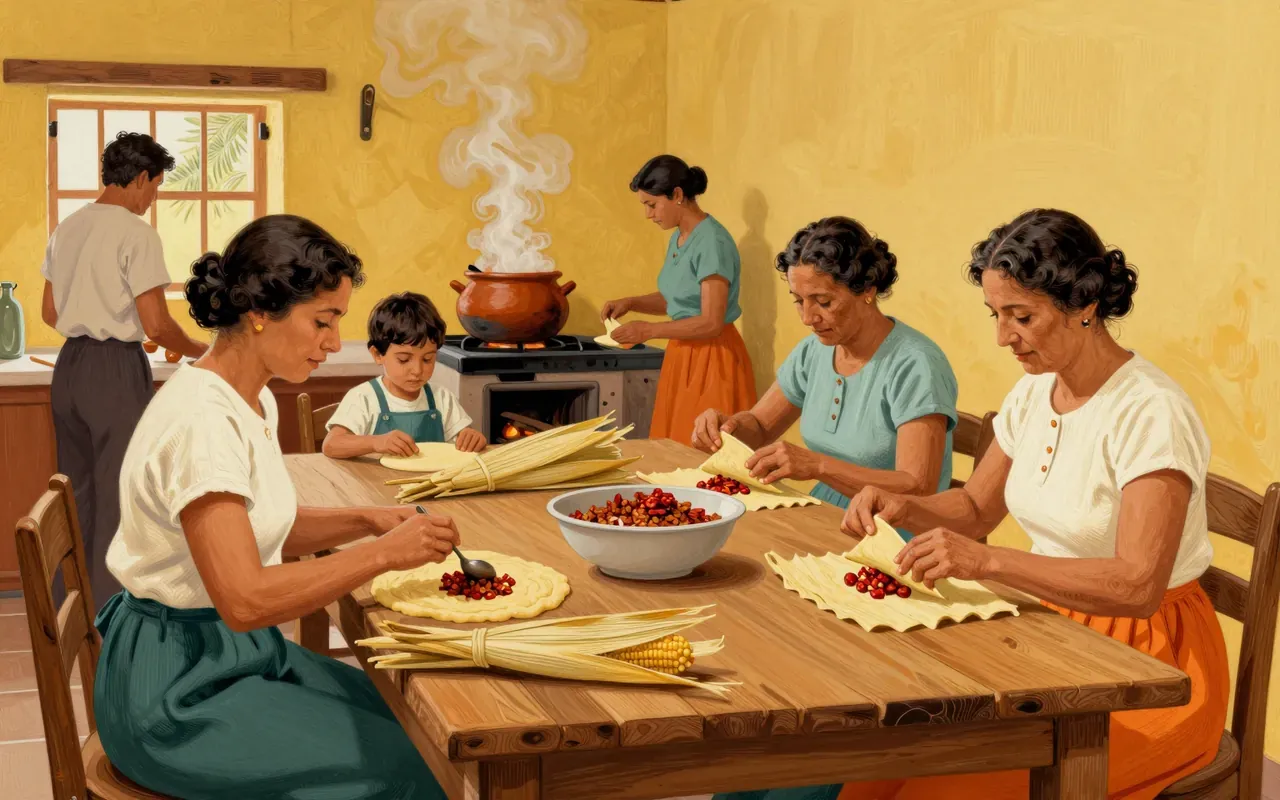
Tamales are a Mesoamerican dish of nixtamalized corn dough, steamed in corn husks or banana leaves around a savoury or sweet filling.
8:05

Tequila

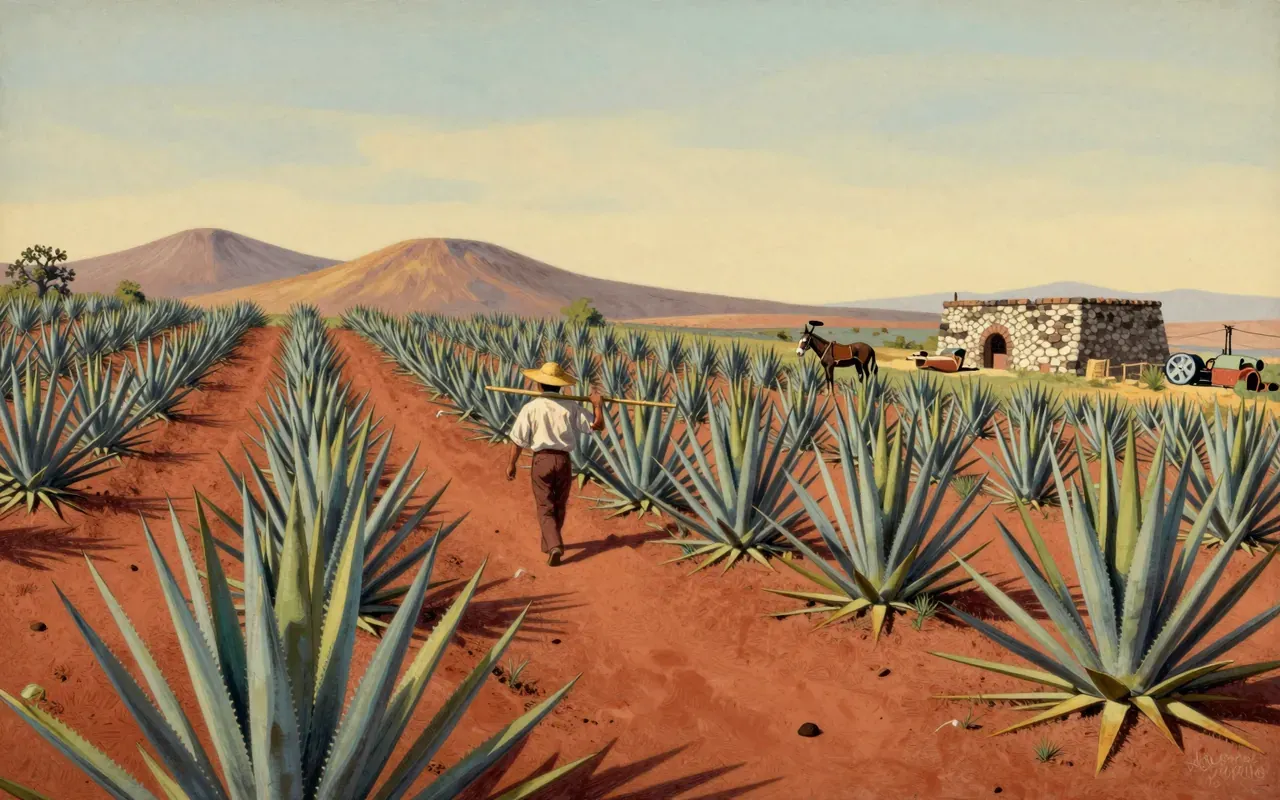
Tequila is a distilled spirit made from blue agave, produced mainly around the town of Tequila and in the Jaliscan Highlands of Jalisco, Mexico.
8:33

Burrito

A burrito isn’t a taco — it’s a taco that learned to seal itself shut.
9:00

Chilaquiles

Chilaquiles are not a breakfast — they’re a salvage operation with salsa.
9:37

Chili con carne

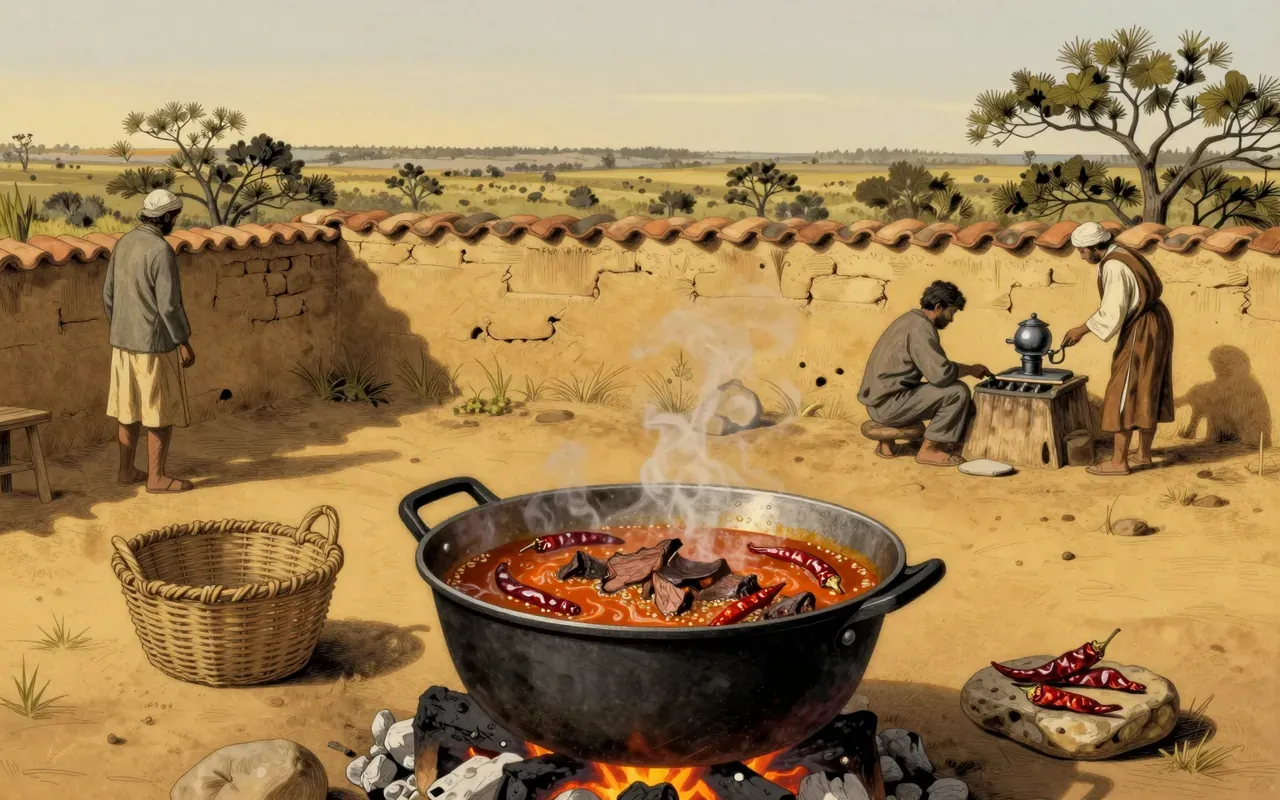
Chili con carne is not Texan. It is a Mexican ranchero dish born from dried beef and native chilies — long before beans, tomatoes, or ground meat entered the pot.
9:33

Chile relleno

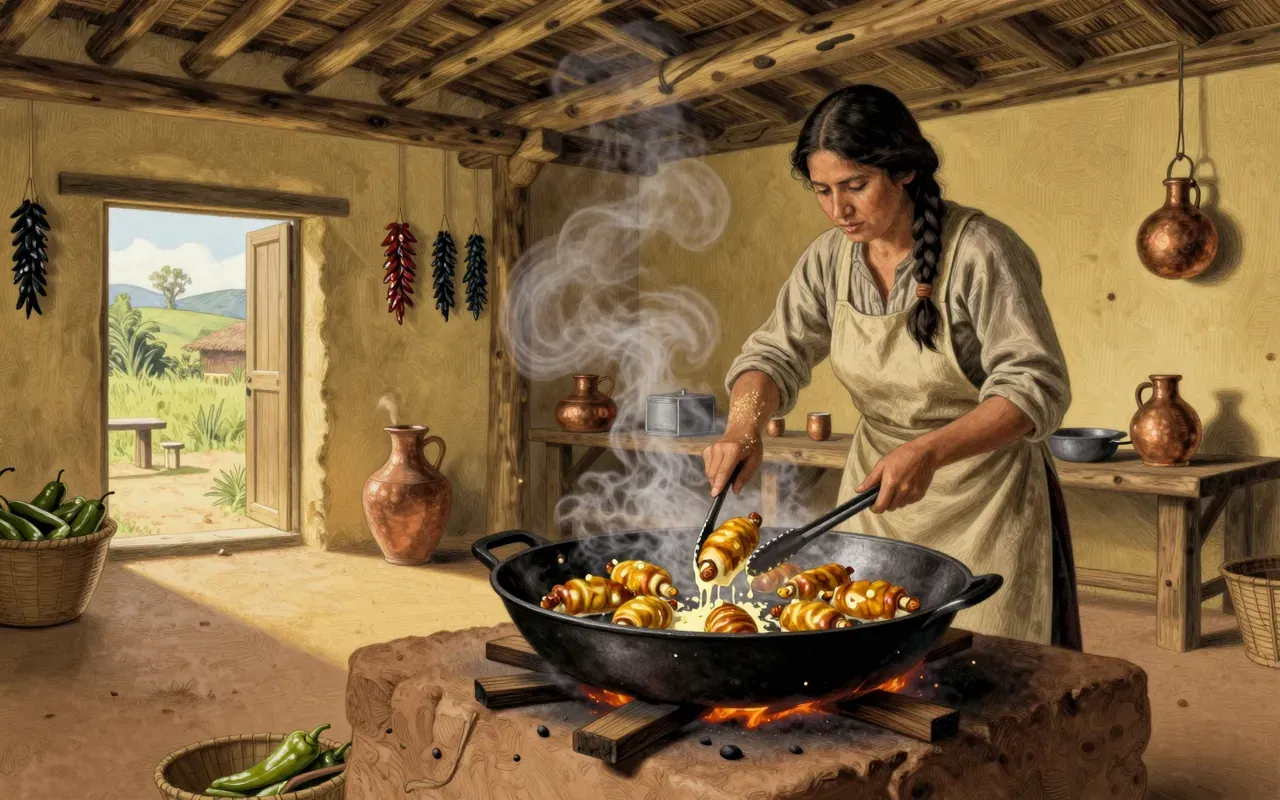
A fried poblano is only as good as its batter’s grip—and most fail at the first bite.
8:13

Picadillo

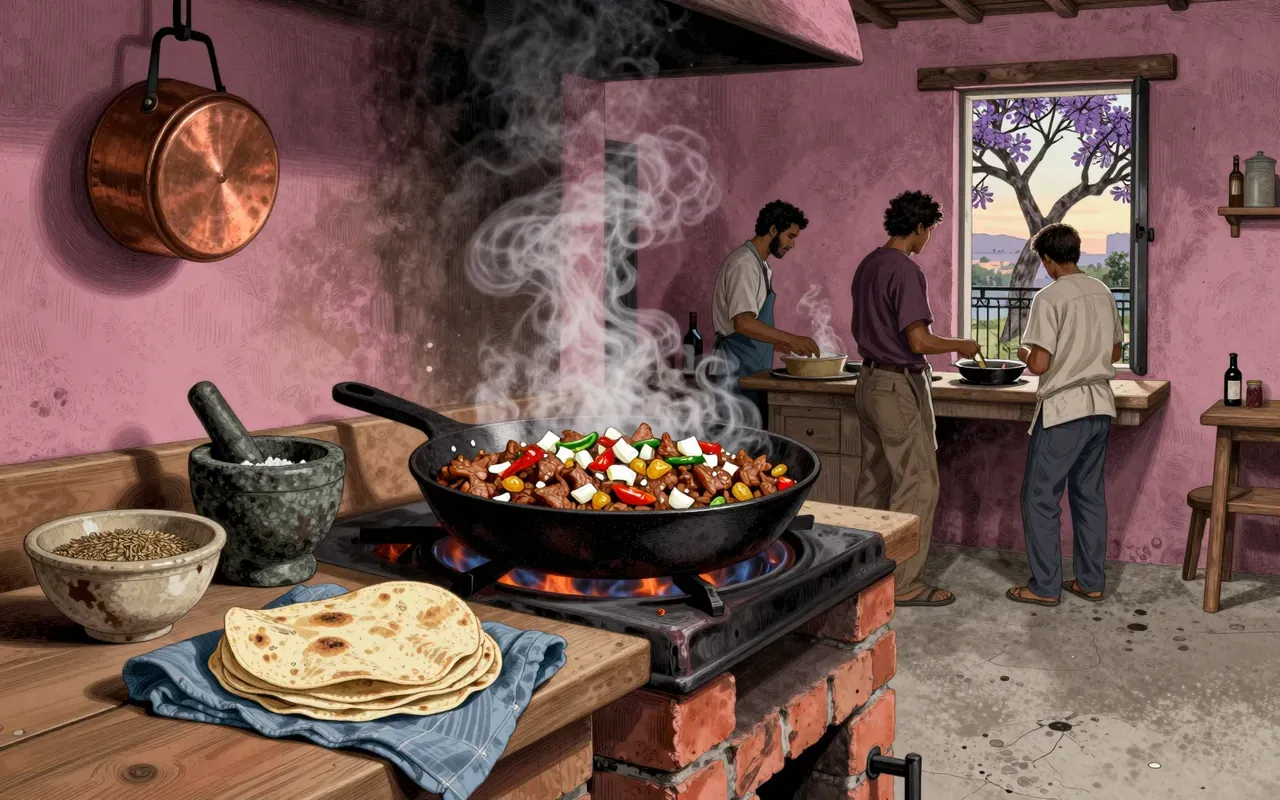
Picadillo is not one dish—it’s a grammar of mince, tomato, raisin, and olive, spoken in Cuban, Mexican, and Filipino dialects.
8:14

Pico de gallo

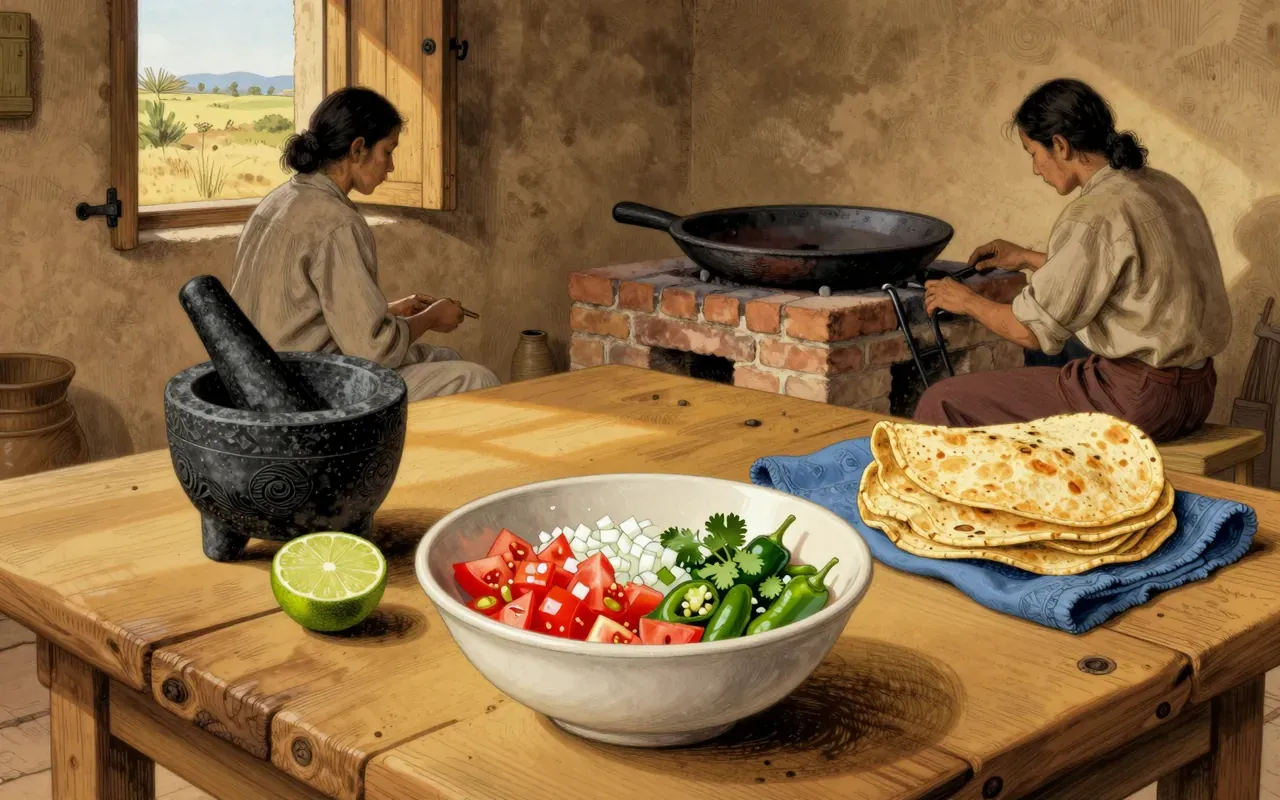
Pico de gallo isn’t just fresh — it’s a structural choice: raw, dry, and assertive by design.

fashion.briefs Fashion

All 1 in fashion →
9:56

Serape

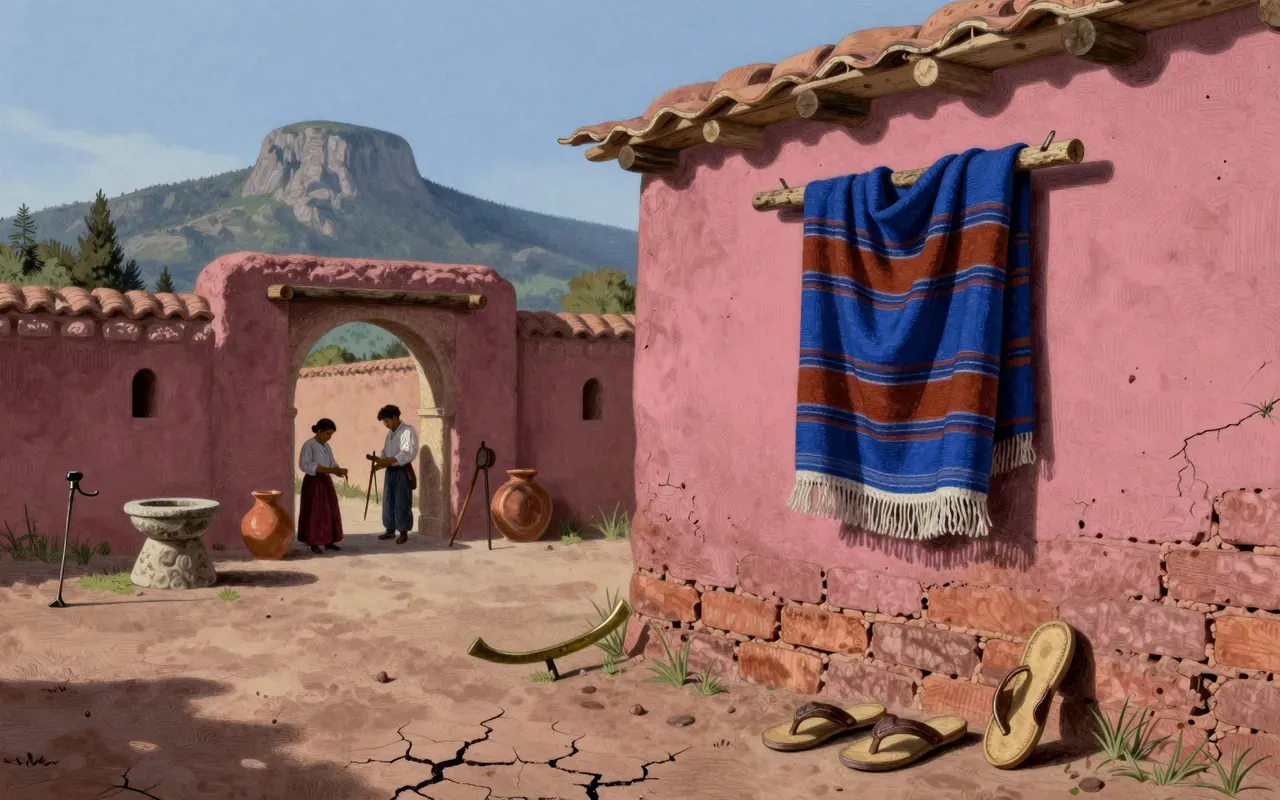
The serape is not folklore—it’s a contested textile archive written in wool, law, and colonial record.