briefs
Topic · across the network

Advertising

The industry that pays for most of the culture and is rarely credited.

77
briefs
10
subjects
10:05
average
776 min
in total
Abstraction 407Absurdism 137Acoustics 220Acting 65Adaptation 372Addiction 95Adolescence 202Advertising 77Age of exploration 14Ageing 113Agriculture 100Algorithms 114Ambition 46Anarchism 38Ancient Egypt 17Ancient Greece 38Ancient Rome 30Animals 172Anthropology 23Apartheid 12Architecture 165Archives 32Argentina 10Art Deco 26Artificial intelligence 78Astronomy 81Attention 42Australia 32Automation 73Avant-garde 164Aviation 79Banking 72Banned works 40Bauhaus 12Beer 5Behavioural economics 22Berlin 16Big tech 6Biodiversity 136Biography 86Birds 41Black holes 20Blockchain 12Boxing 14Branding 77Brazil 43Bread 29Britain 131Brutalism 4Bubbles 3Buddhism 28Byzantium 10California 17Canada 18Capitalism 94Cars 468Celebrity 59Censorship 110Cheese 24Chefs 9Chemistry 104Chess 2Childhood 87China 109Chocolate 8Christianity 49Cinematography 343Cities 90Class 485Climate change 107Club culture 100Cocktails 2Coffee 11Cognitive bias 14Collecting 16Colonialism 284Colour 42Comedy 89Community 52Complexity 21Computing 309Consciousness 16Conservatism 14Conspiracy theories 8Cooking 178Corruption 38Cosmology 31Cover versions 64Craft 116Crate digging 42Creativity 8Crime 234Cryptocurrency 8Cryptography 24Cuba 10Cybersecurity 30Dada 12Debt 38Decision-making 28Decolonisation 46Deep time 80Democracy 45Denim 16Deserts 45Detroit 17Dinosaurs 12Directing 168Disasters 59Disease 109DJ culture 89Dreams 32Drones 5Drum machines 96Dystopia 69East Africa 28Ecology 337Economics 36Editing 72Education 92Egypt 12Electric vehicles 59Emotion 22Empire 92Endurance 49Energy 120Engineering 541Entropy 8Epidemics 13Equality 9Espionage 31Ethics 44Evolution 174Existentialism 106Expertise 2Exploration 49Extinction 23Failure 37Family 240Fandom 22Fascism 45Fashion 215Fast fashion 12Fear 34Feminism 122Fermentation 126Film music 81Fishing 12Folklore 71Food history 588Football 16Forests 31Forgery 7France 163Fraud 15Free will 13Freedom 16French literature 15Friendship 24Furniture 36Gambling 14Gender 63Generations 28Genetics 87Geology 96Germany 66Globalisation 74Gothic 32Greece 5Grief 126Habits 6Happiness 2Hardware 709Haute couture 22Headphones 8Hi-fi 12Hinduism 12Hoaxes 1Human history 23Human nature 41Identity 138Illustration 8Impressionism 6Improvisation 249India 89Indonesia 15Industrial design 342Inequality 13Inflation 4Information 34Infrastructure 280Insects 29Intelligence 8Interiors 31Internet culture 88Invention 329Iran 41Islam 40Islands 17Israel 9Italy 52Jamaica 10Japan 114Jewellery 5Journalism 34Judaism 13Justice 42Korea 41Language 70Law 90Leadership 20Learning 6Liberalism 1Libraries 6Literary criticism 26London 12Loneliness 61Los Angeles 62Lost works 9Love 67Luxury 55Machine learning 15Management 10Maps 5Marketing 21Markets 51Mars 6Marxism 26Masculinity 46Materials 138Mathematics 79Meaning 6Medicine 124Memory 82Mental health 70Mesopotamia 4Mexico 38Migration 95Minimalism 68Mining 30Misinformation 9Modernism 63Money 24Monopoly 32Mortality 61Motivation 2Mountains 16Museums 27Mysticism 11Mythology 60Nationalism 40Neuroscience 23New York 36Nigeria 7Nihilism 10Noise 31Nostalgia 33Nuclear 29Nutrition 17Oceans 48Oil 42Open source 45Painting 18Palaeontology 29Parenting 14Paris 18Partition 6Patents 71Patronage 14Perception 44Personal style 27Personality 2Persuasion 8Peru 10Philosophy 77Photography 37Physics 206Plants 26Platforms 89Podcasting 1Poetry 25Poland 17Policing 34Pop Art 16Populism 2Portraiture 6Portugal 18Postmodernism 23Power 91Prehistory 24Preservation 28Printmaking 21Privacy 11Probability 6Productivity 1Programming 54Prohibition 1Propaganda 35Protest 75Pseudoscience 17Psychology 80Publishing 22Punishment 16Quantum mechanics 44Race 145Radio 30Railways 35Rave 17Realism 47Record labels 19Recording 810Relativity 23Religion 154Resilience 15Restaurants 30Restoration 2Retail 94Revolution 58Risk 18Ritual 96Robotics 26Romance 96Russia 58Salt 9Sampling 246Satire 84Scandinavia 28Scientific method 186Screenwriting 26Sculpture 7Secularism 2Self-deception 14Semiconductors 73Sexuality 102Ships 18Silence 24Silicon Valley 17Slavery 35Sleep 2Smartphones 27Sneakers 15Social media 58Socialism 9Software 68Songwriting 180Sound design 332Sound systems 20South Africa 19South East Asia 30Space exploration 84Spain 18Special effects 41Spices 62Spirits 12Sport 82Startups 21Statistics 10Status 9Stoicism 4Storytelling 68Strategy 70Street food 99Streetwear 16Studio craft 508Subcultures 59Sugar 12Supply chains 115Surrealism 53Surveillance 21Sustainability 30Synthesis 232Tailoring 37Taxation 14Tea 24Textiles 97Thailand 11The American Revolution 19The American South 88The Arab world 41The Arctic 19The Balkans 17The Belle Epoque 13The body 29The brain 26The Caribbean 28The civil rights movement 62The Cold War 160The eighties 268The Enlightenment 29The financial crisis 19The First World War 39The food industry 157The French Revolution 9The Gilded Age 9The Great Depression 18The Holocaust 20The Industrial Revolution 93The internet 61The interwar years 135The Middle Ages 35The Moon 4The music business 169The Netherlands 10The nineties 26The Olympics 10The pandemic 13The Reformation 1The Renaissance 16The Russian Revolution 19The Second World War 102The seventies 58The sixties 28The space race 5The United States 19The universe 7The Victorian era 37Therapy 20Tokyo 11Trade 48Tragedy 22Translation 5Trauma 85Travel 5True crime 2Turkey 18Typography 54Uniforms 23Unions 8Urban planning 66Utilitarianism 1Utopia 5Vaccines 10Vegetarianism 15Venture capital 6Video games 291Vietnam 12Vintage 65Vinyl 6Virtual reality 11War 169Watches 4Water 11Weather 29West Africa 29Wilderness 10Wine 3Work 22Workwear 19Worldbuilding 121

music.briefs Music

All 3 in music →
9:10

Eternally Yours

The Saints · 1978

Eternally Yours is The Saints’ 1978 second album, produced by Chris Bailey and Ed Kuepper, featuring an R&B-influenced sound with horn arrangements and new bassist Algy Ward. Recorded at Wessex Studios under the original title International Robots, the sessions yielded stripped-down versions later issued as bonus tracks. Bailey regarded it as the band’s first proper release—distinct from the demo character of their debut—though its horn-heavy approach reportedly alienated some listeners at the time. Retrospective assessments have elevated it as a punk classic, praised for consistency, variety, and influence, with endorsements from major musicians including Kurt Cobain and Mark Lanegan.

9:34

Germfree Adolescents

X‐Ray Spex · 1978

Germfree Adolescents is X-Ray Spex’s 1978 debut album. All twelve tracks were written by Poly Styrene. Five had previously appeared on singles’ A-sides or B-sides. The core band was Poly Styrene (vocals), Jak Airport (guitar), Paul Dean (bass), Rudi Thomson (saxophone), and B.P. Hurding (drums). Rudi Thomson played saxophone on the album.

11:06

The Who Sell Out

The Who · 1967

The Who Sell Out is a 1967 concept album by The Who that parodies pirate radio, which had recently been outlawed in the UK. It features humorous jingles, mock commercials (including ads for canned milkshakes and the American Cancer Society), the mini rock opera 'Rael', and the single 'I Can See For Miles'. The band framed the project as an extension of their pop art identity, asserting that advertising was an artform and declaring, 'We don't change offstage. We live pop art.'

film.briefs Film

All 11 in film →
13:00

A Face in the Crowd

Elia Kazan · 1957

Elia Kazan’s 1957 drama follows Larry 'Lonesome' Rhodes, a charismatic drifter turned national TV star, whose rise and fall exposes the collusion between media, advertising and politics in shaping public belief. Andy Griffith’s debut performance anchors a tightly structured critique of persuasion as infrastructure, not personality.

13:00

Head

Bob Rafelson · 1968

A 1968 satirical musical directed by Bob Rafelson and written by Jack Nicholson, Head uses The Monkees as raw material to dissect celebrity, media construction, and narrative coherence. With non-linear editing, meta-commentary, and deliberate tonal rupture, it rejects conventional storytelling in favour of structural critique — exposing how pop culture manufactures meaning by assembling fragments. Shot across Los Angeles, Palm Springs, Alaska, and The Bahamas, its craft serves its argument: every cut, lyric, and cameo functions as evidence in a case against authorship, authenticity, and audience expectation.

13:00

How to Get Ahead in Advertising

Bruce Robinson · 1989

Bruce Robinson’s 1989 black comedy follows an ad executive whose nervous breakdown produces a sentient boil — his conscience made manifest. Starring Richard E. Grant, Rachel Ward and Richard Wilson, it is a strident, visually restrained assault on Thatcher-era consumerism, built on repetition, rhetorical fury and practical-effects grotesquerie. Its power lies in its refusal to soften its argument — or its imagery.
13:00

Land of Milk and Honey

Pierre Étaix · 1970

Land of Milk and Honey (1971) is Pierre Étaix’s documentary portrait of French society after May 1968. Shot in contrasting colour and black-and-white, it observes summer holidays, amateur song contests, and street interviews to trace anxieties around advertising, gender, media, and identity. Étaix appears both as filmmaker and subject in a reflexive closing sequence. Though poorly received on release and withdrawn quickly, it has since been reassessed as a subtle, structurally daring essay-film.

13:00

Putney Swope

Robert Downey Sr. · 1969

Putney Swope (1969), written and directed by Robert Downey Sr., follows Arnold Johnson as Putney Swope, the sole Black board member who accidentally becomes head of an ad agency. Renaming it Truth and Soul, Inc., he fires the white staff, bans harmful clients, and commissions surreal, colour-saturated commercials — all while being voiced by Downey himself. The film’s low-budget aesthetic, jagged editing, and deadpan absurdity target advertising, corporate liberalism, and racial tokenism. Though uneven in pacing and reliant on period-specific references, its structural rigour and thematic persistence earned it preservation in the US National Film Registry.

13:00

Sólo Con Tu Pareja

Alfonso Cuarón · 1991

Alfonso Cuarón’s 1991 debut Sólo Con Tu Pareja is a tightly wound Mexican romantic comedy about a womanising ad man falsely diagnosed with AIDS, whose ensuing suicide pact with a disillusioned flight attendant becomes an accidental path to emotional honesty. Shot by Emmanuel Lubezki and edited by him too, it balances farce, satire, and quiet realism across 94 minutes in Mexico City. Though it won Ariel Awards and international festival acclaim, it was delayed for domestic release until 1993. Its strength lies in formal control and moral unsentimentality — not in likable characters or tidy resolutions.

13:00

The Girl Can't Help It

Frank Tashlin · 1956

Frank Tashlin’s 1956 comedy stars Jayne Mansfield as a mobster’s girlfriend launched into stardom against her will. Built around performances by Little Richard, Fats Domino, Gene Vincent and others, it uses animation-derived timing and saturated DeLuxe Color to frame rock ’n’ roll as both commodity and spectacle. Though narratively thin and romantically inert, its visual confidence and musical density make it a singular artifact of mid-century media logic.

13:00

Two or Three Things I Know About Her

Jean-Luc Godard · 1967

Jean-Luc Godard’s 1967 essay-film follows a Parisian housewife who prostitutes herself by day, using her routine as a lens to examine consumerism, advertising, the Vietnam War, and the banlieue as ideological infrastructure. Built from fragmented scenes, whispered narration, and deliberate interruptions, it rejects narrative for inquiry — asking not what happens next, but how meaning is produced, circulated, and dissolved in modern life.

design.briefs Design

All 10 in design →
11:37

I Love New York

Milton Glaser · 1977

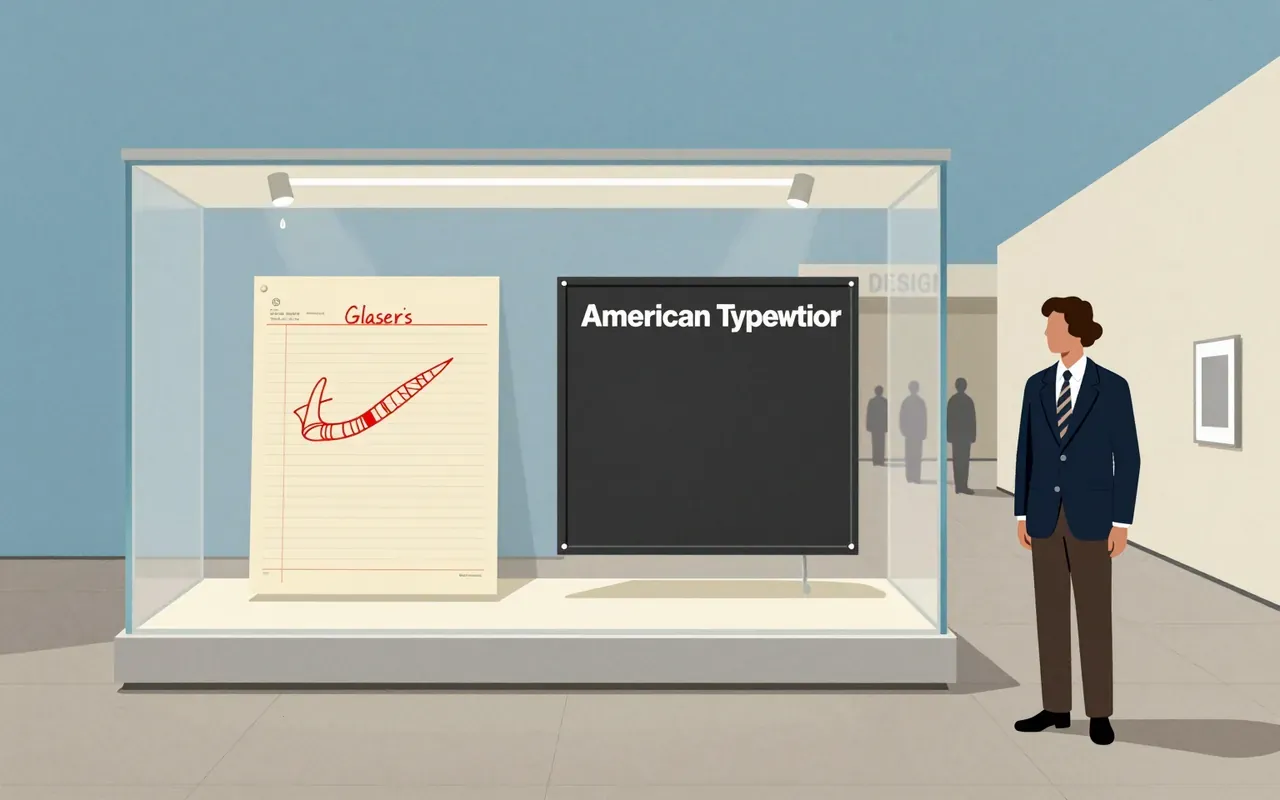
A graphic design brief must account for what is materially present—not reputation, not legacy, not what it ‘feels like’. This logo is three glyphs, one typeface, one colour, made in a taxi, given away, preserved in a museum, and later reactivated by trauma. Its power lies in what it omits: no skyline, no people, no narrative, no explanation.

9:04

Palatino

Palatino was built for bad paper—not books—and became a book face anyway.
10:01

Cooper Black

Oswald Cooper · 1922

Cooper Black is an ultrabold serif typeface designed for display use, drawn as an extra-bold weight of the Cooper Old Style family. It originated from Oswald Cooper’s lettering practice in 1920s Chicago and the Midwest. Its low stroke contrast and soft, 'muddy' appearance distinguish it from nineteenth-century fat faces. It quickly became popular in newspaper advertising and later in pop culture — notably on the 1966 Pet Sounds album cover. It was the second-best-selling typeface for American Type Founders and polarised typographic opinion: rejected by conservative typographers but embraced so enthusiastically by graphic designers that supply could not meet demand.

9:42

Eiko Ishioka

Surrealism anchored in historical form—not abstraction—gave her authority across Olympics, film, and advertising.
10:59

Milton Glaser

Glaser didn’t invent graphic design — he weaponised historical style against modern banality.

games.briefs Games

All 1 in games →
10:57

SSX Tricky

EA Canada · 2001

SSX Tricky is a 2001 arcade snowboarding game developed by EA Canada for PlayStation 2, GameCube, and Xbox. It builds on SSX with twelve characters, Uber Tricks triggered by adrenaline, a rivalry system activated by knocking down opponents, and progression tied to medals and trick books. Tracks include remixes of Merqury City and Tokyo Megaplex, plus Garibaldi and Alaska.

business.briefs Business

All 5 in business →
10:56

ITV plc

A merger designed to dominate UK TV instead built too many studios and closed too many offices — proving scale without synergy is just overhead with a press release.
10:23

RTL Group

Bertelsmann · 2000

RTL Group is a broadcast-first European media operator built through merger, not innovation. Its structure reflects regulatory fragmentation, not technological ambition.

10:43

Ted Turner

Turner didn’t build a media company — he built a regulatory arbitrage engine disguised as a broadcaster.
10:18

Meta Platforms

Mark Zuckerberg · 2004

Meta Platforms is a vertically integrated advertising monopoly masquerading as a metaverse infrastructure company. Its business model is simple and brittle: monetise attention at scale. Its strategy is contradictory: spend billions on speculative futures while refusing to decouple from surveillance-based ads. Its governance is absolute: Zuckerberg controls votes, vision, and compensation.

10:02

Yahoo Inc. (2017–present)

Jerry Yang & David Filo · 2006

Yahoo Inc. (2017–present) is not the original Yahoo!. It is a Delaware-incorporated media entity formed in 2006, acquired by Verizon in 2017 for $4.48 billion — reduced from $4.8 billion after two breaches affecting over a billion users. Verizon wrote down its combined AOL-Yahoo value by $4.6 billion in 2018 and rebranded it Verizon Media in 2019. In 2021, Apollo Global Management acquired 90% for $5 billion, reinstating the Yahoo name and appointing Jim Lanzone CEO. Its $7.4 billion 2020 revenue comes from advertising across vertically focused, high-traffic properties — but it has shed Tumblr, HuffPost, and AOL without replacing their scale or influence.

technology.briefs Technology

All 1 in technology →
10:33

Wii

Nintendo · 2006

The Wii is Nintendo’s seventh-generation home video game console, launched in November 2006. It prioritises accessible motion-based interaction over computational power. Its innovation is the Wii Remote—using MEMS accelerometers and infrared sensors for gesture recognition and pointing—supported by the Sensor Bar. It introduced native Internet connectivity (802.11b/g Wi-Fi and Bluetooth), digital distribution via the Wii Shop Channel, and backward compatibility with GameCube software and accessories in early models. It achieved massive commercial success—over 101 million units sold by 2016—by appealing to non-traditional audiences through intuitive controls, low price, and family-friendly software like Wii Sports. Its hardware uses off-the-shelf components, prioritising cost efficiency and energy savings over high-definition graphics or processing power.

culture.briefs Culture

All 25 in culture →
9:17

Barbie

Barbie didn’t give girls choices—it gave them costumes for adulthood, and sold the wardrobe first.
10:36

Celebrity branding

Celebrity branding doesn’t sell products—it sells borrowed trust, and trust evaporates the moment the celebrity stumbles.
9:50

Consumer identity

Consumer identity is not who you are—it’s how brands make you legible to themselves.
9:44

Subliminal stimuli

Subliminal stimuli don’t hijack your will—they only nudge what you already intend to do.
9:24

Adbusters

Adbusters diagnosed media inequality in 1989—and never updated the remedy.
8:58

Clickbait

Clickbait isn’t lazy writing — it’s fraud dressed as curiosity.

automotive.briefs Automotive

All 3 in automotive →
9:38

Chevrolet Impala

Harley Earl team · 1959

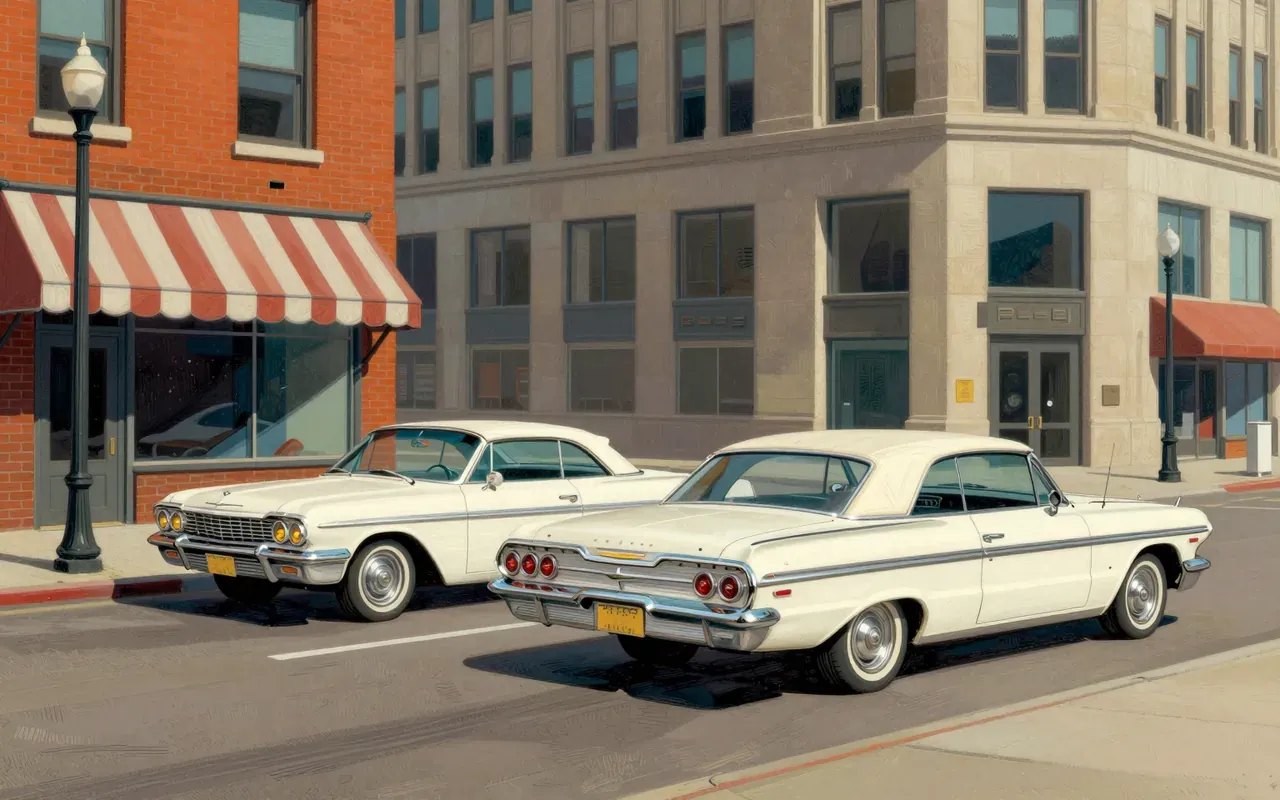
The 1958 Chevrolet Impala is a full-size car, launched as a top-tier Bel Air variant without Bel Air badging, distinguished by symmetrical triple taillights, named after the African antelope, and developed from a 1956 GM Motorama concept car. It rides on GM’s shared 'A' body platform. Harley Earl personally reviewed the foundational styling sketch. Production spanned discontinuous periods: 1958–1985, 1994–1996, and 2000–2020.

10:06

Lincoln Futura

Bill Schmidt · 1955

The Lincoln Futura is a 1955 concept car designed by Bill Schmidt and John Najjar, built by Ghia in Turin, Italy, at a cost of $250,000 (equivalent to $3,000,000 in 2025). Its styling was original by 1950s standards, featuring a double clear-plastic canopy, exaggerated hooded headlight pods, and very large, outward-canted tailfins. The car had a complete powertrain and was fully operable, in contrast to many show cars. Its official public debut was on January 8, 1955, at the Chicago Auto Show; it had been shown to the press at the city's Congress Hotel on January 5. While being displayed elsewhere in the U.S. that spring, the Futura was seen by the country's television audience on Today ("The Today Show") on March 3, 1955. The idea for the Futura came from designer Bill Schmidt, who got the idea while he was diving, after an encounter with a shark.

11:12

Plymouth Road Runner

Plymouth · 1968

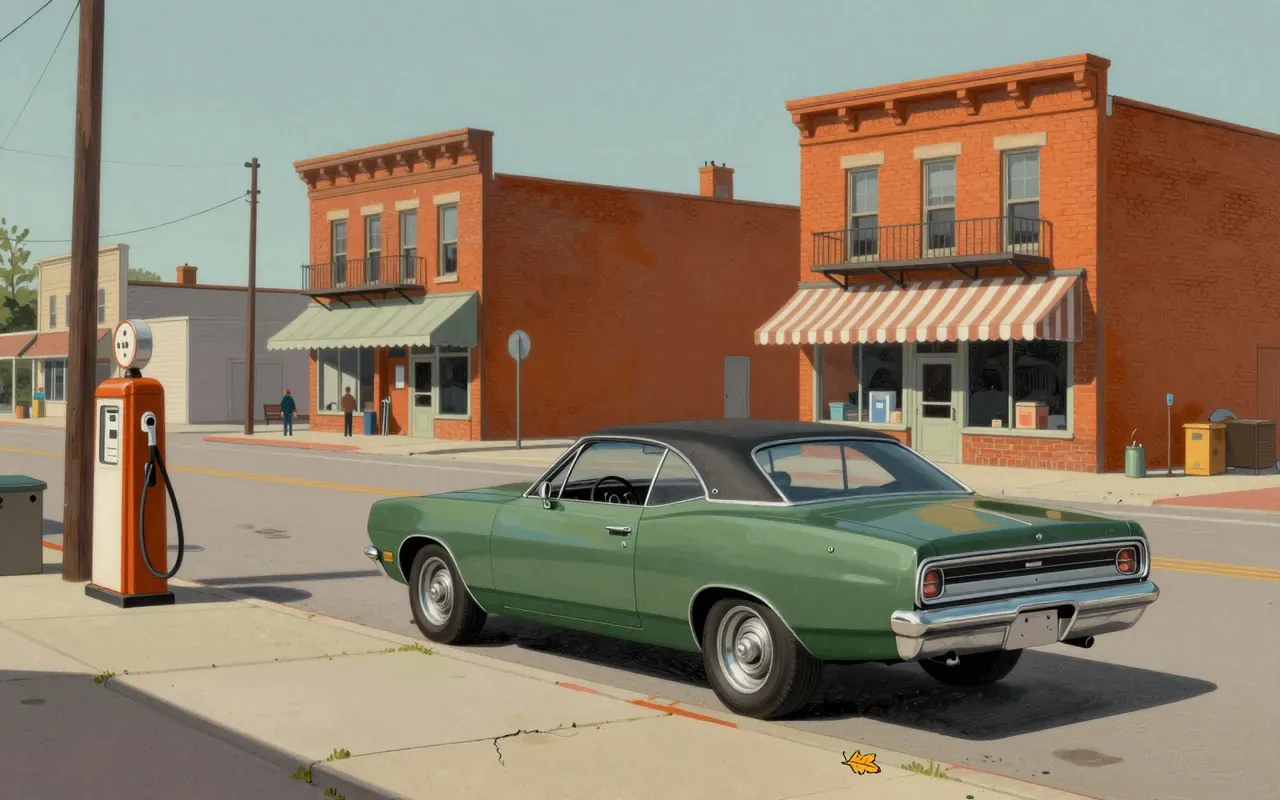
The Plymouth Road Runner is a 1968 US muscle car introduced by Chrysler under its Plymouth brand. It was based on the Belvedere, Plymouth’s basic mid-size model, and built on the Chrysler B platform. It launched as a 2-door pillared coupe, later adding a hardtop. It used licensed cartoon branding and a distinctive horn. Its performance and sales declined in the 1970s due to fuel economy and emissions regulation. By 1976, it was a non-performance trim package on the compact Volaré.

food.briefs Food

All 2 in food →
7:26

Michelin Guide

The Michelin Guide is a restaurant and hotel guide published by the French tyre company Michelin since 1900, known for its stars awarded by anonymous inspectors.
1:49

Key lime pie

A chilled Floridian pie with a tart, creamy filling made from Key lime juice, egg yolks, and sweetened condensed milk.

fashion.briefs Fashion

All 16 in fashion →
10:06

Air Jordan

A shoe that broke league rules to become a retail weapon—and collapsed under its own chemistry.
9:07

Benetton Group

Benetton didn’t sell sweaters — it sold advertising dressed as clothing.
10:39

Canali

Canali didn’t invent Italian tailoring — it industrialised its authority.
9:22

Helmut Lang (fashion brand)

Minimalism was never about less—it was about removing everything until only the cut, the line, and the fabric’s behaviour remained.
11:22

Marc Jacobs

Marc Jacobs doesn’t make clothes—he makes conditions for contradiction.