Barrio fino
Daddy Yankee · 2004
Barrio fino is reggaeton’s first major export strategy — rhythm-locked, studio-sourced, and genre-flexible where it counts.
Selection as authorship.
Barrio fino is reggaeton’s first major export strategy — rhythm-locked, studio-sourced, and genre-flexible where it counts.

Black Sunday is a landmark commercial and cultural achievement — not a document of its production process.
Kaleidoscope is Kelis’s 1999 debut studio album, produced entirely by the Neptunes and released by Virgin Records. It draws from 1970s jazz, disco, soul, R&B, hip hop, urban and rock, and features club-oriented electro beats. Several tracks were designed for dancing. The Neptunes performed instruments and created arrangements. Dave Hummel and Andrew Coleman engineered it. Şerban Ghenea mixed thirteen tracks; Ken 'Duro' Ifill mixed track 10. Kelis cited Sarah Vaughan, Ella Fitzgerald and Dinah Washington as major vocal influences. The album was recorded between mid-1998 and mid-1999.
Madonna’s 'Music' is a studio document — not a concept, not a persona shift, but a sequence of hardware choices, personnel swaps, and tempo decisions made in one London room over five months. It lands where the gear speaks loudest: clipped vocals, dry acoustics, converter-coloured transfers. It fails where the logic breaks: the 6:34 sprawl of 'Paradise', the inert cover of 'American Pie'. It is pop as process, not product.
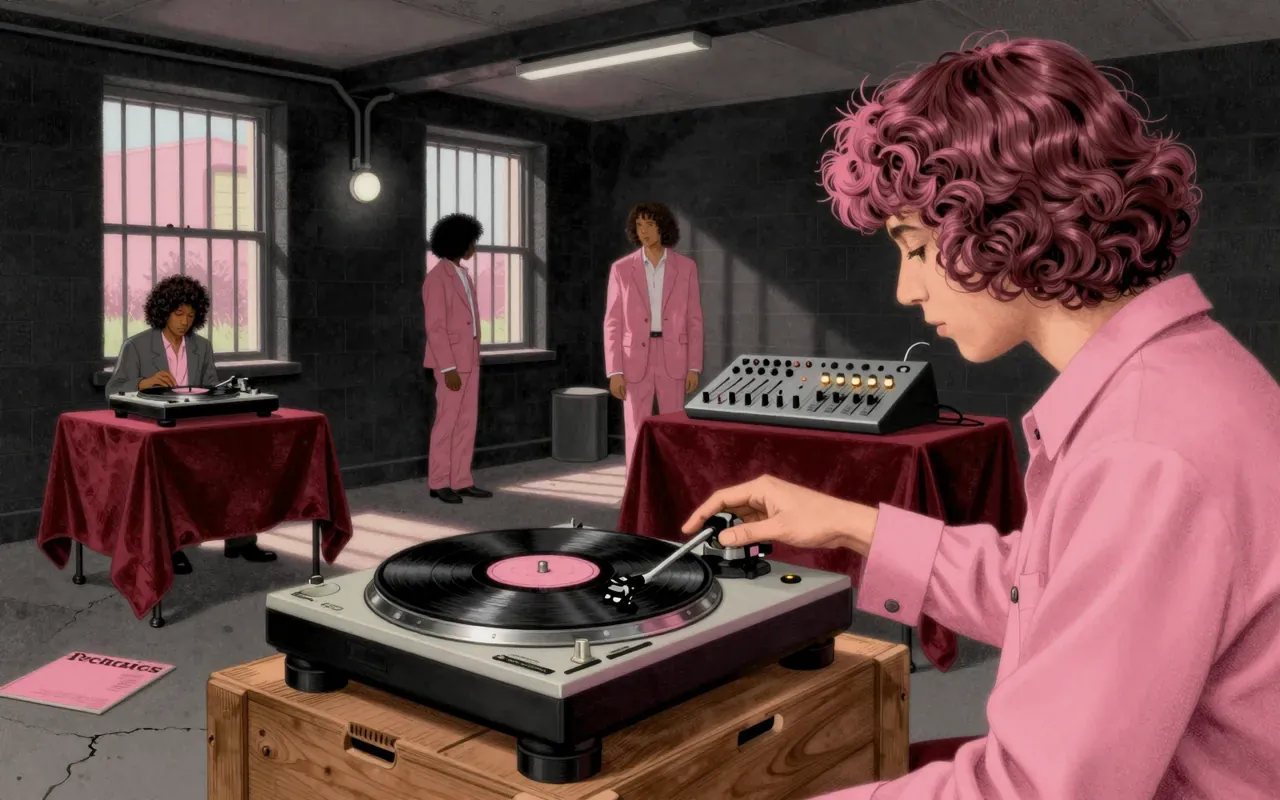
Run-D.M.C. (1984) is a debut defined by subtraction: Oberheim DMX beats, Jam Master Jay’s scratches, Eddie Martinez’s guitar riffs. No basslines beyond the drum machine’s pulse. No melodic relief. No studio reverb. Just staccato vocals, rhythmic tension, and social framing — all assembled by Russell Simmons and Larry Smith. It landed as new school hip hop because it refused the old rules — not by adding, but by stripping away.

A 2004 experimental mashup by Danger Mouse, made from Jay-Z’s The Black Album a cappellas and samples solely from the Beatles’ 'White Album'. Released in a limited 3,000-copy run without Beatles permission. Framed as deconstructive labour — not remixing, but rebuilding using only those two sources.
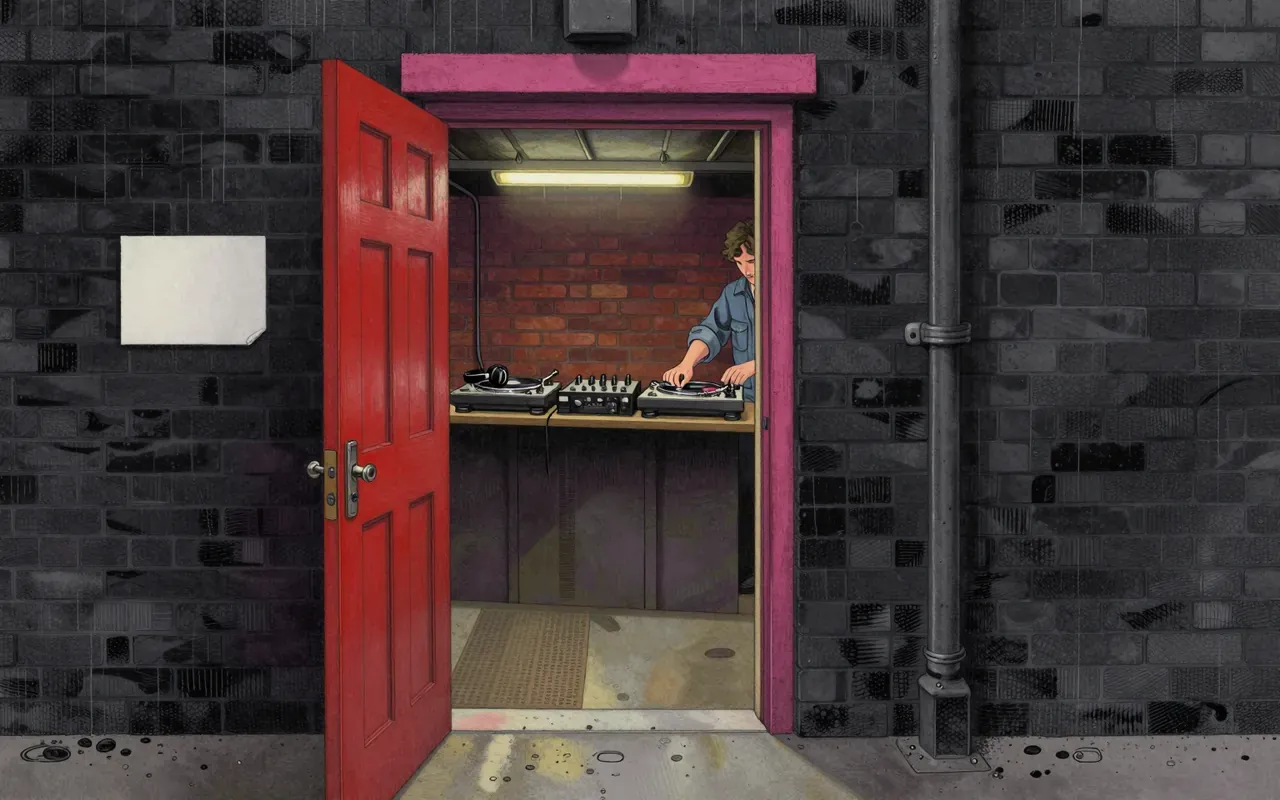

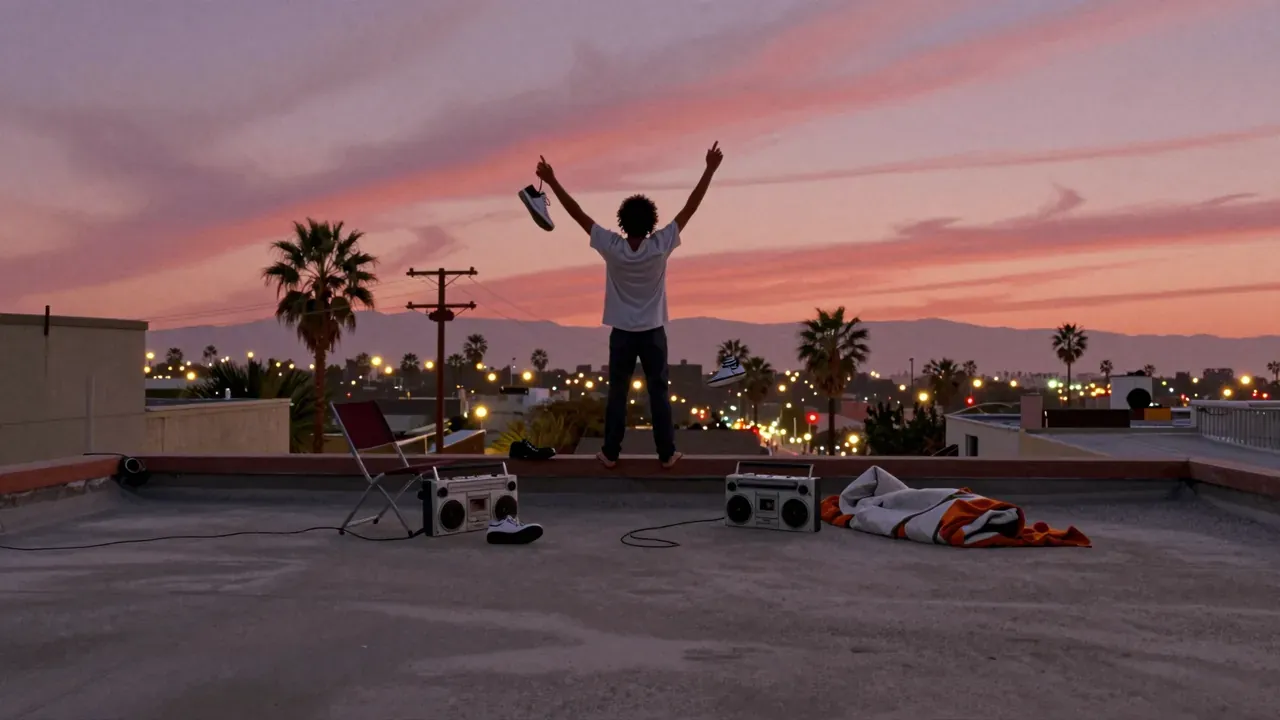
House Party (1990) is a low-budget teen comedy directed by Reginald Hudlin, following Kid and Play as they throw a house party in South Central Los Angeles. Built around a single chaotic night, it uses hip hop aesthetics — scratching, freestyling, dance-offs — as structural devices rather than decoration. With naturalistic cinematography by Peter Deming and a jazz-funk-hip hop score by Lenny White, it prioritises physicality, vernacular rhythm and communal joy over plot mechanics. Though some subplots falter and caricature occasionally intrudes, its consistency, specificity and warmth have secured its status as a culturally significant cult classic.
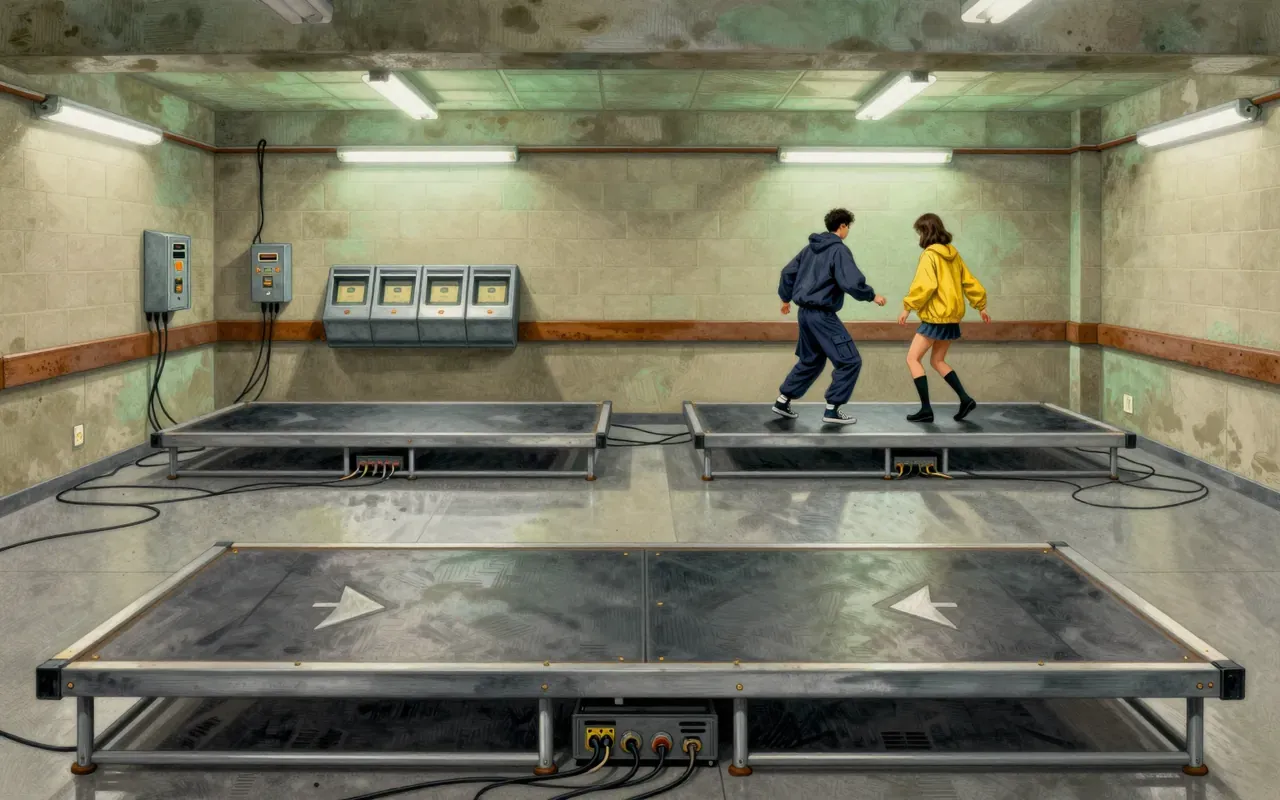
Dance Dance Revolution (1998) is a Konami arcade rhythm game that turns footwork into score. Players match scrolling arrows with steps on a dance pad. Timing judgments affect a life meter — the Dance Gauge — whose depletion ends the song. Combo tracking, step counts, and letter grades follow each performance. It runs under Konami’s Bemani brand. It has no narrative, no progression beyond song selection, and no solo longevity without hardware or social context.
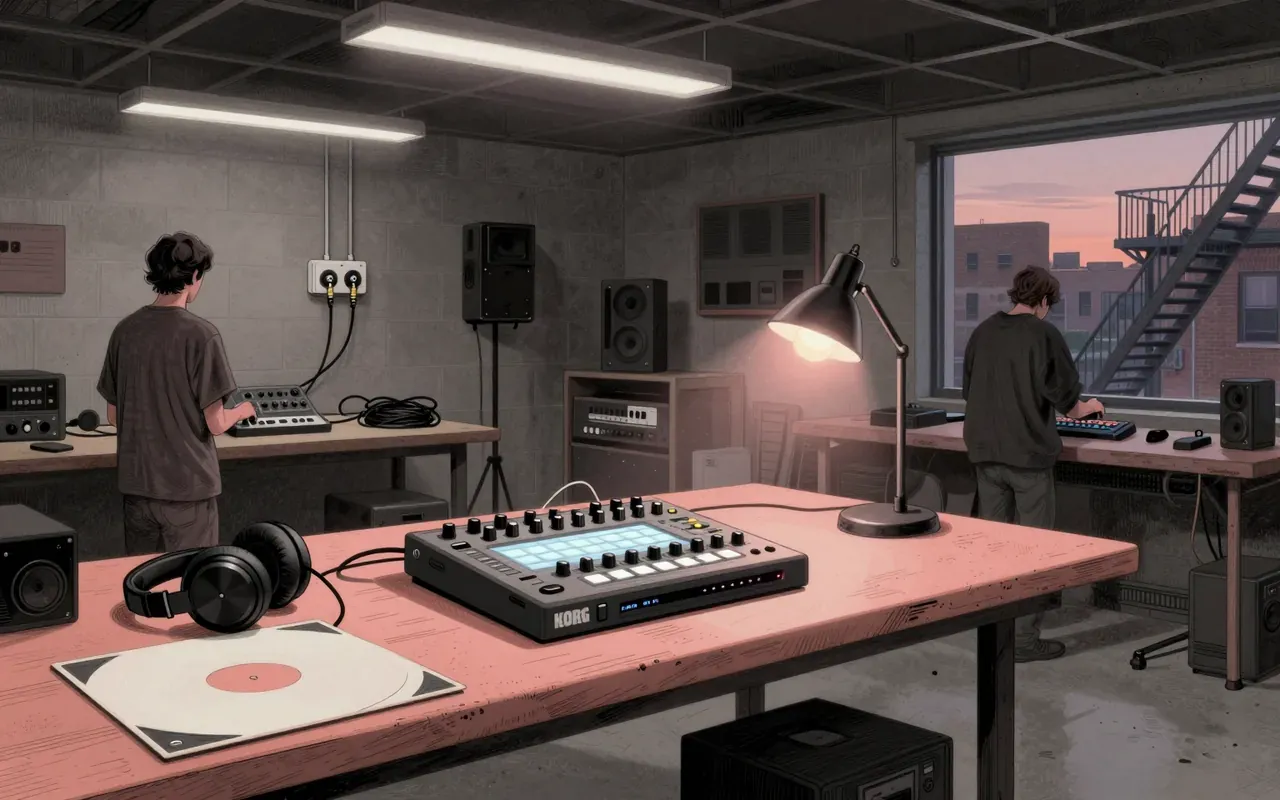
The Korg Kaoss Pad 3 is a live-performance effects unit. It uses an X/Y touchpad for real-time control of 128 built-in programs—including reverb, delay, flanger, analog filter, drive circuit, and a vocoder. It samples onboard. Some effects sync to tempo. It functions as a MIDI controller. Connections are RCA only.
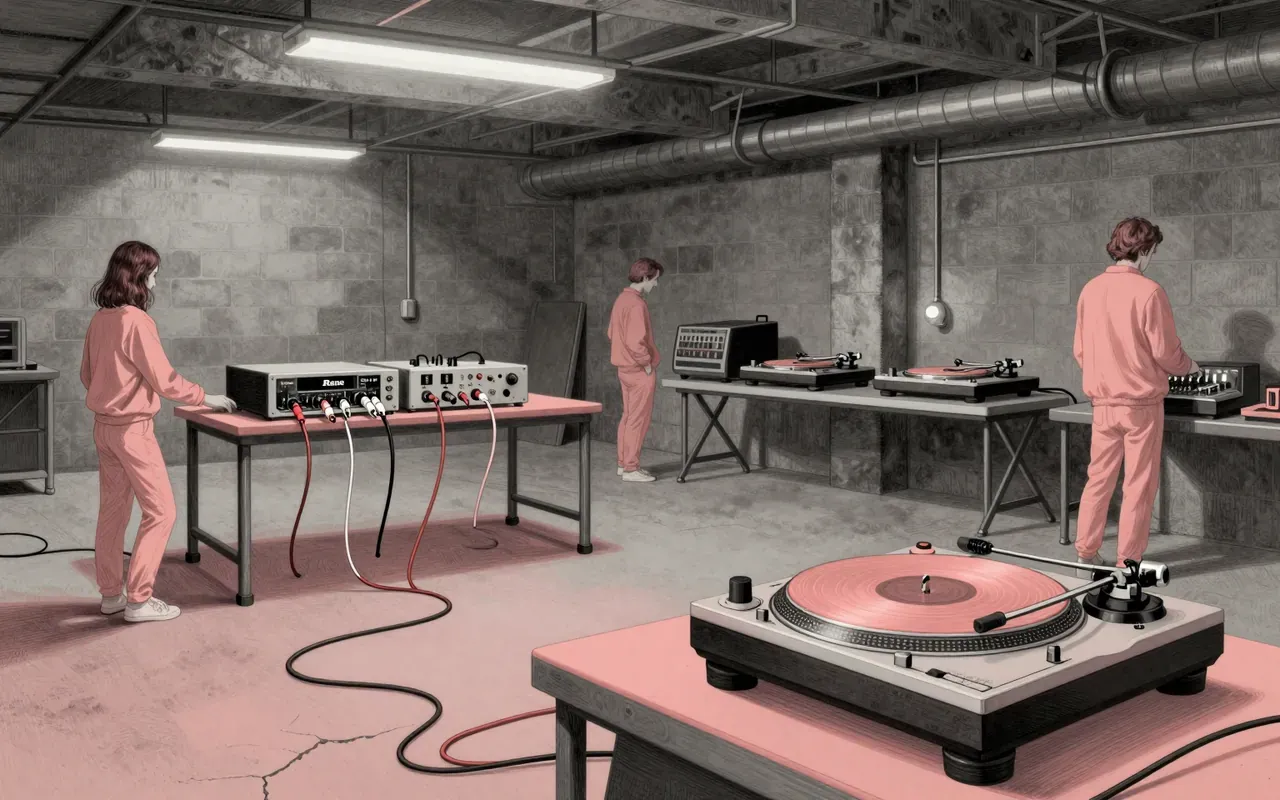
The Rane Serato SL 1 is a purpose-built bridge between vinyl and digital audio. It does one job: translating timecode signals into Serato Scratch Live 2.5. It asks for turntables, a mixer, and a laptop — and gives back stable, low-latency control. It offers no flexibility, no expansion, no autonomy. It is obsolete as a product, but functional as a node — if your setup still runs on it.
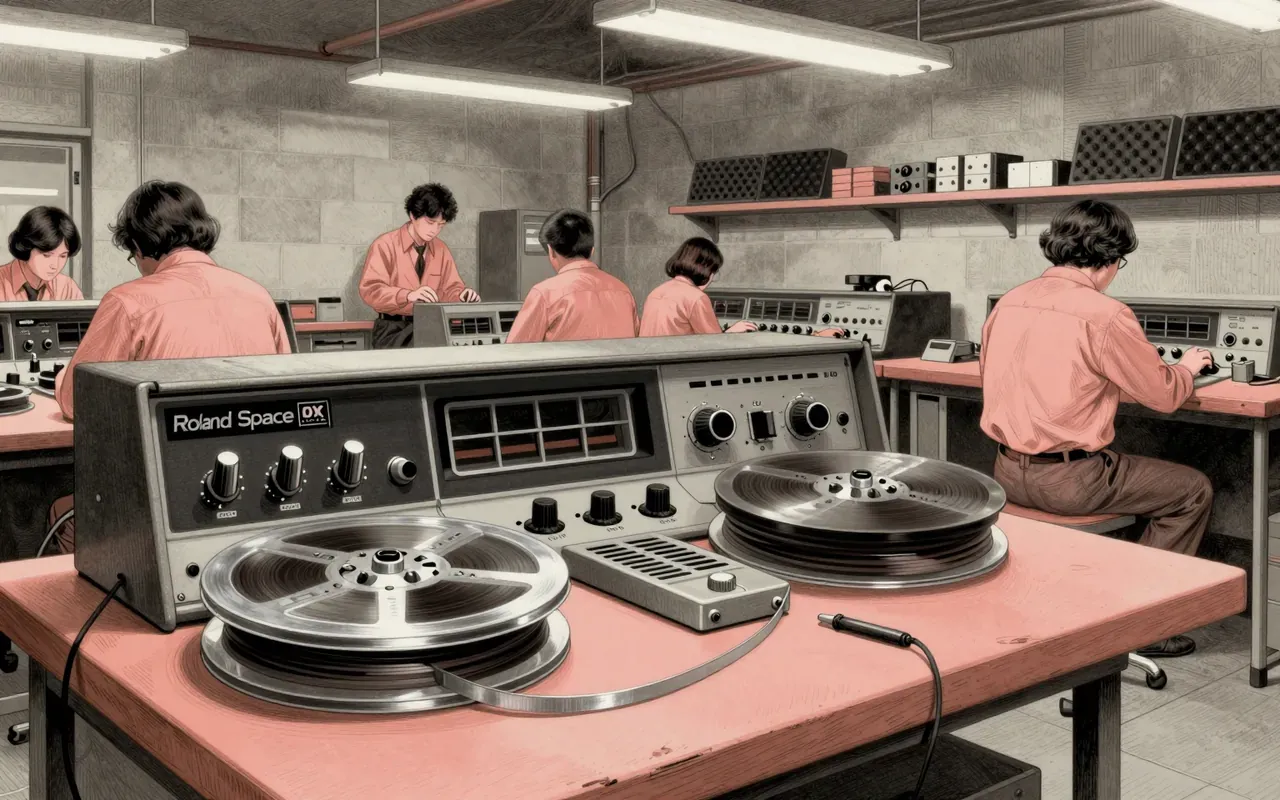
The Roland RE-201 Space Echo is a non-rackable desktop analog tape echo unit with three inputs (two mic, one instrument), five magnetic tape playback heads, 1/4" wet/direct outputs, footswitch input, and controls for time, feedback (intensity), low/high EQ, dry/wet mix, and reverb. Its reverb has a compromised tonal character ('trs CRADA'). It uses an actual reel of tape — distinguishing it from imitators. It does not offer precision, stability, or clean reverb. It does deliver saturated, decaying, pitch-wobbling repeats no digital model fully replicates.
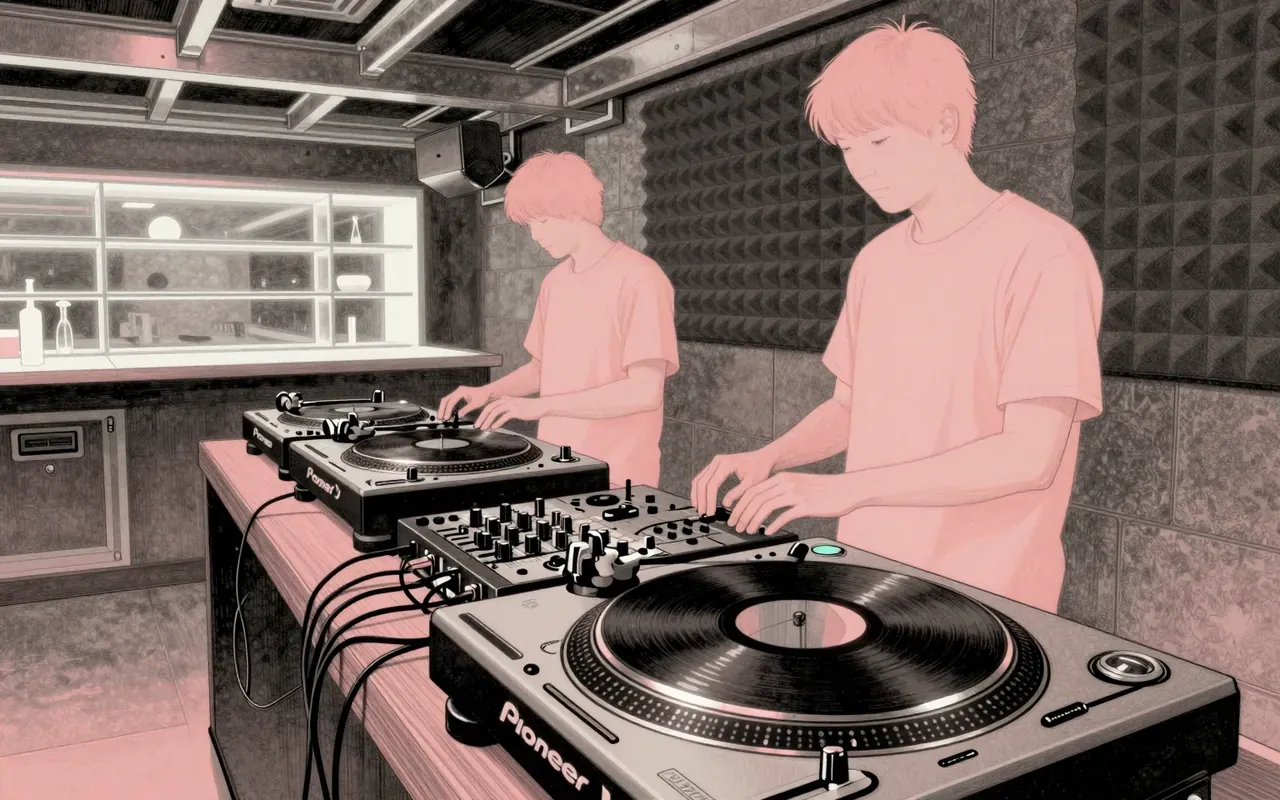
The Pioneer CDJ-1000 is a tabletop DJ player. It plays CDs. It does not read MP3 files. It is no longer sold. It was replaced by the CDJ-2000 Nexus.

The Pioneer CDJ-1000 MK2 is a discontinued tabletop DJ player built to play CDs with exacting mechanical and operational control. It sets the reference for precision, robustness, and reliability among CD-based DJ players of its era. Loops fire instantly. Hot Cues never lag—even while seeking. Reverse isn’t just functional—it’s musical. It’s a discontinued CD-only player, replaced by the CDJ-2000 Nexus.

The Pioneer CDJ-100S is a discontinued tabletop DJ player. It loads CDs reliably. It has pitch control and effects users praise. Its cue point system is obsolete. It is outperformed by the CDJ200, CDJ800, and DNS1000. Users deployed it in live events but declined to repurchase it due to age. Its build quality remains high — but that does not compensate for functional limitations.
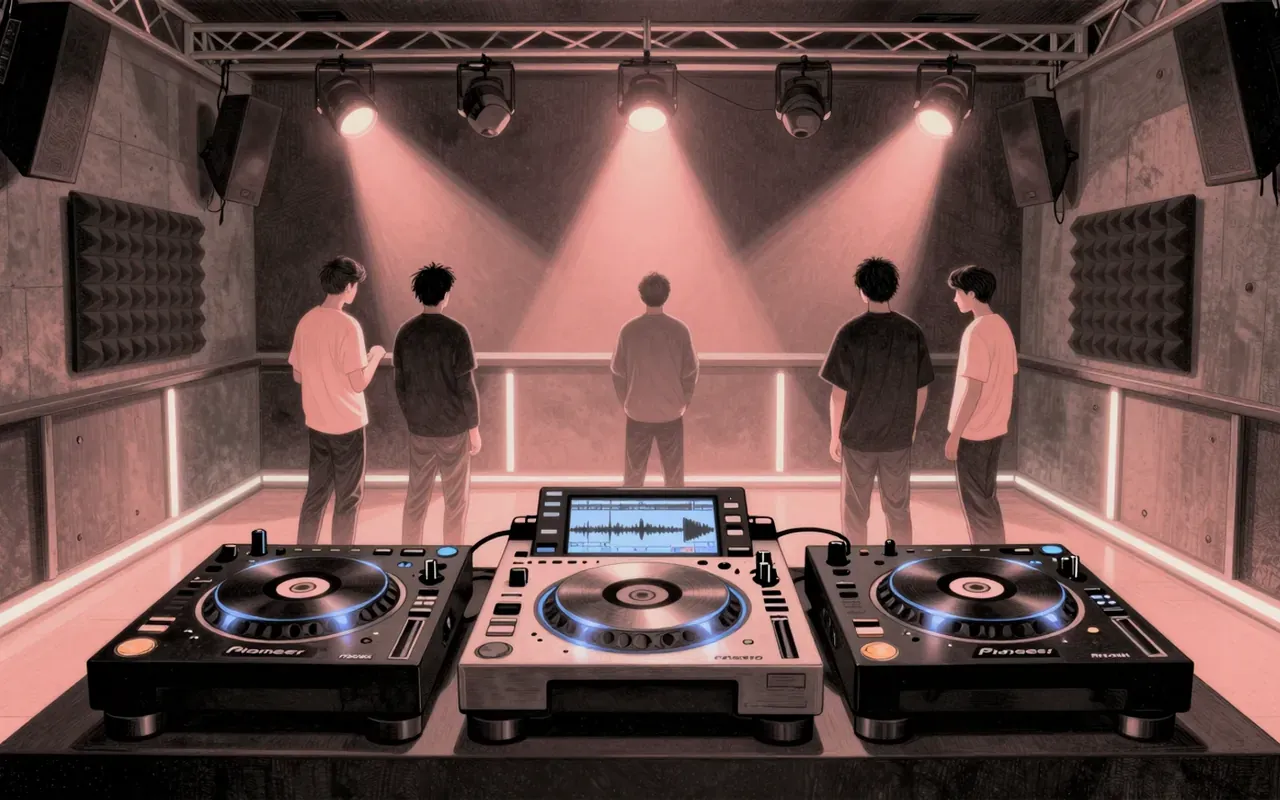
The Pioneer CDJ-2000 is a discontinued tabletop DJ player. It supports playback from CDs, DVDs, SD cards, USB devices, and wirelessly via WiFi from computers and phones. It has a ~6-inch colour LCD display. Its loop quantisation is automatic and highly accurate. User preferences are saved across power cycles. It was replaced by the CDJ-2000 Nexus.

The Pioneer CDJ-500 is a tabletop DJ player built to play CDs in live and private DJ sets.