briefs
Topic · across the network

Memory

What is kept, what is edited, and what is agreed to be forgotten.

82
briefs
8
subjects
12:33
average
1028 min
in total
Abstraction 407Absurdism 137Acoustics 220Acting 65Adaptation 372Addiction 95Adolescence 202Advertising 77Age of exploration 14Ageing 113Agriculture 100Algorithms 114Ambition 46Anarchism 38Ancient Egypt 17Ancient Greece 38Ancient Rome 30Animals 172Anthropology 23Apartheid 12Architecture 165Archives 32Argentina 10Art Deco 26Artificial intelligence 78Astronomy 81Attention 42Australia 32Automation 73Avant-garde 164Aviation 79Banking 72Banned works 40Bauhaus 12Beer 5Behavioural economics 22Berlin 16Big tech 6Biodiversity 136Biography 86Birds 41Black holes 20Blockchain 12Boxing 14Branding 77Brazil 43Bread 29Britain 131Brutalism 4Bubbles 3Buddhism 28Byzantium 10California 17Canada 18Capitalism 94Cars 468Celebrity 59Censorship 110Cheese 24Chefs 9Chemistry 104Chess 2Childhood 87China 109Chocolate 8Christianity 49Cinematography 343Cities 90Class 485Climate change 107Club culture 100Cocktails 2Coffee 11Cognitive bias 14Collecting 16Colonialism 284Colour 42Comedy 89Community 52Complexity 21Computing 309Consciousness 16Conservatism 14Conspiracy theories 8Cooking 178Corruption 38Cosmology 31Cover versions 64Craft 116Crate digging 42Creativity 8Crime 234Cryptocurrency 8Cryptography 24Cuba 10Cybersecurity 30Dada 12Debt 38Decision-making 28Decolonisation 46Deep time 80Democracy 45Denim 16Deserts 45Detroit 17Dinosaurs 12Directing 168Disasters 59Disease 109DJ culture 89Dreams 32Drones 5Drum machines 96Dystopia 69East Africa 28Ecology 337Economics 36Editing 72Education 92Egypt 12Electric vehicles 59Emotion 22Empire 92Endurance 49Energy 120Engineering 541Entropy 8Epidemics 13Equality 9Espionage 31Ethics 44Evolution 174Existentialism 106Expertise 2Exploration 49Extinction 23Failure 37Family 240Fandom 22Fascism 45Fashion 215Fast fashion 12Fear 34Feminism 122Fermentation 126Film music 81Fishing 12Folklore 71Food history 588Football 16Forests 31Forgery 7France 163Fraud 15Free will 13Freedom 16French literature 15Friendship 24Furniture 36Gambling 14Gender 63Generations 28Genetics 87Geology 96Germany 66Globalisation 74Gothic 32Greece 5Grief 126Habits 6Happiness 2Hardware 709Haute couture 22Headphones 8Hi-fi 12Hinduism 12Hoaxes 1Human history 23Human nature 41Identity 138Illustration 8Impressionism 6Improvisation 249India 89Indonesia 15Industrial design 342Inequality 13Inflation 4Information 34Infrastructure 280Insects 29Intelligence 8Interiors 31Internet culture 88Invention 329Iran 41Islam 40Islands 17Israel 9Italy 52Jamaica 10Japan 114Jewellery 5Journalism 34Judaism 13Justice 42Korea 41Language 70Law 90Leadership 20Learning 6Liberalism 1Libraries 6Literary criticism 26London 12Loneliness 61Los Angeles 62Lost works 9Love 67Luxury 55Machine learning 15Management 10Maps 5Marketing 21Markets 51Mars 6Marxism 26Masculinity 46Materials 138Mathematics 79Meaning 6Medicine 124Memory 82Mental health 70Mesopotamia 4Mexico 38Migration 95Minimalism 68Mining 30Misinformation 9Modernism 63Money 24Monopoly 32Mortality 61Motivation 2Mountains 16Museums 27Mysticism 11Mythology 60Nationalism 40Neuroscience 23New York 36Nigeria 7Nihilism 10Noise 31Nostalgia 33Nuclear 29Nutrition 17Oceans 48Oil 42Open source 45Painting 18Palaeontology 29Parenting 14Paris 18Partition 6Patents 71Patronage 14Perception 44Personal style 27Personality 2Persuasion 8Peru 10Philosophy 77Photography 37Physics 206Plants 26Platforms 89Podcasting 1Poetry 25Poland 17Policing 34Pop Art 16Populism 2Portraiture 6Portugal 18Postmodernism 23Power 91Prehistory 24Preservation 28Printmaking 21Privacy 11Probability 6Productivity 1Programming 54Prohibition 1Propaganda 35Protest 75Pseudoscience 17Psychology 80Publishing 22Punishment 16Quantum mechanics 44Race 145Radio 30Railways 35Rave 17Realism 47Record labels 19Recording 810Relativity 23Religion 154Resilience 15Restaurants 30Restoration 2Retail 94Revolution 58Risk 18Ritual 96Robotics 26Romance 96Russia 58Salt 9Sampling 246Satire 84Scandinavia 28Scientific method 186Screenwriting 26Sculpture 7Secularism 2Self-deception 14Semiconductors 73Sexuality 102Ships 18Silence 24Silicon Valley 17Slavery 35Sleep 2Smartphones 27Sneakers 15Social media 58Socialism 9Software 68Songwriting 180Sound design 332Sound systems 20South Africa 19South East Asia 30Space exploration 84Spain 18Special effects 41Spices 62Spirits 12Sport 82Startups 21Statistics 10Status 9Stoicism 4Storytelling 68Strategy 70Street food 99Streetwear 16Studio craft 508Subcultures 59Sugar 12Supply chains 115Surrealism 53Surveillance 21Sustainability 30Synthesis 232Tailoring 37Taxation 14Tea 24Textiles 97Thailand 11The American Revolution 19The American South 88The Arab world 41The Arctic 19The Balkans 17The Belle Epoque 13The body 29The brain 26The Caribbean 28The civil rights movement 62The Cold War 160The eighties 268The Enlightenment 29The financial crisis 19The First World War 39The food industry 157The French Revolution 9The Gilded Age 9The Great Depression 18The Holocaust 20The Industrial Revolution 93The internet 61The interwar years 135The Middle Ages 35The Moon 4The music business 169The Netherlands 10The nineties 26The Olympics 10The pandemic 13The Reformation 1The Renaissance 16The Russian Revolution 19The Second World War 102The seventies 58The sixties 28The space race 5The United States 19The universe 7The Victorian era 37Therapy 20Tokyo 11Trade 48Tragedy 22Translation 5Trauma 85Travel 5True crime 2Turkey 18Typography 54Uniforms 23Unions 8Urban planning 66Utilitarianism 1Utopia 5Vaccines 10Vegetarianism 15Venture capital 6Video games 291Vietnam 12Vintage 65Vinyl 6Virtual reality 11War 169Watches 4Water 11Weather 29West Africa 29Wilderness 10Wine 3Work 22Workwear 19Worldbuilding 121

books.briefs Books

All 1 in books →
15:00

In Search of Lost Time

Marcel Proust · 1913

Proust's seven-volume masterwork on memory and consciousness, pioneering modernist technique across 3,200 pages. The brief covers the madeleine moment, how time works in the novel, why high society occupies so much space, and which sections actually repay the effort.

music.briefs Music

All 8 in music →
9:20

Random Access Memories

Daft Punk · 2013

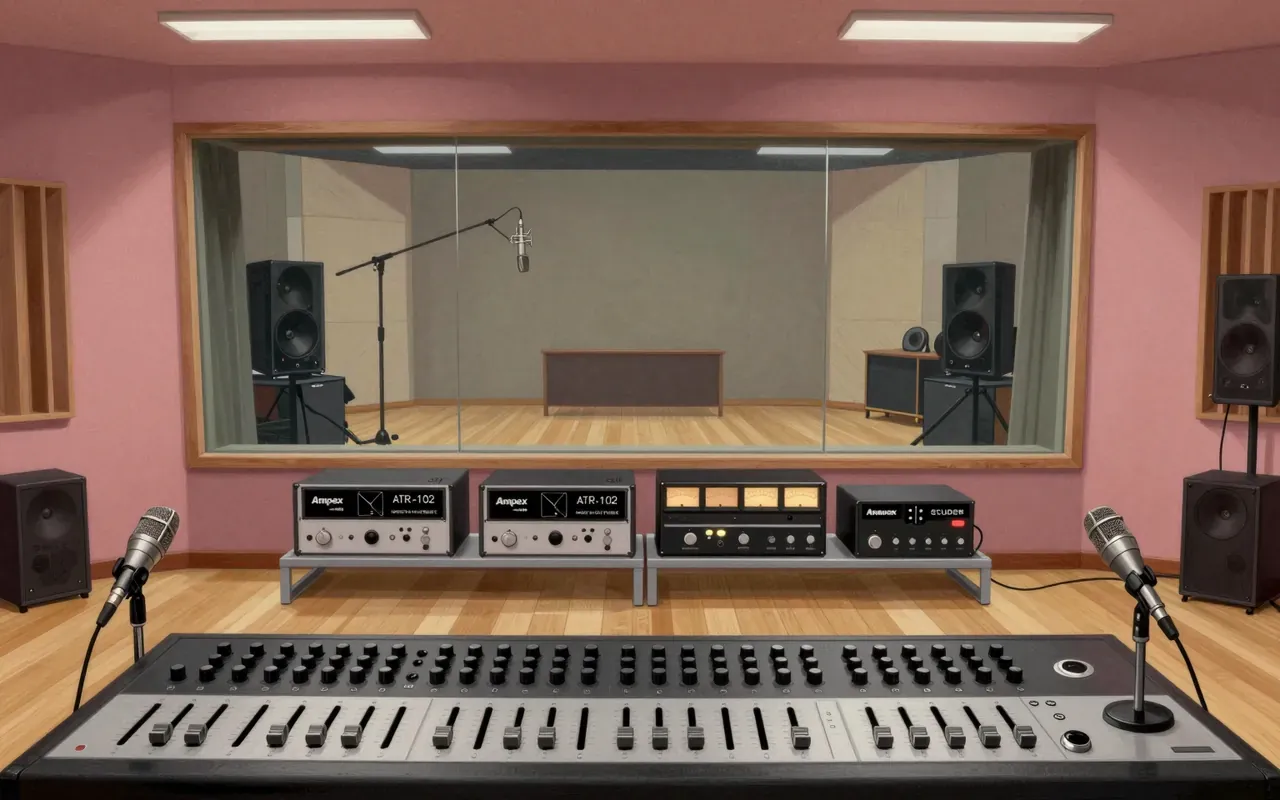
Random Access Memories is Daft Punk’s fourth and final studio album, released 17 May 2013 on Columbia Records. It abandons sampling (except on 'Contact') and minimal electronics in favour of live instrumentation—drums, horns, strings, woodwinds—recorded across Henson, Conway, Capitol, Electric Lady, and Gang Studios between 2008 and 2012. Session musicians including Omar Hakim, Nile Rodgers, Pharrell Williams, and Giorgio Moroder were directed via sheet music and humming—not MIDI or grids. Most vocals were tracked in Paris; rhythm sections in the US. Orchestral parts were recorded for nearly every track but used selectively. The album reflects a shift from futurism to presence and pursues a 'west coast vibe' rooted in Fleetwood Mac, the Doobie Brothers, the Eagles, and Jean-Michel Jarre—not as reference, but as method.
10:20

You Got My Mind Messed Up

James Carr · 1967

A 1967 soul record defined by vocal immediacy, structural economy, and emotional precision — not myth, not legacy, but sound made in a specific room, with specific tools, at a specific time.

9:32

Bookends

Simon & Garfunkel · 1968

Bookends is a tightly wound, formally precise meditation on time — not a sprawling statement, but a sequence of calibrated sonic decisions: acoustic guitar alone, viola tuning, nursing home voices, Moog bass, whispered pop phrases. Its power lies in restraint, not scale.

9:24

The Kinks Are the Village Green Preservation Society

The Kinks · 1968

A 15-track studio album by The Kinks, recorded at Pye Studios in London between March and October 1968 (with one track dating to 1966–67), produced by Ray Davies — his first officially credited production. It uses harmonica, harpsichord, flute, and guitar feedback. Its sound is subdued, light on the bottom end, and demo-like. Assembled from songs written over two years, it presents thematic vignettes of English small-town life. Critically acclaimed on release but commercially modest (~100,000 copies), it later became the band’s best-selling original record.

13:00

Discovery

Daft Punk · 2001

Built at Thomas Bangalter's home studio in Paris over two years, Discovery pairs vintage drum machines and keyboards with heavily processed vocals to turn childhood memory into pop songwriting. It moved the duo from raw club tracks toward a more song-based sound and remains a high point for vocoder-driven dance music.

13:00

Illmatic

Nas · 1994

Recorded across Manhattan studios by a teenager from Queensbridge, Illmatic sets Nas's dense, internal-rhyme narration against beats built separately by DJ Premier, Pete Rock, Q-Tip, Large Professor and L.E.S, arriving as a compact, unhurried document of one New York housing project.

13:00

Music Has the Right to Children

Boards of Canada · 1998

Recorded at their own studio in the Pentland Hills on tape and vintage synthesisers left deliberately out of tune, this debut folds samples of children's television into a haze that sits somewhere between comfort and unease. At seventeen tracks it asks patience of a listener, but its sustained atmosphere remains close to unmatched.

13:00

Play

Moby · 1999

Made at Moby's own Manhattan studio after a career-threatening previous album, Play folds vocal hooks lifted from Alan Lomax's field recordings into electronic production, letting decades-old voices carry new songs. Slow to catch on, it eventually sold over twelve million copies largely through film and advertising licensing.

film.briefs Film

All 62 in film →
13:00

45 Years

Andrew Haigh · 2015

A retired Norfolk couple prepare for their 45th wedding anniversary when news arrives that the body of Geoff’s long-dead lover has emerged from a Swiss glacier. Over six days, Kate observes his growing distance, uncovers buried evidence of Katya’s pregnancy, and begins to question the foundations of their marriage — not through confrontation, but through quiet, accumulating realisations. Directed by Andrew Haigh and adapted from David Constantine’s short story, the film relies on Charlotte Rampling and Tom Courtenay’s restrained performances, Lol Crawley’s naturalistic cinematography, and a script that trusts silence over exposition.

13:00

A Dedicated Life

Kazuo Hara · 1994

Kazuo Hara’s 1994 documentary follows Japanese writer Mitsuharu Inoue during his final four years with terminal cancer. Filmed in real time, it interweaves public appearances, private moments, interviews with peers and former students, and re-enactments of Inoue’s childhood — some later challenged by relatives. The film avoids narration or score, trusting juxtaposition and duration to build a portrait defined by contradiction, not coherence.

13:00

A Safe Place

Henry Jaglom · 1971

Henry Jaglom’s 1971 drama follows Noah, a young woman drifting between present loneliness and childhood memory in New York City. Starring Tuesday Weld, Orson Welles, and Jack Nicholson, it uses fragmented editing, recurring motifs, and nostalgic music to evoke mental fragility without diagnosis. Culled from fifty hours of footage, it is a formally ambitious but divisive experiment in psychological portraiture — intimate, unresolved, and demanding of its viewer.

13:00

After Life

Hirokazu Koreeda · 1998

After Life (1998) is Hirokazu Koreeda’s gently speculative film set in a way station between life and death, where the newly deceased must choose one memory to carry into eternity. Shot on grainy 16 mm and 8 mm film, it blends scripted scenes with real interviews, treating memory not as fixed truth but as subjective, evolving reconstruction. With understated performances and deliberate pacing, it explores how identity forms through fragments — a dress, a breeze, a letter — and how meaning accrues in quiet, relational moments rather than grand events.

13:00

Alice in the Cities

Wim Wenders · 1974

Wim Wenders’ 1974 road film follows a stalled writer and a nine-year-old girl as they search across Germany for her estranged grandmother. Shot in black-and-white 16 mm by Robby Müller, it favours duration over exposition, silence over speech, and observation over explanation. Its power lies in restraint: in the weight of a glance, the rhythm of a bus ride, the quiet persistence of mutual attention.

13:00

And Everything Is Going Fine

Steven Soderbergh · 2010

Steven Soderbergh’s 2010 documentary And Everything Is Going Fine assembles archival monologues, interviews and home movies of Spalding Gray into a portrait built entirely from his own words and presence. Edited by Susan Littenberg and scored by Gray’s son Forrest, it avoids biography-by-explanation in favour of temporal layering and verbal recurrence. The film premiered at Slamdance in January 2010 and was released on Criterion Collection Blu-ray and DVD in 2012.

13:00

Blue Heron

Sophy Romvari · 2025

Blue Heron is Sophy Romvari’s semi-autobiographical debut feature, following a Hungarian immigrant family’s move to Vancouver Island in the late 1990s amid their eldest son’s escalating behavioural crisis. Told through overlapping timelines and anchored by Eylul Guven and Amy Zimmer as young and adult Sasha, it uses restrained performances, Maya Bankovic’s hushed cinematography, and a layered soundscape to explore how childhood perception absorbs trauma without comprehension. Released in 2025 after festival acclaim, it prioritises sensory fidelity over exposition, rendering memory as atmosphere rather than narrative.

13:00

Brand upon the Brain!

Guy Maddin · 2006

Guy Maddin’s 2006 silent-film pastiche follows a man revisiting his childhood home — a lighthouse-orphanage — triggering twelve chapters of repressed memory. Filled with Freudian horror, surreal ritual, and maternal vampirism, it uses stylised performance, intertitles, and Jason Staczek’s score to build a world where trauma repeats like a scratched record. Narrated on screen by Isabella Rossellini, it is arthouse cinema at its most formally committed and emotionally raw.

history.briefs History

All 2 in history →
13:00

Lord Byron

1788–1824

Lord Byron became famous overnight with the first cantos of Childe Harold's Pilgrimage, then scandal over his marriage and rumoured relationship with his half-sister drove him from England for good in 1816. He spent his final months and most of his remaining fortune backing the Greek war of independence, dying of fever at Missolonghi in 1824 without seeing a Greek victory his death nonetheless helped bring closer.

13:00

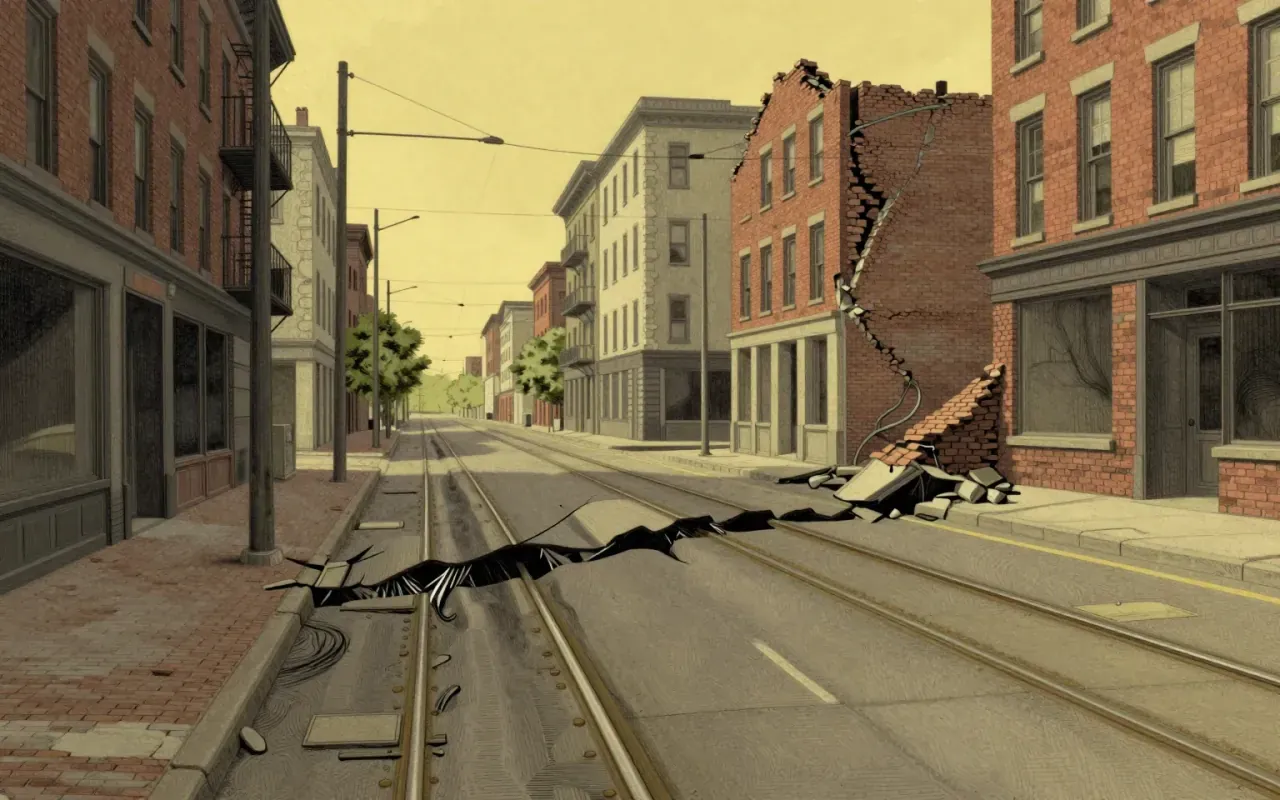
1906 San Francisco earthquake

18 April 1906

The earthquake that struck San Francisco at 5:12 on the morning of 18 April 1906 registered somewhere between magnitude 7.7 and 8.3 and ruptured close to three hundred miles of the San Andreas Fault, but most of the city's destruction came not from the shaking itself, which is estimated to account for as little as five to twenty percent of the damage, but from the fires that followed and destroyed some twenty-five thousand buildings. Early death tolls of a few hundred left out most of the dead in Chinatown, and San Francisco's Board of Supervisors did not formally acknowledge a toll above three thousand until 2005. The disaster also drove the geologist Andrew Lawson's foundational research connecting the earthquake directly to the fault he had already identified in 1895.

science.briefs Science

All 2 in science →
10:00

Baddeley's model of working memory

Alan Baddeley and Graham Hitch · 1974

Baddeley and Hitch’s 1974 model reframed working memory as a set of interacting, domain-specific components — not a single bottleneck. Dual-task interference, the word length effect, and amnesic patient profiles provide direct empirical support. Later additions (episodic buffer in 2000, renamed awareness buffer in 2026) extend but do not overturn the core claim of fractionation. It remains indispensable — not because it is complete, but because it is falsifiable, componential, and repeatedly predictive.

design.briefs Design

All 2 in design →
10:24

Aldo Rossi

Monuments are not ornaments—they're the city's memory banks, and Rossi designed architecture to last as long as they do.
9:52

Daniel Libeskind

Architecture that begins on paper and arrives late — Libeskind proves memory can be structural, not just symbolic.

games.briefs Games

All 1 in games →
10:52

Silent Hill 2

Team Silent · 2001

Silent Hill 2 is a 2001 survival horror game developed by Team Silent within Konami Computer Entertainment Tokyo. It uses third-person perspective, no HUD, light-dependent maps, manual annotation, and environmental progression to frame James Sunderland’s search for his deceased wife as an act of psychological excavation.

culture.briefs Culture

All 4 in culture →
10:13

Collective memory

Collective memory does not preserve the past. It selects, distorts, and defends group identity.
8:42

Cultural memory

Cultural memory isn’t how we remember the past—it’s how the past gets rewritten by the present to serve the next version of us.
9:05

Nostalgia

Nostalgia wasn’t about the past—it was about soldiers dying from homesickness.
11:33

Susan Sontag

Sontag didn’t just write about images—she diagnosed how they replaced memory with recall.