briefs
Topic · across the network

Brazil

The largest experiment in mixing the world has run, still running.

43
briefs
6
subjects
8:52
average
381 min
in total
Abstraction 407Absurdism 137Acoustics 220Acting 65Adaptation 372Addiction 95Adolescence 202Advertising 77Age of exploration 14Ageing 113Agriculture 100Algorithms 114Ambition 46Anarchism 38Ancient Egypt 17Ancient Greece 38Ancient Rome 30Animals 172Anthropology 23Apartheid 12Architecture 165Archives 32Argentina 10Art Deco 26Artificial intelligence 78Astronomy 81Attention 42Australia 32Automation 73Avant-garde 164Aviation 79Banking 72Banned works 40Bauhaus 12Beer 5Behavioural economics 22Berlin 16Big tech 6Biodiversity 136Biography 86Birds 41Black holes 20Blockchain 12Boxing 14Branding 77Brazil 43Bread 29Britain 131Brutalism 4Bubbles 3Buddhism 28Byzantium 10California 17Canada 18Capitalism 94Cars 468Celebrity 59Censorship 110Cheese 24Chefs 9Chemistry 104Chess 2Childhood 87China 109Chocolate 8Christianity 49Cinematography 343Cities 90Class 485Climate change 107Club culture 100Cocktails 2Coffee 11Cognitive bias 14Collecting 16Colonialism 284Colour 42Comedy 89Community 52Complexity 21Computing 309Consciousness 16Conservatism 14Conspiracy theories 8Cooking 178Corruption 38Cosmology 31Cover versions 64Craft 116Crate digging 42Creativity 8Crime 234Cryptocurrency 8Cryptography 24Cuba 10Cybersecurity 30Dada 12Debt 38Decision-making 28Decolonisation 46Deep time 80Democracy 45Denim 16Deserts 45Detroit 17Dinosaurs 12Directing 168Disasters 59Disease 109DJ culture 89Dreams 32Drones 5Drum machines 96Dystopia 69East Africa 28Ecology 337Economics 36Editing 72Education 92Egypt 12Electric vehicles 59Emotion 22Empire 92Endurance 49Energy 120Engineering 541Entropy 8Epidemics 13Equality 9Espionage 31Ethics 44Evolution 174Existentialism 106Expertise 2Exploration 49Extinction 23Failure 37Family 240Fandom 22Fascism 45Fashion 215Fast fashion 12Fear 34Feminism 122Fermentation 126Film music 81Fishing 12Folklore 71Food history 588Football 16Forests 31Forgery 7France 163Fraud 15Free will 13Freedom 16French literature 15Friendship 24Furniture 36Gambling 14Gender 63Generations 28Genetics 87Geology 96Germany 66Globalisation 74Gothic 32Greece 5Grief 126Habits 6Happiness 2Hardware 709Haute couture 22Headphones 8Hi-fi 12Hinduism 12Hoaxes 1Human history 23Human nature 41Identity 138Illustration 8Impressionism 6Improvisation 249India 89Indonesia 15Industrial design 342Inequality 13Inflation 4Information 34Infrastructure 280Insects 29Intelligence 8Interiors 31Internet culture 88Invention 329Iran 41Islam 40Islands 17Israel 9Italy 52Jamaica 10Japan 114Jewellery 5Journalism 34Judaism 13Justice 42Korea 41Language 70Law 90Leadership 20Learning 6Liberalism 1Libraries 6Literary criticism 26London 12Loneliness 61Los Angeles 62Lost works 9Love 67Luxury 55Machine learning 15Management 10Maps 5Marketing 21Markets 51Mars 6Marxism 26Masculinity 46Materials 138Mathematics 79Meaning 6Medicine 124Memory 82Mental health 70Mesopotamia 4Mexico 38Migration 95Minimalism 68Mining 30Misinformation 9Modernism 63Money 24Monopoly 32Mortality 61Motivation 2Mountains 16Museums 27Mysticism 11Mythology 60Nationalism 40Neuroscience 23New York 36Nigeria 7Nihilism 10Noise 31Nostalgia 33Nuclear 29Nutrition 17Oceans 48Oil 42Open source 45Painting 18Palaeontology 29Parenting 14Paris 18Partition 6Patents 71Patronage 14Perception 44Personal style 27Personality 2Persuasion 8Peru 10Philosophy 77Photography 37Physics 206Plants 26Platforms 89Podcasting 1Poetry 25Poland 17Policing 34Pop Art 16Populism 2Portraiture 6Portugal 18Postmodernism 23Power 91Prehistory 24Preservation 28Printmaking 21Privacy 11Probability 6Productivity 1Programming 54Prohibition 1Propaganda 35Protest 75Pseudoscience 17Psychology 80Publishing 22Punishment 16Quantum mechanics 44Race 145Radio 30Railways 35Rave 17Realism 47Record labels 19Recording 810Relativity 23Religion 154Resilience 15Restaurants 30Restoration 2Retail 94Revolution 58Risk 18Ritual 96Robotics 26Romance 96Russia 58Salt 9Sampling 246Satire 84Scandinavia 28Scientific method 186Screenwriting 26Sculpture 7Secularism 2Self-deception 14Semiconductors 73Sexuality 102Ships 18Silence 24Silicon Valley 17Slavery 35Sleep 2Smartphones 27Sneakers 15Social media 58Socialism 9Software 68Songwriting 180Sound design 332Sound systems 20South Africa 19South East Asia 30Space exploration 84Spain 18Special effects 41Spices 62Spirits 12Sport 82Startups 21Statistics 10Status 9Stoicism 4Storytelling 68Strategy 70Street food 99Streetwear 16Studio craft 508Subcultures 59Sugar 12Supply chains 115Surrealism 53Surveillance 21Sustainability 30Synthesis 232Tailoring 37Taxation 14Tea 24Textiles 97Thailand 11The American Revolution 19The American South 88The Arab world 41The Arctic 19The Balkans 17The Belle Epoque 13The body 29The brain 26The Caribbean 28The civil rights movement 62The Cold War 160The eighties 268The Enlightenment 29The financial crisis 19The First World War 39The food industry 157The French Revolution 9The Gilded Age 9The Great Depression 18The Holocaust 20The Industrial Revolution 93The internet 61The interwar years 135The Middle Ages 35The Moon 4The music business 169The Netherlands 10The nineties 26The Olympics 10The pandemic 13The Reformation 1The Renaissance 16The Russian Revolution 19The Second World War 102The seventies 58The sixties 28The space race 5The United States 19The universe 7The Victorian era 37Therapy 20Tokyo 11Trade 48Tragedy 22Translation 5Trauma 85Travel 5True crime 2Turkey 18Typography 54Uniforms 23Unions 8Urban planning 66Utilitarianism 1Utopia 5Vaccines 10Vegetarianism 15Venture capital 6Video games 291Vietnam 12Vintage 65Vinyl 6Virtual reality 11War 169Watches 4Water 11Weather 29West Africa 29Wilderness 10Wine 3Work 22Workwear 19Worldbuilding 121

music.briefs Music

All 10 in music →
9:01

Beach Samba

Astrud Gilberto · 1967

No factual detail about Beach Samba appears in the provided source material. All assertions about it derive solely from the prompt’s givens: title, artist, year, track list, and film placements. Nothing about its recording, musicians, producer, studio, or critical reception is verifiable from the text. The brief therefore treats it strictly as a node in Gilberto’s documented Verve sequence — not as a standalone event.

11:51

Chega de saudade

João Gilberto · 1959

João Gilberto’s 1958 'Chega de saudade' single inaugurated bossa nova. It used two microphones — one for voice, one for guitar — to establish equal sonic footing between them. The voice was delivered at conversational volume. The song is 68 measures long: 32 in minor, 36 in parallel major. Elizeth Cardoso recorded it first in 1957; Gilberto’s version became the hit and defined the genre. It was released on 78 rpm at Odeon in August 1958, with arrangements by Antônio Carlos Jobim and participation by Milton Banana.

9:29

Lô Borges

Lô Borges · 1972

The source provides only three verifiable facts: the Odeon contract offer tied to Clube da Esquina contributions; the album’s nickname and cover detail; and Borges’ immediate departure from Rio after completion. Nothing else about the album’s music, production, personnel, or internal content is established.

10:20

África Brasil

Jorge Ben · 1976

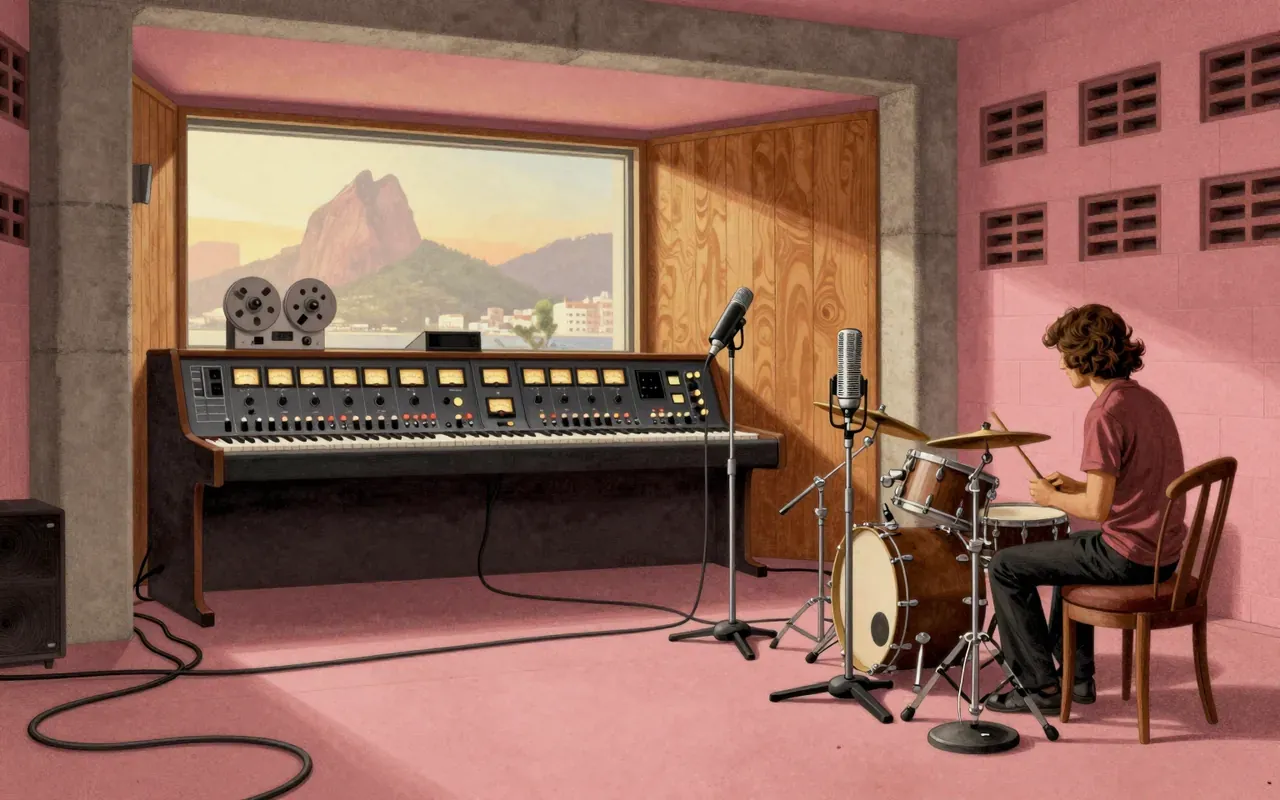
África Brasil is a 1976 album by Jorge Ben, recorded over ten days at Phonogram Studios in Rio de Janeiro with a large ensemble including Admiral Jorge V, fourteen additional instrumentalists and five backing vocalists. Ben replaced his acoustic guitar with an electric guitar during these sessions, influenced by Dadi Carvalho, after swapping instruments following Carvalho’s acquisition of an Ibanez guitar in London. José Roberto Bertrami arranged orchestral parts; Marco Mazzola mixed the album before Philips withdrew him mid-session. The album is described as one of Ben’s most popular, a fusion of funk and samba relying more on electric guitar than previous efforts, and features a remake of 'Taj Mahal'.

8:35

Caetano Veloso

Caetano Veloso · 1968

No self-titled 1968 'Caetano Veloso' album exists in the material. Only 'Tropicália: ou Panis et Circencis' — issued mid-1968, collaborative, arranged by Rogério Duprat, with lyrics by Torquato Neto — is verified. Everything else is unsupported.

9:23

Clube da Esquina

Milton Nascimento · 1972

Clube da Esquina is a 1972 double album by Milton Nascimento and Lô Borges, emerging from a collective formed in Belo Horizonte in 1963. Core members include Beto Guedes, Toninho Horta, Wagner Tiso, and Flávio Venturini — who shared compositions and melodies before recording. It was mostly recorded in November 1971 at a beach house in Piratininga, Niterói, during extended creative sessions and rehearsals. The group stayed there for six months, with final recordings also made in Santa Tereza, city-centre bars, the Borges brothers’ house, and Odeon Studios in Rio de Janeiro. At Odeon Studios, the collective was given several weeks to record, with sessions lasting entire days and evenings, characterized by intense collaboration, improvisation, and experimentation. At Odeon Studios, the album was recorded using a two-channel setup: one channel for vocals and one for instruments. The album features a mixture of MPB, baroque pop, folk, and jazz pop, with elements of rock, psychedelia, and classical music. Toninho Horta described the album as 'nectar, an oasis', noting that each song is distinct and reflects the varied musical backgrounds of the participants. Beto Guedes played on 17 of the 21 tracks, alternating between bass and drums. Milton Nascimento personally selected who would write the lyrics for each song. Clube da Esquina was released in 1972 by the collective and some others.
9:48

Francis Albert Sinatra & Antônio Carlos Jobim

Francis Albert Sinatra · 1967

A 1967 studio collaboration between Sinatra and Jobim, recorded over two days in Hollywood with Claus Ogerman arranging and conducting a studio orchestra. Features bossa nova treatments of Jobim originals and three Great American Songbook standards. Sinatra sings unusually softly — likened to his 1950 vocal hemorrhage — and the mood is consistently romantic and regretful. Al Viola substituted on guitar for 'Change Partners'. Lyricists attended. Grammy-nominated. One of 1967’s best-selling albums.

9:53

Jazz Samba

Stan Getz · 1962

Jazz Samba is a 1962 bossa nova album by Stan Getz and Charlie Byrd, recorded at All Souls Unitarian Church in Washington, D.C., on February 13, 1962, and released by Verve in April. It features Getz on saxophone, Byrd on guitar, two bassists (Keter Betts and Joe Byrd), and two drummers (Buddy Deppenschmidt and Bill Reichenbach). Arrangements are by Byrd. Two tracks—'Desafinado' and 'Samba de Uma Nota Só'—are by Antônio Carlos Jobim and were released as singles. The album won Getz the 1963 Grammy for Best Jazz Performance and sold over one million copies. It was part of Getz’s effort to introduce bossa nova to the U.S. after Byrd’s 1961 State Department tour of Brazil.

film.briefs Film

All 6 in film →
13:00

Black God, White Devil

Glauber Rocha · 1964

Glauber Rocha’s 1964 Black God, White Devil is a foundational Cinema Novo film set in Brazil’s drought-ravaged sertão. It follows a ranch hand and his wife as they flee, convert, join bandits, and flee again — never escaping cycles of violence sanctified by religion or revolution. Shot in stark black and white, edited by Rocha himself, and scored by Sérgio Ricardo, it treats myth and history as inseparable, and endurance as the only authentic political act.

13:00

Brazil

Terry Gilliam · 1985

A 1985 dystopian satire directed by Terry Gilliam, Brazil follows Sam Lowry, a low-ranking bureaucrat in a decaying, anachronistic state, as he navigates absurd administrative logic, misfiled arrest warrants, and increasingly unstable fantasies. With Jonathan Pryce, Robert De Niro, Katherine Helmond and Michael Palin, it uses retro-futurist design, black comedy and Kafkaesque structure to dissect technocracy, surveillance and institutional incompetence — not as future threats, but as present habits dressed in tweed and duct tape.

13:00

Kiss of the Spider Woman

Héctor Babenco · 1985

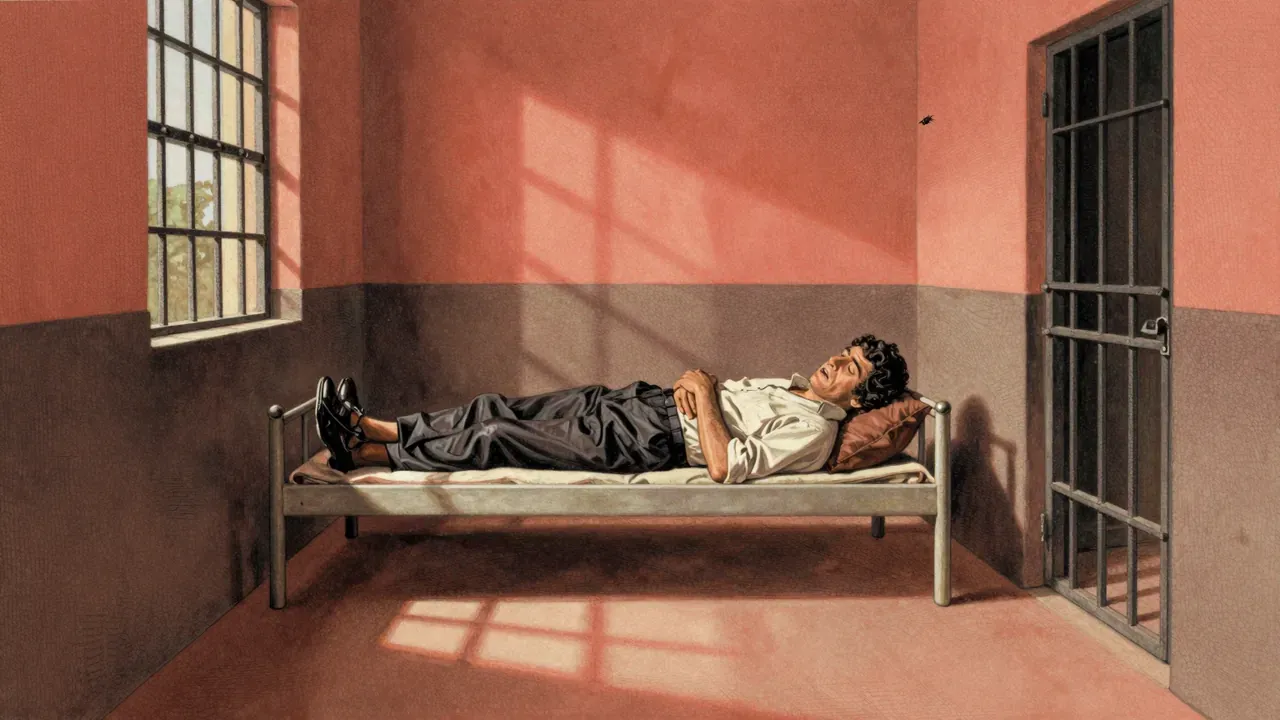
Héctor Babenco’s 1985 adaptation of Manuel Puig’s novel confines itself almost entirely to a Brazilian prison cell, where gay window-dresser Luis Molina (William Hurt) and revolutionary Valentin Arregui (Raul Julia) negotiate politics, desire, and survival through conversation and shared fantasy. Shot in São Paulo by Rodolfo Sánchez, with a tightly focused script by Leonard Schrader, it uses narrative as both shield and probe — Molina’s retelling of a Nazi-era melodrama mirroring the tensions between illusion and coercion, intimacy and control. Hurt won the Academy Award for Best Actor; the film remains a benchmark of restrained, actor-led drama.

13:00

Pixote

Héctor Babenco · 1980

A 1980 Brazilian crime drama directed by Héctor Babenco, based on José Louzeiro’s non-fiction book. It follows Pixote, a ten-year-old boy navigating juvenile detention, street crime, and exploitation in São Paulo and Rio. Cast largely with non-professionals whose lives mirrored their roles, it uses documentary-like methods to depict systemic abandonment without moral framing or narrative relief.

13:00

The Secret Agent

Kleber Mendonça Filho · 2025

Kleber Mendonça Filho’s The Secret Agent is a Portuguese-language historical political thriller set in Recife during Brazil’s military dictatorship. Starring Wagner Moura as Armando, a former professor evading persecution, it traces his movements through carnival crowds, bureaucratic offices and dissident networks—all while a severed leg found in a shark becomes a media smokescreen for state violence. Shot on location with 1970s-inspired cinematography and edited for procedural realism, the film prioritises texture over exposition, embedding its politics in infrastructure, sound and silence.

13:00

Black Orpheus

Marcel Camus · 1959

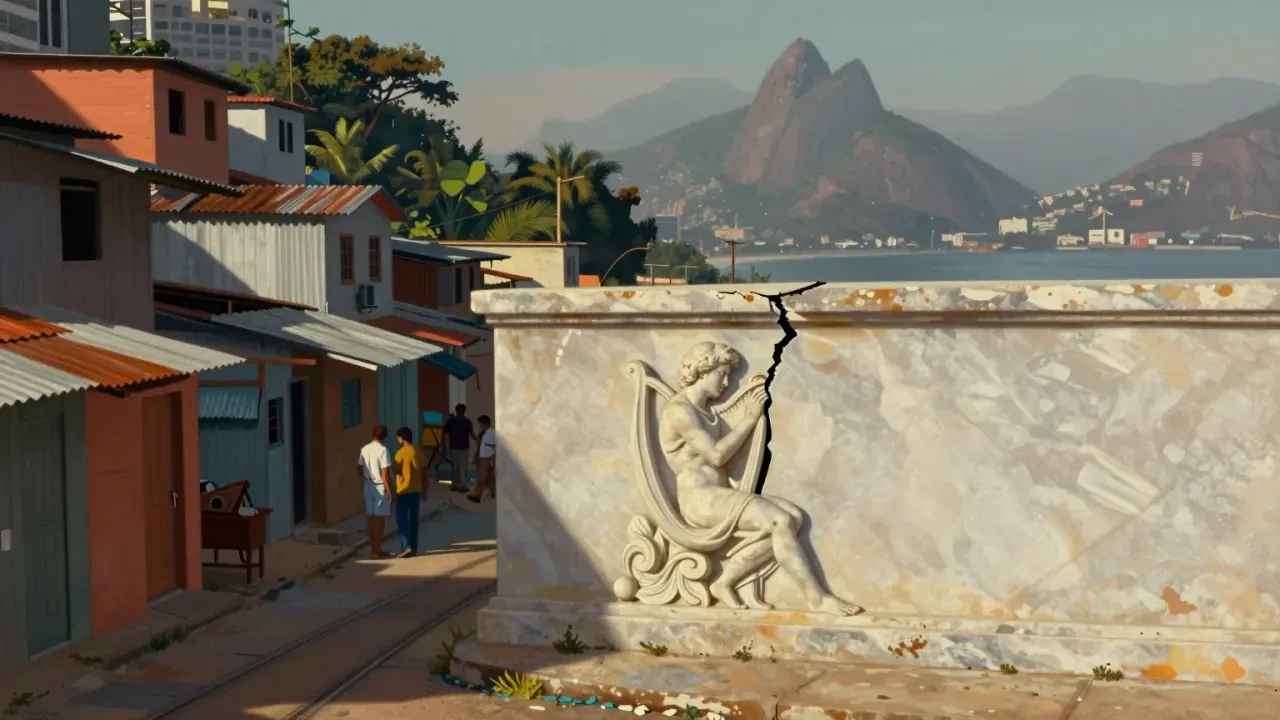
Black Orpheus (1959) transplants the Orpheus and Eurydice myth to Rio de Janeiro’s Carnaval, filmed on location in Morro da Babilônia with non-professional actors. Directed by Marcel Camus and scored by Luiz Bonfá and Antônio Carlos Jobim, it won the Palme d’Or and the Academy Award for Best International Feature Film. Though celebrated for its visual and musical vitality, it has been criticised—especially in Brazil—for reducing Afro-Brazilian life to aestheticised spectacle, sidelining social reality for mythic form.

design.briefs Design

All 6 in design →
9:32

Cathedral of Brasília

Oscar Niemeyer · 1970

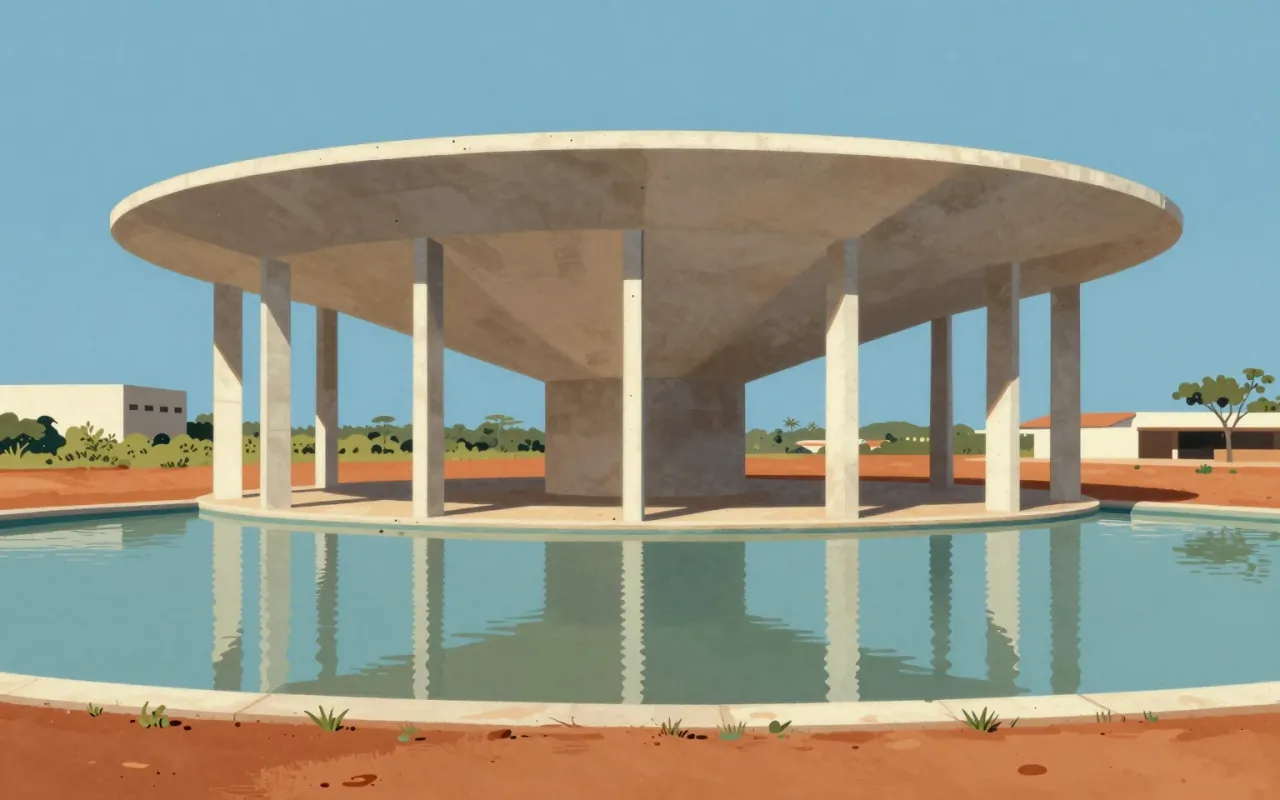
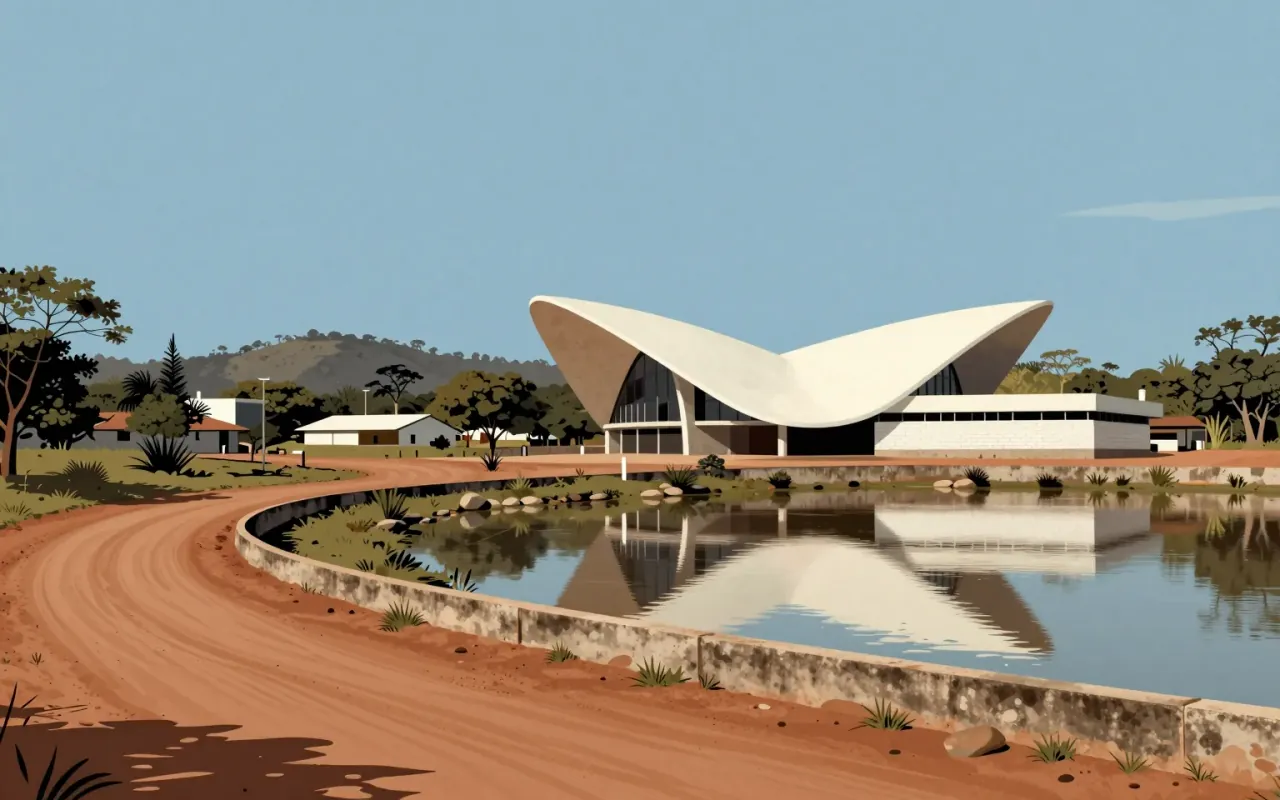
The Cathedral of Brasília is a hyperboloid concrete-framed structure designed by Oscar Niemeyer and engineered by Joaquim Cardozo, featuring subterranean massing, symbolic column geometry, passive thermal design via a reflecting pool, a fiberglass outer roof, and a large suspended stained-glass composition. It specifies construction methods, dimensional and material properties, spatial sequencing (tunnel entry), and symbolic intent tied directly to structural form.

8:55

Lúcio Costa

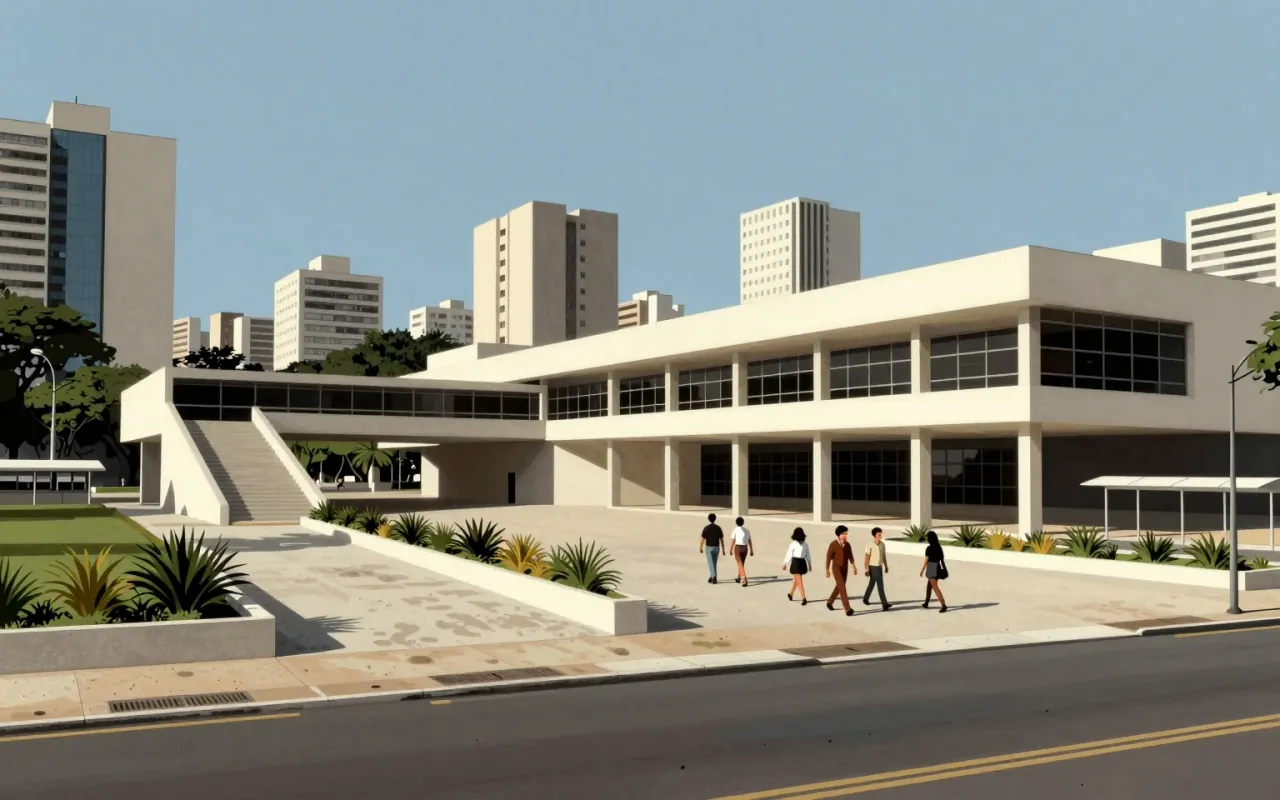
A jury chose Costa’s sketch over detailed rivals — not for precision, but for scalability.
9:13

Oscar Niemeyer

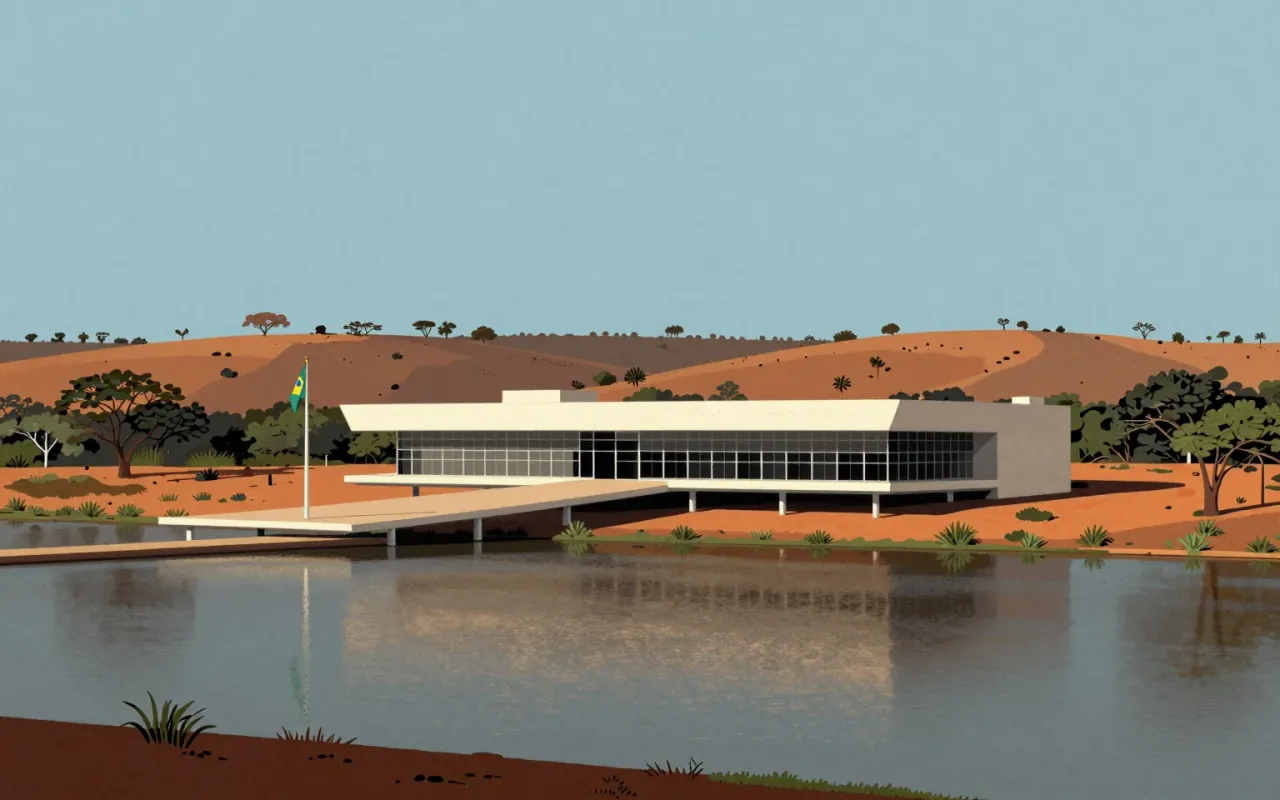
Niemeyer didn’t bend concrete—he bent architectural dogma, then left function behind.

business.briefs Business

All 11 in business →
9:28

Bradespar

A bank spun off its industrial assets into a holding company — then let that company become a one-stock ticker.
10:20

Usiminas

Usiminas isn’t a global steel player—it’s Brazil’s steel anchor, built to dominate at home, not abroad.
11:38

Carrefour Brazil

Carrefour Brazil didn’t build Brazil’s biggest food retailer — it bought it, piece by piece, with no evidence that integration ever caught up to ambition.
10:41

TIM Group

A state monopoly reborn as a binational telco—with all the strategic rigidity that implies.

10:24

Ambev

Jorge Paulo Lemann · 1999

Ambev is a case study in consolidation-driven profitability — not product-led growth. Its value came from regulatory navigation, cost discipline, and geographic sequencing, not brand, taste, or technology. It shows how monopoly conditions can be manufactured where competition is weak, not defeated.

11:12

Embraer

A state-built aerospace champion that went public—but never truly went private.
9:54

Natura

Luiz Seabra · 1969

Natura built a global cosmetics business using direct sales—not digital platforms—and anchored its identity in ethical sourcing and animal-testing bans. It listed on Brazil’s highest-governance stock exchange tier in 2004. But none of its stated commitments include third-party verification, cost impact, or enforcement mechanisms. Its scale—6.6 million consultants in 2018—is real. Its ethics are aspirational.

culture.briefs Culture

All 2 in culture →
9:52

São Paulo

A city named for an apostle, built on Tupi land, whose motto declares leadership while its origin declares subjugation.
9:38

Capoeira

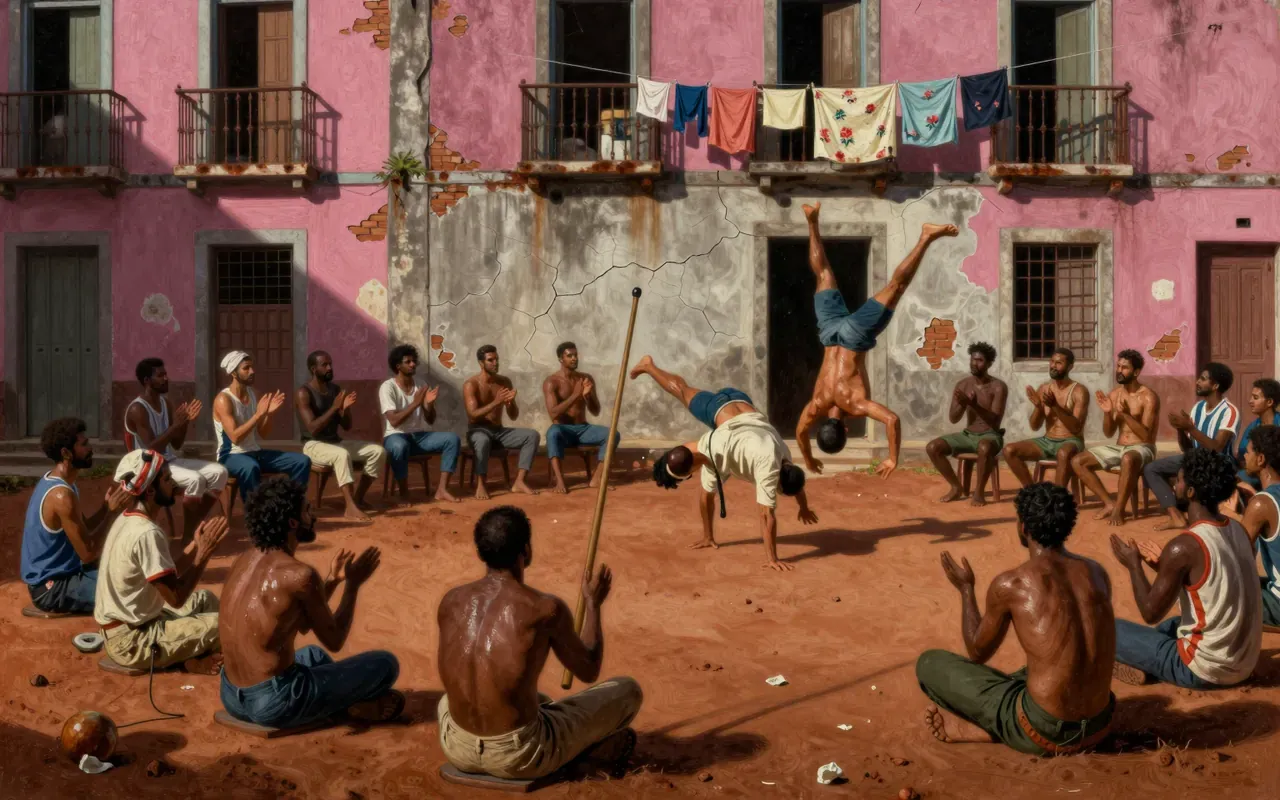
Capoeira wasn’t legitimised in 1937—it was disarmed.

food.briefs Food

All 8 in food →
9:23

Sponge cake

Sponge cake proves air is enough—no yeast, no butter, no apology.
1:01

Açai bowl

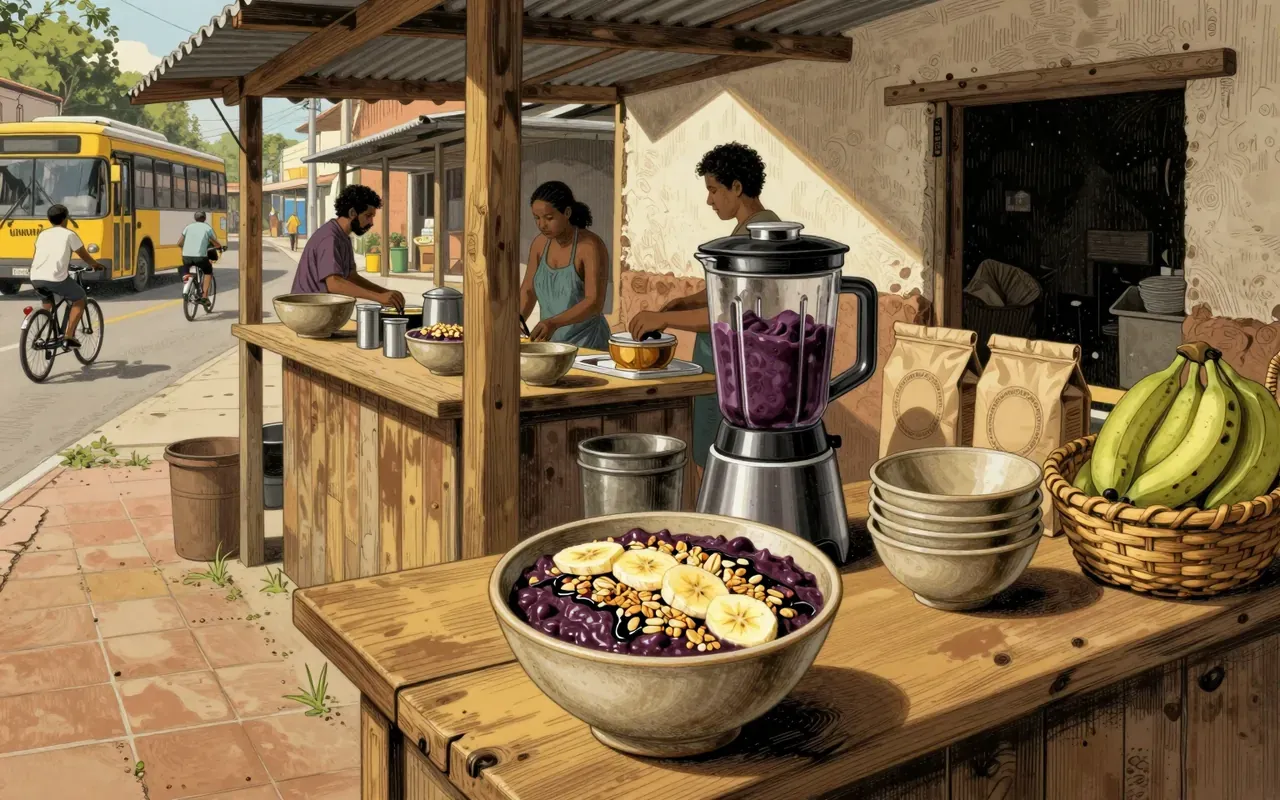
A Brazilian snack from Pará and Amazonas made from açaí berries blended into a smoothie-like base and served in a bowl with toppings.
1:15

Brigadeiro

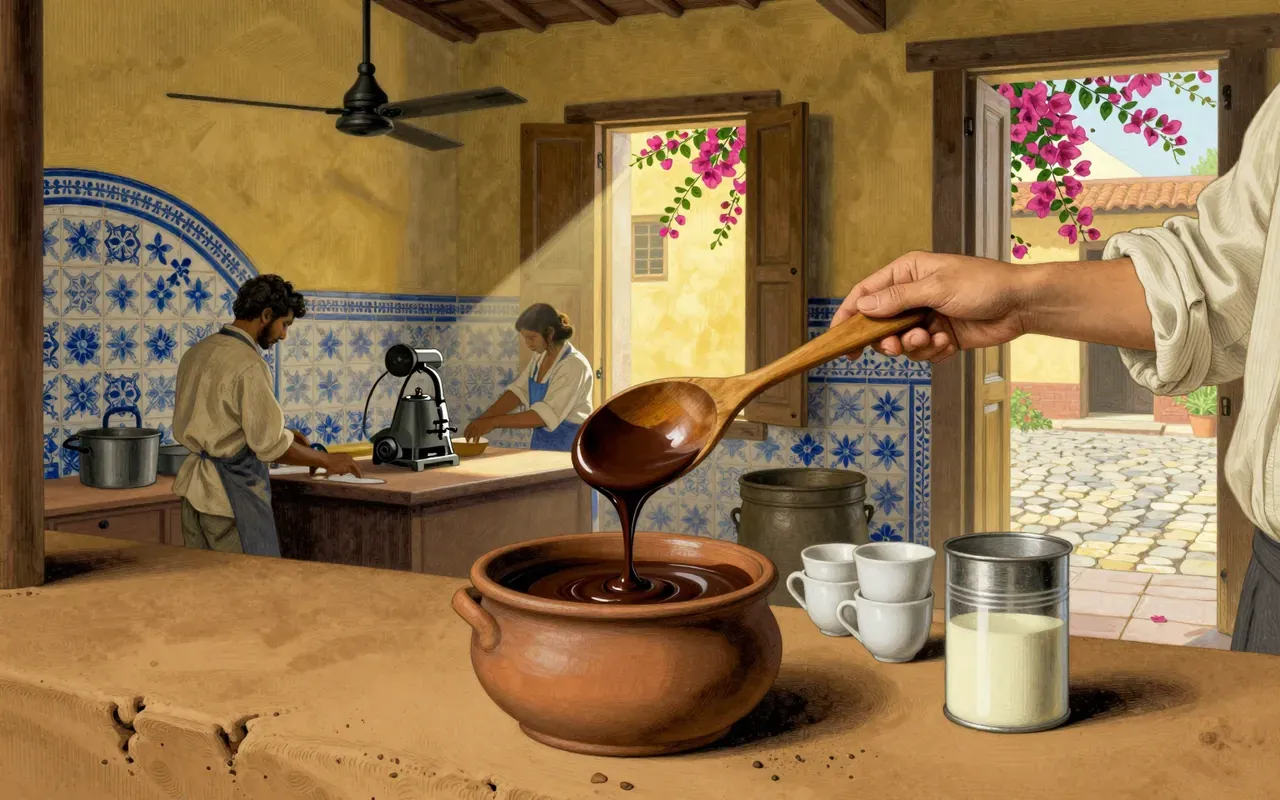
A Brazilian chocolate confection made from condensed milk, cocoa powder, butter, and coated in chocolate sprinkles.
1:28

Churrasco

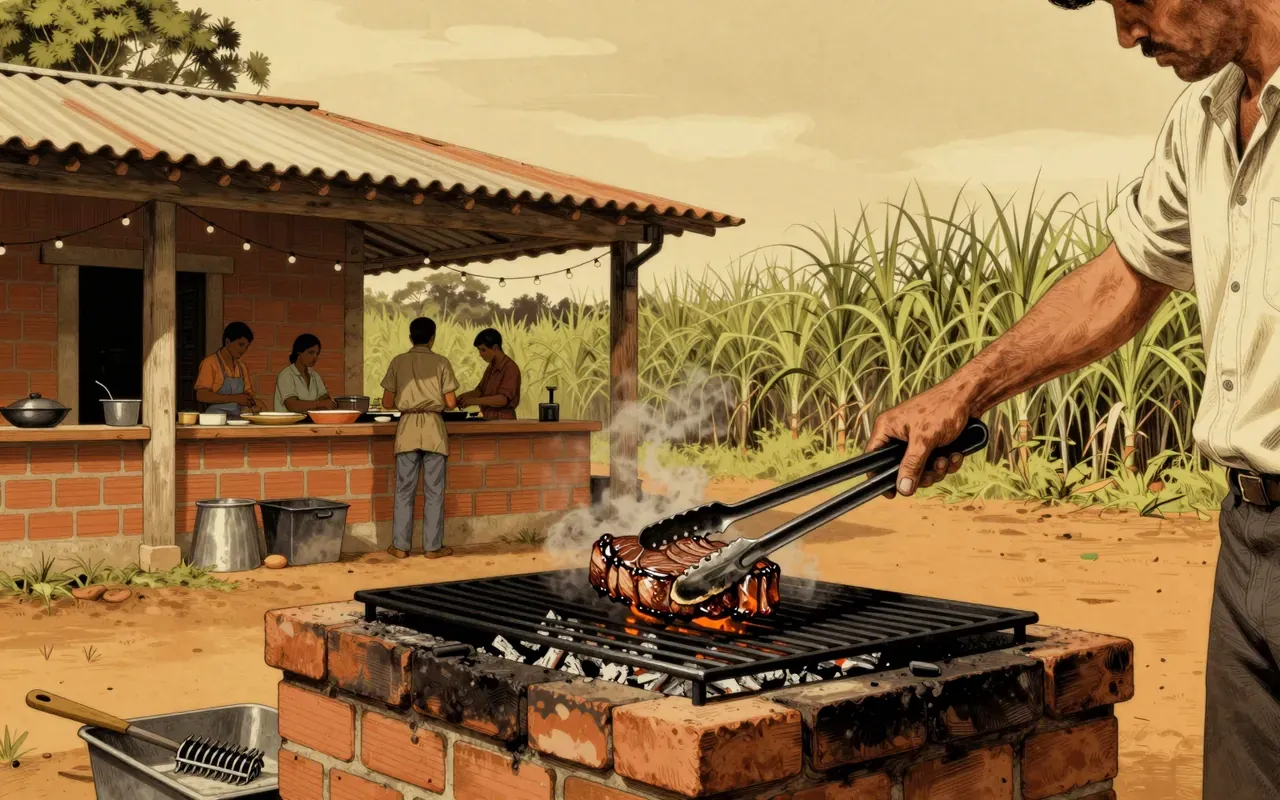
Churrasco is grilled beef served across Latin America and Iberia, with regional definitions varying by cut, preparation, and accompaniments.
1:16

Coxinha

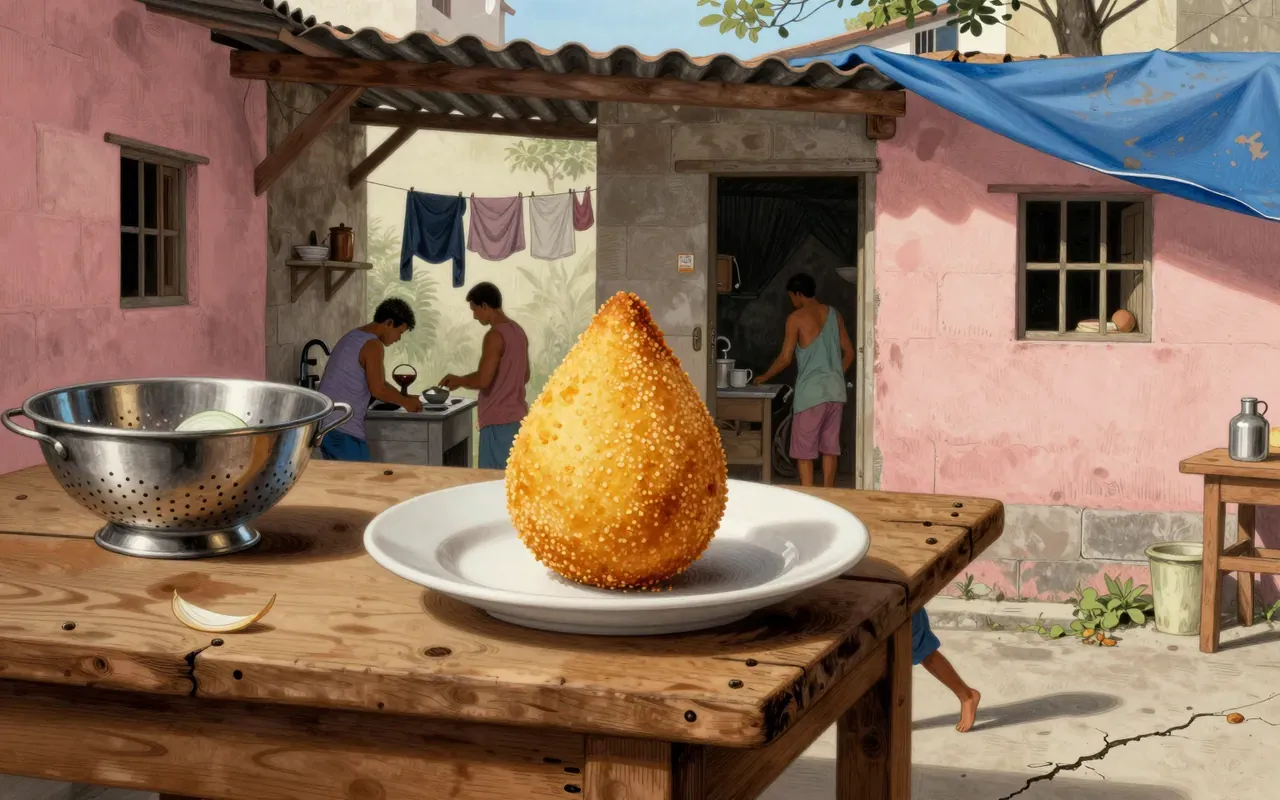
A Brazilian teardrop-shaped fried snack from São Paulo, with chicken-filled wheat dough, often shaped like a drumstick.
1:16

Moqueca

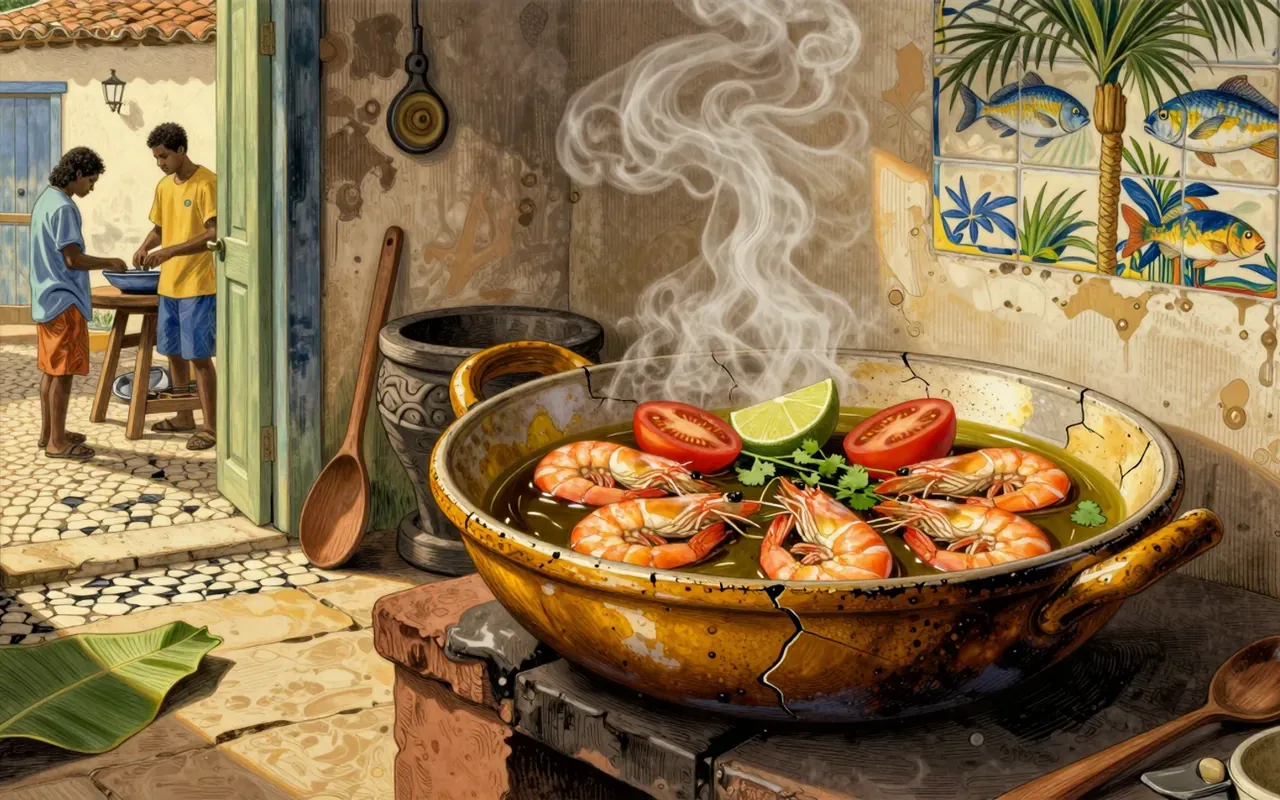
A Brazilian seafood stew with regional variations in fish, aromatics, and fats.
1:06

Pão de queijo

A small baked Brazilian cheese roll made with cassava flour, chewy and elastic, with a crunchy exterior.
0:58

Tapioca

Tapioca is a starch extracted from cassava roots, used in forms including pearls, flakes, and powder.