briefs
Topic · across the network

Revolution

Regime change from below, and how rarely it ends as advertised.

58
briefs
5
subjects
12:47
average
741 min
in total
Abstraction 407Absurdism 137Acoustics 220Acting 65Adaptation 372Addiction 95Adolescence 202Advertising 77Age of exploration 14Ageing 113Agriculture 100Algorithms 114Ambition 46Anarchism 38Ancient Egypt 17Ancient Greece 38Ancient Rome 30Animals 172Anthropology 23Apartheid 12Architecture 165Archives 32Argentina 10Art Deco 26Artificial intelligence 78Astronomy 81Attention 42Australia 32Automation 73Avant-garde 164Aviation 79Banking 72Banned works 40Bauhaus 12Beer 5Behavioural economics 22Berlin 16Big tech 6Biodiversity 136Biography 86Birds 41Black holes 20Blockchain 12Boxing 14Branding 77Brazil 43Bread 29Britain 131Brutalism 4Bubbles 3Buddhism 28Byzantium 10California 17Canada 18Capitalism 94Cars 468Celebrity 59Censorship 110Cheese 24Chefs 9Chemistry 104Chess 2Childhood 87China 109Chocolate 8Christianity 49Cinematography 343Cities 90Class 485Climate change 107Club culture 100Cocktails 2Coffee 11Cognitive bias 14Collecting 16Colonialism 284Colour 42Comedy 89Community 52Complexity 21Computing 309Consciousness 16Conservatism 14Conspiracy theories 8Cooking 178Corruption 38Cosmology 31Cover versions 64Craft 116Crate digging 42Creativity 8Crime 234Cryptocurrency 8Cryptography 24Cuba 10Cybersecurity 30Dada 12Debt 38Decision-making 28Decolonisation 46Deep time 80Democracy 45Denim 16Deserts 45Detroit 17Dinosaurs 12Directing 168Disasters 59Disease 109DJ culture 89Dreams 32Drones 5Drum machines 96Dystopia 69East Africa 28Ecology 337Economics 36Editing 72Education 92Egypt 12Electric vehicles 59Emotion 22Empire 92Endurance 49Energy 120Engineering 541Entropy 8Epidemics 13Equality 9Espionage 31Ethics 44Evolution 174Existentialism 106Expertise 2Exploration 49Extinction 23Failure 37Family 240Fandom 22Fascism 45Fashion 215Fast fashion 12Fear 34Feminism 122Fermentation 126Film music 81Fishing 12Folklore 71Food history 588Football 16Forests 31Forgery 7France 163Fraud 15Free will 13Freedom 16French literature 15Friendship 24Furniture 36Gambling 14Gender 63Generations 28Genetics 87Geology 96Germany 66Globalisation 74Gothic 32Greece 5Grief 126Habits 6Happiness 2Hardware 709Haute couture 22Headphones 8Hi-fi 12Hinduism 12Hoaxes 1Human history 23Human nature 41Identity 138Illustration 8Impressionism 6Improvisation 249India 89Indonesia 15Industrial design 342Inequality 13Inflation 4Information 34Infrastructure 280Insects 29Intelligence 8Interiors 31Internet culture 88Invention 329Iran 41Islam 40Islands 17Israel 9Italy 52Jamaica 10Japan 114Jewellery 5Journalism 34Judaism 13Justice 42Korea 41Language 70Law 90Leadership 20Learning 6Liberalism 1Libraries 6Literary criticism 26London 12Loneliness 61Los Angeles 62Lost works 9Love 67Luxury 55Machine learning 15Management 10Maps 5Marketing 21Markets 51Mars 6Marxism 26Masculinity 46Materials 138Mathematics 79Meaning 6Medicine 124Memory 82Mental health 70Mesopotamia 4Mexico 38Migration 95Minimalism 68Mining 30Misinformation 9Modernism 63Money 24Monopoly 32Mortality 61Motivation 2Mountains 16Museums 27Mysticism 11Mythology 60Nationalism 40Neuroscience 23New York 36Nigeria 7Nihilism 10Noise 31Nostalgia 33Nuclear 29Nutrition 17Oceans 48Oil 42Open source 45Painting 18Palaeontology 29Parenting 14Paris 18Partition 6Patents 71Patronage 14Perception 44Personal style 27Personality 2Persuasion 8Peru 10Philosophy 77Photography 37Physics 206Plants 26Platforms 89Podcasting 1Poetry 25Poland 17Policing 34Pop Art 16Populism 2Portraiture 6Portugal 18Postmodernism 23Power 91Prehistory 24Preservation 28Printmaking 21Privacy 11Probability 6Productivity 1Programming 54Prohibition 1Propaganda 35Protest 75Pseudoscience 17Psychology 80Publishing 22Punishment 16Quantum mechanics 44Race 145Radio 30Railways 35Rave 17Realism 47Record labels 19Recording 810Relativity 23Religion 154Resilience 15Restaurants 30Restoration 2Retail 94Revolution 58Risk 18Ritual 96Robotics 26Romance 96Russia 58Salt 9Sampling 246Satire 84Scandinavia 28Scientific method 186Screenwriting 26Sculpture 7Secularism 2Self-deception 14Semiconductors 73Sexuality 102Ships 18Silence 24Silicon Valley 17Slavery 35Sleep 2Smartphones 27Sneakers 15Social media 58Socialism 9Software 68Songwriting 180Sound design 332Sound systems 20South Africa 19South East Asia 30Space exploration 84Spain 18Special effects 41Spices 62Spirits 12Sport 82Startups 21Statistics 10Status 9Stoicism 4Storytelling 68Strategy 70Street food 99Streetwear 16Studio craft 508Subcultures 59Sugar 12Supply chains 115Surrealism 53Surveillance 21Sustainability 30Synthesis 232Tailoring 37Taxation 14Tea 24Textiles 97Thailand 11The American Revolution 19The American South 88The Arab world 41The Arctic 19The Balkans 17The Belle Epoque 13The body 29The brain 26The Caribbean 28The civil rights movement 62The Cold War 160The eighties 268The Enlightenment 29The financial crisis 19The First World War 39The food industry 157The French Revolution 9The Gilded Age 9The Great Depression 18The Holocaust 20The Industrial Revolution 93The internet 61The interwar years 135The Middle Ages 35The Moon 4The music business 169The Netherlands 10The nineties 26The Olympics 10The pandemic 13The Reformation 1The Renaissance 16The Russian Revolution 19The Second World War 102The seventies 58The sixties 28The space race 5The United States 19The universe 7The Victorian era 37Therapy 20Tokyo 11Trade 48Tragedy 22Translation 5Trauma 85Travel 5True crime 2Turkey 18Typography 54Uniforms 23Unions 8Urban planning 66Utilitarianism 1Utopia 5Vaccines 10Vegetarianism 15Venture capital 6Video games 291Vietnam 12Vintage 65Vinyl 6Virtual reality 11War 169Watches 4Water 11Weather 29West Africa 29Wilderness 10Wine 3Work 22Workwear 19Worldbuilding 121

books.briefs Books

All 2 in books →
13:54

The Communist Manifesto

Karl Marx · 0

The brief argues the Manifesto is a tactical pamphlet, not a prophecy. It extracts its structural logic: class struggle as history, the bourgeoisie’s self-undermining motion, and why Communists must name—not obscure—their antagonism with capital. It tells you which critiques hold up and which to skip.

13:52

The Robbers

Friedrich Schiller · 1805

The Robbers is a Sturm und Drang tragedy about moral contagion: Francis forges a letter to disinherit his brother Charles, who then joins a robber band. Charles returns to find his father imprisoned, kills Amelia in a final 'sacrifice', and surrenders to justice. The brief isolates the forged letter, the dungeon revelation, and the suicide-sacrifice climax—and tells you which acts to skip.

music.briefs Music

All 1 in music →
9:52

Uprising

Bob Marley & The Wailers · 1980

Uprising is the final Bob Marley & The Wailers album released in Marley's lifetime — June 1980. It affirms Marley's Rastafarian beliefs. It contains 'Forever Loving Jah', 'Redemption Song' (described as solo acoustic and folk-based), and 'Could You Be Loved' (a successful single). 'Redemption Song' is the only track with verified sonic description: solo, acoustic, folk-based. The record is framed externally by the concept of rebellion as organized resistance against government — but no source verifies how the music itself enacts that idea.

film.briefs Film

All 8 in film →
13:00

Che Part 2: Guerrilla

Steven Soderbergh · 2008

Che Part 2: Guerrilla follows Ernesto Guevara’s 1965–67 Bolivian campaign as a procedural collapse: dwindling supplies, failed communications, eroding morale, and mounting isolation. Directed by Steven Soderbergh and starring Benicio del Toro, it avoids mythmaking in favour of granular, unsentimental chronology — treating revolution as logistics, not legend.

13:00

Lucía

Humberto Solás · 1968

Humberto Solás’s 1968 Cuban triptych follows three women named Lucía across 1895, 1932, and 1961—each navigating love, violence, and constraint under radically different political orders. Shot in black-and-white by Jorge Herrero, with a sparse score by Leo Brouwer, it builds meaning through repetition, restraint, and precise spatial storytelling—not exposition or uplift. Its power lies in what it refuses: resolution, explanation, and the comfort of progress narratives.

13:00

Once Upon a Time in China II

Tsui Hark · 1992

Tsui Hark’s 1992 sequel follows Jet Li’s Wong Fei-hung through 1895 Canton, where acupuncture seminars are stormed by cultists, British consulates are breached by Qing soldiers, and revolution is passed hand-to-hand on a scrap of cloth. With Arthur Wong’s restrained cinematography and Yuen Woo-ping’s grounded choreography, it frames wuxia not as fantasy but as embodied history — urgent, unresolved, and materially precise.

13:00

Rang De Basanti

Rakeysh Omprakash Mehra · 2006

Rang De Basanti (2006) follows five Delhi students drawn into a British filmmaker’s documentary about 1920s Indian revolutionaries. As they rehearse acts of defiance, real-world corruption forces them to confront their own passivity. Directed by Rakeysh Omprakash Mehra, with cinematography by Binod Pradhan and music by A. R. Rahman, it blends contemporary realism with historical re-enactment to ask what civic courage costs today. Though its climax strains credibility, its emotional logic and ensemble performances sustain its 157-minute runtime.

13:00

Arsenal

Oleksandr Dovzhenko · 1929

Oleksandr Dovzhenko’s 1929 silent film Arsenal reimagines the 1918 Kiev Arsenal Uprising as a mythic struggle, using expressionist imagery, non-linear editing, and stark physical performance. Shot by Danylo Demutskyi and edited by Dovzhenko himself, it privileges gesture over exposition and symbol over summary. Though demanding and historically dense, it remains a landmark of Ukrainian avant-garde cinema — less a history lesson than a visceral, rhythmic invocation of collective will.

13:00

Battleship Potemkin

Sergei Eisenstein · 1925

Battleship Potemkin (1925) is Sergei Eisenstein’s landmark Soviet silent film dramatising the 1905 mutiny aboard the battleship Potemkin. Made as political art rather than historical record, it uses radical montage—especially in the iconic Odessa Steps sequence—to generate collective emotion and ideological conviction. Shot by Eduard Tisse and Vladimir Uralsky, edited by Eisenstein and Grigori Aleksandrov, it relies on non-professional actors, symbolic types, and rhythmic editing over psychology or narrative. Though its revolutionary certainty feels schematic today, its formal mastery remains potent and instructive.

13:00

Persepolis

Marjane Satrapi, Vincent Paronnaud · 2007

Adapted from her own graphic novel, Marjane Satrapi and Vincent Paronnaud's 2007 film follows a girl growing up through the Iranian Revolution, the war with Iraq, and years of exile in Vienna. Hand-drawn black and white carries most of the film's argument about who this story belongs to.

13:00

The Battle of Algiers

Gillo Pontecorvo · 1966

Gillo Pontecorvo's 1966 film reconstructs the Algerian independence struggle against French rule between 1954 and 1957, following FLN fighter Ali La Pointe and the French colonel sent to break the resistance through mass arrest and torture. Cast almost entirely with non-professionals, many of whom had lived through the real events, and shot in a black-and-white newsreel style, the film won the Golden Lion at Venice and was banned in France for years for the discomfort of its subject.

history.briefs History

All 46 in history →
10:48

1911 Revolution

10 October 1911

The 1911 Revolution ended the Qing dynasty and founded the Republic of China. Its success rested on military defection, not mass mobilisation. Its institutions collapsed because they lacked independent authority — Yuan Shikai controlled the army, not the constitution. It changed the form of rule but not the distribution of power.

9:50

Fidel Castro

Castro didn’t just rule Cuba—he built a one-party socialist state in the Western Hemisphere and turned it into a Cold War detonator.
12:16

Ho Chi Minh

1945

A tightly sourced, action-focused account of Ho Chi Minh’s documented political output — no speculation, no omission of violence, no celebration without evidence.

11:55

French Revolution

1789–1799

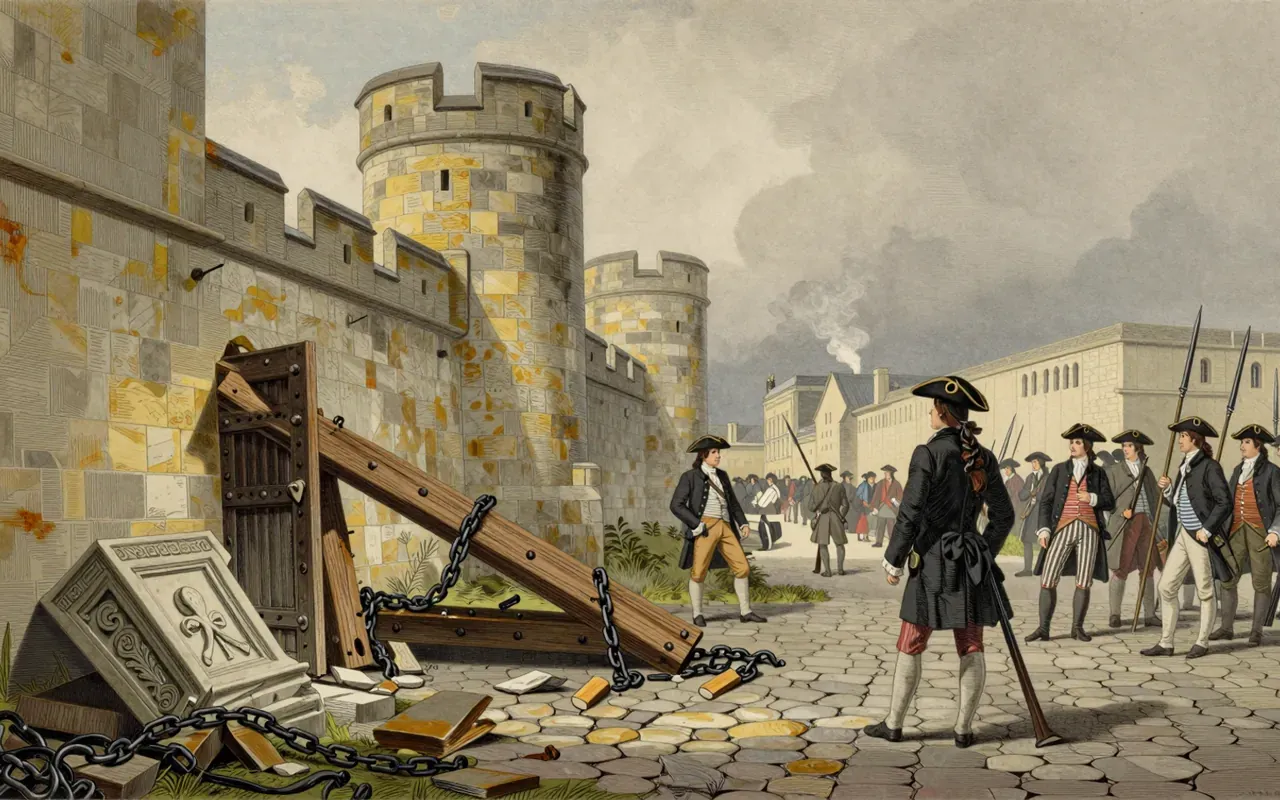
The French Revolution was a period of political and societal change in France that began with the Estates General of 1789 and ended with the Coup of 18 Brumaire on 9 November 1799.

13:00

Ruhollah Khomeini

1902–1989

Ruhollah Khomeini, exiled in 1964 for opposing the Shah's modernisation programme, returned to Iran in February 1979 to lead the revolution that established the Islamic Republic, built around his own doctrine of clerical governance. His rule included the 444-day American hostage crisis, the devastating war with Iraq, and documented mass executions of political prisoners, alongside a 1989 fatwa against author Salman Rushdie that extended his authority's reach well beyond Iran's borders.

13:00

Benjamin Franklin

1706–1790

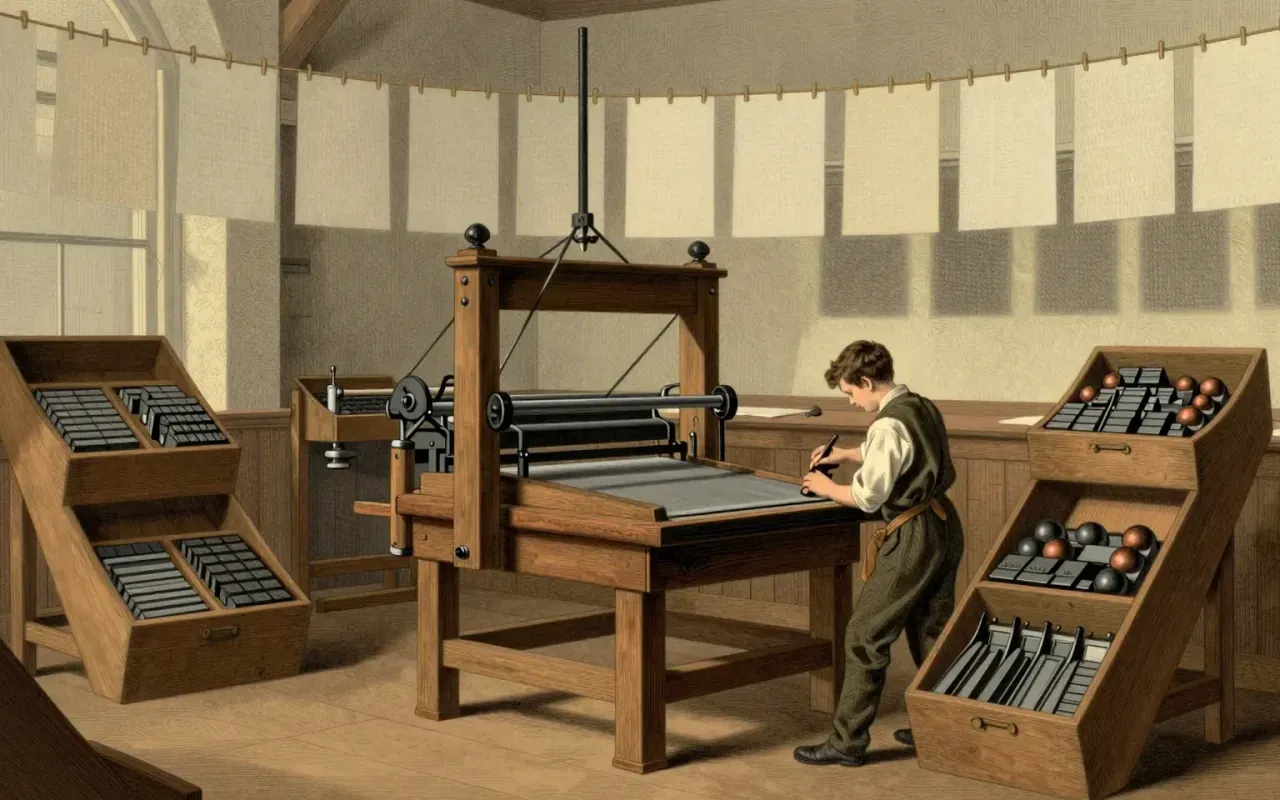
Benjamin Franklin built a career as printer, scientist, and diplomat before becoming the only person to put his signature on the Declaration of Independence, the Treaty of Paris, and the Constitution. His electrical experiments and his years securing French support for the Revolution are well documented; less often mentioned is that he owned enslaved people for decades before turning, late in life, into president of Pennsylvania's abolition society.

13:00

George Washington

1732–1799

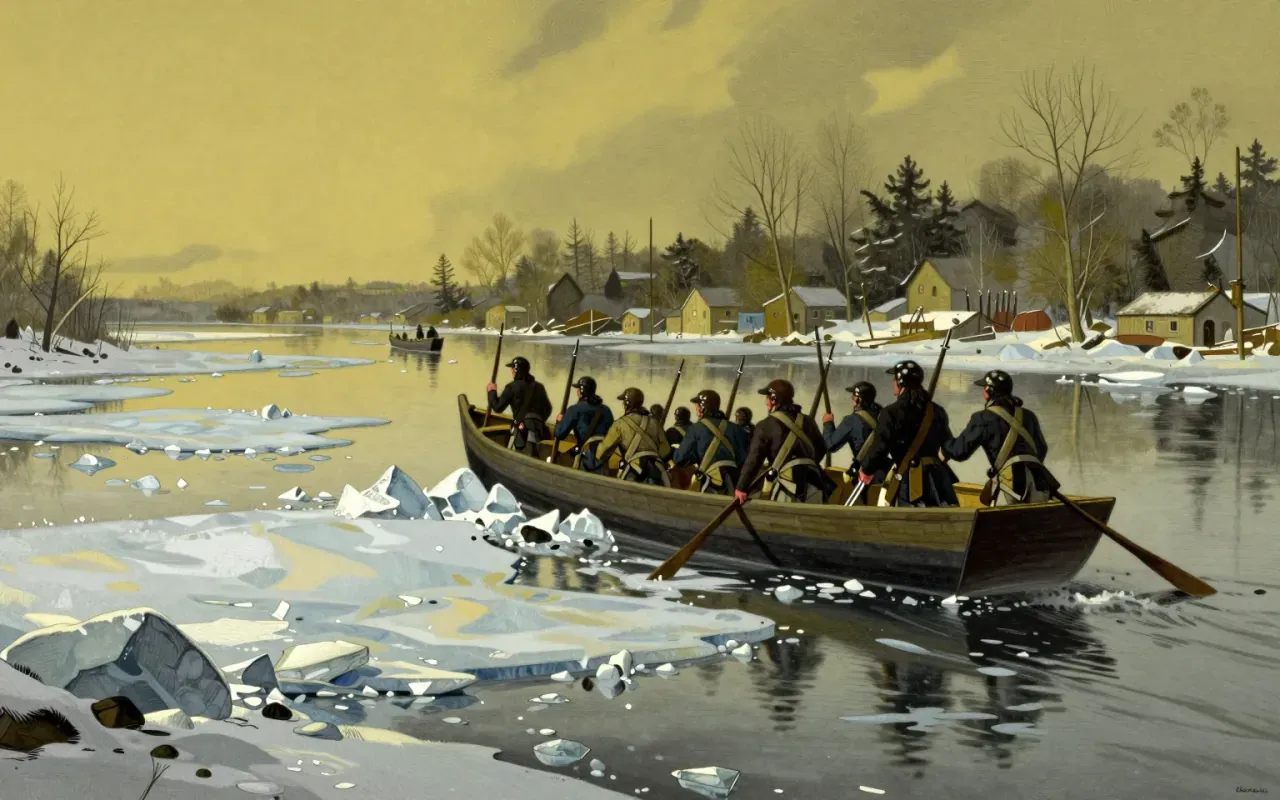
George Washington's ambush at Jumonville Glen in 1754 helped trigger the French and Indian War, and two decades later he commanded the Continental Army through a war he did not always look likely to win, from a chaotic retreat across New Jersey to the decisive siege at Yorktown. As president he set precedents, including a voluntary two-term limit, that outlasted the law requiring them by more than a century, while his own household at Mount Vernon depended on more than a hundred enslaved people whose freedom he provided for only in his will.

13:00

Giuseppe Garibaldi

1807–1882

Giuseppe Garibaldi spent fourteen years fighting in South American civil wars before returning to Italy, where he led a volunteer force of roughly a thousand men to conquer Sicily and Naples in 1860 and then handed both to King Victor Emmanuel II rather than pursue the republic he actually believed in. Historians have increasingly complicated the heroic myth built around him, noting that the peasants who supported his cause in Sicily were driven by hatred of local landlords rather than nationalism, and that Garibaldi himself sided with those same landlords once uprisings threatened his campaign's order.

games.briefs Games

All 1 in games →
8:39

Far Cry 6

Ubisoft Montreal · 2021

Far Cry 6 is a first-person shooter set on the fictional Caribbean island of Yara, where the player assumes the role of Dani Rojas, a guerrilla fighter attempting to topple the dictatorship of Antón Castillo.