briefs
Topic · across the network

Psychology

The study of mind and behaviour, currently rebuilding half its findings.

80
briefs
7
subjects
12:01
average
962 min
in total
Abstraction 407Absurdism 137Acoustics 220Acting 65Adaptation 372Addiction 95Adolescence 202Advertising 77Age of exploration 14Ageing 113Agriculture 100Algorithms 114Ambition 46Anarchism 38Ancient Egypt 17Ancient Greece 38Ancient Rome 30Animals 172Anthropology 23Apartheid 12Architecture 165Archives 32Argentina 10Art Deco 26Artificial intelligence 78Astronomy 81Attention 42Australia 32Automation 73Avant-garde 164Aviation 79Banking 72Banned works 40Bauhaus 12Beer 5Behavioural economics 22Berlin 16Big tech 6Biodiversity 136Biography 86Birds 41Black holes 20Blockchain 12Boxing 14Branding 77Brazil 43Bread 29Britain 131Brutalism 4Bubbles 3Buddhism 28Byzantium 10California 17Canada 18Capitalism 94Cars 468Celebrity 59Censorship 110Cheese 24Chefs 9Chemistry 104Chess 2Childhood 87China 109Chocolate 8Christianity 49Cinematography 343Cities 90Class 485Climate change 107Club culture 100Cocktails 2Coffee 11Cognitive bias 14Collecting 16Colonialism 284Colour 42Comedy 89Community 52Complexity 21Computing 309Consciousness 16Conservatism 14Conspiracy theories 8Cooking 178Corruption 38Cosmology 31Cover versions 64Craft 116Crate digging 42Creativity 8Crime 234Cryptocurrency 8Cryptography 24Cuba 10Cybersecurity 30Dada 12Debt 38Decision-making 28Decolonisation 46Deep time 80Democracy 45Denim 16Deserts 45Detroit 17Dinosaurs 12Directing 168Disasters 59Disease 109DJ culture 89Dreams 32Drones 5Drum machines 96Dystopia 69East Africa 28Ecology 337Economics 36Editing 72Education 92Egypt 12Electric vehicles 59Emotion 22Empire 92Endurance 49Energy 120Engineering 541Entropy 8Epidemics 13Equality 9Espionage 31Ethics 44Evolution 174Existentialism 106Expertise 2Exploration 49Extinction 23Failure 37Family 240Fandom 22Fascism 45Fashion 215Fast fashion 12Fear 34Feminism 122Fermentation 126Film music 81Fishing 12Folklore 71Food history 588Football 16Forests 31Forgery 7France 163Fraud 15Free will 13Freedom 16French literature 15Friendship 24Furniture 36Gambling 14Gender 63Generations 28Genetics 87Geology 96Germany 66Globalisation 74Gothic 32Greece 5Grief 126Habits 6Happiness 2Hardware 709Haute couture 22Headphones 8Hi-fi 12Hinduism 12Hoaxes 1Human history 23Human nature 41Identity 138Illustration 8Impressionism 6Improvisation 249India 89Indonesia 15Industrial design 342Inequality 13Inflation 4Information 34Infrastructure 280Insects 29Intelligence 8Interiors 31Internet culture 88Invention 329Iran 41Islam 40Islands 17Israel 9Italy 52Jamaica 10Japan 114Jewellery 5Journalism 34Judaism 13Justice 42Korea 41Language 70Law 90Leadership 20Learning 6Liberalism 1Libraries 6Literary criticism 26London 12Loneliness 61Los Angeles 62Lost works 9Love 67Luxury 55Machine learning 15Management 10Maps 5Marketing 21Markets 51Mars 6Marxism 26Masculinity 46Materials 138Mathematics 79Meaning 6Medicine 124Memory 82Mental health 70Mesopotamia 4Mexico 38Migration 95Minimalism 68Mining 30Misinformation 9Modernism 63Money 24Monopoly 32Mortality 61Motivation 2Mountains 16Museums 27Mysticism 11Mythology 60Nationalism 40Neuroscience 23New York 36Nigeria 7Nihilism 10Noise 31Nostalgia 33Nuclear 29Nutrition 17Oceans 48Oil 42Open source 45Painting 18Palaeontology 29Parenting 14Paris 18Partition 6Patents 71Patronage 14Perception 44Personal style 27Personality 2Persuasion 8Peru 10Philosophy 77Photography 37Physics 206Plants 26Platforms 89Podcasting 1Poetry 25Poland 17Policing 34Pop Art 16Populism 2Portraiture 6Portugal 18Postmodernism 23Power 91Prehistory 24Preservation 28Printmaking 21Privacy 11Probability 6Productivity 1Programming 54Prohibition 1Propaganda 35Protest 75Pseudoscience 17Psychology 80Publishing 22Punishment 16Quantum mechanics 44Race 145Radio 30Railways 35Rave 17Realism 47Record labels 19Recording 810Relativity 23Religion 154Resilience 15Restaurants 30Restoration 2Retail 94Revolution 58Risk 18Ritual 96Robotics 26Romance 96Russia 58Salt 9Sampling 246Satire 84Scandinavia 28Scientific method 186Screenwriting 26Sculpture 7Secularism 2Self-deception 14Semiconductors 73Sexuality 102Ships 18Silence 24Silicon Valley 17Slavery 35Sleep 2Smartphones 27Sneakers 15Social media 58Socialism 9Software 68Songwriting 180Sound design 332Sound systems 20South Africa 19South East Asia 30Space exploration 84Spain 18Special effects 41Spices 62Spirits 12Sport 82Startups 21Statistics 10Status 9Stoicism 4Storytelling 68Strategy 70Street food 99Streetwear 16Studio craft 508Subcultures 59Sugar 12Supply chains 115Surrealism 53Surveillance 21Sustainability 30Synthesis 232Tailoring 37Taxation 14Tea 24Textiles 97Thailand 11The American Revolution 19The American South 88The Arab world 41The Arctic 19The Balkans 17The Belle Epoque 13The body 29The brain 26The Caribbean 28The civil rights movement 62The Cold War 160The eighties 268The Enlightenment 29The financial crisis 19The First World War 39The food industry 157The French Revolution 9The Gilded Age 9The Great Depression 18The Holocaust 20The Industrial Revolution 93The internet 61The interwar years 135The Middle Ages 35The Moon 4The music business 169The Netherlands 10The nineties 26The Olympics 10The pandemic 13The Reformation 1The Renaissance 16The Russian Revolution 19The Second World War 102The seventies 58The sixties 28The space race 5The United States 19The universe 7The Victorian era 37Therapy 20Tokyo 11Trade 48Tragedy 22Translation 5Trauma 85Travel 5True crime 2Turkey 18Typography 54Uniforms 23Unions 8Urban planning 66Utilitarianism 1Utopia 5Vaccines 10Vegetarianism 15Venture capital 6Video games 291Vietnam 12Vintage 65Vinyl 6Virtual reality 11War 169Watches 4Water 11Weather 29West Africa 29Wilderness 10Wine 3Work 22Workwear 19Worldbuilding 121

books.briefs Books

All 2 in books →
13:34

The Interpretation of Dreams

Sigmund Freud · 1939

Freud argues dreams are not nonsense but disguised wish-fulfilments shaped by censorship, infantile memory, and visual translation. He proves it using his own dreams—especially the 'Irma' injection dream—and builds a structural model of the psyche. The brief isolates the core argument, names what works (the manifest/latent distinction), what fails (universal infantile sexuality), and tells you to skip the bibliography.

12:30

The Idiot

Fyodor Dostoyevsky · 1869

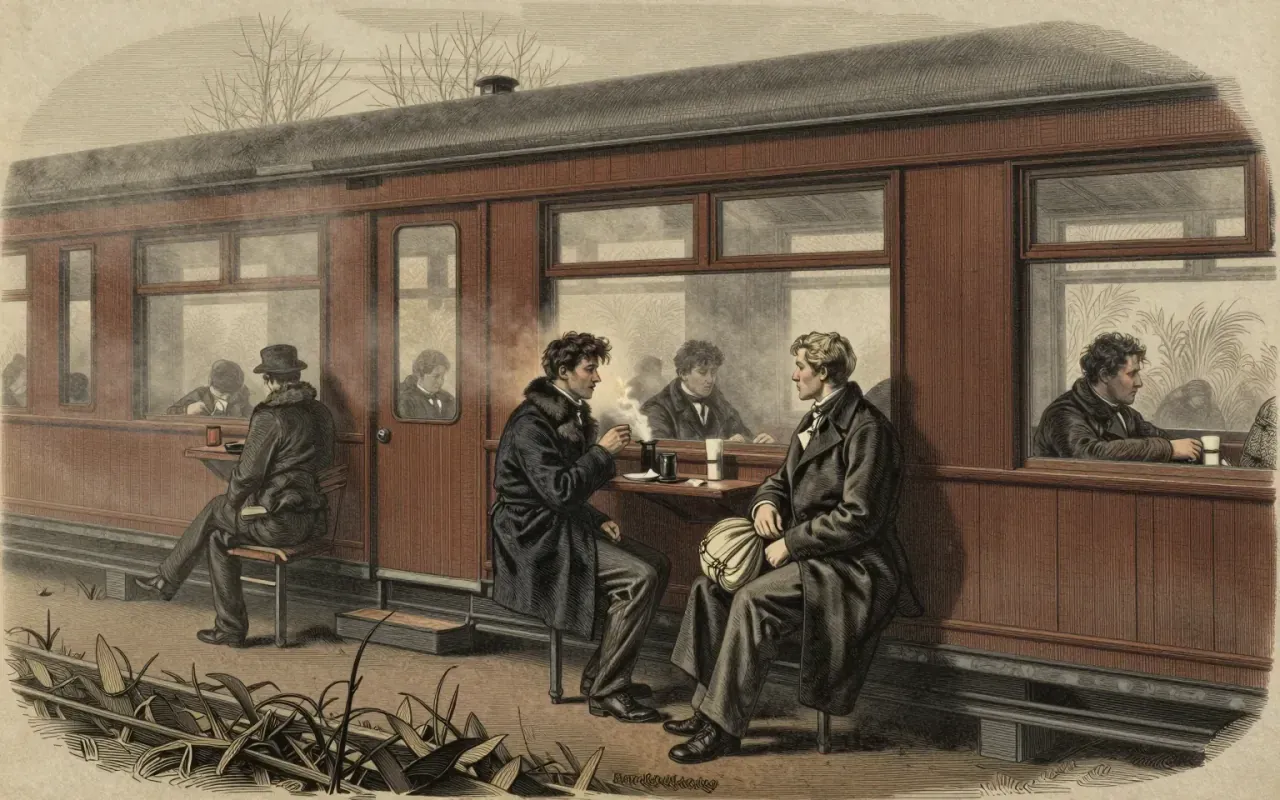
Dostoevsky's 1869 novel follows Prince Myshkin, a man of genuine virtue in a corrupt Russian society, as his innocence collides with greed, vanity, and cruelty. The novel treats moral purity as a defect, not an ideal, and offers no redemption for it.

music.briefs Music

All 8 in music →
10:35

“Awaken, My Love!”

Childish Gambino · 2016

‘Awaken, My Love!’ is a committed, cohesive plunge into psychedelic soul—no hedging, no genre tourism, no rap. It works because it trusts the weight of groove, the heat of analogue texture, and the authority of Glover’s voice as instrument first, storyteller second.

10:29

3 Feet High and Rising

De La Soul · 1989

3 Feet High and Rising is De La Soul’s 1989 debut — a sample-heavy, psychedelic-influenced hip-hop record built with the Casio RZ-1 and Eventide Harmonizer. It introduced the 'D.A.I.S.Y. Age' concept ('Da Inner Sound, Y'all'), used quiz show skits to structure its flow, and drew from funk, soul, doo-wop, psychedelic rock, and children’s music. It was certified platinum, added to the Library of Congress National Recording Registry in 2010, and remained unavailable digitally until 2023 due to sample clearance issues.

10:17

Buffalo Springfield Again

Buffalo Springfield · 1967

Buffalo Springfield Again is a document of disintegration — not decline, but divergence. It is worth hearing for how it uses absence as an instrument.

9:05

In‐A‐Gadda‐Da‐Vida

Iron Butterfly · 1968

Iron Butterfly’s 1968 album In-A-Gadda-Da-Vida is a two-part statement: four short psychedelic tracks on Side A, and a 17-minute title track filling Side B. It was made by the classic quartet — Ingle (Vox Continental organ, vocals), Brann (guitar, lead vocals on 'Termination'), Dorman (bass, backing vocals), and Bushy (drums, percussion). Ingle wrote all tracks except 'Termination', co-written by Brann and Dorman. The album was a commercial milestone — Atlantic’s first in-house platinum award — and its title track became a top-30 US hit when edited to 2:52. Critics identified its sound as a pioneering fusion of hard rock with acid-friendly textures, trippy exploration, open-ended jams, and a hard, distorted attack.

9:25

S.F. Sorrow

The Pretty Things · 1968

S.F. Sorrow is the first rock opera: a studio-bound, narrative-driven, sonically dense 1968 record made at Abbey Road with experimental instrumentation, relentless tape bouncing, and zero concern for live performance. It landed as a landmark—not because it succeeded on all fronts, but because it attempted everything at once, in real time, with limited tools and no map.

9:14

Vincebus Eruptum

Blue Cheer · 1968

Vincebus Eruptum is Blue Cheer’s 1968 debut album. It is a power-trio document: Dickie Peterson (vocals, bass), Leigh Stephens (guitar), Paul Whaley (drums). It emerged after personnel reductions post-Monterey Pop Festival. It was recorded in 1967 at Amigo Studios in North Hollywood.

13:00

The Dark Side of the Moon

Pink Floyd · 1973

Pink Floyd's eighth album, built around a theme Roger Waters proposed at a 1971 band meeting and tested on tour for more than a year before it was finished, sets songs about time, money, conflict and mental collapse inside some of the clearest studio production of its decade.

film.briefs Film

All 38 in film →
13:00

Altered States

Ken Russell · 1980

Altered States (1980), directed by Ken Russell from Paddy Chayefsky’s novel, follows a scientist whose experiments with sensory deprivation and psychoactive drugs trigger a terrifying biological regression. Anchored by William Hurt’s debut performance and Dick Smith’s groundbreaking makeup effects, it merges psychological horror with surrealist science fiction. Though marked by creative conflict between writer and director, the film endures as a formally audacious, physically immersive inquiry into consciousness, identity, and the fragility of the human form.

13:00

Bad Timing

Nicolas Roeg · 1980

Nicolas Roeg’s 1980 psychological thriller Bad Timing follows an inspector’s investigation into a woman’s suicide attempt, using non-linear editing and restrained cinematography to dissect the obsessive, destructive relationship between a psychoanalyst and his lover. Set in Vienna and shot by Anthony B. Richmond, it stars Art Garfunkel and Theresa Russell, with Harvey Keitel as the investigator. Adapted by Yale Udoff from an Italian story, the film was controversial on release — rejected by its UK distributor and X-rated in the US — yet won the Toronto International Film Festival People’s Choice Award. Its formal rigour and emotional austerity have secured its status as an arthouse landmark.

13:00

Birth

Jonathan Glazer · 2004

Jonathan Glazer’s 2004 film Birth follows Anna, a woman who becomes convinced that her deceased husband has been reborn in a ten-year-old boy. Shot in New York with Haris Savides, scored by Alexandre Desplat, and anchored by Nicole Kidman’s restrained performance, it is a psychological mystery that sustains ambiguity as principle. It does not confirm or deny the boy’s claim, instead focusing on the weight of Anna’s belief, the erosion of shared reality among those around her, and the quiet devastation of love that refuses to expire. Polarising on release, it has since gained recognition for its formal rigour and emotional precision.

13:00

Cure

Kiyoshi Kurosawa · 1997

A Tokyo detective investigates a string of motiveless murders linked by an 'X' carved into victims and a mysterious man with apparent amnesia. As he traces each killer to the same enigmatic figure, his own grip on memory, motive, and agency begins to fray. Kiyoshi Kurosawa’s 1997 film treats hypnosis as ambient infection, building dread through repetition, restraint, and the slow erosion of certainty — not through gore or jump-scares, but through the unnerving plausibility of suggestion.

13:00

House of Games

David Mamet · 1987

David Mamet’s 1987 directorial debut is a neo-noir thriller about a psychiatrist drawn into a world of confidence tricks. Lindsay Crouse plays Margaret Ford, whose clinical detachment unravels as she learns the grammar of deception from con man Mike Mancuso (Joe Mantegna). Structured like a series of escalating cons, the film traces her shift from observer to participant to perpetrator — culminating not in redemption but in quiet, irreversible moral collapse. Shot with tight framing and sparse scoring, it privileges precision over psychology, logic over catharsis.

13:00

Klute

Alan J. Pakula · 1971

A 1971 neo-noir thriller directed by Alan J. Pakula, Klute follows a Pennsylvania detective investigating a missing executive by surveilling a New York call girl. Jane Fonda’s Oscar-winning performance anchors a film defined by Gordon Willis’s shadow-drenched cinematography, Michael Small’s unsettling score, and a script that treats paranoia as atmosphere rather than plot. It is the first of Pakula’s informal 'paranoia trilogy', prioritising psychological realism over narrative closure.

13:00

Leave Her to Heaven

John M. Stahl · 1945

Leave Her to Heaven (1945), directed by John M. Stahl, is a Technicolor psychological drama starring Gene Tierney as Ellen Berent, a woman whose obsessive love curdles into calculated violence. Adapted by Jo Swerling from Ben Ames Williams’s novel, it uses Leon Shamroy’s precise cinematography and Tierney’s controlled performance to map the internal architecture of possession. Though some narrative threads remain underdeveloped and its protagonist’s passivity tests credulity, the film endures as a formally rigorous study of zero-sum love — selected for preservation by the Library of Congress in 2018.

13:00

Rosemary's Baby

Roman Polanski · 1968

Roman Polanski’s 1968 adaptation of Ira Levin’s novel follows Mia Farrow as Rosemary Woodhouse, a young wife who suspects her neighbours and husband are conspiring over her pregnancy. Shot with clinical precision by William A. Fraker and edited with unobtrusive rigour, the film sustains tension through accumulation — not revelation. Its power lies in what remains unsaid, unconfirmed, and unchallenged: a portrait of gaslighting as architecture, paranoia as logic, and horror as domestic routine.

science.briefs Science

All 20 in science →
9:14

Abraham Maslow

Maslow didn’t measure self-actualisation—he curated it from heroes he admired.
13:00

Cocktail party effect

Colin Cherry named the cocktail party problem in 1953 after studying how people follow one conversation among many, and found listeners still noticed their own name in speech they were supposedly ignoring — a small detail that broke the theory built to explain it.
9:35

Carl Rogers

Therapy isn’t about what you say — it’s about how you hold space, and in 1941 they proved it with tape recorders.
9:09

Carol Dweck

Praising intelligence isn’t kind—it’s a trap that makes people avoid hard work.
13:00

Universal grammar

Chomsky's claim that children are born with an innate grammatical template has narrowed over sixty years to a single computational operation, and remains genuinely contested rather than settled either way.
13:00

Cognitive bias

Amos Tversky and Daniel Kahneman's 1970s experiments found people rate a detailed, statistically impossible scenario as more probable than a plain one — evidence that judgment runs on shortcuts, not pure logic, a claim that reshaped economics and drew its own rationality war.
13:00

Milgram experiment

In 1961, months after Adolf Eichmann's trial opened, Stanley Milgram found 65 per cent of volunteers at Yale would deliver what they believed was a 450-volt shock to a stranger simply because told to continue — far more than psychiatrists had predicted.

design.briefs Design

All 1 in design →

games.briefs Games

All 3 in games →
9:46

Revelations: Persona

Atlus · 1996

Revelations: Persona is Atlus’s 1996 PlayStation RPG that introduces the Persona series. It casts high school students who summon Personas—Jungian self-manifestations—to fight supernatural threats in a town shaped by lunar cycles and branching narrative paths.

10:48

Prey (2017 video game)

Arkane Studios · 2017

Prey (2017) is a first-person immersive sim set aboard the Talos I space station. You play as Morgan Yu, a scientist surviving a Typhon outbreak. You begin with a wrench and gradually unlock weapons, Neuromod abilities, and environmental tools. Talos I opens in stages—from linear missions to free exploration—and supports multiple solutions via systemic interactions: oil spills, turrets, explosive canisters, and the Gloo Cannon. It draws inspiration from System Shock and Arx Fatalis. It shares only its name with Human Head Studios’ earlier Prey series. It was developed by Arkane Austin under Raphaël Colantonio’s leadership.

10:52

Silent Hill 2

Team Silent · 2001

Silent Hill 2 is a 2001 survival horror game developed by Team Silent within Konami Computer Entertainment Tokyo. It uses third-person perspective, no HUD, light-dependent maps, manual annotation, and environmental progression to frame James Sunderland’s search for his deceased wife as an act of psychological excavation.

culture.briefs Culture

All 8 in culture →
9:56

Framing (social sciences)

Framing doesn’t reflect reality—it builds the lens through which reality becomes legible, actionable, and political.
9:44

Subliminal stimuli

Subliminal stimuli don’t hijack your will—they only nudge what you already intend to do.
9:32

Fear appeal

Fear appeals don’t change behaviour—they test whether the audience trusts the solution more than they fear the threat.
9:30

Coaching

Coaching is goal transport—not soul repair—and its lack of regulation is structural, not incidental.