briefs
Topic · across the network

Family

The first institution, and the one hardest to leave.

240
briefs
6
subjects
12:45
average
3061 min
in total
Abstraction 407Absurdism 137Acoustics 220Acting 65Adaptation 372Addiction 95Adolescence 202Advertising 77Age of exploration 14Ageing 113Agriculture 100Algorithms 114Ambition 46Anarchism 38Ancient Egypt 17Ancient Greece 38Ancient Rome 30Animals 172Anthropology 23Apartheid 12Architecture 165Archives 32Argentina 10Art Deco 26Artificial intelligence 78Astronomy 81Attention 42Australia 32Automation 73Avant-garde 164Aviation 79Banking 72Banned works 40Bauhaus 12Beer 5Behavioural economics 22Berlin 16Big tech 6Biodiversity 136Biography 86Birds 41Black holes 20Blockchain 12Boxing 14Branding 77Brazil 43Bread 29Britain 131Brutalism 4Bubbles 3Buddhism 28Byzantium 10California 17Canada 18Capitalism 94Cars 468Celebrity 59Censorship 110Cheese 24Chefs 9Chemistry 104Chess 2Childhood 87China 109Chocolate 8Christianity 49Cinematography 343Cities 90Class 485Climate change 107Club culture 100Cocktails 2Coffee 11Cognitive bias 14Collecting 16Colonialism 284Colour 42Comedy 89Community 52Complexity 21Computing 309Consciousness 16Conservatism 14Conspiracy theories 8Cooking 178Corruption 38Cosmology 31Cover versions 64Craft 116Crate digging 42Creativity 8Crime 234Cryptocurrency 8Cryptography 24Cuba 10Cybersecurity 30Dada 12Debt 38Decision-making 28Decolonisation 46Deep time 80Democracy 45Denim 16Deserts 45Detroit 17Dinosaurs 12Directing 168Disasters 59Disease 109DJ culture 89Dreams 32Drones 5Drum machines 96Dystopia 69East Africa 28Ecology 337Economics 36Editing 72Education 92Egypt 12Electric vehicles 59Emotion 22Empire 92Endurance 49Energy 120Engineering 541Entropy 8Epidemics 13Equality 9Espionage 31Ethics 44Evolution 174Existentialism 106Expertise 2Exploration 49Extinction 23Failure 37Family 240Fandom 22Fascism 45Fashion 215Fast fashion 12Fear 34Feminism 122Fermentation 126Film music 81Fishing 12Folklore 71Food history 588Football 16Forests 31Forgery 7France 163Fraud 15Free will 13Freedom 16French literature 15Friendship 24Furniture 36Gambling 14Gender 63Generations 28Genetics 87Geology 96Germany 66Globalisation 74Gothic 32Greece 5Grief 126Habits 6Happiness 2Hardware 709Haute couture 22Headphones 8Hi-fi 12Hinduism 12Hoaxes 1Human history 23Human nature 41Identity 138Illustration 8Impressionism 6Improvisation 249India 89Indonesia 15Industrial design 342Inequality 13Inflation 4Information 34Infrastructure 280Insects 29Intelligence 8Interiors 31Internet culture 88Invention 329Iran 41Islam 40Islands 17Israel 9Italy 52Jamaica 10Japan 114Jewellery 5Journalism 34Judaism 13Justice 42Korea 41Language 70Law 90Leadership 20Learning 6Liberalism 1Libraries 6Literary criticism 26London 12Loneliness 61Los Angeles 62Lost works 9Love 67Luxury 55Machine learning 15Management 10Maps 5Marketing 21Markets 51Mars 6Marxism 26Masculinity 46Materials 138Mathematics 79Meaning 6Medicine 124Memory 82Mental health 70Mesopotamia 4Mexico 38Migration 95Minimalism 68Mining 30Misinformation 9Modernism 63Money 24Monopoly 32Mortality 61Motivation 2Mountains 16Museums 27Mysticism 11Mythology 60Nationalism 40Neuroscience 23New York 36Nigeria 7Nihilism 10Noise 31Nostalgia 33Nuclear 29Nutrition 17Oceans 48Oil 42Open source 45Painting 18Palaeontology 29Parenting 14Paris 18Partition 6Patents 71Patronage 14Perception 44Personal style 27Personality 2Persuasion 8Peru 10Philosophy 77Photography 37Physics 206Plants 26Platforms 89Podcasting 1Poetry 25Poland 17Policing 34Pop Art 16Populism 2Portraiture 6Portugal 18Postmodernism 23Power 91Prehistory 24Preservation 28Printmaking 21Privacy 11Probability 6Productivity 1Programming 54Prohibition 1Propaganda 35Protest 75Pseudoscience 17Psychology 80Publishing 22Punishment 16Quantum mechanics 44Race 145Radio 30Railways 35Rave 17Realism 47Record labels 19Recording 810Relativity 23Religion 154Resilience 15Restaurants 30Restoration 2Retail 94Revolution 58Risk 18Ritual 96Robotics 26Romance 96Russia 58Salt 9Sampling 246Satire 84Scandinavia 28Scientific method 186Screenwriting 26Sculpture 7Secularism 2Self-deception 14Semiconductors 73Sexuality 102Ships 18Silence 24Silicon Valley 17Slavery 35Sleep 2Smartphones 27Sneakers 15Social media 58Socialism 9Software 68Songwriting 180Sound design 332Sound systems 20South Africa 19South East Asia 30Space exploration 84Spain 18Special effects 41Spices 62Spirits 12Sport 82Startups 21Statistics 10Status 9Stoicism 4Storytelling 68Strategy 70Street food 99Streetwear 16Studio craft 508Subcultures 59Sugar 12Supply chains 115Surrealism 53Surveillance 21Sustainability 30Synthesis 232Tailoring 37Taxation 14Tea 24Textiles 97Thailand 11The American Revolution 19The American South 88The Arab world 41The Arctic 19The Balkans 17The Belle Epoque 13The body 29The brain 26The Caribbean 28The civil rights movement 62The Cold War 160The eighties 268The Enlightenment 29The financial crisis 19The First World War 39The food industry 157The French Revolution 9The Gilded Age 9The Great Depression 18The Holocaust 20The Industrial Revolution 93The internet 61The interwar years 135The Middle Ages 35The Moon 4The music business 169The Netherlands 10The nineties 26The Olympics 10The pandemic 13The Reformation 1The Renaissance 16The Russian Revolution 19The Second World War 102The seventies 58The sixties 28The space race 5The United States 19The universe 7The Victorian era 37Therapy 20Tokyo 11Trade 48Tragedy 22Translation 5Trauma 85Travel 5True crime 2Turkey 18Typography 54Uniforms 23Unions 8Urban planning 66Utilitarianism 1Utopia 5Vaccines 10Vegetarianism 15Venture capital 6Video games 291Vietnam 12Vintage 65Vinyl 6Virtual reality 11War 169Watches 4Water 11Weather 29West Africa 29Wilderness 10Wine 3Work 22Workwear 19Worldbuilding 121

books.briefs Books

All 9 in books →
16:39

Anne of Green Gables

L. M. Montgomery · 0

Anne of Green Gables argues that imagination is a child’s tool for claiming personhood—not escape. It shows Anne building selfhood through naming, error and quiet love: the White Way of Delight, the liniment cake, Marilla’s green dress. The brief explains why her red hair matters, why Matthew’s narcissus matters more than his death, and why the bend in the road is the book’s truest sentence.

13:26

Fathers and Sons

Ivan Sergeevich Turgenev · 1883

The brief argues that 'Fathers and Sons' is not about ideas but about their bodily cost. Bazarov’s nihilism collapses when confronted with love, illness, and grief. It tells you which chapters to read (XXI–XXVIII), why to skip the Introduction, and how the grave—not the duel or the arbour—is the novel’s true climax.

13:57

The wild duck

Henrik Ibsen · 0

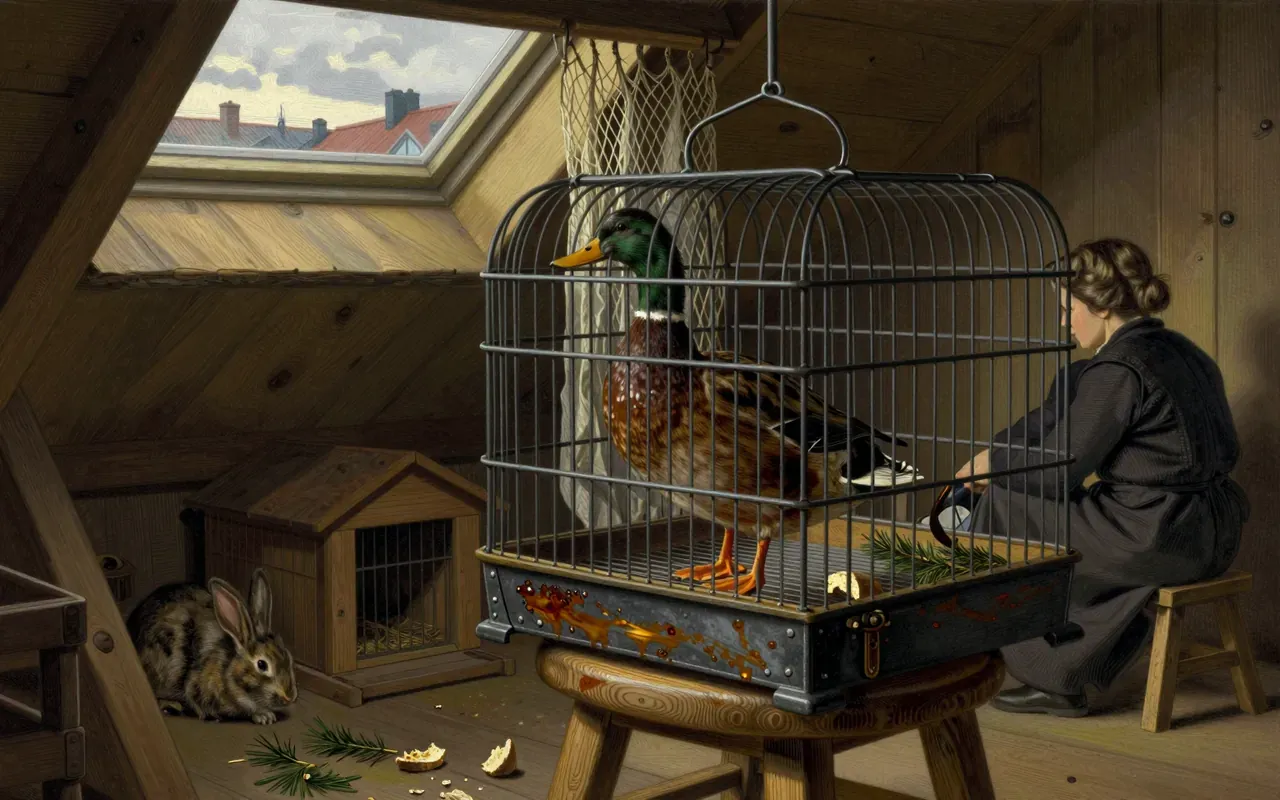
The play argues truth is catastrophic when imposed on fragile lives. Gregers Werle forces Hjalmar Ekdal to confront his wife Gina’s past with Werle Sr., triggering a collapse that ends with Hedvig’s suicide. Relling’s ‘life-lie’ is the play’s core idea: illusion is not weakness but survival infrastructure. Read it for the loft, the duck, and the pistol—not for redemption.

12:30

Anna Karenina

Leo Tolstoy · 1878

Tolstoy's 1878 novel follows multiple lives in Russian society—the affair between Anna Afremova and Count Vronsky, alongside Levin's marriage and search for meaning through farming. The book argues that domestic life is not private. Who you are is determined by the society around you, and defying it has a cost.

14:30

The Brothers Karamazov

Fyodor Dostoyevsky · 1880

Dostoevsky's 1880 novel follows four brothers and their father's death, but treats the murder trial as a setup for Ivan's philosophical challenge to God and Alyosha's search for redemption. The book demands the reader inhabit uncertainty rather than resolve it.

12:20

East of Eden

John Steinbeck · 1952

Steinbeck's 1952 masterpiece spans generations in California's Salinas Valley, following the Trask and Hamilton families through cycles of moral struggle. The brief covers the dual narrative structure, the philosophy of timshel (the ability to choose your nature), and why this is Steinbeck's most ambitious work.

12:00

The Metamorphosis

Franz Kafka · 1915

Kafka's 1915 novella in seventy pages of exact prose. A man becomes an insect overnight. The story is not about the transformation; it is about what comes after, and what it reveals about work, family, and obligation.

11:00

One Hundred Years of Solitude

Gabriel García Márquez · 1967

García Márquez's 1967 novel set in the fictional Colombian town of Macondo, where the Buendía family repeats the same names, mistakes, and obsessions across generations. The brief covers the structure of cyclical time, the decay of an isolated settlement, and why the magical elements are not flourish but argument about how the past swallows the present.

music.briefs Music

All 8 in music →
9:47

A Sailor’s Guide to Earth

Sturgill Simpson · 2016

A Sailor’s Guide to Earth is a live-recorded, self-produced orchestral-soul detour from country orthodoxy — anchored by real strings, real horns, real steel guitar, and real ensemble interplay.

9:17

Carrie & Lowell

Sufjan Stevens · 2015

Carrie & Lowell is Sufjan Stevens’ seventh studio album, released March 31, 2015. It is a set of songs written and recorded in 2014, prompted by his mother Carrie’s death from stomach cancer in 2012 and shaped by his relationship with her and his stepfather Lowell Brams.

10:04

Coal Miner’s Daughter

Loretta Lynn · 1970

Coal Miner's Daughter is Loretta Lynn’s sixteenth solo studio album, released 4 January 1971 by Decca Records. Five of its eleven tracks were recorded earlier for other albums, including the title song, cut 1 October 1969. It was recorded across four sessions at Bradley's Barn in Mount Juliet, Tennessee, produced by Owen Bradley, engineered by Jim Williamson, and mastered by Darrell Johnson. The ensemble features steel guitar, Dobro, banjo, multiple bass players, and The Jordanaires’ background vocals. The title track reached No. 1 on the Billboard Country Chart in 1970 and became Lynn’s first entry on the Billboard Hot 100 (No. 83). It inspired her 1976 autobiography and the 1980 Oscar-winning film.

11:01

Southeastern

Jason Isbell · 2013

Southeastern is a live-vocal, band-in-the-room album anchored by direct lyrical address and emotional specificity. It avoids sonic obfuscation. It names trauma, recovery, and memory without abstraction. Its power lies in what it refuses: polish, distance, and evasion.

10:53

Coat of Many Colors

Dolly Parton · 1971

A lean, writer-led country record — recorded fast, written tighter, released before myth could set in.

11:10

Nebraska

Bruce Springsteen · 1982

Nebraska is a solitary, unadorned document — recorded alone in a bedroom, mixed through damaged equipment, released because nothing else held the weight of its stories.

10:22

The Eminem Show

Eminem · 2002

The Eminem Show is a 2002 hip-hop album released in May 2002. It was Eminem’s fourth studio album and his first self-produced major release, made while filming 8 Mile and certified Diamond by the RIAA.

11:05

The River

Bruce Springsteen · 1980

A 20-track double album released in October 1980. Springsteen’s fifth album. Conceived as a band record to capture the E Street Band’s live sound. Built from over 50 recorded songs. Originally planned as a single LP titled The Ties That Bind, scrapped in late 1979.

film.briefs Film

All 210 in film →
13:00

A Christmas Tale

Arnaud Desplechin · 2008

Arnaud Desplechin’s 2008 French drama follows the fractured Vuillard family as they reunite for Christmas after matriarch Junon is diagnosed with leukemia. Set over several wintry days in Roubaix, the film charts shifting alliances, buried resentments, and fragile intimacies among three adult siblings, their partners, children, and extended kin — all held in uneasy orbit by Junon’s iron will and Abel’s quiet endurance. With a dense script, naturalistic performances, and Éric Gautier’s muted cinematography, it treats family as a site of repetition, inheritance, and unspoken history.

13:00

A Lesson in Love

Ingmar Bergman · 1954

A Lesson in Love (1954) is Ingmar Bergman’s gently ironic study of a Stockholm marriage tested by professional pride, quiet restlessness, and a charming patient. Starring Eva Dahlbeck and Gunnar Björnstrand, it trades existential gravity for domestic nuance, using light comedy and unhurried observation to explore love as daily practice rather than grand declaration. Shot by Martin Bodin and scored by Dag Wirén, it remains a subtle, underseen pivot in Bergman’s career — modest in scope, exact in execution.

13:00

A Long Goodbye

Kira Muratova · 1971

Kira Muratova’s 1971 Soviet drama observes the quiet unraveling of a mother-son relationship as eighteen-year-old Sasha prepares to move to Siberia. Shot by Gennadi Karyuk and starring Zinaida Sharko and Oleg Vladimirsky, it avoids exposition and climax in favour of behavioural realism: glances held too long, letters intercepted and unopened, conversations that circle but never land. Shelved until 1987, it remains a study in asymmetry — of care, of memory, of time — where emotional weight gathers in silence, routine, and the physical effort of staying present.

13:00

A Married Couple

Allan King · 1969

Allan King’s 1969 Canadian documentary observes Billy and Antoinette Edwards in their Toronto home for ten weeks, with no script, no direction during filming, and no narration. Shot by Richard Leiterman and edited by King, it presents marital life as unvarnished duration — arguments, tenderness, boredom, and silence unfolding without commentary. Though controversial on release for its explicitness and perceived voyeurism, it endures as a landmark of cinema vérité, testing whether sustained observation can reveal truths about intimacy that fiction and journalism obscure.

13:00

À Nos Amours

Maurice Pialat · 1983

Maurice Pialat’s 1983 drama follows sixteen-year-old Suzanne (Sandrine Bonnaire) as she navigates sexual experience, family fracture and emotional drift in early-1980s Paris. Shot with observational restraint by Jacques Loiseleux and written by Pialat and Arlette Langmann, it avoids exposition, score-driven emotion or narrative resolution, holding Suzanne’s contradictions — her hunger for connection and her inability to sustain it — without judgment or explanation.

13:00

A Ship Bound for India

Ingmar Bergman · 1947

A Ship Bound for India (1947) is Ingmar Bergman’s third feature and first original screenplay, co-written with Martin Söderhjelm. Set in a Swedish port town, it follows Johannes, who returns after seven years at sea and dreams of his teenage years under his domineering, blind-bound father. Built around a single extended flashback, the film charts Johannes’s slow assertion of self amid familial cruelty, unrequited love, and physical stigma — all rendered with stark, unhurried realism and no stylistic flourish.

13:00

A Tale of Springtime

Éric Rohmer · 1990

Éric Rohmer’s 1990 film follows Jeanne, a philosophy teacher, as she navigates a weekend at a country house orchestrated by her student Natacha. Through precise dialogue, restrained performances, and unhurried pacing, the film charts Jeanne’s gradual realisation that she is being slotted into an existing relational pattern—and her decision to step out of it. Shot by Luc Pagès and scored sparingly with Beethoven, it is the first of Rohmer’s ‘Tales of the Four Seasons’.

13:00

A Tale of Winter

Éric Rohmer · 1992

Éric Rohmer’s 1992 film follows Félicie, a Parisian hairdresser raising her daughter alone, as she navigates two unsatisfying relationships while holding onto the memory of a summer romance. Five years after losing contact with Charles, she sees him by chance on a New Year’s Eve bus — a reunion made possible not by fate, but by her unwavering, quiet fidelity to possibility. Shot by Luc Pagès and written and directed by Rohmer, it is the second in his ‘Tales of the Four Seasons’ series.

games.briefs Games

All 4 in games →
9:54

Clannad (video game)

Key · 2004

Clannad (2004) is a visual novel by Key that uses dialogue choices to navigate a branching narrative across two arcs—School Life and After Story—gated by a light-collection mechanic requiring full scenario completion for the true ending.

9:52

The Sims (video game)

Will Wright / Maxis · 2000

The Sims is a social simulation video game developed by Maxis and published by Electronic Arts in 2000. Designed by Will Wright, it allows players to create and control virtual people called Sims, build and furnish homes, and manage Sims' needs, relationships, careers, and household finances. Its open-ended gameplay has no fixed win condition. The Sims is an artificial life game built around simulated characters who respond to needs, objects, and other Sims. Although Sims can act autonomously when free will is enabled, the player usually directs their actions, manages their household, and decides how they develop relationships, skills, careers, and homes. Because the game has no fixed win condition, it can be played indefinitely and has been described as more like a toy than a traditional game. Sims are influenced by the player to interact with objects or other Sims. If enabled in the game's options, Sims have a certain amount of free will, allowing them to autonomously interact with their world; however, the player can override most of these autonomous actions by canceling them in the action queue at the top of the screen.

8:46

The Sims 2

Maxis · 2004

The Sims 2 is a 2004 Maxis simulation that introduces full 3D, lifespan management, genetics, and 360° camera control to the franchise. It expands domestic agency but offers no narrative cohesion across its pre-built neighborhoods.

10:12

The Sims 4

Maxis · 2014

The Sims 4 is a social simulation game developed by Maxis and released in September 2014. It has no primary objectives or storyline. Players create Sims using Create-a-Sim, build homes in Build mode, and manage six depleting needs—hunger, bladder, hygiene, social, fun, and energy—through interactions with objects. Careers generate income, but advancement depends on developing linked skills. Aspirations and dynamic wants and fears provide optional goal-oriented structure. The game is open-ended and almost endless.

business.briefs Business

All 7 in business →
10:08

Mars family

A family that owns a candy company also owns the argument against taxing inherited wealth.
9:27

Quandt

A family name, not a firm: the Quandts built wealth on industrial control — and silence on complicity.
9:58

Family tree of Thomson family

Thomson family

The Thomson family is a dynastic holding structure anchored by a UK hereditary peerage and centred on The Woodbridge Company. Its wealth is not generated by visible operations but preserved by title, trust law, and concentrated private ownership. Sherry Brydson’s 23.47% stake is the sole quantified anchor of its financial claim. No public revenue, valuation, or operational detail is disclosed — only lineage and control.

9:08

Auchan

Auchan did not invent retail — it alphabetised its way into dominance.
10:41

Tengelmann Group

A 157-year-old family firm stopped selling coffee and started selling equity — but never tells you how much it earns from either.
9:32

Walton Family Foundation

A private foundation funded by Walmart wealth isn’t civic infrastructure—it’s inherited influence made permanent.
11:40

Hermès

Thierry Hermès · 1837

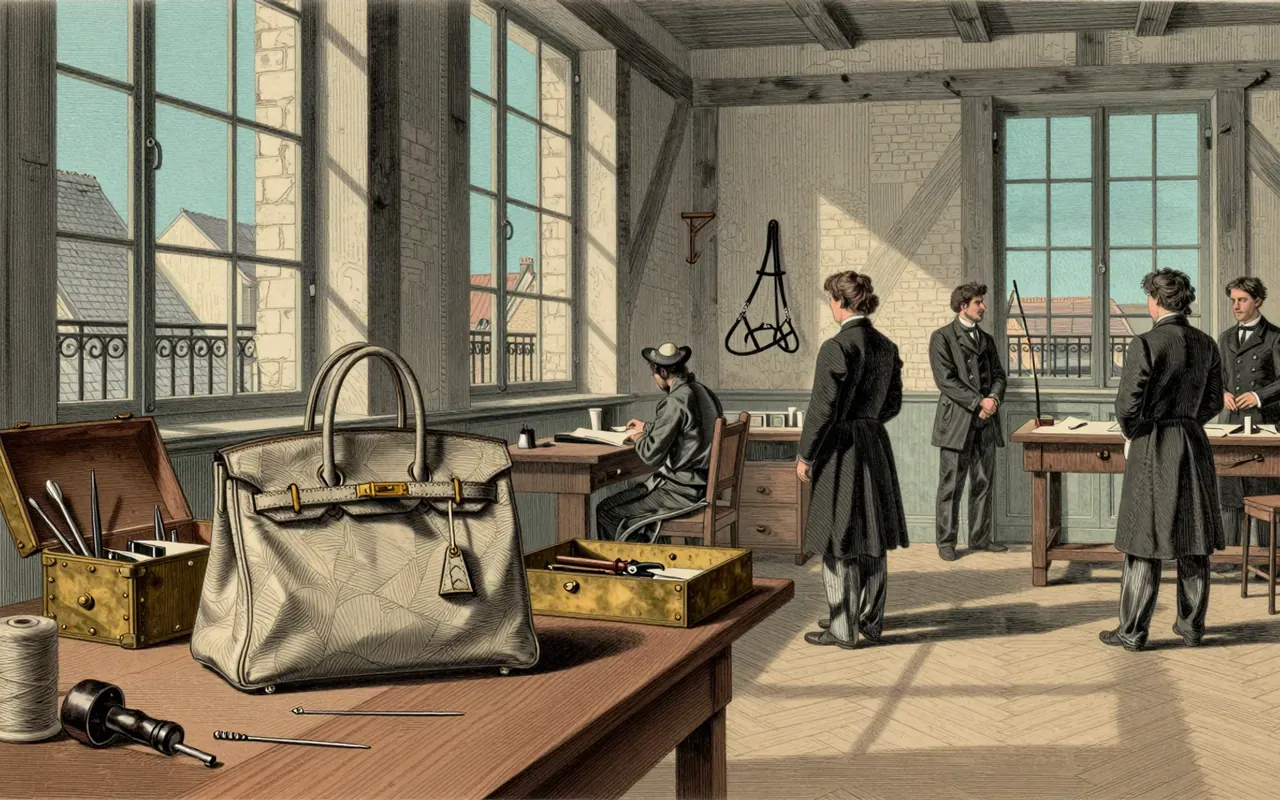
Hermès is a vertically integrated French manufacturing company built on a hand-sewn stitch, sustained by family control, and monetised through scarcity-enforced pricing across 16 product lines.

culture.briefs Culture

All 2 in culture →
9:16

Confucius

Confucius didn’t invent virtue—he weaponised ancestry, enforced hierarchy, and called it harmony.
9:44

Diana, Princess of Wales

She was never born royal—she became royal by marrying in. That difference still defines who counts, and who doesn’t.