briefs
Topic · across the network

Absurdism

Living with the gap between wanting sense and finding none.

137
briefs
9
subjects
12:03
average
1650 min
in total
Abstraction 407Absurdism 137Acoustics 220Acting 65Adaptation 372Addiction 95Adolescence 202Advertising 77Age of exploration 14Ageing 113Agriculture 100Algorithms 114Ambition 46Anarchism 38Ancient Egypt 17Ancient Greece 38Ancient Rome 30Animals 172Anthropology 23Apartheid 12Architecture 165Archives 32Argentina 10Art Deco 26Artificial intelligence 78Astronomy 81Attention 42Australia 32Automation 73Avant-garde 164Aviation 79Banking 72Banned works 40Bauhaus 12Beer 5Behavioural economics 22Berlin 16Big tech 6Biodiversity 136Biography 86Birds 41Black holes 20Blockchain 12Boxing 14Branding 77Brazil 43Bread 29Britain 131Brutalism 4Bubbles 3Buddhism 28Byzantium 10California 17Canada 18Capitalism 94Cars 468Celebrity 59Censorship 110Cheese 24Chefs 9Chemistry 104Chess 2Childhood 87China 109Chocolate 8Christianity 49Cinematography 343Cities 90Class 485Climate change 107Club culture 100Cocktails 2Coffee 11Cognitive bias 14Collecting 16Colonialism 284Colour 42Comedy 89Community 52Complexity 21Computing 309Consciousness 16Conservatism 14Conspiracy theories 8Cooking 178Corruption 38Cosmology 31Cover versions 64Craft 116Crate digging 42Creativity 8Crime 234Cryptocurrency 8Cryptography 24Cuba 10Cybersecurity 30Dada 12Debt 38Decision-making 28Decolonisation 46Deep time 80Democracy 45Denim 16Deserts 45Detroit 17Dinosaurs 12Directing 168Disasters 59Disease 109DJ culture 89Dreams 32Drones 5Drum machines 96Dystopia 69East Africa 28Ecology 337Economics 36Editing 72Education 92Egypt 12Electric vehicles 59Emotion 22Empire 92Endurance 49Energy 120Engineering 541Entropy 8Epidemics 13Equality 9Espionage 31Ethics 44Evolution 174Existentialism 106Expertise 2Exploration 49Extinction 23Failure 37Family 240Fandom 22Fascism 45Fashion 215Fast fashion 12Fear 34Feminism 122Fermentation 126Film music 81Fishing 12Folklore 71Food history 588Football 16Forests 31Forgery 7France 163Fraud 15Free will 13Freedom 16French literature 15Friendship 24Furniture 36Gambling 14Gender 63Generations 28Genetics 87Geology 96Germany 66Globalisation 74Gothic 32Greece 5Grief 126Habits 6Happiness 2Hardware 709Haute couture 22Headphones 8Hi-fi 12Hinduism 12Hoaxes 1Human history 23Human nature 41Identity 138Illustration 8Impressionism 6Improvisation 249India 89Indonesia 15Industrial design 342Inequality 13Inflation 4Information 34Infrastructure 280Insects 29Intelligence 8Interiors 31Internet culture 88Invention 329Iran 41Islam 40Islands 17Israel 9Italy 52Jamaica 10Japan 114Jewellery 5Journalism 34Judaism 13Justice 42Korea 41Language 70Law 90Leadership 20Learning 6Liberalism 1Libraries 6Literary criticism 26London 12Loneliness 61Los Angeles 62Lost works 9Love 67Luxury 55Machine learning 15Management 10Maps 5Marketing 21Markets 51Mars 6Marxism 26Masculinity 46Materials 138Mathematics 79Meaning 6Medicine 124Memory 82Mental health 70Mesopotamia 4Mexico 38Migration 95Minimalism 68Mining 30Misinformation 9Modernism 63Money 24Monopoly 32Mortality 61Motivation 2Mountains 16Museums 27Mysticism 11Mythology 60Nationalism 40Neuroscience 23New York 36Nigeria 7Nihilism 10Noise 31Nostalgia 33Nuclear 29Nutrition 17Oceans 48Oil 42Open source 45Painting 18Palaeontology 29Parenting 14Paris 18Partition 6Patents 71Patronage 14Perception 44Personal style 27Personality 2Persuasion 8Peru 10Philosophy 77Photography 37Physics 206Plants 26Platforms 89Podcasting 1Poetry 25Poland 17Policing 34Pop Art 16Populism 2Portraiture 6Portugal 18Postmodernism 23Power 91Prehistory 24Preservation 28Printmaking 21Privacy 11Probability 6Productivity 1Programming 54Prohibition 1Propaganda 35Protest 75Pseudoscience 17Psychology 80Publishing 22Punishment 16Quantum mechanics 44Race 145Radio 30Railways 35Rave 17Realism 47Record labels 19Recording 810Relativity 23Religion 154Resilience 15Restaurants 30Restoration 2Retail 94Revolution 58Risk 18Ritual 96Robotics 26Romance 96Russia 58Salt 9Sampling 246Satire 84Scandinavia 28Scientific method 186Screenwriting 26Sculpture 7Secularism 2Self-deception 14Semiconductors 73Sexuality 102Ships 18Silence 24Silicon Valley 17Slavery 35Sleep 2Smartphones 27Sneakers 15Social media 58Socialism 9Software 68Songwriting 180Sound design 332Sound systems 20South Africa 19South East Asia 30Space exploration 84Spain 18Special effects 41Spices 62Spirits 12Sport 82Startups 21Statistics 10Status 9Stoicism 4Storytelling 68Strategy 70Street food 99Streetwear 16Studio craft 508Subcultures 59Sugar 12Supply chains 115Surrealism 53Surveillance 21Sustainability 30Synthesis 232Tailoring 37Taxation 14Tea 24Textiles 97Thailand 11The American Revolution 19The American South 88The Arab world 41The Arctic 19The Balkans 17The Belle Epoque 13The body 29The brain 26The Caribbean 28The civil rights movement 62The Cold War 160The eighties 268The Enlightenment 29The financial crisis 19The First World War 39The food industry 157The French Revolution 9The Gilded Age 9The Great Depression 18The Holocaust 20The Industrial Revolution 93The internet 61The interwar years 135The Middle Ages 35The Moon 4The music business 169The Netherlands 10The nineties 26The Olympics 10The pandemic 13The Reformation 1The Renaissance 16The Russian Revolution 19The Second World War 102The seventies 58The sixties 28The space race 5The United States 19The universe 7The Victorian era 37Therapy 20Tokyo 11Trade 48Tragedy 22Translation 5Trauma 85Travel 5True crime 2Turkey 18Typography 54Uniforms 23Unions 8Urban planning 66Utilitarianism 1Utopia 5Vaccines 10Vegetarianism 15Venture capital 6Video games 291Vietnam 12Vintage 65Vinyl 6Virtual reality 11War 169Watches 4Water 11Weather 29West Africa 29Wilderness 10Wine 3Work 22Workwear 19Worldbuilding 121

books.briefs Books

All 7 in books →
15:17

Alice's Adventures in Wonderland

Lewis Carroll · 0

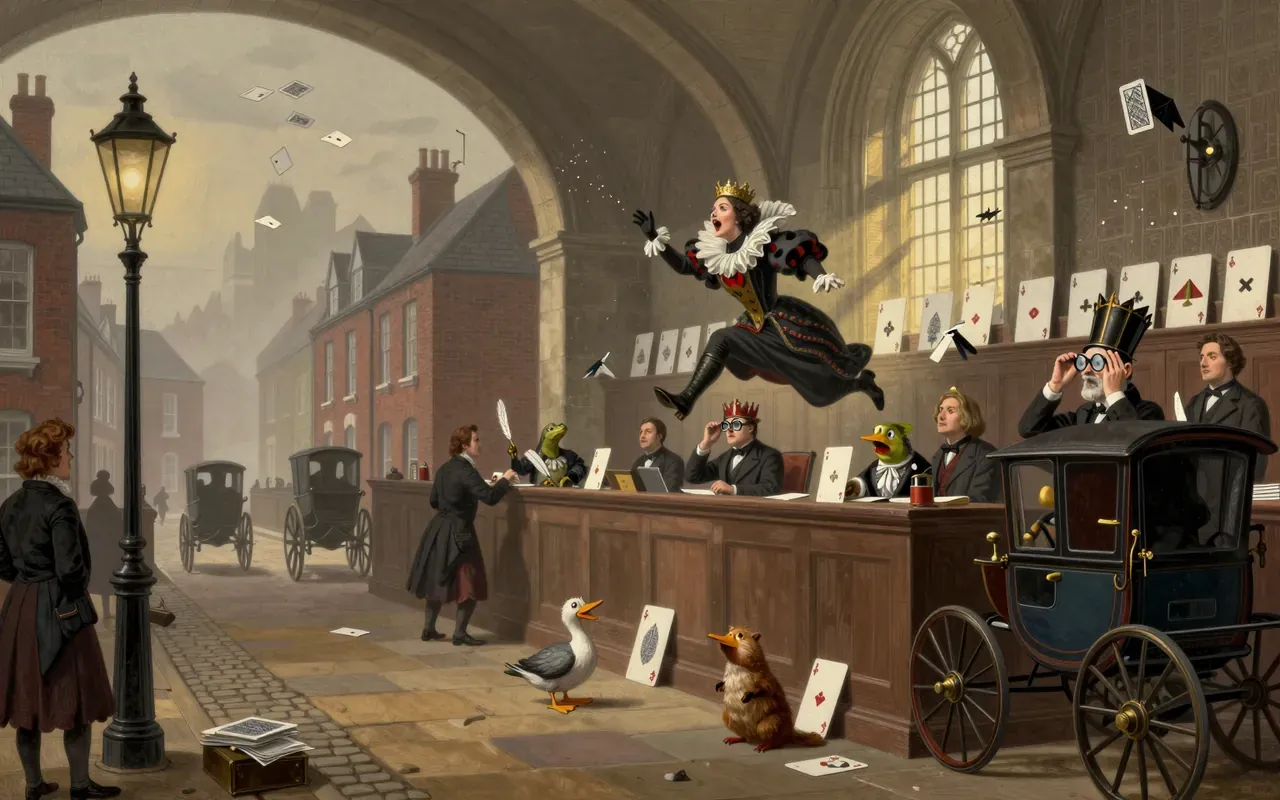
It is a satire of logic, language and authority disguised as children’s fantasy. The brief shows how Alice’s physical instability mirrors her intellectual rebellion—and why the final line, 'You’re nothing but a pack of cards!', is the book’s entire argument. Skip the Duchess’s moralising and the Mock Turtle’s songs.

15:18

Dead Souls

Nikolai Vasilevich Gogol · 1852

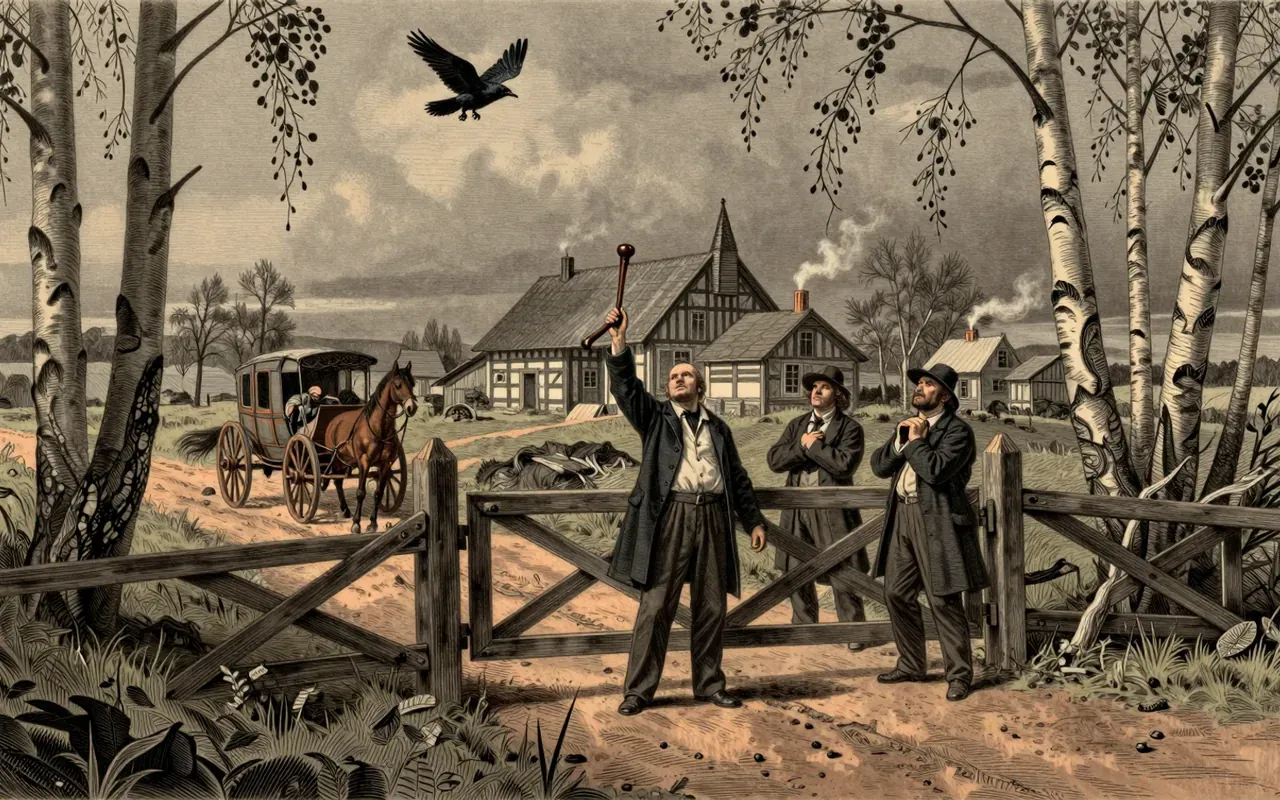
Dead Souls is a satirical diagnosis of imperial Russia’s moral and bureaucratic rot—not a picaresque romp. Chichikov’s ‘dead souls’ scheme works because the state treats serfs as inventory, even when dead. Part I delivers surgical character portraits and systemic critique. Part II collapses into unresolved moralising. Read Part I. Skip the Russia rhapsody. Treat the rest as fragments.

12:32

The Importance of Being Earnest

Oscar Wilde · 1893

A satirical three-act play that reduces Victorian respectability to linguistic games. It works because every line lands like a scalpel, not a sermon. Skip any production that treats it as heart-warming—it is not.

14:37

Pinocchio

Carlo Collodi · 1883

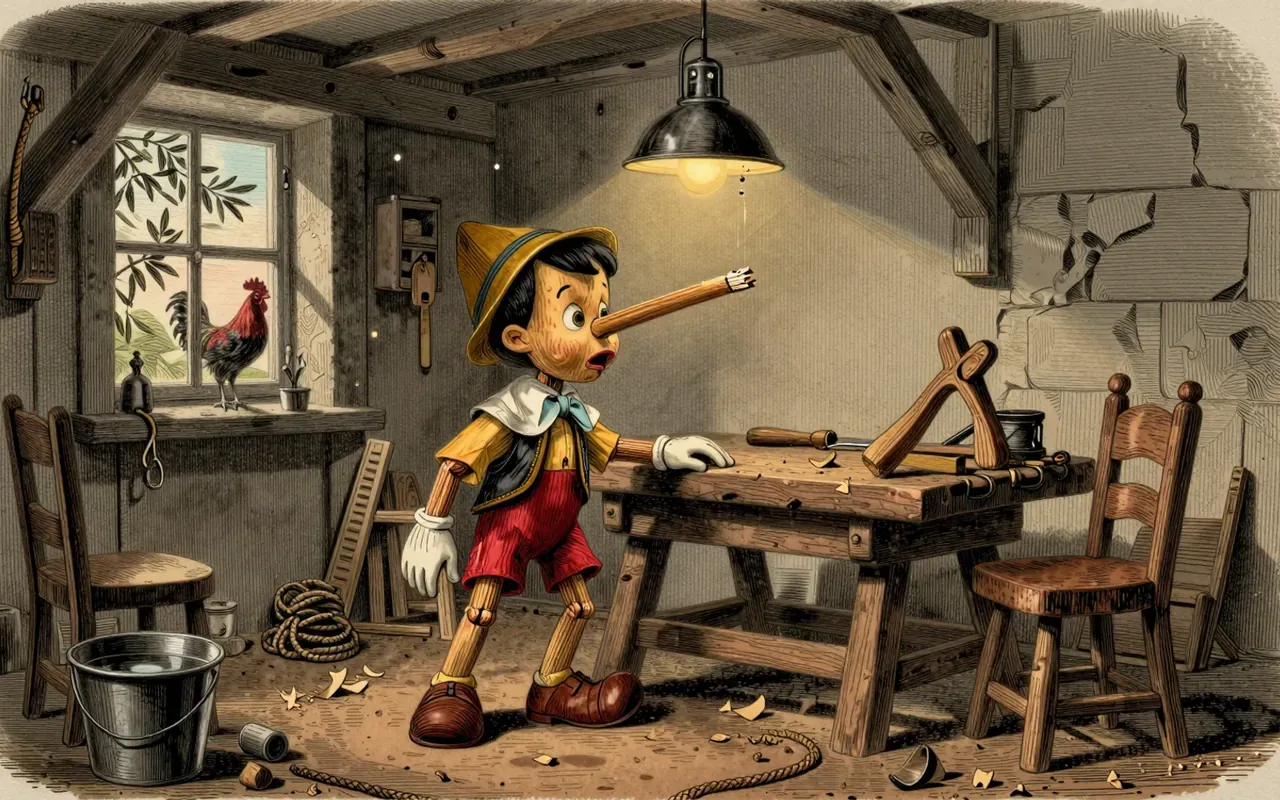
Pinocchio is a moral horror story disguised as children’s literature. Disobedience mutates the body. Redemption arrives only after being swallowed whole—literally—by the Dog-Fish. The brief isolates the core chapters, names what works (the Dog-Fish, the Land of Boobies), and tells you exactly what to skip.

15:50

Steppenwolf

Hermann Hesse · 0

Steppenwolf argues spiritual life demands self-annihilation through laughter—not transcendence. It fails when it abandons Haller’s voice for abstraction. Skip the political despair section. Read the Magic Theatre from the masked ball onward, but stop before Hermine’s command.

15:28

Uncle Vanya

Anton Pavlovich Chekhov · 0

Uncle Vanya is a devastating portrait of wasted lives and unacknowledged labour. It argues that intellectual prestige is often fraud, romantic love is mostly fatigue, and endurance is measured in knitted socks and tuned guitars—not grand gestures. The brief isolates Sonia’s final monologue as the play’s moral centre and tells you why Voitski’s failed shot matters more than his rage.

12:00

The Metamorphosis

Franz Kafka · 1915

Kafka's 1915 novella in seventy pages of exact prose. A man becomes an insect overnight. The story is not about the transformation; it is about what comes after, and what it reveals about work, family, and obligation.

music.briefs Music

All 25 in music →
11:14

Air Lore

Air · 1979

Air Lore is a 1979 album by the improvisational trio Air — Henry Threadgill (alto and tenor saxophones, flute), Fred Hopkins (double bass), and Steve McCall (drums, percussion) — performing radical reinterpretations of compositions by Scott Joplin and Jelly Roll Morton. Critics acclaim it as Air's most beloved and most remarkable work. It rejects academicism and repertory dogma in favour of ambiguity, absurdity, and avant-garde vaudeville energy. It is widely loved for its joy and irreverence, and for bringing early jazz compositions into focus as revolutionary improvisational templates rather than updating them. It is considered the essential Air album and an unsurpassed statement of historical homage to Scott Joplin rags and Jelly Roll Morton tunes from the perspective of the frontiers. Gary Giddins considers it Threadgill's key statement against repertory mania and academicism in jazz. DownBeat awarded it 5 stars, describing it as 'jazz of the absurd' — an avant-garde vaudeville infused with wackiness, where old and new coexist and emotional boundaries blur, resulting in an oddball masterpiece. The title 'Air Lore' evokes Earth's atmospheric layer of mixed gas retained by gravity, serving as a protective buffer and composed precisely of nitrogen, oxygen, argon, carbon dioxide, and trace gases.
9:56

Arepa 3000: A Venezuelan Journey Into Space

Los Amigos Invisibles · 2000

Los Amigos Invisibles’ Arepa 3000: A Venezuelan Journey Into Space is a 2000 studio album produced by Philip Steir. It won a Latin Grammy for Best Rock Album and received a Grammy nomination for Best Latin Alternative Album. Its sound is tightly arranged, groove-first, and sonically frictionless — built for repeat listening and film placement, not deep excavation.

11:32

Country Life

Roxy Music · 1974

Country Life is Roxy Music’s fourth studio album, released on 15 November 1974. It entered the US Billboard 200 Top 40 at No. 37. Rolling Stone described it as 'a cabaret for psychotics'. Its sound features Eddie Jobson’s flanged violin, German oom-pah band passages, Elizabethan textures, and boogie-blues edges. The title and cover parody the British magazine Country Life. The original cover caused US retailers to wrap the album in opaque plastic. An alternative forest-only cover was later issued.

9:21

Dear Science

TV on the Radio · 2008

Dear Science is TV on the Radio’s third studio album, recorded in 2008 at Stay Gold studio in Brooklyn. It is described as indie rock, art rock, funk, soul, and post-punk. Its title originated from a studio note by Dave Sitek: 'Dear Science, please start solving problems and curing diseases or shut the fuck up.' It was released on September 23, 2008.

9:10

Eternally Yours

The Saints · 1978

Eternally Yours is The Saints’ 1978 second album, produced by Chris Bailey and Ed Kuepper, featuring an R&B-influenced sound with horn arrangements and new bassist Algy Ward. Recorded at Wessex Studios under the original title International Robots, the sessions yielded stripped-down versions later issued as bonus tracks. Bailey regarded it as the band’s first proper release—distinct from the demo character of their debut—though its horn-heavy approach reportedly alienated some listeners at the time. Retrospective assessments have elevated it as a punk classic, praised for consistency, variety, and influence, with endorsements from major musicians including Kurt Cobain and Mark Lanegan.

8:56

Faust IV

Faust · 1973

Faust IV is the sound of a band choosing collapse over compromise.

9:17

Hello Nasty

Beastie Boys · 1998

Hello Nasty is a studio-dug experiment — reclusive, unplanned, genre-fluid. It uses 808s, disco breaks, analogue synths, and samples to build a freer, looser Beastie Boys record than before. Mix Master Mike reshapes the group’s sound. Guest vocals from Miho Hatori and Lee 'Scratch' Perry add distinct textures. Its sprawl works in moments — ‘Intergalactic’, ‘Body Movin’’, ‘Dr. Lee, PhD’, ‘Three MC’s and One DJ’ — but not across all 22 tracks.

9:42

Kimono My House

Sparks · 1974

Kimono My House is a precise, high-wire pop record. It uses limited tools — Rickenbacker bass, Echoplex-delayed Electra-Piano, angular guitar — to build ten tightly wound songs. Its wit is structural, not lyrical. Its drama is in timing, not volume. It does not invite affection. It demands attention.

film.briefs Film

All 84 in film →
13:00

A Report on the Party and the Guests

Jan Němec · 1966

A group of picnickers are intercepted in the woods and directed to a celebration, where arbitrary rules govern their conduct. When one guest disappears, the party mobilises to retrieve him — not out of concern, but to preserve the integrity of the event. Made by Jan Němec at Barrandov Studios, the film uses stark visual discipline and behavioural minimalism to trace how authority takes root in shared compliance.

13:00

A Woman Is a Woman

Jean-Luc Godard · 1961

Jean-Luc Godard’s 1961 colour debut is a self-aware, formally restless romantic comedy starring Anna Karina as Angéla, an exotic dancer determined to have a child. Shot in Paris by Raoul Coutard and scored by Michel Legrand, it uses musical interludes, abrupt edits, and stylised dialogue to interrogate genre conventions, gender roles, and the language of desire — all without relinquishing its wit or warmth.

13:00

After Hours

Martin Scorsese · 1985

Martin Scorsese’s 1985 black comedy follows office worker Paul Hackett through a single, increasingly surreal night in SoHo. Stranded without money, misunderstood at every turn, and hunted by neighbours, he careens from one absurd crisis to the next — until the plaster hardens, the van doors fly open, and he crashes, barefoot and broken, into his office at dawn. Michael Ballhaus’s tight cinematography, Thelma Schoonmaker’s razor-sharp editing, and Howard Shore’s nervy score sustain a tone of escalating, inescapable farce.

13:00

And the Ship Sails On

Federico Fellini · 1983

Set aboard the luxury liner Gloria N. in July 1914, Federico Fellini’s And the Ship Sails On follows a funeral voyage to scatter the ashes of a legendary opera singer. Through journalist Orlando’s wry narration, the film assembles a gallery of caricatured aristocrats, artists, and dignitaries — all performing grief, status, and obsession aboard a vessel that doubles as a stage, museum, and mausoleum. Giuseppe Rotunno’s cinematography and Dante Ferretti’s sets sustain a lush, theatrical artifice, while Gianfranco Plenizio’s score underscores the film’s blend of grandeur and gentle absurdity. The voyage ends not with resolution but with sinking — literal and metaphorical — as the ship founders amid cannon fire and butterflies.

13:00

As Long as You've Got Your Health

Pierre Étaix · 1966

Pierre Étaix’s 1966 anthology comedy As Long as You’ve Got Your Health presents four self-contained sketches—on insomnia, cinema queues, psychiatric consultation, and forest visits—unified by deadpan timing, restrained performances, and Jean Boffety’s unobtrusive cinematography. Written by Jean-Claude Carrière and edited with surgical calm, it observes urban alienation and bureaucratic fatigue not through satire but through repetition and pause. Its humour is physical, its themes implicit, its pace deliberate.

13:00

Babo 73

Robert Downey Sr. · 1964

Babo 73 is a 1964 American underground comedy directed by Robert Downey Sr., presenting a surreal, non-narrative campaign for a fictional presidential candidate named Babo. Shot on 16mm in black and white, it uses repetition, deadpan delivery, and jagged editing to dissect the performative emptiness of political theatre. With no score, minimal dialogue, and no character development, it operates as a formal experiment in anti-rhetoric—less satire than structural diagnosis.

13:00

Being John Malkovich

Spike Jonze · 1999

Being John Malkovich (1999) is a surrealist comedy-drama written by Charlie Kaufman and directed by Spike Jonze. A down-on-his-luck puppeteer discovers a portal into actor John Malkovich’s mind, sparking a chain of ethical and existential complications among his wife, co-worker, and employer. With precise writing, restrained performances, and a singular conceptual rigour, it explores identity, desire, and control without resorting to explanation or sentiment.

13:00

Being There

Hal Ashby · 1979

Hal Ashby’s 1979 adaptation of Jerzy Kosiński’s novel follows Chauncey Gardiner, a sheltered gardener mistaken for a sage after stepping into Washington society. Peter Sellers delivers a performance of radical stillness, while the film’s craft — cinematography, editing, score — enforces a tone of calm, unblinking observation. It is satire without ridicule, comedy without punchlines, and a portrait of meaning-making as collective fiction.

science.briefs Science

All 1 in science →
9:11

Schrödinger's cat

Erwin Schrödinger

Schrödinger's cat is a 1935 thought experiment designed by Erwin Schrödinger in correspondence with Einstein to critique the Copenhagen interpretation of quantum mechanics. It uses a sealed chamber containing a cat, radioactive source, Geiger counter, relay, hammer, and flask of hydrocyanic acid. The setup links a single quantum event — atomic decay — to a macroscopic outcome. Mathematically, the wave function describes a superposition of 'alive' and 'dead', yet observation always reveals one definite state. Schrödinger intended this as reductio ad absurdum, not as a proposal. No experiment was conducted. The work establishes a tension between formalism and observation — nothing more.

design.briefs Design

All 2 in design →

games.briefs Games

All 11 in games →
9:16

EarthBound

Nintendo · 1994

EarthBound is a 1994 Nintendo RPG that rejects the genre’s conventions: no overworld map, no random encounters, no top-down grid. Instead, it builds a seamless, oblique-projection world where enemies are visible NPCs, combat begins with spatial positioning, and progression is deliberately unstable. It asks players to read the environment, not the menu.

9:08

Bulletstorm

People Can Fly · 2011

Bulletstorm is a first-person shooter built around one idea: make killing absurdly creative, then reward it instantly. Its design forces constant verticality, slow-motion decision-making, and weapon-specific improvisation. It has no narrative weight, no competitive layer, and no ambition beyond its loop. It succeeds precisely where it narrows its focus—and fails where it tries to widen it.

11:08

Grim Fandango

LucasArts · 1998

Grim Fandango (1998) is LucasArts’ first 3D adventure game. It replaces UI cues with Manny Calavera’s head-turning and inventory management with coat-jacket animations. Players solve puzzles by collecting and combining objects, talking through dialogue trees, and navigating pre-rendered environments — all without death or unwinnable states. Its strengths are its writing, voice acting, soundtrack, and stylised world. Its weaknesses are stiff movement, fixed-camera disorientation, and repetitive environmental feedback. It rewards patience and attention. It resists speed and muscle memory.

10:57

SSX Tricky

EA Canada · 2001

SSX Tricky is a 2001 arcade snowboarding game developed by EA Canada for PlayStation 2, GameCube, and Xbox. It builds on SSX with twelve characters, Uber Tricks triggered by adrenaline, a rivalry system activated by knocking down opponents, and progression tied to medals and trick books. Tracks include remixes of Merqury City and Tokyo Megaplex, plus Garibaldi and Alaska.

10:17

The Stanley Parable

Davey Wreden · 2013

The Stanley Parable is a narrative-first game about obedience, authorship, and the fiction of player agency. It offers no combat, no progression, and no persistent world — only walking, pressing, opening, and listening. Its design is a provocation: every choice you make is anticipated, narrated, and contained.

9:35

ToeJam & Earl

Sega · 1992

ToeJam & Earl is a 1992 Sega game that turns Earth into a stack of floating islands. Players control alien rappers searching for 10 spacecraft wreckage pieces. Movement is in 3/4 perspective. Islands are randomly generated and linked by elevators. Falling off an island drops the player to the layer below, requiring elevator relocation. The game supports single-player and cooperative two-player modes. In two-player mode, proximity unifies the screen and unlocks exclusive dialogue; separation splits the screen. Presents deliver temporary power-ups, but their contents are unknown until opened — and the 'Randomizer' power-up scrambles effects. Earthlings act as unpredictable NPCs, some hostile, some helpful.

10:02

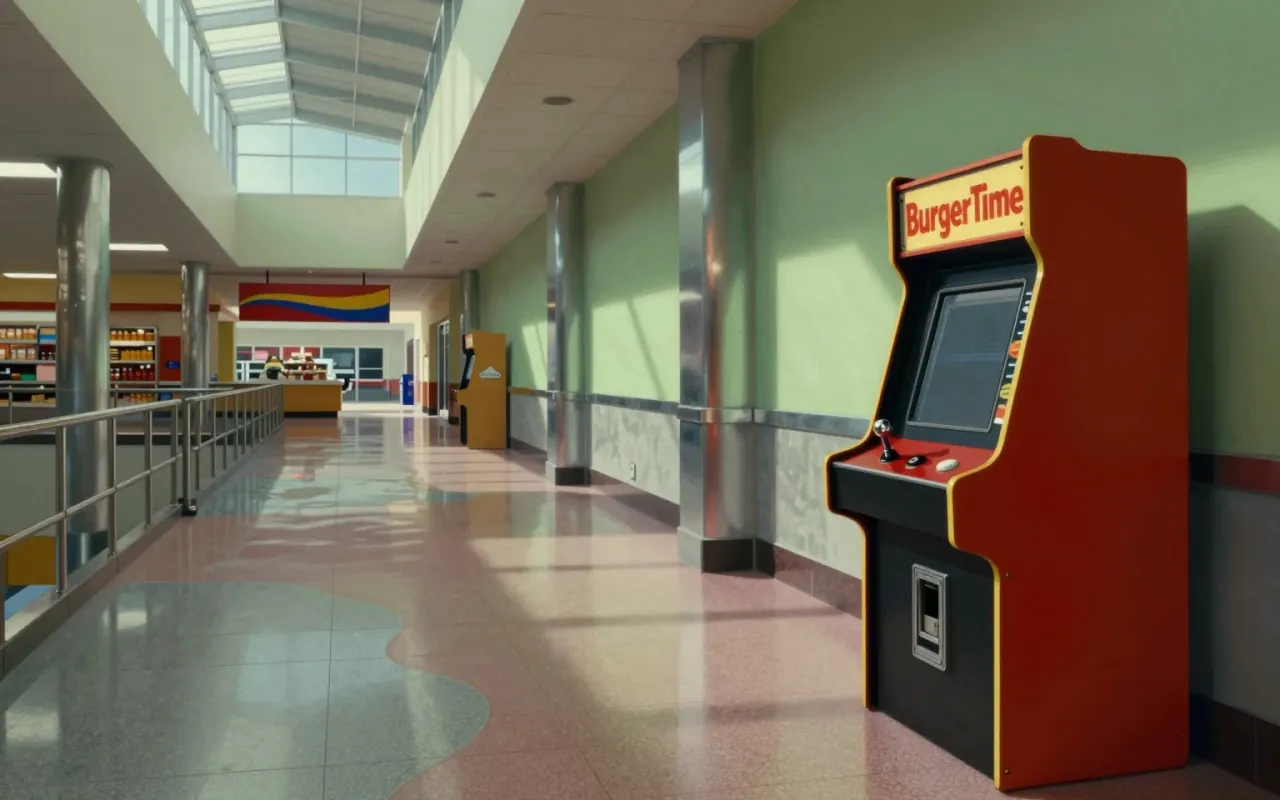
BurgerTime

Data East · 1982

BurgerTime is a 1982 Data East arcade game where chef Peter Pepper walks across oversized burger ingredients on platforms and ladders to make them fall and stack into complete hamburgers while avoiding anthropomorphic hot dogs, fried eggs, and pickles. A limited supply of pepper can be thrown forward to briefly stun enemies. It was Data East's first major hit after abandoning the DECO Cassette System for dedicated arcade cabinets.

9:28

Day of the Tentacle

LucasArts · 1993

Day of the Tentacle is a 1993 LucasArts point-and-click adventure built on the SCUMM engine. It uses time travel as a structural puzzle mechanic, splitting three protagonists across past, present, and future. Players switch between them and move items across eras using Chron-o-Johns or temporal placement. It features voice acting — a LucasArts first — and relies on cause-and-effect logic over reflexes or narrative choice.

culture.briefs Culture

All 5 in culture →
9:31

Pinkydoll

NPC streaming wasn’t satire—it was the first pure interface performance: human as gift-response subroutine.
8:42

Absurdism

The absurd isn’t in you or the world — it’s the gap between them, and it’s wider than ever.
7:13

Fluxus

Fluxus didn’t kill the artwork—it replaced it with a verb.
9:16

Dada

Dada wasn’t art—it was a refusal signed in nonsense and stamped with a cabaret ticket.

automotive.briefs Automotive

All 1 in automotive →
9:11

Fiat Multipla

Roberto Giolito · 1998

The Fiat Multipla is a six-seater compact MPV designed by Roberto Giolito and launched by Fiat in November 1998. It is based on the Bravo/Brava but shorter and wider, reusing the name of the 1950s Fiat 600 Multipla.

fashion.briefs Fashion

All 1 in fashion →