Way Out West
Sonny Rollins · 1957
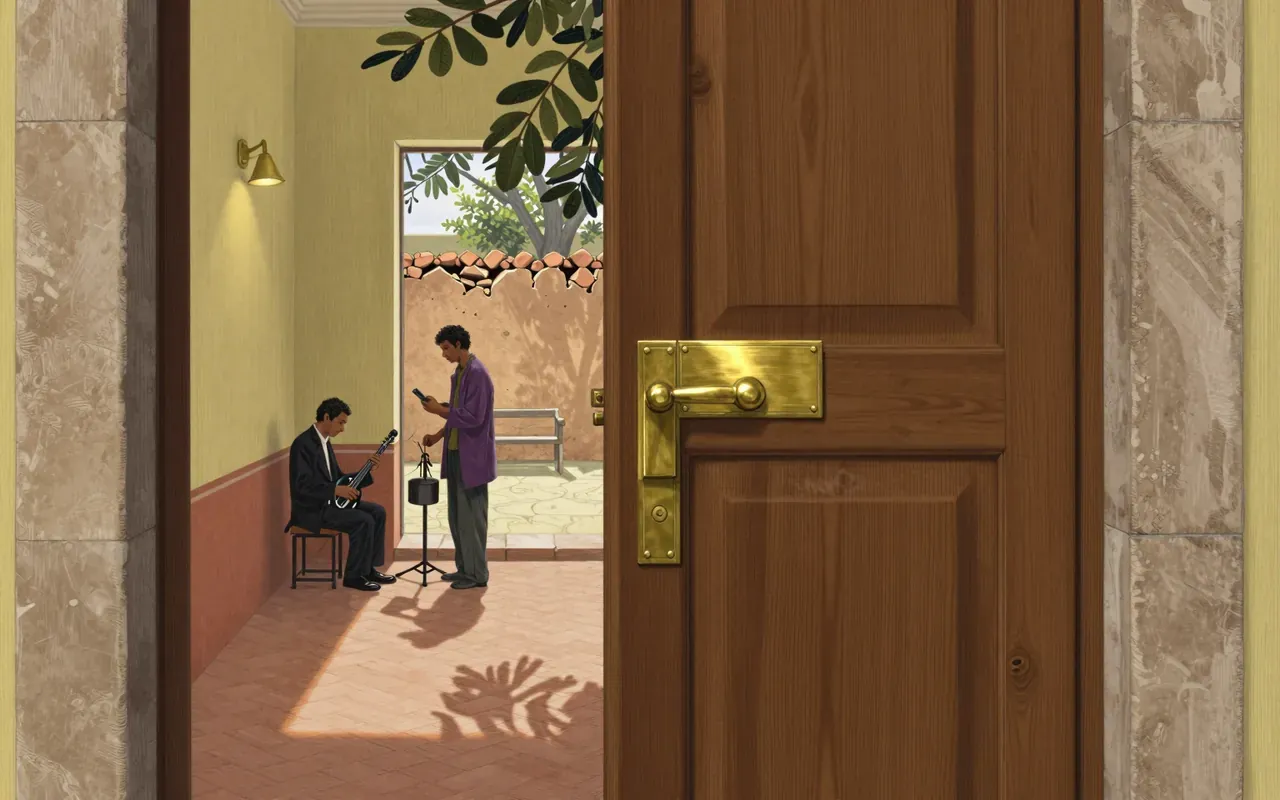
A pianoless trio record that treats silence like terrain — and proves you don’t need chords to build a world.
An industry town with no centre, exporting the world's images.
A pianoless trio record that treats silence like terrain — and proves you don’t need chords to build a world.

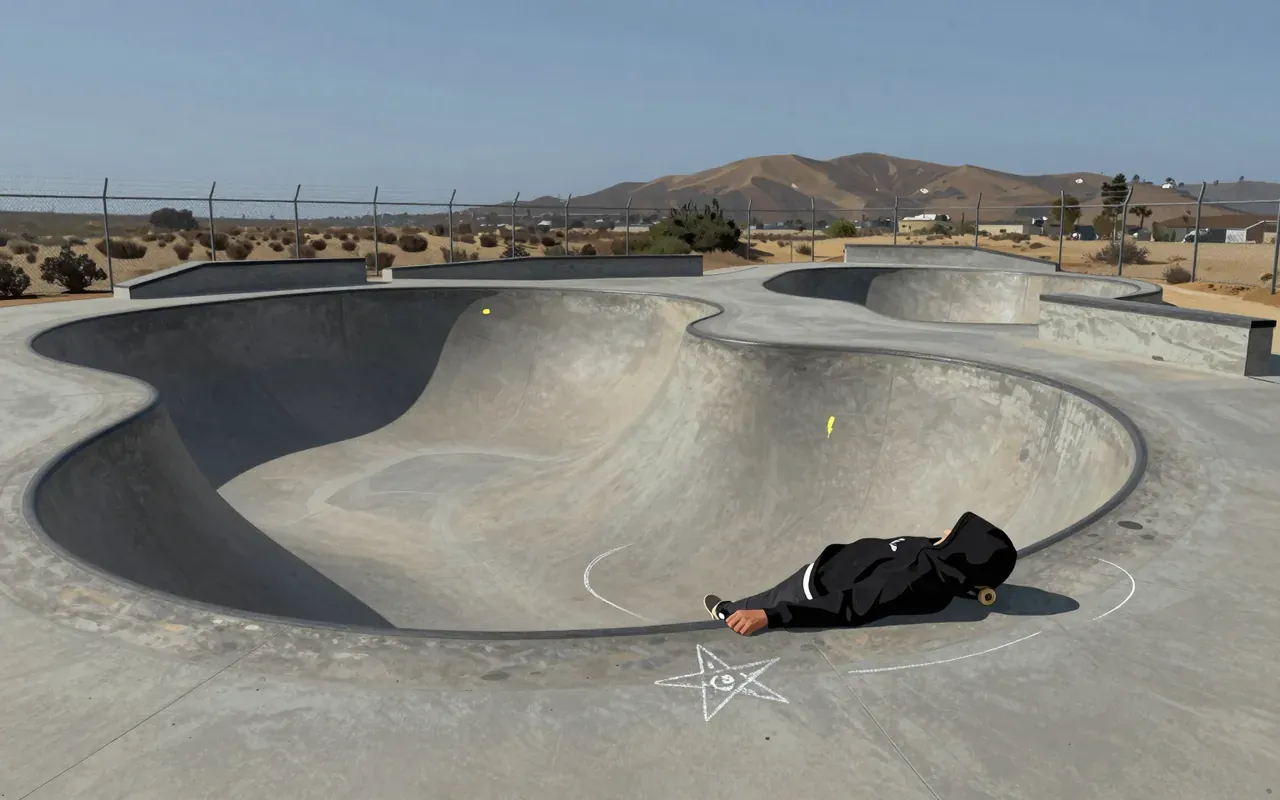
Damaged is not a document of rebellion — it is the sound of a room, a wrist, a decision to record twice and choose the first take of 'Damaged I'. Its power lies in what it leaves unplayed, unsoftened, unexplained.
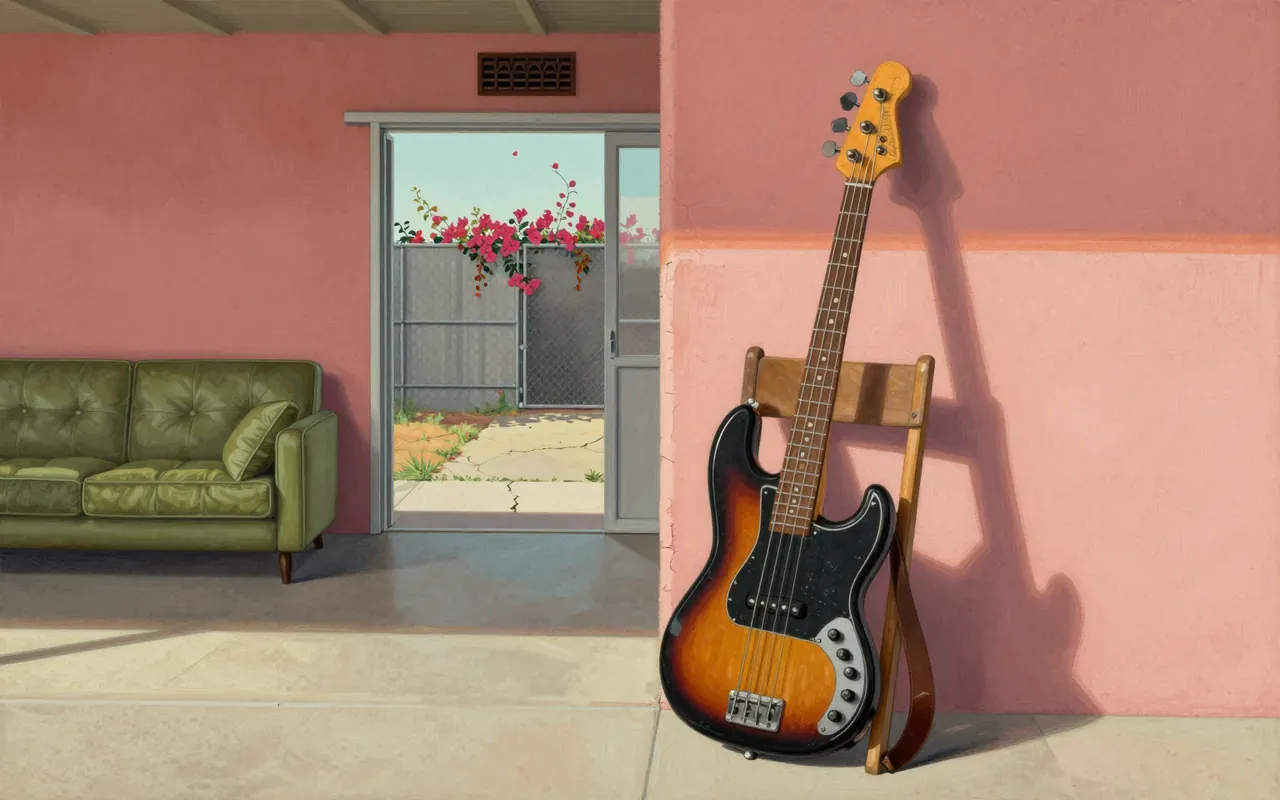
Tim Buckley's 1972 album Greetings From L.A. is a funk record made after he disbanded his Starsailor ensemble and assembled a new funk band in 1970. It features sexually frank lyrics that hindered radio airplay and alienated his earlier hippie fan base, though he retained a cult following.
A vocal architecture record. Tight. Dry. Precise. Built for listening, not lounging.

L.A. Woman is the Doors’ final studio album with Jim Morrison, recorded in their own rehearsal space after producer Paul Rothchild quit over creative differences. It foregrounds bass, rhythm guitar, and live-room feel—rejecting orchestration and synth for blues-rooted groove. Morrison was disciplined and present. The record captures the band’s cohesion at the end of their original run—not as myth, but as sound.
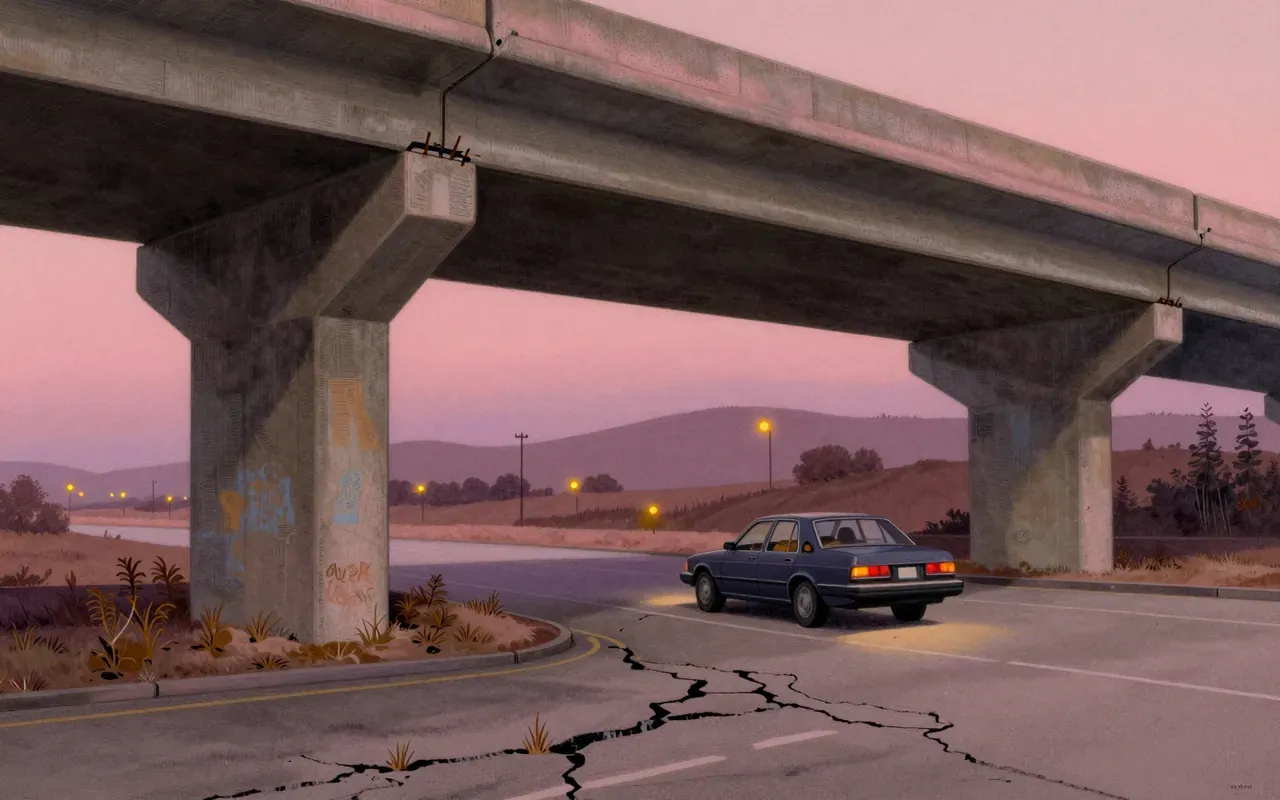
Los Angeles is X's 1980 debut studio album, produced by Ray Manzarek, who also contributed organ and synthesizer parts; it features the core quartet of John Doe, Exene, Billy Zoom, and D. J. Bonebrake, and includes a cover of The Doors' 'Soul Kitchen'; critical reception was highly positive from release, with retrospective acclaim positioning it among punk's finest recordings.
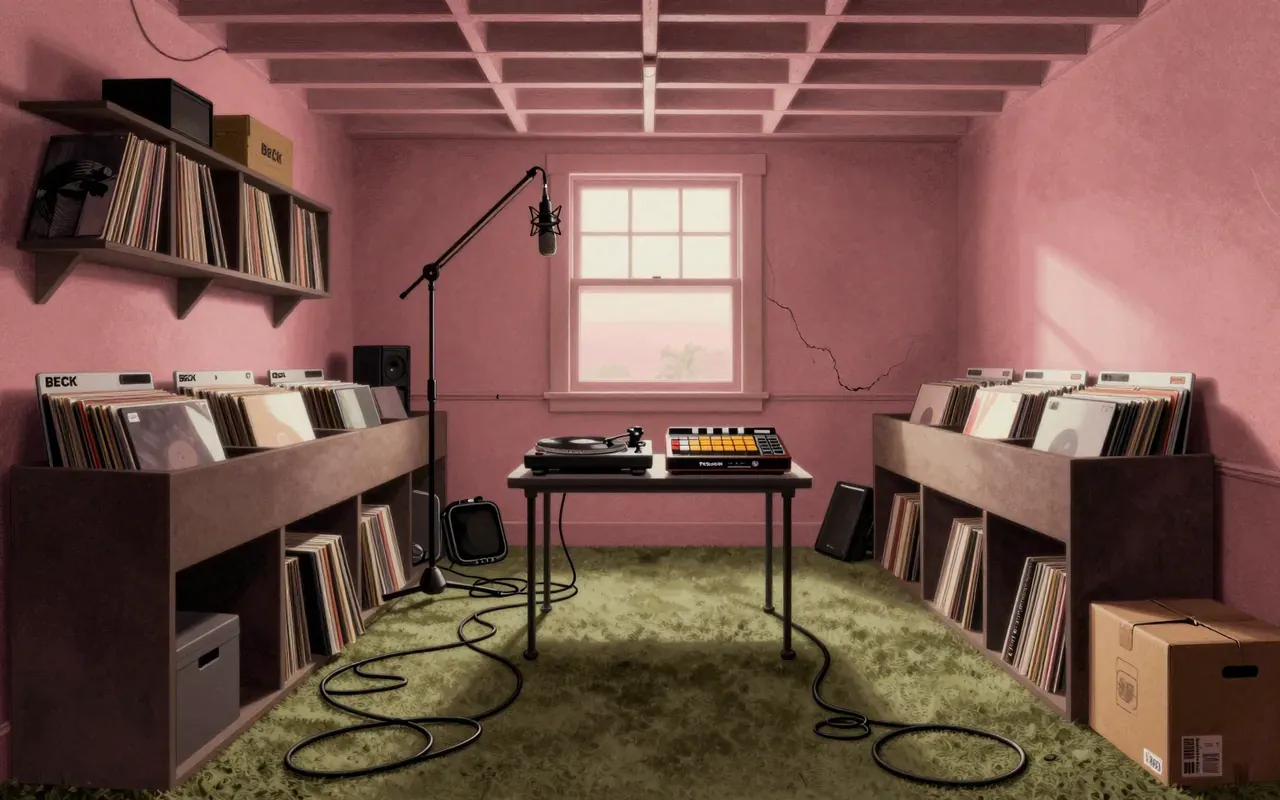
Odelay is a 1995 album recorded primarily in the Dust Brothers’ home studio in Silver Lake, Los Angeles, after Beck abandoned an earlier acoustic album of somber, orchestrated folk tunes made with Tom Rothrock and Rob Schnapf in 1994. Only 'Ramshackle' survived that session. The Dust Brothers’ hip-hop–influenced, layered production — informed by their work with Beastie Boys, Tone Lōc and Young MC — shaped the album’s sound. Their record-filled studio supplied many of the album’s samples. Musicians worked 16-hour days, starting from scratch each day. The album blends country, blues, rap, jazz and rock using cut-and-paste, sample-heavy techniques.
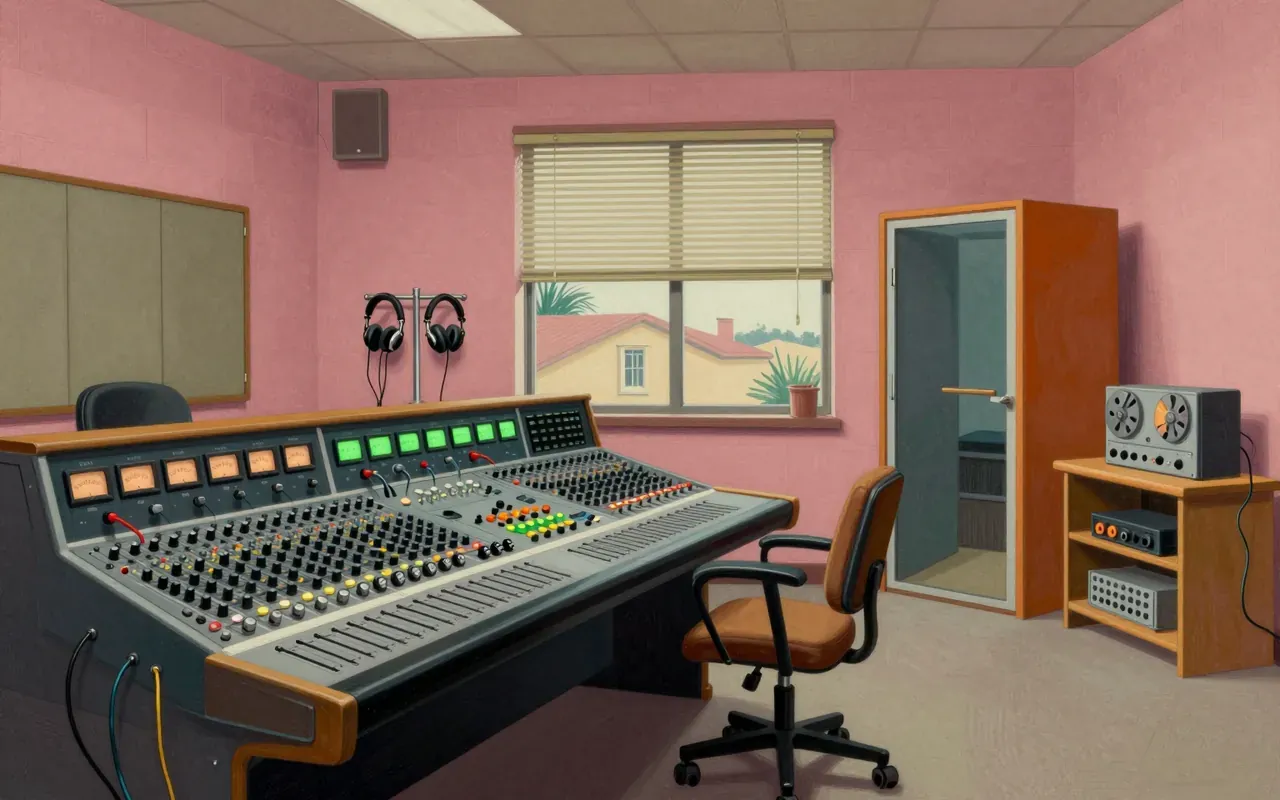
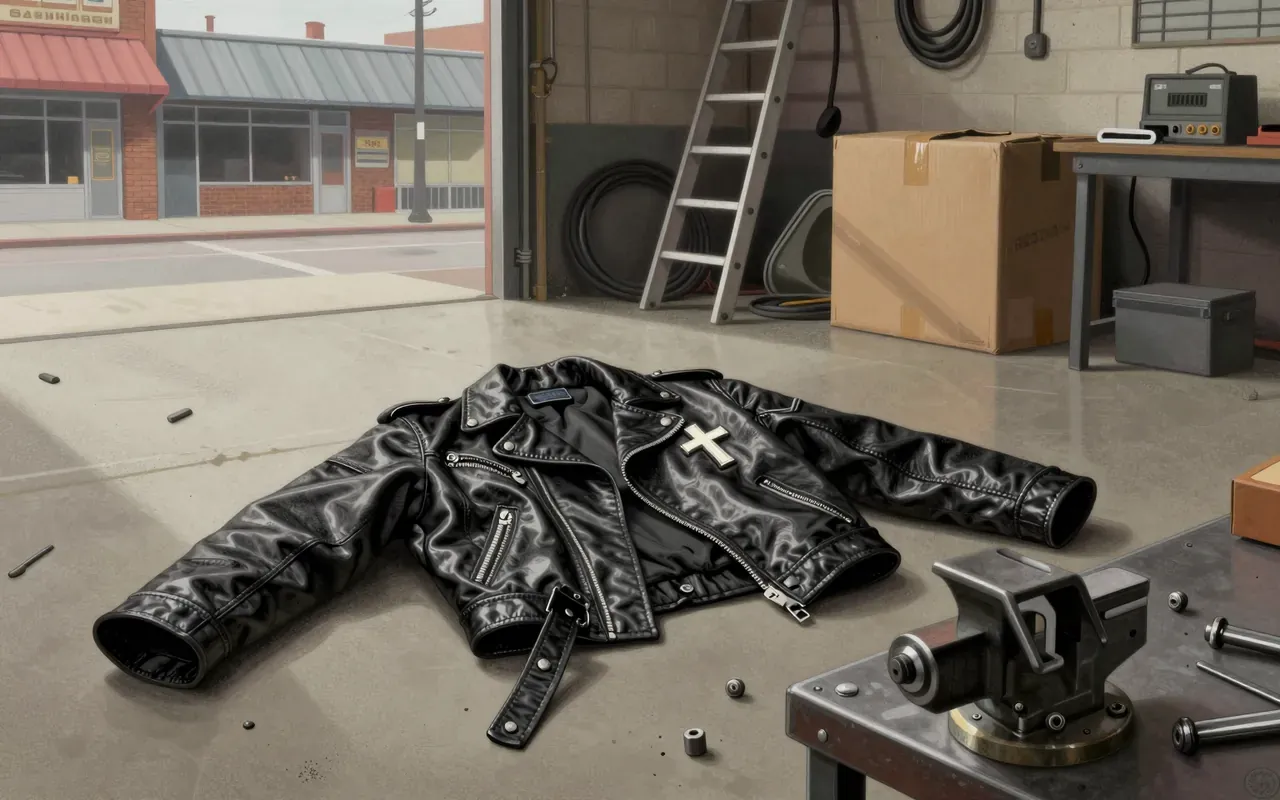
Pretzel Logic is Steely Dan’s decisive turn from band to studio construct — dry, precise, and ruthlessly edited.
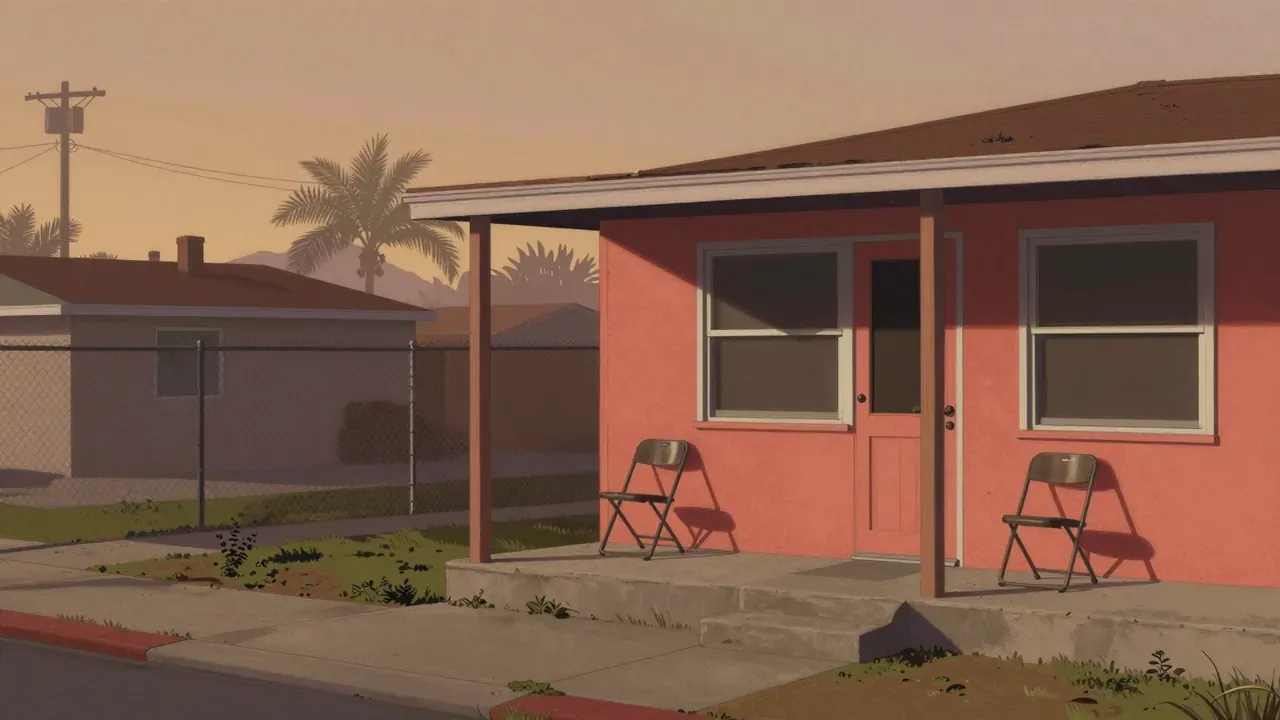
John Singleton’s 2001 crime drama follows Joseph 'Jody' Summers, a 20-year-old South Central LA resident navigating fatherhood, fractured relationships, and the quiet pressure to grow up. Anchored by Tyrese Gibson’s layered performance and grounded in domestic realism, the film traces Jody’s incremental shift from evasion to accountability — not through grand gestures, but through repeated, often awkward choices. Its power lies in specificity, restraint, and its refusal to separate personal failure from structural constraint.
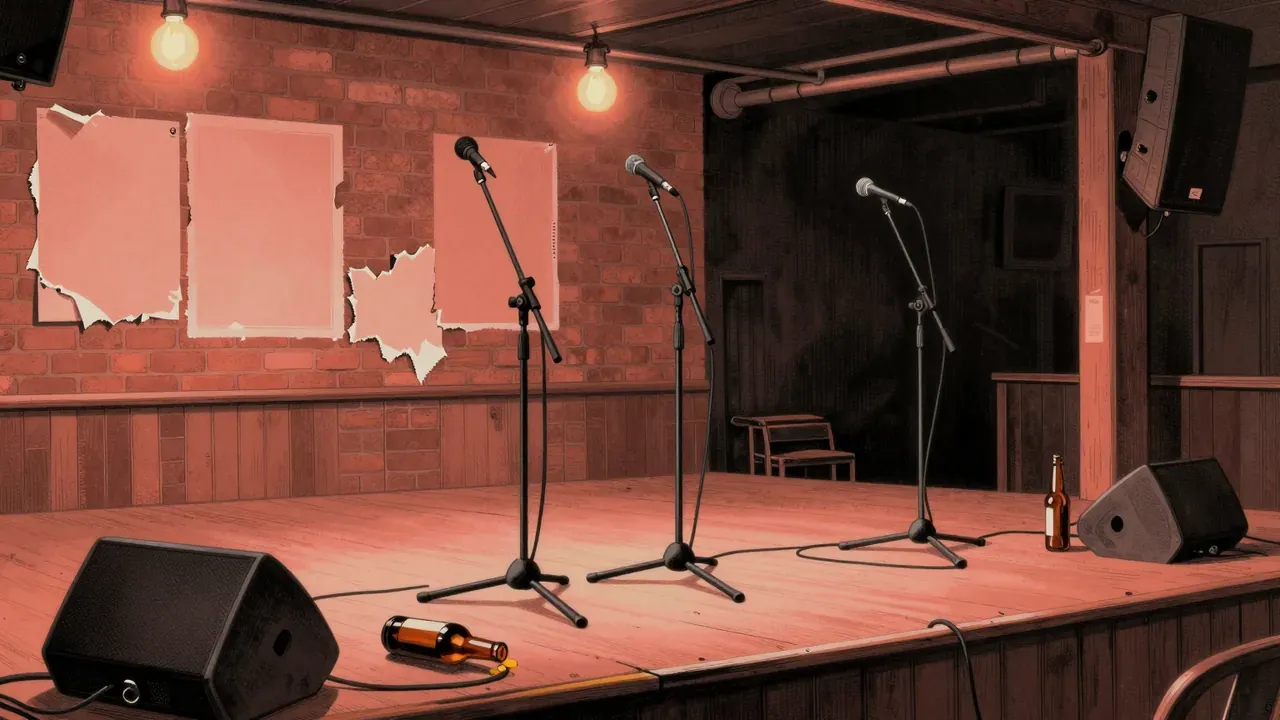
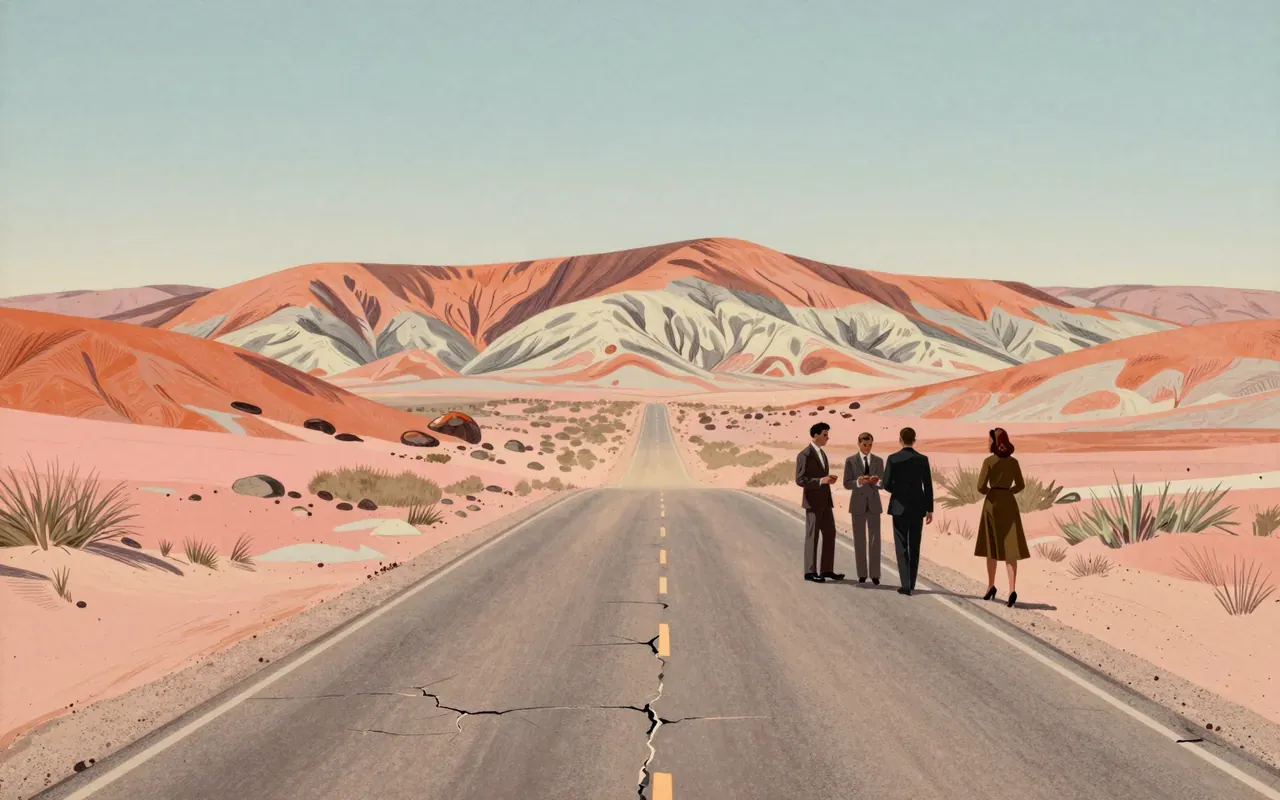
Border Radio is a low-budget 1987 American road movie directed by Allison Anders, documenting the fraying edges of West Coast punk and cowpunk culture. Following unpaid musicians who rob a club and flee toward Mexico, the film prioritises texture over plot, using non-professional performers and diegetic music to evoke a specific time and place — not as nostalgia, but as lived, unvarnished reality.
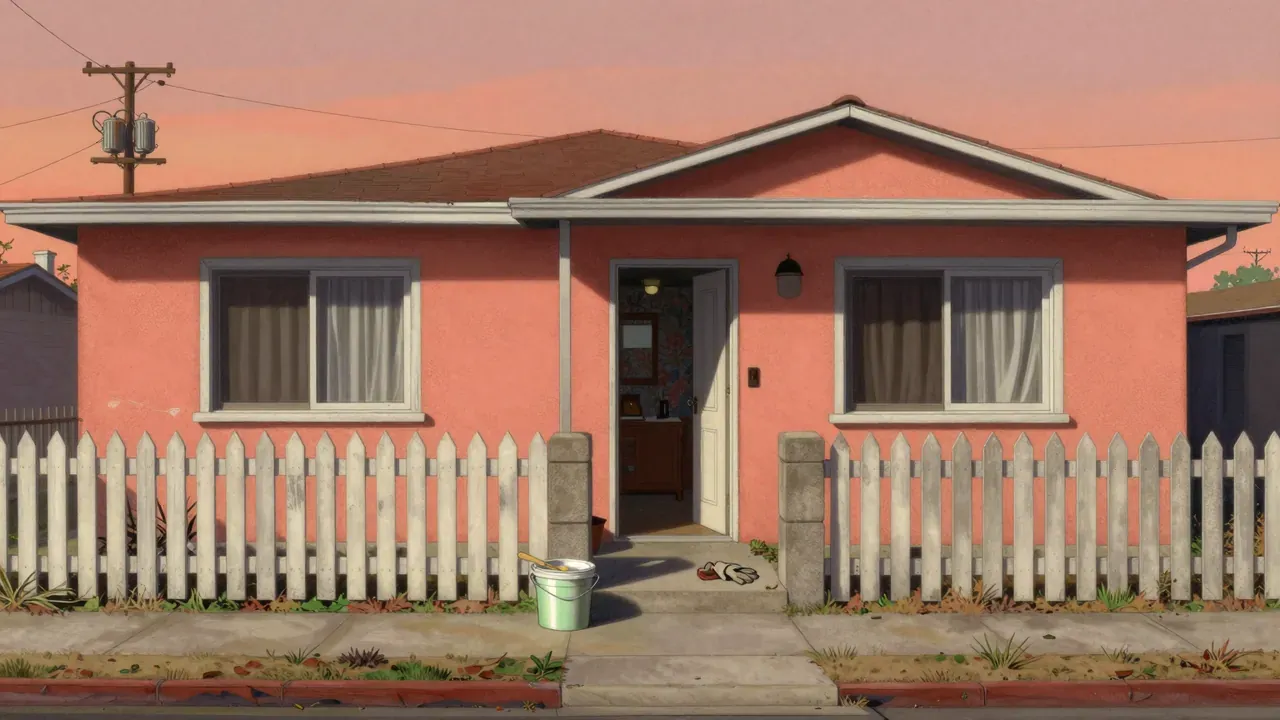
Boyz n the Hood follows Tre Styles from age ten to seventeen as he navigates fatherhood, friendship, and fatal consequences in South Central Los Angeles. Written and directed by John Singleton at twenty-three, it uses linear storytelling, naturalistic performance, and location shooting to ground its depiction of environment as education. The film avoids sensationalism, treating gang culture, policing, and aspiration with equal sobriety. Its power lies in accumulation: small gestures, repeated silences, and the weight of ordinary days.
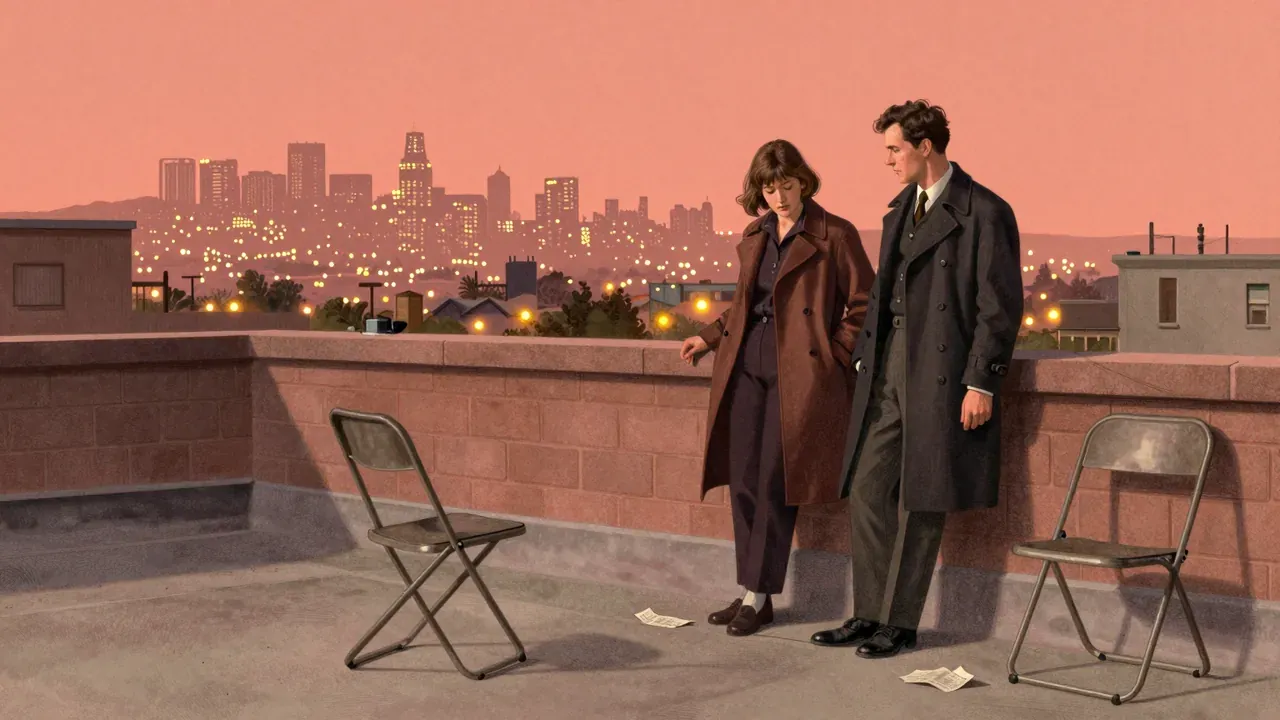
Alan Rudolph’s Choose Me is a 1984 romantic comedy-drama set in a neon-lit Los Angeles bar, where a drifter, a bar owner, and a radio host orbit each other in a cycle of concealment and confession. Shot in three weeks on a modest budget, it favours mood and gesture over exposition, with performances that withhold as much as they reveal. Its themes—self-deception, persona, and urban isolation—are sustained through Jan Kiesser’s dusky cinematography and Phil Woods’ smoky score. Though structurally loose and emotionally elusive, it coheres as a singular, unhurried tone poem about choosing, again and again, without certainty.

Carl Franklin’s 1995 adaptation of Walter Mosley’s novel follows WWII veteran Easy Rawlins through a 1948 Los Angeles entangled in political corruption, racial surveillance, and familial secrets. Denzel Washington anchors a tightly constructed crime narrative shaped by Tak Fujimoto’s restrained cinematography and Elmer Bernstein’s blues-tinged score. The film excels in atmosphere and historical texture but resolves its central tensions with procedural efficiency rather than emotional resonance.
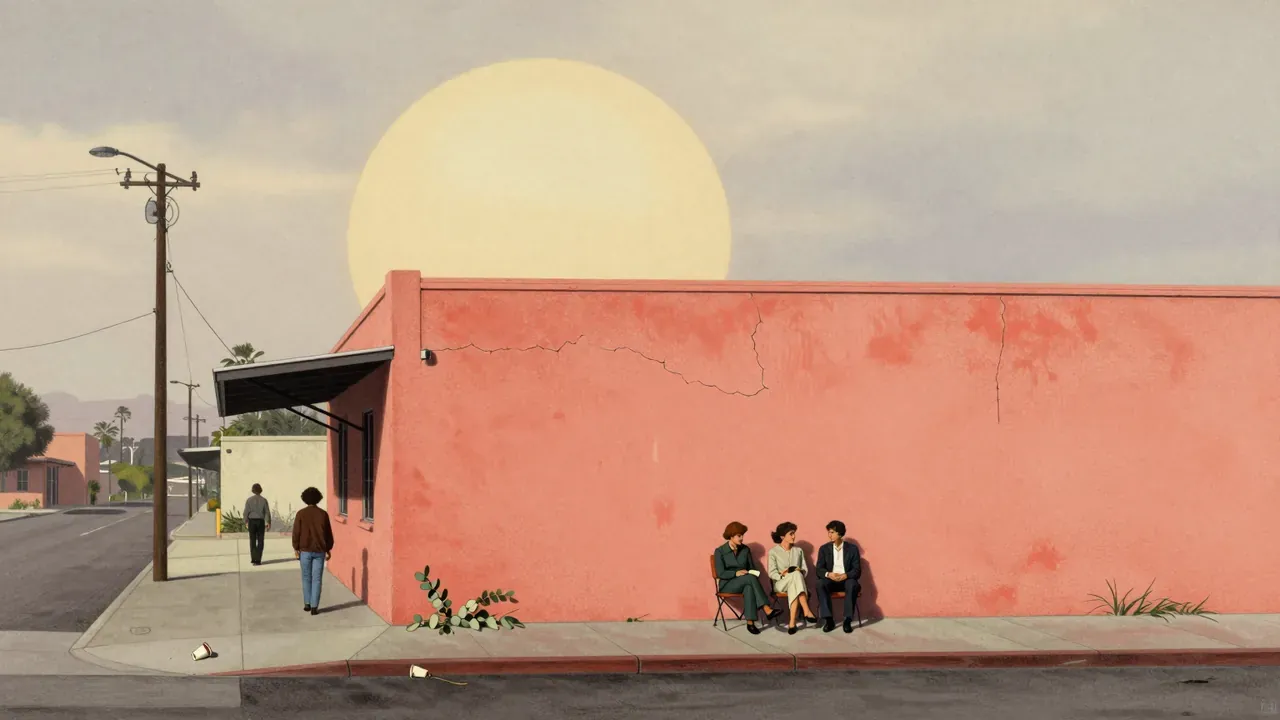
Made in Los Angeles in 1981, Documenteur follows Emilie, a Frenchwoman rebuilding daily life after separation, working as a typist and caring for her young son. Shot in English and interwoven with imagery from Varda’s documentary Mur Murs, the film treats the city’s murals as silent companions to private adjustment. With minimal plot, restrained performances, and a focus on light, texture, and repetition, it offers a delicate, unsentimental portrait of displacement as routine rather than rupture.
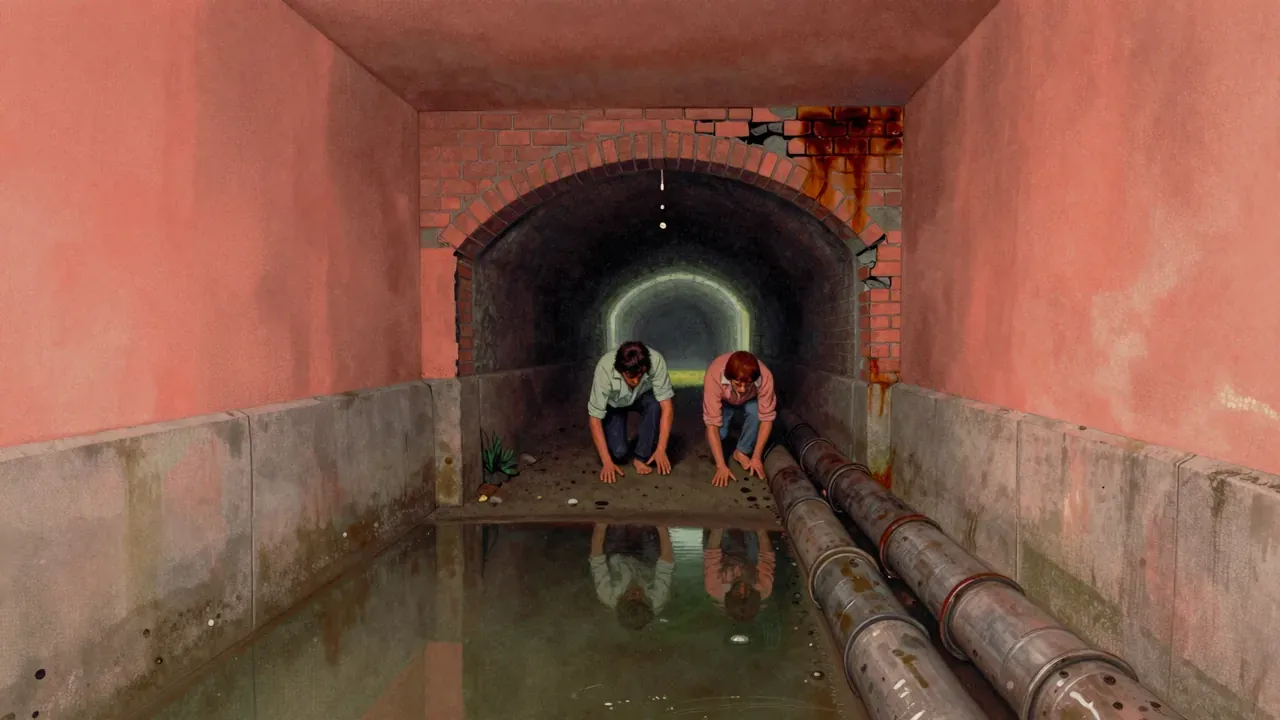
A Guatemalan brother and sister flee civil war, cross Mexico, and enter the US undocumented. Their journey — from rural persecution to sewer-pipe crossing to precarious survival in Los Angeles — is rendered with procedural realism, sparse sound, and unflinching attention to labour, language, and loss. No score until the final scene. No resolution beyond recurrence.
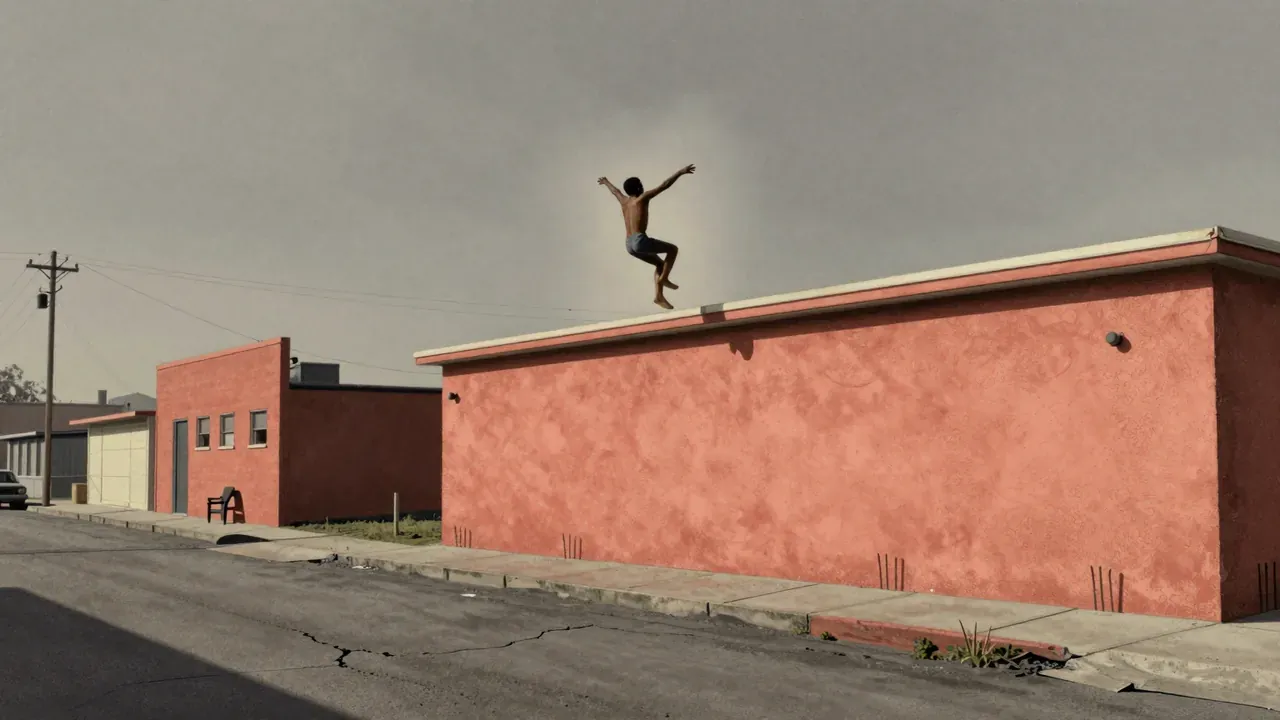
Shot on weekends in Watts between 1972 and 1975, Charles Burnett’s Killer of Sheep is a black-and-white drama built from vignettes rather than plot. Starring Henry G. Sanders as Stan, a slaughterhouse worker, it observes domestic routines, childhood play, and quiet exchanges with documentary restraint. Made for under $10,000, it avoids exposition, professional actors, and musical scoring beyond its licensed soundtrack — relying instead on composition, silence, and duration. Restored and re-released in 2007, it was added to the National Film Registry in 1990 for its cultural and aesthetic significance.
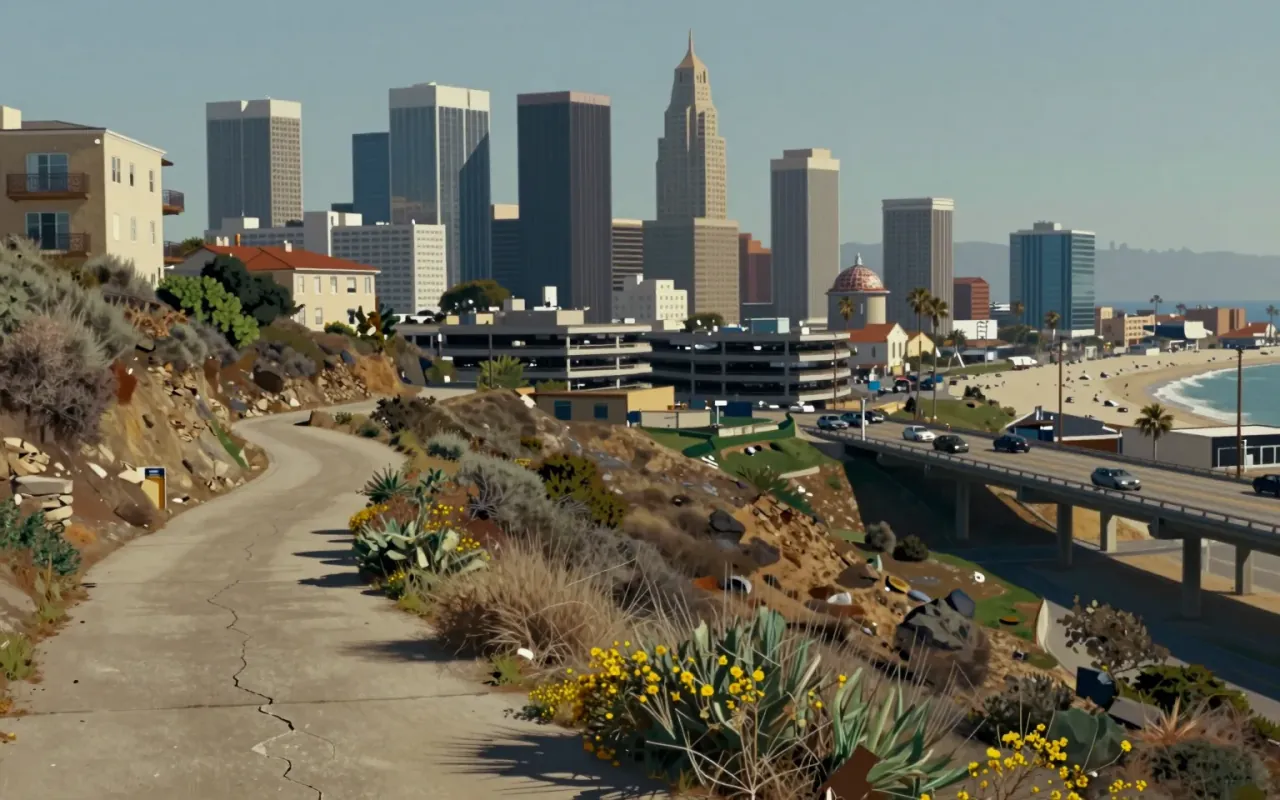
Grand Theft Auto V is an action-adventure game released in 2013 by Rockstar Games. It features an open-world setting modelled on Southern California and Los Angeles, navigable on foot or by vehicle from third- or first-person perspectives. Players control three protagonists—Michael, Franklin, and Trevor—and switch between them during and outside linear story missions centred on heists. Gameplay includes shooting, driving, melee combat, explosives, and a 'wanted' system that escalates law enforcement response to crimes. The world is fully explorable after the prologue and supports context-specific activities, property purchases, stock trading, and character-specific skills. Combat uses auto-aim and cover systems; health regenerates to halfway, with respawns at hospitals upon death. Heists involve AI accomplices with unique skills and support multiple strategies. The game runs on the Rockstar Advanced Game Engine (RAGE) and is part of the Grand Theft Auto franchise, originally published by BMG Interactive.

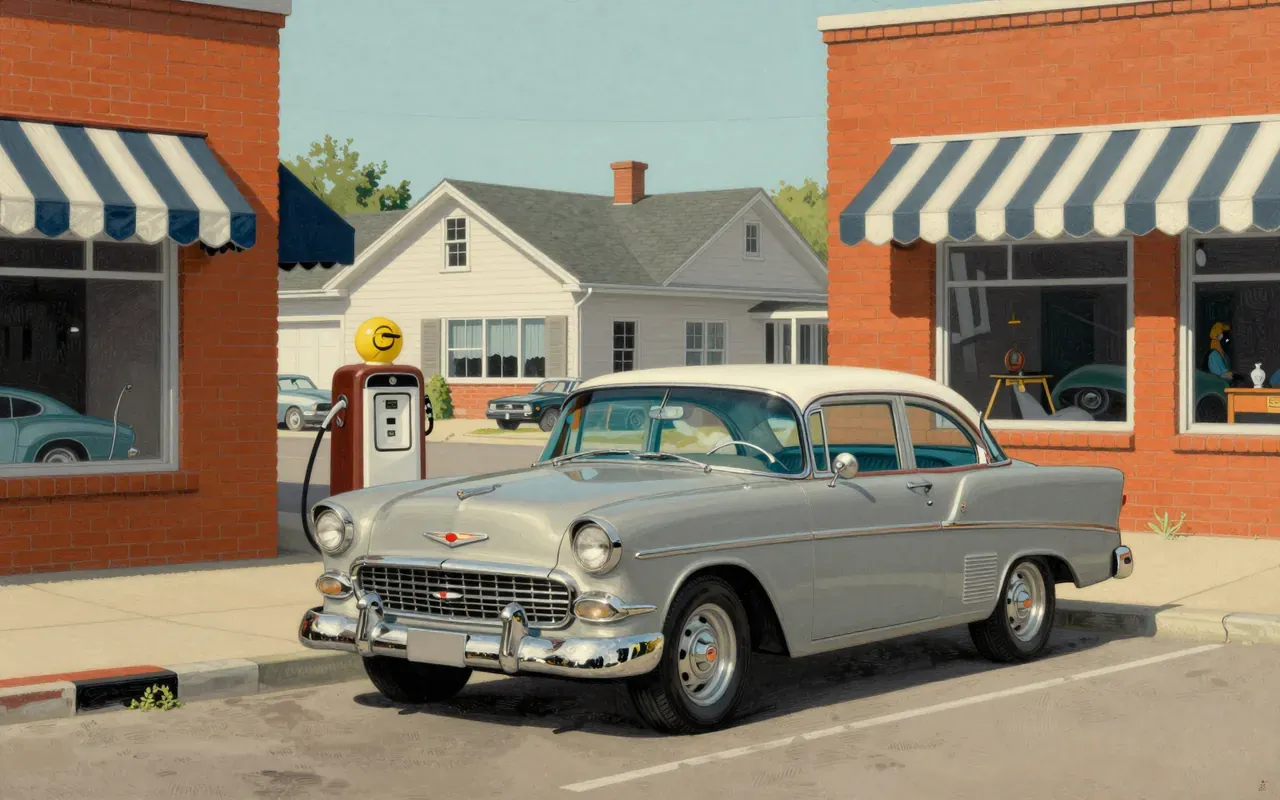
The 1955 Chevrolet Bel Air is a full-size car. It began as a two-door hardtop designation in 1950. It is named after the Bel Air neighbourhood in Los Angeles. From 1953, it became a premium trim level across body styles. By 1975, it had become a budget fleet sedan in the US. Canadian production continued through 1981. First-year production was 76,662 units.