briefs
Topic · across the network

Mythology

The stories a culture tells to explain itself to itself.

60
briefs
10
subjects
12:18
average
738 min
in total
Abstraction 407Absurdism 137Acoustics 220Acting 65Adaptation 372Addiction 95Adolescence 202Advertising 77Age of exploration 14Ageing 113Agriculture 100Algorithms 114Ambition 46Anarchism 38Ancient Egypt 17Ancient Greece 38Ancient Rome 30Animals 172Anthropology 23Apartheid 12Architecture 165Archives 32Argentina 10Art Deco 26Artificial intelligence 78Astronomy 81Attention 42Australia 32Automation 73Avant-garde 164Aviation 79Banking 72Banned works 40Bauhaus 12Beer 5Behavioural economics 22Berlin 16Big tech 6Biodiversity 136Biography 86Birds 41Black holes 20Blockchain 12Boxing 14Branding 77Brazil 43Bread 29Britain 131Brutalism 4Bubbles 3Buddhism 28Byzantium 10California 17Canada 18Capitalism 94Cars 468Celebrity 59Censorship 110Cheese 24Chefs 9Chemistry 104Chess 2Childhood 87China 109Chocolate 8Christianity 49Cinematography 343Cities 90Class 485Climate change 107Club culture 100Cocktails 2Coffee 11Cognitive bias 14Collecting 16Colonialism 284Colour 42Comedy 89Community 52Complexity 21Computing 309Consciousness 16Conservatism 14Conspiracy theories 8Cooking 178Corruption 38Cosmology 31Cover versions 64Craft 116Crate digging 42Creativity 8Crime 234Cryptocurrency 8Cryptography 24Cuba 10Cybersecurity 30Dada 12Debt 38Decision-making 28Decolonisation 46Deep time 80Democracy 45Denim 16Deserts 45Detroit 17Dinosaurs 12Directing 168Disasters 59Disease 109DJ culture 89Dreams 32Drones 5Drum machines 96Dystopia 69East Africa 28Ecology 337Economics 36Editing 72Education 92Egypt 12Electric vehicles 59Emotion 22Empire 92Endurance 49Energy 120Engineering 541Entropy 8Epidemics 13Equality 9Espionage 31Ethics 44Evolution 174Existentialism 106Expertise 2Exploration 49Extinction 23Failure 37Family 240Fandom 22Fascism 45Fashion 215Fast fashion 12Fear 34Feminism 122Fermentation 126Film music 81Fishing 12Folklore 71Food history 588Football 16Forests 31Forgery 7France 163Fraud 15Free will 13Freedom 16French literature 15Friendship 24Furniture 36Gambling 14Gender 63Generations 28Genetics 87Geology 96Germany 66Globalisation 74Gothic 32Greece 5Grief 126Habits 6Happiness 2Hardware 709Haute couture 22Headphones 8Hi-fi 12Hinduism 12Hoaxes 1Human history 23Human nature 41Identity 138Illustration 8Impressionism 6Improvisation 249India 89Indonesia 15Industrial design 342Inequality 13Inflation 4Information 34Infrastructure 280Insects 29Intelligence 8Interiors 31Internet culture 88Invention 329Iran 41Islam 40Islands 17Israel 9Italy 52Jamaica 10Japan 114Jewellery 5Journalism 34Judaism 13Justice 42Korea 41Language 70Law 90Leadership 20Learning 6Liberalism 1Libraries 6Literary criticism 26London 12Loneliness 61Los Angeles 62Lost works 9Love 67Luxury 55Machine learning 15Management 10Maps 5Marketing 21Markets 51Mars 6Marxism 26Masculinity 46Materials 138Mathematics 79Meaning 6Medicine 124Memory 82Mental health 70Mesopotamia 4Mexico 38Migration 95Minimalism 68Mining 30Misinformation 9Modernism 63Money 24Monopoly 32Mortality 61Motivation 2Mountains 16Museums 27Mysticism 11Mythology 60Nationalism 40Neuroscience 23New York 36Nigeria 7Nihilism 10Noise 31Nostalgia 33Nuclear 29Nutrition 17Oceans 48Oil 42Open source 45Painting 18Palaeontology 29Parenting 14Paris 18Partition 6Patents 71Patronage 14Perception 44Personal style 27Personality 2Persuasion 8Peru 10Philosophy 77Photography 37Physics 206Plants 26Platforms 89Podcasting 1Poetry 25Poland 17Policing 34Pop Art 16Populism 2Portraiture 6Portugal 18Postmodernism 23Power 91Prehistory 24Preservation 28Printmaking 21Privacy 11Probability 6Productivity 1Programming 54Prohibition 1Propaganda 35Protest 75Pseudoscience 17Psychology 80Publishing 22Punishment 16Quantum mechanics 44Race 145Radio 30Railways 35Rave 17Realism 47Record labels 19Recording 810Relativity 23Religion 154Resilience 15Restaurants 30Restoration 2Retail 94Revolution 58Risk 18Ritual 96Robotics 26Romance 96Russia 58Salt 9Sampling 246Satire 84Scandinavia 28Scientific method 186Screenwriting 26Sculpture 7Secularism 2Self-deception 14Semiconductors 73Sexuality 102Ships 18Silence 24Silicon Valley 17Slavery 35Sleep 2Smartphones 27Sneakers 15Social media 58Socialism 9Software 68Songwriting 180Sound design 332Sound systems 20South Africa 19South East Asia 30Space exploration 84Spain 18Special effects 41Spices 62Spirits 12Sport 82Startups 21Statistics 10Status 9Stoicism 4Storytelling 68Strategy 70Street food 99Streetwear 16Studio craft 508Subcultures 59Sugar 12Supply chains 115Surrealism 53Surveillance 21Sustainability 30Synthesis 232Tailoring 37Taxation 14Tea 24Textiles 97Thailand 11The American Revolution 19The American South 88The Arab world 41The Arctic 19The Balkans 17The Belle Epoque 13The body 29The brain 26The Caribbean 28The civil rights movement 62The Cold War 160The eighties 268The Enlightenment 29The financial crisis 19The First World War 39The food industry 157The French Revolution 9The Gilded Age 9The Great Depression 18The Holocaust 20The Industrial Revolution 93The internet 61The interwar years 135The Middle Ages 35The Moon 4The music business 169The Netherlands 10The nineties 26The Olympics 10The pandemic 13The Reformation 1The Renaissance 16The Russian Revolution 19The Second World War 102The seventies 58The sixties 28The space race 5The United States 19The universe 7The Victorian era 37Therapy 20Tokyo 11Trade 48Tragedy 22Translation 5Trauma 85Travel 5True crime 2Turkey 18Typography 54Uniforms 23Unions 8Urban planning 66Utilitarianism 1Utopia 5Vaccines 10Vegetarianism 15Venture capital 6Video games 291Vietnam 12Vintage 65Vinyl 6Virtual reality 11War 169Watches 4Water 11Weather 29West Africa 29Wilderness 10Wine 3Work 22Workwear 19Worldbuilding 121

books.briefs Books

All 15 in books →
16:38

Demian

Hermann Hesse · 1919

Demian argues that moral growth requires destroying the world that raised you — family, church, nation — to make space for the self you were meant to be. It succeeds in its early chapters on guilt and awakening, fails in its later mysticism, and should be read selectively. Skip the organist Pistorius entirely.

16:04

The divine comedy

Dante Alighieri · 1321

The Divine Comedy argues divine justice is geometrical, not merciful — and builds Hell, Purgatory, and Heaven to prove it. It works best as architecture, not narrative: the rose of Heaven, the frozen core of Hell, the mountain of Purgatory. Skip the angelic digressions unless you study scholastic theology.

14:08

Eirik the Red's Saga

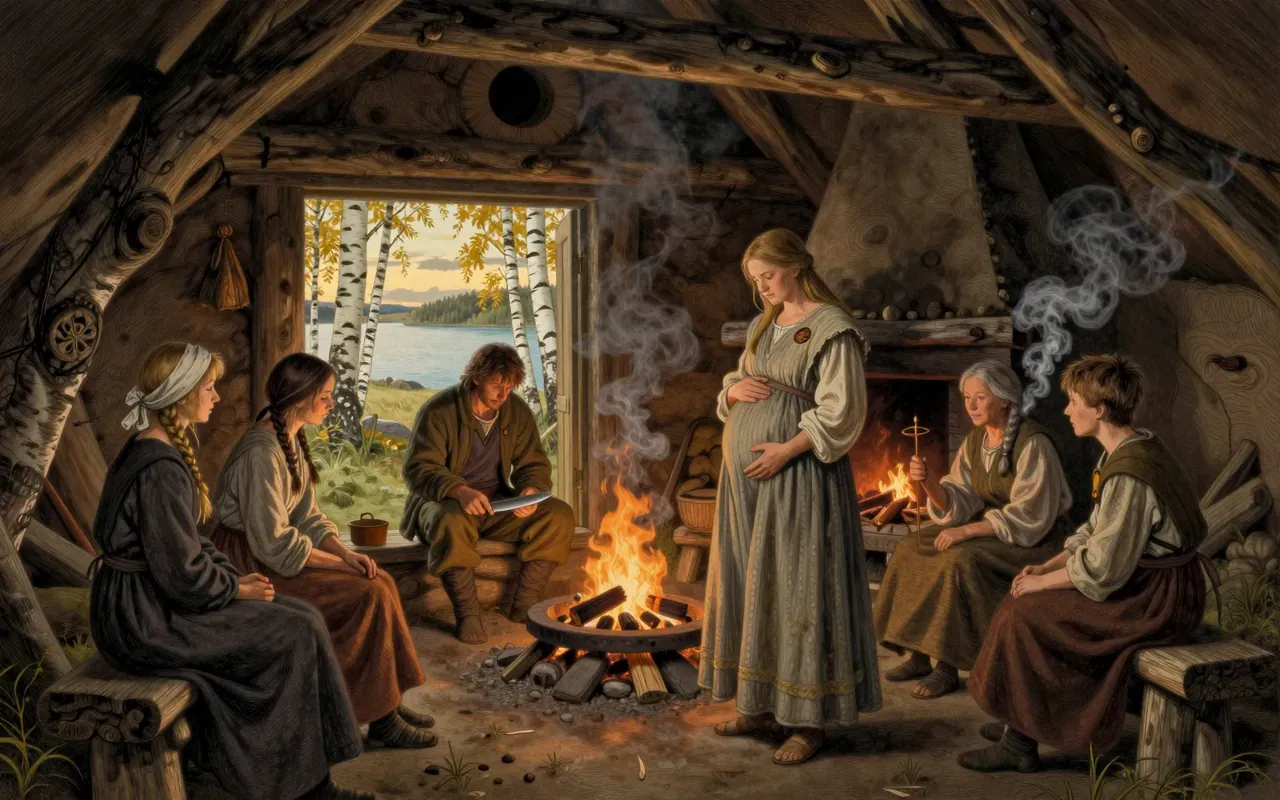
Greenland was named to sell land. Vinland was abandoned because the saga never explains how to live there.
13:47

Goblin Market, The Prince's Progress, and Other Poems

Christina Georgina Rossetti · 0

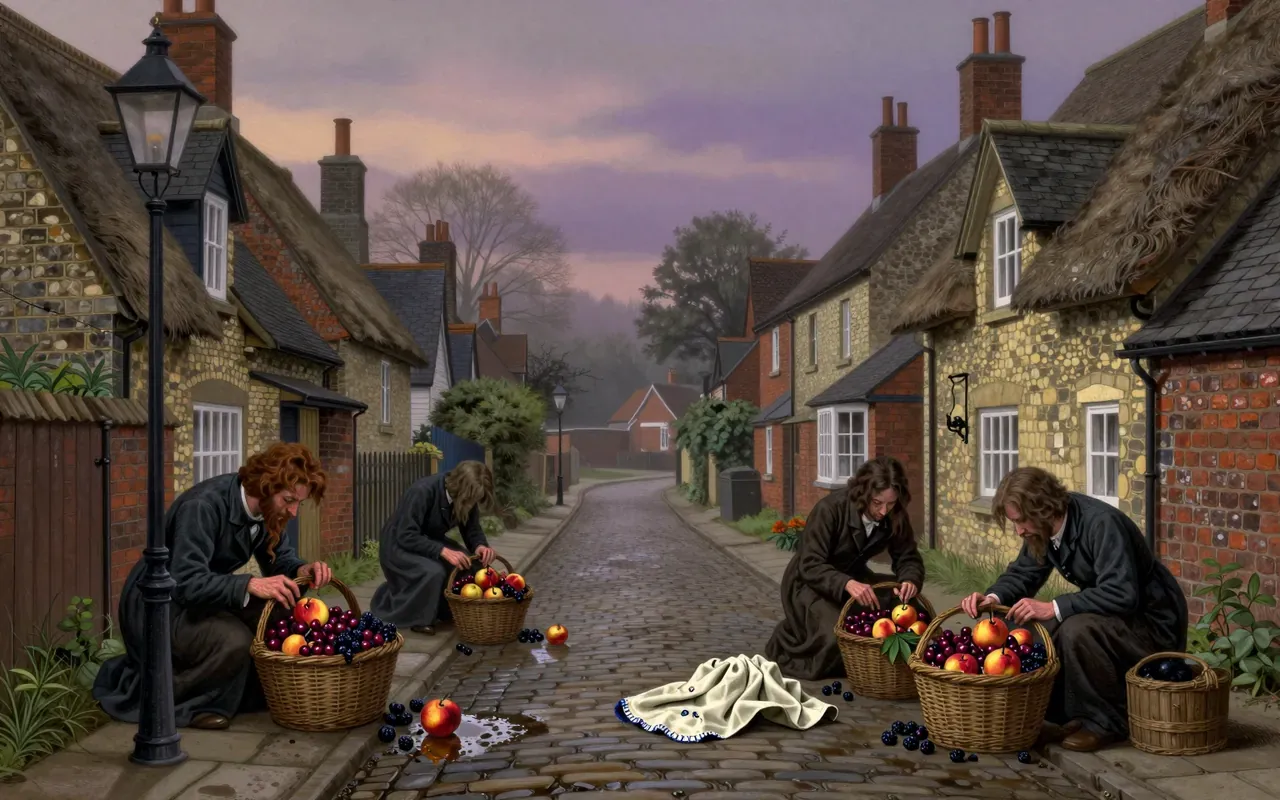
Goblin Market, The Prince's Progress, and Other Poems is Rossetti’s 1862 debut: a tightly wrought collection arguing that desire must be disciplined, salvation is bodily, and sisterhood is liturgical. It works best in Goblin Market’s sensory allegory and falters in The Prince’s Progress’s inert symbolism. Read it for its theology-in-action—not its ideas about society or self.

15:33

The Mabinogion

Welsh legend didn’t borrow from Arthurian romance — it invented the grammar that made it possible.
14:54

A Midsummer Night's Dream

William Shakespeare · 0

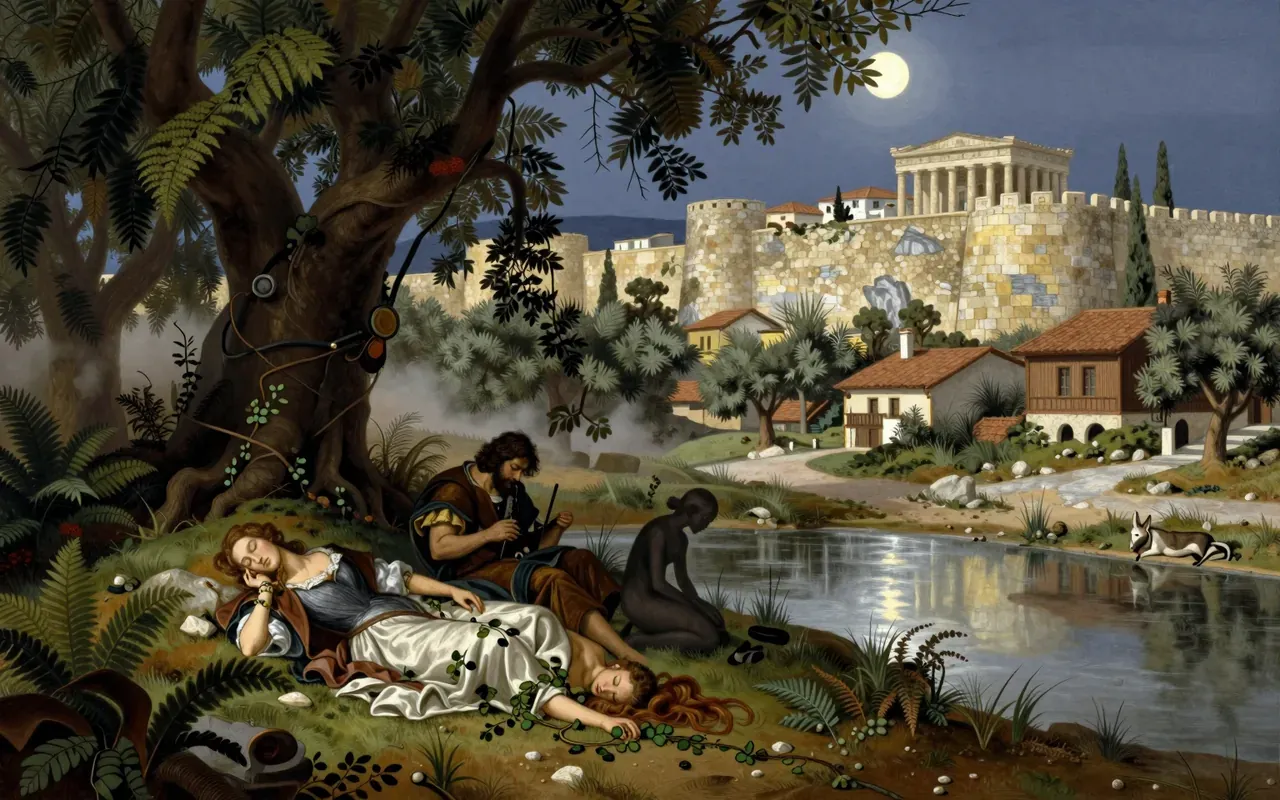
A comic play about love’s irrationality, law’s fragility, and the forest’s power to dissolve both. The brief shows how Hermia’s defiance and Lysander’s 'course of true love' speech drive the action — and why the craftsmen’s subplot should be skimmed after the first reading.

14:10

The Nibelungenlied

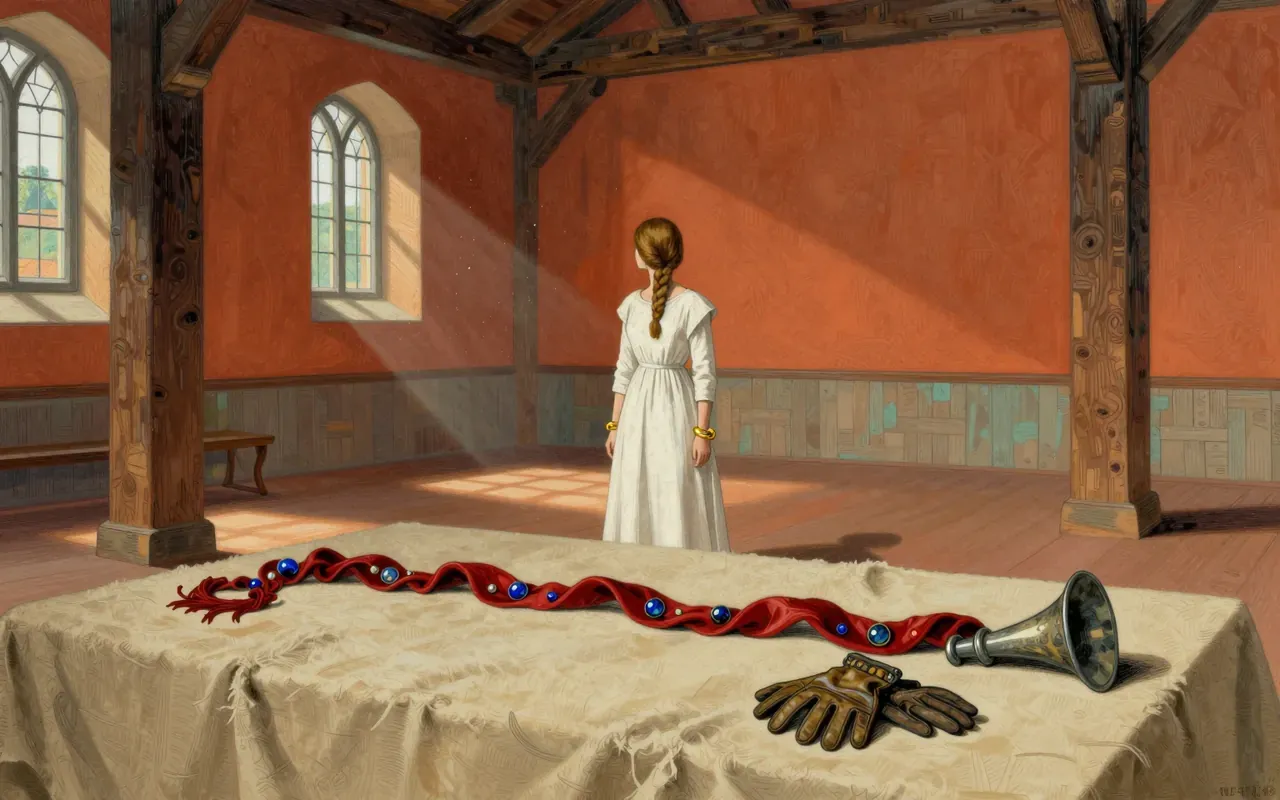
Honour is a death sentence signed in advance — and everyone in this poem keeps signing it.
15:06

Paradise Lost

John Milton · 1667

Milton’s 1667 epic argues that rebellion is self-enslaving, that innocence is active, and that grace precedes repentance. It works best in fragments: Satan’s speeches, Eden’s harmony, the Fall’s rupture, and the final departure. Skip the war machinery and speculative cosmology unless you need angelic ballistics.

music.briefs Music

All 5 in music →
9:36

Rum Sodomy & the Lash

The Pogues · 1985

Rum Sodomy & the Lash is The Pogues’ 1985 second studio album, recorded live at Elephant Studios in Wapping with Elvis Costello producing after initially being hired for just two tracks. Its production prioritised natural acoustic presence and raw ensemble performance — Costello described his role as capturing the band’s 'dilapidated glory' before external interference altered it. The title references a misattributed Churchill quote about naval tradition; the cover reimagines Géricault’s The Raft of the Medusa with painted band members’ faces replacing those of the original figures. Musically, it pivots from traditional covers to Shane MacGowan’s original songwriting — mythic, urban, fatalistic — while retaining authoritative renditions of 'Dirty Old Town' and 'And the Band Played Waltzing Matilda'. It does not sound polished, controlled, or studio-perfect. There are no synthesizers, no overdubbed strings, no vocal comping, no reverb tails stretched for effect. It lands strongest where rhythm and narrative lock: 'The Sick Bed of Cuchulainn' opens with harp-like guitar urgency; 'Dirty Old Town' closes the first side as a bruised, communal lament. It is worth your time if you want folk music that bites, not soothes — if you listen for rhythm first, then story — and if you distrust studio sheen. Not for those who need clarity, comfort, or clean separation between instruments.

10:26

Triangle

The Beau Brummels · 1967

Triangle is the Beau Brummels’ fourth studio album, released in July 1967 and produced by Lenny Waronker. It marks their first collaboration between vocalist Sal Valentino and guitarist Ron Elliott as co-writers. Recorded by a trio—Valentino, Elliott, and Ron Meagher—after the departure of Don Irving and John Petersen, and during Meagher’s exit to Army Reserves, the album embraces psychedelic musical style, fantasy-themed lyrics, and surreal characters. Session musicians including James Burton, Jim Gordon, Carol Kaye, and Van Dyke Parks (on harpsichord for 'Magic Hollow') contributed. Arrangements feature strings, brass, woodwinds, harpsichord, and unique percussion. Ron Elliott described the album as 'ethereal, mystic, and mysterious', reflecting the drug culture of 1967. Though commercially modest, it received critical acclaim and later gained recognition as a cult classic.

12:40

The Number of the Beast

Iron Maiden · 1982

The Number of the Beast is Iron Maiden’s third studio album, released in 1982. It marks Bruce Dickinson’s debut and Clive Burr’s final appearance. Adrian Smith and Clive Burr contributed songwriting for the first time. Steve Harris adapted his writing specifically for Dickinson’s voice. Recorded in five weeks at Battery Studios. Five songs had been performed live before recording. Only 'The Number of the Beast' and 'Gangland' were newly written after the 1981 tour. The title track opens with a spoken passage from Revelation. The album sparked US controversy over religious imagery but was defended by the band as metaphorical and narrative-driven. It became Iron Maiden’s first UK number 1 album and has sold nearly 20 million copies worldwide.

9:02

Ys

Joanna Newsom · 2006

Ys is Joanna Newsom’s second studio album, released November 14, 2006, by Drag City. It features full orchestral arrangements by Van Dyke Parks on four of its five tracks. Harp and vocals were recorded by Steve Albini in December 2005 at Village Recording Studio; orchestration was recorded by Tim Boyle in May–June 2006 at Entourage Studios. The album was mixed by Jim O'Rourke to tape and mastered at Abbey Road Studios. Its five long-form songs explore grief, illness, and relationship turmoil, referencing the mythical Breton city of Ys. There is no title track.

10:23

Funkentelechy vs. the Placebo Syndrome

Parliament · 1977

Funkentelechy vs. the Placebo Syndrome is Parliament’s sixth studio album, released November 28, 1977, on Casablanca Records. It is a loose concept album set within the P-Funk mythology warning of the 'Placebo Syndrome' — consumerism and disco music, which George Clinton viewed as a crass commercialized variant of funk. The album features layered vocal performances, synthesizer-heavy arrangements (especially on 'Flash Light'), and collaborative guitar work across multiple tracks. 'Flash Light' became an R&B number one single, built around a prominent Minimoog bass line played by Bernie Worrell. The original vinyl release included a 22″×33″ poster of Sir Nose D'Voidoffunk and an 8-page comic book explaining the concept — both illustrated by Overton Loyd. Vocalists include George Clinton, Ray Davis, Glenn Goins, Garry Shider, Debbie Wright, Jeanette Washington, Lynn Mabry, Dawn Silva, Cordell Mosson, and Mallia Franklin (though Franklin is not listed on the liner notes). Guitarists include Michael Hampton, Glenn Goins, Garry Shider, and Phelps Collins (on 'Flash Light'). 'Sir Nose d'Voidoffunk (Pay Attention – B3M)' quotes 'Baa, Baa, Black Sheep' and 'Three Blind Mice', with altered lyrics referring to drug use.
film.briefs Film

All 25 in film →
13:00

Cronos

Guillermo del Toro · 1992

Guillermo del Toro’s 1992 debut follows an elderly antique dealer who discovers a 460-year-old alchemical device that reverses ageing at the cost of bloodlust and physical decay. As he grapples with renewed youth, moral compromise, and encroaching monstrosity, a dying industrialist and his violent nephew pursue the device. Shot in Mexico in Spanish, the film balances gothic horror with Catholic solemnity and familial tenderness — all without recourse to exposition or excess.

13:00

Ghidorah, the Three-Headed Monster

Ishirō Honda · 1964

Ghidorah, the Three-Headed Monster (1964) is Toho’s fifth Godzilla film and the first to stage a three-monster alliance against an extraterrestrial threat. Directed by Ishirō Honda with special effects by Eiji Tsuburaya, it follows a Venusian prophetess who warns Earth of King Ghidorah’s arrival, prompting Godzilla, Rodan, and Mothra to set aside rivalry. Built on recycled suits, hand-crafted miniatures, and Akira Ifukube’s score, it privileges ritual over exposition and collective stance over individual heroism. Though human subplots are thin and Ghidorah’s suit proved technically taxing, its vision of reluctant solidarity remains singular in the franchise.

13:00

Godzilla vs. Mechagodzilla

Jun Fukuda · 1974

Toho’s 1974 Godzilla film pits the King of the Monsters against a space-titanium mecha controlled by ape-like aliens from the Third Planet of the Black Hole. Framed by an ancient Okinawan prophecy and centred on the ritual awakening of guardian deity King Caesar, it balances suitmation spectacle with attempts at mythic structure. Though hampered by thin character work and underdeveloped lore, its monster battles are precisely staged, Masaru Sato’s score is distinctive, and its place in the Shōwa era makes it a thoughtful pivot — less jokey than its predecessor, more invested in continuity and consequence.

13:00

Hedwig and the Angry Inch

John Cameron Mitchell · 2001

John Cameron Mitchell’s 2001 film adapts his stage musical as a mythic, musically charged portrait of Hedwig Robinson: an East German trans woman, rock frontwoman, and reluctant philosopher. Shot with gritty immediacy by Frankie DeMarco and scored by Stephen Trask, it moves between roadside gigs and fractured memory, using Plato, punk, and botched surgery to explore origin, theft, and the violence of translation. Though its metaphysical finale falters, its performances, craft, and thematic rigour make it a durable arthouse landmark.

13:00

KPop Demon Hunters

Chris Appelhans, Maggie Kang · 2025

KPop Demon Hunters is a 2025 Sony Pictures Animation film co-directed by Maggie Kang and Chris Appelhans. It follows Huntrix, a K-pop girl group who double as demon hunters rooted in Korean folklore, as they confront the Saja Boys — boy-band idols secretly tied to the jeoseung saja. Animated in a bold 3D style inspired by music videos and Korean drama, with songs and score by Marcelo Zarvos, it blends myth, music, and modernity. Released on Netflix, it won Best Animated Feature and Best Original Song at both the Golden Globes and Oscars.

13:00

La Strada

Federico Fellini · 1954

Federico Fellini’s 1954 drama follows Gelsomina, a young woman bought by strongman Zampanò and taken on the road, where she encounters brutality, absurdity and fleeting grace. Shot in rural Italy by Otello Martelli, scored by Nino Rota and anchored by Giulietta Masina’s restrained performance, it rejects narrative resolution in favour of sustained, tactile presence. It won the first Academy Award for Best International Feature Film.

13:00

Leave Her to Heaven

John M. Stahl · 1945

Leave Her to Heaven (1945), directed by John M. Stahl, is a Technicolor psychological drama starring Gene Tierney as Ellen Berent, a woman whose obsessive love curdles into calculated violence. Adapted by Jo Swerling from Ben Ames Williams’s novel, it uses Leon Shamroy’s precise cinematography and Tierney’s controlled performance to map the internal architecture of possession. Though some narrative threads remain underdeveloped and its protagonist’s passivity tests credulity, the film endures as a formally rigorous study of zero-sum love — selected for preservation by the Library of Congress in 2018.

13:00

Medea

Pier Paolo Pasolini · 1969

Pier Paolo Pasolini’s 1969 Medea stars Maria Callas in her sole film role, adapting Euripides’ play as an anthropological re-enactment rather than a psychological drama. Shot across Turkey, Syria, and Italy, it uses distinct colour schemes, non-Western music, and ritual pacing to embody three civilisations — Colchis, Iolcus, and Corinth — as competing cosmologies. Callas’s Medea is a force of nature, her infanticide a final assertion of sovereignty over meaning in a world that has abandoned her epistemology.

history.briefs History

All 1 in history →
13:00

Hiawatha

The famous poem bearing his name has almost nothing to do with him; it borrowed his identity for an unrelated Ojibwe legend, burying the real political story underneath it.

science.briefs Science

All 1 in science →

games.briefs Games

All 7 in games →
9:35

Broken Sword II: The Smoking Mirror

Revolution Software · 1997

Broken Sword II: The Smoking Mirror is a 1997 point-and-click adventure by Revolution Software. It runs on PC and PlayStation. Players guide George Stobbart—and briefly Nicole Collard—through hand-drawn 2D environments using a mouse or gamepad. Interaction relies on right-clicking for clues, branching dialogue for exposition, and collecting/combining objects to solve puzzles. A dynamic map unlocks new locations as the story progresses. It sold one million copies in the mid-1990s and was well received.

11:34

Hades (video game)

Supergiant Games · 2018

Hades is a tightly wound action roguelike where Zagreus fights through randomized rooms in the Underworld to reach Mount Olympus. Combat relies on five precise inputs — attack, special, dash, magic, summon — with Boons from Olympians reshaping their effects each run. Death is frequent but productive: treasure funds permanent upgrades and narrative advances in the House of Hades between attempts. Rooms draw from pre-set layouts rather than generating freely, so variety emerges from enemy placement and Boon synergies — not spatial novelty. The game demands repetition, rewards pattern mastery, and ties every failure to forward motion. It is not about discovering new spaces, but mastering how known tools behave under shifting divine influence.

10:08

Shin Megami Tensei (video game)

Atlus · 1992

Shin Megami Tensei is a 1992 first-person, turn-based RPG developed by Atlus’s Creative Department 1st Production (Team Maniax). It is a mainline title in the Megami Tensei series. Players navigate dungeons, negotiate with demons, fuse allied demons at Cathedrals of Shadows, manage magnetite, and make moral choices that shape alignment and narrative outcomes.

10:06

Dark Age of Camelot

Mythic Entertainment · 2001

Dark Age of Camelot is the first MMORPG built explicitly around persistent, three-faction realm versus realm warfare. Its design enforces rigid class roles, prioritises RvR balance over cross-realm equivalence, and delivers action through customisable Quickbars—not adaptive AI or dynamic systems. It runs on Linux servers handling ~4,000 players per world, constrained by a 10 kbit/s per-player data stream. It is Mythic Entertainment's first MMORPG and the game for which the studio is best known.

11:08

Grim Fandango

LucasArts · 1998

Grim Fandango (1998) is LucasArts’ first 3D adventure game. It replaces UI cues with Manny Calavera’s head-turning and inventory management with coat-jacket animations. Players solve puzzles by collecting and combining objects, talking through dialogue trees, and navigating pre-rendered environments — all without death or unwinnable states. Its strengths are its writing, voice acting, soundtrack, and stylised world. Its weaknesses are stiff movement, fixed-camera disorientation, and repetitive environmental feedback. It rewards patience and attention. It resists speed and muscle memory.

9:37

Shin Megami Tensei II

Atlus · 1994

Shin Megami Tensei II is a first-person, post-apocalyptic RPG for the Super Famicom, developed by Atlus’s Creative Department 1st Production (Team Maniax). It uses lunar phase to gate demon negotiation, law/chaos/neutrality alignment to shape story and recruitment, and fusion with inheritance and accident mechanics to build party composition. It demands system literacy, tolerates opacity, and rewards consistent alignment play.

10:26

Tactics Ogre

Quest · 1995

Tactics Ogre is a tightly wound tactical RPG where turn order is dynamic, consequence is immediate, and narrative choice reshapes the world physically and morally.

culture.briefs Culture

All 1 in culture →
8:53

Roland Barthes

Barthes killed the author so readers could stop mistaking ideology for truth.

automotive.briefs Automotive

All 2 in automotive →
10:12

TVR Cerbera

Damian McTaggart · 1996

The TVR Cerbera is a British-built coupé manufactured by TVR from 1996 to 2006. It debuted at the 1993 London Motor Show as the third model under Peter Wheeler’s leadership, following the Griffith and Chimaera. It is a hard-top with a 2+2 seating layout, described as both a sports car and a grand touring car. It was TVR’s first model powered by an in-house engine—the AJP8 V8—ending historical reliance on purchased engines from Rover, Ford and Triumph. Its name derives from Cerberus, the three-headed beast of Greek legend guarding Hades’ entrance.

10:35

Pagani Huayra

Horacio Pagani · 2011

The Pagani Huayra is a mid-engine sports car produced by Italian sports car manufacturer Pagani from 2011 to 2015. It was limited to 100 units. It uses a 6.0 L twin-turbocharged V12 engine. It is named after Wayra Tata, the Quechua wind god. It was named 'The Hypercar of the Year 2012' by Top Gear. It sold out on 11 February 2015. It has a top speed of about 383 km/h and accelerates from 0 to 97 km/h in 2.8 seconds.

audio.briefs Audio

All 1 in audio →
8:32

Trident A Range

Trident

The Trident A Range is a rare, studio-built analog mixing console — not an instrument — with only 13 units ever made. It was built by and for Trident Studios, adopted by Cherokee Studios after outperforming Neve, Helios, and Cadac in a drum-miking test, and prized for its distinct, 'musical' EQ and saturated tonal character. It offers no automation, no digital features, no portability, and no relevance outside high-end analog studio contexts.

nature.briefs Nature

All 2 in nature →
9:11

Fairy ring

A fairy ring is fungal geometry—not magic, but enzyme-driven hunger made visible.
8:28

Lingzhi (mushroom)

A bracket fungus that looks like lacquered leather—and tells you nothing about forests unless you already know where to look.