briefs
Topic · across the network

Crime

What a society criminalises, and what that says about it.

234
briefs
8
subjects
12:46
average
2986 min
in total
Abstraction 407Absurdism 137Acoustics 220Acting 65Adaptation 372Addiction 95Adolescence 202Advertising 77Age of exploration 14Ageing 113Agriculture 100Algorithms 114Ambition 46Anarchism 38Ancient Egypt 17Ancient Greece 38Ancient Rome 30Animals 172Anthropology 23Apartheid 12Architecture 165Archives 32Argentina 10Art Deco 26Artificial intelligence 78Astronomy 81Attention 42Australia 32Automation 73Avant-garde 164Aviation 79Banking 72Banned works 40Bauhaus 12Beer 5Behavioural economics 22Berlin 16Big tech 6Biodiversity 136Biography 86Birds 41Black holes 20Blockchain 12Boxing 14Branding 77Brazil 43Bread 29Britain 131Brutalism 4Bubbles 3Buddhism 28Byzantium 10California 17Canada 18Capitalism 94Cars 468Celebrity 59Censorship 110Cheese 24Chefs 9Chemistry 104Chess 2Childhood 87China 109Chocolate 8Christianity 49Cinematography 343Cities 90Class 485Climate change 107Club culture 100Cocktails 2Coffee 11Cognitive bias 14Collecting 16Colonialism 284Colour 42Comedy 89Community 52Complexity 21Computing 309Consciousness 16Conservatism 14Conspiracy theories 8Cooking 178Corruption 38Cosmology 31Cover versions 64Craft 116Crate digging 42Creativity 8Crime 234Cryptocurrency 8Cryptography 24Cuba 10Cybersecurity 30Dada 12Debt 38Decision-making 28Decolonisation 46Deep time 80Democracy 45Denim 16Deserts 45Detroit 17Dinosaurs 12Directing 168Disasters 59Disease 109DJ culture 89Dreams 32Drones 5Drum machines 96Dystopia 69East Africa 28Ecology 337Economics 36Editing 72Education 92Egypt 12Electric vehicles 59Emotion 22Empire 92Endurance 49Energy 120Engineering 541Entropy 8Epidemics 13Equality 9Espionage 31Ethics 44Evolution 174Existentialism 106Expertise 2Exploration 49Extinction 23Failure 37Family 240Fandom 22Fascism 45Fashion 215Fast fashion 12Fear 34Feminism 122Fermentation 126Film music 81Fishing 12Folklore 71Food history 588Football 16Forests 31Forgery 7France 163Fraud 15Free will 13Freedom 16French literature 15Friendship 24Furniture 36Gambling 14Gender 63Generations 28Genetics 87Geology 96Germany 66Globalisation 74Gothic 32Greece 5Grief 126Habits 6Happiness 2Hardware 709Haute couture 22Headphones 8Hi-fi 12Hinduism 12Hoaxes 1Human history 23Human nature 41Identity 138Illustration 8Impressionism 6Improvisation 249India 89Indonesia 15Industrial design 342Inequality 13Inflation 4Information 34Infrastructure 280Insects 29Intelligence 8Interiors 31Internet culture 88Invention 329Iran 41Islam 40Islands 17Israel 9Italy 52Jamaica 10Japan 114Jewellery 5Journalism 34Judaism 13Justice 42Korea 41Language 70Law 90Leadership 20Learning 6Liberalism 1Libraries 6Literary criticism 26London 12Loneliness 61Los Angeles 62Lost works 9Love 67Luxury 55Machine learning 15Management 10Maps 5Marketing 21Markets 51Mars 6Marxism 26Masculinity 46Materials 138Mathematics 79Meaning 6Medicine 124Memory 82Mental health 70Mesopotamia 4Mexico 38Migration 95Minimalism 68Mining 30Misinformation 9Modernism 63Money 24Monopoly 32Mortality 61Motivation 2Mountains 16Museums 27Mysticism 11Mythology 60Nationalism 40Neuroscience 23New York 36Nigeria 7Nihilism 10Noise 31Nostalgia 33Nuclear 29Nutrition 17Oceans 48Oil 42Open source 45Painting 18Palaeontology 29Parenting 14Paris 18Partition 6Patents 71Patronage 14Perception 44Personal style 27Personality 2Persuasion 8Peru 10Philosophy 77Photography 37Physics 206Plants 26Platforms 89Podcasting 1Poetry 25Poland 17Policing 34Pop Art 16Populism 2Portraiture 6Portugal 18Postmodernism 23Power 91Prehistory 24Preservation 28Printmaking 21Privacy 11Probability 6Productivity 1Programming 54Prohibition 1Propaganda 35Protest 75Pseudoscience 17Psychology 80Publishing 22Punishment 16Quantum mechanics 44Race 145Radio 30Railways 35Rave 17Realism 47Record labels 19Recording 810Relativity 23Religion 154Resilience 15Restaurants 30Restoration 2Retail 94Revolution 58Risk 18Ritual 96Robotics 26Romance 96Russia 58Salt 9Sampling 246Satire 84Scandinavia 28Scientific method 186Screenwriting 26Sculpture 7Secularism 2Self-deception 14Semiconductors 73Sexuality 102Ships 18Silence 24Silicon Valley 17Slavery 35Sleep 2Smartphones 27Sneakers 15Social media 58Socialism 9Software 68Songwriting 180Sound design 332Sound systems 20South Africa 19South East Asia 30Space exploration 84Spain 18Special effects 41Spices 62Spirits 12Sport 82Startups 21Statistics 10Status 9Stoicism 4Storytelling 68Strategy 70Street food 99Streetwear 16Studio craft 508Subcultures 59Sugar 12Supply chains 115Surrealism 53Surveillance 21Sustainability 30Synthesis 232Tailoring 37Taxation 14Tea 24Textiles 97Thailand 11The American Revolution 19The American South 88The Arab world 41The Arctic 19The Balkans 17The Belle Epoque 13The body 29The brain 26The Caribbean 28The civil rights movement 62The Cold War 160The eighties 268The Enlightenment 29The financial crisis 19The First World War 39The food industry 157The French Revolution 9The Gilded Age 9The Great Depression 18The Holocaust 20The Industrial Revolution 93The internet 61The interwar years 135The Middle Ages 35The Moon 4The music business 169The Netherlands 10The nineties 26The Olympics 10The pandemic 13The Reformation 1The Renaissance 16The Russian Revolution 19The Second World War 102The seventies 58The sixties 28The space race 5The United States 19The universe 7The Victorian era 37Therapy 20Tokyo 11Trade 48Tragedy 22Translation 5Trauma 85Travel 5True crime 2Turkey 18Typography 54Uniforms 23Unions 8Urban planning 66Utilitarianism 1Utopia 5Vaccines 10Vegetarianism 15Venture capital 6Video games 291Vietnam 12Vintage 65Vinyl 6Virtual reality 11War 169Watches 4Water 11Weather 29West Africa 29Wilderness 10Wine 3Work 22Workwear 19Worldbuilding 121

books.briefs Books

All 4 in books →
13:49

The Hound of the Baskervilles

Arthur Conan Doyle · 1900

The hound is real—but the curse is a lie Stapleton weaponises to inherit the Baskervilles. Holmes outsources to Watson, then secretly joins him on Dartmoor to expose a naturalist’s calculated murder. The book works because its dread is architectural: the moor, the hut, the portrait, and the phosphorus hound all serve the argument that terror is engineered, not inherited.

14:23

The Maltese falcon

Dashiell Hammett · 0

The Maltese Falcon is a tightly wound argument about duty, deception and hollow value. It insists loyalty is contractual, identity is costume, and obsession is blind. The brief extracts Spade’s partner rule, Brigid’s performance, and the falcon’s lead core—and tells you why none of it is metaphor.

14:45

A Study in Scarlet

Arthur Conan Doyle · 1887

A Study in Scarlet invents the consulting detective but splits its energy between Holmes’s method and Jefferson Hope’s Mormon-era revenge. Its Utah section is ideologically loaded and structurally disruptive. Read Part I for Holmes’s debut deduction; skip Part II unless you need motive.

14:30

The Brothers Karamazov

Fyodor Dostoyevsky · 1880

Dostoevsky's 1880 novel follows four brothers and their father's death, but treats the murder trial as a setup for Ivan's philosophical challenge to God and Alyosha's search for redemption. The book demands the reader inhabit uncertainty rather than resolve it.

music.briefs Music

All 10 in music →
12:14

Criminal Minded

Boogie Down Productions · 1987

Criminal Minded is a sonic and sociocultural threshold — not a polished statement, but a live wire pulled from the South Bronx.

9:59

Get Rich or Die Tryin’

50 Cent · 2003

Get Rich or Die Tryin’ is 50 Cent’s 2003 debut studio album, executive-produced by Eminem and Dr. Dre to fuse gangsta rap and R&B. It features production by Mike Elizondo, Sha Money XL, Mr. Porter, Rockwilder, Dirty Swift, and Megahertz. Guest appearances include Eminem, Young Buck, Nate Dogg, Lloyd Banks, and Tony Yayo. 'In da Club' was one of seven tracks recorded with Dr. Dre in five days. 'Back Down' repurposed an unused instrumental from Rakim’s unreleased Oh My God. The album debuted at #1 on the Billboard 200 with 872,000 copies sold in four days. It spawned two Billboard Hot 100 number-one singles: 'In da Club' and '21 Questions' (featuring Nate Dogg). Rolling Stone noted its 'dark synth grooves, buzzy keyboards and a persistently funky bounce'. The Source highlighted 'In da Club’s' 'blaring horns, funky organs, guitar riffs and sparse hand claps'. It received Multiple Platinum certification by the RIAA.
9:22

New York

Lou Reed · 1989

New York is a 57-minute, lyric-first rock record built on guitar, electric upright bass, drums, and two tracks of percussion. It names real public figures and social crises without metaphor or retreat. Its power lies in its refusal to decorate its argument.
11:29

The Infamous…

Mobb Deep · 1995

Mobb Deep’s The Infamous… (1995) is a tightly wound, sample-based document of life inside Queensbridge Houses. Havoc’s production is claustrophobic and precise. Q-Tip’s mixing adds weight without warmth. The record trades in arithmetic, not allegory — survival as calculation, not catharsis. ‘Shook Ones, Pt. II’ remains its most potent distillation: minimal, menacing, and unrelenting.

8:10

good kid, m.A.A.d city

Kendrick Lamar · 2012

Good Kid, M.A.A.D City is a tightly wound, atmospheric West Coast hip-hop record built on restraint: low-key production, nonlinear storytelling, and vocal multiplicity. It subverts gangsta tropes by embedding moral ambiguity inside lived detail — skits, basslines, and pauses all serve the narrative. Its power lies in what it leaves out: no easy answers, no sonic spectacle, no mythmaking. Just Compton, rendered in real time and real consequence.

11:10

Nebraska

Bruce Springsteen · 1982

Nebraska is a solitary, unadorned document — recorded alone in a bedroom, mixed through damaged equipment, released because nothing else held the weight of its stories.

10:26

Only Built 4 Cuban Linx…

Raekwon · 1995

Only Built 4 Cuban Linx… is a tightly wound, cinematic hip-hop record built in a basement, not a boardroom. It trades Wu-Tang’s raw immediacy for layered tension — strings, piano, film samples, and deliberate pacing. Its story is narrow: cocaine, code, and climb. Its appeal is specific: if you lean into its rhythm and language, it pulls you in. If you wait for explanation, it leaves you outside.

10:48

Port of Miami

Rick Ross · 2006

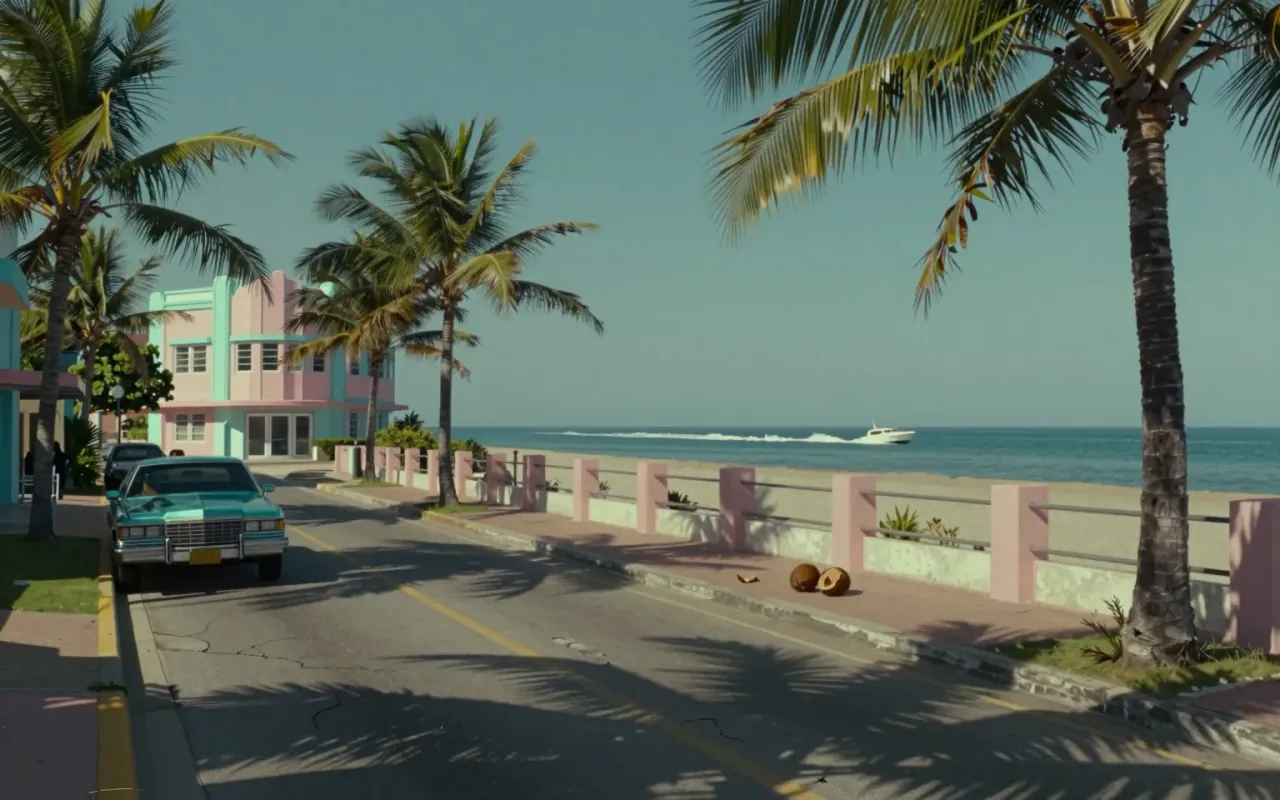
Port of Miami is a debut album that treats Miami as infrastructure — not atmosphere, not character, but a node in a supply chain. Its sound is monolithic: engineered for repetition, built on one unvarnished sample, and delivered with zero tonal deviation. It landed because it refused ambiguity.

film.briefs Film

All 199 in film →
13:00

A Colt Is My Passport

Takashi Nomura · 1967

Takashi Nomura’s 1967 yakuza noir follows contract killer Shuji Kamimura as he navigates a collapsing web of yakuza betrayals after a botched hit. With precise, unhurried direction and Joe Shishido’s stoic performance, the film treats survival as a series of calibrated actions — installing a second brake, digging a ditch, building a bomb — rather than a psychological journey. Its power lies in functional coherence, not thematic elaboration.

13:00

A History of Violence

David Cronenberg · 2005

David Cronenberg’s 2005 crime thriller adapts a graphic novel into a precise, unsentimental study of identity, memory, and embodied violence. Viggo Mortensen plays Tom Stall, a small-town diner owner whose past as hitman Joey Cusack resurfaces after he kills two robbers. The film tracks the unraveling of his family life and his return to Philadelphia, where violence proves inescapable — not as choice, but as somatic fact. Shot by Peter Suschitzky and scored by Howard Shore, it favours stillness over spectacle and implication over exposition.

13:00

Anatomy of a Murder

Otto Preminger · 1959

Otto Preminger’s 1959 Anatomy of a Murder is a rigorously procedural crime drama set in Michigan’s Upper Peninsula. James Stewart plays a small-town lawyer defending an army lieutenant accused of murder, using an 'irresistible impulse' insanity plea. Shot on location with documentary restraint, it prioritises legal mechanics over psychology, and evidentiary tension over emotional payoff. Sam Leavitt’s cinematography and Duke Ellington’s score support, never dominate, its deliberate pace. Though acclaimed for authenticity, it resists moral framing — leaving viewers with the structure of doubt, not the comfort of verdict.

13:00

Arsenic and Old Lace

Frank Capra · 1944

Frank Capra’s 1944 adaptation of Joseph Kesselring’s play is a tightly wound black comedy set over one Halloween day in a Brooklyn house where two elderly sisters poison lonely bachelors, their delusional nephew buries the bodies, and their theatre-critic nephew tries to contain the chaos. Starring Cary Grant, Josephine Hull and Raymond Massey, it prioritises rhythmic precision over emotional depth, using studio-era craft to sustain a high-wire act of escalating absurdity.

13:00

As Tears Go By

Wong Kar-wai · 1988

Wong Kar-wai’s 1988 debut follows Wah, a Mong Kok triad enforcer, as he tries to manage his volatile friend Fly while growing close to his cousin Ngor, who visits from Lantau Island. Shot in naturalistic tones by Andrew Lau and edited with deliberate slowness by William Chang, the film grounds crime-drama tropes in quiet consequence rather than spectacle. Its power lies in restraint: in Andy Lau’s muted performance, Maggie Cheung’s understated presence, and the unforced contrast between urban claustrophobia and island stillness. Though structurally uneven in its second half, it establishes Wong’s enduring concerns — time, loyalty, and the geography of longing.

13:00

Badlands

Terrence Malick · 1973

Terrence Malick’s 1973 debut is a stylised, time-suspended retelling of the Starkweather–Fugate killings, starring Martin Sheen and Sissy Spacek. Shot on a $300,000 budget in Colorado, it uses sparse dialogue, hypnotic repetition, and Tak Fujimoto’s flat, wide compositions to construct a fairy-tale logic around murder and flight. Holly’s detached narration, Orff’s Gassenhauer, and the vast, indifferent landscape all serve a single vision: human action as pattern, not pathology.

13:00

Big Deal on Madonna Street

Mario Monicelli · 1958

Big Deal on Madonna Street (1958) is an Italian heist comedy directed by Mario Monicelli, following a group of Rome-based petty criminals attempting—unsuccessfully—to burgle a pawn shop through a shared wall. Shot on location with harsh, naturalistic lighting by Gianni Di Venanzo and scored with restrained jazz by Piero Umiliani, it parodies both neorealist gravity and crime-thriller solemnity by applying their formal rigour to characters who lack the means to succeed. The film’s humour arises from procedural fidelity, not absurdity: every setback follows logically from material constraint, linguistic mismatch or spatial miscalculation. Though nominated for an Academy Award and listed among Italy’s 100 essential films, its appeal lies in its precision, not its polish.

13:00

Blast of Silence

Allen Baron · 1961

Blast of Silence is a 1961 American neo-noir crime film written, directed by, and starring Allen Baron. Set over Christmas week in New York City, it follows Frankie Bono, a hitman returning to his hometown to carry out a contract killing. Shot on location without permits and scored with stark minimalism, the film leans on atmosphere, silence, and moral ambiguity rather than plot mechanics. Its narration — written by blacklisted Waldo Salt and voiced uncredited by Lionel Stander — adds a layer of literary distance. Though modest in budget and scope, it endures as a precise, unsparing study of alienation and consequence.

history.briefs History

All 10 in history →
13:00

2016 Brussels bombings

22 March 2016

On 22 March 2016, three suicide bombers from the same Brussels-based ISIS cell responsible for the November 2015 Paris attacks struck Brussels Airport and the city's Maelbeek metro station, killing 32 civilians and injuring more than three hundred. All five attackers involved that day had also helped plan and carry out the Paris attacks, and Belgian investigators believe the arrest of Paris attacker Salah Abdeslam just four days earlier may have accelerated the Brussels operation before the cell was fully prepared. A parliamentary inquiry later found serious failures in Belgian security coordination and information-sharing, and separate trials in Paris and Brussels eventually convicted the cell's surviving members, sentencing several, including Abdeslam, to life imprisonment.

13:00

Deepwater Horizon oil spill

2010

An explosion aboard the Deepwater Horizon drilling rig on 20 April 2010 killed eleven workers and began the largest marine oil spill in history, releasing an estimated 4.9 million barrels of oil into the Gulf of Mexico over eighty-seven days before the well was finally capped. The flow rate BP initially reported, one to five thousand barrels a day, turned out to understate the true figure of roughly 62,000 barrels a day by more than tenfold. BP pleaded guilty to eleven counts of manslaughter in 2012 and was later found grossly negligent, culminating in a 2016 settlement of 20.8 billion dollars, the largest environmental damage settlement in American history, on top of total costs that had reached over 65 billion dollars by 2018.

13:00

7 July 2005 London bombings

7 July 2005

Four suicide bombers detonated devices on three London Underground trains and a bus during the morning rush hour of 7 July 2005, killing 52 civilians alongside themselves and injuring nearly 800 people in Britain's deadliest terrorist attack since Lockerbie. An independent inquest later ruled the deaths unlawful but unpreventable, while finding MI5's earlier, brief scrutiny of ringleader Mohammad Sidique Khan had not amounted to a missed warning. Two weeks later, on 21 July, four more attackers attempted an almost identical attack using bombs of similar size and construction, but faulty explosives meant only the detonators fired, and the resulting manhunt led police to fatally shoot an innocent Brazilian electrician, Jean Charles de Menezes, before all four bombers were caught and later sentenced to life imprisonment.

13:00

2004 Madrid train bombings

11 March 2004

Ten bombs exploded across four commuter trains in Madrid on the morning of 11 March 2004, killing 193 people and injuring roughly 2,500 in the deadliest terrorist attack in Spanish history. The government of José María Aznar pointed to the Basque separatist group ETA within hours, even as evidence mounted toward a loosely organised, internet-radicalised cell of Moroccan, Syrian, and Algerian extremists inspired by rather than directed by al-Qaeda. Spontaneous protests erupted once that evidence became public on 12 and 13 March, and three days after the bombings, voters delivered an upset general election victory to the opposition Socialist Party, a result researchers have linked directly to public anger over the government's initial handling of the attack's aftermath.

13:00

Manchester Arena bombing

22 May 2017

Salman Abedi detonated a nail bomb in the foyer of Manchester Arena as concertgoers left an Ariana Grande show on 22 May 2017, killing 22 people and injuring over a thousand in Britain's deadliest terrorist attack since the 2005 London bombings. A public inquiry found a series of missed opportunities, including a security guard who noticed Abedi acting suspiciously but did not intervene for fear of appearing racist, understaffed police coverage of the arena's exit area, and an MI5 assessment that had judged Abedi low-risk despite community warnings about his extremist views. His brother Hashem was later convicted of helping build the bomb and sentenced to a minimum fifty-five years, the longest minimum term ever imposed by a British court, while Ariana Grande's One Love Manchester benefit concert raised more than ten million pounds within twelve hours.

13:00

2016 Nice truck attack

14 July 2016

On Bastille Day, 14 July 2016, Mohamed Lahouaiej-Bouhlel, a 31-year-old Tunisian delivery driver living in Nice, drove a nineteen-tonne truck into crowds on the Promenade des Anglais, killing 86 people and injuring 458 before police shot him dead roughly five minutes after the attack began. He had no prior links to organised terrorism and was not on any watchlist, but investigators found he had rapidly self-radicalised over the preceding months, growing a beard, researching mass-casualty attacks online, and surveying the Promenade in the days beforehand, while separately battling depression, addiction, and a recent divorce and firing. The Islamic State claimed him as acting on its behalf, but French prosecutors concluded he had acted with some accomplices yet without central direction from the group itself.

13:00

November 2015 Paris attacks

13 November 2015

On the night of 13 November 2015, ten operatives from a Brussels-based ISIS cell carried out coordinated shootings and suicide bombings across six sites in Paris and Saint-Denis, killing 130 civilians and injuring more than four hundred, with the Bataclan theatre alone accounting for ninety deaths during a hostage-taking that ended in a police assault. President François Hollande called the attacks an act of war and declared a three-month state of emergency, and France launched major airstrikes against ISIS targets in Raqqa within two days. Salah Abdeslam, the only surviving member of the attack teams, evaded capture until March 2016, while the cell's ringleader, Abdelhamid Abaaoud, was killed in a raid five days after the attacks.

13:00

Roaring Twenties

1920–1929

The 1920s brought rapid economic growth, mass consumer goods, jazz and a new pace of urban life to the United States and, more unevenly, to parts of Europe. The prosperity behind the name was real but badly distributed: rural industries stagnated, and Prohibition, in force for most of the decade, produced a black market and thousands of poisoning deaths alongside whatever gains it made against drinking. The Wall Street crash of 1929 ended the boom abruptly, and the arguments the decade started, about excess, exclusion and the wisdom of Prohibition, ran on well past the crash.

games.briefs Games

All 7 in games →
9:17

Payday: The Heist

Overkill Software · 2011

Payday: The Heist is a 2011 cooperative FPS by Overkill Software. It establishes the core loop of theft-driven co-op play, hostage-based revival, and civilian protection. Its randomisation adds replayability without altering mechanics. It lacks progression, narrative, or solo support. It runs on PlayStation 3 and Windows.

9:45

Payday 2

Overkill Software · 2013

Payday 2 is a cooperative heist shooter released in 2013 by Overkill Software, developed with funding from Starbreeze Studios after their 2012 acquisition, and led in design by David Goldfarb.

9:56

Grand Theft Auto III

Rockstar Games · 2001

Grand Theft Auto III is a foundational open-world action-adventure game that redefined spatial possibility in games—but its systems remain rigid, its controls unrefined, and its world more atmospheric than alive.

11:11

Grand Theft Auto: San Andreas

Rockstar Games · 2004

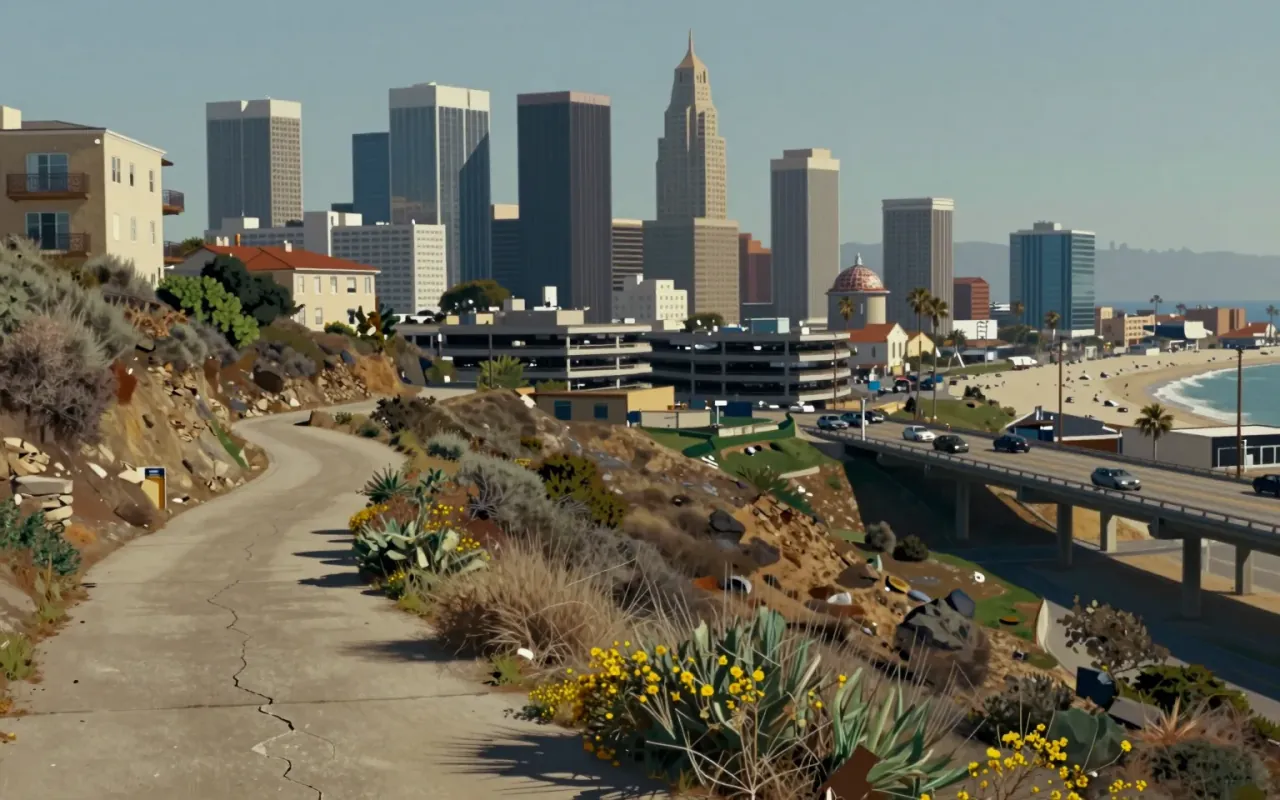
Grand Theft Auto: San Andreas is an action-adventure game published by Rockstar Games in 2004. Players control Carl 'CJ' Johnson in a third-person open world representing a fictionalised California and Nevada. The world comprises three cities—Los Santos, San Fierro, and Las Venturas—connected by rural and desert areas. Cities unlock progressively through the story; airports allow fast travel between them. Players complete linear story missions with fixed objectives, and may freely explore and undertake optional side missions. Navigation includes running, swimming, and vehicle use; combat includes melee, firearms, explosives, dual-wielding, and drive-by shootings. Weapons are acquired via purchase, looting corpses, or finding them scattered across the world. Safehouses—purchasable locations—are used to save progress and store vehicles. The game introduces role-playing elements such as character customisation, skill progression, gang territory control, and relationship management.

10:26

Grand Theft Auto V

Rockstar Games · 2013

Grand Theft Auto V is an action-adventure game released in 2013 by Rockstar Games. It features an open-world setting modelled on Southern California and Los Angeles, navigable on foot or by vehicle from third- or first-person perspectives. Players control three protagonists—Michael, Franklin, and Trevor—and switch between them during and outside linear story missions centred on heists. Gameplay includes shooting, driving, melee combat, explosives, and a 'wanted' system that escalates law enforcement response to crimes. The world is fully explorable after the prologue and supports context-specific activities, property purchases, stock trading, and character-specific skills. Combat uses auto-aim and cover systems; health regenerates to halfway, with respawns at hospitals upon death. Heists involve AI accomplices with unique skills and support multiple strategies. The game runs on the Rockstar Advanced Game Engine (RAGE) and is part of the Grand Theft Auto franchise, originally published by BMG Interactive.

11:26

Red Dead Redemption 2

Rockstar Games · 2018

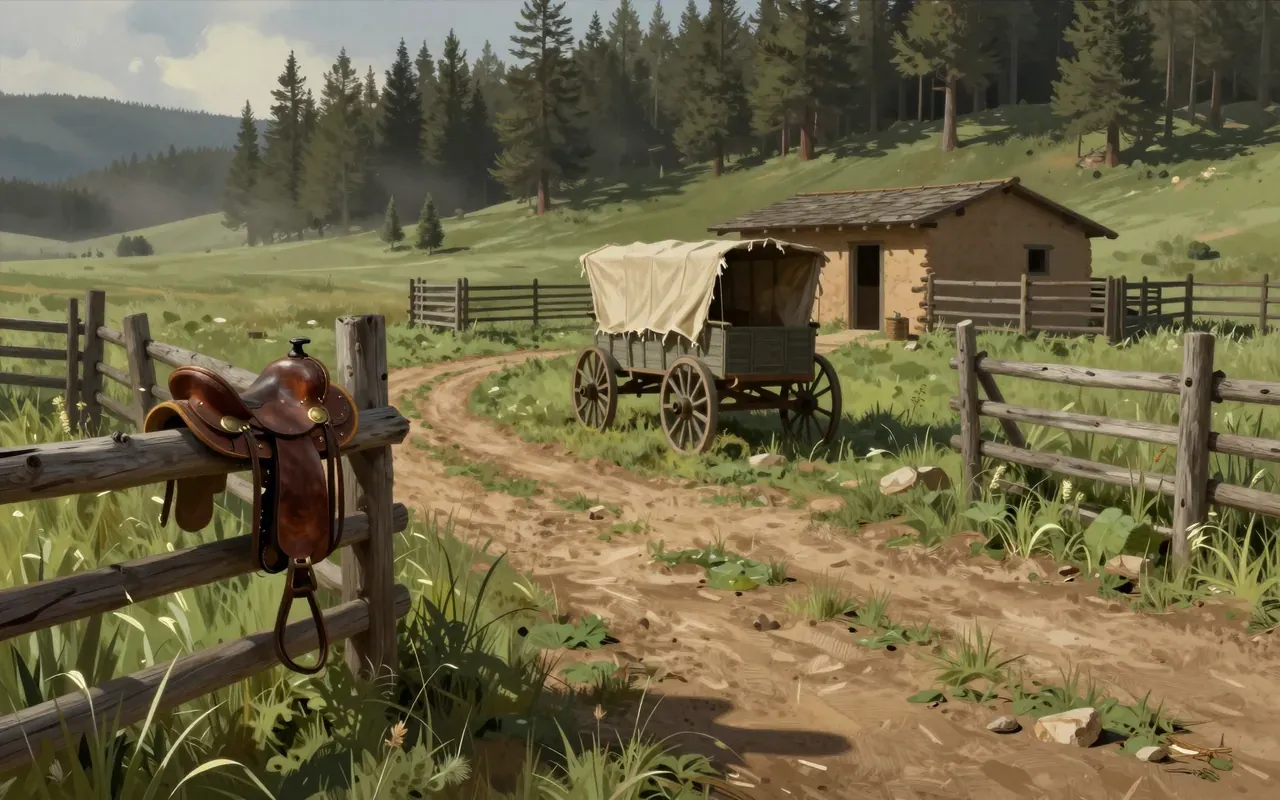
Red Dead Redemption 2 is a meticulously simulated Western world built on procedural consequence — not player authorship.

technology.briefs Technology

All 1 in technology →
8:50

Botnet

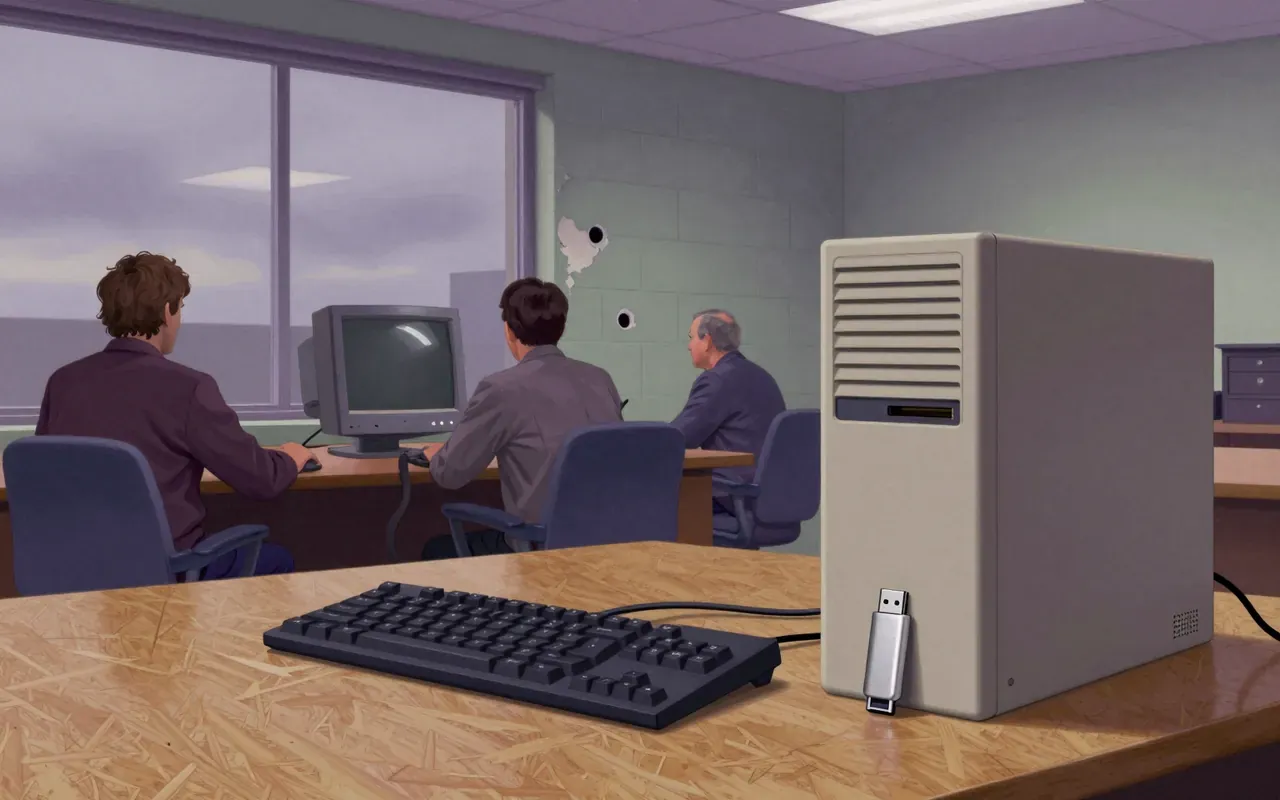
A botnet is not infrastructure—it's theft with a network stack.

culture.briefs Culture

All 2 in culture →
11:07

Cultivation theory

Television didn’t teach people what to think—it taught them what to fear, and how much of it there was.
8:08

Patricia Highsmith

A writer who gave queer love its first happy ending—and spent her life denying humanity to everyone else.

fashion.briefs Fashion

All 1 in fashion →
9:24

The North Face

A climbing jacket that became a target — first for altitude, then for robbery, then for bullying.