briefs
Topic · across the network

Adolescence

The years a society decides someone is not yet responsible.

202
briefs
8
subjects
12:22
average
2500 min
in total
Abstraction 407Absurdism 137Acoustics 220Acting 65Adaptation 372Addiction 95Adolescence 202Advertising 77Age of exploration 14Ageing 113Agriculture 100Algorithms 114Ambition 46Anarchism 38Ancient Egypt 17Ancient Greece 38Ancient Rome 30Animals 172Anthropology 23Apartheid 12Architecture 165Archives 32Argentina 10Art Deco 26Artificial intelligence 78Astronomy 81Attention 42Australia 32Automation 73Avant-garde 164Aviation 79Banking 72Banned works 40Bauhaus 12Beer 5Behavioural economics 22Berlin 16Big tech 6Biodiversity 136Biography 86Birds 41Black holes 20Blockchain 12Boxing 14Branding 77Brazil 43Bread 29Britain 131Brutalism 4Bubbles 3Buddhism 28Byzantium 10California 17Canada 18Capitalism 94Cars 468Celebrity 59Censorship 110Cheese 24Chefs 9Chemistry 104Chess 2Childhood 87China 109Chocolate 8Christianity 49Cinematography 343Cities 90Class 485Climate change 107Club culture 100Cocktails 2Coffee 11Cognitive bias 14Collecting 16Colonialism 284Colour 42Comedy 89Community 52Complexity 21Computing 309Consciousness 16Conservatism 14Conspiracy theories 8Cooking 178Corruption 38Cosmology 31Cover versions 64Craft 116Crate digging 42Creativity 8Crime 234Cryptocurrency 8Cryptography 24Cuba 10Cybersecurity 30Dada 12Debt 38Decision-making 28Decolonisation 46Deep time 80Democracy 45Denim 16Deserts 45Detroit 17Dinosaurs 12Directing 168Disasters 59Disease 109DJ culture 89Dreams 32Drones 5Drum machines 96Dystopia 69East Africa 28Ecology 337Economics 36Editing 72Education 92Egypt 12Electric vehicles 59Emotion 22Empire 92Endurance 49Energy 120Engineering 541Entropy 8Epidemics 13Equality 9Espionage 31Ethics 44Evolution 174Existentialism 106Expertise 2Exploration 49Extinction 23Failure 37Family 240Fandom 22Fascism 45Fashion 215Fast fashion 12Fear 34Feminism 122Fermentation 126Film music 81Fishing 12Folklore 71Food history 588Football 16Forests 31Forgery 7France 163Fraud 15Free will 13Freedom 16French literature 15Friendship 24Furniture 36Gambling 14Gender 63Generations 28Genetics 87Geology 96Germany 66Globalisation 74Gothic 32Greece 5Grief 126Habits 6Happiness 2Hardware 709Haute couture 22Headphones 8Hi-fi 12Hinduism 12Hoaxes 1Human history 23Human nature 41Identity 138Illustration 8Impressionism 6Improvisation 249India 89Indonesia 15Industrial design 342Inequality 13Inflation 4Information 34Infrastructure 280Insects 29Intelligence 8Interiors 31Internet culture 88Invention 329Iran 41Islam 40Islands 17Israel 9Italy 52Jamaica 10Japan 114Jewellery 5Journalism 34Judaism 13Justice 42Korea 41Language 70Law 90Leadership 20Learning 6Liberalism 1Libraries 6Literary criticism 26London 12Loneliness 61Los Angeles 62Lost works 9Love 67Luxury 55Machine learning 15Management 10Maps 5Marketing 21Markets 51Mars 6Marxism 26Masculinity 46Materials 138Mathematics 79Meaning 6Medicine 124Memory 82Mental health 70Mesopotamia 4Mexico 38Migration 95Minimalism 68Mining 30Misinformation 9Modernism 63Money 24Monopoly 32Mortality 61Motivation 2Mountains 16Museums 27Mysticism 11Mythology 60Nationalism 40Neuroscience 23New York 36Nigeria 7Nihilism 10Noise 31Nostalgia 33Nuclear 29Nutrition 17Oceans 48Oil 42Open source 45Painting 18Palaeontology 29Parenting 14Paris 18Partition 6Patents 71Patronage 14Perception 44Personal style 27Personality 2Persuasion 8Peru 10Philosophy 77Photography 37Physics 206Plants 26Platforms 89Podcasting 1Poetry 25Poland 17Policing 34Pop Art 16Populism 2Portraiture 6Portugal 18Postmodernism 23Power 91Prehistory 24Preservation 28Printmaking 21Privacy 11Probability 6Productivity 1Programming 54Prohibition 1Propaganda 35Protest 75Pseudoscience 17Psychology 80Publishing 22Punishment 16Quantum mechanics 44Race 145Radio 30Railways 35Rave 17Realism 47Record labels 19Recording 810Relativity 23Religion 154Resilience 15Restaurants 30Restoration 2Retail 94Revolution 58Risk 18Ritual 96Robotics 26Romance 96Russia 58Salt 9Sampling 246Satire 84Scandinavia 28Scientific method 186Screenwriting 26Sculpture 7Secularism 2Self-deception 14Semiconductors 73Sexuality 102Ships 18Silence 24Silicon Valley 17Slavery 35Sleep 2Smartphones 27Sneakers 15Social media 58Socialism 9Software 68Songwriting 180Sound design 332Sound systems 20South Africa 19South East Asia 30Space exploration 84Spain 18Special effects 41Spices 62Spirits 12Sport 82Startups 21Statistics 10Status 9Stoicism 4Storytelling 68Strategy 70Street food 99Streetwear 16Studio craft 508Subcultures 59Sugar 12Supply chains 115Surrealism 53Surveillance 21Sustainability 30Synthesis 232Tailoring 37Taxation 14Tea 24Textiles 97Thailand 11The American Revolution 19The American South 88The Arab world 41The Arctic 19The Balkans 17The Belle Epoque 13The body 29The brain 26The Caribbean 28The civil rights movement 62The Cold War 160The eighties 268The Enlightenment 29The financial crisis 19The First World War 39The food industry 157The French Revolution 9The Gilded Age 9The Great Depression 18The Holocaust 20The Industrial Revolution 93The internet 61The interwar years 135The Middle Ages 35The Moon 4The music business 169The Netherlands 10The nineties 26The Olympics 10The pandemic 13The Reformation 1The Renaissance 16The Russian Revolution 19The Second World War 102The seventies 58The sixties 28The space race 5The United States 19The universe 7The Victorian era 37Therapy 20Tokyo 11Trade 48Tragedy 22Translation 5Trauma 85Travel 5True crime 2Turkey 18Typography 54Uniforms 23Unions 8Urban planning 66Utilitarianism 1Utopia 5Vaccines 10Vegetarianism 15Venture capital 6Video games 291Vietnam 12Vintage 65Vinyl 6Virtual reality 11War 169Watches 4Water 11Weather 29West Africa 29Wilderness 10Wine 3Work 22Workwear 19Worldbuilding 121

books.briefs Books

All 4 in books →
14:38

The Adventures of Tom Sawyer, Complete

Mark Twain · 1910

Twain’s 1876 novel treats childhood as a site of real moral risk—not innocence, not corruption, but constant negotiation. Tom’s fence-whitewashing, blood oath, courtroom testimony and cave ordeal are not adventures but ethical trials. The book works best in its sharpest scenes: Ch. II, XX, XXXI and XXXIII. Skip the editor’s introduction and the slower interludes.

16:39

Anne of Green Gables

L. M. Montgomery · 0

Anne of Green Gables argues that imagination is a child’s tool for claiming personhood—not escape. It shows Anne building selfhood through naming, error and quiet love: the White Way of Delight, the liniment cake, Marilla’s green dress. The brief explains why her red hair matters, why Matthew’s narcissus matters more than his death, and why the bend in the road is the book’s truest sentence.

16:38

Demian

Hermann Hesse · 1919

Demian argues that moral growth requires destroying the world that raised you — family, church, nation — to make space for the self you were meant to be. It succeeds in its early chapters on guilt and awakening, fails in its later mysticism, and should be read selectively. Skip the organist Pistorius entirely.

12:36

Lord of the Flies

William Golding · 1954

Golding's 1954 novel stages what happens when children are left to organize themselves. The surface reads as survival adventure. Below it is a sharp argument about how quickly order becomes tyranny and civilization masks brutality.

music.briefs Music

All 38 in music →
9:59

After School Session

Chuck Berry · 1957

After School Session is Chuck Berry’s debut studio album, released in May 1957 by Chess Records. It compiles twelve tracks recorded across five sessions at Universal Recording Corporation in Chicago between May 1955 and January 1957. Most songs had previously appeared as singles. The album features Chuck Berry on vocals and guitar, Johnnie Johnson on piano, and contributions from Willie Dixon, Fred Below, L. C. Davis, Jasper Thomas, Ebby Hardy, Otis Spann, Jimmy Rogers, and Jerome Green. Steel guitar appears on 'Deep Feeling'. The sequencing reflects single release order, not recording chronology. It arrived during Berry’s peak commercial and creative period, when he was already an established star with hit records, film appearances, and a touring career.

9:34

Germfree Adolescents

X‐Ray Spex · 1978

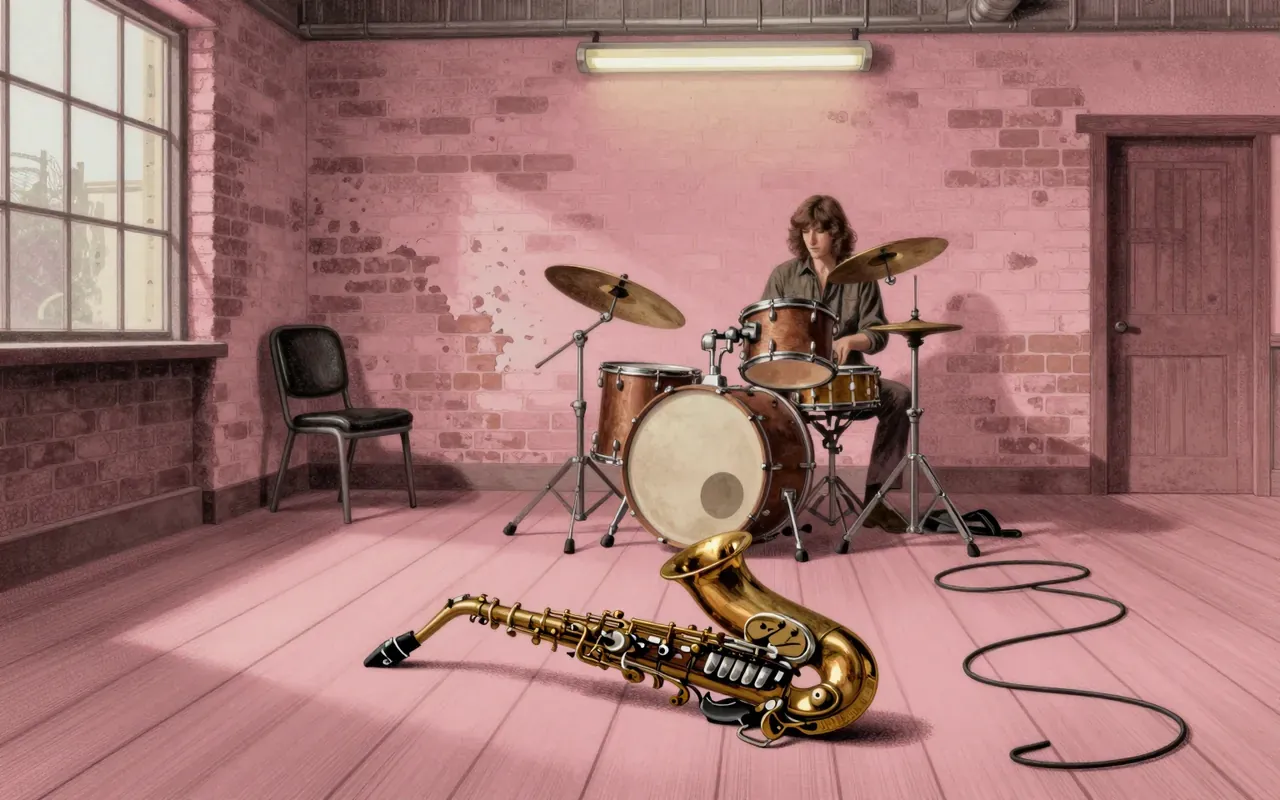
Germfree Adolescents is X-Ray Spex’s 1978 debut album. All twelve tracks were written by Poly Styrene. Five had previously appeared on singles’ A-sides or B-sides. The core band was Poly Styrene (vocals), Jak Airport (guitar), Paul Dean (bass), Rudi Thomson (saxophone), and B.P. Hurding (drums). Rudi Thomson played saxophone on the album.

8:21

Histoire de Melody Nelson

Serge Gainsbourg · 1971

Histoire de Melody Nelson is a 1971 concept album by Serge Gainsbourg, co-written and arranged by Jean-Claude Vannier and produced by Jean-Claude Desmarty. It features funk-style electric guitar and bass guitar, Gainsbourg’s spoken word and Sprechgesang vocals, and lush string and choral arrangements. Personnel include Vic Flick, Big Jim Sullivan, Dave Richmond, Dougie Wright, Jean-Luc Ponty, and Jane Birkin. At just under twenty-eight minutes, its short running time and stylistic consistency give it qualities more in line with an extended play or a single continuous suite.

9:55

Pure Heroine

Lorde · 2013

Pure Heroine is a tightly controlled, ten-track electropop record made in under a year at Golden Age Studios in Auckland. It uses deep bass, programmed beats, and Lorde’s voice as its only melodic and rhythmic anchors. Its themes—suburban teenage disillusionment, consumer culture, social status—are delivered without resolution or ornament. It landed four singles, won the 2014 Taite Music Prize, and helped define ‘whisperpop’ as a production ethos. It is not experimental in form, nor indulgent in texture—it is precise, economical, and unsentimental.

75:40

School’s Out

Alice Cooper · 1972

School's Out is a 1972 rock album by Alice Cooper, designed as a school desk with carved graffiti and wrapped in flammable paper panties. Its title track was a UK number one and US Top 10 hit. It marked a shift to a bratty, macho stage persona and provoked moral outrage — including a BBC video ban — without denting its popularity.

8:58

The Black Parade

My Chemical Romance · 2006

A claustrophobic, emotionally exposed rock record made inside a scary, uneasy mansion — not a polished concept album, but one saturated with the psychological toll of its creation.

11:14

WHEN WE ALL FALL ASLEEP, WHERE DO WE GO?

Billie Eilish · 2019

When We All Fall Asleep, Where Do We Go? is Billie Eilish’s debut studio album, released March 29, 2019. Written and produced with her brother Finneas O'Connell in his bedroom studio in Highland Park, Los Angeles, it uses Logic Pro X, a Universal Audio Apollo 8 interface, and Yamaha HS5 monitors with an H8S subwoofer. Its sound centres on amplified bass, minimalist percussion, foley, and acoustic textures — layered with dissonance and distortion to create a rock ’n’ roll feel without rock instrumentation. Eilish later said she 'hated every second' of its creation. It debuted at number one on both the US Billboard 200 and the UK Albums Chart, and 14 of its 14 tracks (excluding 'Goodbye') charted simultaneously on the US Billboard Hot 100 — a record for a female artist.

10:47

Zen Arcade

Hüsker Dü · 1984

Zen Arcade is a double LP by Hüsker Dü, released July 1984 on SST Records. It tells a conceptual story of a boy fleeing an abusive home, encountering disillusionment through military service, religion, love, and loss — ending when he wakes, revealing the narrative as a dream. Recorded in 45 hours at Total Access Studio in Redondo Beach, California, with producer Spot, it features first-take performances, acoustic folk passages, piano interludes, and psychedelic guitar textures. The band rehearsed in a church-turned-punk squat in St. Paul, Minnesota, during summer 1983, brainstorming lyrics and musical ideas in multi-hour jam sessions. Bob Mould and Grant Hart wrote all songs; Mould demanded individual songwriter credits after seeing Hart’s artwork for another band. Dez Cadena contributed guest vocals to 'What's Going On'. 'Eight Miles High' was recorded during these sessions but released as a non-album single in April 1984. The album’s artistic and conceptual ambitions challenged prevailing U.S. punk purism.

film.briefs Film

All 132 in film →
13:00

20th Century Women

Mike Mills · 2016

Set in 1979 Santa Barbara, Mike Mills’ 20th Century Women follows 15-year-old Jamie as his single mother Dorothea enlists two younger women — photographer Abbie and teenage friend Julie — to help raise him. Anchored by Annette Bening’s restrained performance, the film observes their overlapping lives with warmth and precision, treating feminism, illness, ageing and adolescence as lived conditions rather than themes. Shot by Sean Porter and edited by Leslie Jones, it moves at the pace of real conversation, building meaning through accumulation rather than climax.

13:00

À Nos Amours

Maurice Pialat · 1983

Maurice Pialat’s 1983 drama follows sixteen-year-old Suzanne (Sandrine Bonnaire) as she navigates sexual experience, family fracture and emotional drift in early-1980s Paris. Shot with observational restraint by Jacques Loiseleux and written by Pialat and Arlette Langmann, it avoids exposition, score-driven emotion or narrative resolution, holding Suzanne’s contradictions — her hunger for connection and her inability to sustain it — without judgment or explanation.

13:00

A Ship Bound for India

Ingmar Bergman · 1947

A Ship Bound for India (1947) is Ingmar Bergman’s third feature and first original screenplay, co-written with Martin Söderhjelm. Set in a Swedish port town, it follows Johannes, who returns after seven years at sea and dreams of his teenage years under his domineering, blind-bound father. Built around a single extended flashback, the film charts Johannes’s slow assertion of self amid familial cruelty, unrequited love, and physical stigma — all rendered with stark, unhurried realism and no stylistic flourish.

13:00

A Taste of Honey

Tony Richardson · 1961

Tony Richardson and Shelagh Delaney’s 1961 adaptation of her own play follows Jo, a teenage girl in Salford, as she navigates abandonment, pregnancy, and makeshift kinship amid post-war austerity. Shot on location in Manchester and Blackpool, with Walter Lassally’s naturalistic cinematography and Rita Tushingham’s breakthrough performance, it is a cornerstone of British kitchen-sink realism — unsentimental, formally restrained, and politically precise in its depiction of class, race, and sexuality.

13:00

A Wedding Suit

Abbas Kiarostami · 1976

A Wedding Suit (1976) is Abbas Kiarostami’s 54-minute comedy made for Iran’s Institute for the Intellectual Development of Children and Young Adults. A woman orders a suit for her son to wear to a wedding; her tailor’s apprentice and two friends secretly try it on overnight. Structured around quiet observation and precise, unhurried staging, the film finds humour and humanity in small-scale decisions, material detail, and the unspoken rhythms of adolescent collaboration. It contains no score, minimal dialogue, and no overt commentary — its concerns are procedural, spatial, and tactile.

13:00

Badlands

Terrence Malick · 1973

Terrence Malick’s 1973 debut is a stylised, time-suspended retelling of the Starkweather–Fugate killings, starring Martin Sheen and Sissy Spacek. Shot on a $300,000 budget in Colorado, it uses sparse dialogue, hypnotic repetition, and Tak Fujimoto’s flat, wide compositions to construct a fairy-tale logic around murder and flight. Holly’s detached narration, Orff’s Gassenhauer, and the vast, indifferent landscape all serve a single vision: human action as pattern, not pathology.

13:00

Beasts of No Nation

Cary Joji Fukunaga · 2015

Beasts of No Nation (2015) follows Agu, a West African boy forced into a rebel militia during civil war. Directed and written by Cary Joji Fukunaga, it adapts Uzodinma Iweala’s novel with fidelity to its Krio-inflected voice and narrow psychological focus. Abraham Attah stars alongside Idris Elba as the charismatic, violent Commandant. Shot in Ghana, edited with deliberate duration, and scored with restrained unease, the film avoids spectacle in favour of sustained, intimate horror. It premiered at Venice, where Attah won the Marcello Mastroianni Award, and marked Netflix’s first global feature release.

13:00

Benny's Video

Michael Haneke · 1992

Michael Haneke’s 1992 Austrian horror film follows Benny, a Vienna teenager obsessed with video recording, whose emotionally detached parents enable his fixation. After filming a pig’s slaughter, he invites a girl to his home, kills her on camera, and proceeds with chilling normalcy — cleaning, socialising, travelling — while his parents dispose of the body. The film uses static camerawork, diegetic sound, and layered recordings to dissect how media saturation erodes moral response, treating violence not as rupture but as data.

science.briefs Science

All 2 in science →
9:20

Lawrence Kohlberg

Kohlberg did not discover morality—he invented a ruler for one kind of moral talk.
10:20

Margaret Mead

Margaret Mead didn’t prove culture shapes adolescence—she showed it could, and that was enough to break biological determinism.

games.briefs Games

All 15 in games →
9:28

Danganronpa 2: Goodbye Despair

Spike Chunsoft · 2012

Danganronpa 2: Goodbye Despair is a visual novel, adventure game, and role-playing video game developed by Spike before its 2012 merger with Chunsoft. Its structure divides time between Daily Life (dialogue-driven relationship building), Deadly Life (linear evidence collection after murder), and Class Trial (logic combat using Truth Bullets in a first-person shooter framework). Players earn Hope Fragments through Free Time conversations, exchange them for debate skills, and fund that loop with Monocoins earned from trial success and hidden Monokuma Figures. The game demands attention to verbal contradiction, rewards repetition as narrative escalation, and offers no mechanical evolution beyond its fixed, self-reinforcing systems.

9:46

Revelations: Persona

Atlus · 1996

Revelations: Persona is Atlus’s 1996 PlayStation RPG that introduces the Persona series. It casts high school students who summon Personas—Jungian self-manifestations—to fight supernatural threats in a town shaped by lunar cycles and branching narrative paths.

9:50

Shivers (video game)

Sierra Online · 1995

Shivers is Sierra On-Line’s first first-person, point-and-click PC adventure game, released on CD-ROM in November 1995. It places a nameless, unseen, silent teenage protagonist inside a haunted museum to trap ten Ixupi spirits by solving puzzles, collecting vessel fragments, and matching talismans — all while managing a life-essence health bar and navigating a non-linear, open-ended environment with strict one-item inventory.

9:16

EarthBound

Nintendo · 1994

EarthBound is a 1994 Nintendo RPG that rejects the genre’s conventions: no overworld map, no random encounters, no top-down grid. Instead, it builds a seamless, oblique-projection world where enemies are visible NPCs, combat begins with spatial positioning, and progression is deliberately unstable. It asks players to read the environment, not the menu.

9:54

Clannad (video game)

Key · 2004

Clannad (2004) is a visual novel by Key that uses dialogue choices to navigate a branching narrative across two arcs—School Life and After Story—gated by a light-collection mechanic requiring full scenario completion for the true ending.

9:35

Dragon Quest (video game)

Chunsoft · 1986

Dragon Quest (1986) is a single-player RPG developed by Chunsoft. It simplifies Western RPG conventions for console audiences. The player controls a young hero who must defeat the Dragonlord and retrieve the stolen Balls of Light. Progression relies on open exploration gated by enemy strength, turn-based combat with four commands, and stat growth tied to experience and name input. Save systems differ: passwords in Japan, battery-backed RAM in North America. Its design prioritises narrative clarity and incremental empowerment over mechanical complexity.

10:40

The Last of Us (video game)

Naughty Dog · 2013

The Last of Us (2013) is a post-apocalyptic third-person action-adventure game developed by Naughty Dog for PlayStation 3. It follows Ellie and Joel across a United States overrun by humans infected with a Cordyceps-like fungus. Players traverse ruined environments, engage in vulnerable, resource-constrained combat using firearms, improvised weapons, and stealth, and craft or upgrade gear at workbenches. The design prioritises tension, scarcity, and character-driven stakes over systemic openness or player authorship.

9:52

Digimon World

Bandai · 1999

Digimon World is a PlayStation RPG where raising a single Digimon — through feeding, training, resting, and bathroom use — determines its evolution, intelligence, and battle effectiveness. Poor care locks players into Numemon, a weak Champion form. Battles restore order to File City by recruiting feral Digimon. When the Digimon ages out, it reverts to an egg — forcing a full restart.
culture.briefs Culture

All 8 in culture →
9:41

Goth subculture

Goth wasn’t about darkness—it was about building shelter in plain sight.
8:09

Internet challenge

Internet challenges are not viral stunts — they are attention arbitrage run by teenagers on platforms that pay in likes, not liability.
8:24

Grunge

Grunge didn’t rebel — it withdrew, and got paid for it.
9:05

K-pop

K-pop began not as a genre but as a teenage rebellion disguised as dance music.
8:23

Dark academia

Dark academia isn’t about learning—it’s about longing for the look of learning.
9:41

Straight edge

Straight edge wasn’t about purity—it was about drawing a line in the mosh pit and daring the scene to cross it.
11:11

James Dean

Dean didn’t invent rebellion—he weaponised improvisation.

audio.briefs Audio

All 2 in audio →
8:51

Tascam Portastudio 144

Tascam

The Tascam Portastudio 144 is a four-track analog cassette recorder. It was used by adolescents for home multitrack recording in 1981. It lacked dBX noise reduction but functioned effectively. It enabled users to record and mix music at home, creating a personal musical environment.

8:18

Fender Duo-Sonic

Fender

The Duo-Sonic is a compact, fixed-bridge student guitar built for physical accessibility — not sonic flexibility.

fashion.briefs Fashion

All 1 in fashion →