Blackout
Britney Spears · 2007
Blackout is Britney Spears’ fifth studio album and the only one she executive-produced. Recording began earnestly in 2006. It was released in October 2007.
The rhythm boxes that were commercial failures and then genres.
Blackout is Britney Spears’ fifth studio album and the only one she executive-produced. Recording began earnestly in 2006. It was released in October 2007.

Dare is a methodically engineered synth-pop record, built from Linn LM-1 patterns and charted arrangements at Genetic Sound Studios in Berkshire. It uses a defined suite of early-1980s instruments and rejects avant-garde electronics in favour of emotional calibration. Its success rests on procedural discipline — not inspiration, myth, or unverified context.
If You're Reading This It's Too Late is a production document disguised as a mixtape. Its strength is not mood, melody, or message — it is the granular, track-by-track assignment of bass, drums, and keys to specific Toronto-based musicians. Nothing here is left to chance, improvisation, or room acoustics. It is built to be parsed, not felt.
Run-D.M.C. (1984) is a debut defined by subtraction: Oberheim DMX beats, Jam Master Jay’s scratches, Eddie Martinez’s guitar riffs. No basslines beyond the drum machine’s pulse. No melodic relief. No studio reverb. Just staccato vocals, rhythmic tension, and social framing — all assembled by Russell Simmons and Larry Smith. It landed as new school hip hop because it refused the old rules — not by adding, but by stripping away.
1999 is Prince’s 1982 double LP, his first with the Revolution, defined by synth-and-drum machine-heavy arrangements that codified the Minneapolis sound. It uses ARP Omni, Oberheim OB-SX, OB-X, OB-Xa, OB-8 synths and the Linn LM-1 drum machine. Themes include nuclear anxiety, Computer Age alienation, eroticism, and spiritual gratitude. Its production is tightly controlled, layered, and mechanised—no live drums, no guitar solos, no acoustic piano leads. It landed with urgency, intimacy, rhythmic insistence, theatricality, and groove. It is worth hearing if you want to understand how funk became electronic without losing its body.
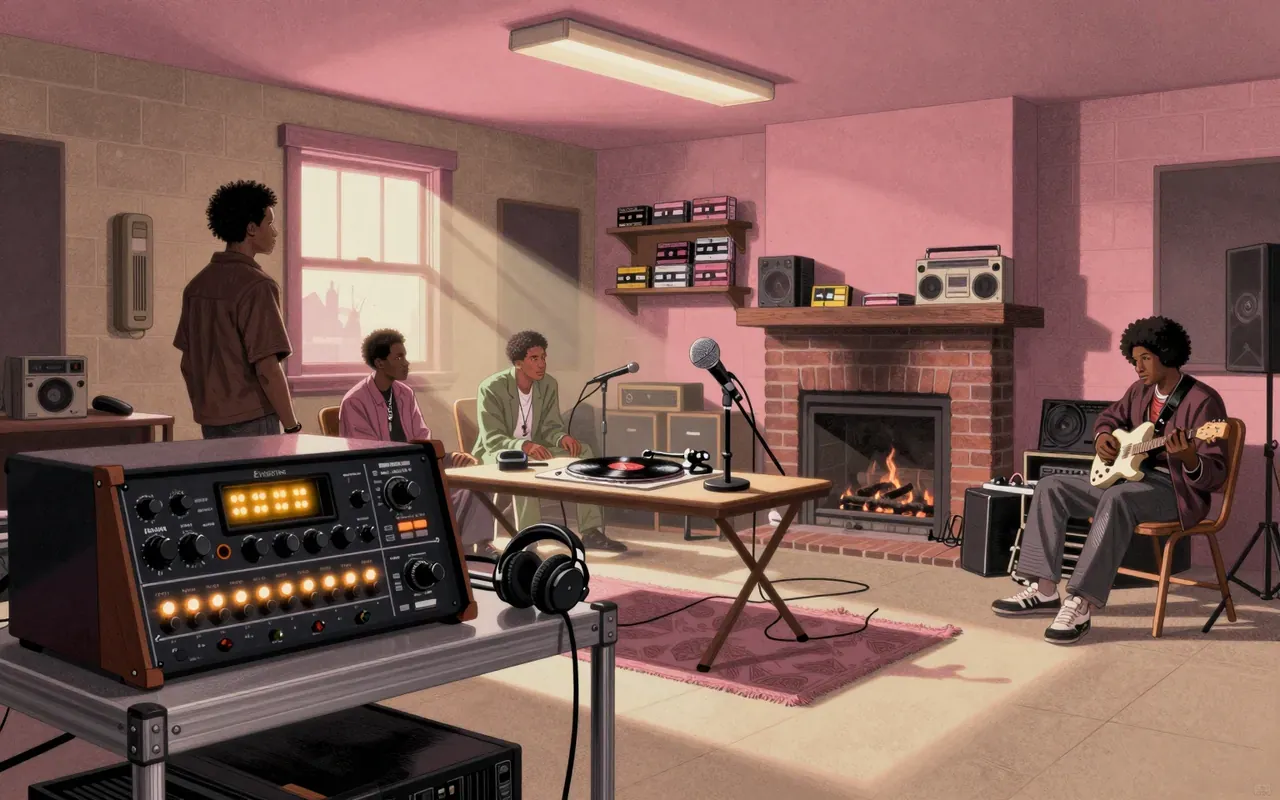
3 Feet High and Rising is De La Soul’s 1989 debut — a sample-heavy, psychedelic-influenced hip-hop record built with the Casio RZ-1 and Eventide Harmonizer. It introduced the 'D.A.I.S.Y. Age' concept ('Da Inner Sound, Y'all'), used quiz show skits to structure its flow, and drew from funk, soul, doo-wop, psychedelic rock, and children’s music. It was certified platinum, added to the Library of Congress National Recording Registry in 2010, and remained unavailable digitally until 2023 due to sample clearance issues.
AM is Arctic Monkeys’ fifth studio album, released 9 September 2013. It marks their first venture into a hip hop-influenced sound, achieved by recording bass and drums first, using unconventional drum setups, and incorporating new instruments including the Hohner Guitaret, celeste, and vintage drum machine. It was produced by James Ford and co-produced by Ross Orton at Sage & Sound Recording in Los Angeles and Rancho De La Luna in Joshua Tree, California. Thematically, it concerns frustration surrounding tainted romance, sex and loneliness. Guest appearances include Josh Homme, Pete Thomas, and Bill Ryder-Jones—with Homme’s contribution to 'Knee Socks' singled out by Alex Turner as his favourite moment on the record. Turner described the sound as 'like a Dr. Dre beat, but we've given it an Ike Turner bowl-cut and sent it galloping across the desert on a Stratocaster', and said 'Arabella' expresses the album’s two dominant styles—hip-hop beats and 1970s heavy rock—most effectively in one track.
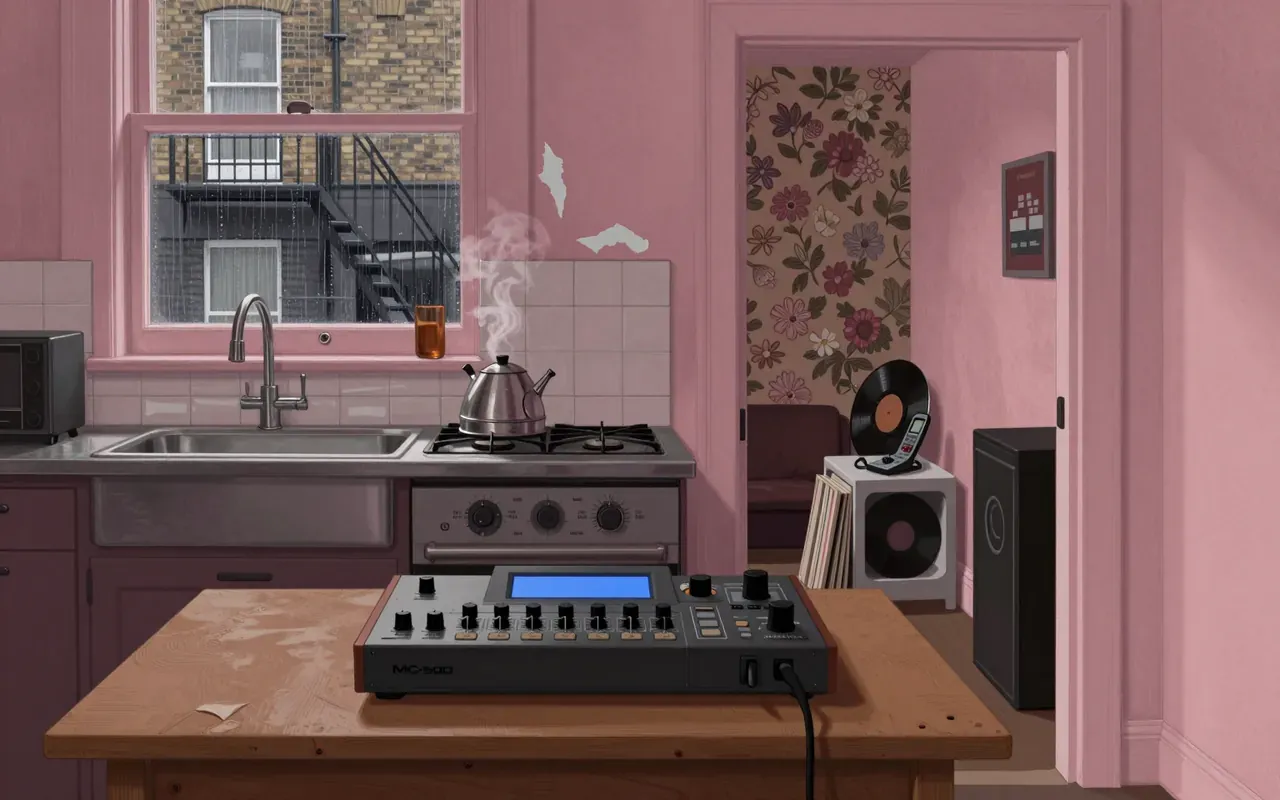
Arular is a debut shaped by constraint: one machine, one room, one voice. Its power lies in what it excludes — space, polish, convention — not what it adds.


The AE86 is a small, front-engine/rear-wheel-drive compact car derived from the fifth-generation Corolla (E80) range. It was the final Corolla model produced with rear-wheel drive. Its light weight, affordability, modifiability, and balanced front-engine/rear-drive layout made it distinctive amid an industry shift away from RWD. It featured a high-revving (7800 rpm) twin-cam engine in some markets, optionally elsewhere. It achieved early and enduring international prominence in drifting due to its inherent qualities. It was central to the manga and anime series Initial D (1995–2013) as the protagonist's drift and tofu delivery car. In 2015, Road & Track described it as 'a cult icon, inextricably interwoven with the earliest days of drifting.' It inspired the Toyota 86 (2012–present), a 2+2 sports car co-developed with Subaru.
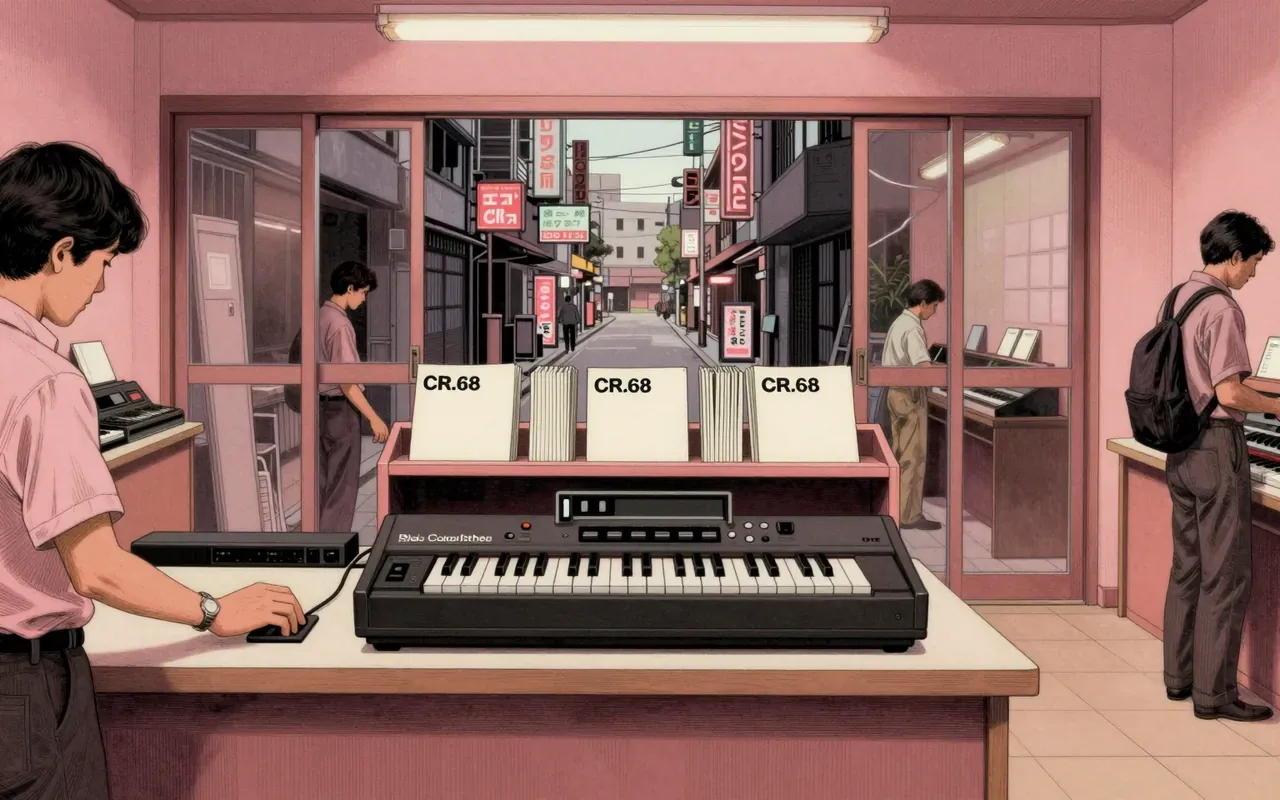
The Roland CR-68 is a non-programmable mono analog rhythm machine from the late 1970s. It shares the CR-78’s sound set and 54 preset rhythms but removes all user programming. Its controls — tempo, level, accent, balance — shape playback in real time. Fills trigger automatically or manually. It has no MIDI, no keyboard, no memory. Its sounds are now more often sampled than played live. Add N To (X) used it.
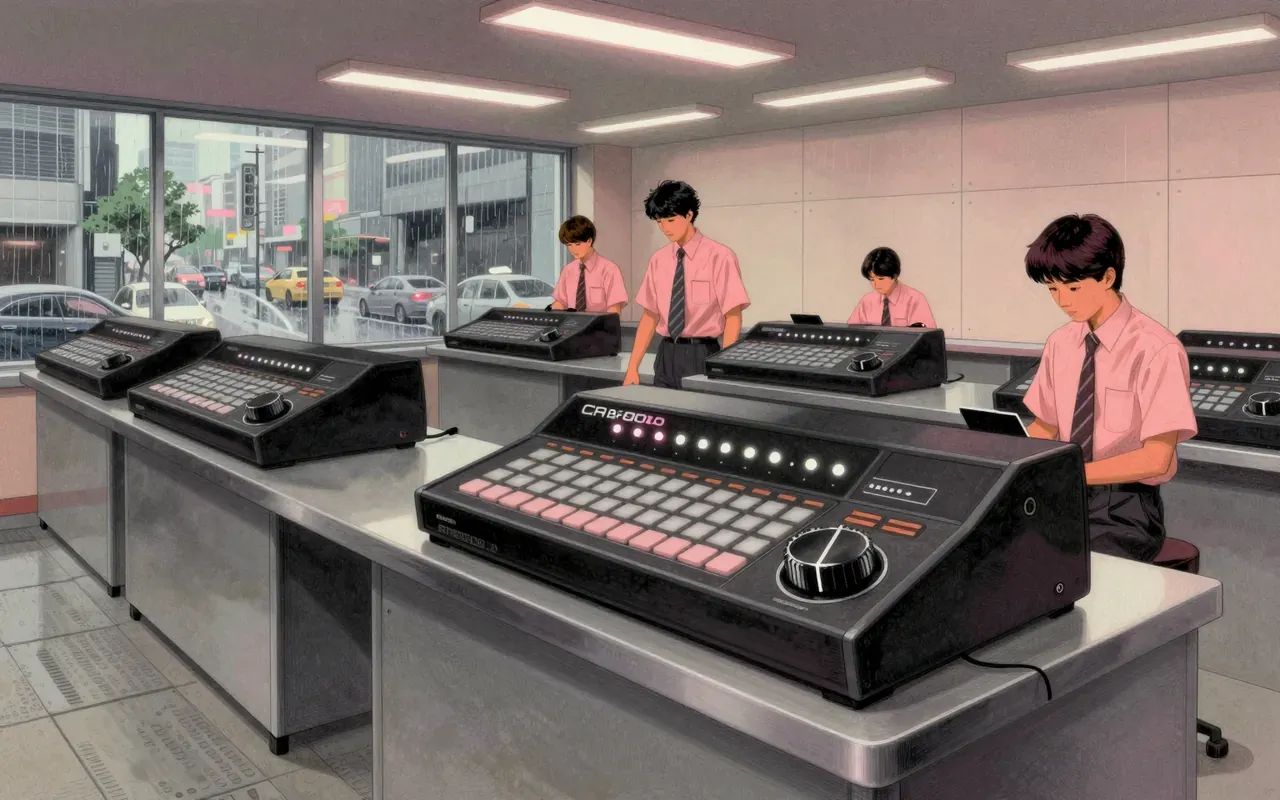
The Roland CR-8000 is a non-editable analog drum machine from 1980/81. It gives you 13 fixed drum sounds, one mono output, eight user-programmable patterns, and a unique groove knob that alters timing and timbre simultaneously — especially in the hi-hats. That groove cannot be sampled. Everything else is compromised: the sequencer is poorly programmed, the control panel fails under external use, and there are no built-in effects. Artists including Fluke, BT, Jimmy Edgar, and Blondie used it. It belongs in a collection, not a production chain.
The Yamaha AN200 is a 2001 compact table-top physical modelling analog synthesizer and sequencer built for live pattern-based dance production and quick sound sketching.
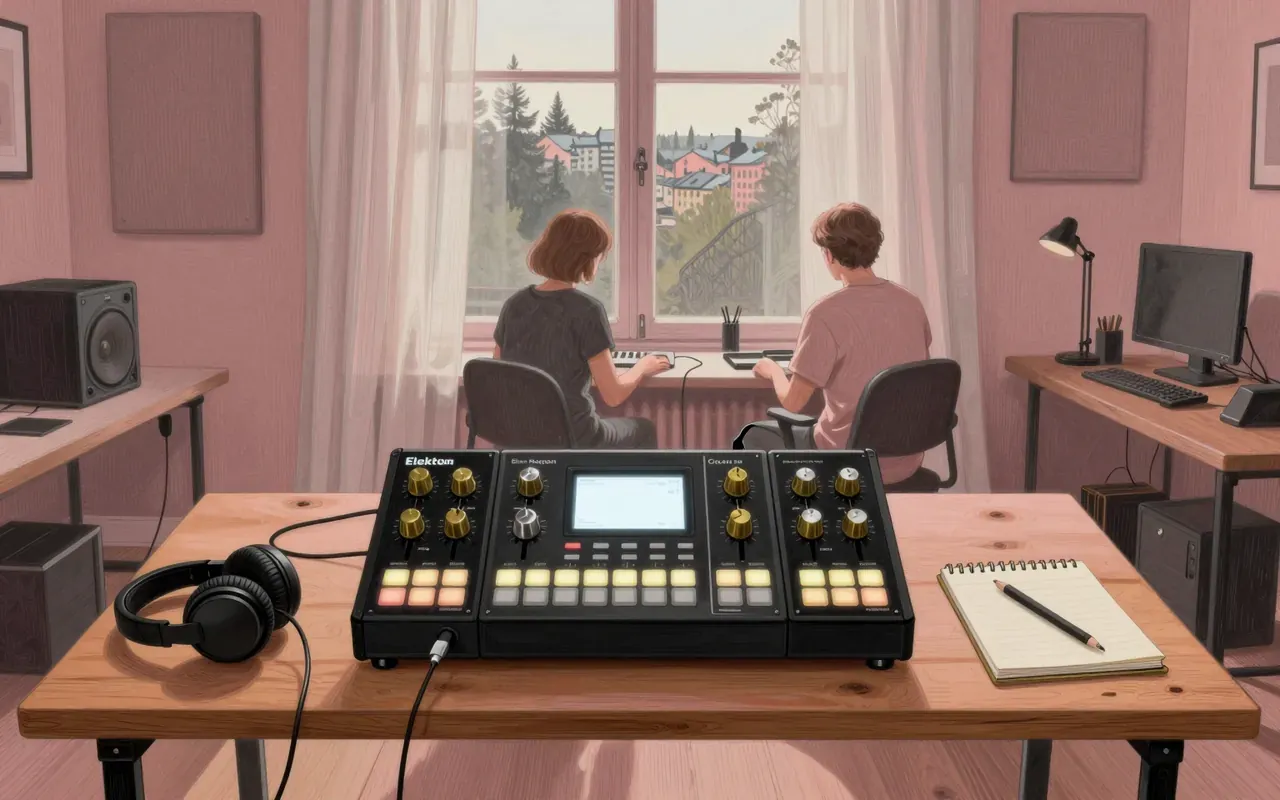
The Elektron Analog Four is a tabletop groove machine with four mono analog synth voices, each with two analog oscillators, a 1-pole analog lowpass ladder filter, and a 2-pole analog multi-mode filter. It includes a 6-track MIDI sequencer and two audio inputs and outputs—but no digital connections.
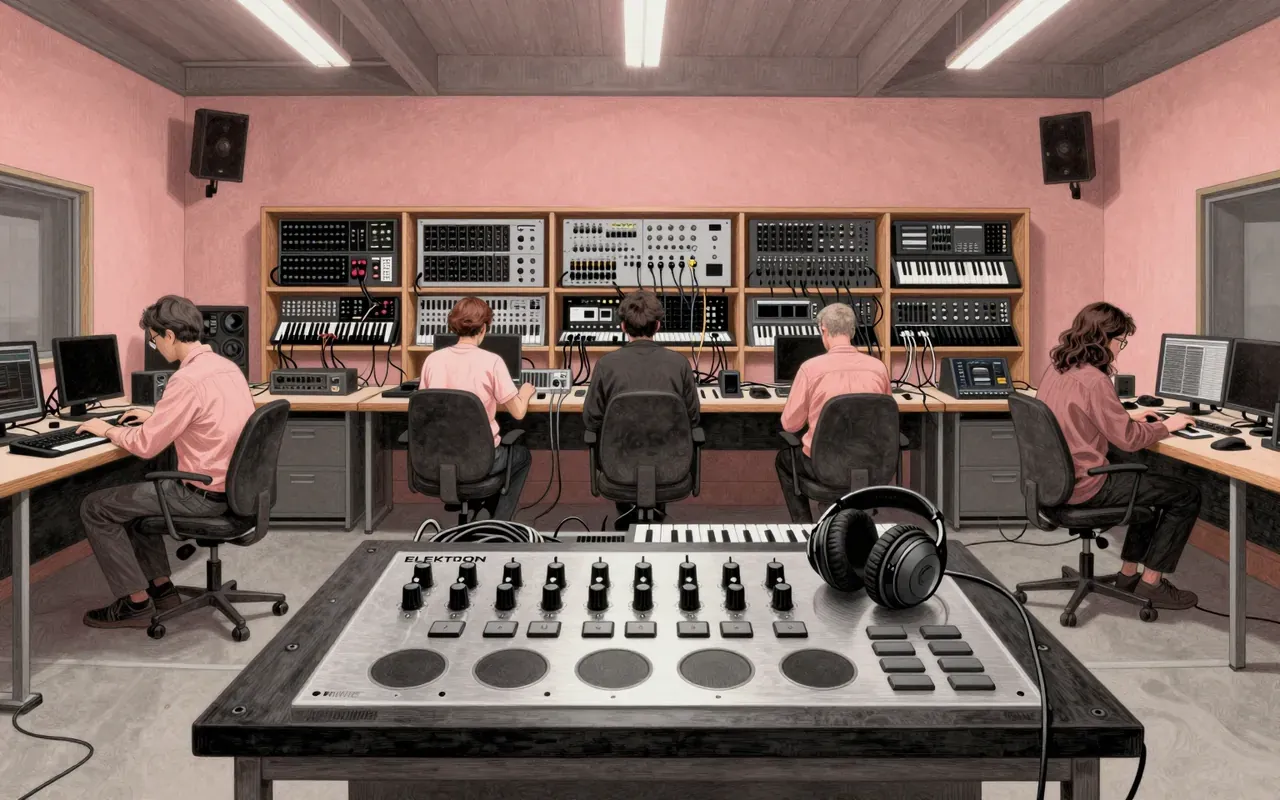
The Analog Rytm is a true analog drum synth. It gives each voice its own engine, up to six oscillators, and a 16-step sequencer. Its pads are velocity-sensitive but small. It enables radical timbral shifts across voices with minimal changes. It falls short on pad ergonomics, stereo per voice, and external audio input. It belongs in the studio of a sound designer—not a live beatmaker.
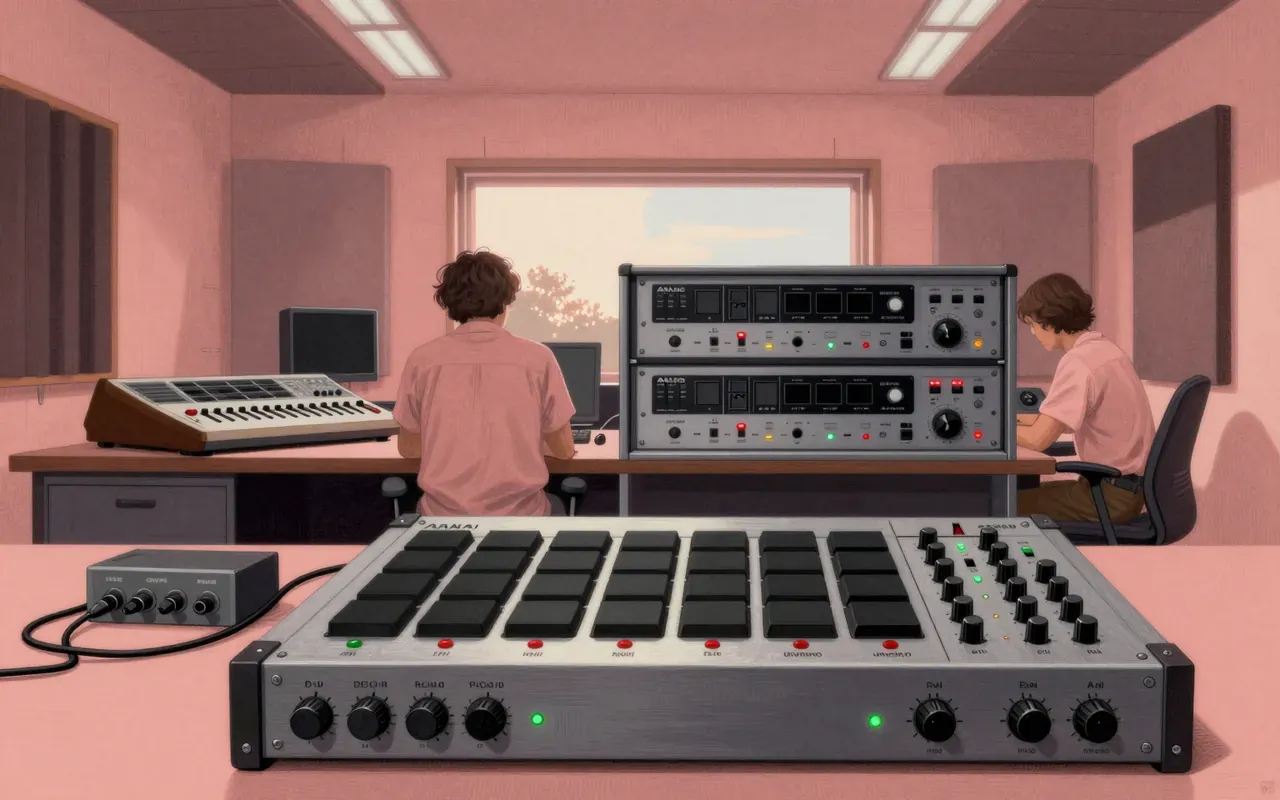
The ASQ-10 is a sequencer-only instrument. It has no sound generation. It does not sample. It exists solely to trigger, time, and lock external gear. Its design enables rhythmic complexity unplayable by hand — then corrects timing drift across the chain. It is the first MPC-shaped workflow, before the MPC existed.
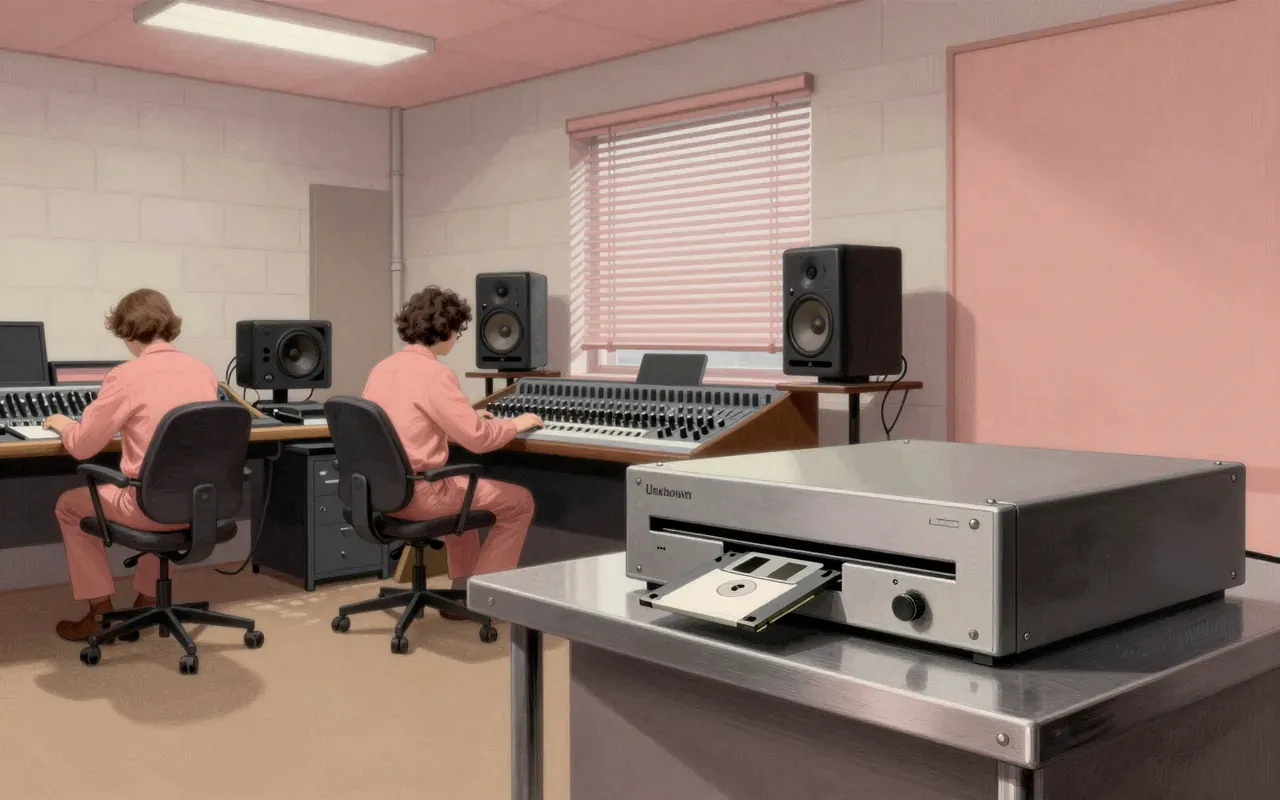
The Drumulator is a fixed-sample, floppy-driven drum machine built to undercut the Linn LM-1 — not match it. It gives you eight gritty 12-bit hits, real-time or step sequencing, and Apple II editing. It withholds sound editing, velocity, swing, and any expansion beyond its ROM.

The Yamaha DX200 is a 2001 desktop sequencer built for DJs and musicians who need FM synthesis and sample playback in one tight hardware unit. It runs a simplified 6-operator FM engine compatible with DX7 patches. It adds a real-time 16-step sequencer with four tracks, a resonant multi-mode filter — absent in all classic DX synths — and bundled software editing tools. It does not offer deep FM programming, internal effects, or flexible voice sharing between FM and AWM2 engines.