briefs
Topic · across the network

The eighties

Deregulation, synthesisers and the arrival of the modern consumer.

268
briefs
10
subjects
10:00
average
2682 min
in total
Abstraction 407Absurdism 137Acoustics 220Acting 65Adaptation 372Addiction 95Adolescence 202Advertising 77Age of exploration 14Ageing 113Agriculture 100Algorithms 114Ambition 46Anarchism 38Ancient Egypt 17Ancient Greece 38Ancient Rome 30Animals 172Anthropology 23Apartheid 12Architecture 165Archives 32Argentina 10Art Deco 26Artificial intelligence 78Astronomy 81Attention 42Australia 32Automation 73Avant-garde 164Aviation 79Banking 72Banned works 40Bauhaus 12Beer 5Behavioural economics 22Berlin 16Big tech 6Biodiversity 136Biography 86Birds 41Black holes 20Blockchain 12Boxing 14Branding 77Brazil 43Bread 29Britain 131Brutalism 4Bubbles 3Buddhism 28Byzantium 10California 17Canada 18Capitalism 94Cars 468Celebrity 59Censorship 110Cheese 24Chefs 9Chemistry 104Chess 2Childhood 87China 109Chocolate 8Christianity 49Cinematography 343Cities 90Class 485Climate change 107Club culture 100Cocktails 2Coffee 11Cognitive bias 14Collecting 16Colonialism 284Colour 42Comedy 89Community 52Complexity 21Computing 309Consciousness 16Conservatism 14Conspiracy theories 8Cooking 178Corruption 38Cosmology 31Cover versions 64Craft 116Crate digging 42Creativity 8Crime 234Cryptocurrency 8Cryptography 24Cuba 10Cybersecurity 30Dada 12Debt 38Decision-making 28Decolonisation 46Deep time 80Democracy 45Denim 16Deserts 45Detroit 17Dinosaurs 12Directing 168Disasters 59Disease 109DJ culture 89Dreams 32Drones 5Drum machines 96Dystopia 69East Africa 28Ecology 337Economics 36Editing 72Education 92Egypt 12Electric vehicles 59Emotion 22Empire 92Endurance 49Energy 120Engineering 541Entropy 8Epidemics 13Equality 9Espionage 31Ethics 44Evolution 174Existentialism 106Expertise 2Exploration 49Extinction 23Failure 37Family 240Fandom 22Fascism 45Fashion 215Fast fashion 12Fear 34Feminism 122Fermentation 126Film music 81Fishing 12Folklore 71Food history 588Football 16Forests 31Forgery 7France 163Fraud 15Free will 13Freedom 16French literature 15Friendship 24Furniture 36Gambling 14Gender 63Generations 28Genetics 87Geology 96Germany 66Globalisation 74Gothic 32Greece 5Grief 126Habits 6Happiness 2Hardware 709Haute couture 22Headphones 8Hi-fi 12Hinduism 12Hoaxes 1Human history 23Human nature 41Identity 138Illustration 8Impressionism 6Improvisation 249India 89Indonesia 15Industrial design 342Inequality 13Inflation 4Information 34Infrastructure 280Insects 29Intelligence 8Interiors 31Internet culture 88Invention 329Iran 41Islam 40Islands 17Israel 9Italy 52Jamaica 10Japan 114Jewellery 5Journalism 34Judaism 13Justice 42Korea 41Language 70Law 90Leadership 20Learning 6Liberalism 1Libraries 6Literary criticism 26London 12Loneliness 61Los Angeles 62Lost works 9Love 67Luxury 55Machine learning 15Management 10Maps 5Marketing 21Markets 51Mars 6Marxism 26Masculinity 46Materials 138Mathematics 79Meaning 6Medicine 124Memory 82Mental health 70Mesopotamia 4Mexico 38Migration 95Minimalism 68Mining 30Misinformation 9Modernism 63Money 24Monopoly 32Mortality 61Motivation 2Mountains 16Museums 27Mysticism 11Mythology 60Nationalism 40Neuroscience 23New York 36Nigeria 7Nihilism 10Noise 31Nostalgia 33Nuclear 29Nutrition 17Oceans 48Oil 42Open source 45Painting 18Palaeontology 29Parenting 14Paris 18Partition 6Patents 71Patronage 14Perception 44Personal style 27Personality 2Persuasion 8Peru 10Philosophy 77Photography 37Physics 206Plants 26Platforms 89Podcasting 1Poetry 25Poland 17Policing 34Pop Art 16Populism 2Portraiture 6Portugal 18Postmodernism 23Power 91Prehistory 24Preservation 28Printmaking 21Privacy 11Probability 6Productivity 1Programming 54Prohibition 1Propaganda 35Protest 75Pseudoscience 17Psychology 80Publishing 22Punishment 16Quantum mechanics 44Race 145Radio 30Railways 35Rave 17Realism 47Record labels 19Recording 810Relativity 23Religion 154Resilience 15Restaurants 30Restoration 2Retail 94Revolution 58Risk 18Ritual 96Robotics 26Romance 96Russia 58Salt 9Sampling 246Satire 84Scandinavia 28Scientific method 186Screenwriting 26Sculpture 7Secularism 2Self-deception 14Semiconductors 73Sexuality 102Ships 18Silence 24Silicon Valley 17Slavery 35Sleep 2Smartphones 27Sneakers 15Social media 58Socialism 9Software 68Songwriting 180Sound design 332Sound systems 20South Africa 19South East Asia 30Space exploration 84Spain 18Special effects 41Spices 62Spirits 12Sport 82Startups 21Statistics 10Status 9Stoicism 4Storytelling 68Strategy 70Street food 99Streetwear 16Studio craft 508Subcultures 59Sugar 12Supply chains 115Surrealism 53Surveillance 21Sustainability 30Synthesis 232Tailoring 37Taxation 14Tea 24Textiles 97Thailand 11The American Revolution 19The American South 88The Arab world 41The Arctic 19The Balkans 17The Belle Epoque 13The body 29The brain 26The Caribbean 28The civil rights movement 62The Cold War 160The eighties 268The Enlightenment 29The financial crisis 19The First World War 39The food industry 157The French Revolution 9The Gilded Age 9The Great Depression 18The Holocaust 20The Industrial Revolution 93The internet 61The interwar years 135The Middle Ages 35The Moon 4The music business 169The Netherlands 10The nineties 26The Olympics 10The pandemic 13The Reformation 1The Renaissance 16The Russian Revolution 19The Second World War 102The seventies 58The sixties 28The space race 5The United States 19The universe 7The Victorian era 37Therapy 20Tokyo 11Trade 48Tragedy 22Translation 5Trauma 85Travel 5True crime 2Turkey 18Typography 54Uniforms 23Unions 8Urban planning 66Utilitarianism 1Utopia 5Vaccines 10Vegetarianism 15Venture capital 6Video games 291Vietnam 12Vintage 65Vinyl 6Virtual reality 11War 169Watches 4Water 11Weather 29West Africa 29Wilderness 10Wine 3Work 22Workwear 19Worldbuilding 121

music.briefs Music

All 45 in music →
11:07

Dare

The Human League · 1981

Dare is a methodically engineered synth-pop record, built from Linn LM-1 patterns and charted arrangements at Genetic Sound Studios in Berkshire. It uses a defined suite of early-1980s instruments and rejects avant-garde electronics in favour of emotional calibration. Its success rests on procedural discipline — not inspiration, myth, or unverified context.

10:05

Macalla

Clannad · 1985

Macalla is Clannad’s 1985 eighth studio album, recorded across Switzerland, England, and Ireland. It features bilingual Irish-English material, including two fully Irish-language tracks and a notable duet with Bono. Producer Steve Nye oversaw key tracks such as 'Closer to Your Heart' and 'Almost Seems (Too Late to Turn)', both of which became hit singles. The album also includes the hit duet 'In a Lifetime' with Bono, opening with Máire teaching him Irish phrases.

9:16

1989

Taylor Swift · 2014

1989 is Taylor Swift’s fifth studio album, released October 27, 2014. It marks her deliberate transition from country to pop. She relocated from Nashville to New York City in March 2014 and titled the album after her birth year to signal artistic rebirth. Songwriting began in mid-2013 on the Red Tour and concluded after the tour ended in mid-2014.

12:46

Actually

Pet Shop Boys · 1987

Actually is a synth-pop record made in short, rotating sessions at Sarm and Advision Studios. It uses Fairlight programming instead of orchestras. Producers included Julian Mendelsohn, Stephen Hague, and Andy Richards. Lyrics reference Thatcherism, AIDS, and pop songs including 'Tainted Love'. 'King’s Cross' unintentionally foreshadowed the November 1987 fire. It was Pet Shop Boys’ second album, released in September 1987.

9:40

Appetite for Destruction

Guns N’ Roses · 1987

Appetite for Destruction is a controlled detonation—not a spark. Every element was tested, rejected, rebuilt. Its power lies in its precision, not its chaos.

10:25

Avalon

Roxy Music · 1982

Avalon is Roxy Music’s final studio album, recorded between 1981 and 1982 across three studios. It marks a decisive turn toward atmospheric, synth-laden minimalism—built on Linn LM-1 drum machine foundations, shaped at Compass Point, and polished at Power Station. Its success was commercial and critical: UK No. 1, Platinum in the US and Canada, and widely praised for its production. Yanick Étienne’s improvised vocal coda on the title track remains its most haunting sonic signature.

11:22

Bad

Michael Jackson · 1987

Bad is Michael Jackson’s seventh studio album, released 31 August 1987. It was his final collaboration with Quincy Jones. Jackson composed and co-produced all but two tracks. The album used digital synthesizers—including FM synthesis, the Fairlight CMI, and the Synclavier PSMT—layered to create new sounds. It incorporated guitars, organs, drums, bass, percussion, saxophones, washboards, and digital guitars. Recording occurred across two workflows: Jackson’s 'B team' developed demos at his Hayvenhurst home studio from 1985–1986; the 'A team' (Jones and engineer Bruce Swedien) completed tracks at Westlake Studios. Sessions were extremely intense, with the team often working for days without rest. Bad was the first album to produce five US Billboard Hot 100 number-one singles: 'I Just Can't Stop Loving You', 'Bad', 'The Way You Make Me Feel', 'Man in the Mirror', and 'Dirty Diana'. 'Smooth Criminal' reached number seven. The album debuted at number one on the Billboard 200 and remained there for six weeks.

10:55

Brothers in Arms

Dire Straits · 1985

A digitally recorded rock album made in two phases: initial tracking at AIR Studios in Montserrat between 2 November and 21 December 1984, followed by overdubs at Power Station in New York in February 1985. Produced by Mark Knopfler and Neil Dorfsman, it features deliberate spatial arrangement of instruments in a small, acoustically limited room whose sonic character derived from its Neve 8078 desk; was among the first major rock albums recorded digitally on a Sony 24-track machine; suffered loss of material due to defective tape; and underwent key personnel changes—including Hal Lindes’ departure, Terry Williams’ suspension and replacement by Omar Hakim, and Guy Fletcher joining full-time as second keyboardist.

film.briefs Film

All 38 in film →
13:00

After Hours

Martin Scorsese · 1985

Martin Scorsese’s 1985 black comedy follows office worker Paul Hackett through a single, increasingly surreal night in SoHo. Stranded without money, misunderstood at every turn, and hunted by neighbours, he careens from one absurd crisis to the next — until the plaster hardens, the van doors fly open, and he crashes, barefoot and broken, into his office at dawn. Michael Ballhaus’s tight cinematography, Thelma Schoonmaker’s razor-sharp editing, and Howard Shore’s nervy score sustain a tone of escalating, inescapable farce.

13:00

All of Us Strangers

Andrew Haigh · 2023

Andrew Haigh’s All of Us Strangers follows a lonely screenwriter who reconnects with his deceased parents and begins a relationship with a mysterious neighbour. Set in contemporary London and rooted in the emotional textures of 1980s Britain, the film uses fantasy not as escape but as a means to examine unresolved grief, queer identity, and the quiet violence of familial silence. With restrained performances, precise cinematography, and a carefully curated soundtrack, it builds its power through stillness and repetition rather than revelation.

13:00

And the Pursuit of Happiness

Louis Malle · 1986

And the Pursuit of Happiness (1986) is a television documentary directed by Louis Malle for HBO’s America Undercover series. Shot in the mid-1980s, it profiles six immigrants — including General José R. Somoza, poet Derek Walcott, and physicist Franklin Chang-Díaz — as they navigate work, language, and belonging in the United States. Narrated by Malle, the film avoids commentary or advocacy, favouring sustained observation and unvarnished interview. Released on Independence Day 1986, it screened at Cannes in 1987 and won a Peabody Award in 1989.
13:00

Ariel

Aki Kaurismäki · 1988

Aki Kaurismäki’s 1988 drama follows a displaced Finnish miner, Taisto Kasurinen, as he drifts from Lapland to Helsinki, surviving eviction, robbery, imprisonment, and finally a bank heist — all with deadpan reserve and minimal dialogue. Shot by Timo Salminen in muted tones and edited with deliberate stillness, the film treats economic abandonment as atmosphere rather than crisis, and resilience as routine rather than triumph.

13:00

As Tears Go By

Wong Kar-wai · 1988

Wong Kar-wai’s 1988 debut follows Wah, a Mong Kok triad enforcer, as he tries to manage his volatile friend Fly while growing close to his cousin Ngor, who visits from Lantau Island. Shot in naturalistic tones by Andrew Lau and edited with deliberate slowness by William Chang, the film grounds crime-drama tropes in quiet consequence rather than spectacle. Its power lies in restraint: in Andy Lau’s muted performance, Maggie Cheung’s understated presence, and the unforced contrast between urban claustrophobia and island stillness. Though structurally uneven in its second half, it establishes Wong’s enduring concerns — time, loyalty, and the geography of longing.

13:00

Border Radio

Allison Anders · 1987

Border Radio is a low-budget 1987 American road movie directed by Allison Anders, documenting the fraying edges of West Coast punk and cowpunk culture. Following unpaid musicians who rob a club and flee toward Mexico, the film prioritises texture over plot, using non-professional performers and diegetic music to evoke a specific time and place — not as nostalgia, but as lived, unvarnished reality.

13:00

Boy Meets Girl

Leos Carax · 1984

Leos Carax’s 1984 debut is a black-and-white French drama following Alex, a jaded aspiring filmmaker, and Mireille, a woman teetering on self-erasure, as their paths intersect in a heat-struck Paris. Built on eavesdropping, misdirection, and withheld emotion, it privileges texture over trajectory—using tight framing, sparse sound, and restrained performances to evoke post-adolescent stasis. Though structurally reliant on coincidence and stylistically indebted to the French New Wave, its emotional precision and formal control mark an unmistakable arrival.

13:00

Broadcast News

James L. Brooks · 1987

Broadcast News (1987), written and directed by James L. Brooks, follows a Washington, D.C. television news producer torn between a brilliant but socially inept reporter and a telegenic but intellectually shallow anchor. Set against the shifting ethics of 1980s network news, it uses workplace realism, precise performances, and understated craft to explore ambition, integrity, and the quiet costs of professional excellence.

design.briefs Design

All 1 in design →

games.briefs Games

All 8 in games →
9:14

Shinobi (1987 video game)

Sega · 1987

Shinobi (1987) is a Sega arcade game where Joe Musashi fights Zeed across timed stages using shurikens, melee, and one-per-stage ninjutsu techniques. Movement is precise. Death is absolute. Progression is hostage-driven. It is not about lore, scale, or stamina — it is about reading space, committing to motion, and choosing when to spend your one irreplaceable power.

10:02

Golden Axe (video game)

Sega · 1989

Golden Axe is a 1989 arcade beat 'em up where players choose one of three warriors to fight through fixed screens of enemies in Yuria, using melee attacks and elemental spells that consume a finite magic resource — refilled only by kicking a blue thief — while health is restored by food dropped by a green thief. Sega announced plans to revive the dormant franchise in 2023.

10:08

13 Sentinels: Aegis Rim

Vanillaware · 2019

13 Sentinels: Aegis Rim is a science fiction-themed PS4 game set in the 1980s, combining mecha with a shōjo manga aesthetic. It is a genre-mixing narrative engine built around three interlocking modes—Remembrance, Destruction, and Analysis—and structured by persistent keywords, timeline-jumping, and daily rewinds.

9:18

Galaga '88

Namco · 1988

A fixed shooter where formation, capture, and rescue define every session.

8:33

Gyruss

Konami · 1988

Gyruss is a Konami shoot 'em up arcade game from 1988. It uses one-point perspective with a central vanishing point. The player’s ship orbits the screen’s perimeter. Enemies are spaceships that must be destroyed to complete levels.

10:38

Jet Set Willy

Software Projects · 1984

Jet Set Willy is a flip-screen platformer where Miner Willy cleans his mansion after a party, navigating 60 rooms to collect glowing items. It abandons linear progression for open exploration, uses only left/right/jump controls, and punishes errors with room-reset deaths that cascade. Its design prioritises memory and timing over fairness or recovery.

9:27

The Last Ninja

System 3 · 1987

The Last Ninja is a precise, path-constrained isometric action-adventure that forces players to learn terrain, timing, and ritualised interaction. It works because its systems interlock cleanly—but it refuses flexibility, improvisation, or narrative expansion.

technology.briefs Technology

All 4 in technology →
10:33

Atari ST

The Atari ST didn’t invent the GUI—it weaponised scarcity.
10:53

Amiga 500

Commodore · 1987

The Amiga 500 is a pivotal hardware milestone—not because it introduced new silicon, but because it delivered proven multitasking and colour graphics to mainstream retail at a time when competitors treated those features as optional or impossible in home systems. Its success relied on reuse, repackaging, and distribution—not invention.

10:29

Sega Genesis

Sega · 1988

The Sega Genesis is a 16-bit fourth-generation home video game console adapted from Sega's System 16 arcade board, using a Motorola 68000 CPU and Zilog Z80 sound controller, released in Japan in October 1988 and North America in August 1989, playing over 800 ROM cartridge games, supporting add-ons like the Power Base Converter for Master System compatibility, and backed by two network services: Sega Meganet and Sega Channel.

culture.briefs Culture

All 2 in culture →
9:00

Bad for Good

Steinman’s only solo album proves he wrote for Meat Loaf’s voice—not his own.
9:22

Rivethead

Rivethead isn’t industrial music’s heir—it’s its imposter cousin who wore the uniform better.

automotive.briefs Automotive

All 30 in automotive →
9:57

Nissan 300ZX Z32

Toshio Yamashita · 1989

The Z32 is the second-generation Nissan 300ZX, sold in Japan as the Fairlady Z from 1989 to 2000 and in the US from 1990 to 1996. Isao Sono and Toshio Yamashita designed it, with a 3.0 L V6 offered naturally aspirated or with twin turbochargers, and Nissan drove it up-market, faster, more advanced and dearer than the Z31 it replaced. Car and Driver named it to its Ten Best list seven years running.

9:59

Nissan Silvia S13

Nissan Design · 1988

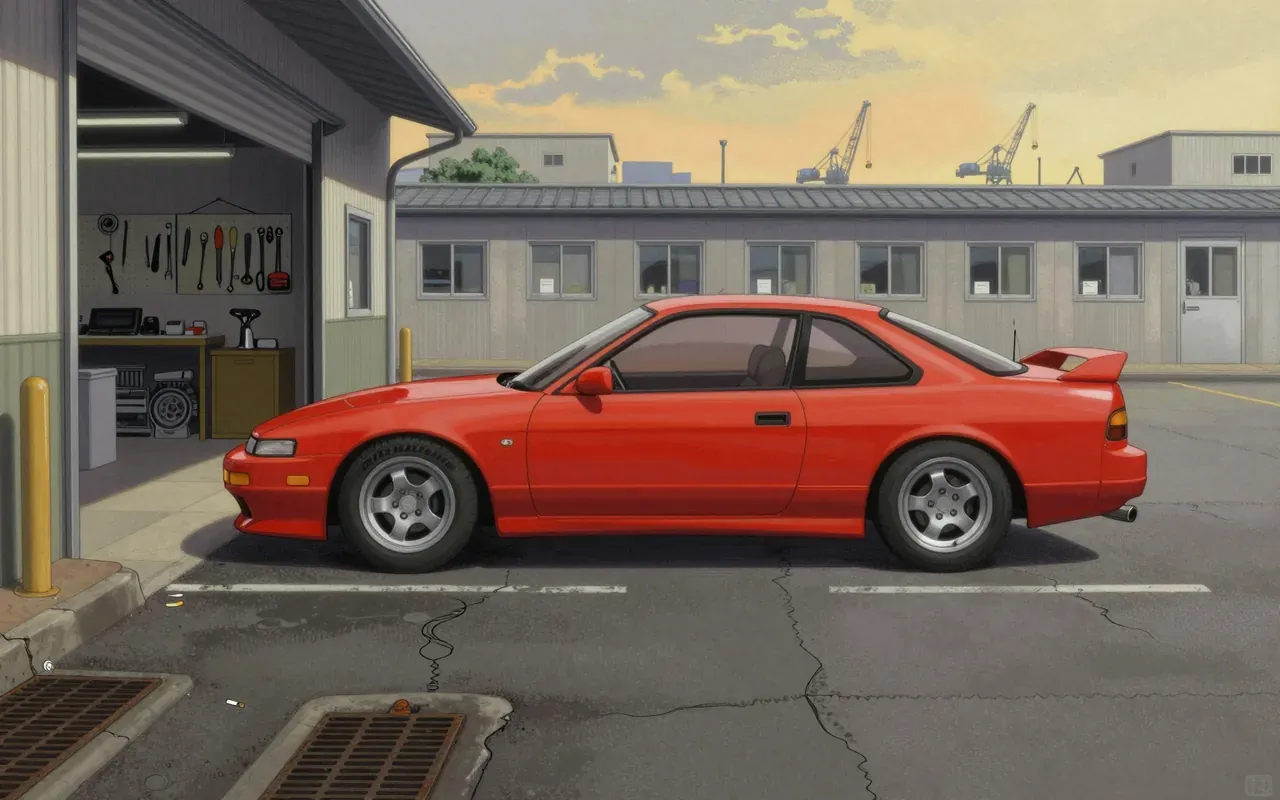
The S13 Silvia went on sale in Japan in May 1988 and won the Car of the Year Japan award in its first year. It paired a multi-link rear suspension with the HICAS four-wheel steering system, moved from the CA18 turbo four to the SR20 in 1991, and was built as a coupé until 1993. Its hatchback sister, the 180SX, carried the platform abroad as the 200SX and 240SX.

9:14

Renault Alpine GTA/A610

Heuliez · 1984

The Renault Alpine GTA is a rear-engined sports coupé launched in 1985 by Alpine under full Renault ownership. It replaced the A310, sharing its layout and V6 PRV engine. Marketed as the Alpine V6 GT or V6 Turbo in Europe—and as the Renault GTA in Britain—it featured aerodynamic design (Cx 0.28–0.30), lightweight composite body panels, and a steel backbone chassis. Production spanned 1984–1995, totalling ~7,300 units across both GTA and A610 models.

9:11

Chevrolet Corvette (C4)

Jerry Palmer · 1984

The C4 redefined the Corvette as a structurally coherent, driver-focused machine—not through power, but through chassis discipline. Its legacy rests on endurance records, not lap times. Its sole 1983 survivor is a museum artifact, not a driver’s car. It is the first Corvette that feels engineered, not assembled.

9:24

DeLorean DMC-12

Giorgetto Giugiaro · 1981

The DMC DeLorean is a rear-engine, two-seat sports car designed by Giorgetto Giugiaro and produced by the DeLorean Motor Company from 1981 to 1983. It features gull-wing doors, unpainted brushed stainless-steel body panels, and a 2.85 L PRV V6 engine shared with Peugeot, Renault, and Volvo. Approximately 9,000 units were built before the company’s bankruptcy. Though criticized for modest performance and build quality, it gained iconic status through the Back to the Future films.

8:38

Ferrari 288 GTO

Leonardo Fioravanti · 1984

The Ferrari 288 GTO is a homologation-special berlinetta, developed from the 308 GTB between 1984 and 1987 in Maranello. Its name stands for Gran Turismo Omologata. It was built to satisfy FIA Group B requirements.

9:07

Italdesign Aztec

Giorgetto Giugiaro · 1988

The Italdesign Aztec is a 1988 concept car built to mark Italdesign’s 20th anniversary. It features driver-passenger separation enforced by physical barriers and electronic communication. Its speedster body uses removable gull-wing visor sections. A turbocharged Audi engine and Lancia Delta HF Integrale–derived four-wheel-drive system power it. Compact srl licensed it for Japan; Carrozzeria Savio built 18 units. It was never a production car — it was a demonstration of interface-first automotive thinking.

9:21

Lancia Delta HF

Giorgetto Giugiaro · 1985

The Lancia Delta HF is a Group A rally car built by Lancia for Martini Lancia to compete in the World Rally Championship from 1987 to 1993. Based on the Lancia Delta road car and replacing the Delta S4, it featured a front-mounted two-litre turbocharged engine and four-wheel-drive. It evolved through four versions and achieved extraordinary success: 46 WRC victories and six consecutive manufacturers’ titles (1987–1992), the most in WRC history.

audio.briefs Audio

All 126 in audio →
10:14

Emulator II

E-mu Systems

The Emulator II, released in 1984, was E-mu's second sampler. It stayed an eight-bit machine but improved fidelity with companding converters and a 27.7 kHz sample rate, and it added resonant analog filters, more flexible editing and far better real-time control. At about $8,000 it was priced like the original, and far below a Fairlight.

7:59

S950

Akai · 1988

The Akai S950 is an expanded version of the S900 sampler, released in 1988 alongside the higher-end S1000. It took over some of the S1000's improvements, including time-stretching, and raised the maximum sample rate to 48 kHz. Like the rest of the S900 series, it can loop a sample alternating forwards and backwards, which the S1000 series cannot. Akai has discontinued it.

8:18

Ibanez Artist AR300

Ibanez

The Ibanez AR300 is a 1981 Japanese-made, violin-shaped electric guitar with a glued-in neck, two humbuckers, 22 frets, and four dedicated controls. It weighs like a vintage Les Paul and plays with warmth and authority in blues and jazz—but resists speed, modern ergonomics, and tonal neutrality.

8:00

Boss BF-2 Flanger

Boss

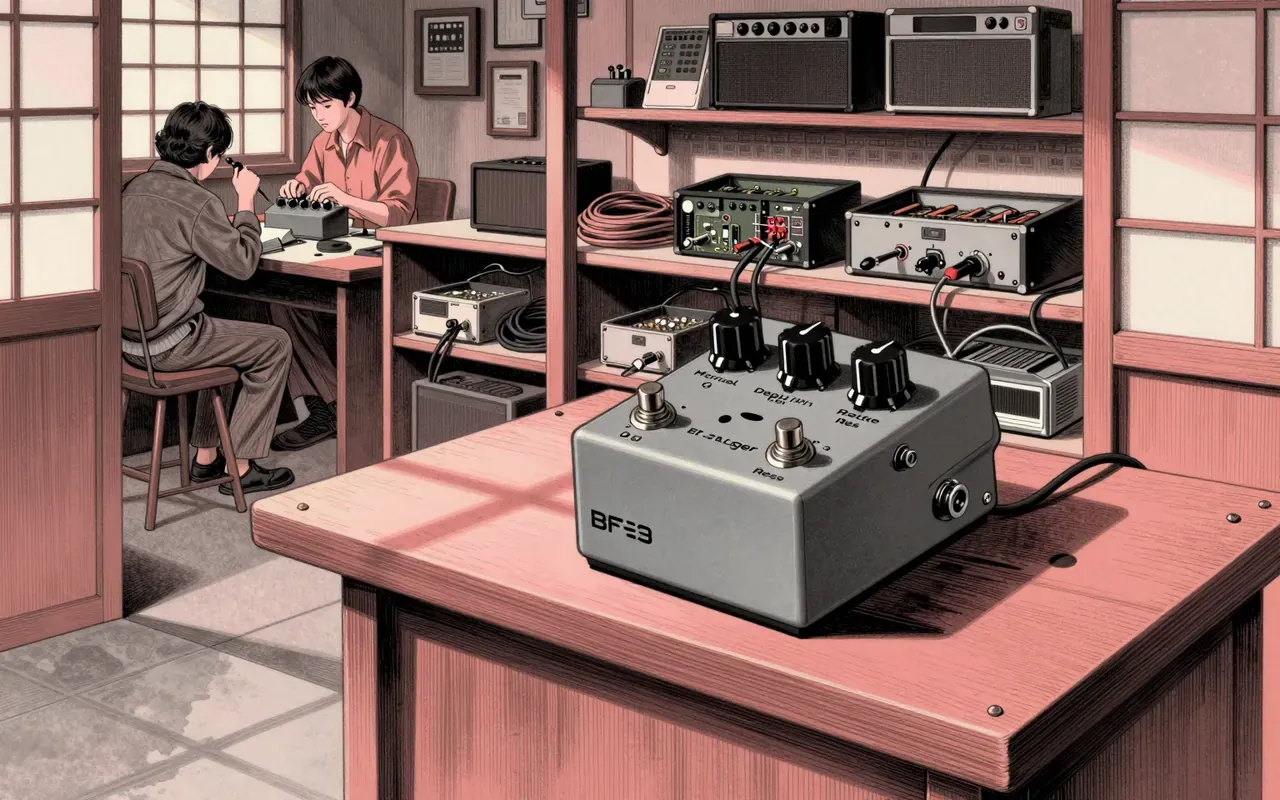
The Boss BF-2 Flanger is an analog stomp-box flanger pedal sold from June 1980 to December 2001. It has 1/4-inch inputs and outputs, four controls (Manual, Depth, Rate, Res), and runs on 9V battery or AC adapter. It is not rackable. It was succeeded by the digital BF-3.

8:11

Boss CE-2 Chorus

Boss

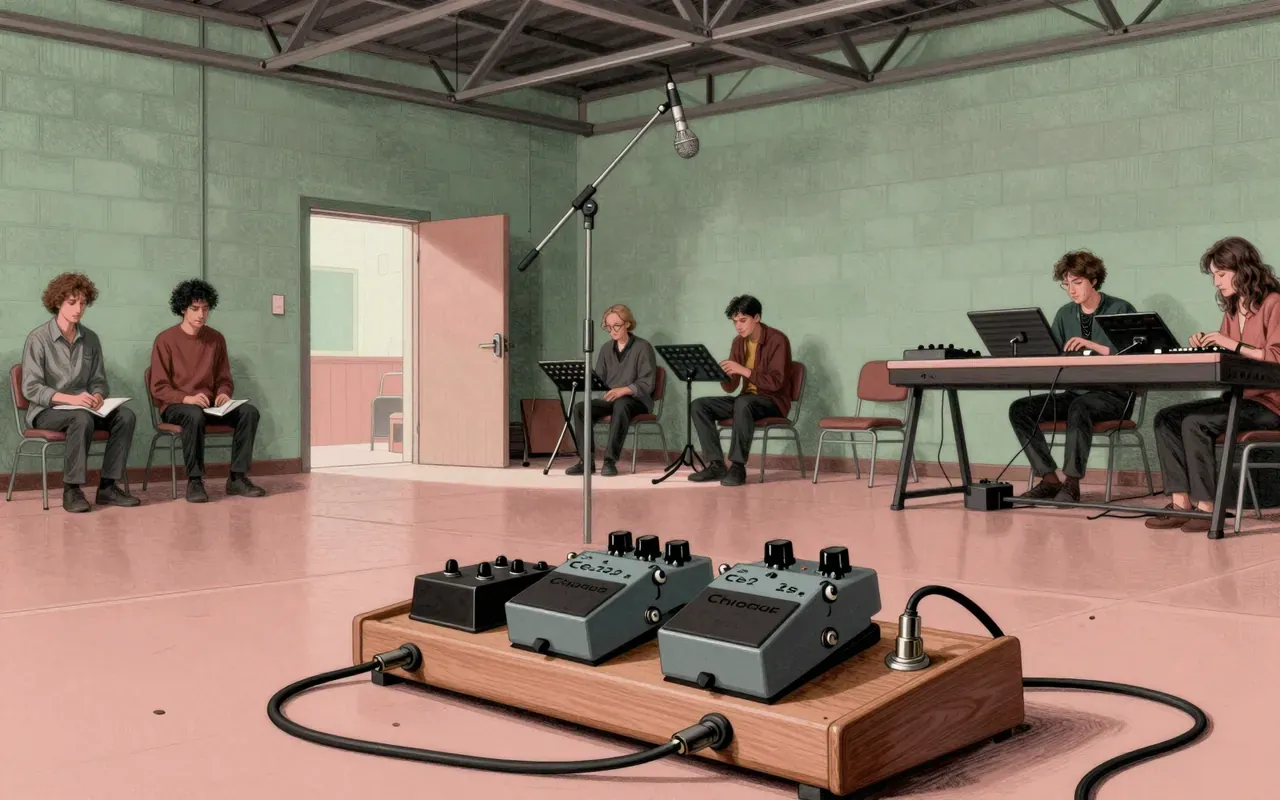
The Boss CE-2 Chorus is an all-analog stomp box introduced in the early 1980s. It has two controls: Rate and Depth. It was Boss’s first compact chorus pedal and the first they housed in a stomp box. Production ended in 1990. It runs on 9V battery or transformer. It was made in Japan.

9:33

Boss CE-3 Chorus

Boss

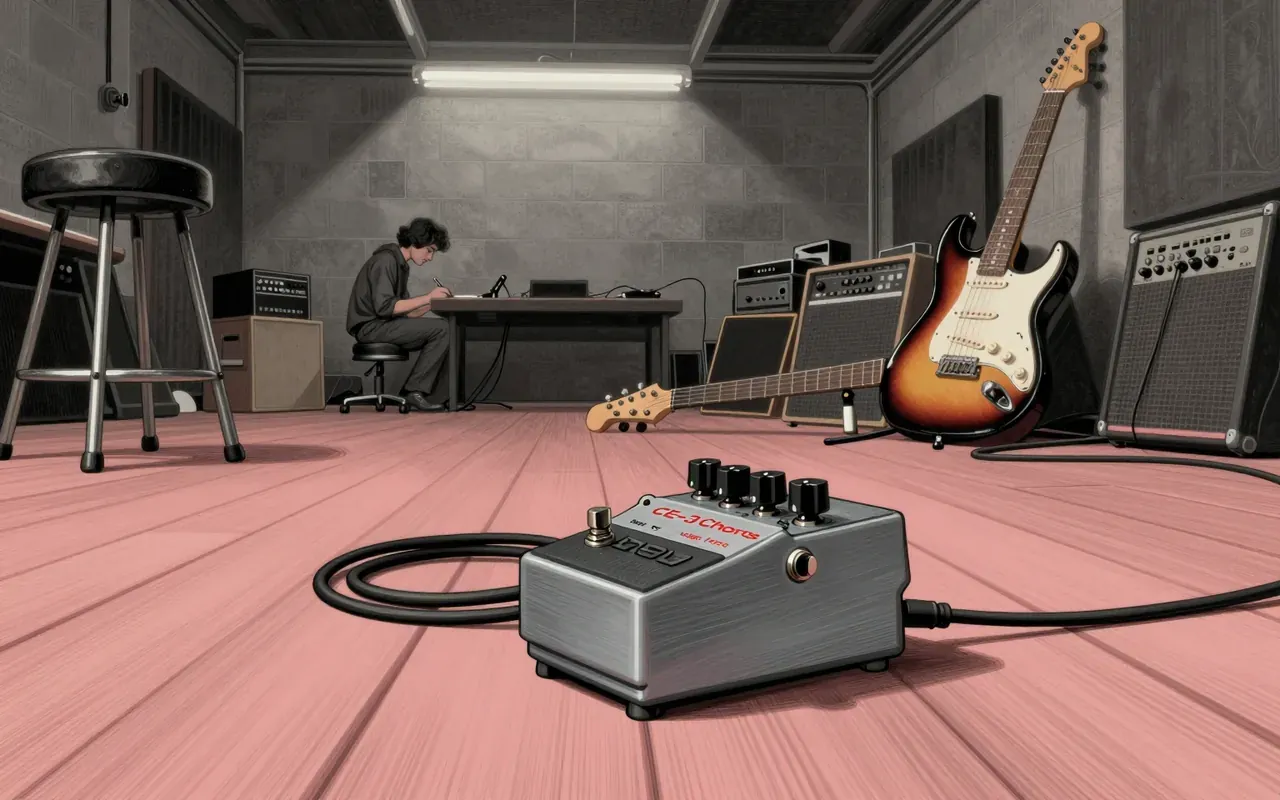
The Boss CE-3 Chorus is an analog guitar pedal built for stereo routing. It has no mix or level control. Its sound matches the CE-2 exactly — lush, hazy, shimmering — but its dual outputs enable wet/dry or true stereo setups. It is useful only where those outputs matter.

9:06

Boss DC-2 Dimension C

Boss

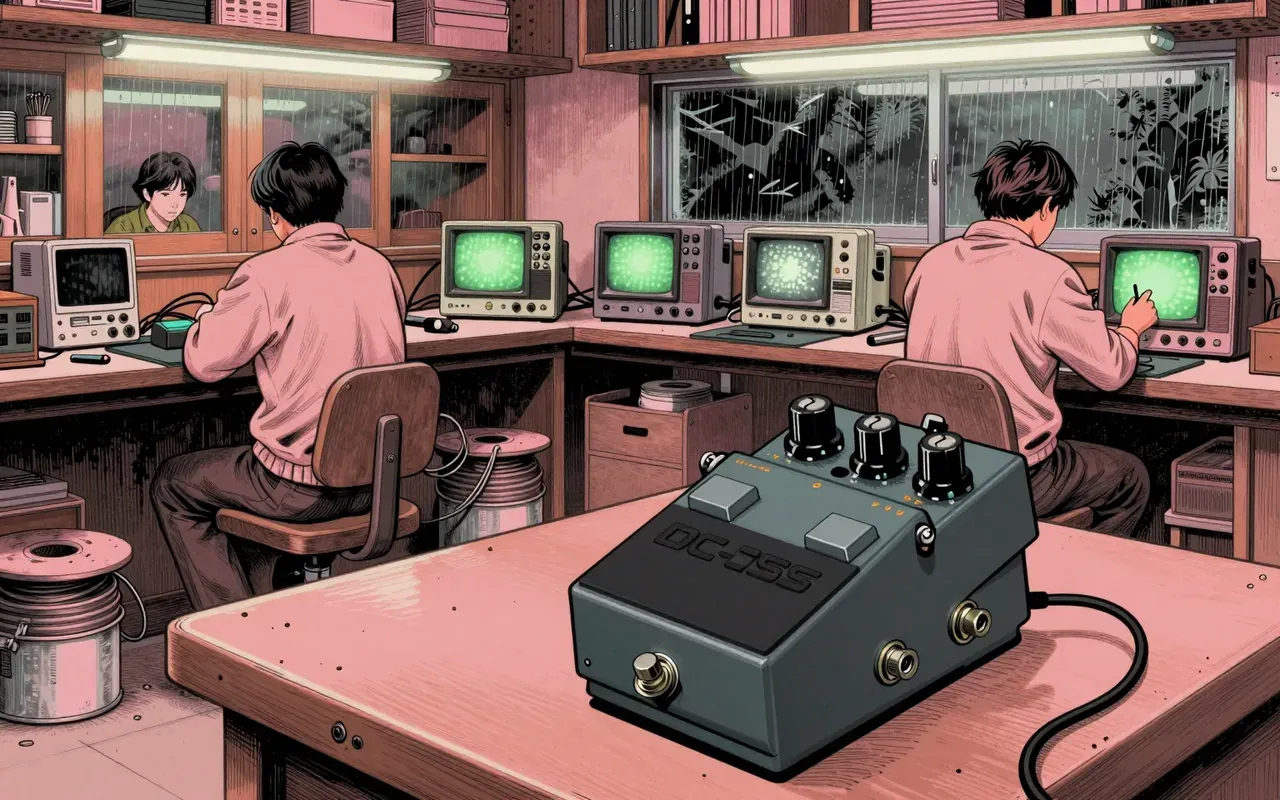
The Boss DC-2 Dimension C is a fixed-preset stereo analog chorus pedal made from 1985 to 1989. It offers five distinct chorus tones — one automatic, four selected by buttons — with no user controls. It reproduces the Roland SDD-320 Dimension D’s spatial effect: thickness, depth and width for a 3D sound. Stereo outputs widen the effect. Built-in noise reduction lowers hiss. It cannot be adjusted mid-performance. It belongs in a rig where consistency matters more than flexibility.

7:59

Boss DM-2 Delay

Boss

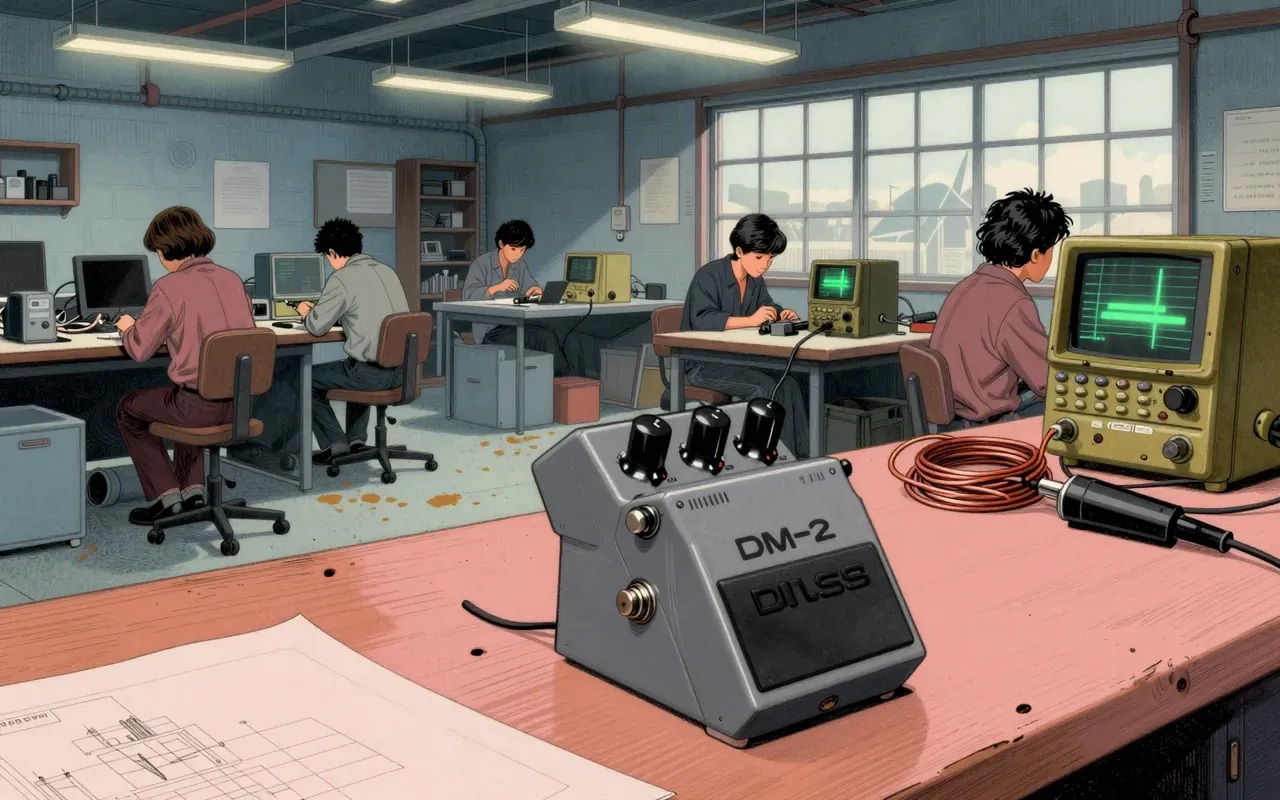
The Boss DM-2 is a Japanese-made analog delay pedal released in 1981. It delivers warm, tone-enhancing repeats from 20ms to 300ms using three knobs: Repeat Rate, Echo, and Intensity. It has no MIDI, no computer control, and is not rackable. It was built for guitar and other electronic instruments. It thickens tone rather than cutting with precision.

food.briefs Food

All 1 in food →
1:01

Crème brûlée

A baked custard of egg yolks and milk, topped with a crisp, caramelized sugar crust.

fashion.briefs Fashion

All 13 in fashion →
8:02

Adidas Campus

A wider, quieter, plainer alternative to the Samba—designed for feet, not footnotes.
10:05

Hysteric Glamour

A Tokyo label that weaponised Western counterculture—and never let the clothes catch up to the graphics.
9:08

Antwerp Six

They were never a movement—just six designers, one van, and a press corps that couldn’t say their names.