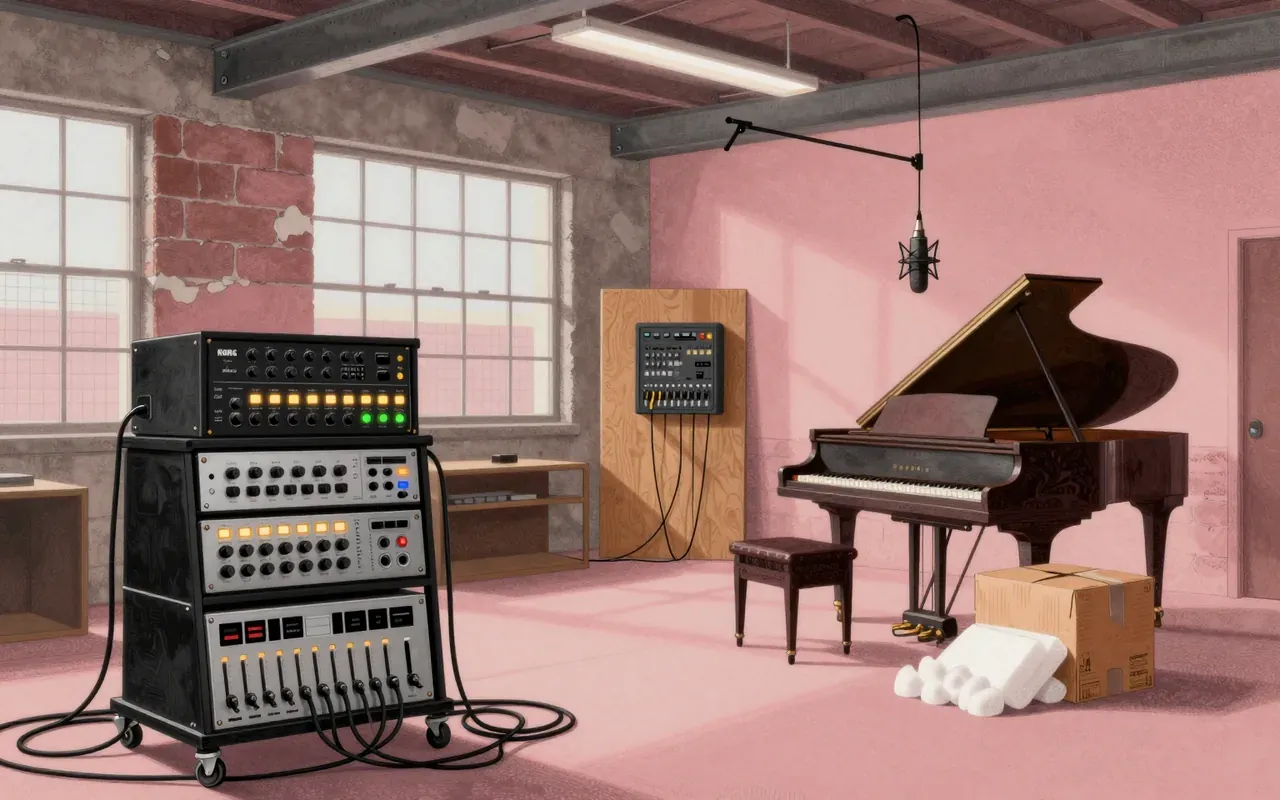
The Soft Bulletin
The Flaming Lips · 1999
The Soft Bulletin is a studio-built symphony of rock and synthesis — no strings, no hedging, no filler. It trades psychedelic chaos for meticulous, emotionally charged construction.
Sound built rather than captured.
The Soft Bulletin is a studio-built symphony of rock and synthesis — no strings, no hedging, no filler. It trades psychedelic chaos for meticulous, emotionally charged construction.

1989 is Taylor Swift’s fifth studio album, released October 27, 2014. It marks her deliberate transition from country to pop. She relocated from Nashville to New York City in March 2014 and titled the album after her birth year to signal artistic rebirth. Songwriting began in mid-2013 on the Red Tour and concluded after the tour ended in mid-2014.
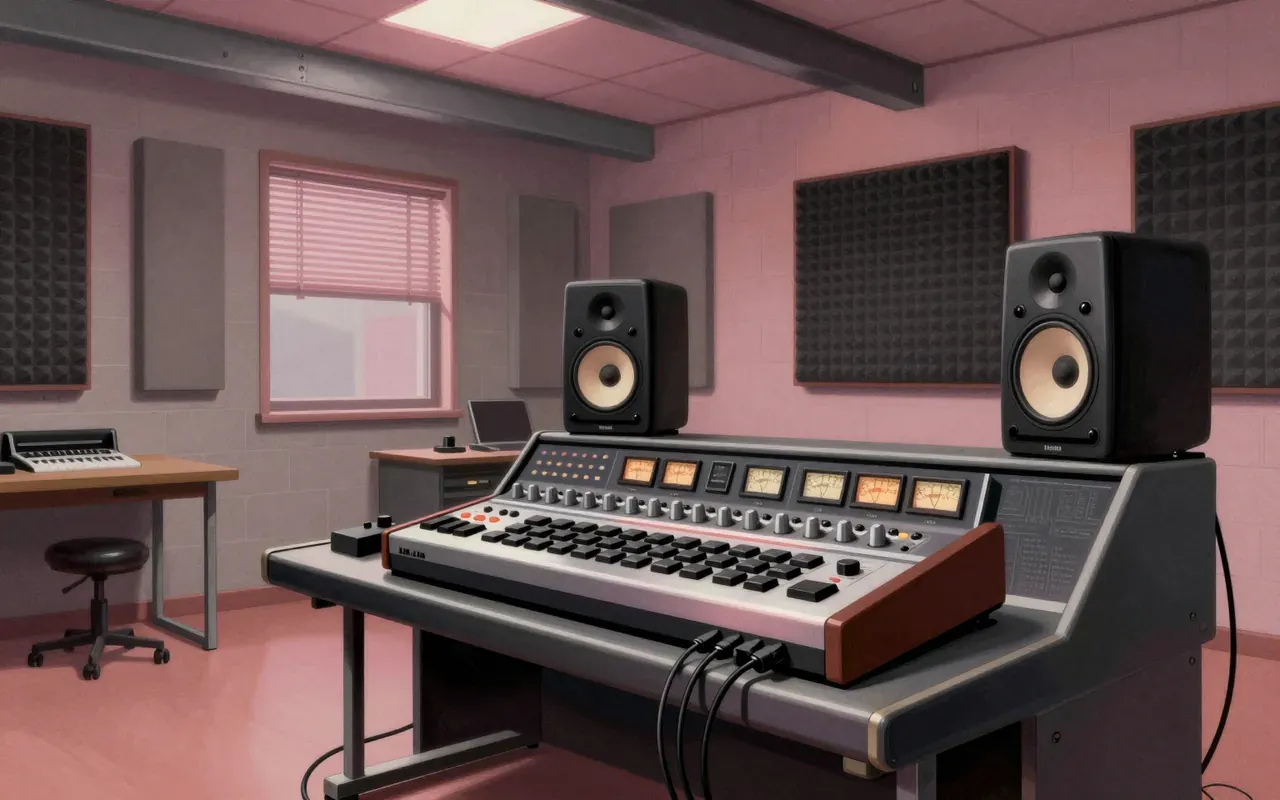
1999 is Prince’s 1982 double LP, his first with the Revolution, defined by synth-and-drum machine-heavy arrangements that codified the Minneapolis sound. It uses ARP Omni, Oberheim OB-SX, OB-X, OB-Xa, OB-8 synths and the Linn LM-1 drum machine. Themes include nuclear anxiety, Computer Age alienation, eroticism, and spiritual gratitude. Its production is tightly controlled, layered, and mechanised—no live drums, no guitar solos, no acoustic piano leads. It landed with urgency, intimacy, rhythmic insistence, theatricality, and groove. It is worth hearing if you want to understand how funk became electronic without losing its body.

Fragile is Yes’s fourth studio album, released in late 1971. It marks Rick Wakeman’s debut and Tony Kaye’s departure over resistance to electronic keyboards. Recorded in August–September 1971 at Advision Studios on a 16-track machine, it features four group compositions and five individual member pieces — a structural choice driven by budget and time constraints. Eddy Offord co-produced with the band. The album introduced Wakeman’s expansive keyboard palette and established the band’s signature progressive sound.

A keyboard-led pivot from Motown’s strings to synthesised soul—tight, live, and decisive.

Speak & Spell is Depeche Mode’s 1981 debut: ten tracks recorded live on 8-track with an ARP 2600, built from songs played live for a year, written mostly by Vince Clarke, co-produced by Daniel Miller. It reached UK #10. Critics split: Melody Maker praised it; Rolling Stone dismissed it as ‘PG-rated fluff’. It established synth-pop as functional pop—not experimental, not atmospheric, not ironic—just direct, repeatable, and built for broadcast.
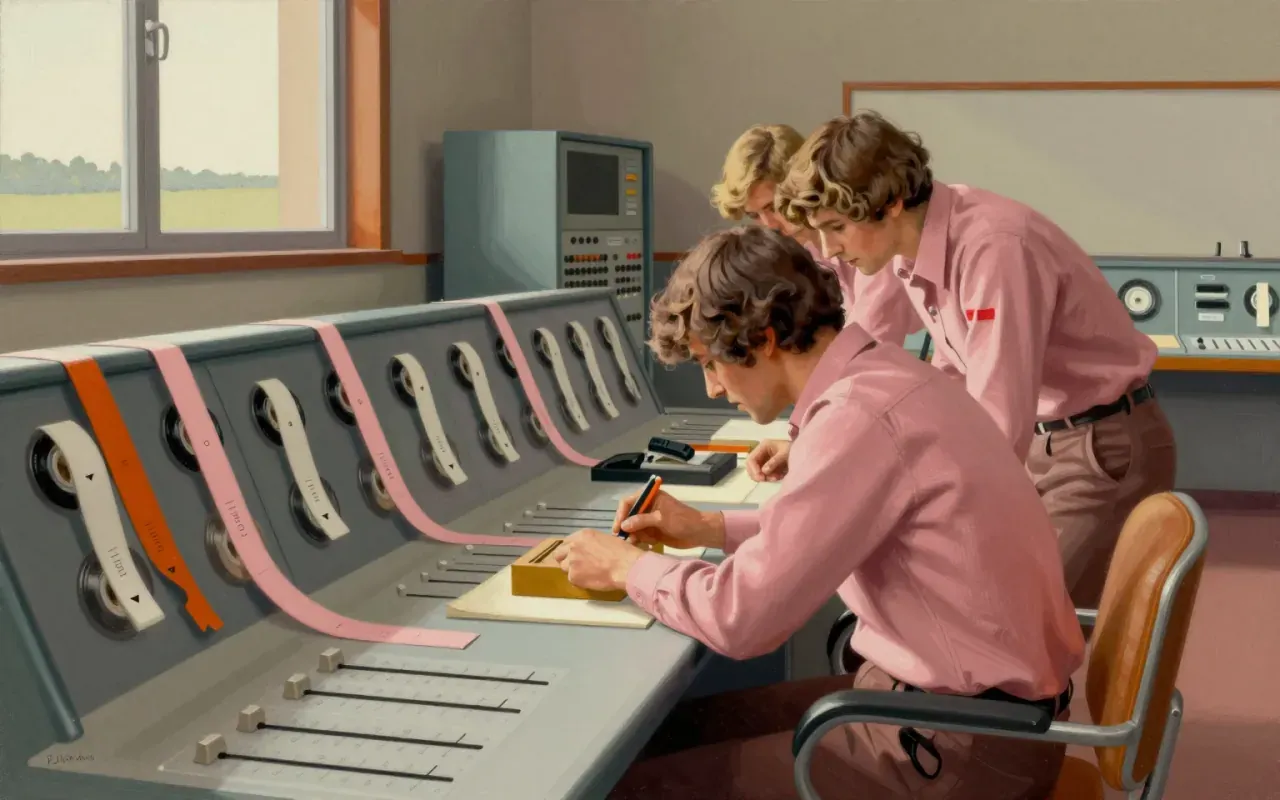
Recorded mainly across April, July and August 1969 at Abbey Road and other London studios, Abbey Road was the Beatles' final recorded album, made under producer George Martin on the condition that the group work with the discipline of their earlier records. Built around McCartney's push for a continuous medley on side two and Harrison's two strongest contributions to the catalogue, it closed the group's studio career with the Moog synthesiser and a solid-state mixing desk giving it a different texture from anything they had made before.
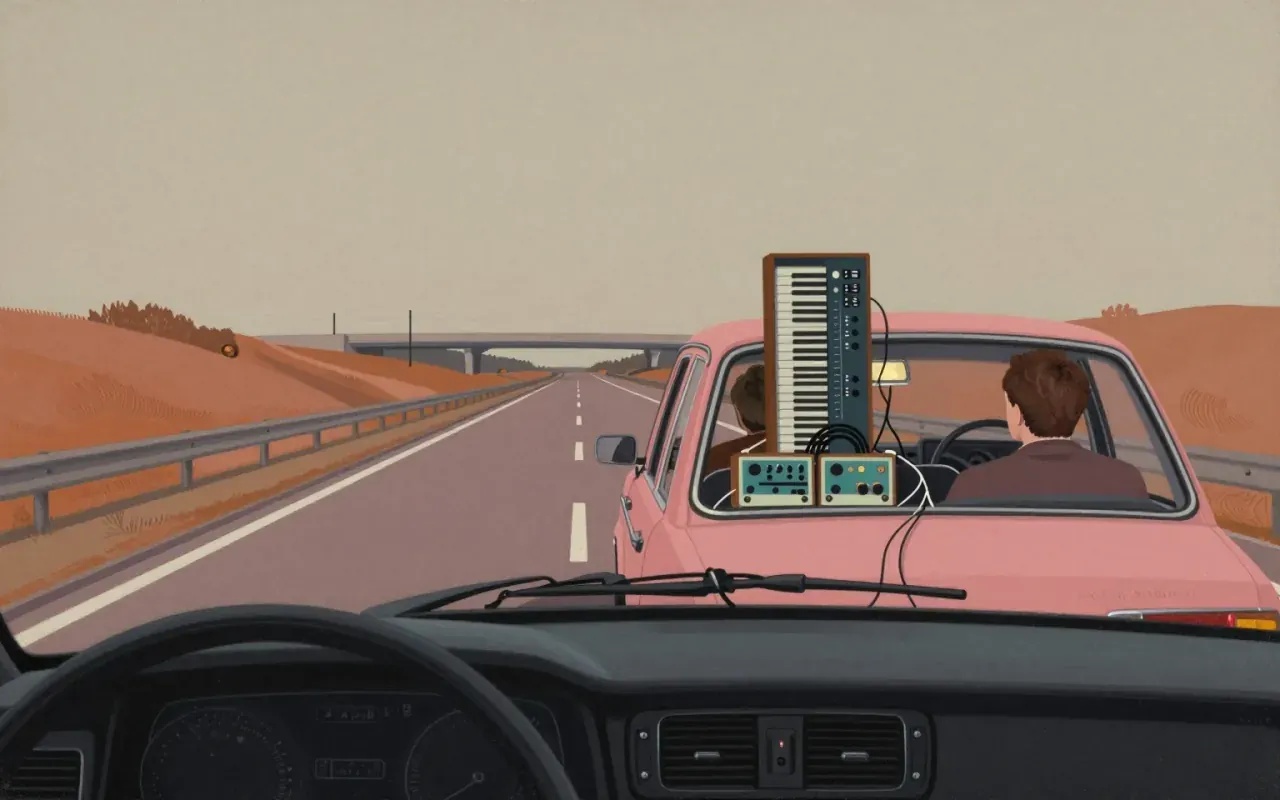
Kraftwerk's fourth album, cut partly at their own Kling Klang studio and mostly at Conny Plank's countryside facility outside Cologne, marks the point where the group traded free improvisation for synthesiser-and-drum-machine pop. The side-long title piece, built to mimic the sound and feeling of a motorway journey, became an unlikely American hit and set the template the band refined for the rest of the decade.

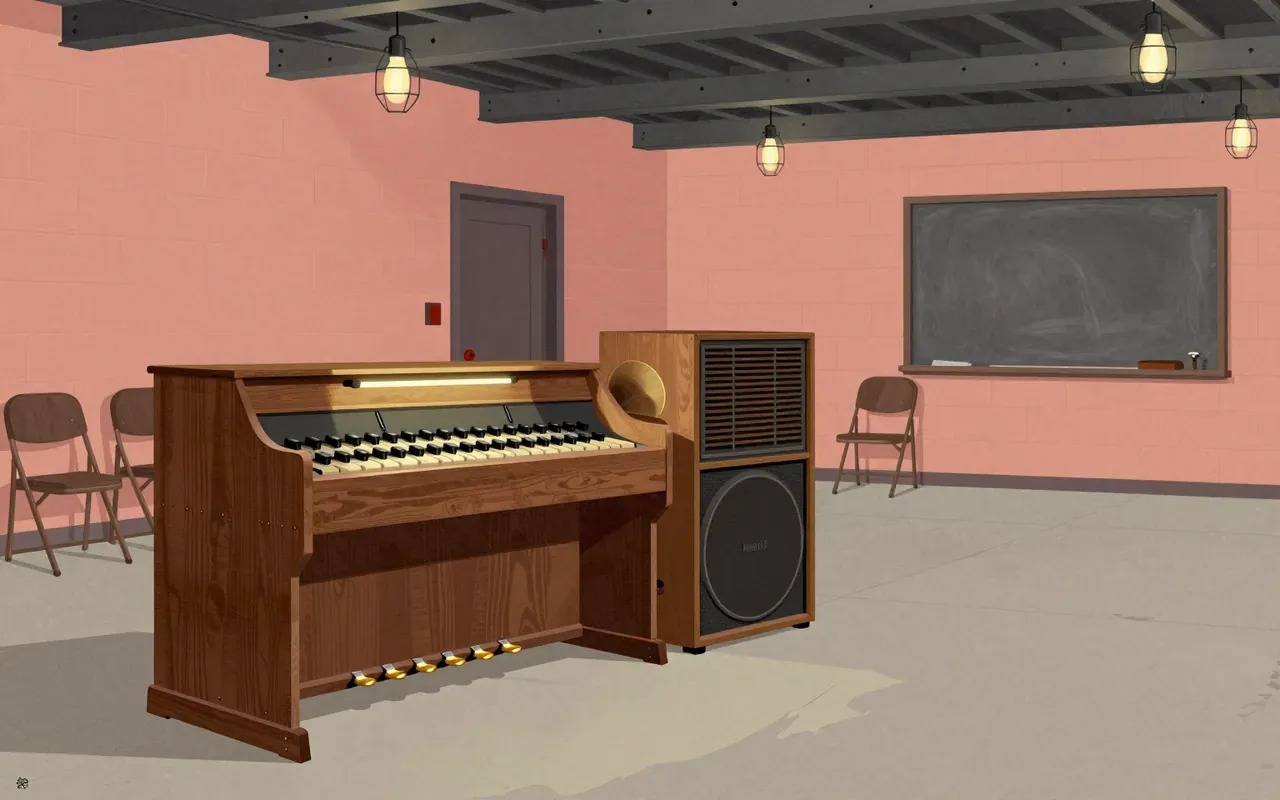
The Hammond A-100 is a console tonewheel organ introduced in 1959. It is effectively a self-contained version of the B-3 and C-3, with an internal power amplifier and speakers, and it was built in many chassis styles identified by the last two digits of the model number.
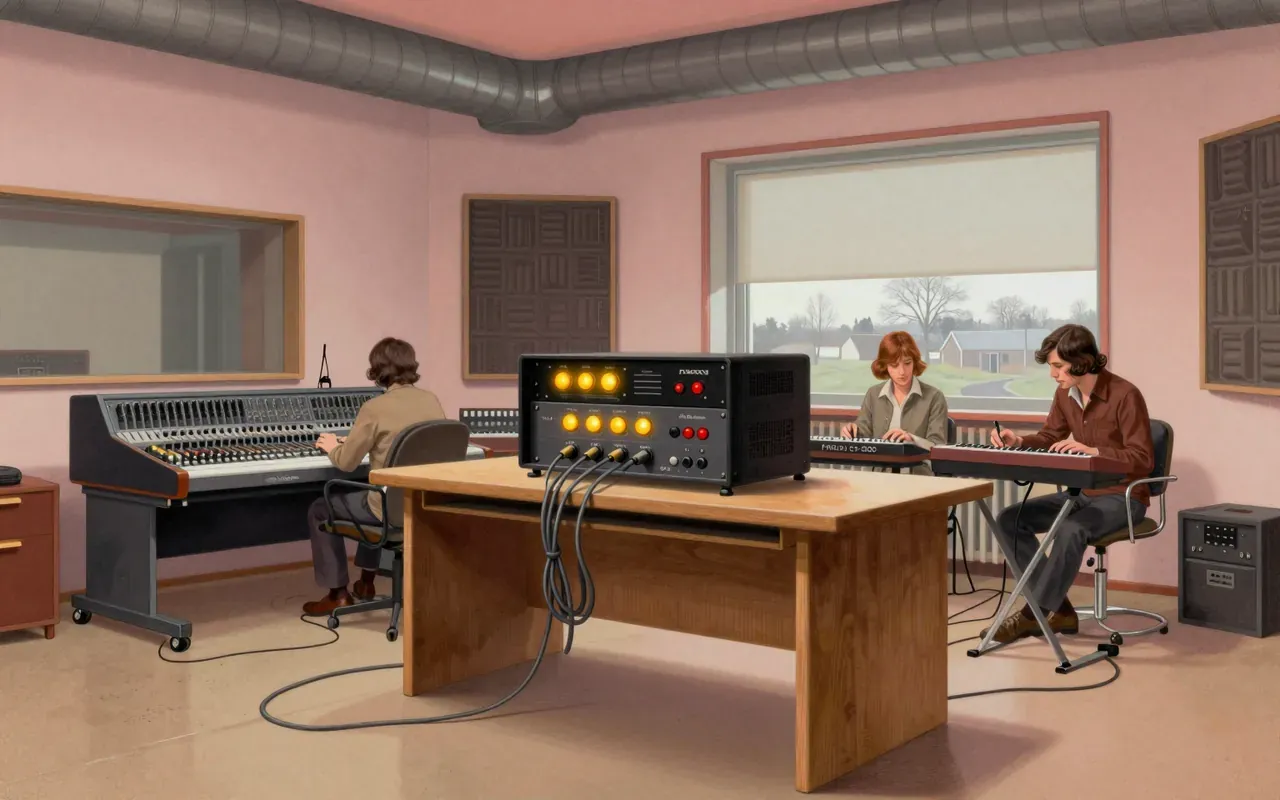
FireworX is a multi-effects processor from the Danish company TC Electronic. It holds distortion, compression, noise and curve generators, ring modulation, vocoding, parametric EQ, tremolo, reverb and delay, and the effects can be routed in a large variety of ways. It won best Hardware Signal Processing Technology at the 1998 TEC Awards, and producers and DJs used it with CD players for live sets.
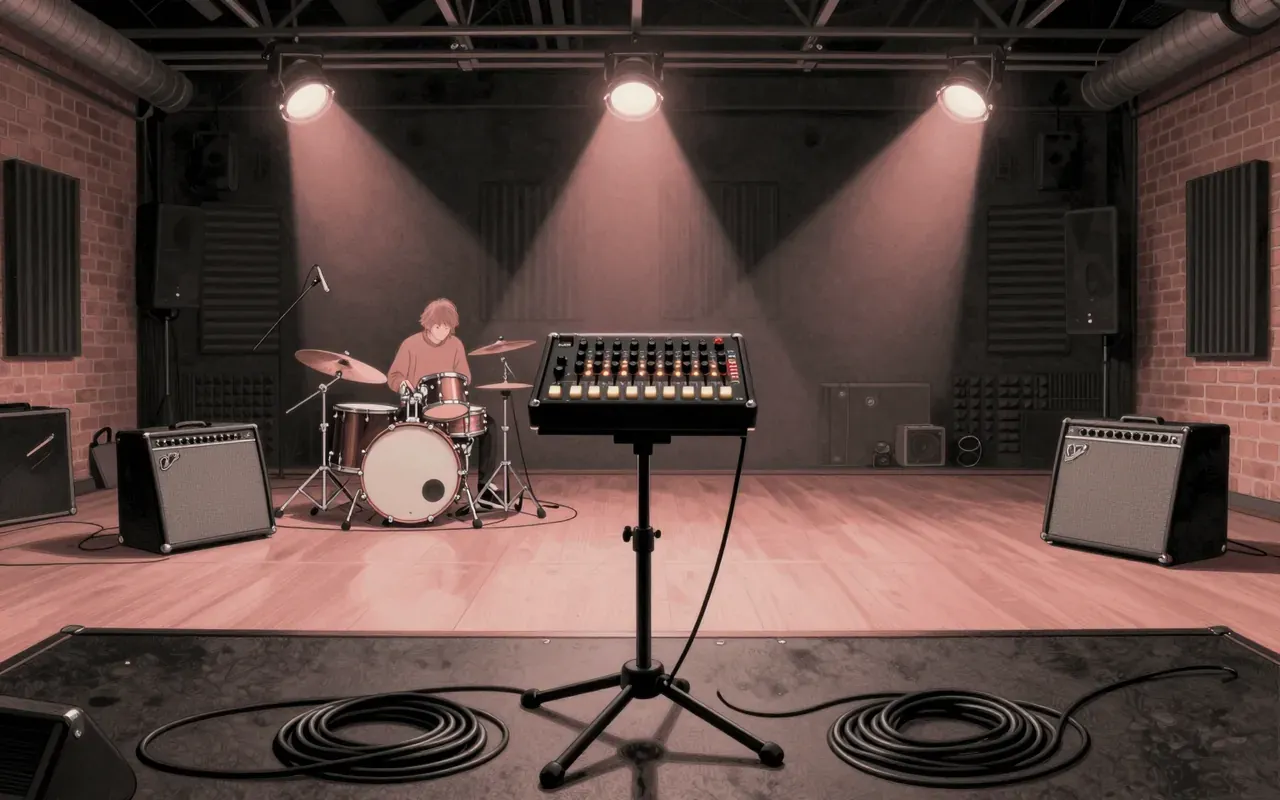
The Nord Lead 2 was launched by Clavia in 1997, two years after the original Nord Lead. It raised polyphony from four voices to 16 and added a ring modulator, a sine waveform on oscillator 1, filter distortion, four individual outputs, more patch storage and a PCMCIA slot. A refreshed Lead 2X followed in 2003 on the same synthesis engine.

The Virus B is a virtual analog synthesizer from Access Music GmbH of Germany, released in 1999 as the follow-up to the Virus A. It is a desktop (rackable) module without a keyboard, with improved converters and expanded polyphony. It has two filters per voice and a modulation matrix, and a keyboard version was sold as the Virus KB.
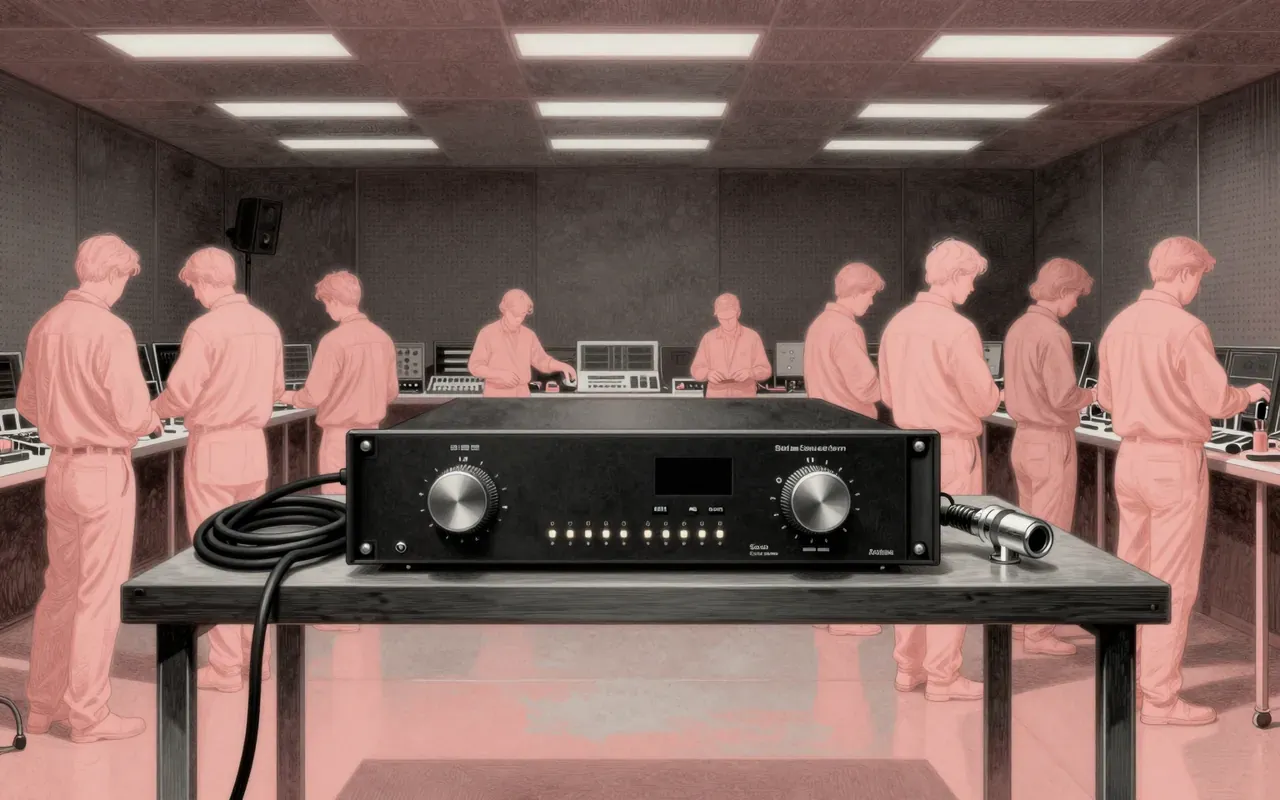
The dbx 120XP is an undocumented studio effect that generates subharmonics. Its operation is opaque. Its design yields no known advantages over alternatives. Its utility depends entirely on tolerance for uncertainty.
The Doepfer A-110 Standard VCO is a generator module for modular synthesizers in the A-100 series. It outputs saw, pulse, triangle, and sine waveforms simultaneously. Octave switching and ±1 semitone fine tuning set pitch range. Manual and CV-controlled pulse width modulation are available. A Sync input allows hard-syncing to another VCO. It lacks FM, LFO-range operation, and tuning beyond ±1 semitone.
The Doepfer A-120 is a Eurorack filter module built to replicate the Moog 24dB low pass filter. Five potentiometers control cutoff, resonance, input level, and two CV amplitudes. Three CV inputs allow layered, complex modulation. It delivers Moog-like saturation and character at low cost. It offers no multimode filtering, no self-oscillation feedback control, and no visual indicators for resonance peak or clipping. Use it for warm, resonant, hands-on low-pass filtering in modular systems. Avoid it if you need versatility beyond 24dB low pass.
The Doepfer A-140 ADSR is a basic ADSR envelope generator for the A-100 modular system. It has no published specs. It has no CV inputs. It has no visual indicators. It does one job, simply.